Blog

  • SOUTHCOM chief and senior Pentagon official visit Venezuela, meet interim government — MercoPress

    SOUTHCOM chief and senior Pentagon official visit Venezuela, meet interim government — MercoPress


    SOUTHCOM chief and senior Pentagon official visit Venezuela, meet interim government

    Thursday, February 19th 2026 – 02:29 UTC


    According to U.S. Southern Command, the program included an engagement with joint force personnel stationed at U.S. Embassy facilities in Caracas
    According to U.S. Southern Command, the program included an engagement with joint force personnel stationed at U.S. Embassy facilities in Caracas

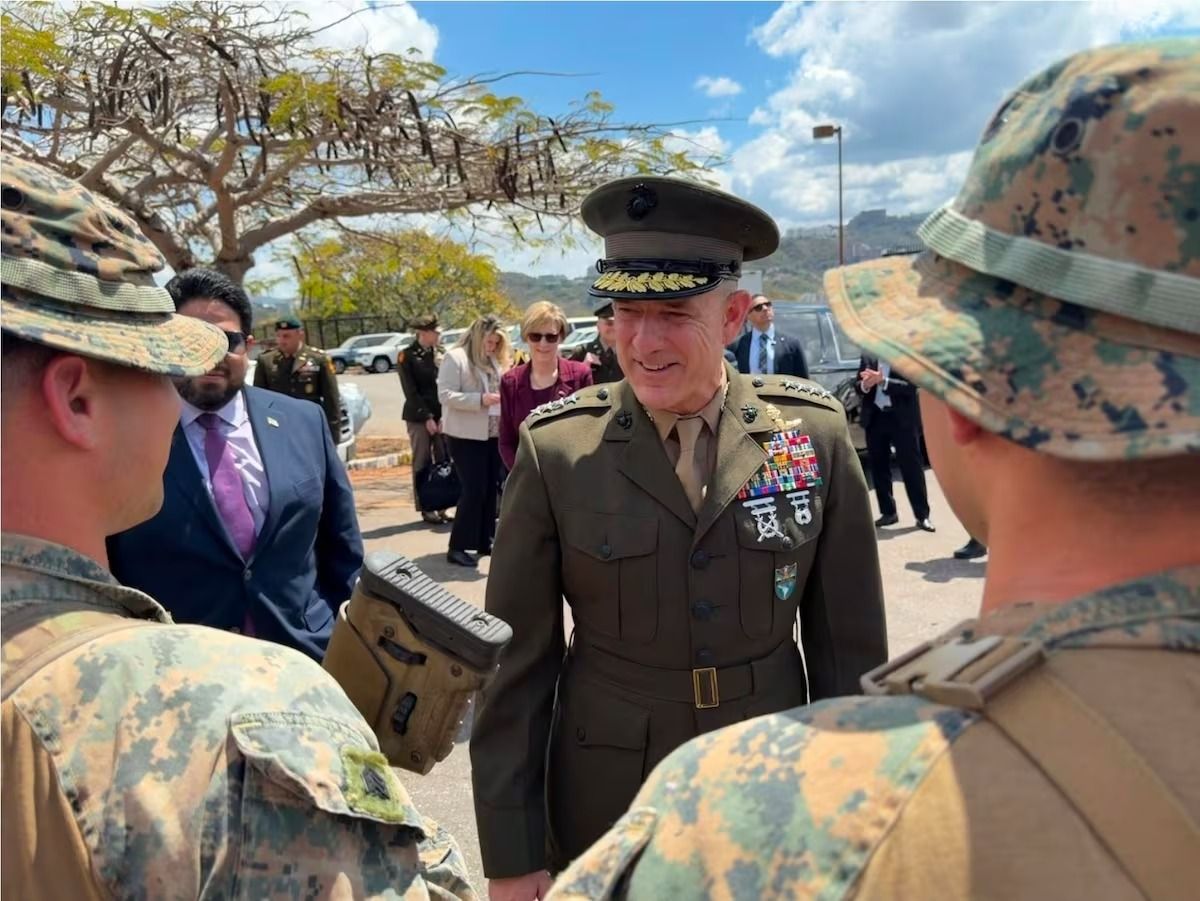
    U.S. Southern Command chief Gen. Francis L. Donovan and Pentagon official Joseph M. Humire made an unannounced trip to Caracas on Wednesday and met Venezuela’s interim authorities, signaling continued operational engagement between Washington and the government led by Delcy Rodríguez.

    U.S. envoy for Venezuela affairs Laura Dogu described the day as “another historic day” and said the visitors met “with the interim authorities” to review security matters and “ensure implementation” of President Donald Trump’s three-phase plan, while advancing the goal of a Venezuela “aligned with the United States,” in a message posted on X.

    According to U.S. Southern Command, the program included an engagement with joint force personnel stationed at U.S. Embassy facilities in Caracas, reopened recently, and discussions focused on the “stabilization” phase of the U.S. plan for Venezuela. In a readout, SOUTHCOM said the United States is committed to “a free, safe and prosperous Venezuela” and will advance U.S. national security and defense strategies “in partnership with like-minded nations” across the hemisphere.

    Venezuela’s interim government said Donovan and Humire met Delcy Rodríguez and ministers Vladimir Padrino (Defense) and Diosdado Cabello (Interior) to agree on a “bilateral cooperation agenda” against drug trafficking, terrorism and migration. The government said the meeting reaffirmed diplomacy as the mechanism to address bilateral and regional issues.

    The visit follows the embassy reopening and comes amid recent high-level contacts in Caracas since early January. Reuters reported the U.S. delegation also met with U.S. military personnel on the ground and circulated official imagery of the Caracas meeting.


    Source link

  • Pep Guardiola: Manchester City’s new tactics analysed

    Pep Guardiola: Manchester City’s new tactics analysed


    In response to my question, Pep focused on player quality.

    “We adapt to the quality of the players that we have. We have just one proper proper winger right now in Antoine and we adapt the system to make comfortable the players.”

    It’s telling that for one of the most successful coaches in football, his approach is player-led.

    In recent years, numerous coaches have been hired and subsequently sacked for a tactical style they have been unwilling to waver from.

    Guardiola in 2026 still believes in unlocking low blocks by dominating possession, and pinning teams into their own half, as he did 20 years ago but in aiming to get the best of his team, tweaks his tactics based on his players, to perform these principles.

    Although Guardiola and his staff will be drilling into their players the best way to move and interact with their team-mates, the reason these tactics have worked well for City in recent weeks is due to the players suiting the positions they’ve found themselves in.

    Pep has reinvented his side numerous times throughout his career. Promising coaches are sometimes described as playing like Pep but this claim is often less true given that Guardiola’s sides looks so different, so often.

    Despite this, the way he thinks about the game and his core beliefs have been unwavering over a remarkably long time and his 2006 columns provide clues as to how the City manager was likely always destined for the top.


    Source link

  • Régimen impide salir del país a periodista independiente cubano Boris González Arenas

    Régimen impide salir del país a periodista independiente cubano Boris González Arenas


    Lo que debía ser un hito en la carrera de un periodista independiente cubano, se convirtió este miércoles en un nuevo episodio de hostigamiento estatal: Boris González Arenas fue impedido de abordar su vuelo hacia Estados Unidos, donde participaría en el prestigioso programa de liderazgo International Visitor Leadership Program (IVLP) 2026.

    “Yo debía viajar para participar de un taller muy importante, con mucho reconocimiento internacional, sobre la inteligencia artificial y el periodismo. Era algo que me tenía muy entusiasmado”, relató a Martí Noticias, el comunicador.

    El viaje tenía como destino el proyecto “Edward R. Murrow” para periodistas, una iniciativa de intercambio profesional de la Oficina de Asuntos Educativos y Culturales del Departamento de Estado de Estados Unidos diseñada para fomentar una prensa libre y responsable a nivel mundial y estrechar lazos entre colegas del continente americano.

    “En Cuba muchas de esas plataformas de inteligencia artificial no funcionan y cuando trabajas con ellas, la conexión en Cuba es tan mala que no trabajan, por eso, la verdad, conozco muy poco o casi nada de lo que se puede hacer con la inteligencia artificial”, señaló.

    El incidente ocurrió en la Terminal 3 del Aeropuerto Internacional José Martí de La Habana. Tras superar años de trabajo en condiciones que el propio afectado describe como “colindantes con lo imposible”, el periodista se dispuso a realizar el chequeo de aduana. Fue allí donde la burocracia del control político mostró su rostro.

    “Yo hice el check in, sin obstáculos”, dijo González Arenas que subrayó que el recorrido hasta la terminal aérea, fue “sin problemas, al contrario de lo que ha ocurrido en otras ocasiones que ha sido seguido por agentes de la Seguridad del Estado.

    Cuando fue a pasar la aduana, un funcionario identificado como Ricardo González, que aseguró “no saber” quiénes eran los responsables directos de la restricción, le notificó que sobre él pesaba un “impedimento de viaje”. Frente al reclamo del comunicador, la respuesta fue el silencio administrativo y no se le permitió cruzar el control migratorio.

    “Como muchas veces antes, me dijeron que no podía viajar, me lo dijeron los mismos funcionarios de aduana, que es, digamos, la primera línea que tienes delante. No había, como en otras ocasiones en que me han impedido viajar, que si están visibles los oficiales de la Seguridad del Estado. Esta vez no me pasó así”, detalló el periodista independiente habanero.

    Más allá de la vulneración del derecho a la libre circulación, lo sucedido a González Arenas pone de relieve la tensión acumulada durante 15 años, no solo por él, sino por su familia, que ha acompañado su labor como defensor de derechos humanos en un entorno de constante vigilancia y persecución.

    El funcionario de Aduana se negó a firmar como recibida una queja formal que González Arenas redactó en el lugar.

    Para el periodismo independiente en la isla, la invitación al programa IVLP no es solo una oportunidad académica; es un reconocimiento a la trayectoria de quienes defienden las libertades fundamentales frente a un sistema que los trata como adversarios y los califica como “mercenarios” al servicio de Estados Unidos.

    Este nuevo acto de “regulación”, el término eufemístico usado por el gobierno cubano para impedir la salida de voces críticas, se suma a una lista de denuncias internacionales contra las restricciones de movimiento que el Estado utiliza como herramienta de castigo político.


    Source link

  • ¿Qué hace un equipo del FBI ‘trabajando’ en México y qué tiene que ver con el secuestro de Nancy Guthrie? – El Financiero

    ¿Qué hace un equipo del FBI ‘trabajando’ en México y qué tiene que ver con el secuestro de Nancy Guthrie? – El Financiero


    Un equipo del FBI estaría trabajando en México, y buscaría contactarse con las autoridades debido a la posibilidad de que Nancy Guthrie, madre secuestrada de la presentadora estadounidense, Savannah Guthrie, podría estar en el país tras presuntamente ser plagiada a finales de enero.

    El portal TMZ reveló este miércoles 18 de febrero que, como parte de la búsqueda del FBI, se informó a las autoridades federales para contactar a la policía, aunque no hay pruebas sólidas al respecto.

    La fuentes del FBI revelaron al portal que es posible que la mujer haya sido llevada a México, aunque es poco probable que haya sido trasladada inmediatamente tras privarla de su libertad.

    Las fuentes de la agencia estadounidense revelaron a TMZ que la posibilidad de que Nancy Guthre haya sido trasladada a México apenas es una hipótesis, y que incluso las revisiones de las cámaras de seguridad de la patrulla fronteriza no encontraron indicios de que esto haya ocurrido.

    “Estamos sacudiendo árboles para resolver el caso”, señaló el FBI, que además trabaja con tiendas como Walmart y otros minoristas para dar con información para llegar a los secuestradores.

    Sonora niega colaboración con el FBI en secuestro de Nancy Guthrie

    La Fiscalía General de Sonora aclaró que no ha recibido ninguna solicitud formal de parte del FBI para colaborar con información relacionada con el secuestro de Nancy Guthrie.


    Respecto a la posible instalación del FBI en México, las autoridades de Sonora afirmaron que no han intercambiado información ni asistido a Estados Unidos en el caso.

    Lo que sabemos del secuestro de Nancy Guthrie

    Nancy Guthre es madre de Savannah Guthrie, copresentadora del programa ‘TODAY’ de la NBC.

    Fue vista por última vez en su casa de Catalina Hills el 31 de enero pasado, y este miércoles se cumplen 18 días de su búsqueda.

    Los presuntos secuestradores mandaron notas de rescate vía correo con exigencias a la familia Guthrie.

    La principal exigencia es económica, y piden 6 millones de dólares mediante una criptomoneda distinta a Bitcoin.

    En caso de que no se cumpla, la nota especifica qué harán con Nancy Guthrie.

    Dicha nota, la última, fue enviada a la familia desde un correo distinto al de las anteriores, y TMZ la entregó al FBI.

    Sheinbaum negó en el pasado colaboración con el FBI

    Por ahora existen distintas teorías respecto al secuestro, pero la posibilidad de que Nancy Guthrie esté en México es latente, en un contexto en el que la presidenta Claudia Sheinbaum aseguró que no se permiten las operaciones del FBI sin autorización.

    Los comentarios de la presidenta Claudia Sheinbaum fueron respecto a la no colaboración ni autorización para que el FBI opere en México tienen relación con el arresto de Ryan James Wedding, uno de los más buscados por la agencia estadounidense, quien se entregó en la Ciudad de México.

    El pasado 26 de enero, Sheinbaum negó que hubiera un operativo del FBI detrás de la detención de James Wedding, exatleta olímpico relacionado con el Cártel de Sinaloa, y que eloperativo fue únicamente por autoridades mexicanas.

    Con información de TMZ.


    Source link

  • Can Latin America’s regulatory framework keep pace with digital finance? — MercoPress

    Can Latin America’s regulatory framework keep pace with digital finance? — MercoPress


    Can Latin America’s regulatory framework keep pace with digital finance?

    Wednesday, February 18th 2026 – 03:27 UTC


    Full article


    The rapid acceleration of financial technology in South America has created a distinct friction between market innovation and legislative capability. As 2026 unfolds, the region finds itself at a critical juncture where the speed of digital adoption is significantly outpacing the bureaucratic machinery designed to oversee it. While consumers and fintech unicorns push for instantaneous global connectivity, legislative bodies within the Mercosur bloc are grappling with the arduous task of harmonizing antiquated banking laws with the demands of a borderless digital economy.

    Legislative challenges facing Mercosur’s digital economy integration

    The primary hurdle facing Mercosur’s legislative bodies is the sheer complexity of harmonizing digital standards across sovereign nations with vastly different economic priorities. Brazil’s aggressive pursuit of a digital real and its mature fintech ecosystem stands in stark contrast to the more conservative approaches seen in neighbouring jurisdictions. This divergence creates a “spaghetti bowl” of compliance requirements where a digital service provider compliant in São Paulo may face entirely different, and sometimes contradictory, legal hurdles when expanding operations to Buenos Aires or Montevideo.

    Furthermore, the legislative process itself is often too slow to address the nuances of emerging technologies. By the time a bill regarding cryptocurrency taxation or cross-border data flows passes through the requisite committees and arguably bureaucratic approval stages, the technology it aims to regulate has often evolved or been superseded by new iterations. This lag forces regulators to rely on temporary decrees and central bank circulars rather than comprehensive parliamentary legislation, leading to a patchwork of provisional rules that lack the long-term legal certainty required for substantial foreign direct investment.

    Consumer demand for real-time transaction processing speeds

    While legislators debate the finer points of jurisdiction, the consumer market has already moved decisively toward an expectation of immediacy. The tolerance for traditional settlement periods, often taking days to clear, has all but evaporated among a population that is increasingly digitally native. This shift is driving a fundamental re-engineering of backend banking systems, forcing financial institutions to abandon batch processing in favour of always-on, real-time ledgers that can handle the volume and velocity of modern commerce.

    This demand for speed is visible across every vertical of the digital economy. From freelance platforms offering same-day settlements to online casinos paying out instantly, the modern consumer expectation for immediate liquidity is forcing regulators to prioritize faster clearing mechanisms. Users no longer view a transaction as complete when the purchase is made, but when the funds are fully settled and available for reuse. This psychological shift places immense pressure on central banks to upgrade national payment rails, ensuring they can support 24/7 liquidity without compromising the stability of the fiat currency.

    The implications of this demand extend beyond mere convenience; they represent a challenge to the traditional banking float model. Historically, financial institutions profited from the time lag between transaction initiation and settlement. In a world of instant payments, that window of profitability closes, forcing banks to find new revenue streams. Consequently, regulators are observing a surge in new financial products designed to monetize speed itself, creating a dynamic environment where the velocity of money is accelerating faster than the oversight mechanisms designed to track it.

    Balancing financial security with technological innovation growth

    As the velocity of transactions increases, so too does the surface area for potential financial crime, forcing a delicate balancing act between security and growth. Regulators are acutely aware that stifling innovation with draconian security measures could drive fintech development underground or offshore, yet a laissez-faire approach risks catastrophic systemic failures. This dilemma has led to the adoption of “regulatory sandboxes” across the region, allowing firms to test new technologies in controlled environments, though scaling these experiments into full laws remains a slow process.

    The alignment with international security standards is becoming a prerequisite for growth. Legal frameworks are being updated to reflect this reality, with specific emphasis on data protection and operational resilience. For instance, Brazil’s digital laws updated in 2025 cover e-commerce and data protection, signalling a clear intent to align domestic security protocols with the rigorous demands of global trade partners. These updates are crucial for fostering trust, as international institutional investors are unlikely to commit capital to markets where digital asset security is perceived as porous or ill-defined.

    However, the implementation of these security measures is often uneven. While top-tier financial institutions in the region have the capital to implement sophisticated AI-driven fraud detection and cybersecurity protocols, smaller fintech startups often struggle with the compliance costs. This creates a risk of market consolidation where only the largest players can afford to be secure, potentially stifling the very innovation that the regulatory changes aim to foster. Policymakers are thus tasked with designing tiered regulatory frameworks that ensure security without erecting insurmountable barriers to entry for new challengers.

    Projecting the timeline for unified digital market standards

    Looking toward the latter half of 2026 and into 2027, the trajectory for a unified digital market in Mercosur appears inextricably linked to the broader trade dynamics with Europe. The ratification of the trade pillar of the EU-Mercosur agreement is expected to act as a powerful catalyst for standardization. As tariffs fall and service markets open, the economic incentive to harmonize digital regulations will likely override domestic political hesitation.

    The economic projections underscore the potential upside of this integration. Recent data indicates that tariff-reduction coverage in the modernized EU-Mexico agreement rises from 94.7% to 99.6%, a precedent that suggests similar liberalization within Mercosur could unlock billions in digital services trade. If Mercosur nations can replicate this level of market access, the region could see a massive influx of European technology partnerships, driving a forced modernization of local standards.

    Ultimately, the timeline for a truly unified digital market will depend on the willingness of member states to cede some degree of regulatory autonomy in exchange for collective growth. While 2026 will likely remain a year of transition and bilateral adjustments, the foundational work being done today suggests that by 2027, the region may finally possess a regulatory framework robust enough to support its digital ambitions. The question remains whether this framework will be proactive enough to lead innovation, or if it will continue to chase the tail of a rapidly evolving financial landscape.


    Source link

  • Peru’s Congress heads to runoff vote to pick José Jerí’s successor — MercoPress

    Peru’s Congress heads to runoff vote to pick José Jerí’s successor — MercoPress


    Peru’s Congress heads to runoff vote to pick José Jerí’s successor

    Thursday, February 19th 2026 – 00:23 UTC


    The incoming president will serve a five-month interim term and must hand over power on July 28 to the winner of the April 12 general election
    The incoming president will serve a five-month interim term and must hand over power on July 28 to the winner of the April 12 general election

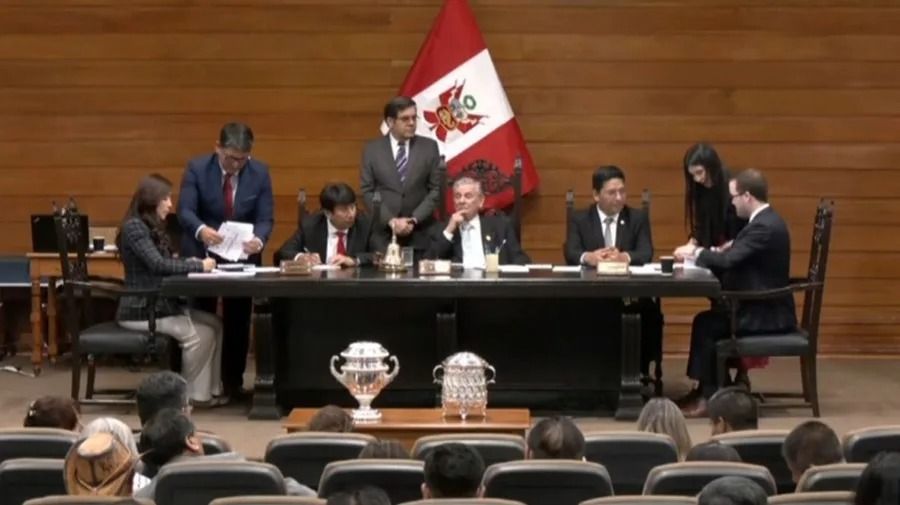
    Peru’s Congress moved to a second-round vote to elect a new head of the legislature, who will automatically become president after José Jerí was removed on Tuesday amid allegations of influence peddling and suspicious links to Chinese businessmen.

    In an extraordinary session on Wednesday, lawmakers weighed four bids for the speakership: María del Carmen Alva (Popular Action), José María Balcázar (Free Peru/Perú Libre), Héctor Acuña (Honor and Democracy) and Edgard Reymundo (Popular Democratic Bloc). No candidate secured the required majority in the first count, triggering a runoff between the top two vote-getters: Balcázar and Alva.

    The tally reported during the session showed Balcázar with 46 votes and Alva with 43, while Acuña drew 13 and Reymundo 7, eliminating the latter two from the contest. Acting congressional vice president Fernando Rospigliosi said the second round would proceed immediately, with the winner decided by a simple majority.

    The incoming president will serve a five-month interim term and must hand over power on July 28 to the winner of the April 12 general election. In the 24 hours following Jerí’s ouster, Peru was formally without a president in office, while ministers remained in place for administrative duties.

    Jerí’s removal —the 39-year-old lawyer had taken office four months earlier after Dina Boluarte’s exit— renewed a parliamentary succession mechanism that has repeatedly been activated in a decade marked by rapid turnover at the top. Wednesday’s runoff will determine whether the presidency goes to a right-leaning lawmaker with prior experience leading Congress (Alva) or to a Perú Libre legislator from the party that brought Pedro Castillo to power in 2021 (Balcázar).


    Source link

  • Aerolíneas Argentinas cancels 255 flights amid CGT strike, US$3m loss estimated — MercoPress

    Aerolíneas Argentinas cancels 255 flights amid CGT strike, US$3m loss estimated — MercoPress


    Aerolíneas Argentinas cancels 255 flights amid CGT strike, US$3m loss estimated

    Thursday, February 19th 2026 – 02:47 UTC


    The airline said it worked on mitigations including rescheduling, advancing departures and shifting delays outside the expected disruption window
    The airline said it worked on mitigations including rescheduling, advancing departures and shifting delays outside the expected disruption window

    Aerolíneas Argentinas said it will cancel 255 flights across its network on Thursday, February 19, as Argentina’s main labor confederation, the CGT, carries out a 24-hour general strike. The airline estimated the disruption will affect more than 31,000 passengers and generate losses of about US$ 3 million.

    The carrier reported that 219 of the cancellations are domestic flights, impacting roughly 25,000 passengers. A further 32 are regional services affecting more than 5,000 travelers. Four international flights have also been cancelled, involving more than 1,000 passengers.

    The airline said it worked on mitigations including rescheduling, advancing departures and shifting delays outside the expected disruption window. It advised passengers due to fly that day to check the email address provided at purchase time and follow company updates for any changes.

    Aerolíneas Argentinas also said it will apply pay deductions to employees who join the strike for the day not worked. The company linked its estimated financial impact to flight cancellations and broader operational adjustments tied to the stoppage.

    The strike was confirmed after the government formally set a lower-house session to debate a labor reform bill previously approved by the Senate, according to local reporting. CGT leaders took part in committee proceedings that issued a draft opinion and then publicly warned lawmakers against backing the proposal.

    Among the statements cited, CGT triumvir Cristian Jerónimo told lawmakers: “Don’t forget you represent the people’s interests,” disputing claims that the bill would “modernize” the economy and create jobs. Another senior CGT figure, Jorge Sola, said the stoppage was intended to “call for reflection” and political responsibility as deputies prepare to vote.

    The disruption is expected to extend beyond the state airline. In Argentina’s air transport system, continuity of operations also depends on staffing levels and the availability of ground services, prompting carriers and airport operators to assess the strike’s practical impact in the hours leading up to Thursday.


    Source link

  • Anthony Gordon: Newcastle forward breaks Alan Shearer’s record

    Anthony Gordon: Newcastle forward breaks Alan Shearer’s record


    Qarabag, in truth, played right into Gordon’s hands.

    This side had previously drawn against Chelsea and defeated Benfica, Eintracht Frankfurt and Copenhagen.

    But the sight of the rapid Gordon playing further forward than Woltemade appeared to catch Qarabag a little cold.

    By the time they finally readjusted, and dropped deeper in the second half, the damage had been done, as Match of the Day pundit Thomas Hitzlsperger noted.

    “I have to say I was surprised by how high Qarabag defended, and how they kept a high line in the first half when the Newcastle goals were going in,” he said.

    “I was thinking, ‘are they not watching Newcastle and their recent games?’ Because why did they allow so much space for Gordon, who was brilliant all evening?”

    Gordon has impressed in such a role away from home in recent weeks – opening the scoring at Anfield last month and setting up Jacob Ramsey’s winner against Spurs last week.

    He gives Eddie Howe’s side something different through the middle with his movement and pace, and the Azerbaijan Premier League champions could not cope.

    “I think he’s been really good in that position,” Howe said. “Looking back to the Liverpool game, where I thought he was excellent, he scores.

    “He’s shown he wants to play there and then he’s got the quality to play there. His pressing today was incredible for us. That gave us the platform to rebuild off of his work.

    “Of course he’s taken the four goals and will get the headlines, naturally, but his all-round game was really strong.”


    Source link

  • Disolución Francesa, de Olivier Marleix

    Disolución Francesa, de Olivier Marleix


    Este texto tan fuerte es el testamento finalmente de un hombre discreto y reservado que ha contado sin ambages los difíciles corredores de la política francesa.


    Source link

  • OPINIÃO. Como evitar IPOs desastrosos? Comece levando a governança a sério

    OPINIÃO. Como evitar IPOs desastrosos? Comece levando a governança a sério


    O mercado brasileiro de IPOs tem funcionado aquém de seu potencial.  Ao invés de ser uma opção permanente para financiar o crescimento das nossas empresas, o mercado funciona na base de “janelas de oportunidade” que se abrem e se fecham em ciclos repetitivos.

    E em cada uma dessas janelas, o filme se repete: uma grande euforia, logo seguida de perdas milionárias para os investidores que acreditaram nas novas empresas.

    Precisa ser assim?

    Não faltam atores prontos a explicar o funcionamento das “janelas”. O Brasil seria um mercado altamente volátil, as taxas de juros escorchantes, e o interesse do investidor estrangeiro incerto como as tarifas de importação americanas. Deveríamos nos resignar – e aproveitar as janelas quando elas se abrem.

    Trata-se de uma explicação simples, elegante e errada. O mercado tem funcionado dessa forma pelas escolhas feitas por seus participantes. Ainda que possamos criticar os gatekeepers por seu foco excessivamente transacional, a chave para sair desse círculo vicioso está com os principais participantes: emissores e investidores.  

    Se olharmos a última “safra” de IPOs, veremos que 79 empresas abriram seu capital entre 2019 e 2021. Na média, essas empresas perderam para o Ibovespa dos seus respectivos períodos de vida pública por mais de 50%.

    Em outras palavras, quem “vendeu” Ibovespa para comprar as ações que vieram a mercado nessa safra perdeu metade do seu capital.

    Mas a coisa é pior ainda: das 79 empresas, apenas 9 superaram o Ibovespa. 70 perderam para o índice. Em 22 empresas, as perdas contra o índice foram superiores a 70%.

    Trata-se de um desempenho inaceitável. É o caso de se pensar o que levaria um investidor são a considerar comprar ações num IPO brasileiro. A reputação do nosso mercado primário é muito ruim. Não surpreende, portanto, que fiquemos tantos anos sem ofertas iniciais. A surpresa, na verdade, é a “janela”, que acaba só se justificando por conta de euforias momentâneas.

    E que não se diga que essa performance foi por questões setoriais: a ‘safra’ 19/21 trouxe ao mercado empresas de 34 setores diferentes, segundo informações da B3.

    A razão é outra. Ela está na falta de preparo das empresas para se tornarem entidades de capital aberto. A urgência transacional faz com que, um belo dia, o empresário receba uma ligação dizendo “chegou a hora”.

    Liga-se a máquina. Prepara-se o business plan, que embute um crescimento exponencial sobre o histórico da empresa. Contratam-se advogados, monta-se um site de RI, e pega-se na prateleira o famoso “kit-IPO”: estatuto, umas 15 políticas copy/paste, escreve-se um formulário de referência que ninguém vai ler, e se monta um conselho de administração com velhos amigos e dois ou três “independentes”, preferencialmente medalhões com passagens por altos cargos e… vamos para o roadshow!

    Em 2021, um dos autores deste artigo recebeu convite para fazer parte do conselho de uma empresa que ia abrir seu capital. Ao perguntar quando seria o registro do IPO, a resposta foi: “nesta segunda-feira”. O convite foi declinado. O papel perdeu grande parte de seu valor nos anos seguintes.

    A transição de uma companhia para ter o capital aberto é muito complexa. Não se resolve com um banho de loja ou soluções de prateleira. Requer reflexões, preparo e construção de um novo modelo societário, diferente do que a trouxe até este ponto.

    O primeiro passo é se perguntar o que se deseja a partir de um IPO. As respostas são mais variadas do que se pensa no início, e as escolhas feitas aqui serão determinantes para o sucesso de eventual operação e para o legado dos fundadores.

    Pode-se estar buscando uma fonte de capital, para necessidade imediata ou para ter um acesso perene a capital de longo prazo. Pode-se estar buscando diversificação dos controladores, mitigação de riscos ou mesmo realização de lucros e liquidez.

    Pode-se querer um respaldo institucional, com consequências nas operações e nas relações com diversos stakeholders, incluindo credores, governo, clientes, competidores, fornecedores e sociedade impactada. Pode-se ainda estar buscando construir ferramentas de retenção e incentivo de talentos.

    Por fim, pode não ser nada disso, concluindo-se mesmo que não vale a pena abrir o capital. O importante é que a reflexão aconteça, que ela seja sincera e tempestiva, sem a pressão de ter que ir a mercado no dia seguinte.

    Do exercício sobre motivação se segue a definição do roadmap da governança corporativa. Inclua ou não o IPO, esse roadmap inclui não as regrinhas dos livros-texto, mas sim aqueles atributos que a companhia escolheu para si, sob a luz do seu momento estratégico e das reflexões que citamos acima. Estamos falando das estruturas de governança, sua composição, desenhos e mandatos. Dos processos implícitos nas políticas corporativas. Nos controles internos e na transparência de seus atos.

    Isso não é um projeto para uma semana, um mês ou mesmo um ano. É um projeto de médio a longo prazo. Mas essa verdade colide com a percepção de que a governança de uma empresa aberta é um custo desnecessário, que só se justifica na iminência do IPO. Entra-se facilmente no dilema do ovo e da galinha – mas aqui sabemos claramente quem tem que vir primeiro: a governança.

    Governança bem feita não é custo. É investimento que se traduz em produtividade, resiliência e crescimento. É verdade que as evidências são esparsas, dado que boa parte dos conselhos de administração brasileiros não agrega valor. Mas as empresas que mergulharam nessa jornada e construíram sua governança por seus próprios méritos, sem a pressão do banqueiro para ir a mercado no dia seguinte, colheram os frutos de solidez e credibilidade por muito tempo. Vide a Natura (pré-Avon).

    Construir uma governança prêt à porter na última hora é a receita do fracasso.

    Se a janela vai abrir de novo, é mais do que hora de refletir sobre governança. É hora de investir de verdade – não para fazer um deal amanhã, mas para estar pronto na hora certa, passar incólume pela rebentação do IPO, e rumar para a geração de valor em parceria com os investidores de longo prazo.

    Caveat emptor: que os investidores tenham a maturidade de entender a importância da governança levada a sério, construída a longo prazo, e distingui-la de arremedos de última hora.


    Mauro Rodrigues da Cunha é conselheiro independente e sócio da Engage. José Guimarães Monforte é conselheiro independente e sócio da EMAX Consultoria.


    Mauro Cunha e José Monforte



    Source link

Translate »
Share via
Copy link