
Blog
-

CGT general strike disrupts transport in Argentina as lower house debates Milei labor reform — MercoPress
CGT general strike disrupts transport in Argentina as lower house debates Milei labor reform

The strike followed a majority committee report advancing the bill and came ahead of a session the government expects to open with quorumArgentina began a 24-hour general strike on Thursday called by the country’s main labor federation, the CGT, to protest President Javier Milei’s labor reform bill, as the Chamber of Deputies was set to start debating the legislation from 2:00 p.m. local time. The stoppage immediately hit urban and long-distance mobility and forced airlines and operators to reschedule services.
From midnight, trains and Buenos Aires’ subway system were suspended, and air travel operated under heavy constraints. Transport unions broadly joined the strike, although some bus routes continued running because one major operator—DOTA—did not take part, according to local reporting. Disruptions also extended to public administration and in-branch banking, with digital channels continuing to operate.
In aviation, state carrier Aerolíneas Argentinas said it was cancelling 255 flights across its network, affecting more than 31,000 passengers, and estimated losses of roughly US$ 3 million. The airline broke the figure down as 219 domestic cancellations, 32 regional and four international, and urged travelers to check notifications and use self-service tools for changes and rebookings.
Other carriers announced operational changes to keep part of their schedules. Flybondi said it would shift its operations from Aeroparque to Ezeiza and expected around 100 flights and more than 16,000 passengers during the day, while warning that key inputs—such as fuel supply—could still disrupt operations. Air traffic controllers’ union ATEPSA did not formally join the stoppage because air navigation is deemed an essential service, but minimal activity was anticipated.
The strike followed a majority committee report advancing the bill and came ahead of a session the government expects to open with quorum. The CGT argues the proposal rolls back labor protections, while the administration says the package is aimed at “modernizing” labor rules and encouraging formal hiring. The federation summed up its stance with the slogan: “It’s not modernization; it’s precarization.”
As publicly described, the reform introduces changes related to working time and labor costs and tightens strike-related requirements by mandating minimum service levels of 75% in sectors classified as essential. The government and its allies adjusted contested provisions during parliamentary bargaining, while opposition blocs signaled resistance on the floor.
Operationally, the government warned it would dock pay from state workers who do not report to work and deployed a security operation around Congress ahead of what officials described as a tense debate. The CGT did not call a central street march, although smaller demonstrations by political and union groups were expected.
-

CGT general strike disrupts transport in Argentina as lower house debates Milei labor reform — MercoPress
CGT general strike disrupts transport in Argentina as lower house debates Milei labor reform
The strike followed a majority committee report advancing the bill and came ahead of a session the government expects to open with quorumArgentina began a 24-hour general strike on Thursday called by the country’s main labor federation, the CGT, to protest President Javier Milei’s labor reform bill, as the Chamber of Deputies was set to start debating the legislation from 2:00 p.m. local time. The stoppage immediately hit urban and long-distance mobility and forced airlines and operators to reschedule services.
From midnight, trains and Buenos Aires’ subway system were suspended, and air travel operated under heavy constraints. Transport unions broadly joined the strike, although some bus routes continued running because one major operator—DOTA—did not take part, according to local reporting. Disruptions also extended to public administration and in-branch banking, with digital channels continuing to operate.
In aviation, state carrier Aerolíneas Argentinas said it was cancelling 255 flights across its network, affecting more than 31,000 passengers, and estimated losses of roughly US$ 3 million. The airline broke the figure down as 219 domestic cancellations, 32 regional and four international, and urged travelers to check notifications and use self-service tools for changes and rebookings.
Other carriers announced operational changes to keep part of their schedules. Flybondi said it would shift its operations from Aeroparque to Ezeiza and expected around 100 flights and more than 16,000 passengers during the day, while warning that key inputs—such as fuel supply—could still disrupt operations. Air traffic controllers’ union ATEPSA did not formally join the stoppage because air navigation is deemed an essential service, but minimal activity was anticipated.
The strike followed a majority committee report advancing the bill and came ahead of a session the government expects to open with quorum. The CGT argues the proposal rolls back labor protections, while the administration says the package is aimed at “modernizing” labor rules and encouraging formal hiring. The federation summed up its stance with the slogan: “It’s not modernization; it’s precarization.”
As publicly described, the reform introduces changes related to working time and labor costs and tightens strike-related requirements by mandating minimum service levels of 75% in sectors classified as essential. The government and its allies adjusted contested provisions during parliamentary bargaining, while opposition blocs signaled resistance on the floor.
Operationally, the government warned it would dock pay from state workers who do not report to work and deployed a security operation around Congress ahead of what officials described as a tense debate. The CGT did not call a central street march, although smaller demonstrations by political and union groups were expected.
-

AI deepfakes for grief and celebrations are growing in India
When the lights dimmed at Jaideep Sharma’s wedding reception in the north Indian city of Ajmer, guests expected to see a cheesy montage of the young couple in various attractive locations. Instead, they saw Sharma’s father — dead for more than a year — on the screen, smiling and blessing the newlyweds.
The video was created using artificial intelligence by a local creator Sharma found on Instagram. Using pictures of Sharma’s father, the creator produced a minute-long video in about a week, and charged about 50,000 rupees ($600), Sharma told Rest of World. It was worth it, he said.
“It was like a bombardment of emotions for everyone,” said the 33-year-old garment trader, who felt his father’s absence keenly at his wedding. “He was like a central force in the entire family. So when the video played, everyone was very happy and emotional at the same time.”

A deepfake video of a client’s dead mother-in-law. Sharma is among a growing number of Indians discovering the power of AI deepfakes to resurrect dead family members, create voice clones of the departed, and add absent guests to family celebrations. AI tools such as OpenAI’s Sora, Google’s Nano Banana, and Midjourney have made it easier to create images and videos that can fool even experts. Cashing in are entrepreneurs in small towns and cities, who have learned how to use these tools from YouTube tutorials and online forums.
Like Akhil Vinayak, a film buff, who posts deepfake videos of popular dead actors on Instagram for fun. A client in the south Indian city of Thiruvananthapuram approached him with an unusual request: Could he create a deepfake video of her dead mother-in-law blessing her baby?
“She wanted to surprise her husband,” the 29-year-old told Rest of World. “Her mother-in-law had passed away before the baby was born.”
Vinayak created a video showing the dead woman stepping down from heaven and visiting her son, then holding the baby she hadn’t met. The client was thrilled, and sent Vinayak a recording of the family’s stunned reaction. That video has more than 1 million likes on Instagram.
Such uses — and reactions — stand in sharp contrast to the growing pushback to AI-generated videos and voice clones, which are most commonly used for harassment, extortion, financial scams, political misinformation, and election manipulation.
For Vinayak’s clients, though, the deepfakes are not just practical but also deeply emotional, he said. Vinayak uses open-source models like Stable Diffusion and editing systems such as Adobe Premiere Pro to create them, charging about 18,000 rupees ($200) on average for minute-long videos.
-

Akhil Vinayak listens to a client’s voice message at his home in Thiruvananthapuram, India. Vinayak’s studio Kanavu Kadha produces AI videos.
Joe Paul Cyriac for Rest of World
-

Vinayak uses AI tools such as Google Gemini and Nano Banana in his studio. -

Vinayak reviews an AI-generated video recreating a deceased individual.
They can be a challenge when clients have only old, damaged, or black-and-white photos of the person they wish to recreate, he said. It also requires an effort to get to know the person they are recreating.
“We have to work with the client to know about them and their behavior to create their closest online version,” said Vinayak, who now has a five-member team at his firm Kanavu Kadha, which means “stories from dreams.” He plans to launch an AI film institute.
Some creators are aware that deepfakes may not be the best way for their clients to deal with grief. Divyendra Singh Jadoun, who taught himself to use Photoshop, video editing, and generative AI tools during the Covid-19 lockdowns, has a thriving business creating AI-generated content. He began by posting “what if” parody videos on Instagram. Then came a message from a woman asking if he could recreate her deceased father for a family gathering.
Jadoun, who is based in the north Indian town of Pushkar, created a short video from the photos, videos, and audio clips the client had sent him, he told Rest of World. He now runs The Indian Deepfaker, an outfit that creates “hyper realistic deepfakes” including those of politicians, and what he calls grief tech — AI-generated avatars of dead people that can speak, text, and even video-chat in real time.
“Being able to talk to someone who is no longer alive, even in a limited way, is deeply meaningful,” Jadoun said. That AI avatars of the dead might “take people into a deep depression” is something he is aware of. “I make sure I convey to them that they should not get too attached, as they are not real,” he said.
India is among the world’s largest markets for generative AI platforms, and for AI-generated videos and voice clones. Several celebrities have sued YouTube and Google for hosting deepfake videos, and the government’s new rules to curb the flood of deepfakes go into effect on February 20. They require all AI-generated content to be clearly labeled, and place new obligations on platforms to remove such content within hours when directed to.
But in small towns, deepfakes are helping meet vital cultural needs, Bhaskar Malu, a Delhi-based behavioral scientist, told Rest of World.
“In cultures like ours, where social rituals demand physical, or at least symbolic presence, especially during weddings and funerals, AI-generated stand-ins are a response to real emotional pressures,” he said. Deepfakes can help with dealing with the loss in the short term, but they also create “an artificial reality,” where the dead are “alive and dead at the same time in your mind,” he said. The long-term effects are unclear. “Technology should be a partner, not a substitute for human connection and emotional reckoning,” Malu said.

An advertisement for photo restoration services outside a photo studio in Thiruvananthapuram, India.
Joe Paul for Rest of World
An advertisement for photo restoration services outside a photo studio in Thiruvananthapuram, India.

A groom speaking on the phone with his family. He had ordered an AI video featuring loved ones who were not present at his wedding.
Ishan Tanka for Rest of World
A groom speaking on the phone with his family. He had ordered an AI video featuring loved ones who were not present at his wedding.
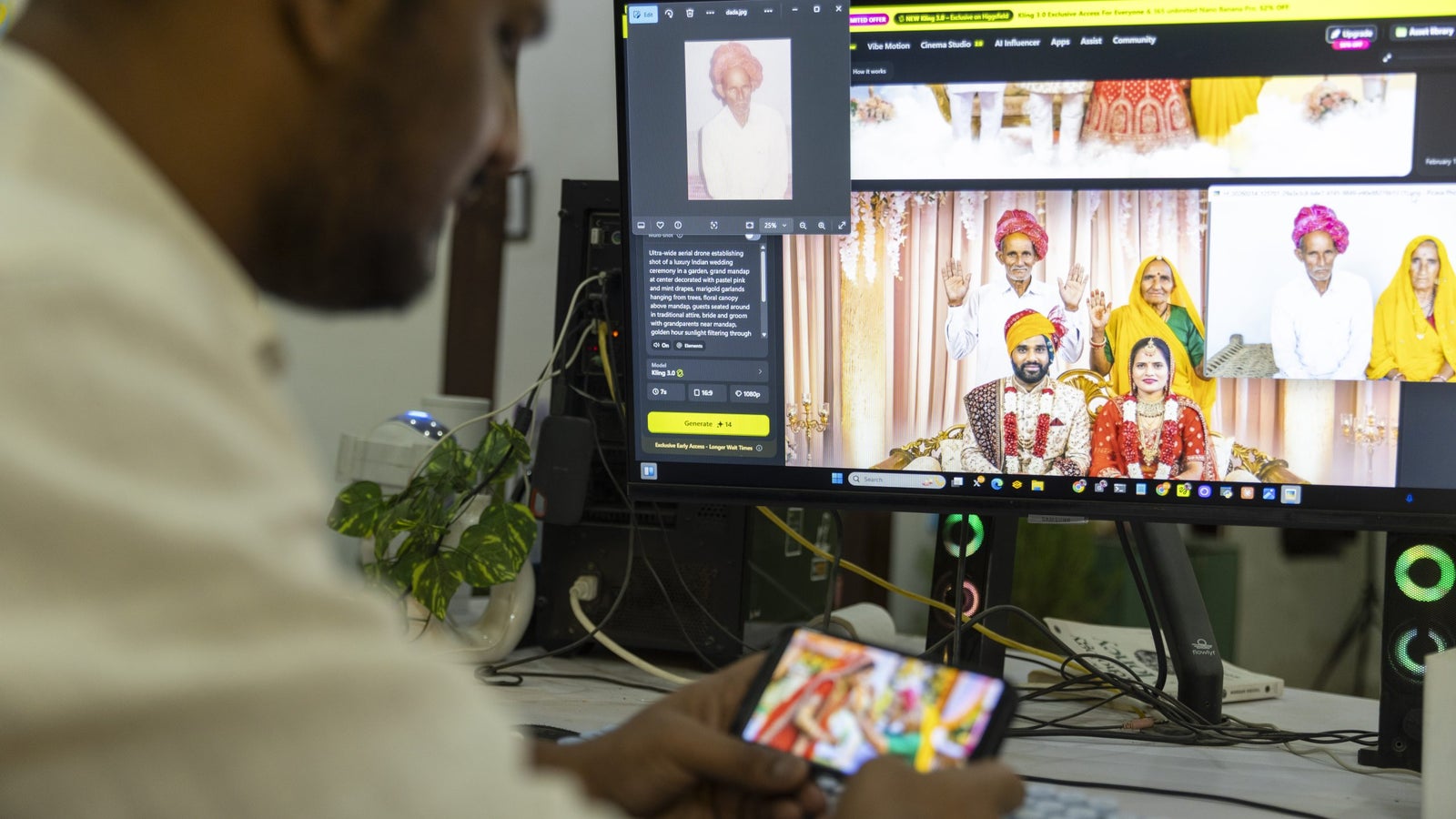
The generation of an AI video for a wedding in Ajmer, India.
Ishan Tanka for Rest of World
The generation of an AI video for a wedding in Ajmer, India.

A mobile phone placed among flowers at a cemetery in Thiruvananthapuram, India.
Joe Paul for Rest of World
A mobile phone placed among flowers at a cemetery in Thiruvananthapuram, India.
A growing number of people say they are in a relationship with their AI chatbots, with some getting engaged to or marrying the AI characters they create on ChatGPT, Character.ai, Replika, and other platforms. As the debate around deepfakes — like the sexualized images produced by X’s Grok chatbot — continues, in wedding halls and living rooms in India, AI-generated avatars are quietly lodging themselves into ceremonies and rituals that have long insisted on presence.
For the creators, the AI technology is a way to earn an income by offering a service, much like wedding photographers and videographers do. For clients, the technology makes it easier to manage social expectations, avoid uncomfortable questions about absent relatives, and maintain continuity during rituals where presence carries deep symbolic weight.
Besides the money to be made, Jadoun values creating something that is cherished. The woman who asked for a video of her dead father thanked him when he sent her the deepfake: It was the “best thing” anyone had given her, she said.
-
-

Premier League: Liverpool head coach Arne Slot says ‘we have to do more’ in fight against racism
Liverpool head coach Arne Slot says “we should always try to do more” after Real Madrid’s Vinicius Jr allegedly received racist abuse from Benfica’s Gianluca Prestianni in the first leg of their Champions League play-off tie in Lisbon.
READ MORE: Vinicius: Eight years at Real Madrid, 20 cases of alleged racist abuse
-

Innovación, inversión extranjera y la oportunidad de México – El Financiero

Esta semana, la empresa mexicana Kavak anunció el cierre de una nueva ronda de inversión por 300 millones de dólares, liderada por capital internacional de alto perfil. En un entorno global donde el financiamiento tecnológico se ha vuelto más selectivo y donde las valuaciones han sido sometidas a escrutinio riguroso, una ronda de esta magnitud no es un hecho menor. Implica que inversionistas institucionales sofisticados —con estándares estrictos de análisis financiero, gobernanza y control de riesgos— decidieron volver a apostar capital relevante en una empresa tecnológica mexicana.
Más allá del titular, el anuncio debe leerse en clave estructural. No es únicamente una operación corporativa exitosa. Es una señal de confianza en el ecosistema de innovación del país y, sobre todo, en la capacidad de México para ofrecer condiciones de certidumbre jurídica, escala de mercado y viabilidad operativa en un contexto internacional más complejo.
El capital global ha cambiado de actitud. Si entre 2020 y 2021 predominó la expansión acelerada y la abundancia de liquidez, el ciclo actual se caracteriza por disciplina financiera, métricas auditables y trayectorias claras hacia rentabilidad. En este nuevo entorno, el capital no fluye por entusiasmo; fluye por convicción. Que una empresa mexicana logre atraer 300 millones de dólares bajo estos parámetros indica que los fundamentos institucionales y empresariales son suficientemente sólidos para competir a nivel internacional.
Sin embargo, la conversación pública suele quedarse en el monto de la ronda y no en el fenómeno más amplio que representa. Desde 2018, las startups mexicanas han captado inversión extranjera por miles de millones de dólares. Son flujos billonarios provenientes de fondos de venture capital, private equity y vehículos institucionales globales que han ingresado al país financiando tecnología, plataformas digitales, infraestructura de datos y talento altamente especializado. Esta dimensión, paradójicamente, muchas veces pasa desapercibida.
Cuando se habla de inversión extranjera en México, el foco tradicional se dirige hacia manufactura, energía, infraestructura o grandes proyectos industriales. Pero durante los últimos años se ha gestado, en paralelo, una transformación silenciosa: una parte considerable de capital internacional ha sido canalizada hacia activos intangibles y modelos de negocio tecnológicos con capacidad de escalamiento regional.
El impacto de este fenómeno es profundo. Cada ronda relevante no sólo inyecta recursos financieros; introduce estándares. Los fondos internacionales exigen estructuras societarias robustas, pactos de accionistas sofisticados, mecanismos de protección a inversionistas minoritarios, auditorías independientes y cumplimiento normativo estricto. Exigen consejos de administración profesionalizados y métricas financieras transparentes. En consecuencia, el venture capital ha funcionado como un mecanismo de sofisticación institucional que eleva el estándar corporativo del país.
México ha logrado atraer este capital por razones estructurales. El tamaño del mercado interno ofrece escala suficiente para validar modelos de negocio complejos. La integración comercial bajo el T-MEC reduce riesgos geopolíticos y brinda certidumbre a largo plazo para inversionistas extranjeros. La estabilidad macroeconómica relativa frente a otras economías emergentes ofrece previsibilidad financiera. Y la existencia de marcos regulatorios específicos —como en el ámbito financiero digital— ha permitido que modelos innovadores operen dentro de esquemas normativos definidos.
A ello se suma un contexto geopolítico que favorece a México. La relocalización de cadenas productivas hacia Norteamérica, la fragmentación del comercio global y la necesidad de digitalización eficiente en mercados emergentes colocan al país en una posición estratégica. El nearshoring no sólo implica fábricas; implica digitalización logística, financiamiento estructurado, plataformas de comercio electrónico y soluciones tecnológicas que acompañen la transformación productiva. Las startups mexicanas forman parte de ese engranaje.
La ronda anunciada esta semana confirma que el capital institucional internacional sigue viendo en México una jurisdicción viable para desplegar recursos en innovación avanzada. Y lo hace en un momento donde la exigencia es mayor. Hoy los inversionistas privilegian eficiencia operativa, disciplina financiera y claridad regulatoria. No se trata de crecimiento a cualquier costo; se trata de crecimiento sostenible.
Desde una perspectiva política, esto representa una oportunidad que el país no puede subestimar. La inversión tecnológica es especialmente sensible a la incertidumbre normativa, a cambios abruptos en reglas sectoriales y a señales ambiguas en materia de competencia o protección de datos. Si México aspira a consolidarse como el principal destino de capital innovador en la región, deberá reforzar la estabilidad regulatoria, fortalecer instituciones técnicas y ofrecer claridad de largo plazo.
La evidencia acumulada desde 2018 demuestra que México puede captar inversión extranjera billonaria en sectores intensivos en innovación. Esa inversión ha generado empleos especializados, ha modernizado industrias tradicionales y ha construido plataformas con ambición regional. No es marginal ni anecdótica; es estructural. Que en ocasiones pase desapercibida no disminuye su relevancia. Al contrario, revela que una parte importante de la transformación económica del país está ocurriendo en activos que no siempre se ven físicamente, pero que determinan la competitividad futura.
México tiene hoy una ventana histórica. Puede combinar su fortaleza manufacturera con un ecosistema tecnológico financiado por capital internacional sofisticado. Puede pasar de ser únicamente un centro de producción a convertirse también en un centro de innovación regional. Pero esa transición exige consistencia institucional y visión estratégica.
La oportunidad está clara: consolidar un entorno donde la innovación encuentre reglas estables, donde la inversión extranjera encuentre certidumbre y donde el capital disciplinado encuentre estructura. Si México logra alinear política pública, estabilidad jurídica y talento empresarial, no sólo seguirá atrayendo rondas relevantes; consolidará una posición permanente en el mapa global de innovación.
Esa es la verdadera dimensión del anuncio de esta semana. No es sólo una ronda. Es una confirmación de que la innovación y la inversión extranjera pueden converger en México como una oportunidad estratégica de largo plazo.
-

‘Scottish is VAR a mess’, says Scotland’s John McGinn after controversy in Aberdeen v Motherwell
Both Priestman and Gordon were judged to have denied a goal-scoring opportunity after Beaton went to the monitor.
And Aston Villa’s 83-times capped McGinn, whose brother Paul captained Motherwell, said on social media: “I’ve sent you to the screen let’s send you to an angle from the North Sea to back it up.
“Scottish var is a mess.”
In his post-match interview, Motherwell manager Jens Berthel Askou told BBC Scotland: “We get Liam Gordon sent off in a decision that is a mystery to me and will remain a mystery to me because there are two players covering behind him who will, without a shadow of a doubt, get in his way or at least make sure it’s never a very obvious goal chance.”
The Scottish FA have been approached for comment.
The Priestman and Gordon red cards follow similar incidents in Dundee United’s Tuesday cup win over Spartans and Falkirk’s Premiership defeat by United on Saturday.
-
La consolidación que cambia de forma – El Financiero

La discusión fiscal en México ha entrado en una nueva etapa. Entre los cierres de 2024 y 2025, el debate giró en torno a una palabra casi obsesiva: consolidación. Reducir el déficit, estabilizar la deuda, recuperar el superávit primario (aún pendiente). El mensaje era claro: después de un desbalance histórico, había que recomponer las cuentas públicas.
Los datos más recientes confirman que buena parte de ese ajuste ya ocurrió. Los Requerimientos Financieros del Sector Público bajaron de 5.8% a 4.8% del PIB y el balance primario prácticamente regresó a terreno de equilibrio. No es menor: implicó contención del gasto y disciplina en un entorno donde las condiciones cíclicas fueran adversas.
Pero justo cuando la narrativa de austeridad parecía asentarse, el gobierno anunció el Plan de Inversión en Infraestructura para el Desarrollo y el Bienestar 2026–2030, con una cifra que de entrada sorprende: 325 mil millones de dólares, equivalentes a 5.6 billones de pesos. A primera vista, la pregunta es inevitable: ¿cómo se concilia un plan de inversión de esa magnitud con un discurso de consolidación fiscal?
La respuesta está menos en el tamaño del anuncio y más en su arquitectura. Las autoridades han sido explícitas en señalar que el plan no implica un incremento sustancial del déficit. El financiamiento descansará en mecanismos extrapresupuestarios, vehículos financieros, fideicomisos y mayor participación de empresas productivas del Estado y capital privado. En otras palabras: no se trata de expandir el déficit abierto, sino de reorganizar el balance.
Esto marca un cambio relevante. La consolidación ya no se entiende como una reducción continua y acelerada del déficit año tras año, sino como la fijación de una nueva ancla. El presupuesto para 2026 sugiere que el déficit presupuestario se estabilizará alrededor de 3.6% del PIB (debajo del 3.9% de 2025), lejos del ajuste abrupto observado entre 2024 y 2025, pero también lejos de un relajamiento desordenado.
La estrategia implícita es clara: una vez creado cierto espacio fiscal mediante el ajuste de 2025, ese margen puede redirigirse hacia inversión pública. El intercambio es evidente: tolerar un déficit moderadamente más alto a cambio de apoyar el crecimiento.
Desde una perspectiva macroeconómica, el mensaje no es contradictorio; es matizado. México no está abandonando la disciplina fiscal. Está redefiniendo qué significa disciplina. El objetivo ya no es minimizar el déficit cada año, sino mantenerlo en un nivel que permita estabilizar la deuda como proporción del PIB mientras se reorienta el gasto hacia formación de capital. No obstante, esta redefinición tiene límites.
Primero, porque el margen fiscal no es amplio. Con el déficit anclado cerca de 4.5% del PIB en su medida más amplia y con la deuda revisada al alza tras el cambio en la base del PIB, el espacio para experimentos adicionales es reducido. Segundo, porque el uso de mecanismos fuera del presupuesto tradicional introduce un nuevo eje de escrutinio: la calidad y transparencia de esos instrumentos.
La credibilidad del plan de inversión no dependerá tanto del monto anunciado como de su ejecución. ¿Se logrará atraer capital privado sin trasladar riesgos contingentes excesivos al soberano? ¿Se evitará que las empresas productivas del Estado —en particular Pemex— se conviertan nuevamente en canales indirectos de presión fiscal? ¿Los fideicomisos y vehículos financieros serán suficientemente transparentes para que el mercado evalúe su verdadero impacto?
En este punto, la discusión se conecta con algo más profundo: el crecimiento. Si la inversión pública logra elevar el producto potencial, el propio denominador de la razón deuda/PIB jugará a favor de la sostenibilidad. Pero si la ejecución es ineficiente o la rentabilidad social y financiera de los proyectos es baja, el resultado podría ser simplemente una deuda mayor sin un crecimiento que la respalde.
Ahí está el verdadero giro de la política fiscal mexicana: la sostenibilidad ya no descansa exclusivamente en la austeridad, sino en la capacidad de brindar soporte al crecimiento. El ancla no es solo el déficit; es la expansión del PIB.
El cierre de 2025 confirmó que la consolidación fue real, pero también que se acerca a sus límites prácticos. No se puede recortar indefinidamente sin afectar inversión, operación gubernamental o programas sociales.
Es una transición delicada. En términos financieros, equivale a pasar de una estrategia de desapalancamiento acelerado a una de estabilización con reasignación. En términos políticos, implica defender la disciplina mientras se anuncia una agenda ambiciosa de inversión. Hacia adelante habrá quienes cuestionen si México está rompiendo el ancla fiscal. No lo está. La pregunta es si podrá sostener este nuevo equilibrio: un déficit controlado, deuda estabilizada y una expansión de inversión que realmente detone crecimiento.
Si lo logra, la narrativa cambiará. La consolidación dejará de verse como sinónimo de ajuste permanente y empezará a entenderse como una plataforma para invertir mejor. Si falla, el margen ganado en 2025 podría diluirse rápidamente.
-
Trump Confuses Bahamas And Bermuda At White House Black History Month Event
By NAN NEWS EDITOR
News Americas, NEW YORK, NY, Thurs. Feb. 19, 2026: US President Donald Trump is facing renewed criticism after appearing to confuse two nations in the Americas – The Bahamas and Bermuda – during of all events- a White House Black History Month event.
While recognizing former NFL star Herschel Walker, who currently serves as U.S. Ambassador to The Bahamas, Trump stumbled over the name of the country he represents.
“Herschel Walker… he’s ambassador to the Bahamas. I don’t know. Bahamas, Bermuda, Berhamas, whatever. A nice place!” Trump said, drawing attention for both the confusion and apparent dismissiveness.
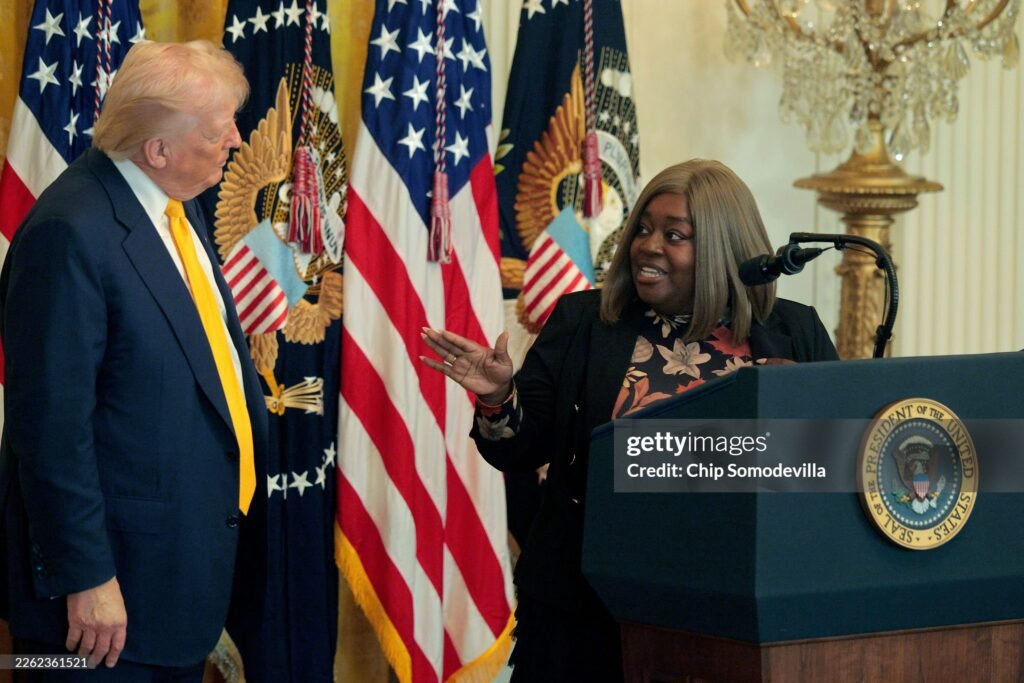
Small business owner Arnetta Bradford of Hope, Arkansas speaks alongside U.S. President Donald Trump during a Black History Month reception in the East Room of the White House on February 18, 2026 in Washington, DC. The president issued a proclamation recognizing Black History Month on Feb. 3. (Photo by Chip Somodevilla/Getty Images) The Bahamas and Bermuda are distinct nations with separate governments, histories, and geopolitical roles. The Bahamas is an independent Caribbean nation of roughly 400,000 people and a key U.S. regional partner. Bermuda, meanwhile, is a British Overseas Territory located in the North Atlantic and operates under a different constitutional and diplomatic structure.
For Caribbean observers, the moment carries deeper symbolic implications beyond a simple verbal slip.
Small island nations in the Caribbean have long played outsized roles in global finance, climate diplomacy, tourism, and regional security cooperation with the United States. The Bahamas in particular is central to U.S. maritime security, migration management, and financial regulation cooperation.
Such misidentifications risk reinforcing longstanding frustrations among Caribbean leaders and diaspora communities who have often argued that the region is treated as interchangeable or peripheral in global political discourse, despite its strategic importance.
Diplomatic recognition, Caribbean analysts say, is not simply about protocol but about respect.
In recent years, Caribbean nations have increased their influence globally, particularly through climate advocacy, financial diplomacy, and economic partnerships. Leaders such as Barbados Prime Minister Mia Mottley have emerged as prominent voices in international forums, while countries like Guyana, Trinidad and Tobago, and The Bahamas are playing expanding roles in energy, finance, and regional development.
The Bahamas itself maintains deep diplomatic and economic ties with the United States, including cooperation on banking regulation, tourism, law enforcement, and national security initiatives.
The appointment of Walker as ambassador underscored the importance of that bilateral relationship. However, public confusion about the country’s identity – especially at a Black History Month event intended to recognize Black leadership and contributions – has prompted broader reflection on how Caribbean nations are perceived within U.S. political consciousness.
For many Caribbean Americans, the moment highlights a larger issue of visibility.
The Caribbean diaspora has made enormous contributions to American society, from civil rights and politics to medicine, business, and culture. Yet, Caribbean nations themselves often remain misunderstood or overlooked in public discourse even as the US has turned the region from a zone of peace into a region where boats are being bombed without real cause, leaving several Caribbean nationals dead to date. Since September last year, the United States has carried out at least 36 similar strikes in Caribbean and Eastern Pacific waters, killing more than 120 individuals suspected of involvement in drug trafficking, according to U.S. military data.
The incident also comes at a time when the Caribbean is gaining increasing geopolitical relevance amid shifts in global energy markets, climate negotiations, and nearshoring strategies. Ultimately, while political misstatements are not uncommon, moments like these resonate deeply in regions whose histories have long been shaped by external powers.
For Caribbean nations that continue to assert their voice and sovereignty on the global stage, recognition – accurate and respectful – remains an essential part of partnership.
RELATED: U.S. Military Strike Raises Urgent Questions About Caribbean Sovereignty After Possible St. Lucian Deaths
Help Sustain Independent Caribbean Diaspora Media.
Support NewsAmericas -

FPL gameweek 27 tips: Double up on Chelsea with Palmer and Joao Pedro
Mohammed Salah, Liverpool, £14m – Nottingham Forest (a)
Is Salah back as an FPL option?
He’s had a terrible season by his standards and is only the 41st-ranked midfielder in FPL but…
In the four games since his return from the Africa Cup of Nations, the signs are there that a haul is imminent.
Salah’s had 14 shots in that time (more than anyone else in the league), 12 in the box, three big chances yet no goal to show for it. He does have three assists.
Forest have been flakey to say the least this season and Liverpool are hitting a bit of form.
Bruno Fernandes, Manchester United, £9.8m – Everton (a)
Fernandes has been fantasy gold dust since his return from injury in gameweek 21 so don’t let his blank at West Ham last time out put you off.
The Portuguese has 44 points in those six games and there’s not even a penalty in there. By contrast, Cole Palmer has the same amount of points in six games but with four penalties.
Fernandes’ potential is off the charts and Everton have only one clean sheet in their past seven.
Cole Palmer (captain), Chelsea, £10.6m – Burnley (h)
He might have relied on penalties for his recent surge in form but that is what makes Palmer such a great FPL asset in the first place.
If you’re chasing points in your mini-league, Palmer is the best differential with just a 15% ownership.
And Burnley at home… well it doesn’t get much better!
Antoine Semenyo, Manchester City, £8.0m – Newcastle (h)
Any worries that Semenyo’s production might suffer from his move to City, with so many forward options, have been unfounded.
He’s scored in both his home matches and now takes on a Newcastle side who have conceded eight in their past three games.