Blog

  • Fechas oficiales y rivales – El Financiero

    Fechas oficiales y rivales – El Financiero


    La Selección Mexicana definió los tres compromisos con los que concluirá su preparación antes del Mundial 2026. El equipo que dirige Javier Aguirre disputará encuentros ante Ghana, Australia y Serbia entre mayo y junio, de los cuales dos son en territorio nacional y uno en Estados Unidos.

    A través de un comunicado, la Selección Mexicana informó que se trata de los últimos partidos de preparación ante “rivales internacionales de renombre” en la antesala del debut mundialista programado para el 11 de junio frente a Sudáfrica. El objetivo es “afinar los últimos detalles previo al arranque de la Copa del Mundo y terminar con una preparación lo más adecuada posible”.

    alt default
    La Selección de Javier Aguirre tiene definidos los últimos tres rivales amistosos antes del Mundial 2026. (EFE)

    Calendario de la Selección Mexicana antes del Mundial 2026

    Los tres partidos se disputan en un periodo de 13 días. El último, el 4 de junio, deja una semana de margen antes del partido inaugural del Mundial en el Estadio Azteca (Estadio Ciudad de México). Estas son las fechas:

    • México vs. Ghana: 22 de mayo de 2026, Estadio Cuahtémoc, Puebla.
    • México vs. Australia: 30 de mayo de 2026, Rose Bowl, California.
    • México vs. Serbia: 4 de junio de 2026, sede en México por confirmar.

    México vs. Ghana: 22 de mayo

    El antecedente entre México y Ghana es favorable al equipo nacional. Se han enfrentado en cuatro ocasiones, todas en partidos amistosos:

    • Juegos disputados: 4
    • Victorias de México: 4
    • Empates: 0
    • Derrotas: 0
    • Goles a favor: 6
    • Goles en contra: 1

    El comunicado señala que el encuentro medirá al equipo mexicano ante “las dificultades del futbol africano”, como preparativo para lo que le espera ante Sudáfrica en la Copa Mundial de la FIFA 2026.

    México vs. Australia: 30 de mayo

    Frente a Australia, el balance es más equilibrado. En seis partidos disputados, México registra una victoria, tres empates y dos derrotas, con nueve goles a favor y diez en contra.


    En Copa Confederaciones, ambas selecciones se enfrentaron en dos ocasiones, con saldo de dos derrotas para México, un gol anotado y cinco recibidos.

    En partidos amistosos, el registro muestra cuatro encuentros: una victoria mexicana, tres empates y ninguna derrota, con ocho goles a favor y cinco en contra.

    El duelo en el Rose Bowl es el único programado fuera de México dentro de esta etapa final de preparación.

    México vs. Serbia: 4 de junio

    Ante Serbia —considerando también el antecedente ante Yugoslavia en Copa del Mundo— el historial marca ocho enfrentamientos totales.

    • Juegos disputados: 8
    • Victorias de México: 2
    • Empates: 1
    • Derrotas: 5
    • Goles a favor: 10
    • Goles en contra: 16

    En Copa del Mundo (cuando el rival competía como Yugoslavia), existe un antecedente: un partido, con derrota para México por marcador que dejó un gol a favor y cuatro en contra.

    En amistosos, el balance es de seis encuentros, con dos victorias, un empate y cuatro derrotas, nueve goles anotados y doce recibidos.

    El comunicado describe a Serbia como “una competitiva selección europea que cuenta con jugadores en grandes equipos del mundo como la Juventus, el Milan o el Sevilla”.

    Calendario de partidos amistosos de México rumbo al Mundial 2026

    El pasado 22 de enero, arrancó la preparación de Javier Aguirre con una victoria: México se impuso a Panamá 1-0 con un autogol; tres días después, la Selección derrotó a Bolivia como visitante con un gol de Germán Berterame.

    • México 1-0 Panamá – 22 de enero de 2026 en Panamá
    • México 1-0 Bolivia – 25 de enero de 2026 en Bolivia
    • México vs. Islandia – 25 de febrero de 2026 en el Estadio Corregidora, Querétaro
    • México vs. Portugal – 28 de marzo de 2026 en el Estadio Banorte, Ciudad de México
    • México vs. Bélgica – 31 de marzo de 2026 en el Soldier Field, Chicago, Estados Unidos
    • México vs. Ghana – 22 de mayo de 2026, sede en México por confirmar
    • México vs. Australia – 30 de mayo de 2026 en el Rose Bowl, California
    • México vs. Serbia – 4 de junio de 2026, sede en México por confirmar

    ¿Cuándo juega México en el Mundial 2026?

    La Selección Mexicana debuta en la Copa del Mundo el 11 de junio de 2026, en el partido inaugural del torneo.

    Este primer compromiso es clave dentro de la fase de grupos, ya que abrirá el calendario del combinado dirigido por Javier Aguirre en un certamen donde México comparte organización y buscará iniciar con un resultado positivo ante su afición.

    • México vs. Sudáfrica – 11 de junio de 2026 | Estadio Ciudad de México
    • México vs. Corea del Sur – 18 de junio de 2026 | Estadio Guadalajara, Jalisco
    • México vs. Ganador del repechaje de la UEFA D – 24 de junio de 2026 | Estadio Ciudad de México


    Source link

  • Latin America’s Regulatory Patchwork: Why Some Countries Legalize Online Casinos While Others Pretend Not to See Them

    Latin America’s Regulatory Patchwork: Why Some Countries Legalize Online Casinos While Others Pretend Not to See Them


    There is a very particular moment when you land in Latin America and open your phone in a hotel room. Your maps app works. Your messages work. Your streaming service works. And then — mysteriously — an online casino either appears everywhere… or disappears completely.

    Same continent. Same internet. An entirely different reality.

    Online gambling in Latin America is not one market. It is four parallel universes stitched together by politics, taxes, culture, and a surprising amount of bureaucratic improvisation. If Europe regulates gambling like a library (quiet, organized, everyone catalogued), Latin America regulates it like a street market: colorful, chaotic, and occasionally someone is selling mangoes without a permit.

    Let’s travel a little.

    Colombia did something rare in the gambling world. Instead of banning online casinos and losing anyway, it legalized them early.

    Back in 2016, the government created a regulator called Coljuegos. Their reasoning was simple: people were already playing online. Blocking websites wasn’t working. Payment bans weren’t working. VPNs existed. So they changed strategy.

    They didn’t fight the river. They built a dam and charged admission.

    Licensed operators must:

    • contribute taxes directly to the national health system

    That last part is important. Gambling taxes literally fund public healthcare programs. Suddenly the conversation shifted. Online casinos were no longer a moral panic. They became a budget line.

    Players also benefited. Withdrawals became predictable. Complaints had a place to go. And for once, gamblers weren’t treated like fugitives hiding from their own hobby.

    Colombia is now quietly one of the most stable online gambling markets outside Europe — not because it loves gambling, but because it accepted reality faster than its neighbors.

    Brazil is the paradox.

    For decades, the country technically banned casinos. Yet Brazilians were among the most active online gamblers on Earth. The prohibition existed mostly on paper. Enforcement was like a referee who lost the whistle.

    Why? Two reasons:

    1. Enormous population (200+ million)
    • A national love of sports betting — especially football

    The government eventually noticed something painful: billions of reais were leaving the country through offshore platforms. No taxes. No regulation. No consumer protection.

    So Brazil started opening the door.

    Instead of a sudden legalization, Brazil is rolling out a controlled licensing framework. The state wants operators to:

    • establish local representation

    The real driver isn’t morality. It’s economics. Governments can tolerate many things, but they cannot tolerate taxable money escaping their borders.

    Brazil isn’t legal yet everywhere — but the machinery has started moving. And once Brazil stabilizes its system, it could become one of the world’s largest regulated gambling markets overnight.

    Mexico is the internet equivalent of a dusty Western town. The saloon is open, poker games are happening, and technically… the sheriff never clarified the rules.

    Mexican gambling law dates back to 1947. Yes, 1947 — before television was common, before personal computers, before the idea of a smartphone would sound like science fiction.

    Because the law is old, regulators apply it creatively. Land-based operators can obtain permits. Online operators often partner with them. The result? A legal fog.

    Online casinos operate openly. Advertising appears on television. Players deposit using local banks. Yet the legal framework remains ambiguous enough that no one feels fully certain.

    This “controlled ambiguity” has an unexpected effect: it allows the industry to function without forcing politicians to officially endorse gambling expansion. It is regulation by polite silence.

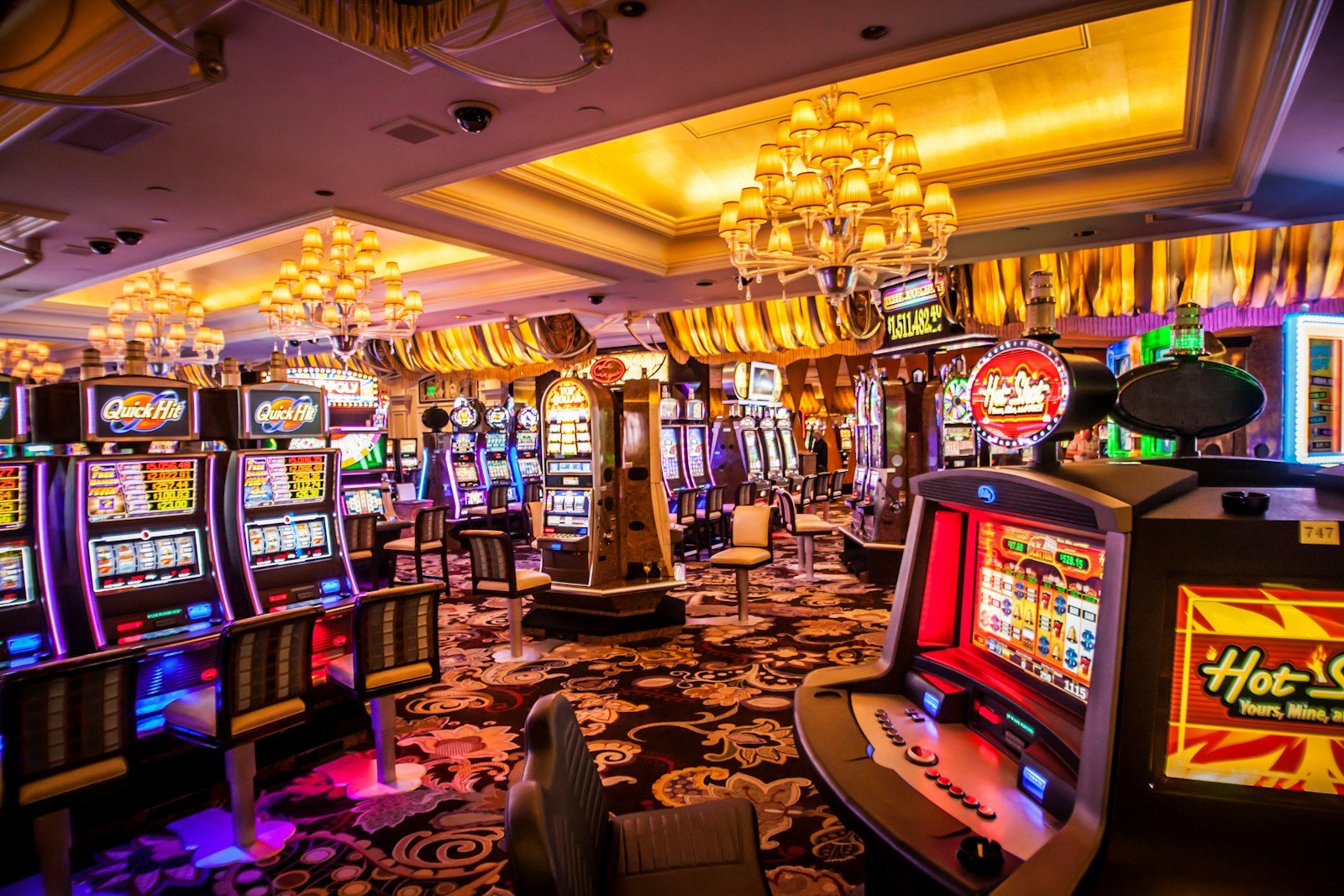
    At some point, the modern Latin American player stopped caring about whether the legal framework was elegant. What mattered was reliability. People wanted quick payouts, working mobile interfaces, and games that didn’t freeze during bonus rounds. That’s exactly why platforms like Slotsgem began gaining attention — especially through features like slotsgem live, where the experience mimics a real casino table instead of a lonely spinning reel on a screen. The interesting part is psychological: players don’t actually need physical casinos anymore. They need credibility. In a region where laws shift faster than exchange rates, trust matters more than regulation.

    Argentina might be the most fascinating case.

    Online gambling is legal — but not nationally.

    Each province regulates it separately. Buenos Aires Province has its own licensing system. The City of Buenos Aires has another. Córdoba, Mendoza, Santa Fe — each created independent frameworks.

    This means crossing an internal border can change which websites are legal on your phone.

    It’s like driving between states and suddenly Netflix only works in one of them.

    Why this system? Federalism.

    Argentina’s provinces guard fiscal autonomy fiercely. Gambling taxes are valuable, and no province wants to share revenue with the national government. So instead of one national law, Argentina built a mosaic.

    Surprisingly, it works. Provincial regulators:

    • require identity verification

    The result is fragmented but functional.

    So Why the Differences?

    After traveling through these four countries, a pattern appears. Regulation has less to do with morality and more to do with three forces:

    1. Tax Collection

     If governments see a reliable way to tax it, legalization becomes likely.

     Leaders worry about being seen as “promoting gambling.” Gray zones allow them to avoid headlines.

     Regulating online casinos requires technology, monitoring, and enforcement agencies. Not every country has the institutional infrastructure yet.

    Colombia had the capacity. Brazil has the market pressure. Argentina had provincial incentives. Mexico had inertia.

    Online casinos didn’t expand because laws allowed them.

    Laws changed because players never stopped.

    Smartphones created a borderless habit. A person in Bogotá, São Paulo, Monterrey, or Córdoba now lives in the same digital neighborhood. Governments eventually face a choice: regulate the behavior or pretend it doesn’t exist.

    Some countries turned on the lights. Some are still squinting in the dark.

    But everywhere, the roulette wheel keeps spinning — not as a symbol of vice, but as a symbol of a much older truth about technology:

    When behavior becomes global, regulation becomes local. And local systems always struggle to catch up.


    Source link

  • Cuba Blackouts Turn Elevators Into Traps and Kitchens Into Clinics

    Cuba Blackouts Turn Elevators Into Traps and Kitchens Into Clinics


    In Alamar, an eighteen-story building has learned to listen for silence. When the power cuts, an elevator can become a small metal room filled with strangers. The oil squeeze, fragile plants, and inflation turn outages into policy.

    The Elevator Door That Never Really Closes

    “Is anyone trapped in the elevatooor?” Heidi Martínez calls out, her phone held high like a lantern, the light bouncing off concrete and metal.

    She is the administrator of an eighteen-story apartment building in Alamar, on the outskirts of Havana. She is fifty-three. Not a technician, not a mechanic, not someone trained for this. But necessity is an aggressive teacher, and she has become practiced at manually opening the elevator when it stalls.

    It happens several times a week. A neighbor gets stuck. The building loses power. The elevator stops between floors. And Martínez, with her phone light and her hands, becomes the difference between panic and air again.

    “We’ve already developed a culture of blackouts,” she told EFE, standing at the building entrance.

    In Cuba, the daily electricity cuts, driven by a power generation deficit, have been chronic for years. In places like Alamar, they are a familiar burden. The trouble is that in recent weeks they have intensified into something harder to bear, with between fifteen and twenty hours a day without power across the country, as noted in the notes, tied to Washington’s oil pressure on the island.

    Official data describe Tuesday as the most extensive blackout on record. At peak demand in the afternoon and night, more than sixty-four percent of the country was simultaneously without electricity.

    Alamar carries its own particular version of this nightmare, and Martínez names it the way people name a recurring illness. They call it quita y pon, she explains, repeated cuts with no discernible pattern that can stretch for hours, every day. In a neighborhood of around 100,000 residents, unpredictability is not a detail. It is the whole point.

    If a blackout arrives, you prepare. If it arrives like a flicker, you live in a constant state of half-readiness.

    Martínez’s elevator is the sharpest illustration. You can hear it in her voice when she shouts into the shaft, a sound that mixes duty with worry. A building can be tall. It can be ordinary. And still, with the wrong kind of darkness, it becomes a trap.


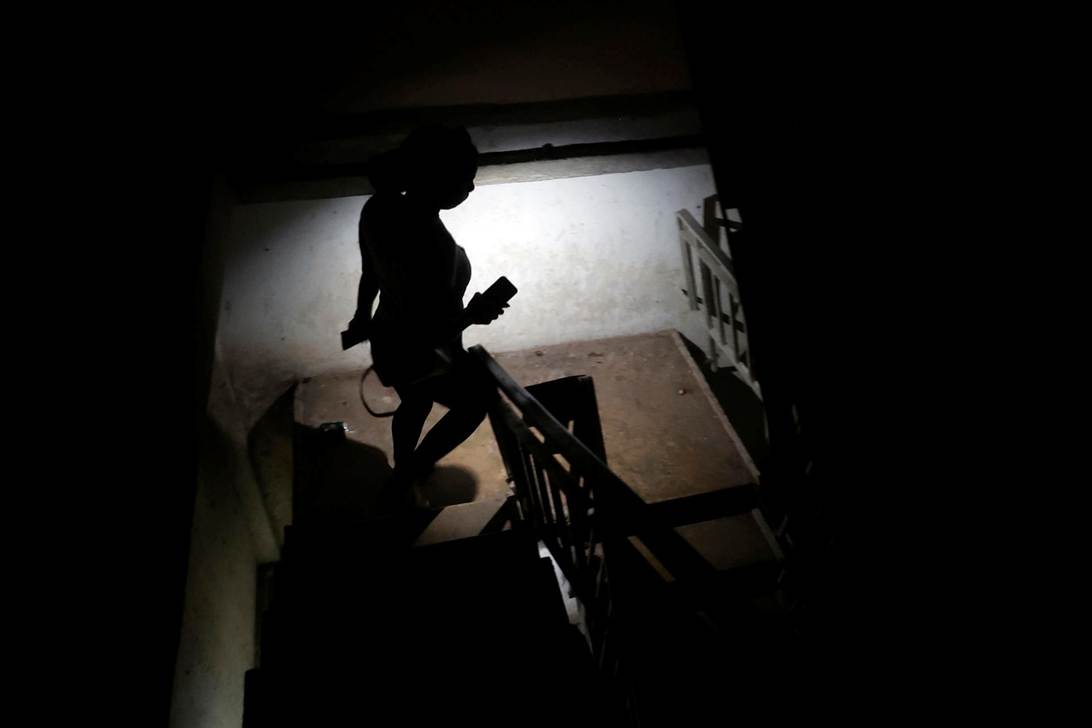
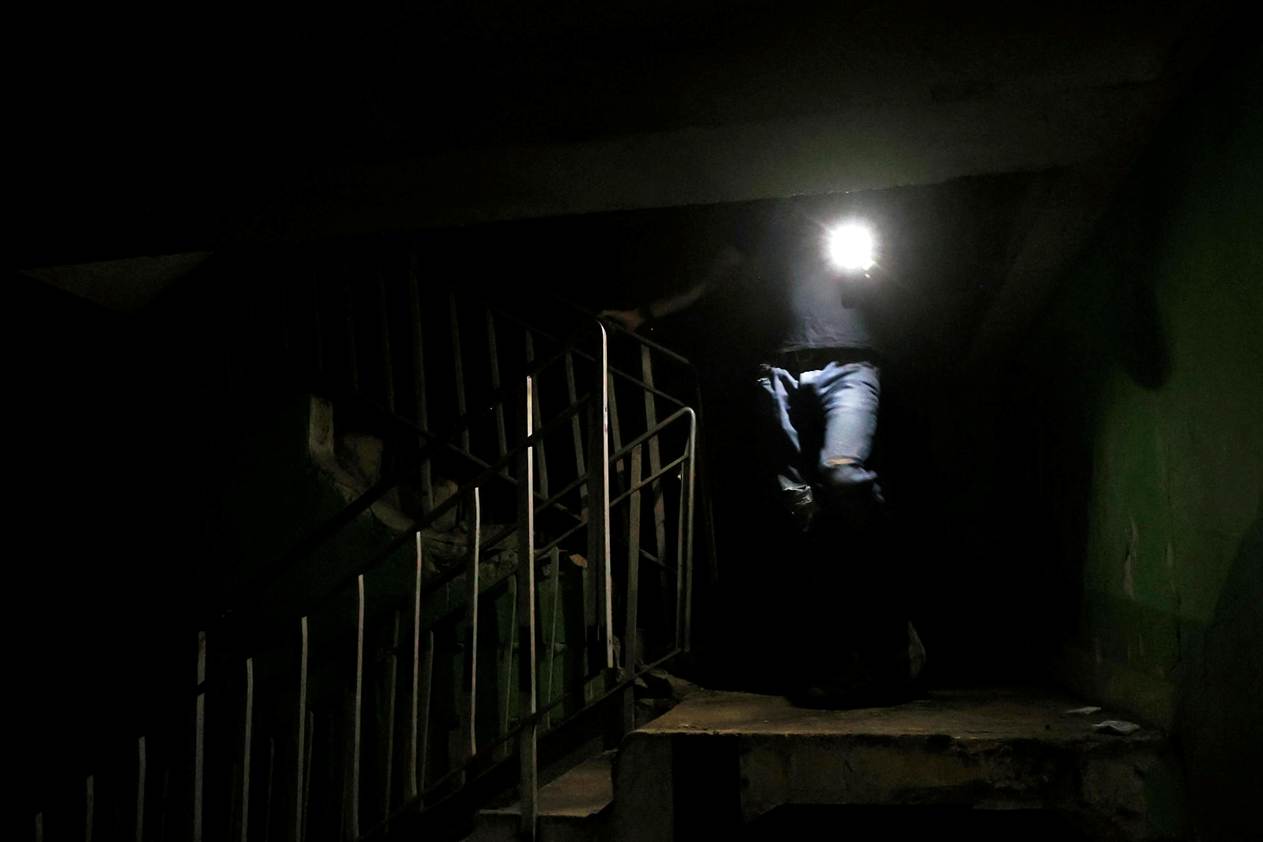
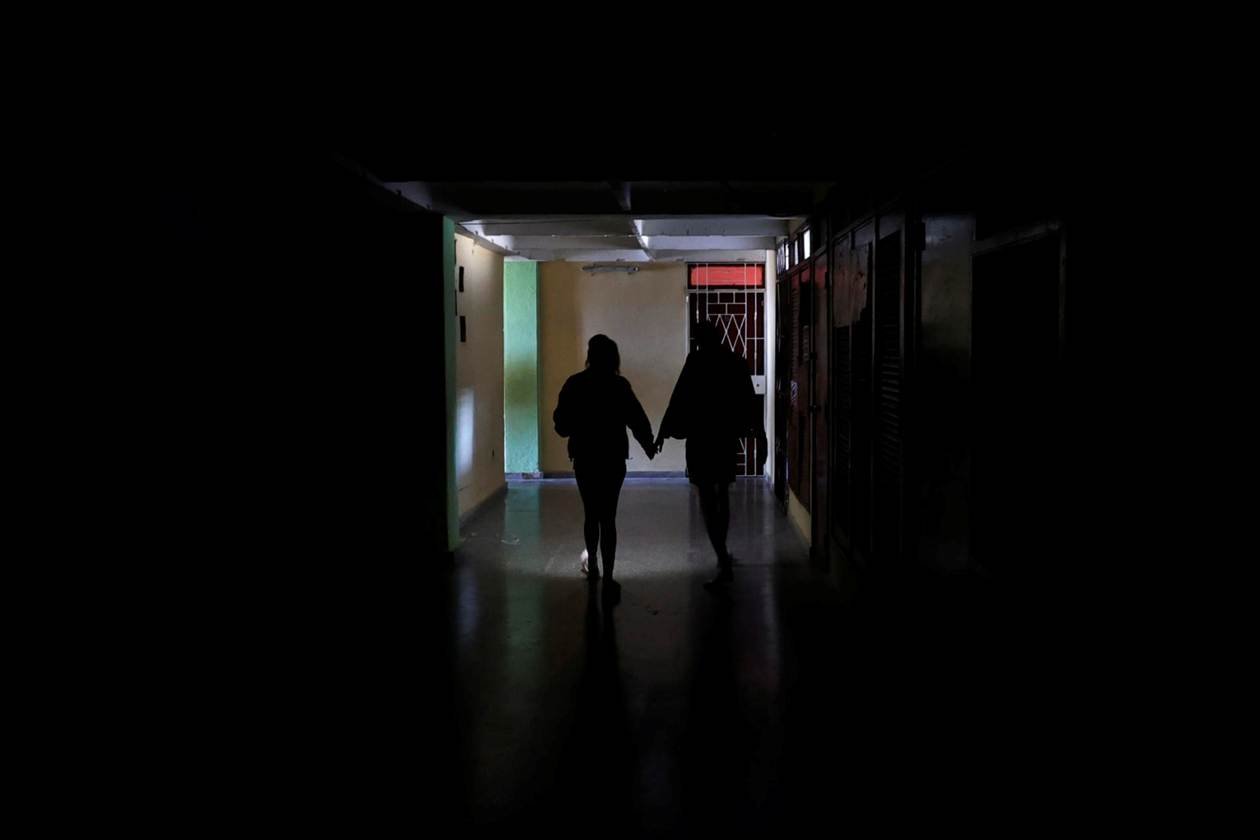
    A person lights up a staircase with a phone in Havana, Cuba. EFE/ Ernesto Mastrascusa

    Quita y Pon as a Way of Life

    Out front, in the improvised workshop near the building’s garages, Erleny is repairing a tire camera. He is forty-nine, working with his hands in a place that looks like it was assembled from what was available, because that is often how workspaces are built when supplies are scarce.

    He describes the power cuts the way you describe a bad habit that refuses to be trained out of the body. “It can be twenty minutes, it can be half an hour, it can be an hour. Nobody adapts to that. That’s like, well, what remedy?” he told EFE.

    That sense of resignation is not passive. It is active endurance. It is people building their day around the possibility that the lights will fail in the middle of a task, and then return, and then fail again.

    Gladys Berriel, a retired special education teacher of seventy-four, says the problem began in twenty twenty three and stayed. There is no surprise in how she tells it. The phrasing carries the tired certainty of someone who has watched an emergency become routine.

    The frustration is so deep, she adds, that some neighbors would trade the quita y pon for the longer, scheduled blackouts other regions endure. It sounds backward until you sit with it for a moment. Predictability is a kind of dignity. A schedule means you can plan dinner, charge a phone, store food, time a shower, and manage a medication.

    “If at least we had a schedule, because we understand the situation with fuel perfectly, you adjust,” Martínez said.

    What this reveals is a social contract that people are still trying to honor, even as it frays. Many residents are not denying the crisis. They are asking for the most basic courtesy a system can offer in a shortage: tell us when.


    A person lights up a staircase with a phone in Havana, Cuba. EFE/ Ernesto Mastrascusa

    When Repairs Cost More Than Work Ever Paid

    The elevator scares you, but the real damage spreads quietly through appliances and budgets.

    The quita y pon, this irregular pulsing of electricity, burns through household electronics without mercy. And in a country marked by product scarcity and high inflation, replacing or repairing a refrigerator or a fan is not an inconvenience. It is a crisis that sits atop the larger crisis.

    Berriel says repairing her refrigerator costs more than her pension. She paid five thousand pesos for the repair, she told EFE. Her retirement income, she added, is 3,156 pesos after 37 years of working in education.

    Numbers like that do not just describe a personal hardship. They describe a society where the math no longer works, where the cost of keeping food cold can exceed the monthly reward for a lifetime of public work.

    This is where the story stops being only about electricity and becomes about how people are forced to ration everything at once. Light. Food. Time. Sleep. Money. Calm.

    The notes frame the latest surge in blackouts as part of a broader energy crisis worsened by the United States oil pressure, layered onto an already critical situation. Cuba has faced prolonged daily outages since the summer of twenty twenty four, as the text ties them to frequent breakdowns at obsolete thermoelectric plants and a lack of foreign currency to import crude.

    Since January 9, the notes say, no external fuel has entered Cuba, while the island produces only about a third of its energy needs. The government announced a contingency package last week aimed at surviving without imported oil: hospitals, state offices, and public transport operating at minimum service, universities shifting to remote teaching, cultural and scientific events canceled, and severe fuel rationing.

    Independent experts cited in the notes believe that, between February and March, the lack of fuel will begin to hit Cuba severely, as it is indispensable and its absence cuts across every sector.

    In recent days, the notes add, several countries have announced humanitarian aid shipments. The U.N. Office of the High Commissioner for Human Rights said Friday that the United States is violating the U.N. Charter and international law with the oil pressure.

    Back in Alamar, the policy arguments are real. Still, they arrive through a narrower door: the sound of an elevator stopping, the sudden quiet of a fan, the jolt that kills a refrigerator, the small flashlight beam of a phone in a stairwell.

    Martínez listens, then calls out again. Is anyone trapped? The question is practical. It is also a summary of the moment Cuba is living through.

    Also Read:
    Chile Border Politics Harden as Kast Countdown Haunts Northern Highlands


    Source link

  • Vinicius racism allegation: Man Utd’s Tullis-Joyce speaks out

    Vinicius racism allegation: Man Utd’s Tullis-Joyce speaks out


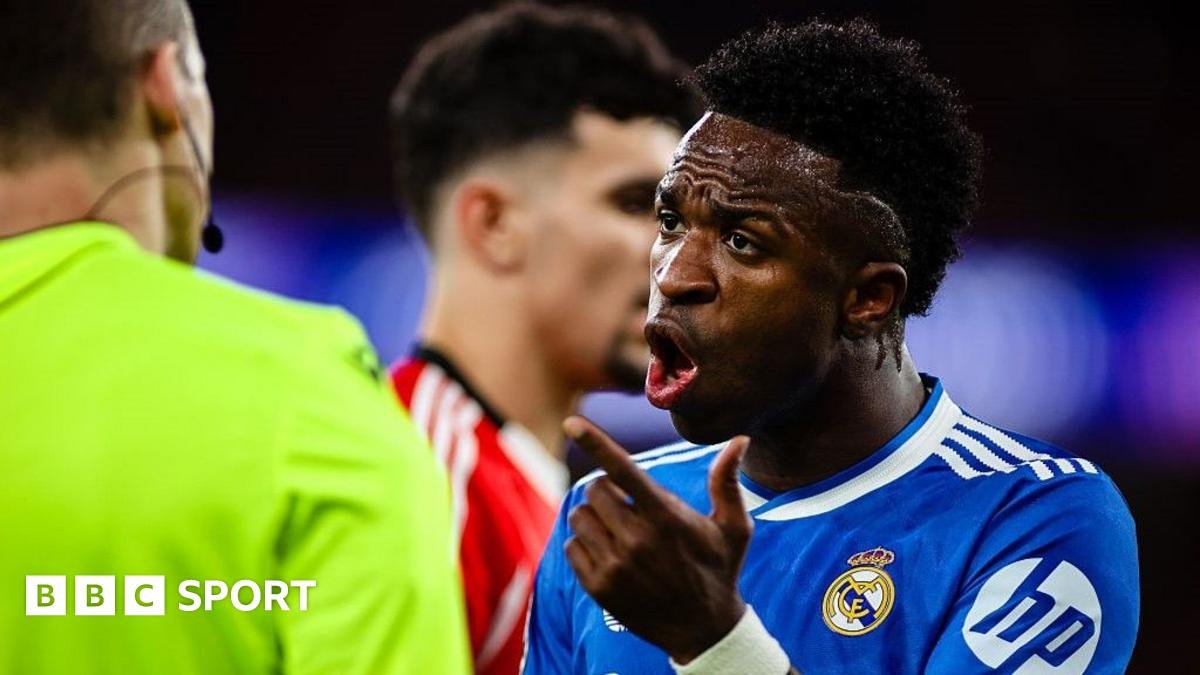
    Manchester United goalkeeper Phallon Tullis-Joyce says it is “shameful but not surprising” that football continues to be blighted by racism.

    European football’s governing body Uefa has launched an official investigation following Real Madrid’s Vinicius Jr’s allegation of racism against Benfica midfielder Gianluca Prestianni during a Champions League game in Lisbon.

    Vinicius has said “racists are cowards”, while Prestianni denied racially abusing the Brazil forward.

    Tullis-Joyce knows from personal experience how deep the problem is and the USA international is saddened there has been no resolution.

    “I’m the daughter of a black woman, so I have been adjacent to the experience of a black woman in society,” she said.

    “It’s no surprise to me. I think it’s very shameful that situations like that are continuing to happen.

    “I also just recently met with United’s campaign ‘All Red All Equal’ so, I know on our doorstep, we’re looking internally at what we’re doing as a club.

    “That’s where I think we can really look at what we do locally at United and then keep branching out through our social media or content and make sure that people know it’s just simply not OK. Period. Full stop. It’s not OK.”

    Prestianni covered his mouth in his exchange with Vinicus, after which caused a 10-minute delay to the game.

    He has been defended by Benfica, while their coach Jose Mourinho said Vinicius had incited angry reaction from the home fans with his celebration of the game’s only goal.

    Vinicius has been the victim of numerous incidents of racist abuse during his playing career.

    Five people were handed suspended prison sentences for racially abusing him last year – the first time that a conviction for racism at a football match in Spain has been handed out.

    “His comments saying this has happened to him several times in the past, is something that clubs and the league itself need to reflect on,” said Tullis-Joyce.

    “It’s for people higher than me to really see how they can protect their players because if it’s continuing to happen, we need to have some more reflection from clubs and leagues alike for what they can do to minimise these actions and words and show they will not be tolerated.”


    Source link

  • Cuba busca apoyo de Rusia ante su peor crisis energética desde 1959

    Cuba busca apoyo de Rusia ante su peor crisis energética desde 1959


    El canciller cubano Bruno Rodríguez se reunió este miércoles en Moscú con su homólogo ruso, Sergei Lavrov, en una visita que busca el apoyo del Kremlin en medio de la peor crisis energética que ha enfrentado la isla desde la llegada al poder de los hermanos Fidel y Raúl Castro en 1959.

    Lavrov se pronunció en contra de las sanciones estadounidenses a los países que suministren petróleo a Cuba.

    “Junto con la mayoría de los miembros de la comunidad internacional, hacemos un llamado a Estados Unidos a mostrar sentido común, adoptar una actitud responsable y abstenerse de sus planes de bloqueo marítimo”, declaró.

    El titular de Exteriores del Kremlin prometió a Rodríguez que Rusia continuará apoyando a “Cuba y a su pueblo en la protección de la soberanía y la seguridad del país”.

    Rodríguez, por su parte, agradeció la acogida de su homólogo ruso.

    “Gran satisfacción de reunirme nuevamente con mi estimado amigo Serguei Lavrov, Canciller de Rusia. Agradecí la tradicional e histórica solidaridad y apoyo rusos a Cuba, en particular frente al bloqueo y el cerco energético”, escribió tras el encuentro en su cuenta de X.

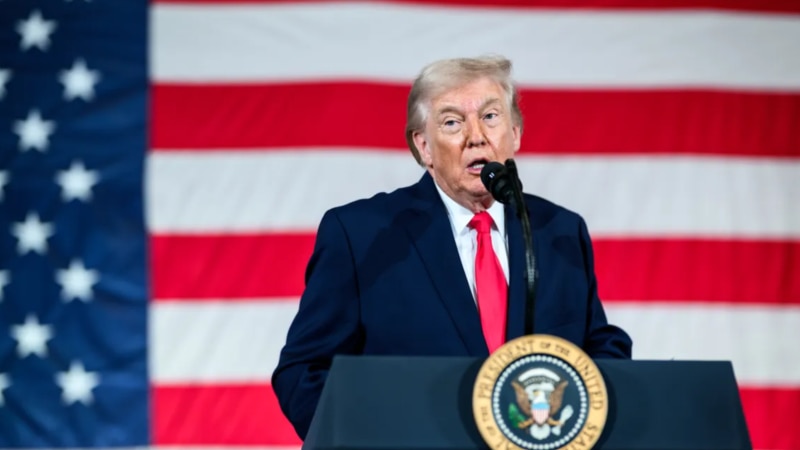
    Es la segunda visita a Moscú del canciller cubano en menos de un mes, parte de sus gestiones para recabar ayuda internacional ante la declaración en enero pasado de una emergencia nacional por parte del presidente de EEUU, Donald Trump, ante la amenaza que representa el régimen cubano.

    La semana pasada, Rodríguez viajó a China, Viet Nam y Rusia, con una escala en Madrid, España, donde se reunió con el canciller José Manuel Albares.

    Tras el encuentro entre el enviado del régimen de La Habana y Lavrov, el portavoz del Kremlin, Dmitri Peskov, recordó que Rusia se ha pronunciado en varias ocasiones contra el embargo estadounidense a la isla caribeña.

    “Tenemos relaciones con Cuba y las valoramos mucho, y tenemos la intención de seguir desarrollándolas, por supuesto, en tiempos difíciles, brindando la asistencia adecuada a nuestros amigos”, dijo Peskov en una rueda de prensa.

    Rusia ha manifestado su intención de asistir al viejo aliado de la Guerra Fría con “envíos humanitarios” de petróleo. A la pregunta de si estos envíos de combustible podrían dañar las relaciones con Washington, Peskov respondió que no cree que estos asuntos estén relacionados.

    El congresista republicano por la Florida, Carlos Giménez, opinó que, esta vez, el Kremlin no podrá asistir a La Habana.

    “Rusia apenas puede sostener a su propio pueblo, obligado a participar en una guerra ilegal contra Ucrania, mucho menos podrá proteger a la dictadura moribunda en Cuba”, escribió en un post en la red social X.

    El lunes, el embajador de Moscú en La Habana, Victor Koronelli, dijo que Rusia estudia cómo organizar la asistencia a Cuba, sin ahondar en detalles.


    Source link

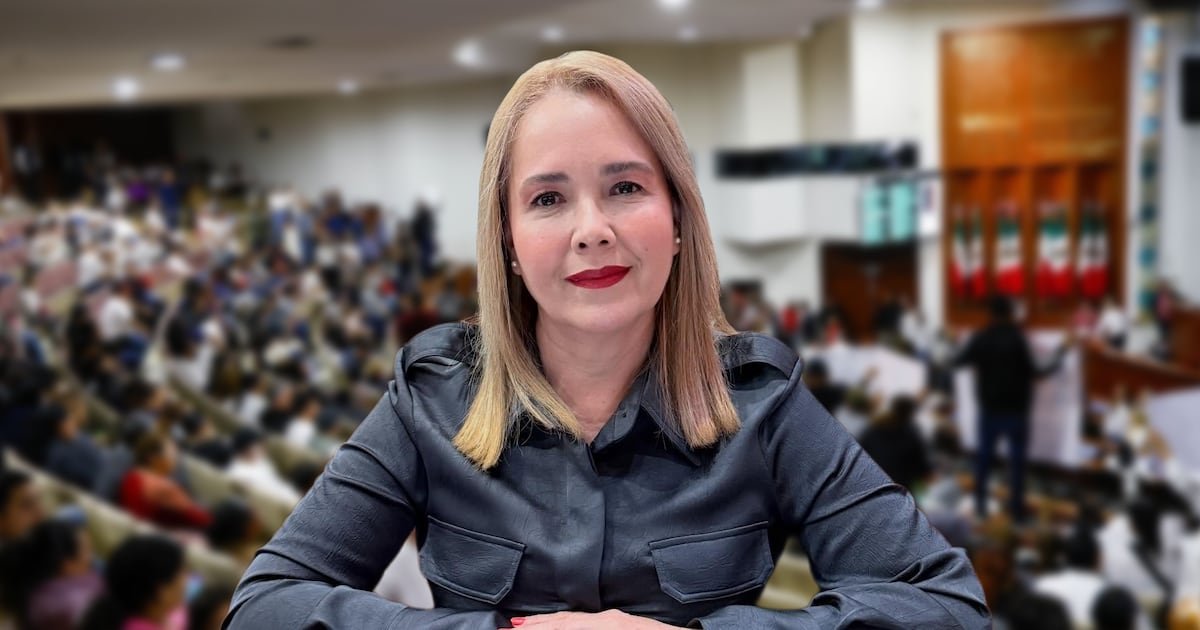
  • Elizabeth Montoya, diputada de MC baleada, regresará al Congreso tras perder un ojo: ‘Es un milagro’

    Elizabeth Montoya, diputada de MC baleada, regresará al Congreso tras perder un ojo: ‘Es un milagro’


    La diputada de Movimiento Ciudadano en Sinaloa, Elizabeth Montoya, aseguró que espera volver a la vida pública y a su labor en el Congreso del estado tras ser víctima de un atentado el 28 de enero.

    La emecista explicó que se recupera de forma favorable de la lesión que sufrió en uno de sus ojos luego del ataque armado, del cual, según las indagatorias, una célula de ‘Los Chapitos’ sería responsable.

    “Perdí un ojo, pero aquí estamos, eso es lo importante, que seguimos aquí, que tenemos mucho por hacer, no nos rendimos, seguimos trabajando (…) Yo espero que de esta tragedia salgan cosas buenas (…) Esa es mi intención (regresar a la escena pública), eso es lo que quiero, regresar a la actividad, amo mi trabajo, me gusta mucho lo que hago, el contacto con la gente”, dijo Montoya en entrevista con Ciro Gómez Leyva.

    Explicó que su regreso al Congreso dependerá de una cirugía programada en los próximos días. Después del procedimiento deberá cumplir un periodo de recuperación, lo que coincide con el periodo vacacional de los legisladores.

    ¿Cómo ocurrió el ataque a Elizabeth Montoya y Sergio Torres?

    La diputada de Movimiento Ciudadano en Sinaloa narró el momento del ataque junto a Sergio Torres. Afirmó que se dirigían al aeropuerto para viajar a la Ciudad de México y asistir a un evento del partido.

    El vehículo se detuvo y segundos después, sin que lo advirtieran, recibieron disparos. Elizabeth Montoya aseguró que no sintió miedo porque el atentado ocurrió con rapidez y no comprendió lo que sucedía.

    Recordó que vio a Sergio Torres, su compañero de bancada, con heridas de bala y sintió “algo caliente” en el rostro antes de perder el conocimiento. Minutos después arribaron elementos de fuerzas federales para auxiliarlos y recuperó la conciencia.

    Yo lo considero un milagro por tantas balas, inclusive ni me dio tiempo de asustarme porque no sabía qué era lo que estaba sucediendo (…) Íbamos de camino al aeropuerto porque teníamos una convención en la Ciudad de México, de diputados locales de Movimiento Ciudadano, íbamos platicando al respecto y de pronto sentí que el carro se detuvo, sentí que me empezaron a sacudir la cabeza, cuando volteó veo al diputado Sergio Torres con una herida, empecé a sentir algo caliente en mi rostro y dije tal vez yo tengo una herida, creo yo que en ese momento me desmayé porque no recuerdo otra cosa hasta que me percaté que ya estaba ahí la Guardia Nacional, el Ejército”, contó.

    Autoridades detienen a uno de los presuntos implicados en el ataque a diputados de MC

    Una semana después del atentado contra Elizabeth Montoya y Sergio Torres, autoridades federales informaron la detención de un presunto implicado.

    Se trata de Jesús Emir, alias “Radio 13”, presunto responsable del control de radios de comunicación, la instalación de cámaras para monitorear la movilidad de autoridades y la adquisición de drones para la célula de ‘Los Chapitos’, informó Omar García Harfuch.

    Casi un mes después, no existe información sobre autores materiales e intelectuales detenidos ni se conoce el móvil del atentado contra los servidores públicos.


    Source link

  • Venezuela Amnesty Bill Stalls as Families Chain Themselves Outside Prison Walls

    Venezuela Amnesty Bill Stalls as Families Chain Themselves Outside Prison Walls


    In Venezuela, a delayed amnesty vote collided with a country that no longer waits patiently. Outside a police command in eastern Caracas, relatives linked themselves in chains. They turned a sidewalk into a deadline, pressing Parliament and the state to choose words or freedom.

    Chains on the Sidewalk, Law in the Chamber

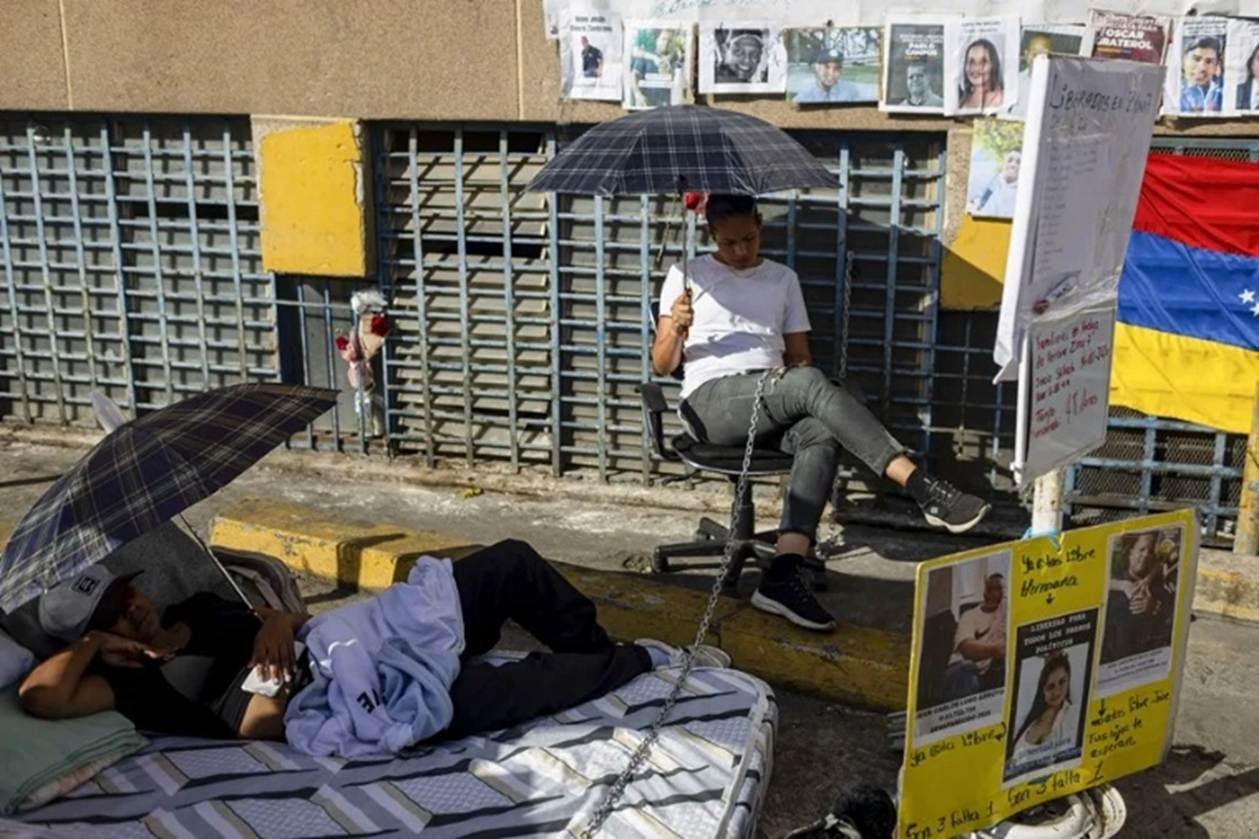
    By late day in eastern Caracas, the protest had a stubborn, metallic sound. Chains scraped against the ground as relatives tightened links around their waists and wrists outside the Bolivarian National Police command known as Zona 7. People shifted their weight. They watched the doors. They listened for movement inside a building that holds the people they call political prisoners.

    Yessy Orozco, the daughter of former lawmaker Fernando Orozco, said the families would remain chained outside until everyone held in that facility is released. “Here we are going to remain chained, nobody enters, nobody leaves, unless they free our political prisoners, until the last of our political prisoners leaves this penitentiary center,” she told EFE.

    The trouble is that the promise they thought they heard from the National Assembly has now been pushed into next week.

    Earlier Thursday, lawmakers in Venezuela’s National Assembly postponed the second and final debate required to approve an amnesty bill covering cases of political prisoners since 1999. The session moved forward, but only up to Article Six of the proposed Law of Amnesty for Democratic Coexistence. Then it snagged on Article Seven, the clause that demands something the opposition says turns amnesty into accusation.

    On paper, the bill aims to grant what it calls a general and full amnesty for crimes or infractions committed during the events and time frame outlined in the text, with the stated purpose of promoting social peace and democratic coexistence. It is a language of reconciliation, almost ceremonial. But the practical hinge is whether people who might be prosecuted or convicted must appear before the justice system to benefit from that amnesty.

    Article Seven says the amnesty applies to anyone who is or could be prosecuted or convicted for alleged or proven participation in crimes or infractions committed, as long as that person is in good standing before the law or places themselves in good standing after the law takes effect.

    Opposition lawmaker Luis Florido of the Libertad faction argued the article had to be modified because requiring people to present themselves before the justice system already casts them as guilty if they are under judicial proceedings. Chavismo lawmakers responded that the Constitution establishes that people must be present in a criminal process.

    In the end, both sides asked to postpone. The next session is expected next Thursday, after the Carnival holiday.

    For families outside Zona 7, the delay is not procedural. It is personal. It is another week.

    Orozco said that last Friday, National Assembly president Jorge Rodríguez said the bill would be approved this week and that afterward all political prisoners would be released. Petra Vera, a relative of another detainee at Zona 7, demanded Rodríguez keep that promise. “We are protesting because of the mockery that all the families of the political prisoners in this penitentiary center have been subjected to; we consider it a mockery,” she told EFE.

    The wager here is that public pressure can force a schedule to mean something.


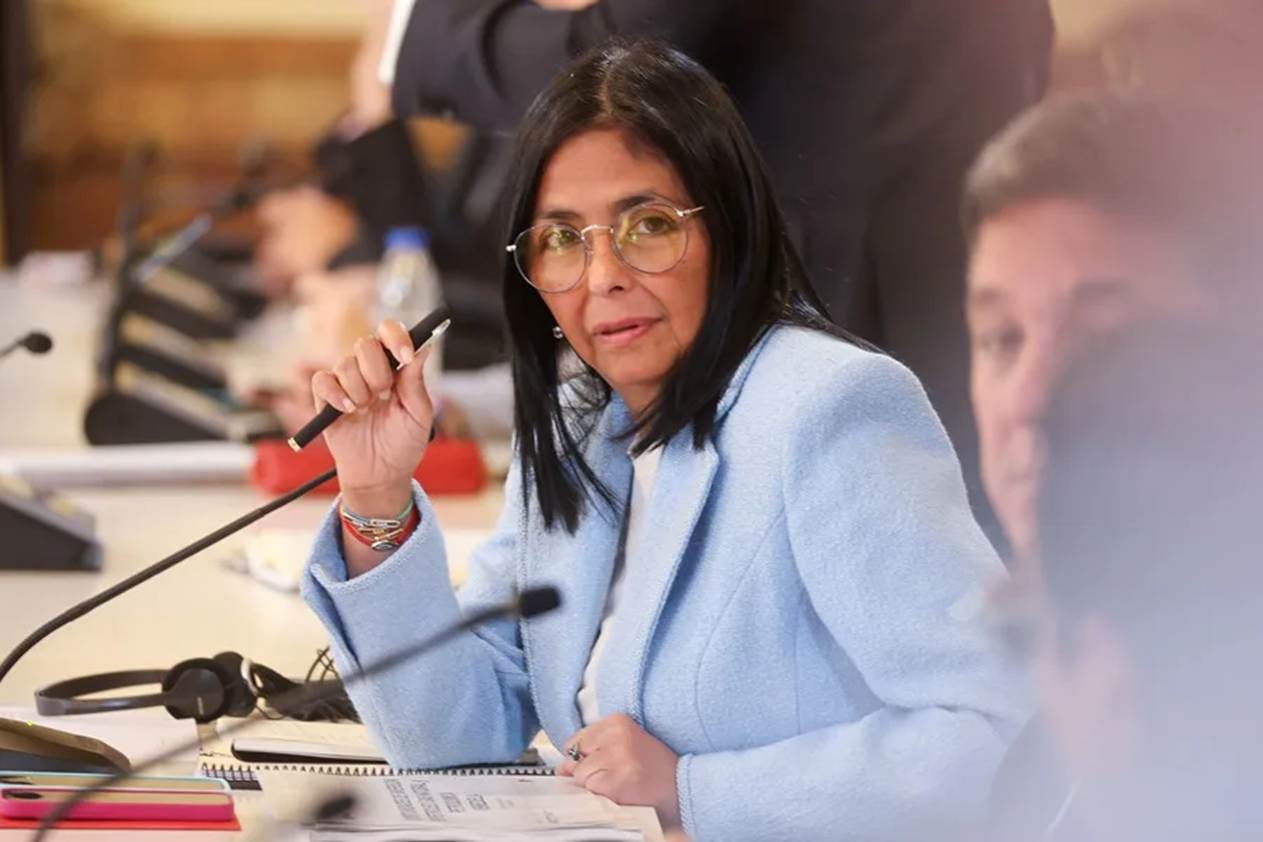
    Venezuela’s acting president, Delcy Rodríguez. EFE

    A Single Article That Changes Everything

    Inside the Assembly, the debate turned into a fight over what it means to be “at the disposal” of a justice system and what it means to return to it, especially for people the opposition frames as persecuted and the government frames as defendants.

    This is not a minor legal edit. It is the difference between a law that functions as a release mechanism and one that functions as a filter.

    Florido’s argument is blunt: if someone is asked to present themselves before the courts, the state is already signaling that person as responsible. The chavista answer is also blunt: due process requires presence, and the Constitution matters.

    Both claims can be true in the abstract. The trouble is the lived reality around them. A country does not argue about amnesty in a vacuum. It argues about it with jail cells in mind, with police commands that become symbols, and with relatives who can recite promises because they have learned to measure politics in calendar weeks.

    What this does is place the entire bill under the shadow of one phrase, “to place oneself in good standing,” and the political question beneath it, who gets to decide what good standing looks like.

    The bill’s supporters say it seeks to promote peace and coexistence. Its skeptics look at the requirement to show up and hear something else: a new condition attached to freedom, a new administrative gate.

    So the Assembly approved up to Article Six, then stopped. The chamber did not break because it ran out of time. It broke because the seventh point marks the point where policy becomes consequence.


    Opponents of Venezuela’s government on July 30, 2024, in Caracas, Venezuela. EFE

    Youth in the Streets, Promises Under Pressure

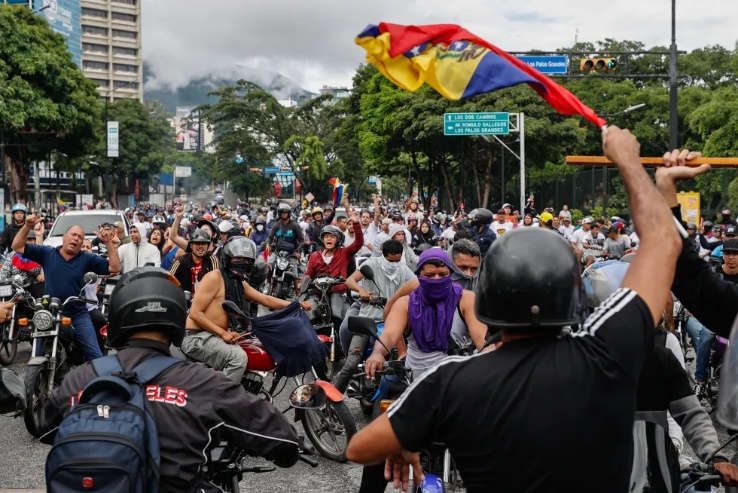
    The postponement did not keep the opposition quiet. Thursday was the National Youth Day, and the Venezuelan Student Movement returned to the streets in multiple cities, demanding the release of all political prisoners. It was one of the largest opposition mobilizations in more than a year.

    In Caracas, hundreds gathered at the Central University of Venezuela, the country’s principal university, moving within and outside the campus. Their chant was simple and designed for echo: “Not one, not two, all of them,” a response to the release process that began January 8.

    According to the NGO Foro Penal, 431 releases had been verified through February 10, while it estimates that more than 600 remain imprisoned. The numbers hang over everything. They create a sense of movement, but also of unfinished business.

    Miguel Ángel Suárez, president of the Federation of University Centers at the Central University of Venezuela, said they would keep pressuring “until all civil and political rights are restored,” and called for an end to persecution and for guarantees that would lead the country to a democratic transition.

    In Maracaibo, students from the University of Zulia also marched, demanding inclusion in the amnesty debate. Yeissel Pérez, president of the university’s student federation, criticized the fact that youth leadership was not called to the public consultation on the bill. This process did include academics, NGOs, and relatives of political prisoners.

    Seen together, the scenes form a single argument made in different locations. Students demand inclusion in the terms of the law. Families demand results from the law. Lawmakers debate whether the law requires deference to courts that many protesters distrust. And the state, still controlled by chavismo in Parliament, insists procedure is not optional.

    On the sidewalk outside Zona 7, chains hold steady. Not one, not two. All of them. Repetition becomes a strategy when faith in timelines runs out.

    Also Read:
    Colombia Tiger Candidate Turns Homeland Theater into a Presidential Test


    Source link

  • Football Daily – 72+ EFL Pod: Andy’s beer ban & Cov back on top

    Football Daily – 72+ EFL Pod: Andy’s beer ban & Cov back on top


    Available for 29 days

    Aaron Paul, Middlesbrough loans manager Tommy Smith & Bromley boss Andy Woodman discuss the top stories from the EFL. They react to Coventry going back above Boro at the top of the Championship. How does Michael O’Neill balance his new Blackburn job with trying to get Northern Ireland to the World Cup? Wigan appoint Gary Caldwell to replace Ryan Lowe, and what’s the secret to success for League Two leaders Bromley? Messages and voicenotes always welcome on WhatsApp to 08000 289 369.

    00:35 Pre-match rituals,
    03:25 Andy loving life at top of League Two,
    08:40 Andy banned beer on the coach!
    11:30 Andy on taking things from Arsenal,
    14:15 Coventry go back above Middlesbrough,
    19:00 Important to avoid the play-offs!
    23:25 Andy reveals his penalty theory…
    24:40 How does Michael O’Neill balance Blackburn with Northern Ireland?
    27:40 Does it matter if you don’t play ‘sexy’ football?
    31:55 Wigan appoint Gary Caldwell to replace Ryan Lowe
    34:30 What’s the Bromley secret to success?
    37:30 Michael Cheek an old-school throwback

    5 Live / BBC Sounds commentaries:
    Wed 1745 Qarabağ v Newcastle,
    Sat 1500 Aston Villa v Leeds on Sports Extra,
    Sat 1500 Chelsea v Burnley on Sports Extra,
    Sat 1730 West Ham v Bournemouth,
    Sun 1400 Nottingham Forest v Liverpool,
    Sun 1400 Sunderland v Fulham on Sports Extra 2,
    Sun 1400 Crystal Palace v Wolves on Sports Extra 3,
    Sun 1630 Tottenham v Arsenal.

    Programme Website


    Source link

  • EEUU renueva emergencia que autoriza interceptar embarcaciones rumbo a Cuba

    EEUU renueva emergencia que autoriza interceptar embarcaciones rumbo a Cuba


    El presidente de Estados Unidos, Donald Trump, prorrogó por un año la emergencia nacional vinculada a Cuba que permite a Washington interceptar, controlar y restringir el movimiento de embarcaciones con destino a la isla, una autoridad vigente desde 1996 y renovada de forma periódica por administraciones de ambos partidos.

    La decisión, publicada en el Registro Federal, mantiene el marco legal que faculta al Gobierno estadounidense a regular el fondeo y tránsito de buques por razones de “seguridad nacional” y para prevenir una “migración masiva desde Cuba”. El aviso oficial subraya que la medida responde a riesgos persistentes en las relaciones bilaterales y a preocupaciones migratorias en el Estrecho de la Florida.

    El documento recuerda que la emergencia fue declarada originalmente tras el derribo en 1996 de dos avionetas civiles registradas en Estados Unidos. Washington sostiene que el Gobierno cubano “no ha demostrado que se abstendrá del uso excesivo de la fuerza contra embarcaciones o aeronaves estadounidenses” que participen en actividades conmemorativas o protestas pacíficas al norte de Cuba.

    La autoridad fue ampliada en 2004 para prohibir el apoyo financiero y material a La Habana, y modificada nuevamente en 2016 y 2018, de acuerdo con el texto oficial.

    “La entrada no autorizada de cualquier embarcación registrada en Estados Unidos a aguas territoriales cubanas sigue siendo perjudicial para la política exterior estadounidense”, señala el aviso.

    El gobierno cubano no ha demostrado que se abstendrá del uso excesivo de la fuerza contra embarcaciones o aeronaves estadounidenses que puedan participar en actividades conmemorativas o protestas pacíficas al norte de Cuba.

    La renovación ocurre en medio del colapso energético que atraviesa la isla, con apagones prolongados y escasez de combustible.

    A finales de enero el presidente Donald Trump declaró una emergencia nacional frente a lo que considera una amenaza inusual y extraordinaria proveniente del Gobierno de Cuba. La orden ejecutiva detalla una serie de medidas, incluyendo la imposición de aranceles adicionales a países que suministren petróleo a la isla.


    Source link

  • ¿Regresará el Doble Hoy No Circula? Esta es la calidad del aire en CDMX y Edomex HOY 18 de febrero – El Financiero

    ¿Regresará el Doble Hoy No Circula? Esta es la calidad del aire en CDMX y Edomex HOY 18 de febrero – El Financiero


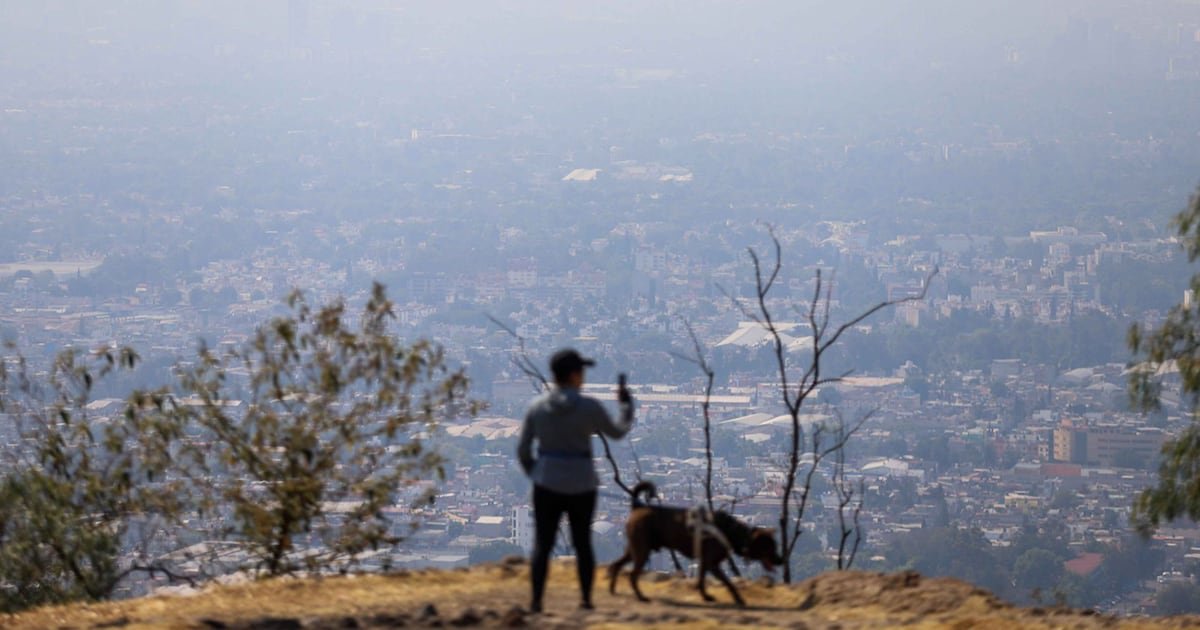
    La Ciudad de México y el Estado de México amanecieron sin Doble Hoy No Circula tras varios días en que el programa se activó por altos niveles de contaminantes.

    Aunque existe este ‘respiro’, la calidad del aire y las condiciones climatológicas serán factores determinantes y podrían provocar nuevas restricciones de circulación.

    Al corte de las 8:00 horas de este miércoles, la calidad del aire era “mala” en las estaciones Gustavo A. Madero, La Merced e Iztapalapa, informó el Sistema de Monitoreo Atmosférico.

    En tanto, era “aceptable” en Xochimilco, Hospital General de México y Atizapán, Estado de México.

    alt default
    La mayoría de la CDMX se mantiene con una calidad de aire aceptable o buena la mañana de este 18 de febrero. (Captura de Pantalla)

    ¿Cuáles son los vehículos que no circulan este 18 de febrero?

    Aunque la Comisión Ambiental de la Megalópolis (CAMe) relajó las medidas para reducir contaminantes, el programa Hoy No Circula opera con normalidad. Por ello, estos son los vehículos que no deben salir a la calle:

    Autos con holograma 1 y 2, engomado rojo, terminación de placas 3 y 4.


    Este programa opera de las 5:00 a las 22:00 horas en las 16 alcaldías de la Ciudad de México y en municipios conurbados del Estado de México.

    ¿Cuáles son los coches que sí circulan tras levantarse la contingencia ambiental?

    La Comisión Ambiental de la Megalópolis informó el 17 de febrero que se suspendió la contingencia ambiental y el Doble Hoy No Circula en el Valle de México, lo que permitió a miles de automovilistas volver a circular.

    De este modo, todos los vehículos con holograma de verificación 0 y 00, con cualquier color de engomado y terminación de placa, pueden circular.

    También se retiraron las restricciones para los coches con holograma 1 y 2 con engomado distinto al rojo y con último dígito de placa diferente de 3 y 4.

    ¿Cuál será el clima este miércoles en el Valle de México?

    A diferencia de días previos, el Servicio Meteorológico Nacional (SMN) no informó alguna condición atmosférica que limite la dispersión de contaminantes o eleve temperaturas en el Valle de México.

    El SMN prevé viento con rachas de 30 a 50 kilómetros por hora en el Estado de México, lo que podría favorecer la dispersión de contaminantes durante el resto del día.

    En el Valle de México, el ambiente será fresco a templado en las primeras horas y cálido a caluroso por la tarde.

    La temperatura mínima en la Ciudad de México será de 10 a 12 grados y la máxima de 27 a 29. Para Toluca, Estado de México, se prevé una mínima de 3 a 5 grados y una máxima de 25 a 27.


    Source link

Translate »
  • Facebhttps://www.facebook.com/profile.php?id=61576547936537ook
  • X (Twitter)
  • LinkedIn
  • More Networks
Copy link