Blog

  • King Kong And The Island: America’s Moral Collapse And Cuba

    King Kong And The Island: America’s Moral Collapse And Cuba


    By Ron Cheong

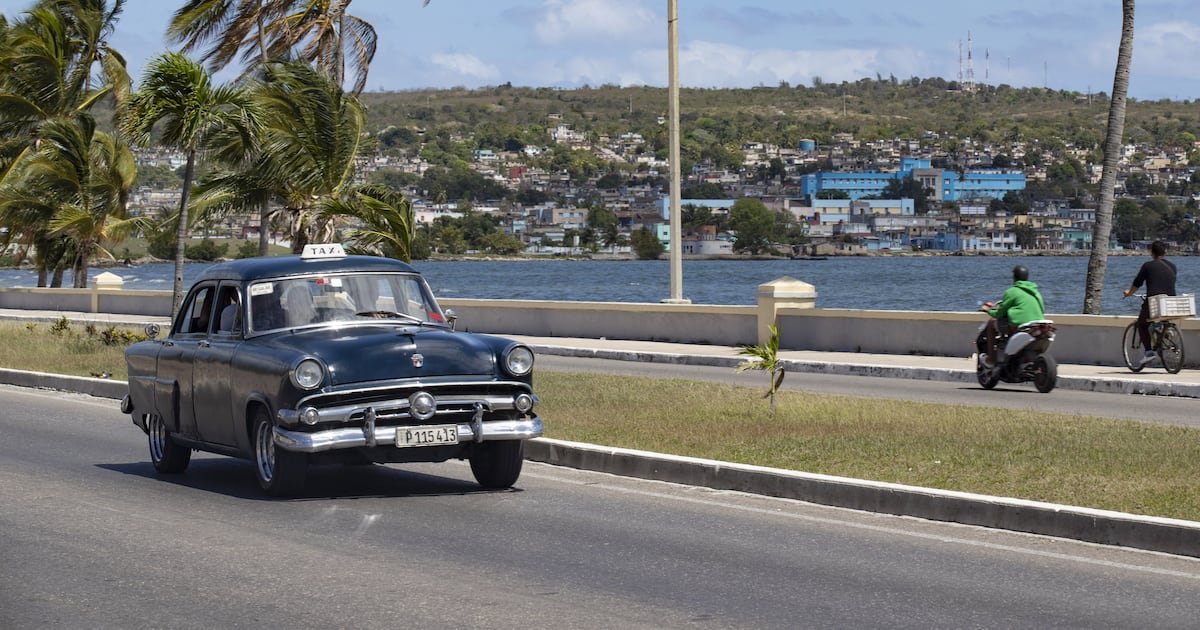
    News Americas, TORONTO, Canada, Tues. Feb. 17, 2026: For more than sixty years, Cuba has endured relentless external pressure from the United States. The embargo, designed to strangle trade, cripple the economy, and punish a population for the choices of its government, has long made daily life a struggle. Today, the situation is more difficult than ever: fuel shortages have grounded planes and paralyzed public transport; tourism, a crucial source of income, has all but collapsed; and the economy teeters under layers of scarcity and deprivation. Decades of hardship have forged resilience in the Cuban people, but the severity of these pressures makes one wonder: can Cuba survive this new trial, or are these dark hours edging it closer to the brink?
    King Kong And The Island: America’s Moral Collapse and Cuba’s Struggle

    Despite these extraordinary challenges, Cuba has preserved a surprising measure of moral and social integrity. Health care remains universal, education is free and widely accessible, and violent crime is low. The government, while politically centralized and media tightly controlled, has consistently prioritized the welfare of its citizens over elite enrichment. In practical, people-centered terms, Cuba remains morally and functionally resilient, even under extreme external duress.

    The U.S.: A Democracy Under Siege From Within

    Contrast this with the United States, once hailed as the world’s premier democracy. Formally, Americans enjoy freedoms enshrined in law: free speech, press protections, competitive elections, and an independent judiciary.

    But these formal liberties are increasingly being hollowed out in practice: There have been unprecedented calls to “nationalise” US elections and talk about cancelling the midterms – even as the blockade of Cuba is being justified as “pressuring the Cuban government to hold free elections.”  At the same time, American civic trust is being battered – protests are met with militarized force as in Minnesota, while the blockade of Cuba is also unashamedly being justified in the name of “Promoting human rights and political freedoms.”

    Wealth is concentrated in the hands of the top 1%, which dominates political donations, lobbying, and policy outcomes. Media ownership is similarly consolidated in the hands of a few, producing shallow, sensationalist coverage that leaves large swaths of the population misinformed. Judicial appointments are increasingly partisan.

    In other words, the United States is showing the signs of a democracy under stress, much like historical empires before it: Rome, Tsarist Russia, and the Soviet Union all exhibited elite capture, norm erosion, and civic disengagement before systemic collapse. Formal freedoms exist, but meaningful self-correction has become compromised. Citizens may vote, speak, and organize, yet their ability to influence outcomes is heavily filtered through wealth, media bias, and institutional manipulation.

    The Moral Challenge

    The contrast is striking. Here is a small island, subjected to decades of external aggression and severe deprivation, yet maintaining a society that, in practice, prioritizes the collective welfare of its people. Meanwhile, a wealthy, globally dominant democracy – free in principle – struggles to ensure that its citizens’ basic needs are met and its political system functions equitably.

    Cuba’s one-party system and state-aligned media are often cited as moral deficits. Yet what moral weight do political freedoms carry if the society that claims them fails to meet the basic needs of its people? The Cuban system, despite restrictions on political plurality, has consistently delivered healthcare, education, and security – the material foundations of dignity and life.

    Historical Lessons: Decline, Inequality, And Moral Authority

    History teaches that empires and states rarely fall suddenly; decline is usually the cumulative effect of inequality, elite capture, and norm erosion. Rome’s senatorial elites insulated themselves while ordinary citizens struggled; Tsarist Russia refused reform until the system collapsed; the Soviet Union stagnated under rigid institutions and external overreach. In each case, the formal structures of governance persisted even as the underlying moral and functional legitimacy deteriorated.

    The United States now exhibits eerily similar patterns: economic inequality has hollowed out political influence; media concentration distorts public understanding; civic trust is fractured; and institutional norms are under strain. Ironically, it is the US rather than Cuba, which has survived decades of external punishment, that faces internal moral and systemic fragility – a democracy that risks eroding from within.

    Kant wrote, “The worth of a person consists in being a subject capable of reason and moral choice, not merely a means to an end.” By this measure, America’s moral authority is increasingly compromised: citizens are treated less as moral subjects with agency than as data points filtered through the lens of wealth and influence.

    King Kong Vs. The Island

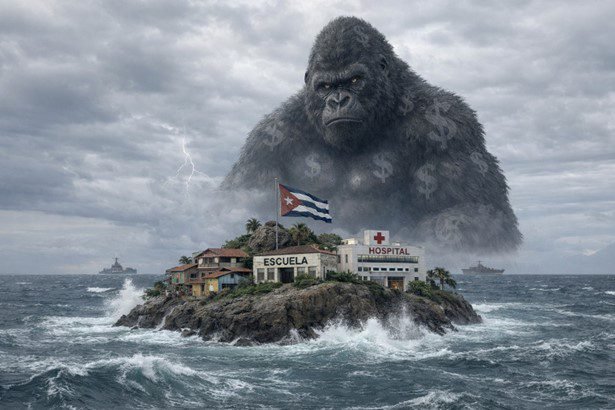
    Even if we take it that Cuba’s government system is seriously flawed, the metaphor is unavoidable: the United States, a global behemoth wielding overwhelming power, functions as a predator – King Kong – crushing a small, vulnerable island beneath its weight. The embargo and aggressive sanctions on Cuba reveal a democracy that has abandoned moral principle in favor of domination. Meanwhile, Cuba, the small animal beneath the shadow of that predator, has demonstrated resilience, cohesion, and a people-centered ethic that the predator itself increasingly lacks.

    Cuba has survived decades of punishment and deprivation. But the current crisis – fuel shortages, economic paralysis, and a collapse of tourism – may be the severest it has ever faced. Will the island endure these dark hours? History shows that resilience is possible, but the strain is immense, and the outcome is uncertain.

    A Moral Reckoning

    The contrast could not be starker: a wealthy, formally free democracy showing cracks in its moral and functional foundations, juxtaposed with a small, embattled island maintaining social cohesion and prioritizing human welfare under extreme external pressure. The United States has long claimed moral and political superiority; today, its claim rings hollow. It’s democracy, once celebrated, risks being remembered as a system where freedom existed in theory but was undermined by the concentration of wealth, the distortion of information, and the erosion of institutional norms.

    Meanwhile, Cuba, despite political limitations, demonstrates that people-centered governance, moral integrity, and social cohesion have so far survived even under extraordinary external duress. The moral lesson is stark: power alone does not confer legitimacy; justice and care for citizens do. If the U.S. continues to prioritize domination, wealth, and spectacle over the well-being of its people, it risks becoming a giant whose size conceals rot, while a small island showed what resilience and moral governance truly look like.

    EDITOR’S NOTE: Ron Cheong, born in Guyana, is a community activist and dedicated volunteer with an extensive international background in banking. Now residing in Toronto, Canada, he is a fellow of the Institute of Canadian Bankers and holds a Bachelor of Science degree from the University of Toronto. His comments are his own and do not reflect those of News Americas or its parent company, ICN.

    Help Sustain Independent Caribbean Diaspora Media.
    Support NewsAmericas


    Source link

  • When Robert Duvall fell in love with Scottish football

    When Robert Duvall fell in love with Scottish football


    The Godfather star, who has died aged 95, filmed A Shot at Glory at locations across Scotland.


    Source link

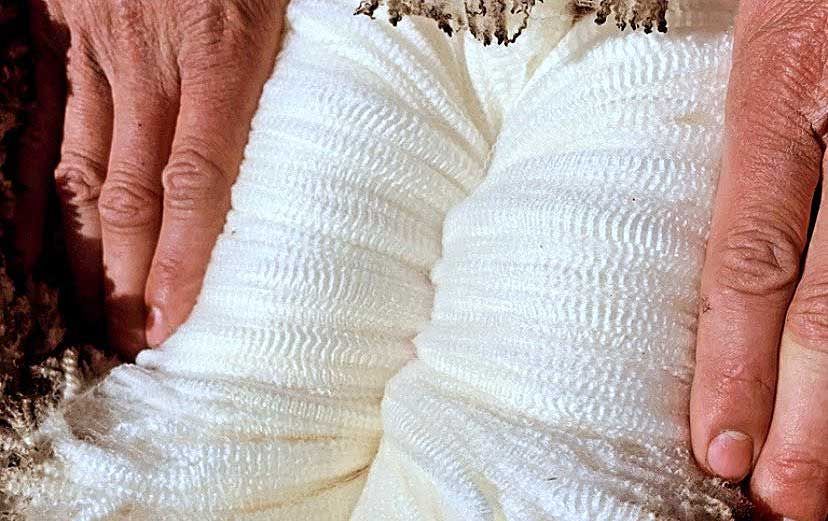
  • Dynamic market for RWS certified Merino wool in Uruguay — MercoPress

    Dynamic market for RWS certified Merino wool in Uruguay — MercoPress


    Dynamic market for RWS certified Merino wool in Uruguay

    Tuesday, February 17th 2026 – 03:15 UTC


    Merino wool sales (less than 16.5 microns) have been registered at US$ 11 a kilo with deals of US$ 10 a kilo for 17.5 microns wool.
    Merino wool sales (less than 16.5 microns) have been registered at US$ 11 a kilo with deals of US$ 10 a kilo for 17.5 microns wool.

    It is estimated that Uruguay’s flock in two/three decades fell from over 22 million to just 6/5 million.
    It is estimated that Uruguay’s flock in two/three decades fell from over 22 million to just 6/5 million.

    The Uruguayan wool market has become particularly dynamic during this 2025/26 season, reflecting events in Australia where prices for clean fine wool have soared above US$ 12 per kilo, for the first time in six and a half years, very close to the maximums from 2019.

     In Uruguay Merino wool sales (less than 16.5 microns) have been registered at US$ 11 a kilo with deals of US$ 10 a kilo for 17.5 microns wool. In effect a wool agent from the north of Uruguay, (Paysandu) reported fast sales of 90.000 kilos of Merino, 17.5 microns. All the deals have included RWS certification and the green label from the Uruguayan Wool Secretariat.

    However there have been some problems with backlogged wool since some farmers have had several annual clips stored, when they considered prices non attractive and had the sufficient funds, or other income to hold out. Sorting out those bales can be complicated.

    Other operations included 18.5 microns Merino at US$ 9.50 per kilo; 18.7 microns Merino, without RWS certification, at US$ 8.60 kilo; 19.7 microns Merino at US$ 8 kilo and 19.9 microns Merino, uncertified at US$ 7 per kilo, and 20/21 microns at US$ 6.30 per kilo.

    But Corriedale coarse wool, 26 microns managed US$ 210 a kilo. Uruguay’s flock is mainly Corriedale, close to 65% and 26% finer fibers mostly Merino and Merino cross breeds. It is estimated that Uruguay’s flock in two/three decades fell from over 22 million to just 6/5 million.

    Meantime in Australia conditions seem to anticipate the current strong demand for fine wool given the drastic drop in their wool clip. The Australian Wool Innovation, AWI, reported that because of adverse climate conditions the wool clip has dropped over 10% and could reach 21%.

    In perspective, the loss of Australian wool production during the last two years has fallen to a magnitude equivalent to all of the South Africa wool production, which is Australia’s closest competitor in Merino wool volume, the AWI reported.

    This situation also helps to understand why the double encouraging impact for wool prices in Australia since market prices managed to increase despite the fact that the Australian dollar strengthened while the US dollar lost ground globally. This was contrary to what happens normally.

    Finally no auctions in Australia this week on request from China, which absorbs 85% of Australian wool exports, since this week is the Spring Festival and Chinese New Year. Auctions will resume 24 January


    Source link

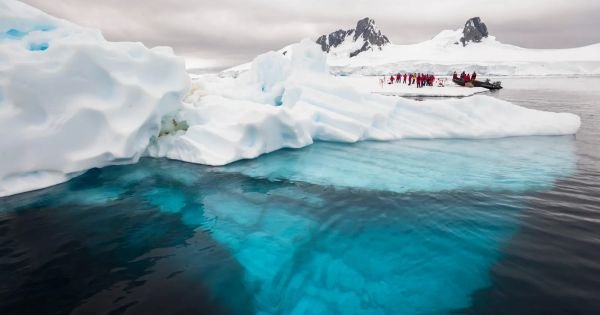
  • Under Antarctic ice, Earth’s deepest gravity “low” points to a 70-million-year story — MercoPress

    Under Antarctic ice, Earth’s deepest gravity “low” points to a 70-million-year story — MercoPress


    Under Antarctic ice, Earth’s deepest gravity “low” points to a 70-million-year story

    Tuesday, February 17th 2026 – 12:00 UTC


    The authors report that at the beginning of the Cenozoic, the location of the maximum global geoid depression was centered over the South Atlantic
    The authors report that at the beginning of the Cenozoic, the location of the maximum global geoid depression was centered over the South Atlantic

    A new study has reconstructed the evolution of the planet’s strongest nonhydrostatic geoid depression —the Antarctic Geoid Low (AGL)— finding that the feature has persisted for at least 70 million years and underwent a major shift in both position and strength between roughly 50 and 30 million years ago.

    Today, the anomaly appears as a gravity “low” centered over the Ross Sea, between Victoria Land and Marie Byrd Land. It is imperceptible at human scale, but it reflects real spatial variations in Earth’s gravity field and can translate into subtle differences in sea-surface height because gravity helps shape how ocean water is distributed.

    Published in Scientific Reports, the research aimed to move beyond present-day gravity snapshots by reconstructing “the long-term evolution of the geoid over the past 70 million years,” using mantle-convection modeling constrained by seismic-tomography-based density structure.

    The authors report that at the beginning of the Cenozoic, the location of the maximum global geoid depression was centered over the South Atlantic (roughly 30°S–45°S). The minimum then shifted rapidly toward the Ross Embayment between 40 and 30 million years ago. They identify the 50–30 million-year interval as a “robust transition” window in the AGL’s evolution across model tests.

    The study describes two phases in amplitude: from 70 to 35 million years ago, the anomaly fluctuated; from 35 million years ago to the present, it strengthened by about 30%. The paper links this long-term intensification to changing buoyancy contributions within the mantle at different depth layers and to the role of an anomalously hot, buoyant mantle upwelling beneath the Ross Embayment.

    The timing of the strengthening overlaps with a pivotal climate shift: the Eocene–Oligocene transition, when Earth moved toward “icehouse” conditions and Antarctica experienced its first major glaciation around ~34 million years ago. The paper does not claim a direct cause-and-effect relationship, but it flags the coincidence as a basis for further work on how deep-Earth dynamics might connect to surface observables such as sea level and long-term ice-sheet development.

    Modern detection and mapping of such gravity-field variations rely on satellite gravimetry. NASA notes that missions like GRACE map Earth’s gravity field by tracking the distance changes between two co-orbiting satellites, enabling precise measurements tied to mass distribution across the Earth system.


    Source link

  • Does This Caribbean Resort Expansion Signal A Shift From Tourism Destination To Global Wealth Hub?

    Does This Caribbean Resort Expansion Signal A Shift From Tourism Destination To Global Wealth Hub?


    By NAN Business Editor

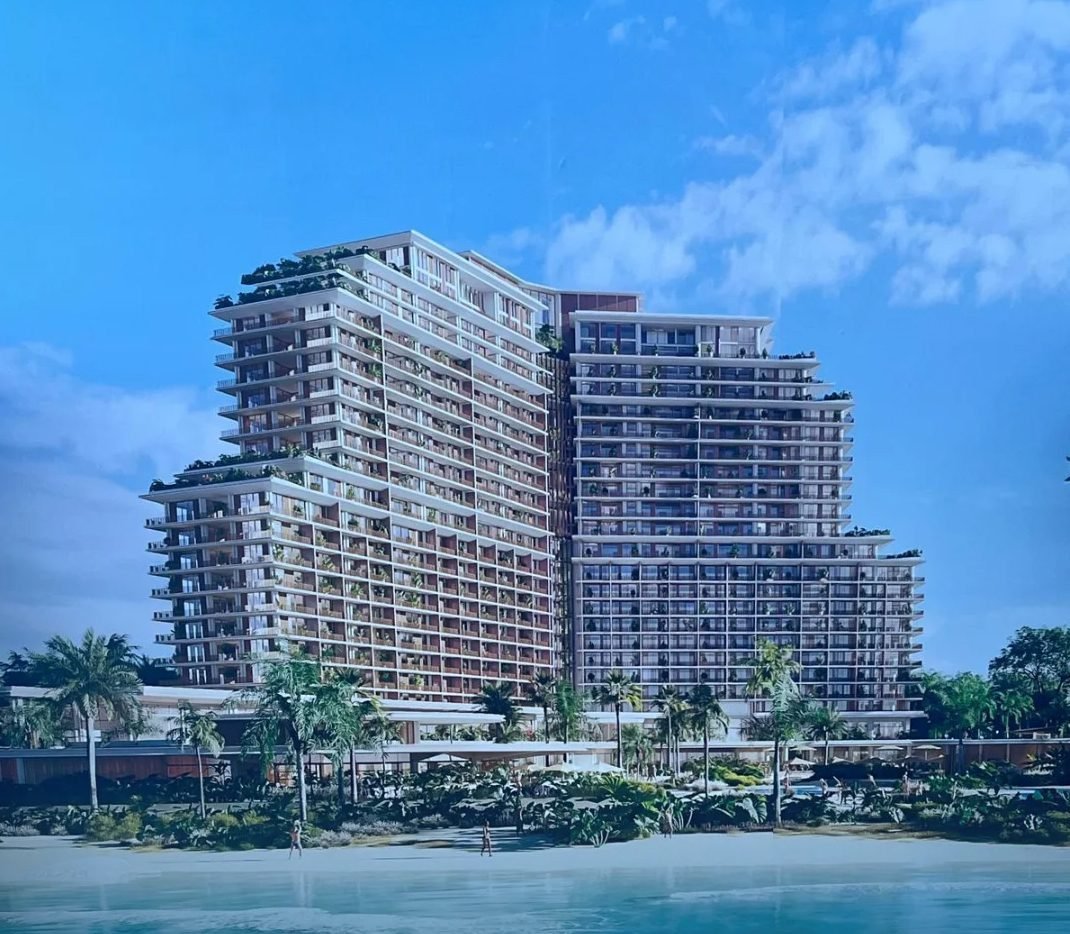
    News Americas, NASSAU, Bahamas, Tues. Feb. 17, 2026: When Baha Mar broke ground on its more than $700 million beachfront expansion on Nassau’s Cable Beach recently, the announcement was framed as a tourism milestone. The project will add 345 guest rooms, 77 branded luxury residences, and thousands of jobs. But beneath the ceremonial shovels and economic optimism lies a deeper question: Is the Caribbean quietly evolving from a tourism destination into a global wealth hub?

    Does This Caribbean Resort Expansion Signal A Shift From Tourism Destination To Global Wealth Hub?
    Baha Mar has officially broken ground on a new beachfront resort and branded residences on Cable Beach, marking a more than $700 million expansion that will add 345 guest rooms and 77 luxury residences to the country’s premier integrated resort destination.

    For decades, the Caribbean’s economic identity has been anchored in hospitality. Resorts brought visitors, jobs, and foreign exchange. Yet today’s mega-developments increasingly reflect something more complex. The inclusion of branded luxury residences alongside hotel rooms signals a structural shift. These are not merely places to visit. They are places to own, invest, and store wealth.

    This distinction matters.

    Branded residences have become one of the fastest-growing segments of global real estate. Buyers are typically ultra-high-net-worth individuals seeking lifestyle, security, and jurisdictional diversification. By integrating residences into resort ecosystems, developers are transforming Caribbean properties into hybrid assets – part hotel, part private enclave, part global wealth infrastructure.

    The Baha Mar expansion fits squarely within this model. Designed by internationally renowned architectural firm Foster + Partners, the project is positioned not just as a hotel, but as a premium residential and investment destination. Owners gain access to an established ecosystem that includes the Caribbean’s largest casino, luxury retail, championship golf, and more than 45 restaurants and lounges.

    This model aligns with a broader global trend: the migration of capital into lifestyle jurisdictions.

    In an era defined by geopolitical uncertainty, rising taxes in traditional wealth centers, and increasing interest in residency and citizenship mobility, wealthy individuals are diversifying geographically. The Caribbean, with its political stability, proximity to North America, and established financial frameworks, has emerged as a preferred destination.

    The Bahamas, in particular, has strengthened its position through infrastructure investment, financial services sophistication, and its appeal as both a tourism and financial jurisdiction.

    Bahamas Prime Minister Philip Davis underscored the significance of the expansion, describing the investment as a signal of confidence in the country’s economic future. “It is a signal to the world that our economy is steady, our tourism sector is growing, and our country is moving in the right direction,” he said.

    Yet, the implications extend beyond tourism metrics.

    Luxury developments increasingly function as anchors for broader economic ecosystems. They generate construction employment, permanent hospitality jobs, and demand for local suppliers—from farmers and fishermen to logistics providers and professional services. Baha Mar alone already employs more than 5,300 Bahamians, with an additional 1,400 positions expected once the new expansion is complete.

    But perhaps more importantly, such developments reshape how the Caribbean is perceived globally.

    Historically marketed primarily as a leisure destination, the region is now also being positioned as a place of long-term presence. Ownership, not just visitation, is becoming central. This transition enhances economic resilience by diversifying revenue streams beyond seasonal tourism cycles.

    It also reflects the Caribbean’s integration into global capital flows.

    Wealth today is increasingly mobile. Investors seek jurisdictions that offer quality of life, asset protection, and global accessibility. High-end resort developments provide precisely that intersection. They offer physical assets tied to globally recognized brands, located in politically stable environments, and embedded within service ecosystems designed for international clientele.

    The Caribbean’s appeal is reinforced by geography itself. Located between North and South America, and accessible from major global financial centers, the region occupies a strategic position that combines lifestyle with connectivity.

    Critically, this evolution does not eliminate tourism. Rather, it elevates it.

    Tourism remains the foundation. But layered atop it is a new economic dimension—one centered on ownership, capital preservation, and global residency patterns. The resort becomes not just a destination, but a node within the architecture of global wealth.

    For countries like The Bahamas, this shift offers opportunity – but also responsibility. Managing growth sustainably, ensuring local participation, and balancing foreign investment with national interests will determine how fully the region benefits.

    What is clear is that the Caribbean’s economic narrative is expanding.

    As cranes rise above Cable Beach and branded residences take shape alongside hotel towers, the message extends beyond Nassau. The Caribbean is no longer simply a place the world visits.

    It is increasingly a place the world invests in, lives in, and anchors wealth within.

    Help Sustain Independent Caribbean Diaspora Media.
    Support NewsAmericas


    Source link

  • Bicycle kicks & set-piece magic – FA Cup fourth round best goals

    Bicycle kicks & set-piece magic – FA Cup fourth round best goals


    Watch the best goals from across the FA Cup fourth-round weekend, including a stunning free kick from Mansfield’s Louis Reed and a strike from outside the box by Newcastle’s Sandro Tonali.


    Source link

  • Em Pernambuco, presidente Lula e ministro Padilha visitam nova unidade da Aché para produção de 40 milhões de medicamentos

    Em Pernambuco, presidente Lula e ministro Padilha visitam nova unidade da Aché para produção de 40 milhões de medicamentos


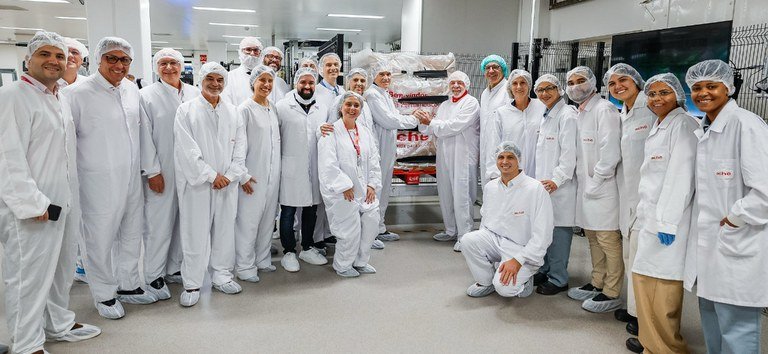
    O presidente da República, Luís Inácio Lula da Silva, e o ministro da Saúde, Alexandre Padilha, visitaram, em Cabo de Santo Agostinho (PE), nesta sexta-feira (13), a expansão de uma das fábricas do Aché Laboratórios Farmacêuticos, que está entre os principais produtores nacionais de medicamentos. Localizada no Complexo Industrial Portuário de Suape, a nova unidade começa a operar em 2026 com capacidade de produção de até 40 milhões de medicamentos por ano, incluindo fármacos injetáveis de uso hospitalar e colírios.

    Com R$ 267 milhões do Banco Nacional de Desenvolvimento Econômico e Social (BNDES) e do Banco do Nordeste, a unidade da Aché contará com recursos de automação e tecnologia industrial avançada, ampliando a capacidade produtiva nacional. Desde que foi instalada, em 2019, a fábrica soma R$ 1,6 bilhão de incentivo federal para a sua expansão. O fortalecimento do complexo industrial da saúde é fundamental para a sustentabilidade do SUS e soberania na oferta de medicamentos e outros produtos de saúde à população.

    “Alguns anos atrás, a gente tratava o Brasil como se fosse incapaz de produzir seus próprios remédios. Agora, produzimos 60% dos medicamentos e não somos mais dependentes como anos atrás, e podendo produzir 100% desses medicamentos. No que depender de mim, se tem alguém que vai fazer chegar a 100%, sou eu, porque quero o Brasil soberano na questão da saúde. Nós acreditamos que o Brasil vai se transformar em uma potência de produção de remédios”, destacou o presidente da República. 

    Com o reforço da unidade que está sendo expandida e ainda deve gerar 3 mil empregos diretos e indiretos, as fábricas do Aché Laboratórios Farmacêuticos poderão produzir até 700 milhões de unidades por ano. Além disso, o laboratório também faz parte da Bionovis, que participa de projetos de Parcerias para o Desenvolvimento Produtivo (PDP) voltadas à produção nacional de medicamentos biológicos, de alta tecnologia, fornecidos ao SUS para tratamento de doenças crônicas não transmissíveis e raras, como Artrite Reumatoide, Psoríase, Esclerose Múltipla e câncer.

    “Ter uma indústria 100 % nacional significa ter empresários brasileiros aqui de Pernambuco gerando oportunidades para jovens e geração de emprego e, sobretudo, para o SUS, significa segurança. Como precisamos cuidar de milhões de brasileiros ter uma empresa nacional produzindo aqui asseguramos o acesso a medicamentos levando mais proteção à nossa população”, declarou Padilha. 

    Retomada da política de desenvolvimento da indústria de saúde no país

    Com o fortalecimento do Complexo Econômico-Industrial da Saúde (CEIS), o Governo do Brasil busca aumentar a produção nacional de medicamentos, vacinas e equipamentos médicos, reduzindo a dependência do mercado internacional. A iniciativa faz parte da Nova Indústria Brasil (NIB), que visa impulsionar o desenvolvimento da indústria nacional.

    O investimento do Ministério da Saúde no âmbito do complexo industrial da saúde está na ordem de R$ 15 bilhões para o desenvolvimento do setor. Desde 2023, com a retomada desta política, abandonada pelo governo anterior, foram firmadas 31 novas parcerias envolvendo empresas públicas e privadas para o desenvolvimento de vacinas, medicamentos e insumos estratégicos para a saúde dos brasileiros.

    Taís Nascimento
    Ministério da Saúde


    Source link

  • Cuba y la miopía estratégica de México – El Financiero

    Cuba y la miopía estratégica de México – El Financiero


    La historia política de América Latina está llena de anuncios prematuros sobre el fin de regímenes que parecían agotados. Cuba ha sido, durante más de seis décadas, el ejemplo paradigmático de esa resistencia. Sin embargo, el momento que hoy atraviesa la isla no admite simplificaciones ni consignas fáciles.

    La presión económica renovada desde Washington, la crisis energética persistente, la caída en ingresos turísticos y la precariedad estructural del modelo centralizado han colocado al régimen cubano ante una tensión que ya no es retórica, sino material y cotidiana.

    Conviene separar la consigna del dato. La economía cubana depende de manera significativa del turismo y de las remesas. Antes de la pandemia, el sector turístico representaba una de sus principales fuentes de divisas. La recuperación posterior ha sido débil.

    La escasez de combustible, los apagones recurrentes, las restricciones financieras y la limitada capacidad de inversión han erosionado la competitividad del destino.

    No se trata de propaganda; se trata de infraestructura eléctrica insuficiente, de logística debilitada y de un aparato productivo que no logra satisfacer la demanda interna ni garantizar estándares internacionales sostenidos.

    En ese contexto, el endurecimiento de sanciones por parte de Estados Unidos ha vuelto a colocar sobre la mesa la hipótesis de una transición. Algunos lo presentan como el inicio del fin del comunismo radical en América Latina.

    Otros, con mayor prudencia histórica, recuerdan que el régimen cubano ha sobrevivido a crisis más severas. Pero aun quienes desconfían de los pronósticos categóricos admiten que el equilibrio actual es frágil. La combinación de agotamiento económico y presión externa constituye un factor que no puede subestimarse.

    Si Cuba iniciara una apertura económica significativa —gradual o acelerada—, el impacto no sería únicamente político; sería, sobre todo, económico y regional.

    El Caribe es un sistema interdependiente; los flujos turísticos no obedecen a afinidades ideológicas, sino a conectividad aérea, certidumbre jurídica, calidad de servicios y percepción de estabilidad.

    La Habana posee activos evidentes: patrimonio arquitectónico, identidad cultural, ubicación estratégica y una marca histórica que despierta interés internacional.

    Existe, además, un antecedente relevante. Durante el periodo de acercamiento diplomático entre 2014 y 2016, la flexibilización de las categorías autorizadas de viaje desde Estados Unidos —aunque el turismo libre continuaba formalmente prohibido bajo el embargo— provocó un incremento sustancial en el número de visitantes estadounidenses.

    No se trató de apertura plena, sino de ampliación regulatoria dentro de los márgenes permitidos por la OFAC. El episodio demostró que la demanda potencial existe cuando disminuye la incertidumbre normativa y política.

    Es aquí donde México debe pensar con serenidad y con visión de Estado. Quintana Roo, con Cancún y la Riviera Maya como ejes, se ha consolidado como uno de los principales generadores de divisas del país. El empleo directo e indirecto que depende del turismo sostiene a cientos de miles de familias.

    La estabilidad económica del sureste mexicano descansa, en buena medida, en la fortaleza de ese sector. La pregunta, entonces, no es ideológica sino estratégica: ¿estamos preparados para competir en un Caribe donde Cuba vuelva a jugar un papel protagónico?

    La competencia no es un agravio; es una realidad del mercado. Si la isla ofreciera incentivos fiscales agresivos, facilidades regulatorias y respaldo político internacional, captaría inversión y visitantes con rapidez. Frente a ello, México no puede refugiarse en la inercia.

    La certidumbre jurídica, la simplificación administrativa, la seguridad pública y la sostenibilidad ambiental no son consignas; son condiciones indispensables para que el capital permanezca y se expanda. Cuando no existen, el capital migra. Somos testigos de cómo lo hace hacia Texas, Florida o Madrid, sin dramatismo, pero con racionalidad económica.

    El caso del Tren Maya merece una reflexión más profunda que la discusión coyuntural. Se trata de una inversión pública de gran magnitud, cuyo potencial para articular polos de desarrollo es indiscutible. No obstante, la infraestructura, por sí sola, no genera prosperidad.

    Requiere planeación territorial, incentivos claros para la inversión privada, integración logística y una estrategia que vincule movilidad, servicios y desarrollo urbano ordenado. Dos corridas diarias no transforman una región; una política económica coherente, sí.

    No se trata de desear la caída de un régimen ni de celebrar escenarios inciertos. Se trata de comprender que los cambios geopolíticos generan efectos económicos inmediatos. Si Cuba se transforma, el Caribe se reconfigurará.

    Y si el Caribe se reconfigura, México deberá competir en condiciones más exigentes. Persistir en una lógica donde el gasto social sustituye a la política de crecimiento productivo sería un error estratégico.

    Los apoyos pueden aliviar carencias, pero no reemplazan la creación estructural de riqueza ni la generación sostenible de empleo.

    La historia enseña que los países que prosperan son aquellos que anticipan escenarios y corrigen rumbos antes de que la presión externa los obligue.

    México tiene la capacidad institucional, la ubicación geográfica y el talento humano para consolidar al sureste como un polo de desarrollo robusto y competitivo. Lo que falta es una visión integral que entienda que el mundo no se detiene mientras debatimos.

    El eventual punto de quiebre en Cuba puede o no materializarse en el corto plazo. Lo que sí es evidente es que la región atraviesa una etapa de redefiniciones profundas.

    En ese contexto, la indiferencia sería costosa. Anticiparse no es alarmismo; es responsabilidad. El Caribe no esperará a que resolvamos nuestras dudas internas. La competencia avanzará con o sin nosotros.


    Source link

  • Polymarket courts Chinese users despite ban

    Polymarket courts Chinese users despite ban


    Cryptocurrency prediction site Polymarket is trying to tap into the Chinese market by hiring Mandarin-speaking staff and listing bets related to the Lunar New Year, even though it has little chance of being officially allowed into China. 

    Justin Yang, who works on Polymarket’s go-to-market strategy in Asia, said he dropped out of Stanford University to join the company in October. “China is becoming a very important geography for Polymarket,” Yang told Rest of World. “They’ve just brought me in to do everything we can to serve our Chinese users better.” 

    Polymarket, a leading prediction market platform, allows users to wager cryptocurrency on topics as wide-ranging as the Federal Reserve’s next rate decision or whether Jesus will return before 2027. The platform has surged in popularity since the 2024 U.S. presidential election, with weekly trading volumes now reaching billions of dollars.

    Polymarket and Kalshi, the two biggest prediction markets, have recently been valued at $9 billion and $11 billion, respectively. Polymarket was founded in 2020 by now 27-year-old New York University dropout Shayne Coplan, and counts Peter Thiel’s venture capital firm and the parent company of New York Stock Exchange as investors. It creates revenue by collecting trading fees. 

    The prediction hype has rippled through China’s financial and tech communities, particularly among crypto traders. China maintains strict bans on online gambling and cryptocurrency trading — Polymarket and Kalshi are both blocked by the Great Firewall. But speculators have been able to access prediction markets through virtual private networks.

    Yang said he was unsure how many Polymarket users were based in China, but that the site receives millions of monthly visits from Asia-based users, with trading volume in the “hundreds of millions” of dollars every month. 

    [China] is not naive about these things. … It looks like a duck, it walks like a duck, it quacks like a duck. … I don’t even think we’re going to get to that regulatory conversation.”

    Yang, who says he is Chinese-American and lives in California, is now hiring four to five Mandarin-speaking customer experience staff members focused on the Chinese community. He said the team would support Chinese market makers, develop a Chinese-language interface for the site, and monitor search trends in China to add more culturally relevant topics for bets.

    Recently, at users’ suggestion, Yang added several China-focused markets. “Which robot dancer brands will feature at the 2026 Spring Festival Gala” has recorded about $74,000 in trading volume — bettors give Unitree a 99% chance of appearing. Chinese users are also active in markets tied to the NBA and the recent under-23 Asian Cup, he said. 

    On social network Xiaohongshu, some Polymarket enthusiasts have been posting about their bets and homemade algorithms that they hope will lead to profits. Jihong Zhou, an entrepreneur in Beijing, said he has developed an AI assistant that tracks Polymarket activity, including an algorithm that calculates whether it is worth betting on an NBA game while it’s ongoing. “Eventually, [prediction markets] will be able to complement the mainstream financial markets,” he said. 

    U.S. prediction markets are actively seeking international growth, although they fall into legal gray zones in many places. Kalshi said last year it would become available in more than 140 countries. 

    These platforms are unlikely to become mainstream in China. The Chinese government has been intensifying its crackdown on cryptocurrency. Offshore entities are banned from providing crypto-related services to individuals in China. Polymarket’s Yang said the company would include the Chinese diaspora in its growth plan. 

    While U.S. regulators are now trying to govern prediction markets as financial instruments, the betting will not enjoy such tolerance in many Asian countries that have long been against gambling, said Patrick Tan, general counsel at blockchain intelligence firm ChainArgos. “[China] is not naive about these things,” Tan told Rest of World. “It looks like a duck, it walks like a duck, it quacks like a duck. … I don’t even think we’re going to get to that regulatory conversation.” 


    Source link

Translate »
Share via
Copy link