Serão ofertadas 4 mil vagas gratuitas destinadas a gestores municipais e profissionais que atuam na Atenção Primária à Saúde (APS) e na Rede de Urgência e Emergência (RUE). As inscrições estarão abertas de 15 de janeiro a 27 de fevereiro de 2026. O curso será realizado entre março e junho de 2026 e é totalmente financiado pelo Proadi-SUS, sem custos para os participantes.
A formação tem como objetivo fortalecer competências para a gestão do SUS no território, estimulando a integração entre a Atenção Primária e a Urgência e Emergência e contribuindo para a organização das redes de atenção à saúde.
Com carga horária de 100 horas, o curso será ofertado na modalidade híbrida, com atividades síncronas, assíncronas e possibilidade de encontros presenciais nos territórios. Entre os conteúdos abordados estão fundamentos do SUS, gestão municipal e articulação em rede.
Um dos diferenciais da formação é a elaboração do Projeto de Interferência, construído a partir de desafios reais vivenciados nos serviços de saúde. Os participantes contarão com o acompanhamento de facilitadores de aprendizagem ao longo de todo o percurso formativo.
O processo seletivo prevê análise documental, com divulgação de resultados conforme cronograma estabelecido em edital. Os candidatos aprovados receberão orientações para matrícula e acesso ao Ambiente Virtual de Aprendizagem.
Reafirmando o compromisso do Ministério da Saúde com a equidade, a inclusão e a democratização do acesso às políticas de formação, o edital prevê reserva de vagas para pessoas negras, indígenas, quilombolas, pessoas com deficiência e pessoas trans e travestis, fortalecendo a diversidade na gestão do SUS.
La ronda de playoffs de la UEFA Champions League 2025-2026 arranca con enfrentamientos decisivos que definen a los equipos clasificados a los octavos de final. Entre los duelos más relevantes aparece el choque entre Real Madrid y Benfica, así como el cruce entre Paris Saint-Germain y Mónaco.
Real Madrid vive los playoffs de la UEFA Champions League con un contexto de revancha. El partido de ida se juega en el Estadio Da Luz, en Lisboa, tres semanas después de la victoria 4-2 del equipo portugués que evitó la clasificación directa del conjunto español a octavos de final.
El encuentro también marca el reencuentro con José Mourinho, ahora con Benfica, frente a su exequipo. Del lado madridista, el regreso de Kylian Mbappé es uno de los elementos centrales tras superar molestias en la rodilla, en un equipo que llega con la obligación de avanzar en la eliminatoria.
¿Dónde ver la Champions League 2026 EN VIVO? Transmisión de los playoffs de ida
Benfica vs. Real Madrid: Mbappé regresa a Da Luz
El 4-2 de la fase de liga obligó al Real Madrid a disputar esta ronda. El conjunto español cayó a la novena plaza tras derrotas ante Liverpool, Manchester City y Benfica.
José Mourinho aseguró: “Sabemos lo que les hicimos a los reyes de la Champions League… están heridos. Y un rey herido es peligroso (…) No creo que haga falta un milagro para pasar, necesitamos un nivel máximo, pero no un milagro”.
Mourinho dice que no hará falta un “milagro” para tumbar al “herido” Real Madrid en la Champions. (AP Foto/Armando Franca) (Armando Franca/AP)
Álvaro Arbeloa respondió: “No creo que José me pueda sorprender, porque sé perfectamente de lo que es capaz”. Y añadió: “Nuestro objetivo no es simplemente eliminar al Benfica, nuestro objetivo es ganar la Champions porque es a lo que te obliga este escudo”.
Kylian regresa tras molestias en la rodilla. “Mbappé lleva con esas molestias bastante tiempo. Está haciendo un gran esfuerzo cada vez que sale al campo y hoy hemos decidido no correr riesgos de cara al martes. Yo creo que estará”, explicó Arbeloa.
El Madrid nunca ha ganado en el estadio Da Luz. Benfica avanzó a playoffs como 24º por diferencia de goles tras un cabezazo del portero Anatoliy Trubin en el último minuto.
Real Madrid: Courtois; Trent, Rüdiger, Huijsen, Carreras; Tchouaméni, Camavinga, Valverde, Güler; Vinícius y Mbappé.
Mbappé regresa tras su lesión de rodilla. (Foto: AP).
Club Brugge vs. Atlético de Madrid: antecedente equilibrado
El Atlético de Madrid ha ganado cuatro de ocho partidos en esta edición, solo uno fuera de casa. Nunca ha vencido en Brujas.
Ivan Leko afirmó: “Nos estamos preparando para competir. Sabemos que estarán a su mejor nivel y que para conseguir resultados contra un equipo como ellos tendremos que estar a nuestro mejor nivel (…) Siempre queremos ganar. No firmo el empate”.
El Atlético llega tras una derrota 3-0 ante Rayo Vallecano y afronta su decimocuarto partido en mes y medio.
Atlético: Oblak; Molina, Pubill, Hancko, Ruggeri; Giuliano, Llorente, Koke, Lookman; Griezmann o Baena y Julián Álvarez.
Mónaco vs PSG: campeón defensor en escena
El vigente campeón Paris Saint-Germain enfrenta al AS Monaco.
El PSG terminó undécimo tras empatar 1-1 ante Newcastle en la última jornada de la fase de liga. Viene de perder 3-1 ante Rennes, su tercera derrota del año y la sexta de la temporada.
El Mónaco finalizó 21º en la fase de liga. Ganó 3-1 al Nantes el viernes, aunque previamente había logrado una sola victoria en siete partidos.
Inter vs Bodø/Glimt: racha nerazzurra
El Inter de Milán llega con seis victorias consecutivas, incluido un 3-2 sobre la Juventus que amplió su ventaja en la Serie A.
El Bodø/Glimt disputa su primera fase eliminatoria de Champions y ha marcado dos o más goles en seis de sus últimos ocho encuentros.
Partidos de vuelta de playoffs de la Champions League 2026
La vuelta del repechaje se disputa el 24 y 25 de febrero. Arsenal, Barcelona, Bayern München, Chelsea, Liverpool, Manchester City, Sporting CP y Tottenham ya están en octavos de final.
El sorteo de octavos, cuartos y semifinales se realizará el 27 de febrero de 2026.
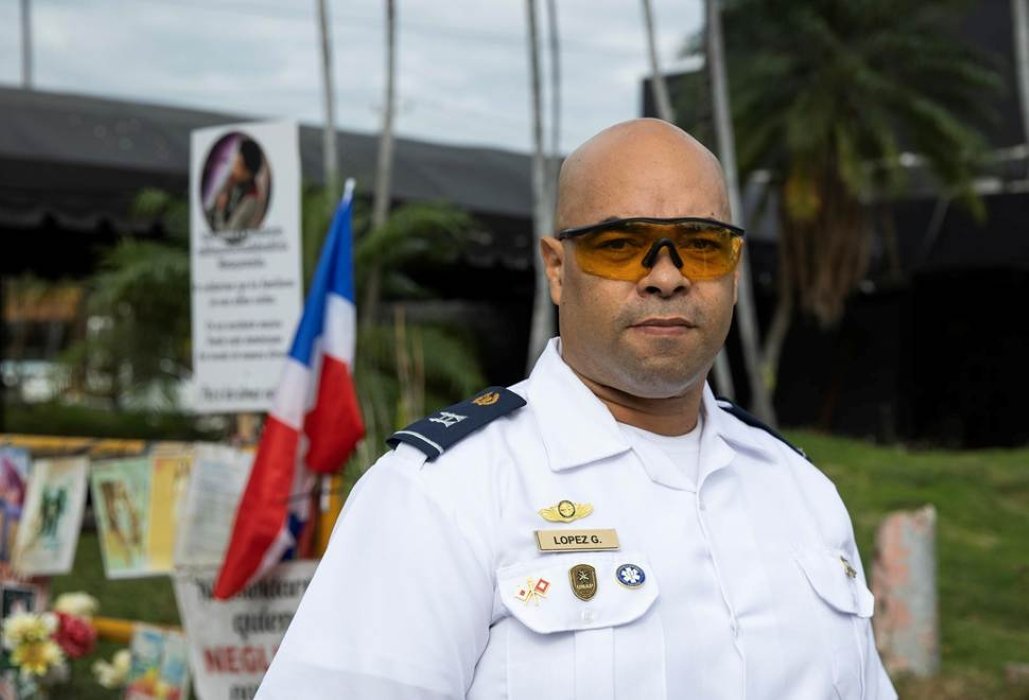
Nine years after fleeing Venezuela, firefighter Thony López became essential in Santo Domingo after the Jet Set nightclub collapse. His work blended rescue with emergency psychology, exposing gaps in disaster protocols and the role of migrant brigades across the Americas.
When the Noise Became Dust
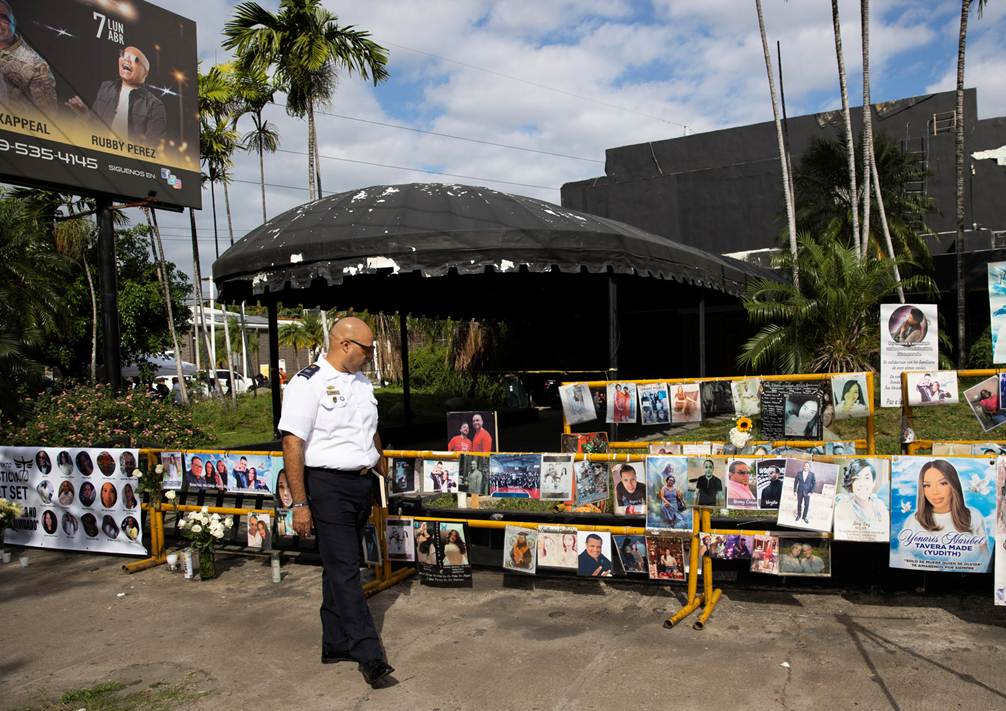
In the hours after the Jet Set discotheque collapsed on April 8, 2025, the work was physical first. Concrete. Twisted metal. The tight, breath-held geometry of rubble. It was also human, in the most immediate sense, because the catastrophe left two hundred thirty-six dead and more than a hundred injured. Every decision inside that wreckage carried a weight that did not fade when the sirens did.
Thony López, a Venezuelan firefighter who arrived in the Dominican Republic nine years ago, marked by the crisis back home, describes that rescue as the event that has affected him most. The sensory memory is not glamour or shock, but dust and strain, the kind that coats your mouth and makes voices sound farther away than they are. He was there as part of the Santo Domingo firefighters, doing rescue work and also, in public retellings, something less visible: emotional containment for victims.
That second role became sharper after the first day, when many volunteers from different countries showed up, and then the help thinned out. López kept working in the rubble when the crowd effect dissolved, and the long emergency started to look like what it really is, a marathon of attention and nerves.
He said he came to the Dominican Republic after watching what was happening in Venezuela and deciding to leave, like many Venezuelans, to give his family security. “I arrived in the Dominican Republic after seeing what was happening in Venezuela, and because of that, I decided to leave the country, like many Venezuelans, to give security to my family,” he told EFE.
The trouble is that migration stories are often told as endings or escapes. His reads like a transfer of skills across borders, followed by a test, under the worst conditions, of whether the receiving country is prepared to use those skills effectively.
Photo of Thony López, who worked in rescue efforts after the collapse of the Jet Set nightclub, walking next to the monument to the victims in Santo Domingo, Dominican Republic. EFE/ Orlando Barría
The Rescue You Cannot Photograph.
López says his vocation began with his father, also a firefighter, who passed the profession down to him. In Venezuela, he belonged to rescue groups and citizen security teams. Still, he left due to the difficult situation his family and he faced. In the Dominican Republic, he says the vocation continued, and his professional background helped him integrate into the Santo Domingo fire department.
“When I arrived here, my vocation continued. Whatever country we are in, vocation remains part of us,” he told EFE. He specializes in emergency psychology, and Jet Set became the place where that specialization stopped being a credential and turned into a necessity.
He reflected there that even in a catastrophe, victims have dignity. That is a moral statement, but it is also operational. It changes how you speak to people, how you move around bodies, how you treat families who are waiting, how you treat fellow rescuers who are running on adrenaline until they suddenly are not.
“The psychology of emergency is as vital as rescuing people. It is vital, because we need to protect and address what has to do with the psychic health of victims and rescuers,” he told EFE.
What this does is push the public conversation beyond heroism and toward systems. Emergency response is often measured in speed, equipment, and extraction. López is arguing for protocol, for training, for a language of care that can be repeated under pressure. He says the experience led him and his team to understand that emergencies should be humanized and that everything related to psychological first aid needs to be properly protocolized for interventions in any event.
The wager here is whether governments and institutions treat that as optional. In practice, psychological first aid is not an add-on. It shapes outcomes, including whether survivors return to daily life with support or with silence, and whether responders carry trauma home without tools to process it.
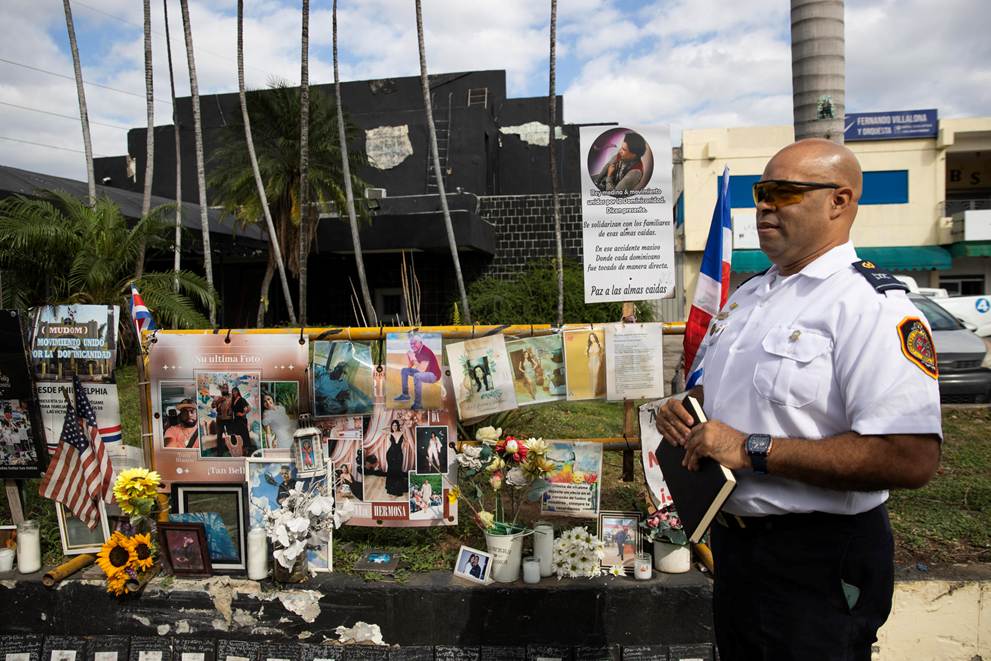
Photo of Thony López, who worked in rescue efforts after the collapse of the Jet Set nightclub, walking next to the monument to the victims in Santo Domingo, Dominican Republic. EFE/ Orlando Barría
A Brigade Built From Exodus
After the rescue, López was contacted by the Legión Internacional Brigada Venezuela, a network formed by Venezuelan firefighters living in multiple countries. The organization is not only focused on catastrophes and major events, but also on emotional care for the firefighters and emergency workers themselves.
That focus connects directly to López’s point. It also reveals a larger reality across Latin America and the Caribbean: migration has created transnational pools of expertise that move faster than institutions do.
The Legión was founded in Lima in 2018 after its commander general, Venezuelan Richard Perales Gerdel, arrived in Peru amid the Venezuelan exodus. According to United Nations data cited in the notes, about 7.9 million people have left Venezuela in search of protection and a better life. Most, about 6.7 million, have been taken in by other Latin American and Caribbean countries.
Perales says the Legión emerged to support Venezuelan migrants in emergencies. Still, so they could contribute in any emergency, wherever they were. “It was created to support Venezuelan migrants in emergencies and disasters, but also so they could contribute in any emergency situation in the country where they were,” he told EFE. He said the organization includes doctors, nurses, lawyers, engineers, rescue personnel, and even police officers.
Over time, the membership widened beyond Venezuelans to include people of other nationalities, reaching a total of six hundred members. Perales said the organization consolidated in 2022 as it expanded across Latin America and Europe to offer integrated cooperation with allied fire departments during disasters. From Lima, he described activations in Spain tied to the devastating dana in October 2024, and more recent activations linked to wildfires in Chile. He said the network also operates in countries including Canada, the United States, Mexico, Panama, Colombia, Bolivia, Argentina, and Uruguay.
The policy dispute, then, is not abstract. It is about coordination and legitimacy. How do states integrate migrant expertise into official response without turning it into informal labor they can rely on when convenient and ignore when not? How do they build shared standards for safety, training, and psychological first aid when responders may belong to both a national department and an international volunteer network?
Jet Set, in López’s telling, was the place where those questions stopped being theoretical. It was where dust and grief made the limits of protocol visible, and where a Venezuelan firefighter, shaped by one crisis, found himself inside another, insisting that dignity is not only a value. It is a procedure.
Arsenal, who will still offer 1,000 free tickets to the local community for the 2026-27 season, say the season ticket price increases are partly a reflection of rising operational matchday costs.
Arsenal already have one of the most expensive season tickets in the Premier League and received the third-highest amount of income from gate receipts in the 2023-24 season (£127m), behind only Real Madrid (£153m) and Paris St-Germain (£139m).
“We firmly believe that with the football sector benefiting from ever-increasing broadcast and commercial revenues it is time to stop squeezing match-going supporters so hard,” the AST said in a statement.
“Neither the Premier League nor Arsenal have seriously engaged with the idea that a freeze at all clubs would help stop the ‘arms race’.”
The Gunners will also introduce safe standing after “extensive consultation and engagement”.
From next season Arsenal say there will be “standing rails in areas where we know our supporters stand” in the Clock End’s lower tier.
The North Bank lower tier will follow suit from the start of the 2027-28 season – which will mean there will be about 13,500 supporters, including away fans, in licensed standing areas at the Emirates.
‘Love is in the air’. La senadora de Morena, Andrea Chávez Treviño, compartió en sus redes sociales una imagen por el Día de San Valentín. En la foto, ella aparece abrazada de un hombre identificado como Emil Kamar, con quien presuntamente se casará próximamente.
La publicación se realizó el pasado 14 de febrero. Ese día, Andrea Chávez publicó en sus historias de Instagram la fotografía, acompañada del mensaje: “¡Feliz Día del Amor y la Amistad!”.
En las imágenes, Andrea Chávez aparece en un evento social, vestida con un atuendo dorado, mientras abraza a su pareja.
Otra de las imágenes publicadas muestra que él le besa la mejilla, mientras la senadora de Morena sonríe a la cámara. Andrea Chávez figura como una de las aspirantes a la candidatura a la gubernatura de Chihuahua rumbo a las elecciones de 2027.
¿Quién es Emil Kamar, el presunto prometido de Andrea Chávez?
Emil Kamar es identificado como un empresario originario de Ciudad Juárez, Chihuahua, vinculado al sector joyero en la región fronteriza. Su nombre cobró relevancia tras la publicación realizada por Chávez Treviño.
De acuerdo con algunos medios locales, Emil Kamar es un joven empresario perteneciente a una familia con presencia económica en Ciudad Juárez y con inversiones en Estados Unidos.
A pesar de las imágenes, hasta el momento no existen comentarios adicionales por parte de Andrea Chávez
Sin embargo, estas versiones surgieron luego de que en las fotografías se observa que la senadora de Morena porta un anillo en el dedo anular derecho.
Cabe recordar que Andrea Chávez sostuvo una relación sentimental con Abraham Mendieta, analista político de origen español que participa en medios de comunicación en México.
La relación entre ambos fue visible en redes sociales desde al menos 2020; terminó en 2025. A pesar de ello, Abraham Mendieta se mantiene como uno de los principales asesores políticos de la legisladora morenista.
Sin embargo, esa no fue la única polémica en la que estuvo envuelta la senadora de Morena. El año pasado la acusaron de actos anticipados de campaña en Chihuahua, luego de que Andrea Chávez realizara recorridos por el estado con caravanas de salud que incluían su imagen.
De igual forma, la senadora de Morena recibió un llamado de atención por parte de la presidenta Claudia Sheinbaum para evitar realizar actos anticipados de campaña.
A downpour in Old San Juan did not stop a centennial tribute to Catalino Tite Curet Alonso. At his grave, bomba drums and dancing carried his lyrics back into public space, reopening questions about cultural policy, preservation, and Puerto Rico’s voice abroad.
A Cemetery Bomba Under a Hard, Clean Rain
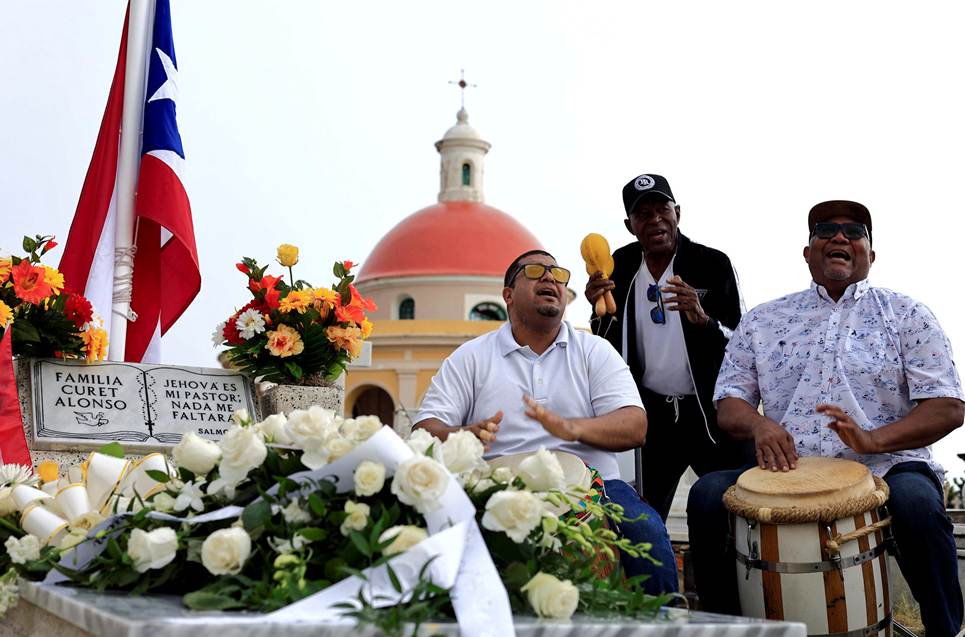
The micro scene is wet and simple. In the cemetery of Old San Juan, where Catalino Tite Curet Alonso is buried, people gather under copious rain. Family members stand close. The group Plenibom plays bomba, an Afro-Puerto Rican rhythm that hits the body before it reaches the intellect. A couple dances in front of the others while the music cuts through the weather.
They play Sorongo. They play Las caras lindas. They play Se escapó un león. In that moment, the tribute is not abstract. It is not a plaque. It is not an anniversary post. It is music in the open air, in a place where people do not usually dance.
Tite Curet is remembered on his centennial as a master of songs that evoke pride and admiration. His ability to craft melodies for legendary salseros like Ismael Rivera, Héctor Lavoe, Cheo Feliciano, Rubén Blades, and La Lupe made his work feel inevitable, creating a deep sense of cultural pride among Puerto Ricans.
Hilda Curet, one of his daughters, watched the homage and felt a profound sense of gratitude and a gentle ache. ‘I feel very honored and happy,’ she told EFE, sharing how he wrote at least 1,400 songs, including works for Menudo, Nelson Ned, Tony Croatto, and orchestras of Roberto Roena and Tommy Olivencia, which highlights her pride and emotional connection.
“I would have liked my dad to be alive so he could see all the celebration and what the Committee has done to spread the legacy of his music across Puerto Rico and internationally,” she told EFE.
That line lands because it is both personal and political. A family wanting a father to witness his flowers is a human truth. But it is also a statement about recognition delayed, about how often the island’s cultural architects become fully visible only when they are gone.
Bomba dancers perform during the centennial celebration of Puerto Rican composer Catalino “Tite” Curet Alonso this Thursday at Santa María Magdalena de Pazzis Cemetery in San Juan, Puerto Rico. EFE/ Thais llorca
A Writer Who Never Drove, Always Listened
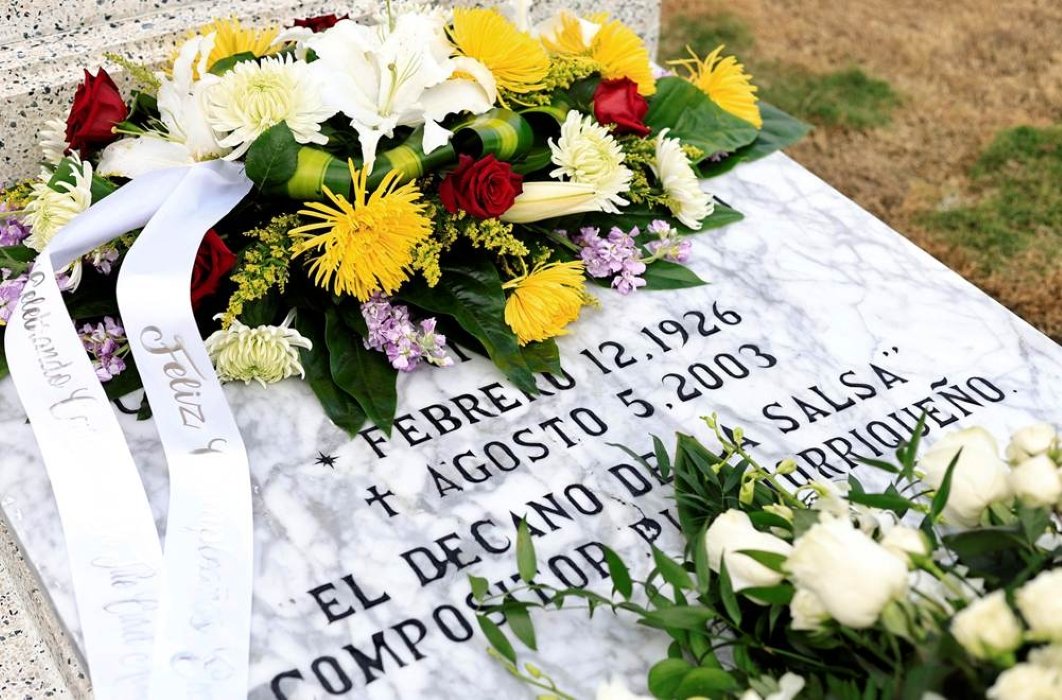
Curet was born on February twelve, 1926, in Guayama, in southern Puerto Rico. His daughter said he was crossing borders from a young age and may not have known the reach of his music, including the fact that one of his songs ended up in film soundtracks such as The Godfather II.
From Guayama, he moved to Barrio Obrero in San Juan, a neighborhood known for musical fervor in salsa, bomba, and plena. This is where the method becomes part of the legend. He observed. He analyzed. He took the lived experiences and anecdotes of people around him and turned them into songs.
The everyday observation implied by the notes is the way public life becomes material when a writer is paying attention. A conversation at a corner. A complaint was heard on a bus. A story repeated in a doorway. For Curet, the city was not the background. It was the source.
He used public transportation or walked because he did not drive. He collected experiences and wrote them down in a notebook, recorded them on tape with his voice, or typed them on a typewriter, then delivered them to singers.
This is where the tailoring metaphor becomes concrete. A composer without a car, moving through the city at street speed, gathering language in fragments, then shaping it into something that could hold a stadium. The trouble is that modern cultural policy often measures value through scale and export. Big venues. Big streaming numbers. Big international deals. Curet’s practice suggests another measure, the slow accumulation of listening that produces songs sturdy enough to travel.
His catalog includes La Perla and Las caras lindas for Rivera, Periódico de ayer and Barrunto for Lavoe, Anacaona and Mi triste problema for Feliciano, Plantación adentro for Blades, La cura for Frankie Ruiz, and Marejada feliz for Roena and his orchestra.
Hilda Curet remembers the daily discipline behind all that output. “I always saw him writing. He never got tired of writing. It was a gift, because he did it well, and something in the family, because he came from a family of writers,” she told EFE. She noted that he worked for the United States Postal Service while also writing music columns for magazines.
It is a life that makes the romantic image of the composer look more like labor. Two jobs. A notebook. A typewriter. A mind that keeps turning.
Members of the group Plenibom perform a song next to the tomb of Puerto Rican composer Catalino “Tite” Curet Alonso. EFE/ Thais llorca
A Legacy That Demands Institutional Care
José Rodríguez, president of the Committee Camino al Centenario Catalino Tite Curet Alonso, frames the centennial as an obligation to public memory. He said the author’s life must be celebrated and remembered as one of the greatest composers the country has given to popular music.
Rodríguez insists on the nickname that best explains the craft. “Tite is and will be the tailor of composition, because what he created for artists was a custom suit, a number made to measure. He created it directly for that singer’s personality, and it was a success,” he told EFE.
He also argues that Curet’s work traveled the world because it carried social denunciation, including racial realities, along with other textures of daily life. “It is an icon of popular music and salsa. In every country where Tite’s music has been heard, there should be space to reflect on his career and legacy,” he told EFE.
That is the policy question behind the rain-soaked tribute. Reflection depends on institutions that value popular music as heritage, inspiring hope and collective responsibility. Archives, education, and public funding are essential to treat songs as vital historical documents, not just entertainment.
The centennial is being marked with art exhibitions and conferences in Peru, Panama, and New York, as well as in other parts of Puerto Rico, including Ponce, which has dedicated its famous carnival to him.
The wager here is whether Puerto Rico can hold this kind of legacy in public view beyond anniversaries. A cemetery gathering under heavy rain is moving, but it is also fragile. It depends on volunteers, committees, families, and memory. Curet wrote at street level, for the people who rode buses and walked. Keeping his work alive requires the same street-level commitment, plus the institutional will to treat popular music as part of the island’s cultural infrastructure.
In Old San Juan, the drums kept going anyway. Rain or no rain. That is the point. The songs were built to endure. Now the question is whether the systems around them will do the same.
El líder de los derechos civiles en Estados Unidos, Reverendo Jesse Jackson, falleció este martes a los 84 años, según confirmó su familia.
“Nuestro padre fue un líder servidor, no solo de nuestra familia, sino también de los oprimidos, los que no tienen voz y los ignorados de todo el mundo… Les pedimos que honren su memoria continuando la lucha por los valores que él guió”, dijeron sus hijos en un comunicado.
El reverendo Jesse Jackson frente a la casa donde nació, en Greenville, Carolina del Sur.
Jackson, figura clave del movimiento por la igualdad racial y dos veces candidato a la nominación presidencial demócrata, dedicó su vida a la lucha por la justicia social, la defensa de los marginados y la diplomacia humanitaria en escenarios internacionales.
Nacido en Greenville, Carolina del Sur, Jackson se convirtió en discípulo del Dr. Martin Luther King Jr. Su oratoria, activismo político y capacidad para articular coaliciones diversas lo consolidaron como una de las voces más influyentes de la lucha racial durante más de cinco décadas.
“Lo conocí bien, mucho antes de convertirme en presidente. Era un buen hombre, con mucha personalidad, coraje y mucha inteligencia. Era muy sociable, ¡alguien que realmente amaba a la gente!”, dijo el presidente Donald Trump.
En un mensaje publicado en redes sociales, en el que recordó el apoyo que brindó al reverendo Jackson, el presidente Trump envió sus condolencias a la familia. “Jesse fue una fuerza de la naturaleza como pocos antes que él (…) Amaba profundamente a su familia, y a ellos les envío mi más sentido pésame. ¡Echaremos de menos a Jesse!”, escribió.
Un puente diplomático informal con Cuba
Aunque en Estados Unidos será mayormente recordado por su activismo interno, Jackson desempeñó también un papel significativo en la diplomacia informal, particularmente en sus múltiples gestos de acercamiento hacia Cuba, que dejaron huella en las relaciones bilaterales.
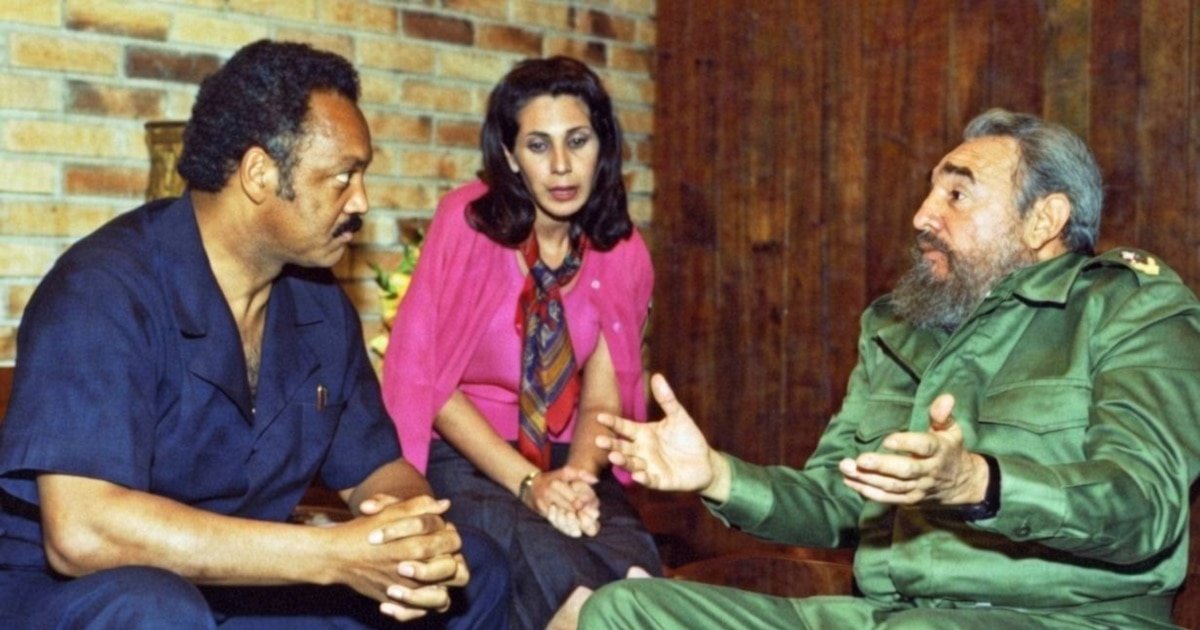
En junio de 1984, Jackson realizó una visita clave a La Habana, donde negoció directamente con Fidel Castro la liberación de 22 ciudadanos estadounidenses, la mayoría detenidos por cargos relacionados con narcóticos, y 26 presos políticos cubanos.
Muchos de los liberados ellos eran conocidos como “plantados”, presos que se negaban a acatar el sistema carcelario; otros eran antiguos combatientes de la invasión de Bahía de Cochinos. También fue excarcelado el exdiplomático Andrés Vargas Gómez.
El reverendo Jackson habría solicitado a Castro la liberación de unas 50 personas, a partir de una lista conformada con datos de organizaciones como la Fundación Nacional Cubano Americana y Amnistía Internacional.
Este episodio se convirtió en uno de los momentos más emblemáticos de la llamada “diplomacia ciudadana” desplegada por el líder religioso.
Durante la visita, Jackson logró además que Fidel Castro entrara por primera vez en 27 años a una iglesia, durante una visita a un templo metodista en La Habana, algo que líderes religiosos cubanos consideron un momento clave para el inicio de una relación menos hostil entre el Estado y las instituciones religiosas del país.
Durante su estancia, Jackson se dirigió a los estudiantes de la Universidad de La Habana en un discurso en el que gritó “¡Viva Fidel! ¡Viva el Che Guevara!”.
La administración del entonces presidente Ronald Reagan criticó el viaje de Jackson, considerándolo una interferencia en la política exterior oficial de Estados Unidos.
Décadas después, el líder religioso y activista mantuvo su rol como intermediario informal entre los gobiernos de EEUU y Cuba. El régimen cubano vio siempre en él a un aliado en su campaña internacional contra el embargo estadounidense, por cuya eliminación el líder religioso abogaba.
En 2013, Jackson regresó nuevamente a La Habana para abogar por la liberación del contratista estadounidense Alan Gross, entonces encarcelado por el régimen de Castro, además de buscar otras avenidas para contribuir al diálogo entre Washington y La Habana.
La Inversión Extranjera Directa (IED) de origen canadiense en Veracruz aumentó más del 100 por ciento en comparación con el periodo anterior, posicionando a la entidad como un destino estratégico para el capital de ese país y consolidando su liderazgo en la atracción de inversión internacional, reportó la Secretaría de Desarrollo Económico y Portuario (Sedecop).
Al tercer trimestre de 2025, Canadá se ubicó como el cuarto inversionista en el estado, al concentrar el 20 por ciento de la IED estatal. Este crecimiento sostenido, con variaciones positivas de 64 y 107 por ciento en los últimos trimestres, confirma la confianza en las condiciones de competitividad, infraestructura y vocación productiva de Veracruz.
En el ámbito comercial, el país de la hoja de maple es el cuarto socio comercial de la entidad, al representar el 6 por ciento del flujo total. Durante 2025, las exportaciones veracruzanas hacia ese país crecieron 19 por ciento, mientras que las importaciones aumentaron 25 por ciento, reflejando un intercambio dinámico y con potencial de expansión.
Las exportaciones se concentran principalmente en café, azúcar y carne de bovino, productos estratégicos del sector agroindustrial que han fortalecido la presencia de Veracruz en el mercado canadiense. Este desempeño abre oportunidades para diversificar la oferta hacia bienes con mayor valor agregado y ampliar la integración productiva.
En este contexto, el secretario de Desarrollo Económico y Portuario, Ernesto Pérez Astorga, se reunió con el Embajador de Canadá en México, Cameron MacKay con el objetivo de fortalecer la cooperación bilateral y ampliar los flujos de inversión y comercio.
Lo anterior se enmarca en la política de apertura económica y fortalecimiento de lazos internacionales impulsadas por la gobernadora Rocío Nahle García, orientada a atraer capital estratégico, generar empleos y consolidar el desarrollo regional sostenible.