In Montevideo, La Rueda de Candombe has turned a casual circle of friends into a public ritual of drums, memory, and national identity, showing how an Afro-Uruguayan tradition can still reshape culture, tourism, and prestige without losing its street soul.
A Circle That Grew Into a Mirror
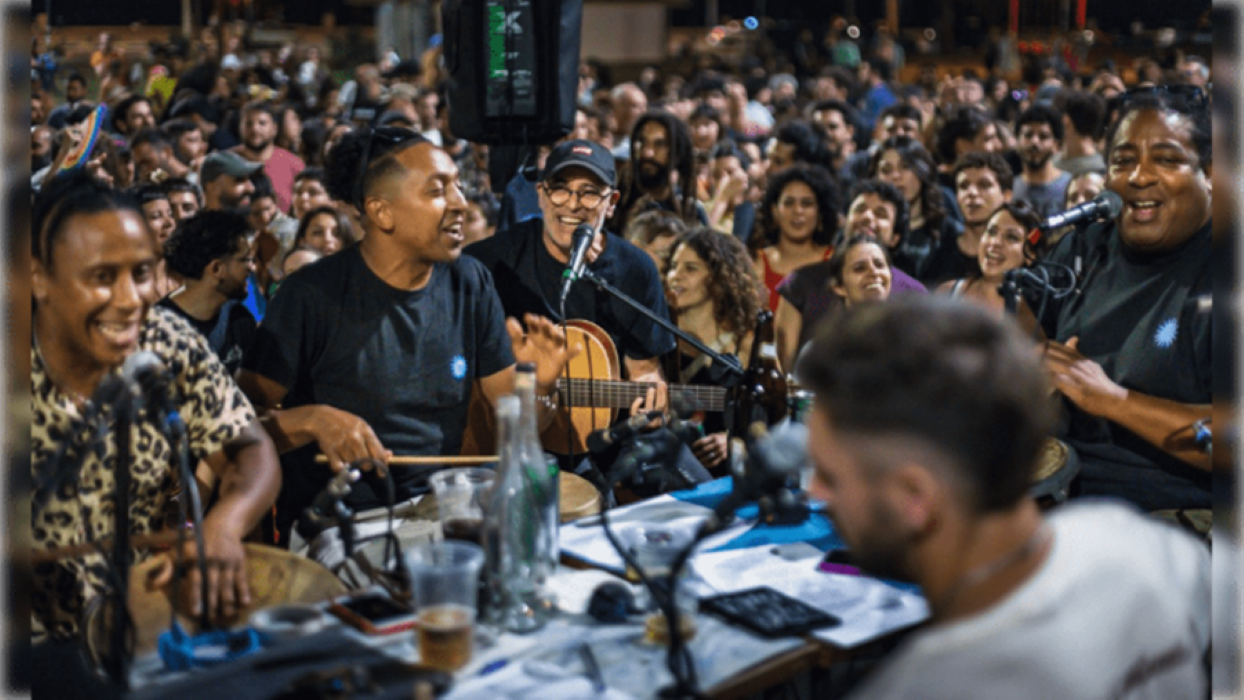
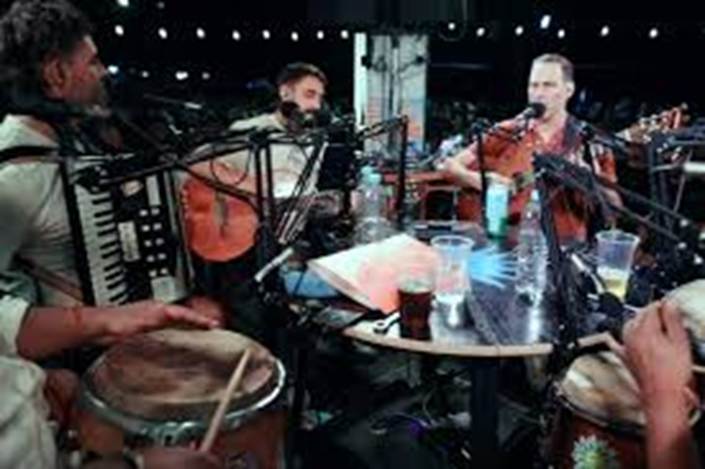
Every Monday night in Montevideo, hundreds gather around a table in a public square, drawn by drums, guitar, accordion, and voices rising into the evening air. On its surface, La Rueda de Candombe looks simple. Friends playing music. People dancing nearby. A city pausing to listen to itself. But as The Associated Press reports in coverage by Ramiro Barreiro, what began as an informal jam session has quickly grown into one of Uruguay’s most visible cultural events, moving from neighborhood corners to international stages without ever fully leaving the street behind.
That transformation matters because Uruguay is not a country usually imagined through spontaneous public performance, as people imagine Buenos Aires or Rio de Janeiro. The notes make that clear. Despite Montevideo’s abundance of public space, including its long waterfront promenade, street performances are far less common than in those neighboring capitals. So when La Rueda de Candombe began pulling nearly a hundred people into a small bar and then spilled into Plaza España as the crowds grew, it did more than create a successful music event. It reopened a question about what public culture can look like in Uruguay when it is allowed to emerge organically rather than by official programming or festival season alone.
Producer Caleb Amado, one of the founders, tells AP that what started among friends became visible without them intending it. That phrase is revealing. Visibility arrived before strategy. The event was not designed in a boardroom as a cultural export. It rose through affection, rhythm, and repetition. That makes the phenomenon feel less like branding and more like recognition. People showed up because the circle offered something familiar and missing at once: a form of gathering that was communal, musical, inexpensive, rooted, and alive.
The final performance of the season in Plaza España, featuring six musicians, carried that energy in concentrated form. Spectators did not just watch. Dancers taught others how to move. The circle expanded by invitation. In an age when so much culture is flattened into content, that detail matters. La Rueda does not simply present candombe. It recruits bodies into it.
The Sound of a Deeper Uruguay
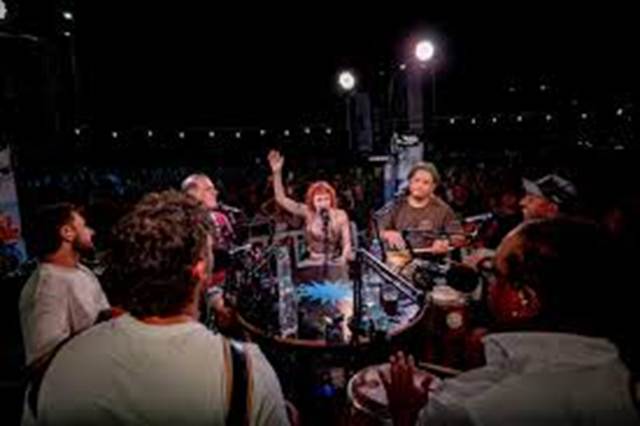
To understand why this has struck such a nerve, it helps to see what the group chose to center. The form came partly from Brazil. In the fall of 2024, Amado and Rolo Fernández went to Rio de Janeiro, where they immersed themselves in rodas, the informal circles where musicians gather around a table as audiences stand around them. Returning home, they adapted that structure. But the sound they placed inside it was unmistakably Uruguayan.
Candombe is not some decorative national style brought out for cultural diplomacy and then put back in storage. It is one of the deep rhythmic languages of the country, rooted in African traditions brought to the region in the 18th century and later recognized by UNESCO as Intangible Cultural Heritage of Humanity. The notes place Plaza España at the historical landing site where enslaved Africans used the drumbeat to sustain their rituals. That means La Rueda is not merely an entertaining revival of a beloved genre. It is a performance unfolding in the shadow of arrival, pain, survival, and continuity.
That historical depth gives the event its force. When the drums sound in Plaza España, they do not arrive on neutral ground. They touch a place already marked by memory. And that is part of why candombe still occupies such a singular place in Uruguay’s identity. It has survived not only as music but as an inheritance. Built around the chico, repique, and piano drums, it reaches a public climax during carnival, when comparsas parade through the streets. But the AP notes also remind us that candombe evolved. By the mid-20th century, it had blended with jazz and popular music into candombe canción, becoming part of ordinary social gatherings and serving as a form of cultural and political expression during the 1960s and 1970s.
That is important because it shows candombe has never been frozen. It has always been both archive and argument. It remembers Africa, slavery, barrio life, carnival, artistic experimentation, and political feeling all at once. La Rueda succeeds because it understands that instinctively. It does not treat candombe like a museum object. It treats it like a living social technology.
And that may be why it has resonated so widely. Uruguay is often praised for stability, moderation, and institutional calm. Those qualities are real, but they can also flatten how the country is seen, especially from outside. La Rueda offers another image. A more rhythmic Uruguay. A more visibly Afro-Uruguayan Uruguay. Uruguay is willing to put one of the foundations of its national culture back at the center of public life.
From Street Corner to Cannes
The speed of the group’s rise also says something about how cultural legitimacy now travels. Social media amplified the buzz. Prominent artists showed up. The group performed with Jorge Drexler at Montevideo’s Centenario Stadium, recorded an album, and, in 2025, was invited to represent Uruguay at the Cannes Film Festival, which hosts cultural showcases alongside its film program.
There is always some risk in this kind of ascent. Once a street phenomenon becomes internationally marketable, it can start to drift toward self-exoticism. The rough edge gets polished. The living tradition becomes a postcard. But nothing in the notes suggests La Rueda has crossed that line yet. If anything, its expansion has strengthened the public square rather than abandoned it. The crowds grew. Vans of tourists arrived. Yet the basic scene remained intimate in structure: a table, musicians around it, people standing close enough to feel the beat in their bodies.
That is why this story matters beyond one successful music project. It hints at a model for Uruguay’s cultural future. Not culture sealed in elite venues first and then filtered outward, but culture that begins in shared space and earns wider prestige because it is already socially alive. In Latin America, that kind of path has often been crucial for traditions with African roots, which are frequently celebrated once they become nationally useful but historically neglected or marginalized in everyday power structures. La Rueda seems to be doing something a little different. It is making candombe feel central not by sanitizing it, but by letting it remain collective, accessible, and public.
As colder months approach, Amado and Fernández say they are staying in Montevideo and planning new projects, including expansion into other public squares across the city. That ambition feels fitting. A circle that began among friends now wants to redraw the cultural map of the capital, one square at a time.
In a region where identity is often debated in abstract slogans, La Rueda de Candombe offers a more persuasive answer. It says a nation’s deepest truths do not always come from institutions or speeches. Sometimes they come from what people gather around when the light fades, from which rhythms they still recognize as their own, and from whether a public square can still become, even for a few hours, a place where history is not recited but played.
Also Read:
Ecuador Lets Trans Teens Be Seen as Politics Looks Away