Caracas, Venezuela — Venezuela’s interim President Delcy Rodríguez announced that the country’s so-called amnesty law, which aims to free political prisoners detained during the regime of Nicolás Maduro, will come to an end just two months after its approval in February.
During an April 24 event at Miraflores Palace, the presidential headquarters, the president said, “This amnesty law is coming to an end. For those cases that were not covered, or rather, were expressly excluded, there are other avenues through which they can be addressed.”
She also noted, “In the Democratic Coexistence and Peace Program—from which some members have moved to the Executive Branch—there is a forum for addressing cases related to justice. The same applies to the Commission for Criminal Justice Reform.”
At the meeting, Rodríguez said that some 8,616 people had been freed under the amnesty law, the BBC reported.
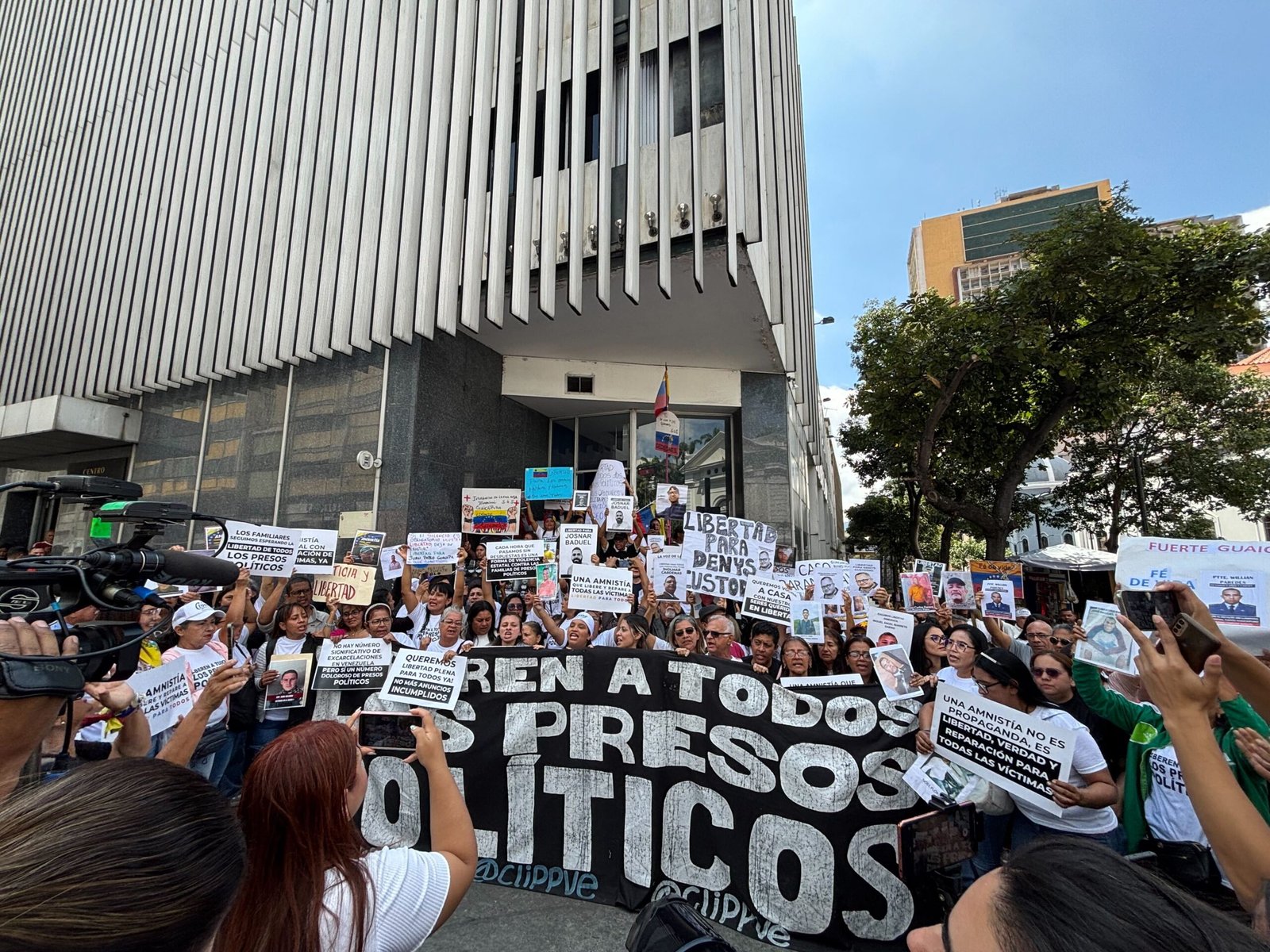
According to Foro Penal, an NGO that monitors political detentions in the country, 473 political prisoners remain in jail. (Other NGOs have counted as many as 670 political prisoners still in custody). Many of their family members are worried about their fates as the sun goes down on the amnesty law.
Other NGOs, such as the Venezuelan Program for Education and Action on Human Rights (Provea), have been more forceful, rejecting Rodríguez’s statements and characterizing the move as a major setback for the country.
“This constitutes an arbitrary and unconstitutional measure that does not contribute to the process of coexistence and peace that has been announced,” the organization wrote.
It added that, despite its limitations, “the Amnesty Law is a first step toward dismantling the repressive framework that has stifled the rights of the Venezuelan people in recent years.”
The organization argues that an instrument such as amnesty for political prisoners must be part of any process of reinstitutionalization in the country.
“It should be a first step in that direction, but it is not a prerequisite for the full release of all those deprived of their liberty for political reasons,” Provea noted.
Featured image: Families of political prisoners protest in Caracas in February 2026.
Image credit: Julio Blanca for Latin America Reports