Many Cubans died yesterday protecting Maduro, Trump said on his way to the White House
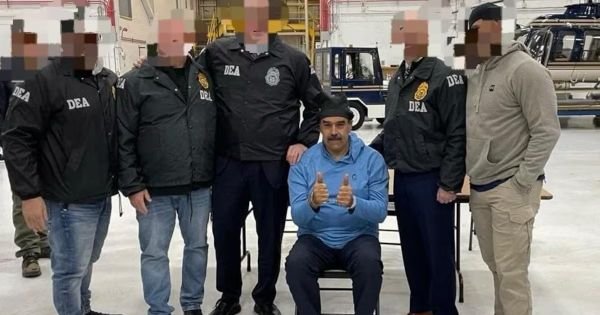
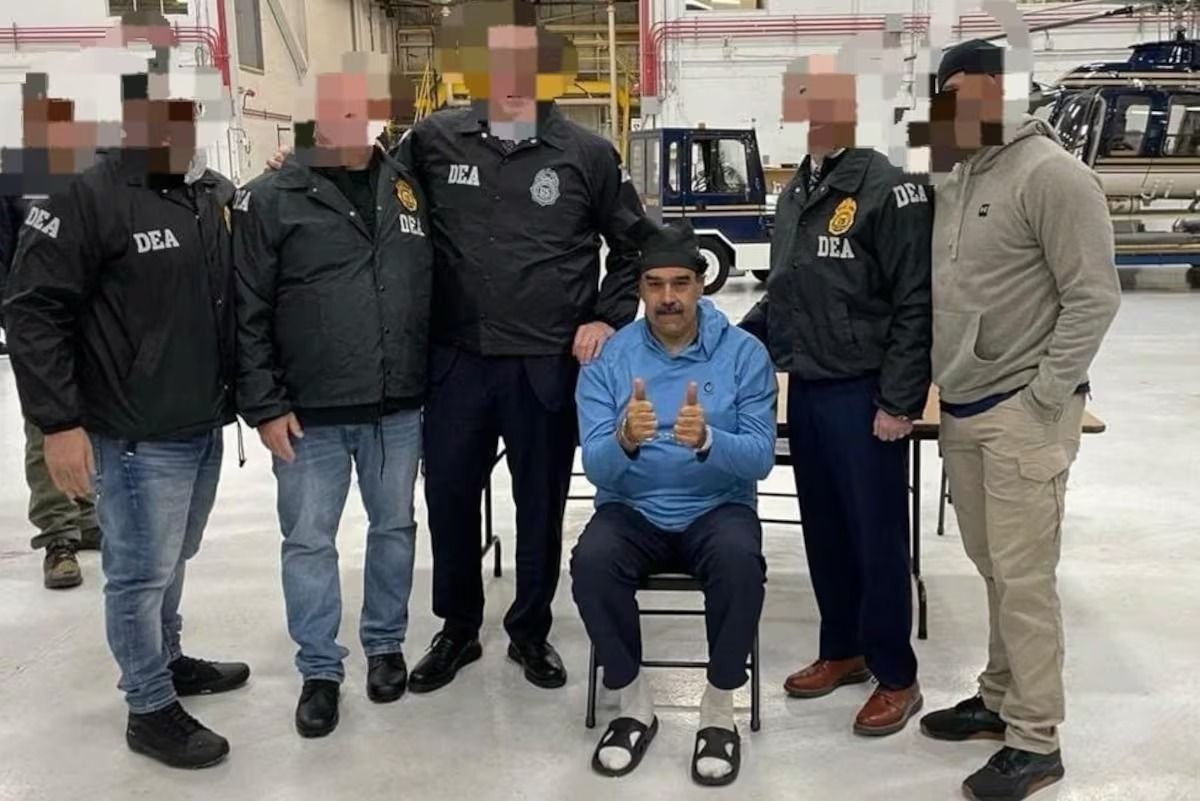
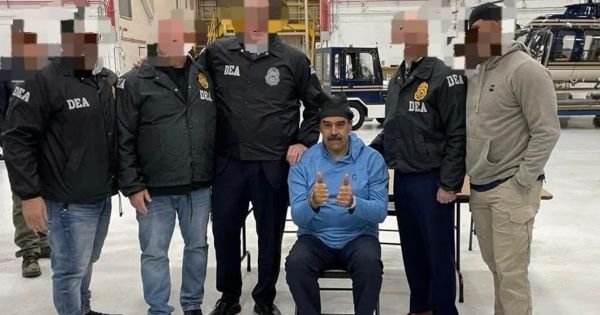
Speaking aboard Air Force One on Sunday, US President Donald Trump addressed the mounting death toll from the “Operation Absolute Resolve” raid in Caracas to abduct former Venezuelan leader Nicolás Maduro and outlined his administration’s new doctrine regarding ties with Latin American countries.
Trump confirmed that the operation encountered significant resistance from a foreign-backed security detail. During the fighting, 32 Cuban military personnel were killed at Fuerte Tiuna, figures later confirmed by Havana.
While the Trump administration has not released an official casualty count, reports from Venezuela indicate that the overall death toll ranges between 40 and 80 people, including military personnel and civilians affected by the strikes. Reuters reported that Venezuelan authorities have acknowledged fatalities but have so far declined to publish official figures, making an independent verification of total casualties impossible at this stage.
The United States has maintained that no American service members were killed during the operation, according to official statements. However, no detailed breakdown of possible injuries has been publicly released, and agencies note that casualty information remains incomplete.
Trump used the outcome of the mission to issue blunt warnings to other regional leaders, suggesting his administration was prepared to replicate what he described as the “Maduro model” elsewhere. “Operation Colombia sounds good,” Trump remarked, adding that President Gustavo Petro would not be “running Colombia for much longer.”
On Cuba, Trump said he saw little need for further action: “I don’t think we need any action… they have no income. They received all their income from Venezuela.”
Referring to Mexico, Trump described President Claudia Sheinbaum as a “wonderful person,” but claimed she was too “afraid” of drug cartels. “Like it or not… the cartels rule Mexico,” he insisted.
Meanwhile, the UN Security Council is expected to convene on Monday at the request of Colombia, Russia, and China to debate what they have described as a “colonial war” and a potential violation of Article 2(4) of the UN Charter, amid growing international concern over the legality of the operation.
“The presidency intends to hold an emergency meeting on Monday morning at 10:00 hours (15:00 hours GMT),” Khadija Ahmed, spokesperson for the Permanent Mission of Somalia to the United Nations, informed.
Somalia holds the rotating presidency of the UNSC this month.
Diplomatic sources confirmed that a request, submitted by Colombia, has been received by the Security Council.
A spokesperson for the Southern District Court of New York announced that Maduro and his wife will be brought before Federal Judge Alvin K. Hellerstein in Manhattan at 12:00 hours (local time).
Scotland’s men’s team qualified for their first World Cup since 1998 in November
A public holiday will mark Scotland’s men’s national team playing in its first World Cup since 1998.
Scotland will face Haiti in Boston at 02:00 GMT on Sunday 14 June, before taking on Morocco and Brazil in their remaining group fixtures in the United States.
First Minister John Swinney has proposed that 15 June is designated as a national bank holiday – though the move will only affect staff directly employed by the Scottish government.
Like the St Andrews’ Day bank holiday, other employers would not be compelled to observe it.
The proposal will be formally confirmed once it has been rubber-stamped by the King.
Scotland to come to a ‘standstill’
Speaking at an event in Glasgow, Swinney said: “The whole nation will come to a standstill in June – even more so in July once we’ve seen off Brazil and progressed to the knockout stages.
“This is a moment 28 years in the waiting – and I want as many people as possible to share the occasion.”
He added: “That will mean that supporters across the country can watch our men’s team in their first World Cup match for almost 30 years, and share in the chance for Scotland to be on the world stage, to attract business development, to create tourism and hospitality interest within the country and to make deep and lasting cultural and sporting connections.”
Scotland is able to set distinct bank holidays from the rest of the UK.
A day can be appointed as a bank holiday in Scotland by royal proclamation.
The first minister is able to advise the Privy Council – an advisory board to the monarch – on proclamations for Scotland, which are formally signed off by the King.
Scotland face Morocco in Boston on 19 June, and Brazil in Miami on 24 June. Both games kick off at 23:00 GMT.
Swinney has previously said that the government would work with local authorities on extending pub opening hours during the World Cup.
The Scottish government simply does not have the power to give people across the country – including those working in the private sector or in parts of the public sector controlled by the UK government – an extra, specified day off work.
But an extra holiday may be a pragmatic response to the situation some businesses may face on the morning after Scotland’s opening World Cup game. How many might want to stay up late and then take the day off?
Decisions on whether or not to give staff the day off are for individual employers to take.
In general, bank or public holidays do not have to be given as paid leave by employers.
An employer can choose to include bank holidays as part of a worker’s statutory annual leave.
Employment contracts tend to specify that employers have a certain number of days off every year – inclusive of bank holidays.
Nor is there any reason why private business would need to close. There are no restrictions on opening hours on bank holidays.
Even the major Scottish high street banks do not close on Scottish bank holidays now – they observe English bank holidays, to stay in line with their sister businesses south of the border.
School holidays are already set for the coming year by individual councils. Some may consider whether to look at giving the special bank holiday as a day off, but there are also rules on how many days schools need to open for to consider.
Opposite visions left the regional bloc, inspired by former Venezuelan president Hugo Chávez, increasingly fragmented
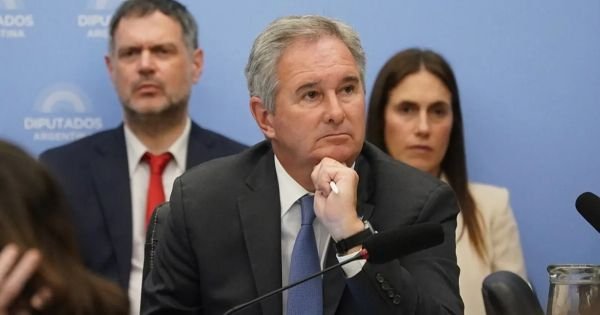
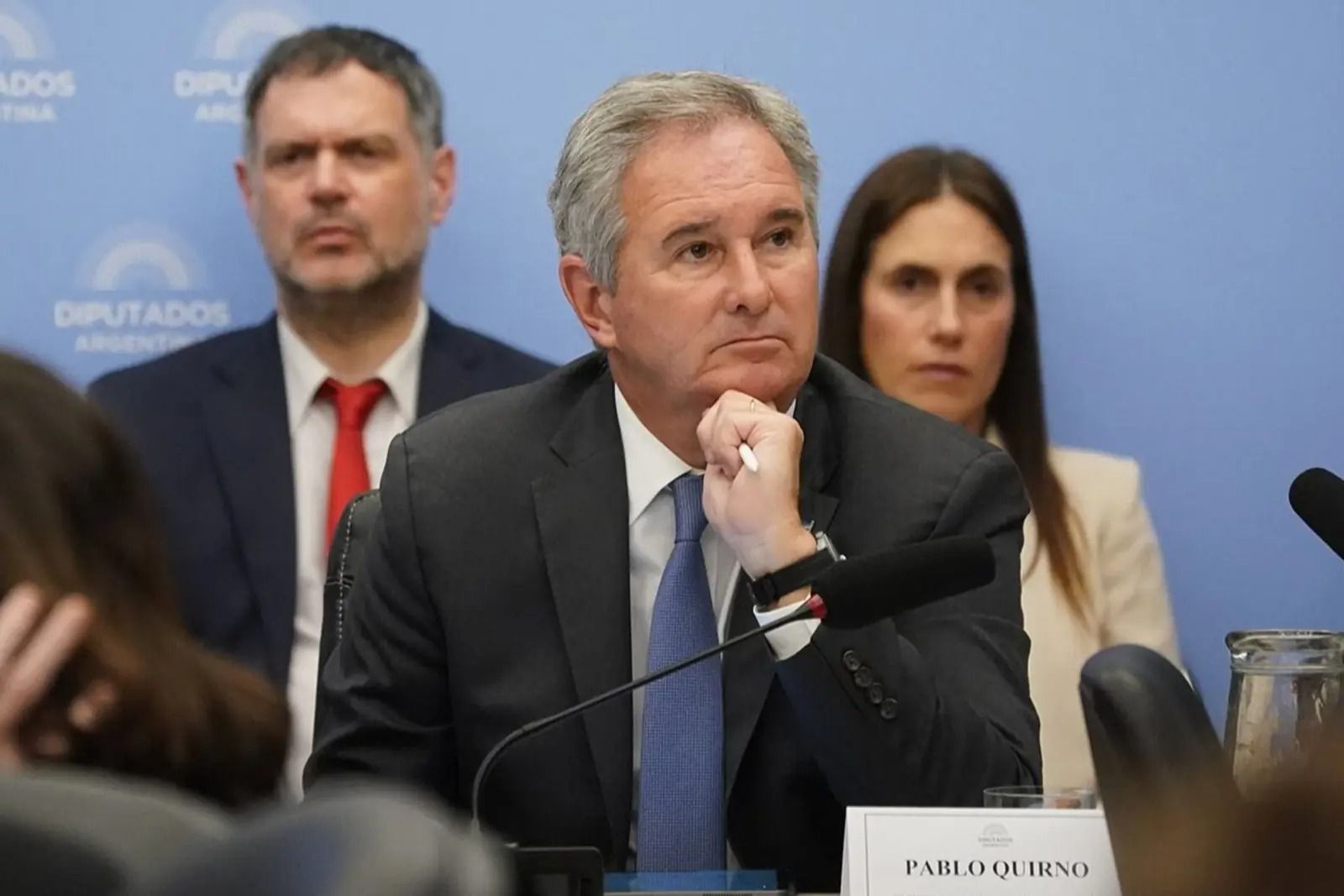
Argentina’s President Javier Milei and Foreign Minister Pablo Quirno reportedly played a key role Sunday in barring a joint statement from all members of the Community of Latin American and Caribbean States (Celac) objecting to Washington’s operation in Caracas to abduct Nicolás Maduro.
Due to Milei’s and Quirno’s swift intervention with other countries endorsing the Libertarian government’s position, a virtual summit ended without a joint statement, exposing cracks within the regional organization.
The meeting, convened urgently by Colombian President Gustavo Petro, was held by videoconference and attended by foreign ministers and diplomatic representatives from the 33 countries that make up the forum.
Joining Argentina’s stance were Paraguay, Peru, Bolivia, Costa Rica, Ecuador, El Salvador, Panama, the Dominican Republic, and Trinidad and Tobago. This group rejected any statement that could be interpreted as a political defense of the Venezuelan regime or a direct criticism of Washington.
Argentina’s position was key to articulating that veto minority. Quirno promoted a strategy in clear disagreement with the approach promoted by Petro and supported by governments aligned with the Bolivarian axis, including Cuba, Nicaragua, and Honduras.
While Chilean President Gabriel Boric Font joined in the criticism of US actions, President-elect José Antonio Kast celebrated Maduro’s arrest and described it as a turning point in curbing the expansion of drug trafficking and organized crime in the region.
In Honduras, incumbent President Xiomara Castro was one of the harshest voices against the capture of the Venezuelan leader, but Nasry Asfura publicly supported the operation, labeling it a step forward in the defense of freedom and human rights.
Many Cubans died yesterday protecting Maduro, Trump said on his way to the White House
Speaking aboard Air Force One on Sunday, US President Donald Trump addressed the mounting death toll from the “Operation Absolute Resolve” raid in Caracas to abduct former Venezuelan leader Nicolás Maduro and outlined his administration’s new doctrine regarding ties with Latin American countries.
Trump confirmed that the operation encountered significant resistance from a foreign-backed security detail. During the fighting, 32 Cuban military personnel were killed at Fuerte Tiuna, figures later confirmed by Havana.
While the Trump administration has not released an official casualty count, reports from Venezuela indicate that the overall death toll ranges between 40 and 80 people, including military personnel and civilians affected by the strikes. Reuters reported that Venezuelan authorities have acknowledged fatalities but have so far declined to publish official figures, making an independent verification of total casualties impossible at this stage.
The United States has maintained that no American service members were killed during the operation, according to official statements. However, no detailed breakdown of possible injuries has been publicly released, and agencies note that casualty information remains incomplete.
Trump used the outcome of the mission to issue blunt warnings to other regional leaders, suggesting his administration was prepared to replicate what he described as the “Maduro model” elsewhere. “Operation Colombia sounds good,” Trump remarked, adding that President Gustavo Petro would not be “running Colombia for much longer.”
On Cuba, Trump said he saw little need for further action: “I don’t think we need any action… they have no income. They received all their income from Venezuela.”
Referring to Mexico, Trump described President Claudia Sheinbaum as a “wonderful person,” but claimed she was too “afraid” of drug cartels. “Like it or not… the cartels rule Mexico,” he insisted.
Meanwhile, the UN Security Council is expected to convene on Monday at the request of Colombia, Russia, and China to debate what they have described as a “colonial war” and a potential violation of Article 2(4) of the UN Charter, amid growing international concern over the legality of the operation.
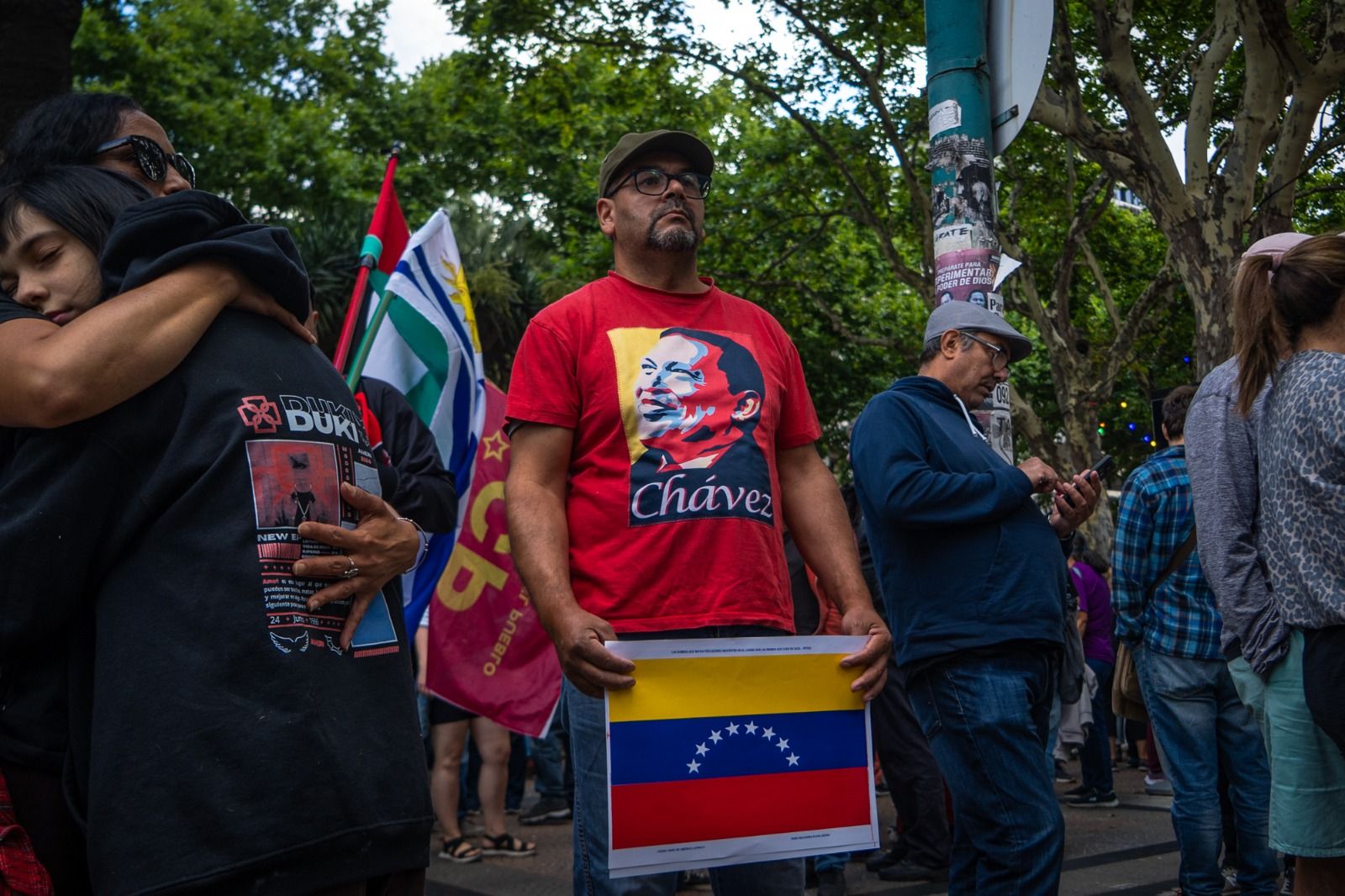
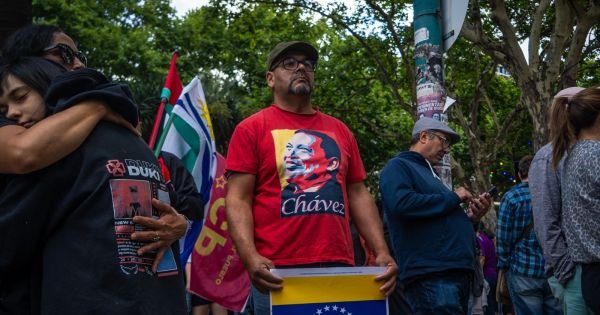
Uruguayan left-wing demonstrators protest against US invasion in Venezuela. Photo: Sebastián Astorga
The governments of Brazil, Chile, Colombia, Mexico, Uruguay, and Spain issued a joint statement on Sunday, expressing “deep concern and rejection” of the US military operation that resulted in the capture of Nicolás Maduro.
The communiqué marks a significant diplomatic challenge to the President Donald Trump administration, as it includes both traditional critics and key regional partners who had previously distanced themselves from the Maduro regime.
The six signatories asserted that the unilateral strike contravenes fundamental principles of the UN Charter, specifically the prohibition of the use or threat of force and the respect for territorial sovereignty.
The leftwing governments warned that targeting a sitting head of state sets an extremely dangerous precedent for regional peace and cautioned that such actions put the civilian population at immediate risk. We call for regional unity, beyond political differences, in the face of any action that jeopardizes regional stability, they said.
In a direct response to Trump’s claims that the US would run Venezuela and its oil industry, the group expressed alarm over any attempt at external appropriation of natural or strategic resources, calling it incompatible with international law.
The document also underscored Latin America’s long-standing status as a Zone of Peace and launched an appeal for the hemisphere to look beyond political differences to maintain stability, while urging UN Secretary-General António Guterres to use his good offices to de-escalate tensions.
The nations reiterated that the crisis must be resolved through an inclusive political process led by Venezuelans themselves, without external interference.
While the Spanish government joined the statement calling for de-escalation, Prime Minister Pedro Sánchez faced immediate pressure at home.
The organization, which joined the national and international condemnation, warned of the escalating hostility of the current Republican administration in Latin America and the Caribbean.
They also mentioned the ongoing measures against Cuba that reinforce the economic, financial, and commercial blockade that has been attempting to suffocate the Caribbean nation for more than six decades.
“Trump says: first Venezuela, then Cuba. We say NO,” emphasized the Los Angeles Committee, which is part of the extensive National Network on Cuba in the United States.
“We need to organize actions worldwide, street protests, and informational talks like the ones we are holding here in Los Angeles, united fronts with the broadest possible forces,” a press release stated.
Also in the United States, the American Federation of Labor and Congress of Industrial Organizations, commonly known as the AFL-CIO, spoke out for the first time against the U.S. attacks on the Latin American country.
“We join the international labor community in condemning President Trump’s unconstitutional actions in Venezuela,” emphasized a statement from the largest labor federation in the United States and Canada.
November 18 was supposed to be a routine workday for Rwanda-based entrepreneur Derrick Ikenga. But it turned out to be a nightmare he wasn’t prepared for.
Cloudflare, a U.S.-based cloud services and cybersecurity firm, faced a massive global outage that day, taking down large parts of the internet, including operations of giants like X (formerly Twitter) and ChatGPT.
Ikenga’s company, which builds sales automation tools for clients, also uses Cloudflare. The outage brought the tools to a grinding halt, sending his clients into panic mode.
For many entrepreneurs and tech workers, this was a familiar experience in 2025. Today, an estimated 94% of enterprise servicesworldwide rely on at least one major cloud provider, such as Amazon Web Services, Microsoft Azure, or Google Cloud, for hosting, data storage, or delivery. Together, the three largest providers control more than 62% of the global cloud market.
Between August 2024 and August 2025, AWS, Azure, and Google Cloud together experienced more than 100 service outages. The duration of these outages varied between a few minutes and several hours. AWS saw one of the biggest and most widespread cloud outages of 2025 when its services went down for 15 hours in October. The outage affected over 4 million users and more than 1,000 companies.
When an outage occurs, cloud service providers are responsible for restoring services as soon as possible. In some cases, providers compensate affected customers with free cloud credit.
Each time such disruptions occurred, everyday moments began to fail in unexpected ways. Online payments failed. Doctors were unable to access patients’ health records. CCTV cameras went offline. Doorbells stopped working. Smart mattresses lost their sleep-tracking features.
The outage offered a glimpse into just how deeply cloud infrastructure is woven into modern life, powering everything from bank transfers to flight bookings and movie streams.
Rest of World brings together first-person accounts from entrepreneurs and technology workers around the world, tracing what happened when the cloud failed in 2025.
The quotes have been edited for length and brevity.
Helpless because of a cloud outage
Francisco Osorio, a Mexico-based senior go-to-market marketing engineer at Simetrik, an operational control and management automation company
I couldn’t do anything other than feel helpless.
I am responsible for the smooth functioning of my company’s website, among other things. During the November AWS outage, the website stopped functioning, but I was unable to take any action because I lost access to all my work-related platforms, like HubSpot, Slack, and Salesforce. [Some users of AWS experienced issues on November 5, according to outage tracking website Downdetector.com. An AWS spokesperson denied the claims in comments to Reuters.]
Even as we were sorting through internal issues, our clients also couldn’t log into the platform, which was a more serious concern because we need to comply with service level agreements under which we assure quality and quantity of service.
I couldn’t do anything other than feel helpless. All I could tell everyone around was, “I’m deeply sorry, I cannot help you today. Our platforms are not running.”
Standard operating procedures for cloud outage
Sundeep Narwani, India-based co-founder of Narrative Research Labs, a firm focusing on AI in media
Being an AI company, we’re quite heavily dependent on the cloud. The outages have wasted a lot of time for our clients and us, rendering us helpless in most cases.
The outages have wasted a lot of our time.
The first time it happened, we didn’t know what to do or how to deal with it, and we entered panic mode. My biggest concern was on two fronts: downtime disrupting our processes, and our clients being obviously very angry because we deliver a lot of daily reports for them.
When it happened the second time, we created a standard operating procedure to deal with it because someone like me, who is involved in business development apart from being the CEO, cannot be available all the time to handle these issues.
We delegate a project manager to handle issues of cloud outages and ensure our customers are taken care of during such times while finding a quick solution to the downtime.
We have also purchased a local server to replicate what AWS does, so that if there is any kind of outage again, we have one local server to tide us over. Obviously, it doesn’t have the same kind of performance that AWS gives us, but at least the team can function. But these are just temporary options.
On-premise cloud solution
David Nandwa, founder of Honeycoin, a Kenyan cross-border payment company
We have faced cloud outage issues in the past and were also hit with the recent AWS outage in November.
The approach we have applied to dealing with this is to have a “distributed stack” or multiple fallback options. We rely on multiple clouds, including AWS, Google Cloud, and Heroku. During the recent AWS outage, we temporarily switched to Google Cloud to maintain service availability for most of our customers.
If all cloud providers are down, we then fall back to using an on-premise server that we’ve created. It doesn’t perform as efficiently as our providers, but it comes in handy in moments where all the major providers are down. It’s locally hosted, so it’s an option to process requests when all else fails.
Subscribing to multiple cloud providers definitely helps us not only to hedge against future risk but also to decrease reliance on a single one, and risk losing our data completely.
However, multiple providers mean multiple bills at the end of the month.
The one-off cost of a single on-premise server installation is something we’re seriously considering to decrease reliance on the large players and also have more digital sovereignty. It’s pretty simple to set up, but it requires a lot of work to move our stack from any of the globally reputable providers to our own direct stack.
Navigating through a cloud outage
Olumide Egbigbola, Nigeria-based product manager at Leatherback, a cross-border payment startup
Companies like ours can’t do much in such cases.
Cloud infrastructure is the backbone of most of the things that we do, as most of our critical services are hosted in the cloud. So any downtime from our cloud provider is immediately felt by our individuals and business users. We face complaints of transaction delays, and the app slowing down or being unresponsive.
This usually causes a lot of anxiety amongst users who can’t access their money.
Companies like ours can’t do much in such cases other than inform our users about the downtime.
We try to spread our cloud services and route traffic through regions that are less affected or unaffected, so that users can at least perform minimal activities while we wait for the major downtime to be over.
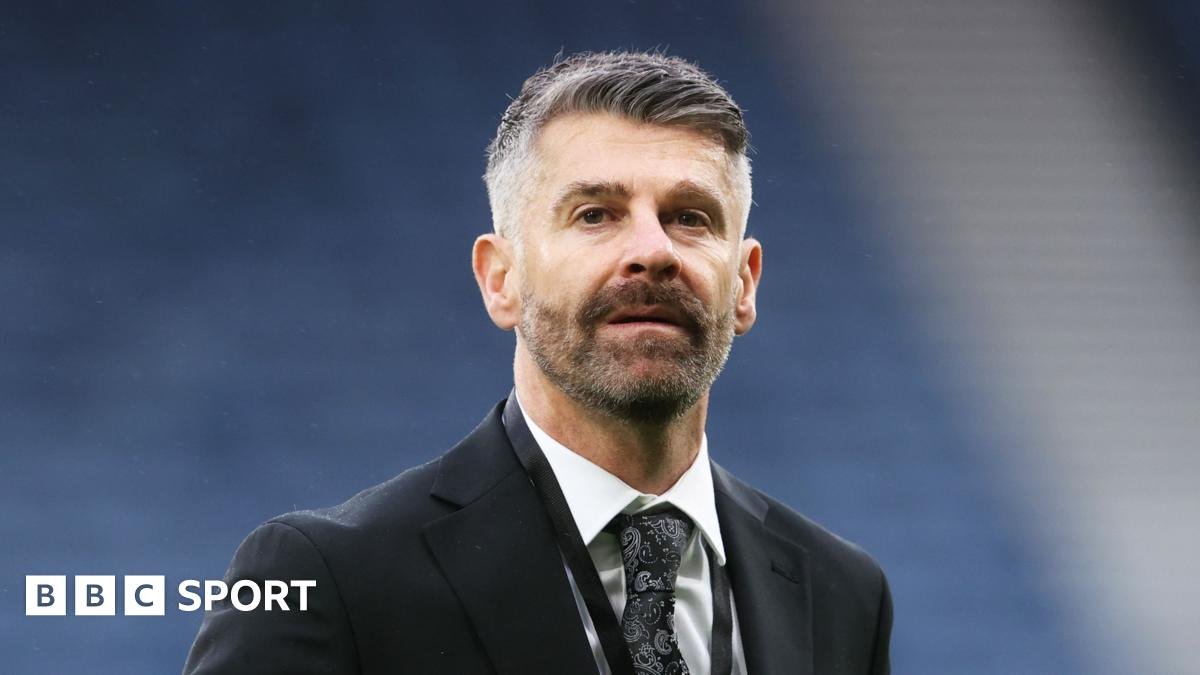
Robinson says in his younger years he would allow links to go to his head, but again stressed the need to stay focused on the job at hand with St Mirren.
The former Northern Ireland midfielder had spells managing Oldham, Motherwell and Morecambe before taking the St Mirren job in February 2022.
“Yes, we’ve done well, we’ve done well at Motherwell as well, but I can’t control what people think,” he said. “I can only concentrate on what’s right in front of me and that’s St Mirren.
“At that stage, I probably got a little bit excited and thought, ‘I’m really good and people want me’, but I was a very young manager then. I’ve got 400-odd games under my belt now.
“There’s a lot of talk, there’s a lot of social media now that runs the world and fortunately, I’m not part of that. I don’t look at that, I don’t see that.
“As soon as you take your eye off the ball, what’s in front of you, the game gets very complicated and I’m certainly not complicating the job. We need to do basics well here and that’s my main focus.”
Despite being a fixture in the top-half in the past three seasons, St Mirren are 10th in the current campaign, five points above Kilmarnock in the relegation play-off spot.
“At the minute, we’re in a relegation battle,” Robinson said. “If we win our two games in hand, you’re on the verge of the top six again and that’s how tight this league is.
“So what can we achieve? The biggest thing that has to happen in this football club is staying in this division. People get carried away with what we’ve done and how we’ve done it, but that doesn’t change the fact that success is to stay in this division.
“So I certainly won’t be looking beyond that at this moment in time.”
Uruguayan left-wing demonstrators protest against US invasion in Venezuela. Photo: Sebastián Astorga
The governments of Brazil, Chile, Colombia, Mexico, Uruguay, and Spain issued a joint statement on Sunday, expressing “deep concern and rejection” of the US military operation that resulted in the capture of Nicolás Maduro.
The communiqué marks a significant diplomatic challenge to the President Donald Trump administration, as it includes both traditional critics and key regional partners who had previously distanced themselves from the Maduro regime.
The six signatories asserted that the unilateral strike contravenes fundamental principles of the UN Charter, specifically the prohibition of the use or threat of force and the respect for territorial sovereignty.
The leftwing governments warned that targeting a sitting head of state sets an extremely dangerous precedent for regional peace and cautioned that such actions put the civilian population at immediate risk. We call for regional unity, beyond political differences, in the face of any action that jeopardizes regional stability, they said.
In a direct response to Trump’s claims that the US would run Venezuela and its oil industry, the group expressed alarm over any attempt at external appropriation of natural or strategic resources, calling it incompatible with international law.
The document also underscored Latin America’s long-standing status as a Zone of Peace and launched an appeal for the hemisphere to look beyond political differences to maintain stability, while urging UN Secretary-General António Guterres to use his good offices to de-escalate tensions.
The nations reiterated that the crisis must be resolved through an inclusive political process led by Venezuelans themselves, without external interference.
While the Spanish government joined the statement calling for de-escalation, Prime Minister Pedro Sánchez faced immediate pressure at home.