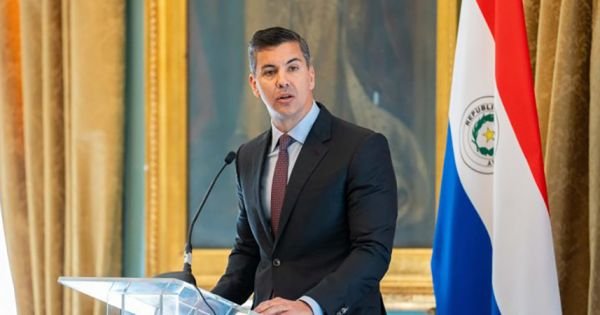
Peña highlighted the event as a critical opportunity for a democratic restoration in the region
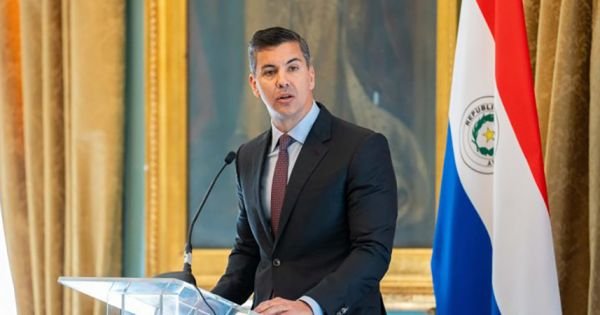
Paraguayan President Santiago Peña celebrated Washington’s intervention in Caracas to hold Bolivarian leader Nicolás Maduro Moros accountable before a New York court of law.
The National Republican Association (ANR) leader highlighted the event as a critical opportunity for a democratic restoration in the region.
In a statement, Peña characterized the Maduro regime as illegitimate, predatory, and dictatorial, asserting that it has caused immense harm to the Venezuelan people. The document explicitly declares that the fall of the regime can only be good news.
Additionally, the Paraguayan government urges that the decisive moment ahead be handled through democratic means, underscoring that the primary focus must remain on the stability and well-being of Venezuelans.
Drawing on its own history of transitioning from the Alfredo Stroessner dictatorship to a modern democracy, Paraguay offered the international community its experience and cooperation, proposing Asunción to act as a partner in building a new Venezuelan government where civil rights and freedoms are fully upheld.
The communiqué concludes with a message of support, stating that Venezuelans deserve to live in a society defined by democracy, freedom, and peace, rather than the authoritarianism of the past.
Argentina
President Javier Milei has taken the most celebratory stance, aligning himself directly with the Trump administration’s Absolute Resolve operation.
The Libertarian leader hailed Maduro’s capture as a victory for the free world and the end of a narco-terrorist regime.
Argentina was the first in the region to offer full support for a transition led by Edmundo González and has pledged to back the US in multilateral forums.
Additionally, Milei linked Maduro’s fall to the hope of releasing Nahuel Gallo, an Argentine Border Guard (Gendarmería Nacional) NCO held prisoner by the Chavista regime.
Brazil
President Luiz Inácio Lula da Silva spoke of a return to the darkest days of US interventionism in Latin America, noting that the White House had crossed an unacceptable line.
The government held an emergency cabinet meeting and called for a vigorous response from the UN Security Council, fearing a humanitarian crisis at its Venezuelan border.
Uruguay
The Uruguayan Broad Front (Frente Amplio – FA) administration of President Yamandú Orsi endorsed the six-nation statement condemning US President Donald Trump’s move. In Montevideo’s view, the Venezuelan crisis must be solved through dialogue and negotiation, calling the military strike a dangerous precedent.
Former President Luis Lacalle Pou, now a main opposition leader, expressed a more optimistic viewpoint. Today freedom can dawn in Venezuela, he stressed.
In more than a dozen plazas, workers from this large Cuban province raised their voices in solidarity with the Venezuelan people and the Bolivarian government.
The demonstrations took place following recent events in South America, which are being followed with concern by the island’s labor movement.
The agricultural sector gathered at the Provincial Delegation of Agriculture, and the sugar workers at Lenin Workshops.
Meanwhile, civilian workers met at the Ignacio Agramonte Industrial School, and the Commerce union at its corresponding Business Group.
Other meeting included the Community Computer Clubs (Communications), the Ministry of Construction, and the Electricity Company.
The Transportation sector at the Airport and the Tourism sector at Transtur venue are also joining the demonstration today, in a clear show of unified support for a
Liverpool badly missed Hugo Ekitike in their draw against Fulham, and put in another lacklustre display.
Arne Slot’s side are nine games unbeaten now, so their recent results have been all right on paper.
It’s their performances that are the problem, though. When you see them with your own eyes, they are miles off where they were when they won the title last season, and are nowhere near where Arsenal are at now either.
When Liverpool beat them at Anfield in August, Gunners boss Mikel Arteta was criticised for being too cautious, as he often is in big games like this.
It has to be different this time. This Liverpool team have been leaking goals all season, so Gunners fans are not going to accept Arteta sitting back.
I doubt Arteta will do it this time, because Arsenal are at home and Liverpool are there for the taking.
In fact, there should be zero negativity in the way they are set up. Manchester City have dropped points twice in the past few days, so Arsenal are six points clear. It’s just over six years since Arteta took charge, and this is not the time for him to be cautious.
The Gunners should go for it, because they are on a different level to Liverpool, and they may as well be in a different league.
No-one thinks Slot’s side are going to win the Premier League anymore, even though they are fourth, and they don’t look capable of flexing their muscles and going on a long winning run, either.
That is not going to happen. This is a bang-average Liverpool team this season, and Arsenal should be able to exploit all of their weaknesses.
It should be pretty comfortable for the league leaders too.
They are carrying Viktor Gyokeres a bit, because he has just not fired for them up front, but it does not seem to matter, they are winning anyway.
Declan Rice is just majestic in the middle of the park, he is just phenomenal, and they have got lots of different ways of scoring goals.
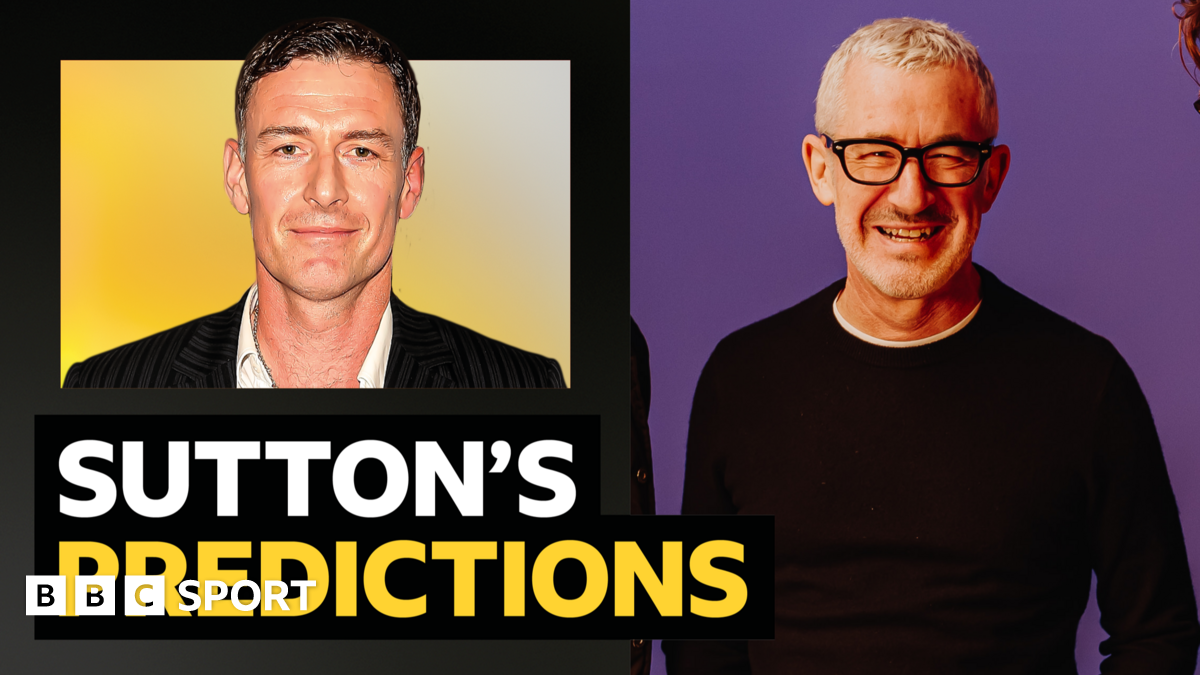
Sutton’s prediction: 2-0
Tony’s prediction: A win here and Arsenal have the title destiny in their own hands. With their first-choice defence back, I can’t see Liverpool getting past Gabriel and William Saliba, so I expect a comfortable night in north London for the champions in waiting.
Gabriel to rise above Virgil van Dijk in the box and grab the first goal. 2-0
Ahead of his upcoming debut Netflix American Boy special, Marcello Hernández just might’ve revealed something personal about his love life.
Though it’s not confirmed yet, the comedian posted a black-and-white video of him getting ready for what appears to be his wedding day alongside his mother and close friends earlier today (January 5th).
Clips show him smiling and celebrating what could be his big day, sound tracked by Willie Hutch’s “I Choose You.” However, it’s worth mentioning that this could also be part promo for his highly-anticipated Netflix debut.
Furthermore, his partner and him are private about their relationship.
His girlfriend (or perhaps now wife) Ana Amelia Batlle Cabral posted an Instagram carousel from October, with a photo of wedding dress shopping. Though she’s not wearing it, it could be a clue to her saying “yes to the dress.”
While this could be another clue to the Hernández wedding, fans are questioning under his post if it’s a glimpse into his personal life or of his upcoming big day with Netflix.
Hernández’s American Boy–his first stand-up special–will be available for streaming on Wednesday (January 7). “MY FIRST NETFLIX SPECIAL. I started comedy at 18 in Cleveland, Ohio at dive bars, small clubs, and poetry slam rooms. 10 years later, stand up has given me everything. If you’ve ever been to a show, put me on a show, given me advice, or supported me in any way, THANK YOU. AMERICAN BOY JAN 7TH ON @netflix 🇺🇸👦🏻,” he wrote on Instagram at the time.
The stand-up special comes after becoming one of Saturday Night Live’s favorites, representing Latines on a national scale.
Opposite visions left the regional bloc, inspired by former Venezuelan president Hugo Chávez, increasingly fragmented
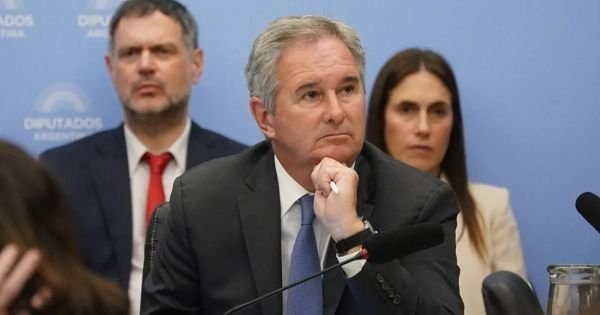
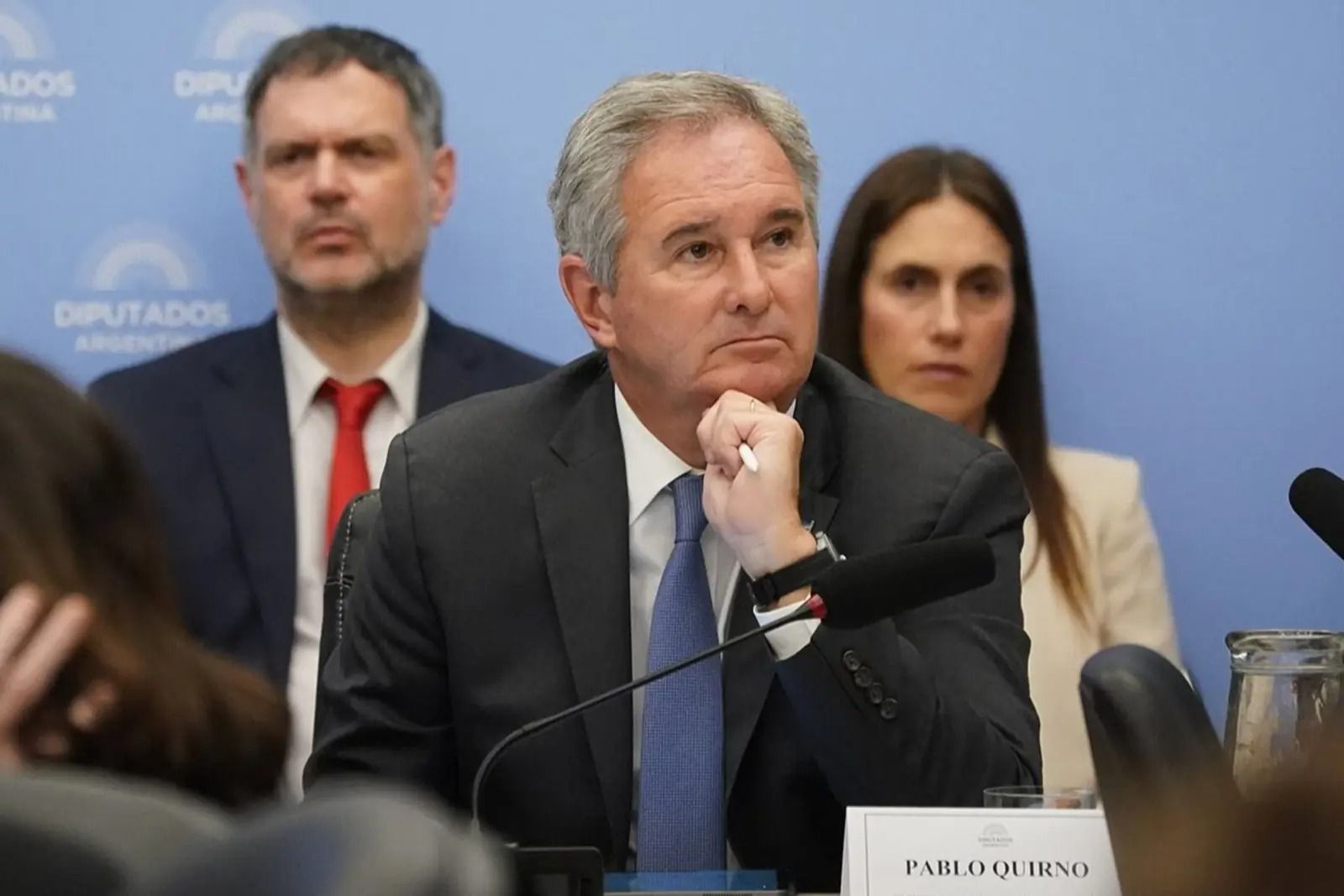
Argentina’s President Javier Milei and Foreign Minister Pablo Quirno reportedly played a key role Sunday in barring a joint statement from all members of the Community of Latin American and Caribbean States (Celac) objecting to Washington’s operation in Caracas to abduct Nicolás Maduro.
Due to Milei’s and Quirno’s swift intervention with other countries endorsing the Libertarian government’s position, a virtual summit ended without a joint statement, exposing cracks within the regional organization.
The meeting, convened urgently by Colombian President Gustavo Petro, was held by videoconference and attended by foreign ministers and diplomatic representatives from the 33 countries that make up the forum.
Joining Argentina’s stance were Paraguay, Peru, Bolivia, Costa Rica, Ecuador, El Salvador, Panama, the Dominican Republic, and Trinidad and Tobago. This group rejected any statement that could be interpreted as a political defense of the Venezuelan regime or a direct criticism of Washington.
Argentina’s position was key to articulating that veto minority. Quirno promoted a strategy in clear disagreement with the approach promoted by Petro and supported by governments aligned with the Bolivarian axis, including Cuba, Nicaragua, and Honduras.
While Chilean President Gabriel Boric Font joined in the criticism of US actions, President-elect José Antonio Kast celebrated Maduro’s arrest and described it as a turning point in curbing the expansion of drug trafficking and organized crime in the region.
In Honduras, incumbent President Xiomara Castro was one of the harshest voices against the capture of the Venezuelan leader, but Nasry Asfura publicly supported the operation, labeling it a step forward in the defense of freedom and human rights.
On New Year’s Eve, Nicolás Maduro toured Caracas on state TV, offering oil overtures as U.S. warships waited offshore. Three days later he was in a New York City jail, his rule’s economic wreckage and migration waves still haunting Venezuela.
A late olive branch on New Year’s Eve
On New Year’s Eve, Maduro drove through central Caracas as if filming a travelogue. He narrated landmarks to a friendly interviewer, recalled a 1959 speech by Fidel Castro, and pointed toward his childhood home with practiced tenderness. Only after roughly 40 minutes did he name what waited offshore: U.S. warships near Venezuela.
Then he tried to turn force into a business conversation. “If they want oil, Venezuela is ready for U.S. investment like Chevron,” he said on state television. “Whenever they want it, wherever they want it and however they want it.”
The text says the Trump administration had been negotiating the terms of his exit. The broadcast feels like a leader insisting he still sets the tempo. Journalist Boris Muñoz, who profiled him for Mexico’s magazine Gatopardo and has tracked him since 2003, blamed “negligence” and “a lack of empathy,” saying there were many chances to correct course, and Maduro “just kept going.” In Venezuela, that stubborn pace became policy—and then became a trap.
From Havana classrooms to Chávez’s inner circle
He grew up with his parents and three siblings in a two-bedroom apartment in southern Caracas, the son of a union household. As a teenager, sponsored by the Socialist League, he spent a year in Havana studying politics. He returned to drive a bus, then rose through the unions of the Caracas metro system, learning the mechanics of organization long before he learned how to perform power on camera.
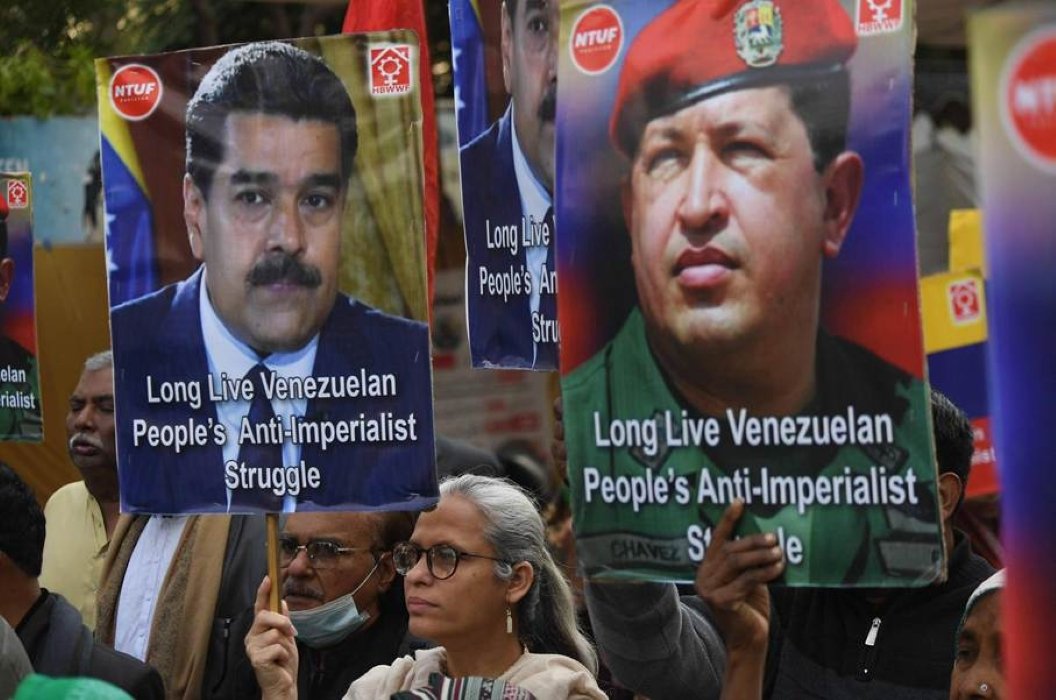
When Hugo Chávez won in 1998, defeating Acción Democrática and Copei, Maduro entered Congress. In 2006, Chávez elevated him to foreign minister, placing him in a movement that invoked Simón Bolívar, the 19th-century liberator born in Caracas, as both symbol and instruction. Under the 1999 constitution, the country renamed itself the Bolivarian Republic of Venezuela.
That loyalty became succession. Before dying of cancer in 2013, Chávez handpicked Maduro and left him a state already wobbling on oil dependence. In Alma Guillermoprieto’s book The Years of Blood, she wrote that Chávez “had the good fortune to die before the bill arrived for the havoc he wreaked on the economy.” Under Maduro, the bill arrived in full.
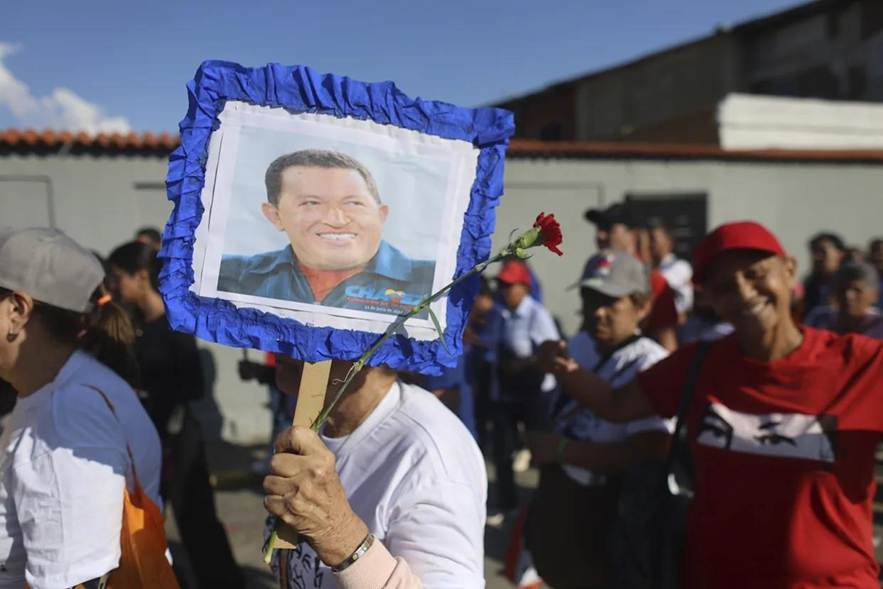
A woman holds an image of the late Venezuelan president Hugo Chávez this Wednesday at the Cuartel de la Montaña 4F in Caracas (Venezuela). EFE/Miguel Gutiérrez
The numbers behind the exodus
As president, Maduro leaned on Petróleos de Venezuela S.A. to dispense patronage and shore up loyalty. As deficits mounted, authorities ordered the Central Bank of Venezuela to print money, a move that rendered the bolívar effectively worthless, said economist José Guerra, who spent two decades at the bank and served in the National Assembly from 2015 to 2021.
From 2012 to last year, Venezuela’s GDP shrank by nearly 80 percent, according to the International Monetary Fund. Inflation in 2018 exceeded 65,000 percent. In Caracas, those figures meant wages that expired overnight, hospitals without supplies, and an economy of improvisation where planning itself became risky. Families learned to price bread in minutes, as the currency lost meaning in real time, everywhere, daily.
At least 7.9 million Venezuelans have fled, the United Nations Refugee Agency says, searching for safety and the means to feed their families. Some crossed the deadly rainforest route of the Darién Gap between Colombia and Panama on the way toward the United States. Most remained elsewhere in Latin America, carrying Venezuela outward in accents, remittances, and absence.
In 2024, the Carter Center for Democracy, the only independent group allowed to monitor Venezuela’s presidential election, said restrictions—including barring opposition candidate María Corina Machado—were so severe the vote could not be considered legitimate. Based on 81% of ballots tallied by its observers, it said opposition candidate Edmundo González Urrutia won with 67 percent. González fled the country, Machado was forced into hiding, and Maduro declared himself the winner.
Now the ending is being written in the United States. The Department of Justice case against Maduro alleges he ran a trafficking operation flooding narcotics into the United States. In the New Year’s Eve interview, he rejected being the head of a “narco-terrorist” organization and said Washington’s true objective was to seize Venezuela’s natural resources.
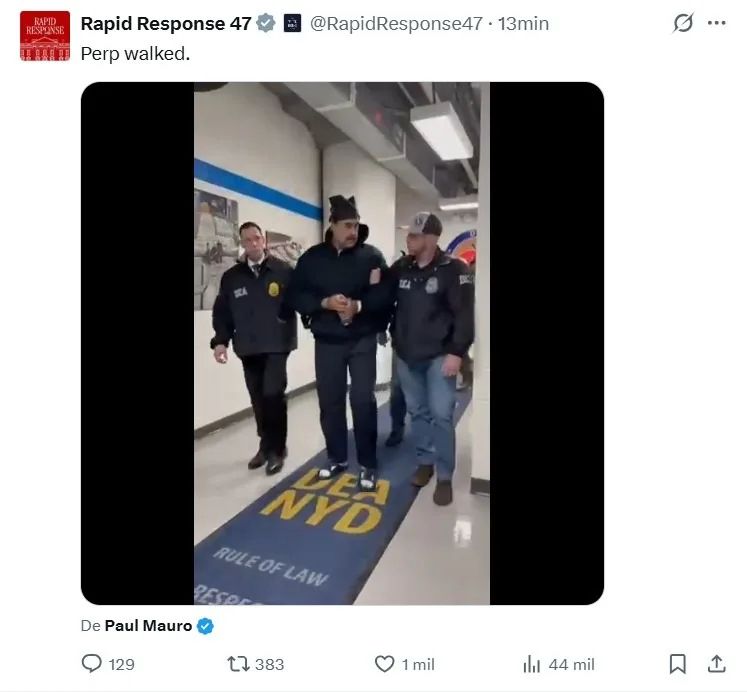
He is scheduled to make his first appearance Monday in federal court in New York. In a White House video posted on Saturday, two U.S. Drug Enforcement Administration agents grip his arms and escort him away as he stands tall, smiles, and wishes onlookers a happy new year—an old revolutionary posture meeting the fluorescent certainty of custody, while Venezuela waits to learn what comes after downfall.
Outside the courtroom, Venezuela’s diaspora keeps counting losses, remittances, and unanswered questions.
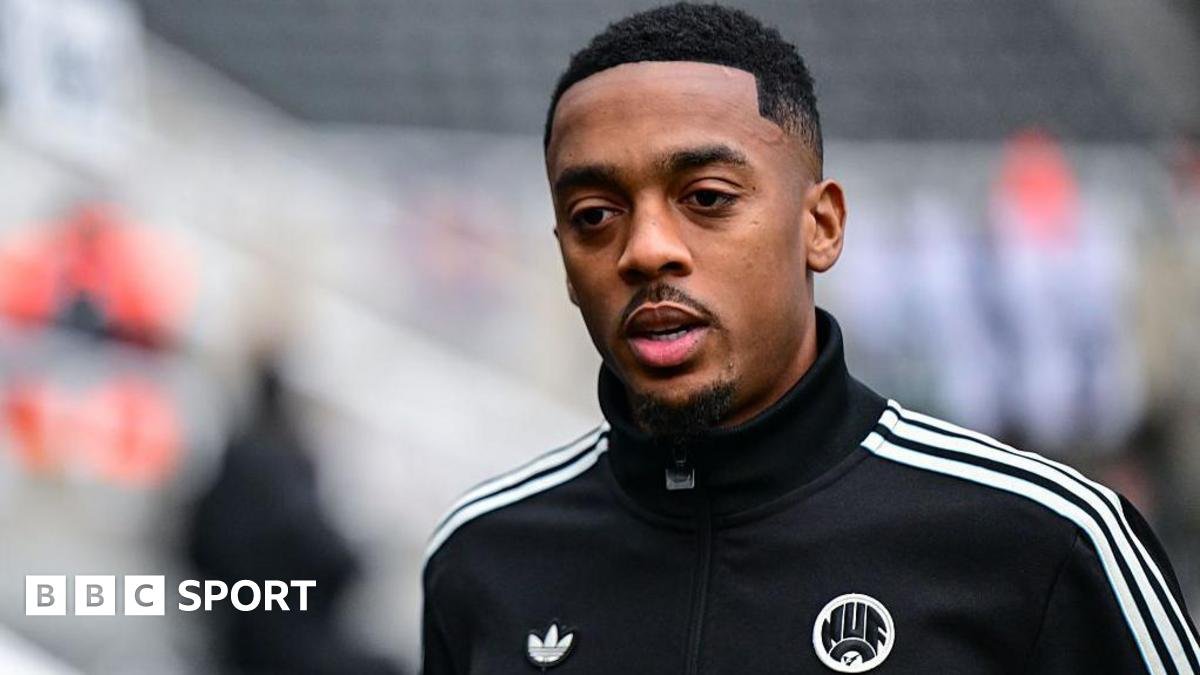
Newcastle United have contacted the police after midfielder Joe Willock was the subject of “disgusting” racial abuse and “deeply disturbing threats” on social media.
Willock was targeted by an anonymous Instagram account following his side’s 2-0 win against Crystal Palace on Sunday.
The substitute missed a chance to score late on at St James’ Park, and went on to post a screengrab highlighting the series of abhorrent private messages he received from a social media user after the game.
“We are disgusted by racist abuse received by Joe Willock on Instagram on Sunday evening,” the club said.
“Following our win over Crystal Palace, Joe received several direct messages from an Instagram account that included racial slurs and deeply disturbing threats of violence towards Joe and his family.”
In response, to the messages, Willock wrote: “I pray you and your family find God. And may him have mercy on you.”
It is the second time in less than a year that Willock has highlighted the racist messages he has received on Instagram.
Newcastle previously contacted the police after Willock was targeted on the social media platform following a 2-1 defeat against Fulham last February.
The club said removing content and applying message filters was not enough, and have called on social media companies to do more to “protect users and support the prosecution of those who seek to break the law on their platforms”.
“Sadly, Joe has faced this before,” the club said. “Each time, we have acted quickly to support him and that has been our immediate priority again.
“We have swiftly reported this matter to the police and we will fully support any investigation to identify the person responsible and hold them accountable, wherever they are.
“This can only happen with meaningful action from Meta, Instagram’s owners. We urge Meta to give the police all the information they need to identify the perpetrator, and to do so quickly.”
Northumbria Police confirmed an investigation had been launched, with the force working alongside the UK Football Policing Unit.
“We condemn all forms of discrimination – it has no place in society and our communities,” a spokesperson said.
Richard Offiong, the campaign co-ordinator for Show Racism the Red Card, the UK’s leading anti-racism educational charity, found it “distressing” to see Willock receive “abhorrent abuse” on multiple occasions.
The former Newcastle academy player said the incident highlighted the “urgent need” for social media companies to do “far more” to prevent racist abuse on their platforms.
“Stronger measures are needed to identify perpetrators quickly, remove harmful content, and ensure those responsible face real consequences,” he said.
“Education, accountability and robust enforcement must go hand in hand if we are serious about tackling racism.”
A spokesman for anti-discrimination charity Kick It Out was also “disgusted to hear of the vile racism” directed towards Willock.
“We stand alongside him in his determination to call out this behaviour,” he added. “But it needs to be met with action from those who can prevent it.
“We have seen a surge in online abuse being reported to us this season, and there is no sign of it slowing down.
“Offenders must be held accountable, and social media companies must work harder to provide better protections for their users. As this abuse shows, current safeguards are not fit for purpose.”
Meta is understood to be in direct contact with the club and stressed “no-one should be subjected to racist abuse”.
“Sending messages like this is against our rules,” a spokesperson for the American multinational technology company said.
“DMs [direct messages] are a private messaging service, which means we can’t review or take action on a message unless the person who received the abusive DM reports it to us in-app.
“No one thing will stop this behaviour overnight, but we will be taking appropriate action and will work to help protect our community from abuse and support police investigations.”
Many Cubans died yesterday protecting Maduro, Trump said on his way to the White House
Speaking aboard Air Force One on Sunday, US President Donald Trump addressed the mounting death toll from the “Operation Absolute Resolve” raid in Caracas to abduct former Venezuelan leader Nicolás Maduro and outlined his administration’s new doctrine regarding ties with Latin American countries.
Trump confirmed that the operation encountered significant resistance from a foreign-backed security detail. During the fighting, 32 Cuban military personnel were killed at Fuerte Tiuna, figures later confirmed by Havana.
While the Trump administration has not released an official casualty count, reports from Venezuela indicate that the overall death toll ranges between 40 and 80 people, including military personnel and civilians affected by the strikes. Reuters reported that Venezuelan authorities have acknowledged fatalities but have so far declined to publish official figures, making an independent verification of total casualties impossible at this stage.
The United States has maintained that no American service members were killed during the operation, according to official statements. However, no detailed breakdown of possible injuries has been publicly released, and agencies note that casualty information remains incomplete.
Trump used the outcome of the mission to issue blunt warnings to other regional leaders, suggesting his administration was prepared to replicate what he described as the “Maduro model” elsewhere. “Operation Colombia sounds good,” Trump remarked, adding that President Gustavo Petro would not be “running Colombia for much longer.”
On Cuba, Trump said he saw little need for further action: “I don’t think we need any action… they have no income. They received all their income from Venezuela.”
Referring to Mexico, Trump described President Claudia Sheinbaum as a “wonderful person,” but claimed she was too “afraid” of drug cartels. “Like it or not… the cartels rule Mexico,” he insisted.
Meanwhile, the UN Security Council is expected to convene on Monday at the request of Colombia, Russia, and China to debate what they have described as a “colonial war” and a potential violation of Article 2(4) of the UN Charter, amid growing international concern over the legality of the operation.
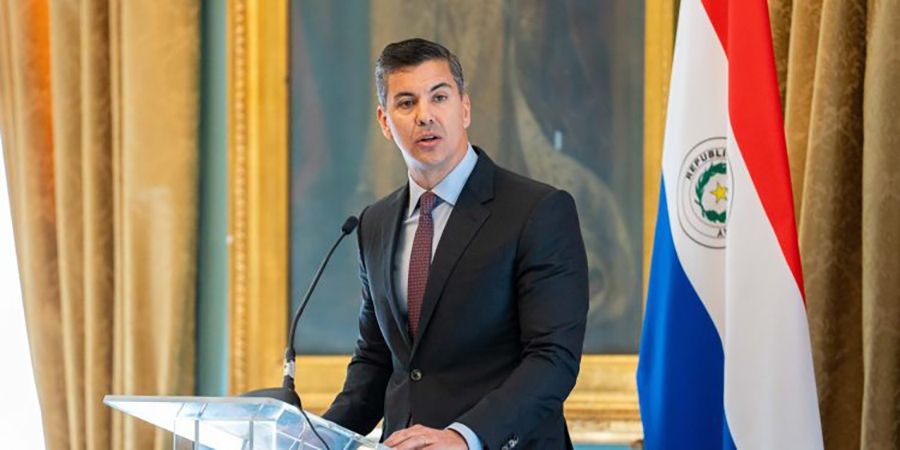
Peña highlighted the event as a critical opportunity for a democratic restoration in the region
Paraguayan President Santiago Peña celebrated Washington’s intervention in Caracas to hold Bolivarian leader Nicolás Maduro Moros accountable before a New York court of law.
The National Republican Association (ANR) leader highlighted the event as a critical opportunity for a democratic restoration in the region.
In a statement, Peña characterized the Maduro regime as illegitimate, predatory, and dictatorial, asserting that it has caused immense harm to the Venezuelan people. The document explicitly declares that the fall of the regime can only be good news.
Additionally, the Paraguayan government urges that the decisive moment ahead be handled through democratic means, underscoring that the primary focus must remain on the stability and well-being of Venezuelans.
Drawing on its own history of transitioning from the Alfredo Stroessner dictatorship to a modern democracy, Paraguay offered the international community its experience and cooperation, proposing Asunción to act as a partner in building a new Venezuelan government where civil rights and freedoms are fully upheld.
The communiqué concludes with a message of support, stating that Venezuelans deserve to live in a society defined by democracy, freedom, and peace, rather than the authoritarianism of the past.
Argentina
President Javier Milei has taken the most celebratory stance, aligning himself directly with the Trump administration’s Absolute Resolve operation.
The Libertarian leader hailed Maduro’s capture as a victory for the free world and the end of a narco-terrorist regime.
Argentina was the first in the region to offer full support for a transition led by Edmundo González and has pledged to back the US in multilateral forums.
Additionally, Milei linked Maduro’s fall to the hope of releasing Nahuel Gallo, an Argentine Border Guard (Gendarmería Nacional) NCO held prisoner by the Chavista regime.
Brazil
President Luiz Inácio Lula da Silva spoke of a return to the darkest days of US interventionism in Latin America, noting that the White House had crossed an unacceptable line.
The government held an emergency cabinet meeting and called for a vigorous response from the UN Security Council, fearing a humanitarian crisis at its Venezuelan border.
Uruguay
The Uruguayan Broad Front (Frente Amplio – FA) administration of President Yamandú Orsi endorsed the six-nation statement condemning US President Donald Trump’s move. In Montevideo’s view, the Venezuelan crisis must be solved through dialogue and negotiation, calling the military strike a dangerous precedent.
Former President Luis Lacalle Pou, now a main opposition leader, expressed a more optimistic viewpoint. Today freedom can dawn in Venezuela, he stressed.
In a hypothetical scenario, Donald Trump seizes Nicolás Maduro in Caracas, warns Colombia’s Gustavo Petro, predicts Cuba could fall, and revives talk of taking Greenland. In Latin America, the swagger sounds like policy, reshaping borders, oil flows, and futures ahead.
Aboard Air Force One, the map redraws itself
In this scenario, less than 48 hours after the raid in Caracas, Donald Trump spoke aboard Air Force One returning to Washington as if the hemisphere had been rearranged overnight. He predicted the government in Cuba could soon collapse and threatened Colombia’s President Gustavo Petro, suggesting the seizure of Nicolás Maduro was a beginning, not a finale.
“Cuba looks like it’s ready to fall,” Trump said. “I don’t know if they’re going to hold out.” He brushed aside the idea of sending American forces to hasten the island’s demise, arguing that its survival is tethered to its patron. “Cuba only survives because of Venezuela,” he said, implying that leverage over Caracas could become leverage over Havana.
Many U.S. presidents have predicted Cuba’s collapse, and the state survived even the fall of the USSR. What sounded new was not the prophecy but the possession. “Don’t ask me about who’s in charge [of Venezuela] because it will be controversial,” Trump said. “We’re in charge.”
His warning then moved to Bogotá. Trump called Colombia “very sick,” and described Gustavo Petro as “a sick man who likes making cocaine and sending it to the United States,” adding that he would not be doing it “very long.” In Latin America, where the language of drugs has often served as a pressure point, it read as a threat dressed in diagnosis.
And he widened the frame beyond the Americas. After the Danish Prime Minister condemned annexation talk, Trump again insisted the United States “needs” Greenland for security, adding that “The EU needs us to have Greenland.”
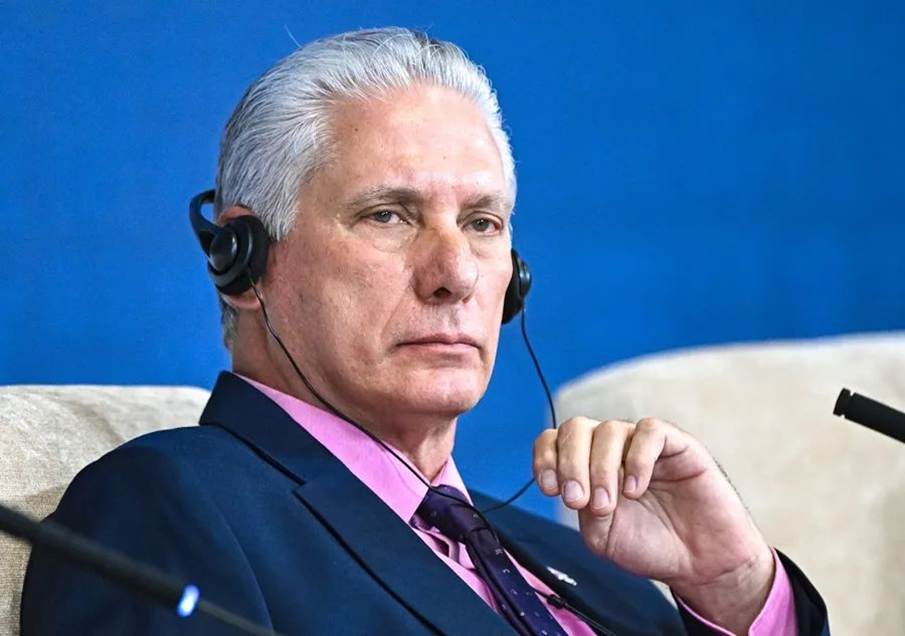
Archive photo of Cuban President Miguel Díaz-Canel. EFE/EPA/Sergey Bobylev / Sputnik / Kremlin
When Venezuela’s future is negotiated in oil and access
Trump says he wants to “rebuild” Venezuela before it votes. He described repairing the country’s oil infrastructure first, then holding an election so Venezuelans can “elect their own leader.” The order flips the usual promise: rather than elections granting legitimacy, legitimacy is postponed until after a project managed from abroad.
The administration says the operation against Maduro was driven “in large part” by the drug trade. But Trump repeatedly returns to oil, saying American energy companies are ready to invest billions of dollars and assume control of the country’s reserves. Commerce Secretary Howard Lutnick suggested the effort could also revive steel and aluminum industries for U.S. benefit, a detail that turns “rebuilding” into a two-way extraction of value.
For now, Trump said he is willing to work with Delcy Rodríguez, Maduro’s vice president and the acting president. He said he expects the new Venezuelan government to grant the United States “unfettered access” so American forces can help rebuild—and warned, “If they don’t behave, we will do a second strike.”
The threat lands heavily because Venezuela is not a minor test case. It has 30 million residents and a territory double the size of Iraq’s. To “run” such a country, even temporarily, would require a sustained presence, and sustained presences have a habit of breeding the resistance that makes departure politically costly—pulling Washington toward the nation-building invasions Trump once swore off.
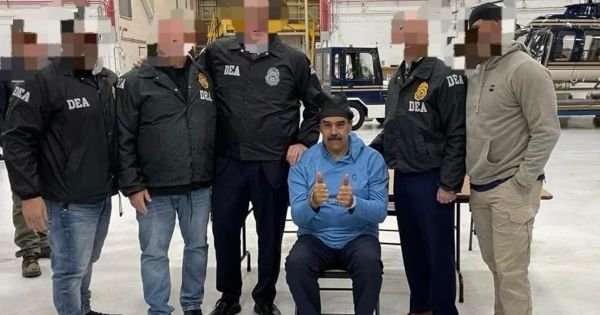
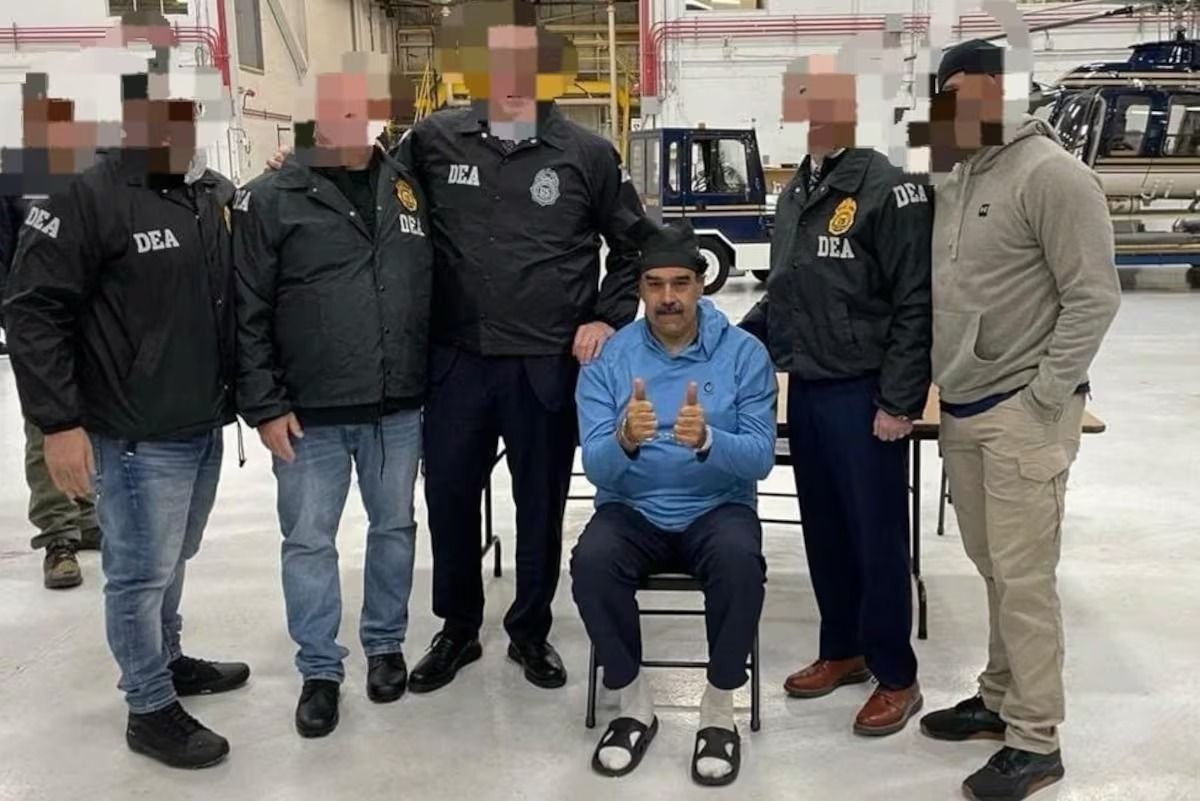
Video still taken from the White House’s X account @RapidResponse47 of Venezuela’s president, Nicolás Maduro (center), upon his arrival at DEA headquarters in New York, USA. Latin American Post/Rapidresponse47.
The Donroe Doctrine meets dissent at home
After Maduro’s capture, Trump promoted the “Donroe Doctrine,” his twist on the Monroe Doctrine articulated by President James Monroe in 1823. A national security strategy released in December described a “Trump Corollary” promising “to protect our homeland and our access to key geographies throughout the region.” The language evokes a 19th-century claim to hemispheric preeminence—and the hazards that come with it. Trump and some backers have also floated Mexico as a potential target.
Supporters argue the emphasis is overdue. Secretary of State Marco Rubio, speaking on NBC’s “Meet the Press” on Sunday, said the goal is changes in Venezuela “beneficial to the United States first and foremost,” while also benefiting Venezuelans who “have suffered tremendously.” Rubio, the son of Cuban immigrants, has long backed efforts to oust Venezuela’s leaders, citing economic decline, ignored election results, and ties to Russia and China. Deposing Venezuela’s government would probably weaken the Communist leaders of Cuba as well, since they have long depended on Caracas for energy and other economic support.
Nick Solheim, chief executive of American Moment, framed the focus as an “accurate prioritization” aimed at the greatest geopolitical challenge: China. Yet claiming a right to reorder governments in the Western Hemisphere complicates Washington’s arguments that Russia and China should steer clear of their neighbors. It also invites smaller states that once relied on U.S. guarantees for trade and stability to hedge by building ties elsewhere.
The shift has opened a visible rift at home. On NBC’s “Meet the Press” on Sunday, Marjorie Taylor Greene condemned the approach as “the same Washington playbook” that serves “big corporations, the banks and the oil executives.” “We don’t consider Venezuela our neighborhood,” she said. “Our neighborhood is right here in the 50 United States, not in the Southern Hemisphere.” In her warning, the raid becomes less a victory than a return to the foreign entanglements Trump once promised to end.
For Latin America, the question is who gets to author change. The United States has a long history of backing friendly leaders in the region, sometimes by force, but it has not done so directly since the 1991 end of the Cold War. To return now—with threats aimed at Colombia, predictions for Cuba, and a claim of stewardship over Venezuela—is to reopen an older grammar of power.
For the people living inside that grammar, the stakes are intimate. A president’s words can shift markets, embolden armed actors, or freeze negotiations before they begin. In neighborhoods far from presidential cabins, families measure policy in shortages, migrations, and the sudden sense that tomorrow belongs to someone else.