Author: americalatinanews.com

  • Speculation Rife Over Identity Of Caribbean Politicians Named In U.S. Maduro Indictment

    Speculation Rife Over Identity Of Caribbean Politicians Named In U.S. Maduro Indictment


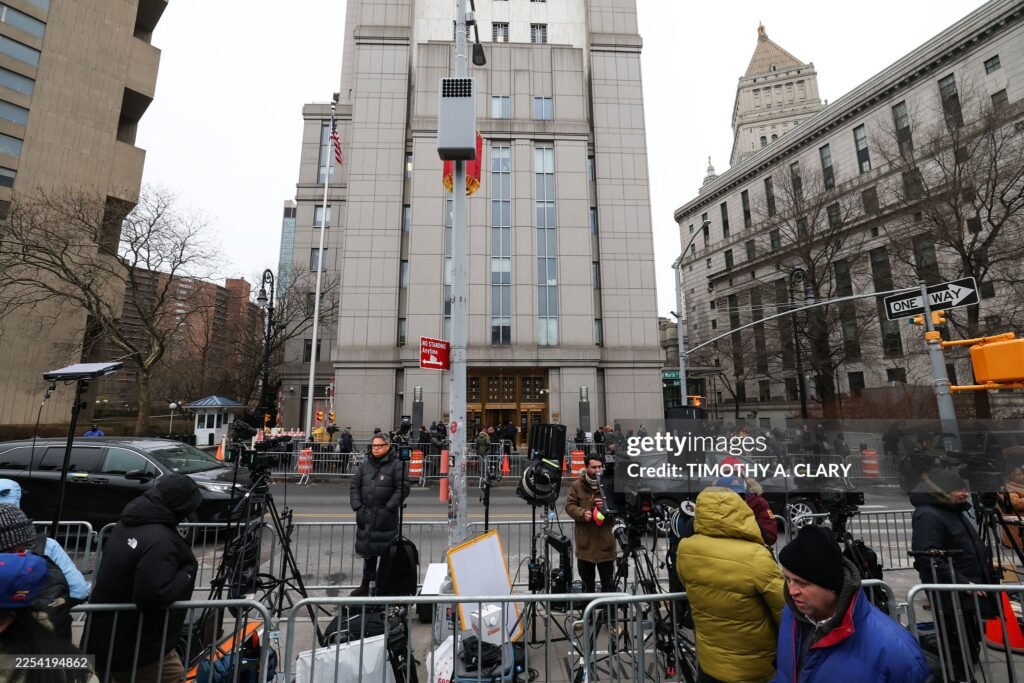
    News Americas, New York, NY, Jan. 5, 2026: As Venezuelan President Nicolás Maduro gets ready for his court arraignment in a NYC courthouse today, speculation is intensifying across the Caribbean and the Diaspora over the identity of regional politicians referenced – but not named – in a sweeping United States indictment tied to Maduro, following his dramatic capture and transfer to U.S. custody on Jan. 3rd.

    The indictment, unsealed in New York, alleges that politicians operating along what U.S. prosecutors describe as a “Caribbean route” were corrupted by cocaine traffickers, accepting payments in exchange for protection from arrest and allowing favored traffickers to operate with impunity as cocaine moved from Venezuela toward the United States.

    While no Caribbean officials are named in the court documents, the reference has sparked widespread debate on social media and in political circles across the region, particularly after comments from Trinidad and Tobago Prime Minister Kamla Persad-Bissessar, a U.S. ally in regional counter-narcotics efforts.

    “I’m not surprised at all,” Persad-Bissessar said in a statement posted on X, responding to questions about whether Caribbean politicians were implicated in the indictment. “As the story continues to unfold, I have no doubt that many ‘respectable’ and ‘celebrated’ people across all sectors of society will be exposed.”
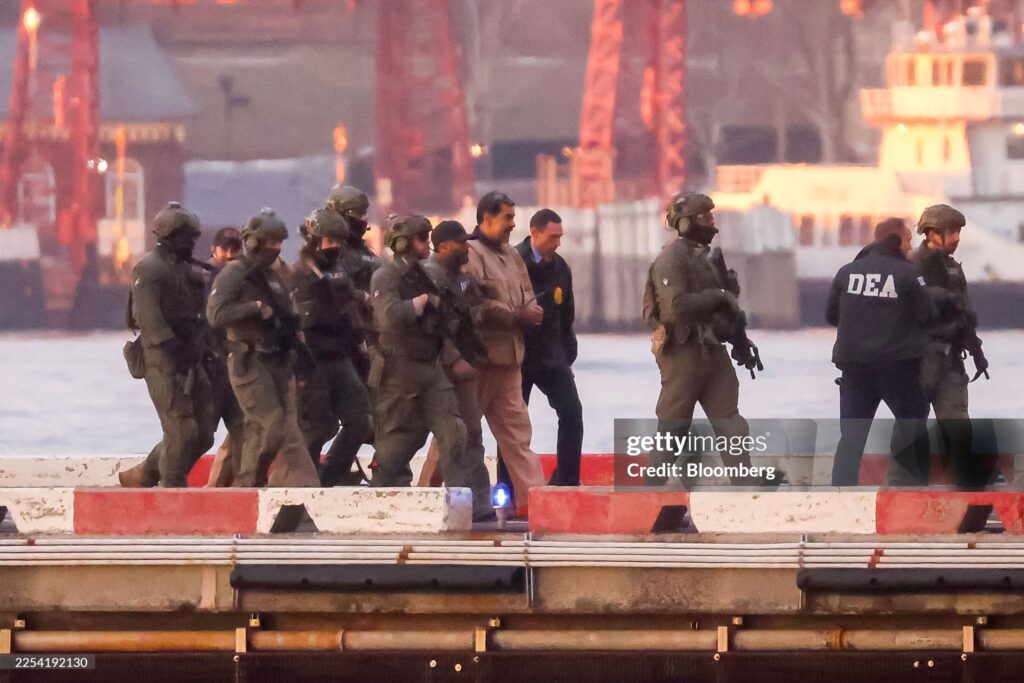
    maduro-after-landing-in-nyc
    Ousted Venezuelan President Nicolas Maduro arrives at the Wall Street heliport ahead of his appearance in federal court in New York, US, on Monday, Jan. 5, 2026. The indictment released on Saturday accuses Maduro and others of partnering with groups including the Sinaloa Cartel and Tren de Aragua, which have been designated by the US as foreign terrorist organizations. Photographer: Michael Nagle/Bloomberg via Getty Images

    Indictment Details And Regional Implications

    According to the indictment, Venezuela became a safe haven for drug traffickers beginning around 1999, as cocaine trafficking flourished under the protection of corrupt civilian and military officials. U.S. authorities allege that cocaine was dispatched northward via maritime and air routes, including transshipment points in the Caribbean, Central America, and Mexico.

    The court filing states that cocaine traffickers paid politicians along these routes for protection, enabling the movement of hundreds of tons of cocaine annually through the region. By 2020, the U.S. State Department estimated that between 200 and 250 tons of cocaine transited through Venezuela each year.

    Prosecutors further allege that profits from cocaine trafficking were used to entrench political power, while simultaneously strengthening violent transnational criminal and narco-terrorist organizations operating across South America, Central America, and the Caribbean basin.

    Maduro’s Court Appearance And International Response
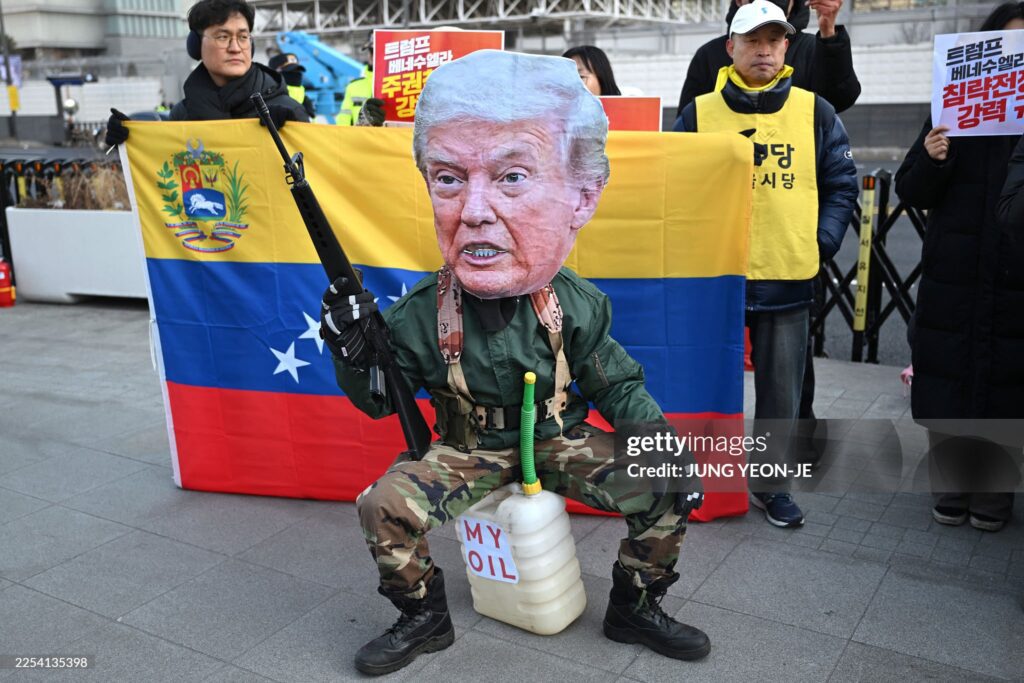
    south-koreans-protest-trump-following-venezuela-invasion
    A protester wearing a mask of US President Donald Trump performs during a demonstration condemning the US attack on Venezuela and the seizure of Venezuelan leader Nicolas Maduro, in front of the US embassy in Seoul on January 5, 2026. (Photo by Jung Yeon-je / AFP via Getty Images)

    Maduro, who was captured by U.S. forces over the weekend along with his wife, former First Lady Cilia Flores, is scheduled to make his first appearance in a federal courtroom in lower Manhattan at noon Monday. Both face charges including narco-terrorism conspiracy, cocaine importation conspiracy, and weapons offenses.

    Since his arrival in the United States, Maduro has been held at the Metropolitan Detention Center in Brooklyn. His capture has prompted protests outside the facility and globally, while celebrations were reported among Venezuelan diaspora communities around the world, including in South Florida.

    The United Nations Security Council is expected to convene an emergency session following remarks by U.N. Secretary-General António Guterres, who said he was “deeply alarmed” by the escalation in Venezuela and warned that the U.S. action could set a “dangerous precedent.”

    Unanswered Questions

    Despite official reassurances, the indictment’s reference to unnamed “Caribbean route” politicians has raised uncomfortable questions across the region, particularly as details continue to emerge from U.S. court proceedings.

    As Maduro prepares to face trial in New York, attention is increasingly turning from Venezuela itself to whether further disclosures could implicate political figures beyond its borders—potentially reshaping political narratives and accountability across the wider Caribbean.

    ANTIGUA

    Meanwhile Prime Minister Gaston Browne has confirmed that a senior official of the West Indies Oil Company (WIOC), in which Venezuela has a 25 per cent shareholding, had been questioned by United States authorities during a recent trip to the North American country.

    Speaking on his weekly radio programme, Prime Minister Browne said that he first became aware of the situation involving WIOC chief executive officer, Gregory Georges, in a report that had been published in the local media.

    “I saw the publication on Real News and I spoke to Gregory Georges,” Browne said, adding that Georges had confirmed that he was detained and questioned by US authorities and that his electronic devices were temporarily taken during the process.

    “He told me that he was questioned and that his laptop and phone were taken, but later returned to him,” Browne said, noting that WIOC’s Venezuelan shareholding predated the imposition of US sanctions on Venezuela.

    Prime Minister Browne said that WIOC is in compliant with the sanctions adding “there has been absolutely no violation whatsoever”

    Prime Minister Browne explained that the questioning appeared to be linked to ongoing international scrutiny surrounding Venezuela’s historical 25 percent shareholding in WIOC.

    “I’m just stating what the issues are as I know them,” Prime Minister Browne said without indicating whether any action would be taken against the WIOC official.

    He told radio listeners that his comments were intended to clarify the situation amid heightened international attention on Antigua and Barbuda and its state-owned entities.

    According to  WIOC, it is the premier oil storage and petroleum products provider in Antigua and Barbuda.
    RELATED: OP ED: The United States Attacks Venezuela And Kidnaps Its President


    Source link

  • Cuban government could be “ready to fall” — MercoPress

    Cuban government could be “ready to fall” — MercoPress


    Attack on Venezuela was the first of many changes: Cuban government could be “ready to fall”

    Monday, January 5th 2026 – 10:03 UTC


    With no supplies from Caracas, the Cuban revolution seems to have its days numbered
    With no supplies from Caracas, the Cuban revolution seems to have its days numbered

    While former Venezuelan President Nicolás Maduro is held at the Metropolitan Detention Center (MDC) in Brooklyn, pending his arraignment at noon on Monday, Caracas’ Supreme Court (TSJ) ordered Vice President Delcy Rodríguez to assume the role of Acting President to ensure “administrative continuity.”

    However, US President Donald Trump made it clear that his country was actually in charge, with Rodríguez highly cooperative. “If she doesn’t do what’s right, she is going to pay a very big price, probably bigger than Maduro,” the Republican leader insisted.

    US Secretary of State Marco Rubio noted that Trump’s Government was “running policy,” not Venezuela itself, to protect national interests and block adversaries like Russia, China, and Iran.

    At the same time, Edmundo González Urrutia, widely recognized as the rightful winner of the 2024 election, has called on the Venezuelan military to recognize him as the legitimate commander-in-chief to begin the transition. In this regard, Trump noted that most Venezuelans aligned with Urrutia or with fellow anti-Chavista leader María Corina Machado were outside the South American country and therefore lacked the on-site support to consolidate the political shift, which is why it was wiser to rely for the time being on a more compliant figure from the ancient regime.

    With Caracas under Washington’s effective control, Havana is expected to lose its Venezuelan oil and other lifeline supplies shortly, raising questions about how much longer the Communist government can survive.

    In addition, law purists who objected to the US extraction of Maduro were told during the weekend that 32 Cuban troops guarding the deposed Bolivarian leader were killed in the operation. Were they protecting or controlling him? That point remains unclear so far. In any case, foreign military presence at the Miraflores Palace did not start with Trump, who recognized that the Cuban government was “ready to fall.”

    In the case of Colombia, Trump warned that the country was a large cocaine producer ruled by a “sick man,” who would not last long, hinting at a possible military action to that end or just banking on this year’s elections in which Gustavo Petro is constitutionally banned.

    The White House also encored its interest in Greenland for national defense. Danish Prime Minister Mette Frederiksen rejected the idea as “absurd,” though White House staffer Katie Miller posted a photo of an American flag over the island with the caption “SOON.”


    Source link

  • Venezuela oil dreams meet reality after Trump’s dramatic Maduro capture

    Venezuela oil dreams meet reality after Trump’s dramatic Maduro capture


    After Donald Trump promised U.S. oil majors would “run” Venezuela’s fields post-Nicolás Maduro raid, analysts say production won’t surge soon. Decades of PDVSA decay, sanctions, security risks and legal doubts could delay investment and keep crude output stagnant for years.

    Billions promised, barrels uncertain

    In Venezuela, oil is less an industry than a national mood—hope and grievance compressed into one word. So Trump’s promise of billions of dollars, made hours after Maduro was captured by U.S. forces, felt momentous and intrusive. A Reuters report by Nathan Crooks, Liz Hampton and Arathy Somasekhar framed the paradox: vast reserves, but too few conditions that reliably turn them into output.

    Analysts told Reuters that a meaningful output boost is still years away, even if U.S. majors arrive with billions. Production has slid as mismanagement and underinvestment weakened fields, and foreign firms pulled back after Venezuela tightened control in the 2000s, including nationalizing assets of Exxon Mobil and ConocoPhillips. Any return would have to contend with security risks, broken infrastructure, legal doubts over the raid, and the chance of prolonged instability. “American firms won’t return until they know for sure they will be paid and will have at least a minimal amount of security,” said Mark Christian of CHRIS Well Consulting; he added sanctions must be lifted and Venezuela must reform laws to allow larger foreign investment. Strategist Thomas O’Donnell said that “if Trump et al can produce a peaceful transition with little resistance,” then “in five to seven years” output could ramp; the country’s heavy crude, he noted, fits U.S. Gulf Coast refineries and can be blended with lighter fracked oil. He warned that “a botched political transition” with a “feeling of U.S. dominance” could bring “years of resistance.”

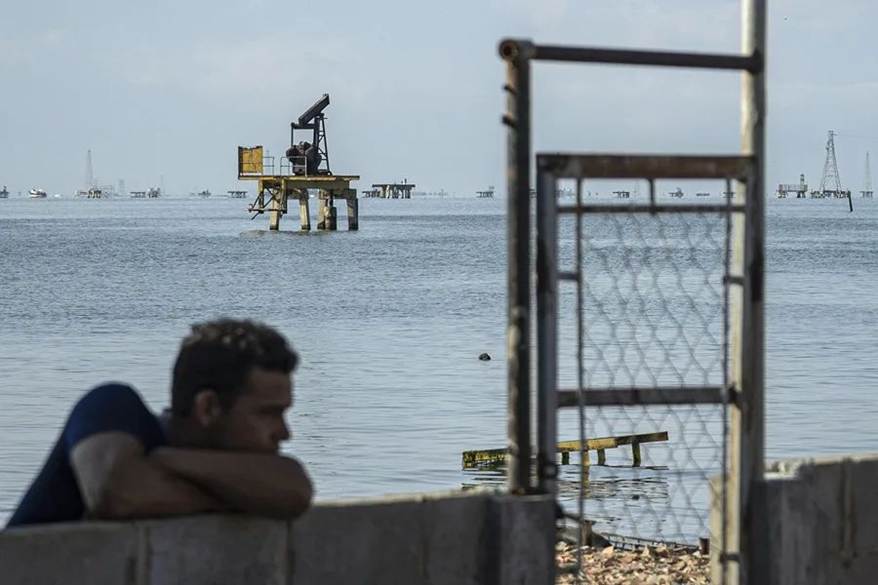
    A person waits in front of Lake Maracaibo, where oil platforms can be seen in Cabimas, Venezuela. EFE/ Henry Chirinos

    The caution is rooted in history. The industry was nationalized in the 1970s, and in the 2000s authorities forced projects into joint ventures controlled by PDVSA. Many companies negotiated exits or adapted—Chevron stayed—while others filed for arbitration after failing to reach deals. ConocoPhillips has pursued billions tied to the takeover of three oil projects nearly two decades ago, and Exxon Mobil has also fought lengthy arbitration after leaving. For investors, those legal scars are more than old news: they shape whether executives believe today’s contracts will survive tomorrow’s politics.

    The production record makes the rebuilding task visible. A founding member of OPEC with Iran, Iraq, Kuwait and Saudi Arabia, Venezuela produced as much as 3.5 million barrels per day in the 1970s, over 7% of global output. Production fell below 2 million bpd during the 2010s and averaged around 1.1 million bpd last year—about 1% of global supply. Restoring that capacity is less about drilling new holes than repairing an industrial ecosystem.

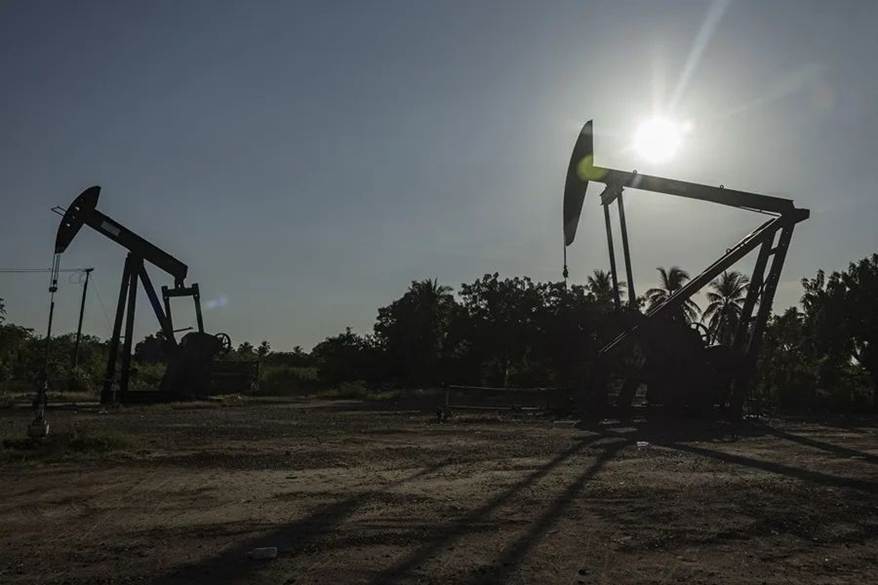
    Oil pumpjacks in Cabimas, Venezuela. EFE/ Henry Chirinos

    Chevron’s head start, slow politics

    For now, the most obvious beneficiary of any opening is Chevron, the only U.S. oil major operating in Venezuela. It exports about 150,000 bpd to the U.S. Gulf Coast, and has had to maneuver carefully with the Trump administration to keep operating. CEO Mike Wirth said in December he spoke with officials about maintaining an American presence through multiple political cycles. In Venezuela for over 100 years, Chevron said on Saturday it was focused on employee safety and the integrity of its assets, adding, “We continue to operate in full compliance with all relevant laws and regulations.”

    Francisco Monaldi of Rice University’s Baker Institute in Houston said Chevron would be positioned to benefit most, while other companies would watch political stability, the operating environment and contracts before committing. He said ConocoPhillips could be especially interested because it is owed “more than $10 billion,” and “it’s unlikely that they will get paid without going back into the country.” A ConocoPhillips spokesperson told Reuters it was monitoring developments and that it would be “premature to speculate on any future business activities or investments.” Exxon Mobil did not immediately respond to questions from Reuters.

    Global oil dynamics may also limit the immediate payoff. OPEC and its allies meet on Sunday and are expected to keep policy steady, after pausing output hikes for January, February and March amid fears of a supply glut. Ed Hirs of the University of Houston said the upheaval is unlikely to move U.S. oil and gasoline prices soon, noting that much Venezuelan crude currently goes to Cuba and China. “Trump now joins the history of U.S. presidents who have overthrown regimes of oil-rich countries. Bush with Iraq. Obama with Libya. In those cases, the United States has received zero benefit from the oil. I’m afraid that history will repeat itself in Venezuela,” he said. A narrower “win”—restarting flows to the U.S. Gulf and helping refiners like Valero—looks uncertain, with few tankers sailing since Trump’s December “blockade” announcement, even those chartered by Chevron.

    Also Read:
    Venezuelan Tankers Circle as Trump Blockade Turns Oil Into Storage


    Source link

  • Manchester United: Could Gareth Southgate become caretaker boss?

    Manchester United: Could Gareth Southgate become caretaker boss?


    After sacking Ruben Amorim, might Manchester United co-owners INEOS consider approaching former England manager Gareth Southgate with a view to steadying the ship?

    Reds fan George Allen says Southgate is the manager he does not want taking over because he thinks it would go “very, very wrong”.

    READ MORE: ‘Amorim’s toxic exit the latest chaotic chapter in Ratcliffe’s reign’


    Source link

  • How Bezel Settings Enhance Diamond Brilliance (Contrary to What Most Buyers Think) — MercoPress

    How Bezel Settings Enhance Diamond Brilliance (Contrary to What Most Buyers Think) — MercoPress


    How Bezel Settings Enhance Diamond Brilliance (Contrary to What Most Buyers Think)

    Monday, January 5th 2026 – 00:21 UTC


    Full article


    Photo: Unsplash
    Photo: Unsplash

    Everyone “knows” bezel settings kill sparkle. Your mother-in-law said it. That jewelry store clerk mentioned it. They’re all wrong.

    Here’s what actually happens: diamonds get their brilliance from light entering through the table and crown – that’s the top of the stone. Not the sides. A properly engineered bezel setting ring can actually enhance how your diamond performs. But the jewelry industry keeps pushing myths because most bezels are badly made.

    The Physics Nobody Talks About


    Light enters a diamond through the table facet (that big flat top) and crown facets. It bounces off the pavilion facets underneath like mirrors, then shoots back out through the top. That’s how diamonds sparkle.

    The sides? They contribute maybe 5% to overall brilliance in a well-cut stone. Yet everyone panics about covering them up.

    Properly designed bezels don’t diminish brilliance even the tiniest bit. The sparkle comes from light entering the table, reflecting off pavilion facets, and exiting through the crown. If you look at the designs available at Best Brilliance, you’ll see that the bezel setting ring doesn’t touch these critical surfaces.

    Think about it. If side light was crucial, diamonds in rings would look dead compared to loose stones. They don’t.

    Mirror-Finish Metal: The Secret Weapon


    Here’s what jewelry stores won’t tell you – polished bezels act like reflectors. That mirror-finish metal bounces light back into the diamond from angles that wouldn’t normally contribute.

    Modern bezels – like Taylor Swift’s engagement ring – use high-polish techniques creating surfaces smoother than glass. When light hits these surfaces, it reflects right back into your diamond. You’re adding tiny mirrors around the girdle.

    The metal even adds half a millimeter to your diamond’s visible diameter. A 1-carat stone looks more like 1.25 carats. Not an illusion – the reflective metal extends the diamond’s light performance area.

    Open-Back Engineering Changes Everything


    Old bezels killed sparkle. They wrapped diamonds in thick metal coffins with closed backs. Modern bezels are completely different.

    Today’s designs use open backs and ultra-thin walls. Some have channels cut through the sides. Light enters from underneath, hits pavilion facets, and creates brilliance you wouldn’t get in traditional settings.

    MIT just developed quantum diamond sensors using similar principles – maximizing light interaction through strategic openings. If it works for quantum physics, it works for your ring.

    Thin-Wall Revolution


    Thickness matters. Old bezels used 2-3mm thick walls. Modern precision casting creates walls under 0.5mm – thinner than a credit card.

    These micro-thin bezels cover less than 1% of the diamond’s surface area. We’re talking about a human hair wrapped around your stone. Visual impact? Zero. Security benefit? Absolute.

    Japanese manufacturers perfected this for industrial diamonds. They needed maximum light transmission for laser applications while maintaining perfect alignment. Jewelry makers borrowed the technology.

    The Girdle Myth


    “But bezels cover the girdle where light enters!” No.

    According to the GIA, pavilion angles determine light return, not girdle exposure. The girdle is the thinnest part of the diamond. In older stones, it’s not even polished – it’s frosted. Zero light contribution.

    Even in modern diamonds with polished girdles, we’re talking 0.5mm of surface area. The table facet – unaffected by bezels – is 50 times larger.

    Real Numbers from Real Testing


    Gemologists using ASET scopes find virtually no difference in light return between bezel and prong settings when diamonds are properly cut.

    A diamond with excellent proportions – pavilion angle around 40.8 degrees, crown angle near 35 degrees – returns over 95% of light through the crown. Bezels don’t change this.

    What does change? Protection. Bezel-set diamonds show 90% less wear after five years. No chipped girdles. No loosening. Just consistent performance.

    When Bezels Actually Help


    Some diamonds perform better in bezels. Stones with thin girdles. Fancy shapes with pointed tips. Even diamonds with slight window effects benefit from reflected light off polished bezels.

    Best Brilliance uses precision engineering to match bezel dimensions to specific stones. The metal becomes part of the optical system, not just a holder.

    FAQs


    Do bezel settings really reduce sparkle?


    No. Well-made bezels with thin walls don’t affect brilliance. Light enters diamonds through the top, not sides. The myth comes from old, thick bezels that were poorly designed.

    How much bigger do bezels make diamonds look?


    About 0.5mm larger in diameter, or roughly 15-20% bigger visually. The polished metal extends the stone’s apparent size.

    Are modern bezels different from vintage ones?


    Completely. Modern bezels use walls under 0.5mm thick, open backs, and mirror finishes. Vintage bezels were 3-4 times thicker with closed backs.

    Which diamonds work best in bezels?


    All cuts work, but bezels especially benefit stones with thin girdles, pointed tips (marquise, pear), or minor cut imperfections that reflect better with surrounding metal.

    Can bezels enhance diamond color?


    Yes. Yellow gold bezels can warm up lower color grades. White metal bezels make near-colorless diamonds appear whiter through contrast.


    Source link

  • The One Constraint Touching Every Falklands Business — MercoPress

    The One Constraint Touching Every Falklands Business — MercoPress


    Telecommunications: The One Constraint Touching Every Falklands Business

    Monday, January 5th 2026 – 04:00 UTC


    Fully 44% of respondents identified telecommunications bandwidth as a barrier to growth
    Fully 44% of respondents identified telecommunications bandwidth as a barrier to growth

    By OpenFalklands

    On December 19th 2025, the Falkland Islands Development Corporation (FIDC) published its 2025 Business Climate Survey with the statement:

    “FIDC is pleased to release its latest edition of the Business Climate Survey, a biennial survey conducted with its business association partners, Falkland Islands Chamber of Commerce, Falkland Islands Tourism Association, and Rural Business Association.”

    You can see the 2025 Business Climate Survey down bellow. This OpenFalklands post will focus on the survey’s findings on telecommunications in the Falkland Islands.

    2025 Business Climate Survey Results Report by MercoPress

    When the survey was conducted between 31 March and 1 May 2025, it captured business opinion at a moment of transition in the Islands’ telecommunications landscape. Since then, developments around Starlink availability and uptake have begun to change the practical connectivity options for some business users. As a result, the survey should be read as a snapshot of business sentiment before those changes fully materialised in December 2025.

    That said, the findings remain highly relevant. They reflect the depth, persistence, and scale of dissatisfaction with the Islands’ telecommunications that emerged after many years of limited choice, constrained capacity, and high costs, and they provide essential context for understanding why demand for alternative connectivity solutions has been so strong.

    Telecommunications is the only barrier that cuts across every theme raised by businesses in the survey. It appears as:

    – A growth barrier

    – An innovation barrier

    – A rural infrastructure failure

    – A tourism reputational issue

    – A Stanley productivity constraint

    – A cost-of-doing-business issue

    – A constraint on diversification

    No other issue in the survey has that reach.

    The survey once again places telecommunications at the centre of the Islands’ economic challenges. For the fourth survey cycle in a row, businesses have identified poor connectivity as a significant barrier to growth and innovation. This year, however, the message is more stark than ever: telecommunications bandwidth speed and quality are ranked as the most significant constraints on business development across the Falkland Islands.

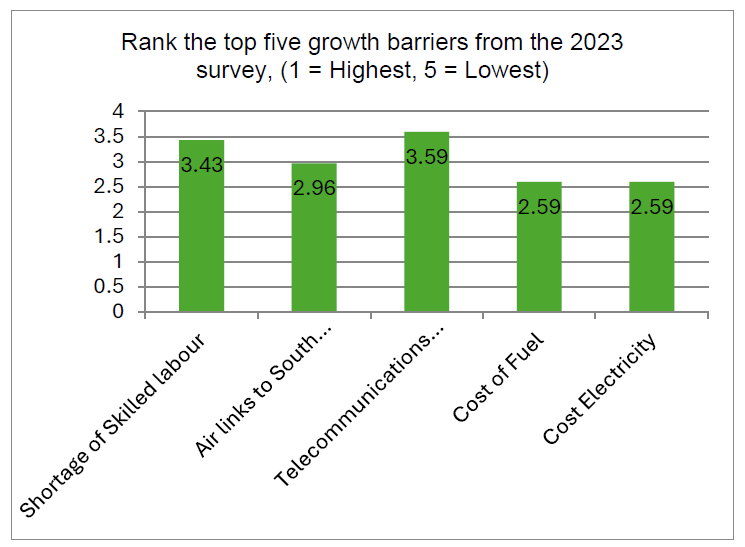
    Fully 44% of respondents identified telecommunications bandwidth as a barrier to growth, placing it above fuel costs, electricity prices, labour shortages and transport links. This is not a new concern. Telecommunications has featured in the top five barriers since at least 2018, ranked first in 2021, third in 2023, and now back to first place in 2025. The consistency of this result strongly suggests a structural problem rather than a temporary one. The same constraint is blocking both today’s and tomorrow’s business.

    What is particularly striking in the 2025 results is the breadth of businesses affected. Telecommunications is not confined to one sector or business type. Twelve primary sectors selected bandwidth speed and quality as a growth constraint, including tourism, transport, finance, energy-related services and communications itself. In several sectors, every single responding business identified telecommunications as a barrier. This underlines that connectivity is now foundational infrastructure, not an optional enhancement.

    The issue is also not limited to Camp businesses. While connectivity challenges in Camp are well known, the survey shows that a majority of businesses citing telecommunications problems are based in Stanley. This matters because Stanley-based companies tend to be more diversified, more digitally dependent, and more engaged with off-island markets. When these firms struggle with bandwidth, the problem is systemic and economy-wide.

    Description of the image


    Cost compounds the issue. Telecommunications pricing was ranked jointly fifth as a barrier to growth, while package size also featured among the constraints identified by businesses. Taken together, businesses are signalling a three-part problem: internet connections are too slow or unreliable, too expensive, and too inflexible to support growth. Improving just one of these elements without addressing the others is unlikely to resolve the broader issue.

    The telecommunications constraint also helps explain a broader contradiction in the survey results. An overwhelming majority of businesses describe themselves as innovative and say innovation is essential to their success. Yet business performance and economic confidence remain below pre-2022 levels. Digital tools, cloud services, online marketing, remote collaboration and data-intensive operations all rely on robust connectivity. Without it, the innovation potential is constrained before it can be converted into productivity or growth.

    From a strategic perspective, the survey makes an implicit yet powerful argument: telecommunications is now a binding constraint on the Falkland Islands’ economy. It affects diversification, competitiveness, service quality and resilience. Unlike fuel prices or external transport links, it is also an area where local policy, regulation and investment choices can make a decisive difference.

    The survey does not simply highlight dissatisfaction. It reflects a growing gap between how Falkland Islands businesses need to operate in a modern economy and the digital infrastructure currently available to them. If this gap remains unaddressed, it risks locking the Islands into lower-growth business models and weakening long-term economic resilience. 

    Starlink’s legal arrival in the Falkland Islands in November 2025 has unquestionably changed what is technically possible for some businesses, particularly in terms of raw bandwidth and latency. For many households and businesses, it offers immediate relief from long-standing capacity constraints and introduces long-missing competition into a closed market. However, its use is limited to internal staff and, under current regulatory arrangements, cannot be used for customer interactions, meaning it cannot be seen as a panacea for businesses’ broadband challenges.

    However, Starlink does not resolve every issue highlighted by the survey. It does not replace the need for resilient, affordable, well-regulated core telecommunications infrastructure; it does not address questions of redundancy, national resilience, or long-term strategic control; and it is not equally accessible to all users due to cost, regulatory conditions, or practical limitations.

    “The cost of providing guests with free unlimited wifi under the current system is extremely prohibitive and the selling of wifi cards is an embarrassment and a really bad advert for our country as a tourist destination.”

    “We are never more than 60% fully booked because the amount of land based tourists are limited… The cost of providing guests with free unlimited wifi under the current system is extremely prohibitive.”

    Starlink should be understood as a powerful new option, not a comprehensive solution. The survey’s findings, therefore, remain relevant: they explain why demand for alternatives has been so strong and underscore the continuing need for a coherent, transparent, and future-focused telecommunications strategy for the Falkland Islands.


    Source link

  • Caribbean Remittances By Major Countries: A Lifeline Powering Economies Across The Region

    Caribbean Remittances By Major Countries: A Lifeline Powering Economies Across The Region


    By NAN Business Editor

    News Americas, NEW YORK, NY: Caribbean remittances remain one of the most powerful – and often overlooked – economic forces shaping the Caribbean today. For millions of families across the region, money sent home by relatives abroad helps pay for food, housing, healthcare, education, and small business survival. At a national level, remittances stabilize economies, boost consumer spending, and act as a buffer during economic shocks.

    remittance-haiti
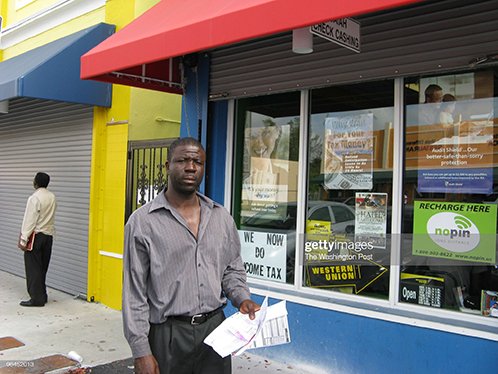
    Windel Pierre, 41, a Haitian cab driver, sends money back to Haiti from Miami, FL. (Photo by Peter Whoriskey /The Washington Post via Getty Images)

    According to regional estimates from ‘Remittances-to-Latin-America-and-the-Caribbean-in-2025-Adaptations-in-a-Context-of-Uncertainty,’ by the IDB, Caribbean nations were projected to receive approximately US $20.9 billion in remittances in 2025, underscoring the scale and importance of diaspora support across the region.

    Top Caribbean Remittance Recipients

    Based on country-specific estimates and global remittance rankings compiled from international development and financial data, several Caribbean nations stand out as the region’s largest remittance recipients:

    Country Estimated Annual Remittances (USD)
    Haiti US $4.9 billion
    Jamaica US $3.6 billion
    Dominican Republic US $11,973 billion
    Trinidad & Tobago US $361 million
    Guyana US $1.4 billion
    Suriname US $166 million
    Belize US $173 million

    These figures provide a relative snapshot of remittance inflows rather than precise totals, as reporting methods vary by country. However, they clearly illustrate how deeply Caribbean economies are tied to their global diasporas.

    Why Remittances Matter Beyond The Dollar Amount

    While total remittance volumes tell one story, their real economic impact becomes clearer when viewed as a share of GDP.

    In smaller Caribbean economies, remittances account for a substantial portion of national income. In countries such as Haiti and Jamaica, remittances have historically exceeded 20 percent of GDP, making them among the most remittance-dependent economies in the Western Hemisphere.

    This level of dependence means remittances do more than supplement incomes — they help sustain national economic stability.

    A Critical Social Safety Net

    For Caribbean households, remittances often function as a private social protection system, filling gaps where public services or employment opportunities fall short. Families commonly use remittance income to:

    • Cover basic living expenses
    • Pay school fees and education costs
    • Access healthcare and medications
    • Repair homes after storms or disasters
    • Support elderly relatives

    In economies where formal job markets are limited or volatile, remittances help reduce poverty and smooth consumption during economic downturns.

    Diaspora Ties Drive Regional Resilience

    The Caribbean’s remittance flows are rooted in long-standing migration patterns, particularly to North America. The United States remains the largest source of remittances to the Caribbean, accounting for roughly half of all inflows, followed by Canada, which contributes more than 10 percent.

    These financial connections reinforce enduring social, cultural, and economic ties between Caribbean nations and their diaspora communities abroad.

    A Steady Outlook Despite Global Uncertainty

    Recent analyses indicate that remittance growth in the Caribbean has been moderate but steady, even amid global economic uncertainty. As labor markets in the U.S. and Canada continue to stabilize, remittance inflows are expected to remain resilient, providing ongoing support to Caribbean households and economies.

    Development economists note that while remittances alone cannot replace comprehensive economic reform, they remain a critical pillar of Caribbean economic survival and resilience.

    Looking Ahead

    As Caribbean governments pursue growth strategies – from tourism and energy to agriculture and technology – remittances will continue to play a stabilizing role. Policies that reduce transfer costs, expand financial inclusion, and encourage productive investment of remittance income could further amplify their positive impact.

    For now, the numbers are clear: the Caribbean’s diaspora is not just connected emotionally – it is economically indispensable.

    REMITTANCES TO THE CARIBBEAN IN THE PAST


    Source link

  • Argentina’s FM champions no joint Celac document condemning Maduro’s arrest — MercoPress

    Argentina’s FM champions no joint Celac document condemning Maduro’s arrest — MercoPress


    Argentina’s FM champions no joint Celac document condemning Maduro’s arrest

    Monday, January 5th 2026 – 10:03 UTC


    Opposite visions left the regional bloc, inspired by former Venezuelan president Hugo Chávez, increasingly fragmented
    Opposite visions left the regional bloc, inspired by former Venezuelan president Hugo Chávez, increasingly fragmented

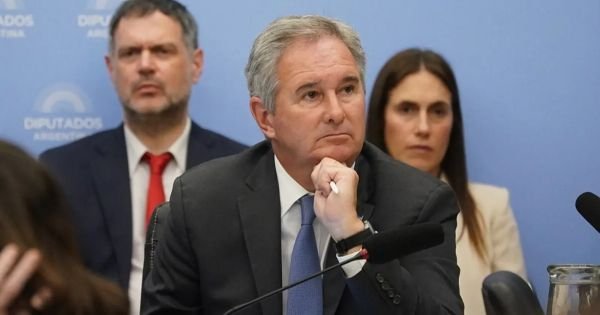
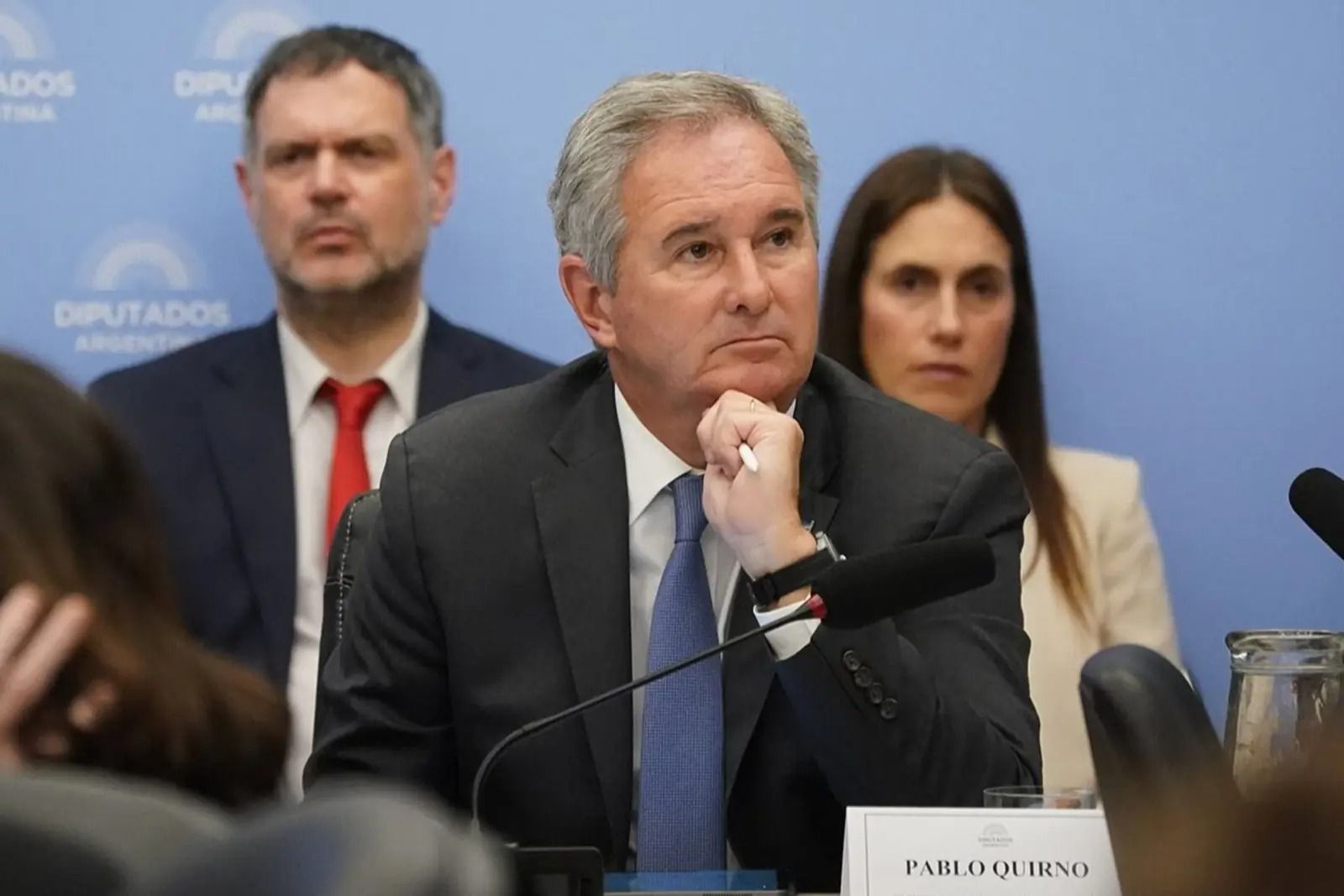
    Argentina’s President Javier Milei and Foreign Minister Pablo Quirno reportedly played a key role Sunday in barring a joint statement from all members of the Community of Latin American and Caribbean States (Celac) objecting to Washington’s operation in Caracas to abduct Nicolás Maduro.

    Due to Milei’s and Quirno’s swift intervention with other countries endorsing the Libertarian government’s position, a virtual summit ended without a joint statement, exposing cracks within the regional organization.

    The meeting, convened urgently by Colombian President Gustavo Petro, was held by videoconference and attended by foreign ministers and diplomatic representatives from the 33 countries that make up the forum.

    Joining Argentina’s stance were Paraguay, Peru, Bolivia, Costa Rica, Ecuador, El Salvador, Panama, the Dominican Republic, and Trinidad and Tobago. This group rejected any statement that could be interpreted as a political defense of the Venezuelan regime or a direct criticism of Washington.

    Argentina’s position was key to articulating that veto minority. Quirno promoted a strategy in clear disagreement with the approach promoted by Petro and supported by governments aligned with the Bolivarian axis, including Cuba, Nicaragua, and Honduras.

    While Chilean President Gabriel Boric Font joined in the criticism of US actions, President-elect José Antonio Kast celebrated Maduro’s arrest and described it as a turning point in curbing the expansion of drug trafficking and organized crime in the region.

    In Honduras, incumbent President Xiomara Castro was one of the harshest voices against the capture of the Venezuelan leader, but Nasry Asfura publicly supported the operation, labeling it a step forward in the defense of freedom and human rights.


    Source link

  • Tribute paid in Italy to Cuban combatants killed in Venezuela

    Tribute paid in Italy to Cuban combatants killed in Venezuela


    At the ceremony held this morning at the embassy, ​​the national anthem was sung and a minute of silence was observed in memory of the compatriots “who lost their lives in fulfillment of the sacred duty of solidarity and internationalism of Cuban revolutionaries,” the interim charge d’affaires, Damian Delgado, said.

    “Our fallen brothers are symbols of what is most sacred and valuable to the nation, and of the fighting spirit of our courageous people,” Delgado stated at the tribute, where the commitment to defend the Cuban Revolution against the threats of the US imperialist government, to the very end, was reaffirmed.

    “The decision is simple: Homeland or Death. We will prevail!” the diplomat declared at the deeply patriotic event honoring the martyrs who fought to their last breath on Venezuelan soil.

    The Cuban government declared two days of mourning, from 6:00 a.m. local time on January 5th until 12:00 p.m. on January 6th, 2026, to pay tribute to those who “honorably fulfilled their duty and fell, after fierce resistance, in direct combat against the attackers or as a result of the bombing of the facilities.”

    The Cuban combatants, who were carrying out missions representing the Revolutionary Armed Forces and the Ministry of the Interior, at the request of their counterparts in that country, “exalted, through their heroic actions, the solidarity of millions of compatriots,” the statement reads.

    jdt/arm/mem/ort


    Source link

  • West Ham sign Valentin ‘Taty’ Castellanos: Lazio striker joins for undisclosed fee

    West Ham sign Valentin ‘Taty’ Castellanos: Lazio striker joins for undisclosed fee


    West Ham have signed Lazio striker Valentin ‘Taty’ Castellanos for an undisclosed fee on a four-and-a-half-year contract, with the option for a further year.

    The 27-year-old joined Lazio in 2023 and made 98 appearances, scoring 22 goals and providing 16 assists.

    Castellanos, who has won two caps for Argentina since making his debut in 2024, has also played for New York City FC and Girona.

    West Ham said head coach Nuno Espirito Santo identified Castellanos as “a key target”.

    Castellanos said he will “give everything” to the club.


    Source link

Translate »