The opposition fears intelligence services might become a political police force
Argentine President Javier Milei has issued a sweeping Emergency Decree to restructure Argentina’s intelligence service, sparking concerns among opposition sectors, particularly regarding the new powers granted to field operatives.
The reform repositions the State Intelligence Secretariat (SIDE) at the top of the structure, its agents now having the authority to apprehend individuals. The intelligence apparatus will now report to the General Secretariat of the Presidency, headed by Karina Milei, the President’s sister.
As per the DNU, intelligence operatives may arrest suspects when protecting facilities, assets, or personnel; execute detentions in cases of flagrant crimes or upon judicial request; and use force to repel or stop attacks that put intelligence operations at risk.
While the decree mandates that agents must immediately notify federal security forces following an apprehension, critics argue that this moves the SIDE closer to a political police force.
The DNU seeks to eliminate institutional fragmentation by centralizing military and criminal intelligence, it was explained. Other key structural changes include the termination of the National Directorate of Strategic Military Intelligence, its functions reverting to the Joint Armed Forces’ Command Chief of Staff to ensure a unified strategy.
Additionally, the Libertarian government has separated Cyber-intelligence (offensive monitoring under SIDE) from Cybersecurity (defensive protection). The latter will now be managed by a new, decentralized National Cybersecurity Center under Cabinet Chief Manuel Adorni.
The reform emphasizes Counterintelligence Security Measures across the entire National Public Sector. Under the new rules, heads of all government agencies are held responsible for implementing these measures. Some analysts suggest this turns the state into a mega-structure of counterintelligence.
Furthermore, the reorganization signals a deepening alignment with the intelligence services of the United States and Israel. By creating a more corporate and integrated structure, the Milei administration aims to modernize the system to face high-intensity global threats, including cyber-warfare and organized crime.
According to local media, the Bicameral Intelligence Oversight Committee is expected to challenge the decree, particularly regarding the lack of clear boundaries for classified information. Critics point out that such secrecy should not be used to mask corruption scandals, citing recent controversies within the National Disability Agency (ANDIS), which was also dissolved in the last week of 2025.
In the government’s view, these second-generation reforms are essential to resolve decades of overlapping functions and to provide the President with timely and verifiable strategic intelligence.
The opposition fears intelligence services might become a political police force
Argentine President Javier Milei has issued a sweeping Emergency Decree to restructure Argentina’s intelligence service, sparking concerns among opposition sectors, particularly regarding the new powers granted to field operatives.
The reform repositions the State Intelligence Secretariat (SIDE) at the top of the structure, its agents now having the authority to apprehend individuals. The intelligence apparatus will now report to the General Secretariat of the Presidency, headed by Karina Milei, the President’s sister.
As per the DNU, intelligence operatives may arrest suspects when protecting facilities, assets, or personnel; execute detentions in cases of flagrant crimes or upon judicial request; and use force to repel or stop attacks that put intelligence operations at risk.
While the decree mandates that agents must immediately notify federal security forces following an apprehension, critics argue that this moves the SIDE closer to a political police force.
The DNU seeks to eliminate institutional fragmentation by centralizing military and criminal intelligence, it was explained. Other key structural changes include the termination of the National Directorate of Strategic Military Intelligence, its functions reverting to the Joint Armed Forces’ Command Chief of Staff to ensure a unified strategy.
Additionally, the Libertarian government has separated Cyber-intelligence (offensive monitoring under SIDE) from Cybersecurity (defensive protection). The latter will now be managed by a new, decentralized National Cybersecurity Center under Cabinet Chief Manuel Adorni.
The reform emphasizes Counterintelligence Security Measures across the entire National Public Sector. Under the new rules, heads of all government agencies are held responsible for implementing these measures. Some analysts suggest this turns the state into a mega-structure of counterintelligence.
Furthermore, the reorganization signals a deepening alignment with the intelligence services of the United States and Israel. By creating a more corporate and integrated structure, the Milei administration aims to modernize the system to face high-intensity global threats, including cyber-warfare and organized crime.
According to local media, the Bicameral Intelligence Oversight Committee is expected to challenge the decree, particularly regarding the lack of clear boundaries for classified information. Critics point out that such secrecy should not be used to mask corruption scandals, citing recent controversies within the National Disability Agency (ANDIS), which was also dissolved in the last week of 2025.
In the government’s view, these second-generation reforms are essential to resolve decades of overlapping functions and to provide the President with timely and verifiable strategic intelligence.
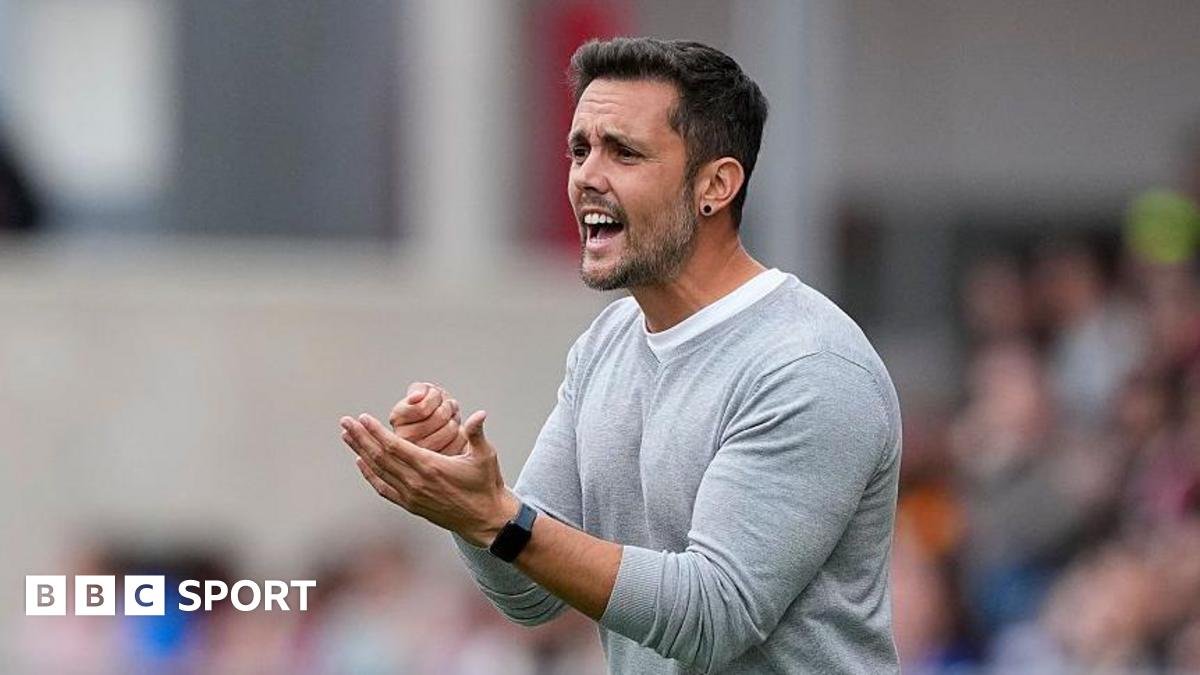
London City Lionesses wanted a coach who could help develop and consistently deliver a unique style of football.
They have been influenced by Spanish football and its success, as well as the full-throttle style which has helped deliver eight Women’s Champions League titles at Lyon – one of the clubs also owned by wealthy businesswoman Michele Kang.
A shortlist of coaches was drawn up when they decided to replace former manager Jocelyn Precheur and they did not rule out some from the men’s game.
The main criteria was centred around the playing style, the coach’s ability to collaborate with a wider team of expertise and to have a track record of developing players and talented youth.
Maestre showed his potential with Spanish clubs CD Tenerife and Real Sociedad and London City believe he can become a future leading figure in the game
Led by chief executive officer Martin Semmens, London City have been working on a long-term project to achieve their aims of reaching European competition by 2026.
That is an ambitious target for a club only promoted to the WSL for the first time this season and their decision to replace Precheur with Maestre may have been premature but they were willing to take the risk and will be judged on that with intrigue.
I think it’s positive news for Uruguay, Fratti said
Beginning in 2026, the Chinese Ministry of Commerce will implement a three-year protective measure consisting of a 55% tariff on beef imports exceeding specific quotas. The initiative was found to hit the United States, Brazil, and Australia. However, it would leave Uruguay unharmed and prevent any Argentine expansion.
Following an investigation that blamed skyrocketing imports for hurting local producers, Beijing is now capping duty-free imports. Hence, anything above each exporter’s annual quota will face the 55% surcharge. Brazil was allowed to ship up to 1,100,000 tons, Argentina 511,000 tons, Uruguay 324,000 tons, Australia 200,000 tons, and the United States 164,000 tons.
China claims these measures are intended to temporarily help the domestic industry overcome difficulties caused by an oversupply of foreign meat.
In this scenario, Uruguay’s Agriculture and Livestock Minister Alfredo Fratti noted that his country’s cap was significantly higher than its actual export history, providing ample room for growth. In 2025, we did not even reach 200,000 tons, Fratti explained. We have never exported that entire amount, even in record years.
Because Uruguay is unlikely to hit its limit, it will continue to pay the standard 12.5% tariff, while competitors like Brazil and Argentina risk triggering the extra charge if they attempt to maintain their current volumes.
Not only is it not serious, I think it’s positive news, Fratti said. It is likely that, if other countries in the region decrease [their exports] and China continues to need meat, we will be able to increase and meet this authorized quota.
In the case of Brazil, the country would need to cut nearly 25% of its shipments to stay within the limit, while in Buenos Aires, the Argentine Beef Promotion Institute (Ipcva) reported that Argentina exported 453,860 tons to China through November 2025. While the new 511,000-ton quota covers current levels, it effectively hard-caps any future expansion.
Additionally, Beijing has suspended parts of the Australia-China Free Trade Agreement specifically related to beef, thus dealing a major blow to Canberra.
Fratti attributed this favorable scenario to Uruguay’s political relationship and its reputation for commercial seriousness. He revealed that the Chinese Ambassador visited him personally days before the announcement to guarantee that Uruguay would not be harmed.
Bolsonaro’s doctors continue to have full access to the patient while in detention, De Moraes argued in denying a request for house arrest
Former Brazilian President Jair Bolsonaro left Brasilia’s DF Star Hospital late Thursday afternoon and was transferred back to the Federal Police’s detention facility, where he is serving his 27-year prison sentence for masterminding the Jan 8, 2023, coup attempt.
A convoy formed by Federal District Military Police escorts and unmarked black cars left the hospital garage at around 6.40 pm from the Asa Sul neighborhood to the Federal Police Headquarters, where Bolsonaro has been held since November.
The retired Army captain had been hospitalized since Dec. 24, 2025, and underwent surgery for a bilateral inguinal hernia, in addition to various procedures to control recurrent hiccups. Additionally, he underwent an endoscopy on New Year’s Eve. Physicians found persistent esophagitis and gastritis.
Doctors had already scheduled Bolsonaro’s discharge for Thursday if no new health problems emerged. On Thursday morning, Supreme Federal Court (STF) Justice Alexandre De Moraes denied a request made by the former president’s defense team for humanitarian house arrest after his release.
De Moraes argued that Bolsonaro’s defense team had not presented any new facts that could overturn the reasons behind the decision to deny the request for humanitarian house arrest issued on December 19, 2025.
Furthermore, Bolsonaro’s doctors continue to have full access to the patient, who will be supplied with the necessary medications, as well as a physical therapist, and the delivery of food prepared by his family members. (Source: Agencia Brasil)
Bolsonaro’s doctors continue to have full access to the patient while in detention, De Moraes argued in denying a request for house arrest
Former Brazilian President Jair Bolsonaro left Brasilia’s DF Star Hospital late Thursday afternoon and was transferred back to the Federal Police’s detention facility, where he is serving his 27-year prison sentence for masterminding the Jan 8, 2023, coup attempt.
A convoy formed by Federal District Military Police escorts and unmarked black cars left the hospital garage at around 6.40 pm from the Asa Sul neighborhood to the Federal Police Headquarters, where Bolsonaro has been held since November.
The retired Army captain had been hospitalized since Dec. 24, 2025, and underwent surgery for a bilateral inguinal hernia, in addition to various procedures to control recurrent hiccups. Additionally, he underwent an endoscopy on New Year’s Eve. Physicians found persistent esophagitis and gastritis.
Doctors had already scheduled Bolsonaro’s discharge for Thursday if no new health problems emerged. On Thursday morning, Supreme Federal Court (STF) Justice Alexandre De Moraes denied a request made by the former president’s defense team for humanitarian house arrest after his release.
De Moraes argued that Bolsonaro’s defense team had not presented any new facts that could overturn the reasons behind the decision to deny the request for humanitarian house arrest issued on December 19, 2025.
Furthermore, Bolsonaro’s doctors continue to have full access to the patient, who will be supplied with the necessary medications, as well as a physical therapist, and the delivery of food prepared by his family members. (Source: Agencia Brasil)
Título del autor, Corresponsal de BBC Mundo en México,
Informa desde, Monterrey, Nuevo León
Tiempo de lectura: 7 min
A Pedro Valdés, líder de Sonido Monarca, la música colombiana le llegó “por el aire”.
Era un niño cuando, hace 50 años, en este barrio popular de la ciudad mexicana de Monterrey llamado Independencia, de las trompetas de aire colocadas en las calles salía una cumbia, un bullerengue, un vallenato que marcaron su vida.
“El viento arrimaba todo el ruido; venía de ese lado y se escuchaba por todo el barrio”, dice, señalando la parte más alta de esta loma de casas coloridas también conocida como “La Indepen” y “la Colombia chiquita”.
Lo acompañan otros siete “sonideros”, es decir, coleccionistas de vinilos de música colombiana y ambientadores de fiestas desde hace cuatro décadas considerados leyenda en esta ciudad industrial del norte de México.
Es viernes por la mañana. El sol pica. El aire, con alguna melodía de fondo, llega fresco gracias a la lluvia de anoche. Por las calles empinadas pasan carros con la música a todo volumen. Música colombiana. Hay murales de sombrero vueltiao, tambores, acordeones: símbolos colombianos que acá, al parecer, son mito.
Me reúno en la casa del paladín de la dinastía sonidera: Gabriel Duéñez, pionero de este culto por un país lejano que, sin embargo, dio sentido a comunidades marginadas.
Duéñez, quien roza los 80 años, se mantiene callado mientras sus discípulos me intentan explicar cómo es que Colombia, a 3.000 kilómetros de distancia, se convirtió en identidad.
Y yo, periodista colombiano en México, no termino de sentirme cerca de casa: los símbolos, nombres y sonidos en cuestión me resultan familiares, pero parecen extraños; tal vez no despojados de su naturaleza, pero sí acondicionados a la lógica regiomontana: mexicanizados.
Pie de foto, Las leyendas sonideras rodeando al mítico Gabriel Duéñez, una mañana en La Indepen.
Pie de foto, La Independencia, al lado pero separado del centro, es el barrio histórico de la protesta en Monterrey.
Es la música, y punto
¿Qué es lo que les gusta tanto de Colombia?, les pregunto.
“Principalmente el folclore”, dice Abel Sánchez, de Sonido Colombia.
“Su gente”, añade Francisco Ontiveros, de Sonido Brasilia. “Cómo se portan, son muy amigables, lo arropan a uno, brindan lo que tienen, su casa”.
Intento encontrar alguna noción más allá de los apelativos tradicionales, pero nada: los platos típicos mencionados no pasan de la bandeja paisa, de las ciudades que han visitado recuerdan poco y de la realidad política o histórica no hay rastro.
En cambio, sobre la música saben mucho más que un colombiano promedio: detalles insólitos de las disqueras insigne, datos biográficos de los músicos y puntos altos y bajos de cada canción, no solo las famosas.
Hay referentes, como Andrés Landero, “el rey de la cumbia”, que acá son venerados y en Colombia apenas sobrepasan los nichos especializados.
Celso Piña, el exponente mexicano más relevante del género, conoció Colombia en 2010, 40 años después de haber fundado su crucial banda, Ronda Bogotá.
Pie de foto, Jorge Rada, de Sonido Brisa del Mar, y la colección de vinilos de Duéñez.
Acá no hay tiendas de comida colombiana ni se celebran las fiestas patrias colombianas ni se ven los partidos de la selección de fútbol.
Pero cuando estos sonideros sesentones sacan un vinilo al azar de la enorme colección de Duéñez, saben qué es y cuál su mejor canción. Hasta tararean una melodía.
Se visten con los colores de la bandera, pero conocen las mismas dos o tres ciudades que un turista.
Su obsesión con Colombia pasa exclusivamente por la música. Agarraron lo que llegó por el aire, y lo adaptaron a su mundo, este mundo regiomontano.
Las letras, el acordeón, la marginación
José Juan Olvera es un sociólogo, periodista y doctor en estudios culturales que ha dedicado su carrera a investigar los fenómenos musicales del norte de México. En 2005 escribió un libro, “Colombianos en Monterrey”, que detalla el origen de todo esto.
“La música colombiana de Monterrey es más que un gusto: es un universo de significaciones que permite a los miembros del grupo interactuar, comunicarse, competir y, al mismo tiempo, ser distintos al resto”, escribió en su momento.
Dos décadas después, si bien detecta un declive del fenómeno a cuenta del auge de los corridos y la música norteña, sigue pensando que este fenómeno habla más de Monterrey y México que de Colombia.
El auge industrial de Monterrey, me explica, atrajo a cientos de miles de trabajadores de todo México entre los años 50 y 80.
“Es una población marginada no solo económica sino social y políticamente, porque no son regios, no los aceptan, no tienen tierra, y encuentran en la música colombiana dispositivos de intersubjetividad que les hacen la vida más llevadera”, me dice.
Olvera encuentra tres elementos de la música colombiana que explican su arraigo: las letras, que hablan con nostalgia de un entorno rural; los instrumentos, que como el acordeón son parte de la tradición mexicana; y el elemento afro, que alude a una población diferenciada como eran estos migrantes laborales en Monterrey.
A su llegada, los habitantes de barrios populares como “La Indepen” fueron vistos como marginales, pandilleros, “marihuanos”. Les empezaron a llamar, de manera despectiva, “los colombia”, mucho antes de que Colombia se hiciera famoso por el narcotráfico.
Yasodari Sánchez, investigadora y referente del tema y del barrio, me explica: “El río San Catarina (que separa a Independencia del centro de Monterrey) siempre fue una frontera simbólica que nos marginó, pero la música colombiana llegó para que la gente se sintiera parte de algo, para explicar esa diferenciación y desarrollar fuentes de empleo y mecanismos de solidaridad”.
Cuando el agua llegaba al barrio o se anunciaban entregas de terrenos, eran estos sonideros quienes lo daban a conocer con sus trompetas de aire.
Olvera añade: “Las músicas colombianas eran distintas al rocanrol y al chachachá que llegaban de otras partes; eran más largas, más intensas, y eso los hacía sentirse privilegiados a quienes la escuchaban”.
Así que ser “colombia” era atributo para unos y agravio para otros. Un apelativo digno de una sociedad segregada, desigual; indirectamente relacionado a Colombia.
Vine en busca de una postal de mi país y me encontré, más bien, con otra foto de México.
Pie de foto, Una siesta en La Indepen, con sombrero vueltiao.
Lo que sí dice de Colombia
Pero mientras entrevisto a este grupo de juglares, pienso que, así su fascinación por Colombia se reduzca a la música, resulta inevitable relacionar algunas cosas con mi tierra.
La geografía de Monterrey, por ejemplo, rodeada de inmensas montañas, es de lo más colombiano que voy a encontrar en México.
Igual con la cultura del trabajo regiomontana, que destaca como una de las regiones más pujantes de México. Todo gracias a una obsesión por emprender y salir adelante que suena muy a Colombia, el país que tanto madruga y responde al principio de “trabajar, trabajar y trabajar”.
Esta música, además, no llegó porque colombianos la trajeran, sino porque migrantes mexicanos y colombianos se encontraron en Estados Unidos, intercambiaron discos y luego los trajeron. Lo que recuerda otra faceta que estos pueblos comparten: su condición de exiliados.
Esa historia de marginación, estigmatización social y migración laboral que me cuentan los sonideros bien pudo haber ocurrido en Colombia, por no decir que en cualquier país de América Latina.
Pie de foto, Abel Sánchez, de Sonido Colombia; Francisco Entiveros, de Sonido Brasilia; Mauro Vargas, de Sonido Panamá.
En realidad, en esta pequeña Colombia encuentro algo más grande: un síntoma de la influencia que ha tenido el país en la región.
La música colombiana se ha regado por Latinoamérica como si fuera un himno que convoca gente eminentemente diversa, casi siempre segregada y violentada.
La cumbia, sobre todo, es un rasgo identitario no solo acá, sino también en Argentina, Perú y Chile, porque fue el resultado de la mezcla entre culturas africanas, mestizas y españolas en el Caribe colombiano, y porque, también, tiene una cadencia y melodía fáciles de adaptar, de escuchar, de entender, de bailar.
Cosa que me devuelve a la charla con los sonideros, quienes insistieron en el carácter festivo de todo esto: “La música colombiana es hecha para bailotear, movida, te levanta de la silla”, decía Abel Sánchez.
Que es otra de las cosas que encontré de Colombia en “La Indepen”: si algo sabemos hacer, es la fiesta.
Suscríbete aquí a nuestro nuevo newsletter para recibir cada viernes una selección de nuestro mejor contenido de la semana.
Y recuerda que puedes recibir notificaciones en nuestra app. Descarga la última versión y actívalas.
In January 2022, Villa, then managed by Steven Gerrard, knew they lacked a real holding midfielder able to stablise the side and allow others, like John McGinn, more freedom.
Part of the discussion was how to get the best out of Douglas Luiz and find the optimal midfield pairing with a number six who could use the ball and had positional discipline.
Villa factored in how midfield partnerships were overlooked and how balanced they need to be, comparing them to vital centre-back roles.
Kamara had played at centre-back early in his career at Marseille or, when he was in midfield, he could drop into the middle of a back three.
It gave Villa insight into his skillset, how he would be able to build up play from the back, and the appreciation of his positional awareness and areas he would look to occupy.
The scouts saw a player of character and bravery, a young man willing to handle the spotlight at Marseille – having made his debut at 16 after joining the club aged five – where the pressure is palpable.
They saw calmness and composure which gave them the belief he would be able to transition to the Premier League well.
One negative was his injury record, and in his first season he missed 17 games with knee and ankle problems.
Yet there was confidence that, given his workload at Marseille, he would handle the rigours of the Premier League and Europe.
Villa scouts watched Marseille’s 2-0 win at Lens in January 2022 to assess Kamara against another potential target Cheick Doucoure, who went to Crystal Palace that summer.
It was then they decided not to sign a central midfielder in the winter window and prioritise signing Kamara, having been tracking him for over a year, on a free transfer.
Tottenham‘s Rodrigo Bentancur, then at Juventus, was an option but there were doubts over if he was the pure holding midfielder Villa needed and whether he could bring enough discipline to the role.
Gerrard scouted Ibrahim Sangare – now at Nottingham Forest – for PSV Eindhoven against Leicester in the Europa Conference League quarter-final.
He also watched Kamara in Marseille’s Conference League semi-final defeat by Feyenoord.
The midfielder had meetings with both clubs but opted to move to England after chief executive Christian Purslow, sporting director Johan Lange and Gerrard flew out to meet him.
Those released will enjoy limited freedom pending their trials, human rights organizations warned
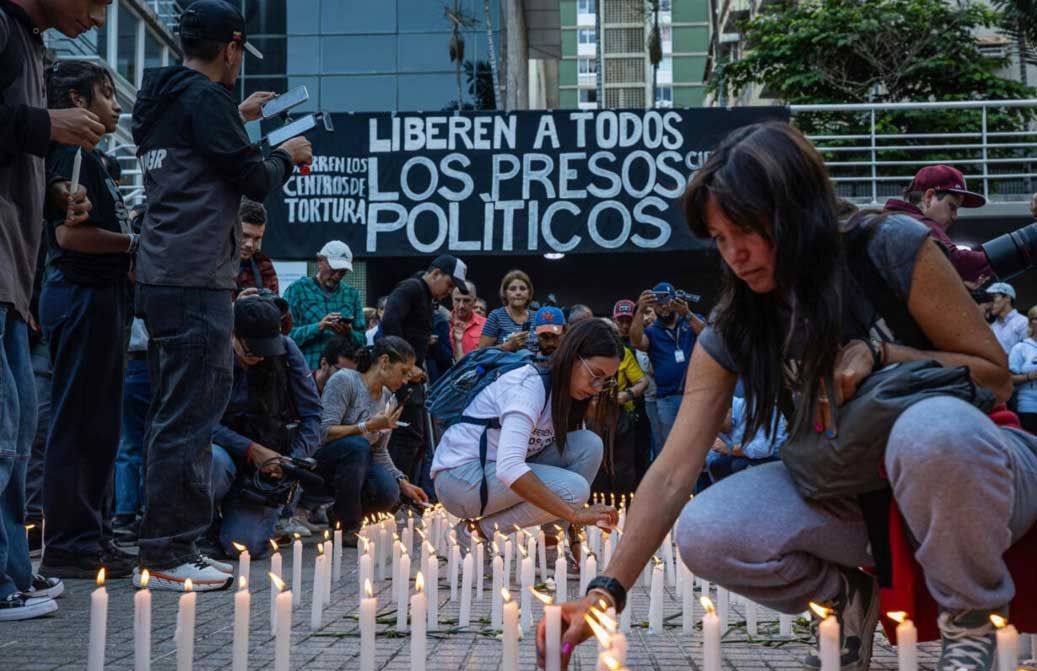
Venezuela’s Bolivarian regime announced the release of 88 people who had been detained following the July 28, 2024, presidential elections, which Nicolás Maduro claimed to have won despite producing no corroborating evidence.
Caracas’ Ministry of Popular Power for Penitentiary Services (MPPSP) said the measure would be carried out on New Year’s Day. However, opposition groups challenged the numbers on Thursday afternoon, explaining there were still several prisoners to be set free. Independent organizations, including Foro Penal and Justicia, Encuentro y Perdón (JEP), spent Thursday corroborating the government’s figures. While the government reported 88 releases, JEP confirmed at least 47 specific cases by Thursday afternoon, and the Committee of Mothers in Defense of the Truth identified 87 individuals released from the Tocorón prison in the State of Aragua.
The move was part of a comprehensive case review ordered by Maduro, citing a humanistic approach. Human rights groups noted that the beneficiaries would enjoy a limited freedom pending their trials and subject to precautionary measures, such as periodic court appearances or travel bans. Hundreds of others continue to be jailed. Foro Penal recorded 902 political prisoners in Venezuela as of mid-December, while JEP estimated the figure to be over 1,000.
The Chavista administration said in a statement that the 88 individuals were held for crimes committed during violent actions by extremist sectors intended to destabilize the nation and disregard the sovereign will of the Venezuelan people. Additionally, the Ministry insisted that a dignified treatment, respectful of their human rights, had been granted to all detainees.
After the July 28 election, the pro-Chavista National Electoral Council (CNE) proclaimed Maduro the winner, a result the opposition and much of the international community labeled fraudulent, citing tally sheets that showed a victory for Edmundo González Urrutia. In the ensuing protests, more than 2,400 people were arrested. The Bolivarian regime’s Prosecutor’s Office has frequently labeled these detainees as terrorists, while the administration insists that the country is free of political prisoners, arguing that all those currently held are guilty of terrible crimes.
Last month, 71 people (65 men, 3 women, and 3 juveniles) were released in a first wave seeking to appease international condemnation, particularly that of the United States, which has deployed a sizeable armada in the Caribbean to allegedly combat drug trafficking. The United States, the European Union, and the OAS have recognized González Urrutia as the president-elect, citing “credible evidence” of fraud.
Esta historia contiene detalles que algunos lectores pueden encontrar perturbadores.
“Pensé que mi hermano pequeño estaba dentro, así que me acerqué e intenté romper la ventana para ayudar a la gente a salir, y después entré”.
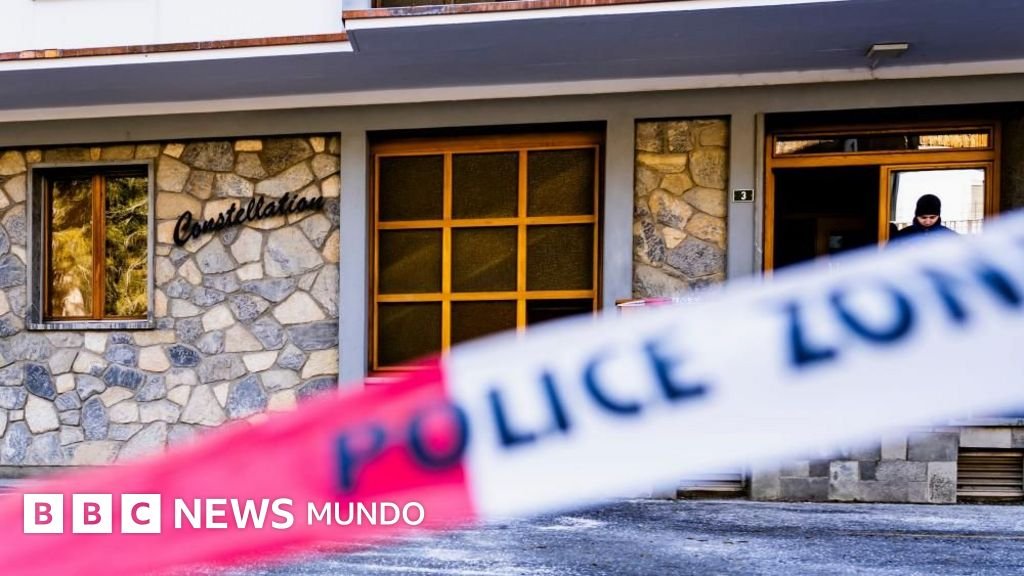
El joven de 18 años, que no quiso dar su nombre, habló con la BBC después de que un gran incendio en una fiesta de Nochevieja en la estación suiza de Crans-Montana convirtiera rápidamente una noche de celebración en una pesadilla.
La policía dice que se presume que decenas de personas murieron cuando el incendio se desató en un bar llamado Le Constellation alrededor de la 01:30 hora local (00:30 GMT) del jueves. Alrededor de 100 personas más resultaron heridas, principalmente con quemaduras graves.
El testigo presencial le contó a la BBC que estaba cerca del bar cuando escuchó una gran explosión, seguida de mucho humo.
Mientras otros intentaban escapar, él entró, buscando a su hermano. Una vez dentro, describió una escena de horror.
“Vi gente quemándose… Encontré gente quemándose de pies a cabeza, sin ropa”, dijo, y añadió: “Fue muy impactante”. Su hermano resultó ileso.
“Fui a este bar todos los días esta semana; el día que no fui, se incendió”, relató.
Los bomberos y los paramédicos intervinieron rápidamente, dijo, pero él intentó ayudar en lo que pudo, ofreciendo agua y ropa a los heridos.
Minutos antes, los lugareños y los turistas celebraban la llegada de 2026 durante uno de los períodos vacacionales más concurridos del año para las estaciones de esquí alpinas.
“Todo estaba en llamas”
Fuente de la imagen, Reuters
Pie de foto, El presidente de Suiza, Guy Parmelin, dio una rueda de prensa sobre el incidente.
Le Constellation es un bar grande con capacidad para unas 300 personas repartidas en dos plantas y una terraza, aunque se desconoce cuántas personas se encontraban en el bar en ese momento.
Dos mujeres francesas, Emma y Albane, contaron al medio francés BFMTV que estaban dentro cuando comenzó el incendio.
Dijeron que creían que se prendió cuando una camarera puso “velas de cumpleaños” encima de algunas botellas de champán.
“En cuestión de segundos, todo el techo estaba en llamas. Todo era de madera”, dijeron, y añadieron que las llamas “empezaron a subir muy rápidamente”.
La evacuación fue “muy difícil”, contaron Emma y Albane, porque la ruta de escape de la sala en la que se encontraban era “estrecha” y las escaleras que conducían al exterior eran “aún más estrechas”.
“Tuvimos mucha suerte”, añadieron, afirmando que había “unas 200 personas intentando salir en 30 segundos por unas escaleras muy estrechas”.
Otro adolescente que se encontraba dentro del bar le contó a la BBC cómo se vio obligado a esconderse de una “pared de calor” antes de lograr escapar por las escaleras.
Sin embargo, no pudo salir, así que intentó romper una ventana con una mesa. Pero solo pudo salir con vida cuando usó el pie para romper el cristal .
Título del video, Incendio en un bar en Suiza
La unidad de cuidados intensivos del hospital más cercano se llenó rápidamente y algunos pacientes fueron trasladados a otros centros para recibir tratamiento, incluso a Milán, en la vecina Italia.
Entre quienes presenciaron la tragedia se encontraba Oleh Paska, que estaba de visita en Crans-Montana con su esposa y su hijo.
Contó a la BBC que acababan de celebrar el Año Nuevo en su habitación de hotel, a unos 50 metros del bar, cuando oyeron una serie de explosiones, que inicialmente pensaron que eran petardos.
Oyeron a alguien llorando fuera, pero al principio pensaron que se había producido una pelea.
Solo cuando empezaron a llegar los servicios de emergencia, con las “diferentes sirenas” que anunciaban la llegada de ambulancias, policía y bomberos, se dieron cuenta de que algo andaba mal.
El impacto en la zona
Fuente de la imagen, Getty Images
Pie de foto, Las personas empezaron a dejar homenajes en la zona del siniestro.
El jueves, la zona, que normalmente está repleta de turistas, estaba inusualmente tranquila, dijo Paska.
Un ambiente de conmoción se cernía sobre la ciudad de Crans-Montana, tras las escenas de caos y tragedia de la noche anterior.
El embajador de Italia en Suiza ha declarado que la identificación de todas las víctimas podría tardar semanas, y el ministro de Asuntos Exteriores del país afirmó que la identificación será difícil debido a las graves quemaduras.
Por ahora, amigos y familiares esperan con nerviosismo noticias de sus seres queridos.
Un hombre italiano dijo que uno de sus amigos que se encontraba en el bar en ese momento estaba “quemado por completo”, mientras que otro fue trasladado a Zúrich en helicóptero.
“Otro amigo nuestro… anoche no teníamos noticias, no lo encontrábamos”, declaró a la cadena pública italiana Rai News.
“Mis amigos y yo no hemos dormido en toda la noche, apenas hemos comido”, añadió.
Suscríbete aquí a nuestro nuevo newsletter para recibir cada viernes una selección de nuestro mejor contenido de la semana.
Y recuerda que puedes recibir notificaciones en nuestra app. Descarga la última versión y actívalas.