Author: americalatinanews.com

  • Premier League predictions: Chris Sutton v singer-songwriter Andrew Cushin – and AI

    Premier League predictions: Chris Sutton v singer-songwriter Andrew Cushin – and AI


    Alan Shearer was one of Cushin’s first heroes, but his idol as a kid was a Toon player who stopped goals, rather than scored them.

    “I first went to St James’ when I was very young, but my first proper memory was against Stoke in 2008,” he explained. “We were 2-0 up at half-time, and I remember being on the concourse at half-time and thinking how great it was to be a Newcastle supporter.

    “That didn’t last long – we ended up throwing the game away, conceding a couple of late goals and drawing 2-2 – but it was watching Shay Given pull off some big saves that day which made me want to be a keeper.

    “Everyone else looked the same, wearing the same shirts, and it was just that one player, the goalkeeper, standing out. You are the last line of defence and you can be the hero, and I always liked that gamble – if it went wrong it was my fault, or I could be the reason why we get the points.

    “I was quite keen on that, and then I suppose that transitioned into me being a musician, where it is my name on the poster. I guess I’ve always liked the attention!”

    Cushin’s career between the sticks saw him play in the youth team for non-league Newcastle Benfield, but he has had to hang up his gloves to focus on playing the guitar.

    “It was a sad day when I had to stop playing, but it came after I’d spent some time in the studio with Noel Gallagher, and I realised I couldn’t afford to carry on as a keeper and risk breaking my fingers,” he added.

    “So I always say it was Shay who inspired me to put the gloves on, and Noel who told me to take them off again!”

    Chris Sutton and Andrew Cushin were speaking to BBC Sport’s Chris Bevan.

    The AI predictions were generated using Microsoft Copilot Chat – we simply asked the tool to ‘predict this weekend’s Premier League scores’.


    Source link

  • Latin America Becomes Chessboard as China and Trump Jockey Quietly


    Beijing’s new Latin America policy paper lands days after Donald Trump’s security strategy vows Western Hemisphere primacy. From Panama to Venezuela, ports, minerals, and recognition of Taiwan shape the contest—while ordinary citizens watch superpowers negotiate influence over their futures today.

    A Paper Slips Out And The Hemisphere Stiffens

    In December, the Trump administration released a national-security strategy pledging to “restore American pre-eminence in the Western Hemisphere” and “deny non-Hemispheric competitors.” As The Wall Street Journal reporter James T. Areddy wrote, Beijing answered within a week with a 6,700-word policy paper on Latin America and the Caribbean, its first on the region in almost a decade. The paper says “China has always stood in solidarity through thick and thin with the Global South,” and it points to a “significant shift” in the international balance of power—language tied to Xi Jinping. China hasn’t said why it published the paper now, but it expands the official 2016 version to include security and governance initiatives.

    The footprint is hard to ignore. Areddy reports Beijing now claims 24 regional signatories to the Belt and Road Initiative, up from none before 2017, and has displaced the U.S. as the biggest trading partner for many countries. The Center for Strategic and International Studies in Washington wrote that “Great power competition in the region has only just begun,” arguing China intends to widen diplomatic and economic ties and position itself as an alternative. CSIS co-author Ryan Berg put it more bluntly: “China’s strategy is basically not giving an inch.” Infrastructure spending and the pull of critical minerals, energy, and other natural resources create leverage, while diplomats work embassies and cultivate local political power brokers.

    Chinese President Xi Jinping/ EFE/EPA/ANDRES MARTINEZ CASARES

    Venezuela Draws Rhetoric As Cuba Flashes On The Radar

    The early stress test is Venezuela, where Trump has made pressuring Nicolás Maduro a marquee goal. China has denounced as illegal hegemony and “unilateral bullying” the U.S. military buildup around Venezuela, including interceptions of oil tankers Washington alleges are part of a sanctions-busting ghost fleet that also transports oil to China. At the U.N. Security Council on Dec. 23, Sun Lei, China’s deputy permanent representative to the United Nations, said, “We stand against any move that violates the purposes and principles of the U.N. Charter.” Areddy notes few expect Beijing to back that line with steps that could trigger a direct military confrontation with the U.S.; most support is likely to remain rhetorical.

    Beijing has tested the atmosphere with imagery. China Central Television aired a computer wargame in the Western Hemisphere, showing Chinese “red” forces facing “blue” ships and aircraft around Cuba and Mexico. Leland Lazarus, a Miami-based risk consultant, said Washington worries about Chinese “strategic support points” that could turn ports into military logistics hubs, including in Cuba. An unclassified Defense Department report to Congress in December cited Cuba as the only nation in the Americas where China may have considered a base, noting soft-power inroads and satellite help. With trade in agriculture and rare-earth minerals kept flowing but sensitive technology exports tightened, White House deputy press secretary Anna Kelly said the administration has moved “with historic speed to restore American strength at home and abroad and bring peace to the world.”

    Panama Ports And Taiwan Ties Become Bargaining Chips

    Panama makes the rivalry tangible. Trump vowed to retake control of the Panama Canal and, after taking office in January, said China wielded too much influence in a country that uses dollars as its official currency. Panama then moved to withdraw from the Belt and Road Initiative, and its president skipped Xi’s summit in May. In March, Trump welcomed a plan for a BlackRock-backed group to buy control of container-handling ports at either end of the canal from a Hong Kong company that has managed them since 1996. The Journal reported Beijing is pressing to reshape the deal so control shifts to Cosco, the shipping group owned by China. Last weekend, an order to demolish a Chinese-built friendship park near the waterway drew an angry response from Beijing’s embassy in Panama City.

    Beijing’s paper draws a line around Taiwan. Areddy reported Latin America and the Caribbean hold seven of the 12 governments that recognize the island, including Guatemala, Paraguay, and Haiti. China offers unspecified benefits for accepting “One China,” and several have switched, including Panama. Yet Honduras elected Nasry Asfura, a Trump-backed candidate who opposed the country’s 2023 shift to Beijing and said he would consider restoring ties with Taiwan. The U.S. strategy’s “Trump Corollary” to the Monroe Doctrine—a 19th-century warning to European powers—warns of “espionage, cybersecurity, debt-traps” and vows America will be “the partner of first choice.” Leland Lazarus called the neocolonial language a “narrative gift” to Beijing—and, for many in the region, pressure that rarely feels voluntary, especially now.

    Also Read:
    Latin America Under Trump 2025: Ports, Prisons, and Tariffs Rewrite Regional Politics


    Source link

  • Two SPFL games off because of snow with further inspections to come

    Two SPFL games off because of snow with further inspections to come


    Two of this weekend’s SPFL matches have been postponed because of freezing weather across Scotland.

    Cove Rangers v Montrose in League 1 and Elgin City v East Kilbride in League 2 have both been called off because of snow in the north-east.

    There are further inspections scheduled for Saturday morning with the Championship fixture between Dunfermline and Ross County in doubt, as well as Hamilton Academical’s match against East Fife in League 1.

    There was already a lack of certainty over the latter with Hamilton players considering not playing after they were not paid on time.

    Caretaker manager Darian MacKinnon has assured fans he will be able to field a team if the match goes ahead, but admitted the club is in a “critical” condition.

    In League 2, there will be pitch inspections on Saturday morning at both Stirling Albion and The Spartans, who play Annan Athletic and Dumbarton, respectively.


    Source link

  • 5 Things Every Successful Man Should Know About Ukrainian Marriage Agencies

    5 Things Every Successful Man Should Know About Ukrainian Marriage Agencies


    The landscape of international romance has undergone a significant shift over the past decade. Ukraine has emerged as a prominent destination for men seeking meaningful relationships through professional matchmaking services. But here’s the thing – navigating this complex world requires more than wishful thinking and a credit card.

    The growing interest in Ukrainian marriage agencies isn’t just a trend. It reflects more profound changes in how modern relationships form across cultural boundaries. Men from Western countries increasingly turn to professional services, hoping to find partners who share traditional values while embracing contemporary life. Yet success in this arena demands informed decision-making, cultural sensitivity, and realistic expectations.

    This exploration reveals five critical insights that separate successful international relationships from disappointing experiences. These aren’t surface-level tips about writing better profiles or choosing attractive photos. They’re foundational principles that determine whether your investment in a reputable Ukraine marriage agency yields a genuine connection or costly frustration.

    Understanding the Role and Reputation of Ukrainian Marriage Agencies

    Ukrainian marriage agencies operate across a spectrum that ranges from legitimate, established businesses to questionable operations designed to extract maximum profit from hopeful clients. The most reputable services act as comprehensive relationship facilitators, offering a range of services that include initial introductions, translation services, travel coordination, and cultural coaching.

    Traditional brick-and-mortar agencies in major Ukrainian cities, such as Kyiv, Odesa, and Kharkiv, typically maintain physical offices where clients can meet with staff face-to-face. These establishments often have established relationships with local women and provide hands-on support throughout the courtship process. Online platforms, meanwhile, cast wider nets but may offer less personalized attention.

    Matchmaking services represent the premium tier, where experienced professionals actively work to create compatible pairings based on detailed personality assessments and compatibility factors. These services command higher fees but often deliver more targeted results for serious clients.

    Assessing agency credibility requires diligent research. Legitimate operations possess proper business licenses registered with Ukrainian authorities. They maintain transparent fee structures, provide verifiable client testimonials, and operate from established addresses. Their track record should include documented success stories spanning multiple years of operation.

    Red flags appear in various forms. Agencies demanding large upfront payments before any introductions should trigger immediate concern. Services that promise guaranteed marriages or make unrealistic claims about their success rates often prioritize profit over genuine matchmaking. A lack of physical address, absence of verifiable staff credentials, or use of pressure tactics during initial consultations all signal potential problems.

    The reputation factor extends beyond individual agencies to affect Ukraine’s entire international dating market. Scandals involving fraudulent operations damage the credibility of legitimate services and create skepticism among potential clients. This dynamic makes choosing established, reputable agencies even more crucial for men serious about finding authentic relationships.

    Cultural Nuances and Expectations in Ukrainian Matchmaking

    Ukrainian dating culture operates on principles that often differ significantly from Western casual dating norms. Family remains central to Ukrainian society, and women typically approach relationships with long-term commitment in mind. This doesn’t mean every Ukrainian woman seeks immediate marriage, but rather that casual encounters rarely align with their relationship goals.

    Sincerity carries enormous weight in Ukrainian culture. Women can quickly detect insincere intentions or superficial interest, and such approaches typically result in swift rejection. Respect manifests through consistent behavior, punctual communication, and genuine interest in her thoughts, aspirations, and family background. Men who demonstrate authentic curiosity about Ukrainian culture and history often find themselves welcomed more warmly.

    Ukrainian women generally value emotional intelligence, financial stability, and family-oriented mindsets in foreign partners. They’re often attracted to men who can provide security – not just economic, but emotional and relational stability. Many appreciate the perceived chivalry and romantic attention that Western men bring to relationships.

    Professional agencies typically provide some level of cultural coaching for their female clients. This might include guidance on Western dating expectations, communication styles, or social norms. However, the quality and extent of such preparation vary dramatically between agencies. Some invest heavily in preparing women for international relationships, while others provide minimal support.

    Communication nuances create frequent misunderstandings. Direct communication styles common in Western cultures can seem harsh to Ukrainian women, while their more indirect approach might frustrate men accustomed to explicit statements. Agencies often serve as cultural bridges, helping translate not just language but communication styles between partners.

    Religious and traditional values continue to hold influence in Ukrainian society, even among younger generations. Men who respect these aspects of Ukrainian culture and show genuine interest in understanding them typically achieve better results than those who dismiss or ignore cultural differences.

    Ukrainian marriage law requires specific documentation and procedures for international unions. Both parties must provide valid passports, proof of single status (or divorce/death certificates if previously married), and medical certificates confirming marriage fitness. The process typically takes several weeks to complete once all documentation is assembled.

    Foreign men must obtain authenticated documents from their home countries, which often require apostille certification or verification by the embassy of their country of origin. This bureaucratic process can consume months if not appropriately planned. Medical examinations must be conducted by approved Ukrainian medical facilities and cover both general health and communicable diseases.

    Prenuptial agreements represent sensitive territory in Ukrainian culture, where they’re less common than in Western countries. Men considering such agreements should approach the topic carefully, preferably with the guidance of a professional lawyer. Asset protection strategies must comply with both Ukrainian law and the man’s home country regulations.

    Post-marriage visa and citizenship options vary significantly depending on the man’s nationality. EU citizens enjoy streamlined processes for bringing Ukrainian spouses to Europe, while Americans face more complex K-1 fiancé visa requirements. Understanding these procedures before embarking on the relationship journey can prevent later complications.

    Reputable agencies guide through legal requirements and can recommend qualified attorneys specializing in international marriage law. However, men should independently verify all legal advice and never rely solely on agency recommendations for such crucial matters. Fraudulent operations often exploit legal complexity to extract additional fees or provide inadequate guidance.

    Costs, Fees, and Financial Transparency

    The financial investment in Ukrainian marriage agencies varies enormously based on service level and agency reputation. Basic membership fees for online platforms typically start at several hundred dollars annually. At the same time, comprehensive matchmaking services can cost tens of thousands of dollars over the course of the courtship period.

    Communication fees represent ongoing expenses that accumulate quickly. Translation services, video calls, and message exchanges often incur per-use charges that can total hundreds or thousands of dollars per month for active participants. Gift delivery services, while optional, frequently become significant expense categories as relationships develop.

    Travel coordination costs include not just transportation and accommodation, but also interpreters, local guides, and cultural activities. Agencies typically charge markup on these services, sometimes substantially. Men should budget for multiple trips to Ukraine, as single visits rarely provide a sufficient foundation for serious relationships.

    Hidden fees appear in various forms across different agencies. Some charge “activation” fees for profiles, others impose penalties for membership cancellation, and many include unexpected charges for premium features or priority placement. Transparent agencies provide comprehensive fee schedules upfront and avoid surprise charges.

    International intermediary agencies often charge significantly more than local Ukrainian services while providing similar access to the same pool of potential partners. Men willing to work directly with Ukrainian agencies usually achieve substantial cost savings, although they may sacrifice some convenience and English-language support.

    Financial transparency extends beyond fee structures to include agency business practices. Legitimate operations provide detailed invoices, maintain clear refund policies, and operate through established payment processing systems. Cash-only requirements or demands for offshore payments should trigger immediate concern.

    How to Maximize Success When Using a Ukrainian Marriage Agency

    Profile creation requires honest self-presentation balanced with attractive positioning. Successful profiles showcase genuine personality, life achievements, and relationship goals without exaggeration or deception. Professional photography helps, but authenticity matters more than studio perfection. Men should avoid generic descriptions and instead highlight specific interests, values, and lifestyle preferences.

    Communication effectiveness depends more on consistency and sincerity than frequency or eloquence. Regular, thoughtful messages demonstrate genuine interest without overwhelming recipients. Video calls provide crucial opportunities to assess compatibility and build emotional connections that text exchanges cannot replicate.

    Personal visits remain irreplaceable components of serious relationship development. Online interaction, regardless of duration or intensity, cannot substitute for face-to-face meetings in natural settings. Successful men typically plan multiple trips to Ukraine, allowing relationships to develop gradually and naturally.

    Agency resources for partner verification vary significantly in quality and thoroughness. Basic services may include identity confirmation and verification of marital status. Premium agencies conduct more extensive background checks, though men should supplement agency efforts with independent research when possible.

    Timeline expectations require careful calibration. Rushed relationships rarely succeed in cross-cultural contexts, while excessively prolonged online courtships can lose momentum. Most successful international marriages facilitated through Ukrainian agencies typically develop over a period of six months to two years, allowing sufficient time for thorough mutual evaluation and assessment.

    Realistic expectation management prevents disappointment and relationship failure. Ukrainian women, despite cultural differences, remain individuals with personal preferences, career ambitions, and life goals. Men approaching the process as if they were shopping for compliant partners typically experience frustration and rejection.

    The Path Forward in International Romance

    These five insights represent fundamental principles for navigating Ukraine’s marriage agency landscape successfully, including understanding agency operations, respecting cultural differences, managing legal requirements, controlling costs, and maximizing personal effectiveness to distinguish between successful relationships and expensive disappointments.

    The most crucial element remains approaching international matchmaking with genuine respect for Ukrainian culture and an authentic desire for meaningful partnership. Men who view Ukrainian women as potential life partners rather than exotic acquisitions find themselves welcomed into a culture that values family, loyalty, and emotional connection.

    Success in this arena demands patience, cultural sensitivity, and realistic financial planning. The investment – both emotional and economic – can be substantial. But for men genuinely seeking committed relationships with traditional values, Ukrainian marriage agencies can provide access to partnerships that might not develop through conventional Western dating channels.

    Research your chosen agency thoroughly. Verify credentials, compare services, and speak directly with previous clients when possible. Remember that the most expensive agency isn’t necessarily the best, nor is the cheapest option likely to provide adequate support for such an important life decision.

    The world of international romance continues evolving as technology bridges cultural gaps and global mobility increases. Ukrainian marriage agencies represent one avenue among many for forming cross-cultural relationships. Approach the process with open eyes, realistic expectations, and genuine respect for the remarkable women who might become your life partner.



    Source link

  • Latin America Private Jets Find New Altitudes Beyond Luxury Travel

    Latin America Private Jets Find New Altitudes Beyond Luxury Travel


    Business aviation is surging across Latin America as Mexico, Brazil, and Colombia treat private jets less as status symbols and more as tools for mining, nearshoring, and tourism. New traffic records reveal a region racing to match aircraft availability today.

    Geography Turns Urgency Into Strategy

    In AVBuyer’s report, aviation writer Felipe Reisch portrays a market rooted in Latin America itself. Demand no longer merely echoes North America and Europe alone; it responds to long distances, uneven airline connectivity, and industries that cannot afford to lose days to geography.

    The terrain turns travel into logistics. From the winds of Patagonia to the humidity of the Amazon and the wall of the Andes, commercial frequencies thin out beyond major hubs, while overland routes can be punishing or unreliable. Private aviation shifts from luxury to working infrastructure, moving engineers, executives, and crews between remote sites and the capitals where decisions are made.

    Mexico And Brazil Rewrite The Center Of Gravity

    Reisch identifies Mexico and Brazil as the region’s strongest demand engines, two economies with mature business-aviation cultures. In Brazil, fleet size places it among the world’s biggest business aviation markets, and Greater São Paulo alone holds more business aircraft than many countries. The density reflects an industrial and agro-export machine that often needs to reach secondary cities with limited scheduled service.

    In Mexico, the cadence is set by corporate travel and cross-border commerce. Nearshoring into the U.S. supply chain has added urgency to routes linking manufacturing centers and commercial capitals, and Reisch notes that the reopening of FAA Category 1 status has steadied the regulatory environment. In both countries, he argues, demand has outpaced traditional supply, pushing operators to rethink how—and where—aircraft are positioned.

    The route map is changing too. North–south flights to the United States remain strong, but intra-regional links are becoming structural. Mexico–Panama, Brazil–Chile, and Colombia–Mexico are examples of trips companies refuse to do through multi-stop itineraries and overnight layovers, because the cost is measured in stalled negotiations and delayed projects.

    Pexels/ RDNE Stock project

    Availability Becomes The New Luxury

    Traffic data in the report give that intuition a sharp edge. Figures attributed to Avi-Go show Brazil with a 45% increase in flights in 2025 over the previous year, followed by Colombia at 42% and Venezuela at 34%. Growth appeared in almost every month; February was the lone dip, down 2.6% versus the prior 12 months. July peaked at 306,488 flights, a 7% rise over 2024, reinforcing the sense that business aviation is spreading beyond traditional strongholds.

    Yet Reisch’s more unsettling point is that demand is not the region’s hardest problem. Availability is. Much of the fleet is privately owned and not consistently offered for charter, and seasonal repositioning can leave gaps when markets spike. Maintenance capacity, airport infrastructure, and regulatory friction can further shrink the number of planes truly usable on a given day. Reliability becomes a currency: the value is not only the flight, but the confidence that it will happen as promised.

    Operators are reacting with basing decisions and managed capacity. Jet Luxe, Reisch reports, expanded its managed fleet across key U.S. and Latin American gateways, increasing midsize and light-midsize availability. The move is framed as preparation for traffic compressing around hubs during the 2026 FIFA World Cup, with the company saying it will make its infrastructure available to provide “seamless, safe, and reliable service.”

    Beyond the marquee markets, the story shows national variations shaped by resources, tourism, and bureaucracy. In Chile, private jet operator Aerocardal says more than 35% of its flights are outside Chile, and CEO Ricardo Real points to destinations such as Easter Island and Torres del Paine. In Peru, Carlos Cueva of ATSA says mining, hydrocarbons, and tourism lead demand, while health-care providers are increasingly turning to air ambulances; he projects fleet growth from two to three Dash 8 Q400 aircraft in 2025.

    In Ecuador, David Carrión of Ecuacentair FBO argues that “simplifying procedures” for permits and approvals would reduce delays and encourage investment. In Colombia, Jorge Campillo of Searca says oil contributes more than US$5 billion annually to the Colombian economy and calls business aviation essential for “fast and secure transportation to remote areas,” adding that the Beechcraft 1900D can cover up to 98% of the country’s terrain. In Argentina, Gastón Devesa of Hangar Uno describes why vast territory and limited transport infrastructure keep private flight a strategic solution.

    Threaded through Reisch’s reporting is a quieter optimism: professionalization. As brokers and corporate clients demand clearer commitments, performance data, and consistent execution, operators and service providers adopt more standardized practices. The question facing Latin America is no longer whether private aviation will grow. It is whether fleets, airports, and rules can mature fast enough to keep the region’s new flight rhythm from outrunning its capacity.

    Also Read:
    US Gold and Coin: A Reliable Name in Precious Metals and Coin Services


    Source link

  • 'I will leave one day' – Guardiola on City future

    'I will leave one day' – Guardiola on City future


    Manchester City head coach Pep Guardiola has insisted he wants to “fight with his team” and see out his contract at the club, following reported interest in former Chelsea manager Enzo Maresca.


    Source link

  • Venezuelan Tankers Circle as Trump Blockade Turns Oil Into Storage


    Under Donald Trump’s new blockade, Venezuelan crude is piling up at sea. PDVSA is turning tankers into floating storage near Jose, bargaining discounts, and watching Chevron ships sail while others hesitate, testing how long Nicolas Maduro can keep exporting anyway.

    Jose Turns Into An Offshore Waiting Room

    Off the coast by Jose, the sea is no longer just a route out of Venezuela. It is becoming the country’s improvised warehouse. In reporting by Reuters journalist Marianna Parraga, at least two oil tankers reached Venezuela in recent days, with others still navigating toward the country, a sign that state-run PDVSA is expanding floating storage to keep selling crude even as exports have been squeezed to a minimum.

    The squeeze, Parraga reported, hardened this month when U.S. President Donald Trump announced a blockade of all sanctioned vessels going in or out of Venezuelan waters, part of a strategy to pressure President Nicolas Maduro. The result has been abrupt and measurable: Venezuela’s oil exports this month are about half of their November level. In a nation where public solvency and private survival are often tied to the oil cycle, the numbers read like weather—an omen before the storm arrives.

    Enforcement has been visible. The U.S. has seized two fully loaded cargoes of Venezuelan oil, and American ships are patrolling the Caribbean Sea, a corridor that doubles as economic lifeline and geopolitical pressure point. The patrols radiate beyond the hulls they shadow. They reach vessel owners and insurers deciding whether a voyage is worth the legal exposure, and they ripple through brokers who understand that one interdicted cargo can poison a relationship overnight.

    Fear has done its work. Parraga described reroutings and U-turns that have left only a fraction of ships willing to approach this OPEC producer. Yet the blockade has not cleared the horizon. Data from monitoring service TankerTrackers.com, cited by Reuters, showed that at least two ships under sanctions arrived in Venezuela over the last few days, and two more vessels that are not under sanctions were approaching the coast. The sea lanes are narrowing, but they are not closed; they are being filtered.

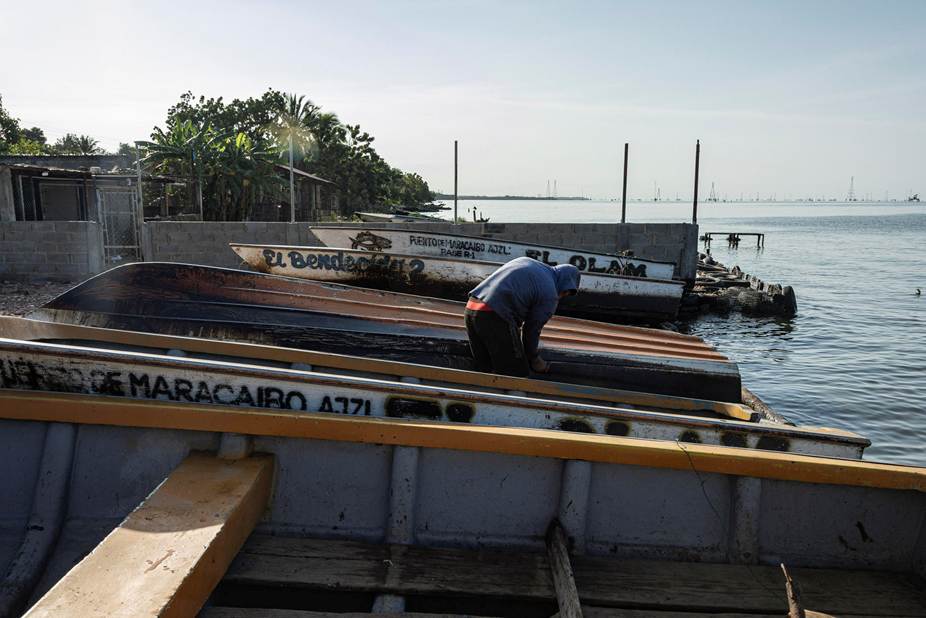
    A fisherman cleans his oil-covered boat outside Lake Maracaibo (Venezuela). EFE/ Henry Chirinos

    China And Chevron Trace The Last Open Routes

    The approaching tankers matter because Maduro’s government has long treated crude not just as export revenue but as a form of payment. Since 2019, when Venezuela was first placed under U.S. energy sanctions, the administration has used oil to cover a long list of purchases and services, including debt service to China, Parraga reported. The two vessels nearing Venezuela are part of a fleet used by China and Venezuela to move crude bound for Chinese ports as repayment. It was unclear whether China will press for a U.S. waiver to secure delivery of those cargoes.

    Inside PDVSA, the blockade is forcing negotiations that feel less like commerce than triage. Parraga reported that the company has been negotiating price discounts and contract changes this month to avoid cargo returns or crude production cutbacks. Company sources told Reuters that many buyers are growing impatient because there are no real alternatives to move oil cargoes out of the country, even in non-sanctioned tankers. A legal ship is still not a usable ship if the ecosystem around it—financing, flagging, classification, insurance—has decided the risk is too high.

    Then came another blow that did not arrive from the sea. A cyberattack forced PDVSA to shut down its centralized administrative system this month, and the company is now delivering cargoes at ports more slowly, Parraga reported. The slowdown serves two purposes at once: it helps fulfill loading windows when exports are possible, and it allows the company to store crude and fuel in ships, expanding floating storage capacity. For an oil company, delays are never neutral; they are either a bridge to the next shipment or the beginning of a chokehold.

    The departures that still happen stand out precisely because they are so few. Parraga reported that the only loaded vessels leaving are Chevron’s tankers, which continue sailing for the United States under Washington’s authorization, along with small ships carrying oil byproducts and petrochemicals. In the choreography of sanctions, a narrow corridor remains open—proof that pressure can be both sweeping in rhetoric and carefully calibrated in practice.

    The 2020 Warning Returns With Ships Anchored In Place

    The current congestion carries an echo that Venezuela has not forgotten. A similar squeeze in 2020, when Washington ramped up pressure on Maduro by sanctioning PDVSA’s main trading partners, forced the country to switch to little-known intermediaries to keep selling oil to Chinese buyers, Parraga reported. Those measures triggered oil output cuts, oilfield shutdowns and severe scarcity of motor fuel. It took years for Venezuela to reach about 1 million barrels per day (bpd) of output again, recover some refining capacity and stabilize exports.

    Now the view from Jose captures how quickly stability can be tested again. As of this week, almost two dozen tankers were visible from shore near the Jose port waiting for loading windows or for departure instructions, according to the data and documents cited by Reuters. The volume of oil stuck in undeparted tankers has climbed to about 16 million barrels, from 11 million barrels in mid-December. Each additional barrel afloat buys time, but it also announces strain: storage is a strategy, yet it is also an admission that the pipeline to buyers has narrowed.

    PDVSA did not reply to a request for comment, Parraga reported, while Venezuela’s oil ministry and Maduro have said exports will continue. The vow is political. The anchored fleet is logistical. Between them sits the question that has defined the sanctions era: how long a country can keep moving oil when the sea itself becomes storage. It is a test of tolerance—how much uncertainty customers and shipowners will absorb before they decide that Venezuelan barrels are simply too costly to touch.

    Also Read:
    Latin America Ports Remake Soybean Trade as China Builds Futures


    Source link

  • Tottenham: Thomas Frank ‘understands and shares’ Spurs fans’ frustrations

    Tottenham: Thomas Frank ‘understands and shares’ Spurs fans’ frustrations


    Frank was drafted in as Ange Postecoglou’s replacement over the summer after Tottenham ended last season in 17th place.

    Spurs have already shown signs of recovery in defence, with seven clean sheets under Frank in the Premier League, having only earned six league shutouts in the entirety of 2024-25 with Postecoglou in charge.

    They won 1-0 at Crystal Palace prior to the Brentford trip.

    Frank accepts there are still further areas for improvement but insists there are plenty of reasons to be positive.

    “It’s not perfect, we want to be a free-flow team,” Frank said.

    “A few things I went to reinforce positively is our last two away performances. The foundation we were building was very strong and we were very strong defensively. That is hugely important and we understood how to close down their transitions.

    “We are working very hard on the offensive part of the game.

    “Football is a game of mistakes. You lose the ball, that happens – but if half of those can be better, it will provide more attacks.”

    Frank, who spent seven years in charge of Brentford, was unable to call on several key figures on Thursday as he continues to contend with a lengthy absentee list.

    James Maddison, Dominic Solanke and Dejan Kulusevski are among those on the sidelines with injuries, while Xavi Simons is serving a suspension.

    “Expectation is good and I also think we are probably in a bit of a transition,” Frank said.

    “Not that we don’t want to play a lot better, but the club, the squad, the injuries, all that taken into consideration is part of that.”

    Tottenham return to action on Sunday when Sunderland visit north London at 15:00 GMT.


    Source link

  • Colombia Drone Narco War Turns Cheap Tech into City Terror


    Explosive drones now stalk Colombia, from jungle checkpoints to the streets of Cali, giving cocaine militias a low-cost edge over weary soldiers and police. As Gustavo Petro faces Donald Trump’s pressure, civilians wonder who controls the sky this holiday season.

    A Battlefield Without a Front Line

    Shortly before Christmas, drones slipped over a military compound in northeastern Colombia and detonated above soldiers who believed they were briefly safe. Seven soldiers died where they were resting. Reporting by The Wall Street Journal correspondent Juan Forero linked the strike to the National Liberation Army, or the ELN.

    The fear has moved fast from the periphery to the cities. The Journal described officials in Cali scrambling to keep gangs from dropping explosives onto police stations, and reported that an assault in eastern Colombia killed 80 people and uprooted tens of thousands earlier this year. Since April 2024, the military says it has counted about 400 drone attacks; President Gustavo Petro has said those strikes killed 58 soldiers and police officers and wounded nearly 300. Senior army officer Maj. Gen. Juan Carlos Correa, cited by the Journal, said the drones arrived as a surprise capability and that the countermeasures so far have not been enough.

    Outside Colombia, drone warfare is often told through Ukraine and Russia, but here it is stitched into the cocaine economy. Military officials told the Journal most attack drones are commercial models—often made in China—bought online for a few hundred dollars and modified to carry homemade explosives.

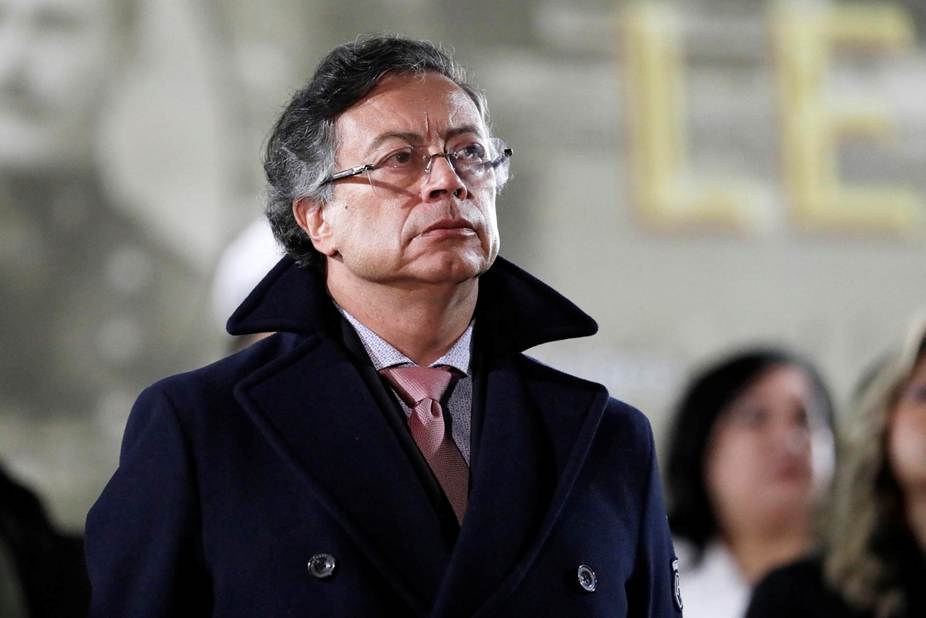
    Colombian President Gustavo Petro attends a military promotions ceremony this Monday in Bogotá, Colombia. EFE/Carlos Ortega

    Cheap Flight, Costly Shield

    Engineer Cesar Jaramillo of the state-run Colombian Aeronautical Industry told the Journal how quickly armed groups can turn off-the-shelf drones into weapons. The same adaptation is spreading across Latin America. In western Mexico, the Jalisco New Generation Cartel drops C-4 to drive villagers out and seize territory. In Rio de Janeiro in October, the Red Command gang used drones to bomb police from above. In Ecuador, authorities say prison-based kingpins use drones to smuggle in phones and drugs, keeping command alive behind bars.

    Researcher Henry Ziemer of the Center for Strategic and International Studies in Washington told the Journal the region’s drone challenge can be harder than on conventional battlefields because there is no frontline to fortify. Organized-crime groups are embedded in society, so governments must defend bases, highways, ports, and neighborhoods at once.

    The drone war is also political. Trump calls Colombia’s resurgent militias narco-terrorists for shipping drugs to the U.S. and has attacked Petro for letting the trade expand, even as his administration carried out airstrikes against alleged drug boats in the Caribbean and the Pacific to pressure Nicolás Maduro’s regime in Venezuela, the Journal reported. Petro says his government is fighting the gangs while acknowledging that United Nations monitoring shows more coca than ever. Military data cited by the Journal show the biggest armed groups have roughly doubled to 25,000 members in three years after cease-fires gave them room to recruit and invest. The ELN is now estimated at 6,700 members, and the drone tempo has climbed from roughly a dozen strikes a month in 2024 to nearly double that pace this year.

    Grief Under The Propellers In Cali

    Luz Rivas told the Journal her nephew, Sgt. Wilmar Rivas, feared being killed by an explosive dropped from a drone he could not even see. He was killed in August at a river checkpoint along a major cocaine corridor when a drone targeted his unit. Beforehand, he texted home, “Pray for me, hopefully they’ll get us out of here soon.”

    Colombia is trying to buy time. At Aeronautical Industry, engineers are designing rugged unmanned vehicles for surveillance and real-time intelligence, while contractors develop jamming systems for a new antidrone battalion. Engineers told the Journal there is no single counterdrone system that works against every attack, and a single unit can cost more than $100,000. Electronics engineer Andres Gomez said options like nets or lasers can exist on paper but are difficult to deploy in jungles and mountains where troops often operate. Evan Ellis of the U.S. Army War College told the Journal that drones, like landmines before them, have forced everyone to assume they are exposed.

    In Cali, Mayor Alejandro Eder has weighed the threat since an antidrone system was temporarily installed for a United Nations-led summit. The city lies near mountains where drug crops grow and close to trafficking corridors, and gangs fight for control in its outskirts and poorest barrios. Eder said gangs have twice dropped explosives from drones that failed to detonate, and he has consulted antidrug officials from the U.S. embassy about jamming options. He warned it is only a matter of time before a major city suffers a successful strike, and added, “And that city will be Cali.” The sky is contested.

    Also Read:
    Venezuela’s Dancing Strongman Bets Oil, Memory, and Defiance Against Trump


    Source link

  • Chelsea interim boss Calum McFarlane on a ‘whirlwind’ 24 hours since replacing Enzo Maresca

    Chelsea interim boss Calum McFarlane on a ‘whirlwind’ 24 hours since replacing Enzo Maresca


    Chelsea interim manager Calum McFarlane admits it’s been a “whirlwind” 24 hours since he was named as temporary replacement for Enzo Maresca.

    Italian Maresca parted company with the Blues on Thursday, 18 months after replacing Mauricio Pochettino at Stamford Bridge.

    McFarlane, Chelsea‘s U21s head coach, was named as interim manager and will take charge of Sunday’s Premier League trip to Manchester City.

    Such was the unexpected nature of McFarlane’s appointment, the Englishman’s training ground pass had to be amended to grant him access to the club’s press conference room on Friday morning.

    “It’s been a crazy 24 hours, a whirlwind, as you can imagine, but also really enjoyable and really exciting,” said McFarlane.

    “I can only feel positive about it. It’s an amazing experience.”

    Maresca’s departure came after a 2-2 draw against Bournemouth on Tuesday, which left the Blues 15 points adrift of leaders Arsenal.

    It means McFarlane’s debut as a manager of a senior team will come against Pep Guardiola, who celebrated managing his 1,000th match as a head coach in November.

    “The team needs to be ready and prepared and our role is giving the players the support they need to go and execute,” he said.

    “I wouldn’t say we have nothing to lose. We have to give a real good account of ourselves.”

    Chelsea travel to Manchester three places and 11 points behind second-placed City.

    Reports following Maresca’s departure suggested the Italian had held talks with City over succeeding Guardiola, though the former Leicester City boss denied the claims.

    “From my point of view Chelsea have lost an incredible manager and an incredible person,” Guardiola said on Maresca’s departure.

    “It’s a decision from the Chelsea hierarchy so I’ve nothing to say. How lucky I am in the club where I am. My club is extraordinary.”


    Source link

Translate »