Hearts play four of their next six league games at Tynecastle, where they are still unbeaten in the league.
McInnes says that form is something they can “take encouragement” from, as well as the fact four of their pre-split games are against bottom-half sides.
The next challenge is against sixth-place Falkirk, who did triumph at Hearts’ home in the Scottish Cup after a penalty shootout last month.
McInnes believes every match requires full focus, and is looking for his squad to improve.
“All I’m looking for now is to try and get a wee bit more from some at this stage of the season,” he said.
“We just need to try and up the ante a wee bit if we can and get a better performance.
“Because these games, they do give us opportunities, particularly the games at Tynecastle.”
Oisin McEntee, who went off at Ibrox with a shoulder injury, will miss the Falkirk match but is expected to be fit for the visit of Aberdeen next week.
Uma tempestade perfeita se abateu sobre os resultados da General Mills e derrubou os papéis da fabricante do Cheerios no pregão desta terça-feira, refletindo pressões cada vez mais avassaladoras sobre a indústria de bens de consumo.
Um mix de inflação, corte de benefícios sociais pelo governo Trump, e o efeito das drogas GLP-1 no apetite dos consumidores enfraqueceu a demanda pelos cereais e snacks da gigante de Minneapolis.
A General Mills reduziu seu guidance de faturamento e lucro, empurrando a ação para uma queda de 7% no dia.
Segundo o WSJ, a General Mills agora prevê uma contração de 1,5% a 2% nas vendas líquidas orgânicas para este ano – comparado a uma faixa anterior que ia de -1% a + 1%.
A empresa de alimentos também projetou que seu lucro ajustado por ação vai cair entre 16% e 20% em moeda constante, comparado a uma estimativa anterior de queda de 10% a 15%.
Falando na CAGNY – a grande conferência anual da indústria de bens de consumo – o CEO Jeff Harmening disse que os clientes de renda média e baixa renda estão sofrendo, e cada vez mais dependentes das promoções para fazer suas compras.
“O custo de vida e o custo de moradia estão remodelando os padrões de consumo, e a equação custo-benefício é uma expectativa do consumidor que veio para ficar,” disse Harmening, segundo o WSJ.
Para responder às pressões, a companhia está priorizando a inovação, particularmente novos produtos com foco em proteínas – um resultado da adoção cada vez maior das drogas GLP-1, que estão incentivando consumidores “a optarem por porções menores e alimentos mais ricos em proteínas e fibras,” disse o CEO.
A General Mills disse esperar que sua receita com novos produtos aumente 25% este ano.
A empresa também tomou uma atitude mais drástica: cortou os preços de dois terços de seu portfólio na América do Norte, e já está vendo um volume maior de vendas, disse o WSJ.
Ainda segundo o jornal, a estratégia permitiu que a General Mills “ficasse abaixo dos preços de corte [a partir dos quais o consumidor simplesmente não compra] e reduzisse a distância para a concorrência,” disse a presidente do segmento de varejo na América do Norte.
A General Mills agora vale US$ 24 bilhões na Bolsa, um valor de mercado perto da mínima dos últimos seis anos.
Al fin el diálogo y la negociación tuvieron frutos en la Cámara de Diputados. Con ello, ayer se asomó apenas la producción legislativa y aprobaron ¡10 dictámenes en una sesión! De consenso y por unanimidad, las reformas abarcaron temas de apicultura, asentamientos humanos, derechos de niñas, niños y adolescentes, acoso sexual, hostigamiento laboral, igualdad de género, medio ambiente y apoyo al deporte, entre otras. No se supo quién agradeció a quién, pero tanto Morena como la oposición celebraron la disposición de avanzar.
Faltan 151 mdp en Tequila
El exalcalde de Tequila, Jalisco, el morenista Diego Rivera, no sólo era experto en extorsionar a empresarios, sino también en el desvío de recursos públicos, pues ayer la Auditoría Superior de la Federación reveló que en 2024, el primer año de la administración del edil –hoy preso en el Altiplano–, desaparecieron 151 millones de pesos que tenían que invertirse en infraestructura, educación y seguridad. Aunque la ASF solicitó los registros contables y presupuestales, éstos no existen.
Liquidación en vilo
El diputado morenista Sergio Gutiérrez Luna ha pregonado que los tres consejeros del INE que concluirán funciones en abril próximo se llevarán una liquidación de siete millones de pesos cada uno. Quien no se quedó callada fue la consejera Dania Ravel, pues dijo que debido a que el Órgano Interno de Control del INE continúa desahogando un procedimiento de responsabilidad en contra suya y de los consejeros Claudia Zavala y Jaime Rivera, no podrá acceder a esa liquidación que, afirmó, por derecho les corresponde.
Grecia Quiroz pasa a la carga
La alcaldesa de Uruapan, Grecia Quiroz, finalmente materializó la acusación contra quienes ella cree tuvieron que ver en el homicidio de su esposo, Carlos Manzo. Ayer, mismo día en que se dio a conocer la detención de tres implicados más en el asesinato, la alcaldesa acudió a la Fiscalía local y pidió investigar por el crimen a los morenistas Leonel Godoy, senador de la República; Raúl Morón, diputado federal, e Ignacio Campos, exalcalde de Uruapan. Su prueba: los videos en los que el mismo Manzo, en vida y de viva voz, responsabilizó al trío de morenistas por si algo le llegara a ocurrir. ¿Será que la Fiscalía ahondará en esa línea política para esclarecer el caso?
Otra pifia de Lenia Batres
Que ahora sí Lenia Batres aceptó que quitaran un párrafo a pesar de que la ponente no estaba de acuerdo, contrario a su posición anterior en el tema de cosa juzgada, donde a pesar de la votación de la mayoría de quitar un párrafo, se aferró a dejarlo. La pifia está en que defendió que podía quedarse el párrafo porque no tenía validez jurídica, lo cual demuestra que no entendió la reforma constitucional que establece como criterio obligatorio los razonamientos mayoritarios de la Corte al cambiar del sistema de jurisprudencia al de precedentes. Sigue su curva de aprendizaje.
Se quedó en el ayer
Que alguien le avise a Manuel Velasco Coello, coordinador de la bancada del PVEM, que hace casi 10 años dejó de existir el nombre de Distrito Federal y ahora se llama Ciudad de México, con Constitución propia. Ayer, dijo que su partido estaba empujando la idea de elegir a los legisladores como se hace en el “Distrito Federal, y los mejores segundos lugares accedan”. Díganle que eso sólo quedó en la canción de Chava Flores, ¿se acuerdan?
Baños de pureza
Ayer la senadora Paloma Sánchez, del PRI, resaltó que no hay cabida para decir que es una crítica infundada eso de que los chairos son mugrosos: “Luego se enojan porque dicen que los chairos no se bañan. Pero pues ahí está Marx Arriaga”. Esto tras cuatro días de atrincheramiento en las instalaciones de la SEP, pese a ser destituido como director de materiales educativos. Híjole, que no la escuche el Conapred porque van a querer apercibir a la sinaloense.
It remains unclear whether the back-channel will evolve into a formal process or concrete measures
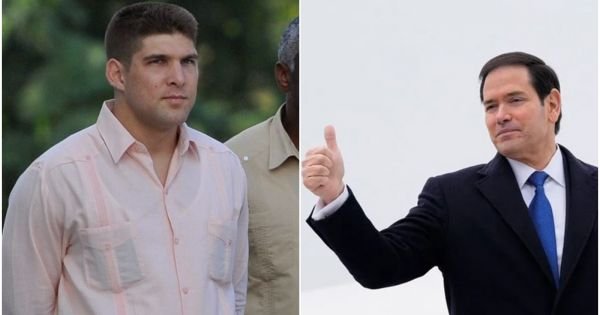
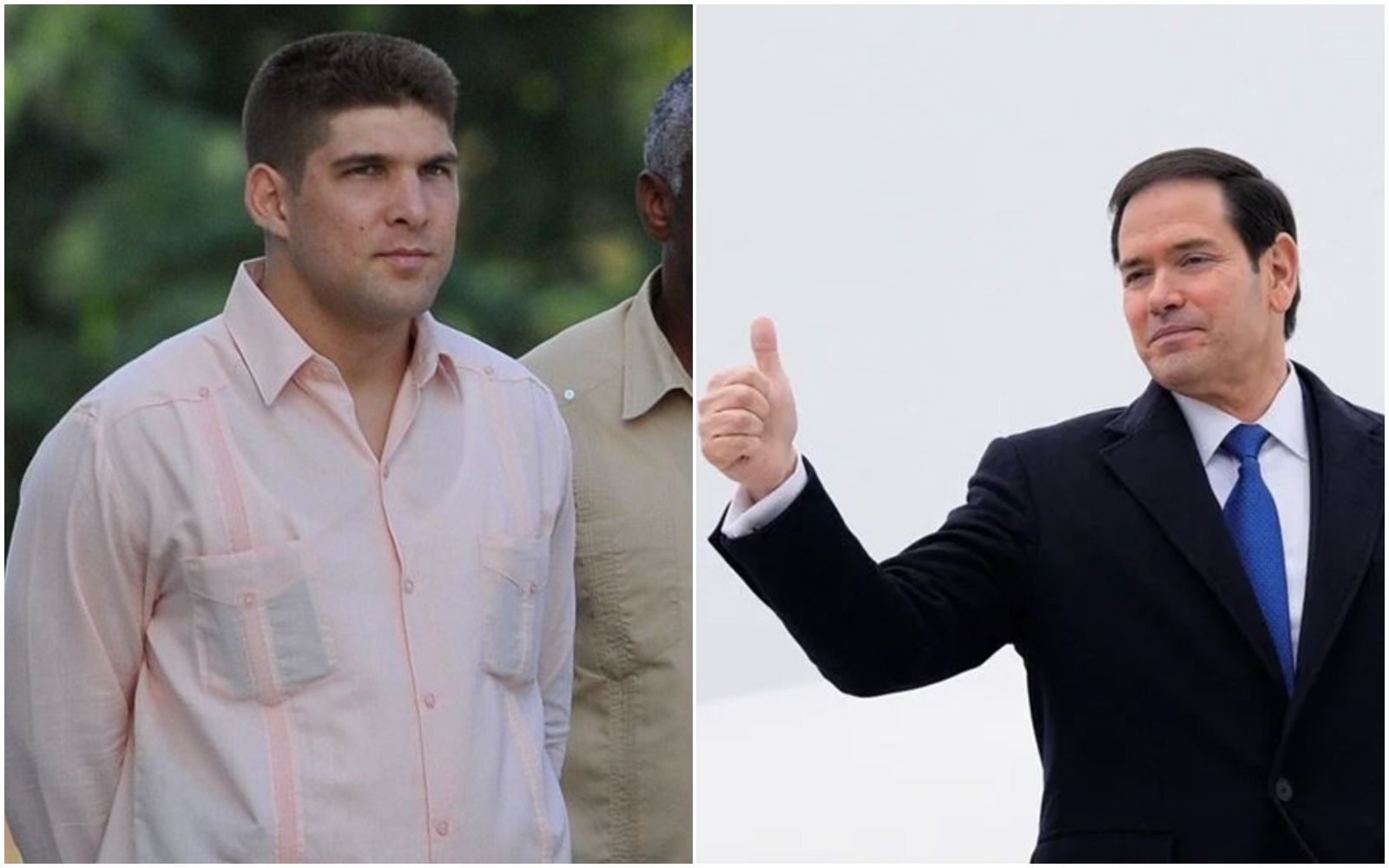
U.S. Secretary of State Marco Rubio has held discreet talks with Raúl Guillermo Rodríguez Castro, the grandson and caretaker of former Cuban leader Raúl Castro, bypassing official Cuban government channels, Axios reported, citing sources familiar with the outreach.
Axios says the exchanges underscore the Trump administration’s view that the 94-year-old revolutionary remains the island’s main decision-maker despite no longer serving as president. A senior official quoted by the outlet said he would not call them “negotiations,” but rather “discussions” about the future.
In the same account, the official described Washington’s position as that “the regime has to go,” while adding that what that looks like will ultimately be determined by President Donald Trump, who “has yet to decide,” and that Rubio “is still in talks with the grandson.”
The report lands as Cuba faces deepening economic and energy strain, including blackouts and severe fuel shortages, and as external partners move to shore up Havana. On Wednesday, Cuban Foreign Minister Bruno Rodríguez met Russian officials in Moscow, where Russia’s Sergey Lavrov urged Washington to refrain from what he described as plans for a maritime “blockade,” linking the crisis to a U.S. oil embargo and pressure on third countries.
Separately, Trump said on Monday that his administration is “talking to Cuba” and that Rubio “is talking to Cuba right now,” describing the situation as a “humanitarian threat,” according to remarks reported by Bloomberg. Havana has denied in recent weeks that talks are taking place on those terms.
Axios portrays Rodríguez Castro, 41, as a consequential figure in Raúl Castro’s security and family circle, and says Rubio’s team views him as a potential bridge to younger, more business-minded power brokers who may see value in a U.S. rapprochement.
It remains unclear whether the back-channel will evolve into a formal process or concrete measures. Axios frames the outreach as part of a broader strategy that combines intensified pressure on Havana with efforts to identify alternative interlocutors and test transition or deal-making scenarios outside the Cuban government’s official hierarchy.
It remains unclear whether the back-channel will evolve into a formal process or concrete measures
U.S. Secretary of State Marco Rubio has held discreet talks with Raúl Guillermo Rodríguez Castro, the grandson and caretaker of former Cuban leader Raúl Castro, bypassing official Cuban government channels, Axios reported, citing sources familiar with the outreach.
Axios says the exchanges underscore the Trump administration’s view that the 94-year-old revolutionary remains the island’s main decision-maker despite no longer serving as president. A senior official quoted by the outlet said he would not call them “negotiations,” but rather “discussions” about the future.
In the same account, the official described Washington’s position as that “the regime has to go,” while adding that what that looks like will ultimately be determined by President Donald Trump, who “has yet to decide,” and that Rubio “is still in talks with the grandson.”
The report lands as Cuba faces deepening economic and energy strain, including blackouts and severe fuel shortages, and as external partners move to shore up Havana. On Wednesday, Cuban Foreign Minister Bruno Rodríguez met Russian officials in Moscow, where Russia’s Sergey Lavrov urged Washington to refrain from what he described as plans for a maritime “blockade,” linking the crisis to a U.S. oil embargo and pressure on third countries.
Separately, Trump said on Monday that his administration is “talking to Cuba” and that Rubio “is talking to Cuba right now,” describing the situation as a “humanitarian threat,” according to remarks reported by Bloomberg. Havana has denied in recent weeks that talks are taking place on those terms.
Axios portrays Rodríguez Castro, 41, as a consequential figure in Raúl Castro’s security and family circle, and says Rubio’s team views him as a potential bridge to younger, more business-minded power brokers who may see value in a U.S. rapprochement.
It remains unclear whether the back-channel will evolve into a formal process or concrete measures. Axios frames the outreach as part of a broader strategy that combines intensified pressure on Havana with efforts to identify alternative interlocutors and test transition or deal-making scenarios outside the Cuban government’s official hierarchy.
Facebook’s new content monetization program is booming, and Indonesian creators are leading the charge, giving the platform a much-needed boost to compete with YouTube and TikTok. The program has grown from under 3 million to 12 million participants in just over a year. Accounts in Bahasa Indonesia made up nearly 15% of the platform’s total monetized accounts in January 2026, forming the largest group of non-English content on the platform.
Until January 2025, Facebook’s content monetization program was splintered across platforms, and growing marginally around the world, with just about 2.7 million total users enrolled. Creators often prioritized rival platforms like YouTube and TikTok because of their younger audiences, better reach, and engagement opportunities. YouTube paid out $70 billion to creators between 2021 and 2023 through its well-reputed partner program, while Facebook only doled out $2 billion in 2024.
To court more creators, Facebook combined all of its monetization schemes, and introduced a new monetization program in October 2024 that rewarded creators on the performance of their content rather than with a share of the ad revenue, similar to TikTok.
Meta did not respond to Rest of World’s request for comment.
The strategy has driven a massive surge of participants in the monetization program. Rest of World analyzed data from the Meta Monetization Archive, a repository created by nonprofit What To Fix. It shows that as of January 2026, there were 12 million monetized accounts across all languages on Facebook — an increase of nearly 10 million accounts in just one year.
Over 8 million of those accounts are in the English language — and the second most popular language is Bahasa Indonesia. There are now 1.7 million Bahasa Indonesia accounts monetized as of early this year, which surpasses all other non-English languages, including Spanish (about 850,000) and Hindi (about 280,000).
Bunga Istyani, director of strategic planning at digital marketing agency We Are Social’s Indonesia arm, told Rest of World in an email that they are witnessing a “Facebook Renaissance,” with creators “returning to Facebook for its resilient reach in Tier 2 and Tier 3 cities.”
She said that while creators still have a preference for TikTok, YouTube, and Instagram, they’ve also started paying attention to Facebook. The platform helps creators build a loyal, paying community, which is especially crucial at a time of declining organic reach on other platforms. It includes the virtual tipping feature “Stars,” which allows followers to send creators money during live broadcasts, and a unique model of Facebook Groups that helps increase engagement.
These features are crucial for markets like Indonesia, where creators are “community leaders” who directly impact sales and revenue, Istyani said.
And they’re seeing results. “For many Indonesian creators, the RPM [revenue per mille, or thousand views] on Facebook has become highly competitive compared to YouTube,” she said.
In addition to these changes, Facebook’s barrier to entry for monetization is relatively low. By merging its content monetization programs under a single umbrella, creators can earn from multiple content formats, including text and photos. YouTube, on the other hand, is largely viewed as tougher to get into, despite boasting higher and more stable payouts.
In Indonesia, gaming and family-related content is among the most popular. Raffi Ahmad, an actor who regularly posts content of his family life, is the second most popular monetized account in Indonesia, with over 16.5 million followers. His popularity led to his appointment as a Special Envoy of the President of Indonesia for Development of Young Generation and Artists.
Other top accounts in the country include traditional news brands like Kompas, Tribunnews, and Liputan6.
“People pay a lot more attention to traditional [news] brands on Facebook than they do on TikTok,” journalist and digital strategist Nic Newman told Rest of World. His Digital News Report 2025, published by the Reuters Institute for the Study of Journalism, found that in Indonesia, 57% of respondents reported using social media for news consumption, surpassing India and many other countries.
News websites, too, are more than happy to monetize on social media. “In Indonesia, the brands are in quite a weak position; it’s very ad-supported because they’re not subscription-based publishers,” he said. “They’ll take advertising from wherever they can get it.”
A Nuveen Investments — a gestora do gigantesco fundo de pensão TIAA-CREF — fechou a compra da Schroders, a histórica gestora britânica, por £ 9,9 bilhões (R$ 70 bilhões), formando um mamute com US$ 2,5 trilhões sob gestão.
Na transação anunciada na quinta-feira, a Nuveen vai pagar (em dinheiro e ações) um prêmio de 34% em relação ao fechamento da ação da Schroders no dia anterior ao anúncio. De lá pra cá, o papel sobe 25% em Londres, e em 12 meses acumula uma alta de 52%.
O acordo é um desfecho para o turnaround da Schroders, que buscava se reestruturar após sofrer com o avanço dos ETFs e o encolhimento da Bolsa de Londres frente ao mercado americano.
Richard Oldfield, o CEO da Schroders desde o fim de 2023, vinha conduzindo um processo de revisão estratégica que culminou na saída da gestora do Brasil e em uma parceria com a firma de private equity Apollo Global para o desenvolvimento de produtos de gestão de patrimônio e previdência.
Com as mudanças já trazendo melhoras operacionais, e depois de Oldfield ter dito várias vezes que a Schroders não estava à venda, alguns analistas dizem que o acordo com a Nuveen pode ter ocorrido cedo demais e não captura todo o valor gerado pelo turnaround.
“Mais um ano com o tipo de transformação já observado nos últimos 15 meses poderia ter levado o preço da ação a um patamar diferente,” Rae Maile, uma analista do banco Panmure Liberum, disse ao Financial Times.
Não obstante, o acordo foi aprovado pela família fundadora da Schroders, que possui uma participação de 42% na companhia, e deve ser concluído no quarto trimestre.
Com isso, os cerca de £ 825 bilhões que a britânica possui sob gestão se unem ao US$ 1,4 trilhão da Nuveen, formando uma das maiores assets do mundo com um mix equilibrado entre renda fixa, ações e private equity.
Com sede em Nova York, a TIAA-CREF é conhecida como uma gigante em planos de aposentadoria e annuities.
Em 2014, a TIAA-CREF pagou US$ 6,25 bilhões pela Nuveen – uma firma de Chicago cuja origem remonta a 1898 – fortalecendo sua base de clientes institucionais, agregando uma franquia de fundos de muni bonds, e ampliando seu canal de distribuição nos EUA e no exterior, onde a TIAA-CREF não comercializava fundos mútuos.
Depois da compra ser concluída, a gestora combinada terá seu principal escritório em Londres, e a marca Schroders será mantida, disse o FT.
Na América Latina, a Nuveen é dona de 50% da Radar, uma joint venture com a Cosan que investe em terras agrícolas, florestais e plantações de frutas no Brasil, Uruguai, Panamá e Chile. A Radar tem R$ 20 bilhões em terras sob gestão.
Afore XXI Banorte se colocó en el primer lugar de rendimiento anualizado dentro del Sistema de Ahorro para el Retiro (SAR) en el arranque de 2026, impulsada por un sólido desempeño year-to-date (YTD), el cual refleja la consistencia de su estrategia de inversión.
De acuerdo con cifras del sector, la Administradora registró un rendimiento anualizado de 34.11% entre el 31 de diciembre de 2025 y el 6 de febrero de 2026, por encima del promedio ponderado del sistema, de 30.06%. Este resultado permitió a la Afore escalar al primer lugar del ranking durante el inicio del año.
Cabe señalar que dicho desempeño responde a la exposición táctica en activos con mayor dinamismo en mercados globales, así como a una estrategia diversificada con horizonte de largo plazo, diseñada para aprovechar ciclos favorables y traducirlos en mayores plusvalías para las Cuentas Individuales.
“Las cifras obtenidas al inicio de 2026 reflejan que la estrategia de inversión está generando resultados tangibles para las y los trabajadores”, señaló David Razú Aznar, Director General de Afore XXI Banorte, quien destacó que la prioridad es maximizar rendimientos manteniendo disciplina en la gestión de riesgos.
En este contexto, la Administradora subrayó que los periodos de alto desempeño en los mercados representan ventanas clave para potenciar el crecimiento del ahorro pensionario, particularmente cuando se combina con aportaciones voluntarias, las cuales permiten amplificar el efecto del interés compuesto.
Como parte de su estrategia para elevar la futura tasa de reemplazo de las y los trabajadores, la Afore reiteró que el Ahorro Voluntario puede iniciarse desde los 50 pesos mediante canales digitales y físicos.
Con estos resultados, XXI Banorte inicia 2026 con una señal positiva para el sistema, al evidenciar cómo un entorno favorable de mercado puede traducirse en mayores rendimientos para las y los ahorradores cuando se combina con una estrategia activa y disciplinada de inversión de largo plazo.
Debates over the governance of artificial intelligence tend to assume that it will be important and transformative across many areas of human endeavor. Yet, the question of how those benefits and risks will be distributed — who will win and who will lose — is less commonly articulated.
Techno-utopians enthuse that everyone will win: The pie will be bigger; the rising tide will lift all boats. Concerns about inequality or the environmental impact of AI are batted aside with the promise that AI itself will solve such problems.
Others, including a surprising fraction of those developing AI systems themselves, warn of darker, dystopian futures in which AI turns on humanity, either through misalignment of objectives or the emergence of a superintelligence that regards its creators in the way that we might regard lesser creatures such as dogs — or ants. Everyone loses.
Between the extremes are those trying to think through where the gains and losses of AI will fall. In realist circles, it has become common to speak of AI in the language of an arms race, a comfortingly familiar frame that pits the West against a rising China.
AI is shifting economic and, increasingly, political power away from governments.”
An alternative framing adopts a North-South axis, noting the 750 million people without stable electricity and the more than 2 billion unconnected to the internet. For all the worry about misuse of AI, many in developing countries are more concerned about missed uses and being left behind.
Yet, the most important divide may not be East-West or North-South but public-private. AI is shifting economic and, increasingly, political power away from governments.
The nature and scale of the power wielded by today’s tech giants rivals the role occupied by the East India Company in the early 19th century, when it controlled half of global trade and had its own army. Today’s tech behemoths may lack that measure of economic or military power, but their global cultural and political influence is arguably greater. These “silicon sovereigns” set rules, adjudicate disputes, police speech, shape labor markets and elections — functions once associated primarily with states.
Governments have struggled to keep pace. China has shown that a determined state can reassert control, cracking down on major technology firms and restructuring corporate power — though this may amount to replacing private dominance with party oversight. The European Union took a bold step with its AI Act, yet early signs of implementation strain and quiet buyer’s remorse suggest ambivalence about the economic costs. The U.S., by contrast, has been unwilling or unable to regulate at the federal level, with efforts to preempt or prohibit more ambitious AI legislation at the state level.
The hesitation is understandable. AI is associated with economic growth, national competitiveness, and military advantage. Politicians worry that aggressive regulation will stifle innovation or drive it elsewhere. Meanwhile, technology companies command significant lobbying resources and enjoy deep integration into the daily lives of voters, even as they deploy tools that enhance surveillance, monetize human attention, and replace human labor.
So, what is to be done? If companies cannot be trusted to self-regulate, if governments are unwilling to legislate, and if international organizations are unable to do more than coordinate — who or what might help mitigate the risks and more evenly distribute the benefits of AI?
The first answer is, of course, us. Users can choose not to support companies that ignore safety or exacerbate inequality. The problem is that individual users have trivially little leverage over companies whose business model is premised in part on hiding that lack of agency from consumers. The tragedy of AI governance lies in that inverse relationship between leverage and interest: Users have interest but no leverage; tech companies have leverage but no interest in constraining their own behavior if it means thereby limiting their profits.
Just as organized labor offered glimmers of hope in increasing workers’ bargaining power, organized users might have a greater say in how technology is developed and deployed. Global privacy movements, for example, shifted markets at least modestly. It is conceivable that similar norms might emerge in the AI space, perhaps along the lines of “responsible” AI that is more trustworthy and less prone to hallucinations, or more “open” in the sense of greater transparency as to how decisions are made and how models are trained.
Another form of transparency involves the costs of AI, notably its environmental impact. Various tech companies — and some countries — have announced that their investments in AI mean they are giving up on climate targets. More information about the costs of AI, either through moves to subscription models, or at least revealing the electricity and water consumed when using the latest AI systems, might influence user — and therefore corporate — behavior.
The first true AI emergency may not be an existential catastrophe but the steady hollowing out of public authority.”
Market mechanisms, however, will not be enough. In the wake of the global financial crisis of 2007–08, one of the lessons learned was that if certain banks were “too big to fail,” then it meant that they were too big in the first place. There is a strong argument that tech companies — or tech entrepreneurs — that are too big to regulate are too big, period. There have, of course, been efforts to break up those companies. The U.S. Justice Department is currently suing Google and Apple, while the Federal Trade Commission has ongoing actions against Amazon, having unsuccessfully brought actions against Microsoft and Meta.
The EU has linked size with more elaborate obligations and reporting requirements for “gatekeepers” under the Digital Markets Act, and “very large” online platforms and search engines under the Digital Services Act. Only China, however, has successfully broken up tech companies in a purge lasting from 2020 to 2023, wiping trillions of dollars off the share value of those companies, with Alibaba divided into six new entities. These were costs that Beijing was willing to bear, but at which Washington or Brussels might balk, particularly given President Trump’s new chumminess with the tech elite.
An alternative to divestiture is nationalization, with states moving from regulation to outright control, treating AI infrastructure as public utilities or national assets essential to national security or economic stability. For now, there is no appetite for confrontation with technology companies, a timidity reinforced by the fear of holding back innovation or falling behind geopolitical rivals, or the more mundane concerns of running for political office in a social media age.
International institutions face an even steeper challenge. In the 1950s, nuclear governance emerged against the backdrop of unmistakable devastation and a clear existential threat. AI presents no such singular moment of reckoning. Its harms are diffuse: disinformation, labor displacement, surveillance, market concentration. Without a catalytic crisis, coordination remains elusive.
It is possible that fears are overstated. AI may deliver productivity gains and scientific breakthroughs that justify its risks. But even if catastrophic scenarios never materialize, a quieter transformation is already underway. Sovereignty — understood as the authority to set rules, allocate resources, and shape collective futures — is migrating from public institutions to private actors.
The danger is not that machines will rule humanity. It is that those who control them increasingly shape the conditions under which humanity governs itself. If states prove unwilling or unable to reassert meaningful oversight, and if global institutions remain reactive rather than proactive, the first true AI emergency may not be an existential catastrophe but the steady hollowing out of public authority.
The question is not whether AI will be governed. It is by whom.