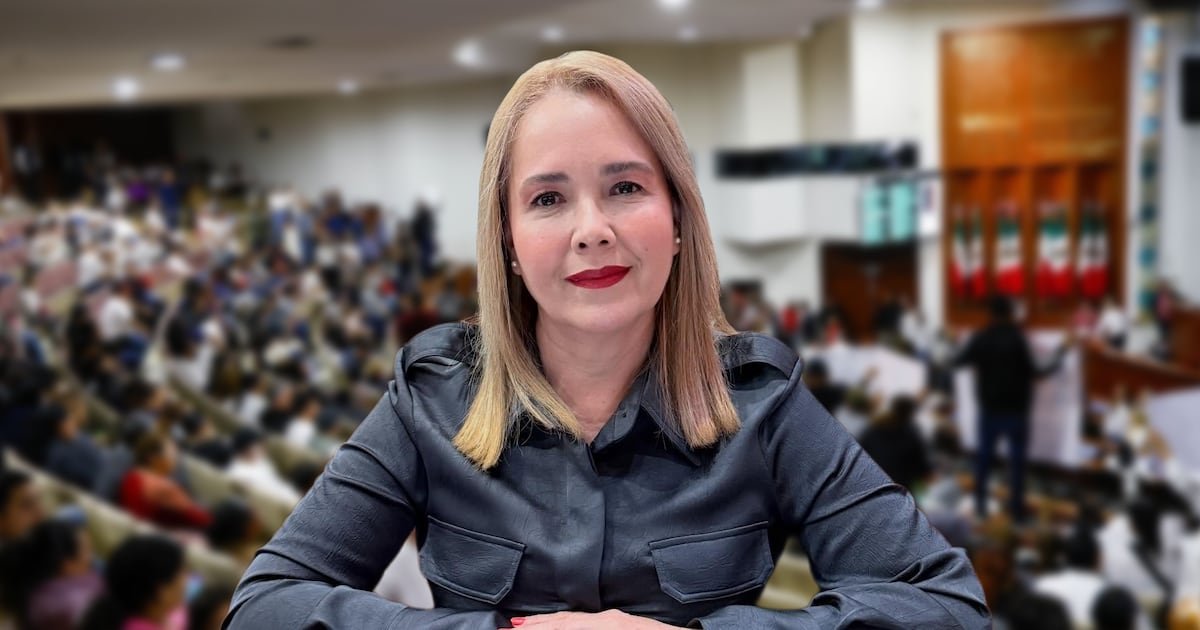
La diputada de Movimiento Ciudadano en Sinaloa, Elizabeth Montoya, aseguró que espera volver a la vida pública y a su labor en el Congreso del estado tras ser víctima de un atentado el 28 de enero.
La emecista explicó que se recupera de forma favorable de la lesión que sufrió en uno de sus ojos luego del ataque armado, del cual, según las indagatorias, una célula de ‘Los Chapitos’ sería responsable.
“Perdí un ojo, pero aquí estamos, eso es lo importante, que seguimos aquí, que tenemos mucho por hacer, no nos rendimos, seguimos trabajando (…) Yo espero que de esta tragedia salgan cosas buenas (…) Esa es mi intención (regresar a la escena pública), eso es lo que quiero, regresar a la actividad, amo mi trabajo, me gusta mucho lo que hago, el contacto con la gente”, dijo Montoya en entrevista con Ciro Gómez Leyva.
Explicó que su regreso al Congreso dependerá de una cirugía programada en los próximos días. Después del procedimiento deberá cumplir un periodo de recuperación, lo que coincide con el periodo vacacional de los legisladores.
¿Cómo ocurrió el ataque a Elizabeth Montoya y Sergio Torres?
La diputada de Movimiento Ciudadano en Sinaloa narró el momento del ataque junto a Sergio Torres. Afirmó que se dirigían al aeropuerto para viajar a la Ciudad de México y asistir a un evento del partido.
El vehículo se detuvo y segundos después, sin que lo advirtieran, recibieron disparos. Elizabeth Montoya aseguró que no sintió miedo porque el atentado ocurrió con rapidez y no comprendió lo que sucedía.
Recordó que vio a Sergio Torres, su compañero de bancada, con heridas de bala y sintió “algo caliente” en el rostro antes de perder el conocimiento. Minutos después arribaron elementos de fuerzas federales para auxiliarlos y recuperó la conciencia.
“Yo lo considero un milagro por tantas balas, inclusive ni me dio tiempo de asustarme porque no sabía qué era lo que estaba sucediendo (…) Íbamos de camino al aeropuerto porque teníamos una convención en la Ciudad de México, de diputados locales de Movimiento Ciudadano, íbamos platicando al respecto y de pronto sentí que el carro se detuvo, sentí que me empezaron a sacudir la cabeza, cuando volteó veo al diputado Sergio Torres con una herida, empecé a sentir algo caliente en mi rostro y dije tal vez yo tengo una herida, creo yo que en ese momento me desmayé porque no recuerdo otra cosa hasta que me percaté que ya estaba ahí la Guardia Nacional, el Ejército”, contó.
Autoridades detienen a uno de los presuntos implicados en el ataque a diputados de MC
Una semana después del atentado contra Elizabeth Montoya y Sergio Torres, autoridades federales informaron la detención de un presunto implicado.
Se trata de Jesús Emir, alias “Radio 13”, presunto responsable del control de radios de comunicación, la instalación de cámaras para monitorear la movilidad de autoridades y la adquisición de drones para la célula de ‘Los Chapitos’, informó Omar García Harfuch.
Casi un mes después, no existe información sobre autores materiales e intelectuales detenidos ni se conoce el móvil del atentado contra los servidores públicos.
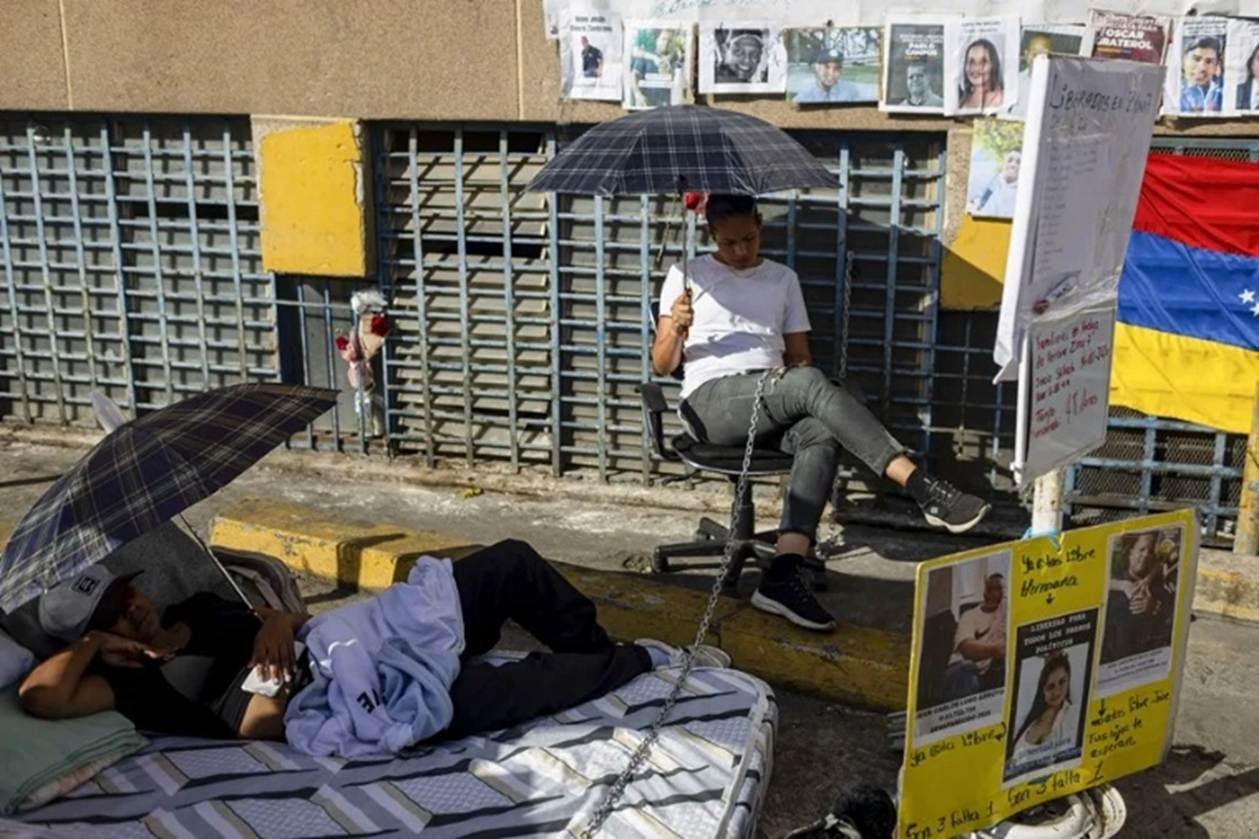
In Venezuela, a delayed amnesty vote collided with a country that no longer waits patiently. Outside a police command in eastern Caracas, relatives linked themselves in chains. They turned a sidewalk into a deadline, pressing Parliament and the state to choose words or freedom.
Chains on the Sidewalk, Law in the Chamber
By late day in eastern Caracas, the protest had a stubborn, metallic sound. Chains scraped against the ground as relatives tightened links around their waists and wrists outside the Bolivarian National Police command known as Zona 7. People shifted their weight. They watched the doors. They listened for movement inside a building that holds the people they call political prisoners.
Yessy Orozco, the daughter of former lawmaker Fernando Orozco, said the families would remain chained outside until everyone held in that facility is released. “Here we are going to remain chained, nobody enters, nobody leaves, unless they free our political prisoners, until the last of our political prisoners leaves this penitentiary center,” she told EFE.
The trouble is that the promise they thought they heard from the National Assembly has now been pushed into next week.
Earlier Thursday, lawmakers in Venezuela’s National Assembly postponed the second and final debate required to approve an amnesty bill covering cases of political prisoners since 1999. The session moved forward, but only up to Article Six of the proposed Law of Amnesty for Democratic Coexistence. Then it snagged on Article Seven, the clause that demands something the opposition says turns amnesty into accusation.
On paper, the bill aims to grant what it calls a general and full amnesty for crimes or infractions committed during the events and time frame outlined in the text, with the stated purpose of promoting social peace and democratic coexistence. It is a language of reconciliation, almost ceremonial. But the practical hinge is whether people who might be prosecuted or convicted must appear before the justice system to benefit from that amnesty.
Article Seven says the amnesty applies to anyone who is or could be prosecuted or convicted for alleged or proven participation in crimes or infractions committed, as long as that person is in good standing before the law or places themselves in good standing after the law takes effect.
Opposition lawmaker Luis Florido of the Libertad faction argued the article had to be modified because requiring people to present themselves before the justice system already casts them as guilty if they are under judicial proceedings. Chavismo lawmakers responded that the Constitution establishes that people must be present in a criminal process.
In the end, both sides asked to postpone. The next session is expected next Thursday, after the Carnival holiday.
For families outside Zona 7, the delay is not procedural. It is personal. It is another week.
Orozco said that last Friday, National Assembly president Jorge Rodríguez said the bill would be approved this week and that afterward all political prisoners would be released. Petra Vera, a relative of another detainee at Zona 7, demanded Rodríguez keep that promise. “We are protesting because of the mockery that all the families of the political prisoners in this penitentiary center have been subjected to; we consider it a mockery,” she told EFE.
The wager here is that public pressure can force a schedule to mean something.
Inside the Assembly, the debate turned into a fight over what it means to be “at the disposal” of a justice system and what it means to return to it, especially for people the opposition frames as persecuted and the government frames as defendants.
This is not a minor legal edit. It is the difference between a law that functions as a release mechanism and one that functions as a filter.
Florido’s argument is blunt: if someone is asked to present themselves before the courts, the state is already signaling that person as responsible. The chavista answer is also blunt: due process requires presence, and the Constitution matters.
Both claims can be true in the abstract. The trouble is the lived reality around them. A country does not argue about amnesty in a vacuum. It argues about it with jail cells in mind, with police commands that become symbols, and with relatives who can recite promises because they have learned to measure politics in calendar weeks.
What this does is place the entire bill under the shadow of one phrase, “to place oneself in good standing,” and the political question beneath it, who gets to decide what good standing looks like.
The bill’s supporters say it seeks to promote peace and coexistence. Its skeptics look at the requirement to show up and hear something else: a new condition attached to freedom, a new administrative gate.
So the Assembly approved up to Article Six, then stopped. The chamber did not break because it ran out of time. It broke because the seventh point marks the point where policy becomes consequence.
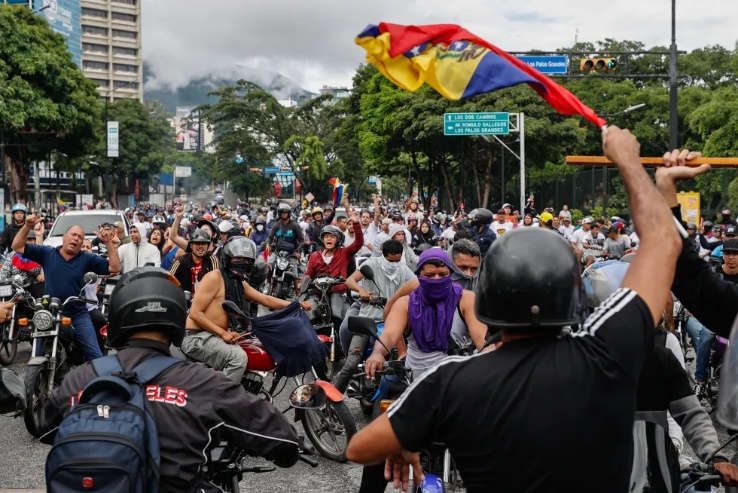
Opponents of Venezuela’s government on July 30, 2024, in Caracas, Venezuela. EFE
Youth in the Streets, Promises Under Pressure
The postponement did not keep the opposition quiet. Thursday was the National Youth Day, and the Venezuelan Student Movement returned to the streets in multiple cities, demanding the release of all political prisoners. It was one of the largest opposition mobilizations in more than a year.
In Caracas, hundreds gathered at the Central University of Venezuela, the country’s principal university, moving within and outside the campus. Their chant was simple and designed for echo: “Not one, not two, all of them,” a response to the release process that began January 8.
According to the NGO Foro Penal, 431 releases had been verified through February 10, while it estimates that more than 600 remain imprisoned. The numbers hang over everything. They create a sense of movement, but also of unfinished business.
Miguel Ángel Suárez, president of the Federation of University Centers at the Central University of Venezuela, said they would keep pressuring “until all civil and political rights are restored,” and called for an end to persecution and for guarantees that would lead the country to a democratic transition.
In Maracaibo, students from the University of Zulia also marched, demanding inclusion in the amnesty debate. Yeissel Pérez, president of the university’s student federation, criticized the fact that youth leadership was not called to the public consultation on the bill. This process did include academics, NGOs, and relatives of political prisoners.
Seen together, the scenes form a single argument made in different locations. Students demand inclusion in the terms of the law. Families demand results from the law. Lawmakers debate whether the law requires deference to courts that many protesters distrust. And the state, still controlled by chavismo in Parliament, insists procedure is not optional.
On the sidewalk outside Zona 7, chains hold steady. Not one, not two. All of them. Repetition becomes a strategy when faith in timelines runs out.
Aaron Paul, Middlesbrough loans manager Tommy Smith & Bromley boss Andy Woodman discuss the top stories from the EFL. They react to Coventry going back above Boro at the top of the Championship. How does Michael O’Neill balance his new Blackburn job with trying to get Northern Ireland to the World Cup? Wigan appoint Gary Caldwell to replace Ryan Lowe, and what’s the secret to success for League Two leaders Bromley? Messages and voicenotes always welcome on WhatsApp to 08000 289 369.
00:35 Pre-match rituals,
03:25 Andy loving life at top of League Two,
08:40 Andy banned beer on the coach!
11:30 Andy on taking things from Arsenal,
14:15 Coventry go back above Middlesbrough,
19:00 Important to avoid the play-offs!
23:25 Andy reveals his penalty theory…
24:40 How does Michael O’Neill balance Blackburn with Northern Ireland?
27:40 Does it matter if you don’t play ‘sexy’ football?
31:55 Wigan appoint Gary Caldwell to replace Ryan Lowe
34:30 What’s the Bromley secret to success?
37:30 Michael Cheek an old-school throwback
5 Live / BBC Sounds commentaries:
Wed 1745 Qarabağ v Newcastle,
Sat 1500 Aston Villa v Leeds on Sports Extra,
Sat 1500 Chelsea v Burnley on Sports Extra,
Sat 1730 West Ham v Bournemouth,
Sun 1400 Nottingham Forest v Liverpool,
Sun 1400 Sunderland v Fulham on Sports Extra 2,
Sun 1400 Crystal Palace v Wolves on Sports Extra 3,
Sun 1630 Tottenham v Arsenal.
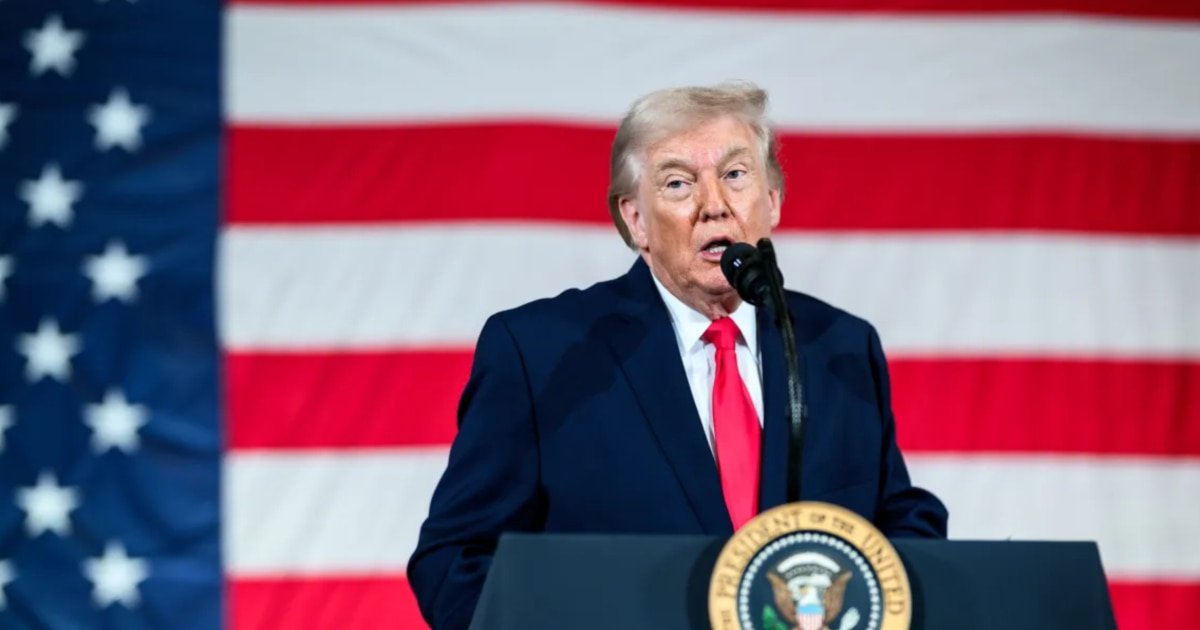
El presidente de Estados Unidos, Donald Trump, prorrogó por un año la emergencia nacional vinculada a Cuba que permite a Washington interceptar, controlar y restringir el movimiento de embarcaciones con destino a la isla, una autoridad vigente desde 1996 y renovada de forma periódica por administraciones de ambos partidos.
La decisión, publicada en el Registro Federal, mantiene el marco legal que faculta al Gobierno estadounidense a regular el fondeo y tránsito de buques por razones de “seguridad nacional” y para prevenir una “migración masiva desde Cuba”. El aviso oficial subraya que la medida responde a riesgos persistentes en las relaciones bilaterales y a preocupaciones migratorias en el Estrecho de la Florida.
El documento recuerda que la emergencia fue declarada originalmente tras el derribo en 1996 de dos avionetas civiles registradas en Estados Unidos. Washington sostiene que el Gobierno cubano “no ha demostrado que se abstendrá del uso excesivo de la fuerza contra embarcaciones o aeronaves estadounidenses” que participen en actividades conmemorativas o protestas pacíficas al norte de Cuba.
La autoridad fue ampliada en 2004 para prohibir el apoyo financiero y material a La Habana, y modificada nuevamente en 2016 y 2018, de acuerdo con el texto oficial.
“La entrada no autorizada de cualquier embarcación registrada en Estados Unidos a aguas territoriales cubanas sigue siendo perjudicial para la política exterior estadounidense”, señala el aviso.
El gobierno cubano no ha demostrado que se abstendrá del uso excesivo de la fuerza contra embarcaciones o aeronaves estadounidenses que puedan participar en actividades conmemorativas o protestas pacíficas al norte de Cuba.
La renovación ocurre en medio del colapso energético que atraviesa la isla, con apagones prolongados y escasez de combustible.
A finales de enero el presidente Donald Trump declaró una emergencia nacional frente a lo que considera una amenaza inusual y extraordinaria proveniente del Gobierno de Cuba. La orden ejecutiva detalla una serie de medidas, incluyendo la imposición de aranceles adicionales a países que suministren petróleo a la isla.
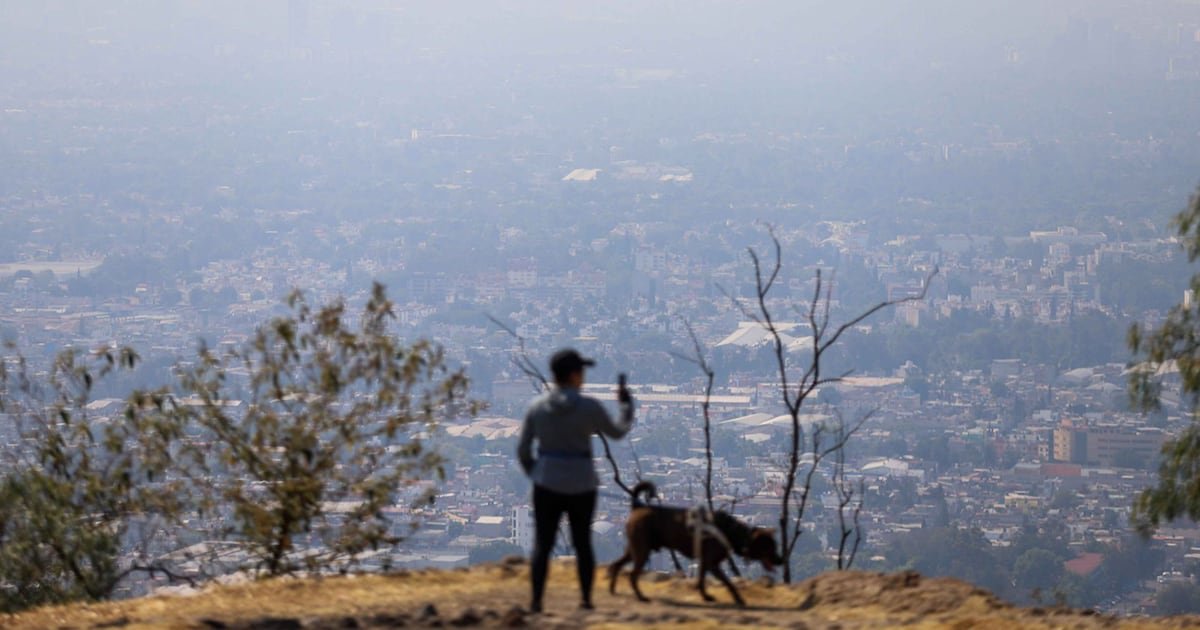
Aunque existe este ‘respiro’, la calidad del aire y las condiciones climatológicas serán factores determinantes y podrían provocar nuevas restricciones de circulación.
Al corte de las 8:00 horas de este miércoles, la calidad del aire era “mala” en las estaciones Gustavo A. Madero, La Merced e Iztapalapa, informó el Sistema de Monitoreo Atmosférico.
En tanto, era “aceptable” en Xochimilco, Hospital General de México y Atizapán, Estado de México.
La mayoría de la CDMX se mantiene con una calidad de aire aceptable o buena la mañana de este 18 de febrero. (Captura de Pantalla)
¿Cuáles son los vehículos que no circulan este 18 de febrero?
Aunque la Comisión Ambiental de la Megalópolis (CAMe) relajó las medidas para reducir contaminantes, el programa Hoy No Circula opera con normalidad. Por ello, estos son los vehículos que no deben salir a la calle:
Autos con holograma 1 y 2, engomado rojo, terminación de placas 3 y 4.
Este programa opera de las 5:00 a las 22:00 horas en las 16 alcaldías de la Ciudad de México y en municipios conurbados del Estado de México.
¿Cuáles son los coches que sí circulan tras levantarse la contingencia ambiental?
La Comisión Ambiental de la Megalópolis informó el 17 de febrero que se suspendió la contingencia ambiental y el Doble Hoy No Circula en el Valle de México, lo que permitió a miles de automovilistas volver a circular.
De este modo, todos los vehículos con holograma de verificación 0 y 00, con cualquier color de engomado y terminación de placa, pueden circular.
También se retiraron las restricciones para los coches con holograma 1 y 2 con engomado distinto al rojo y con último dígito de placa diferente de 3 y 4.
¿Cuál será el clima este miércoles en el Valle de México?
A diferencia de días previos, el Servicio Meteorológico Nacional (SMN) no informó alguna condición atmosférica que limite la dispersión de contaminantes o eleve temperaturas en el Valle de México.
El SMN prevé viento con rachas de 30 a 50 kilómetros por hora en el Estado de México, lo que podría favorecer la dispersión de contaminantes durante el resto del día.
En el Valle de México, el ambiente será fresco a templado en las primeras horas y cálido a caluroso por la tarde.
La temperatura mínima en la Ciudad de México será de 10 a 12 grados y la máxima de 27 a 29. Para Toluca, Estado de México, se prevé una mínima de 3 a 5 grados y una máxima de 25 a 27.
We focus on Aberdeen ahead of their rearranged Scottish Cup tie with title-chasing Motherwell, and take a deep look at where they are as a club and ask where they go from here? With Charlotte Cohen, Michael Grant and Gary Scott from the ABZ podcast.
La dictadura de Daniel Ortega y Rosario Murillo expulsó de Nicaragua al sacerdote José Concepción Reyes Mairena, párroco de la Diócesis de León.
El padre Concepción Reyes fue expulsado la semana pasada, luego de ser retenido e interrogado por funcionarios de Migración y Extranjería de Nicaragua en el Aeropuerto Internacional de Managua, cuando volvía al país, tras haber permanecido dos años en España.
“Con esta expulsión suman 309 sacerdotes y monjas que han sido exiliados, expulsados o que no les permiten el ingreso. Más del 95% son nicaragüenses”, según denunció la investigadora exiliada Martha Patricia Molina, autora del informe “Nicaragua: una Iglesia perseguida”.
De acuerdo con la investigadora, desde el 2018, el régimen de Ortega-Murillo ha perpetrado 1.070 ataques contra la Iglesia Católica y prohibido 16 mil 500 procesiones.
Además de la expulsión de religiosos ya formados, el gobierno ha bloqueado la ordenación de nuevos diáconos y sacerdotes en varias jurisdicciones eclesiásticas, como Jinotega, Matagalpa, Estelí y Siuna, donde, como explicó Martha Patricia Molina, el relevo pastoral está prácticamente paralizado por la falta de autorizaciones estatales.
Raquel Buenrostro exhibe pensiones de jubilados de Pemex, CFE y Luz y Fuerza
La titular de la Secretaría Anticorrupción y de Buen Gobierno, Raquel Buenrostro, exhibió pensiones millonarias que tienen trabajadores de confianza en Petróleos Mexicanos (Pemex), la Comisión Federal de Electricidad (CFE), Luz y Fuerza, entre otras áreas del gobierno.
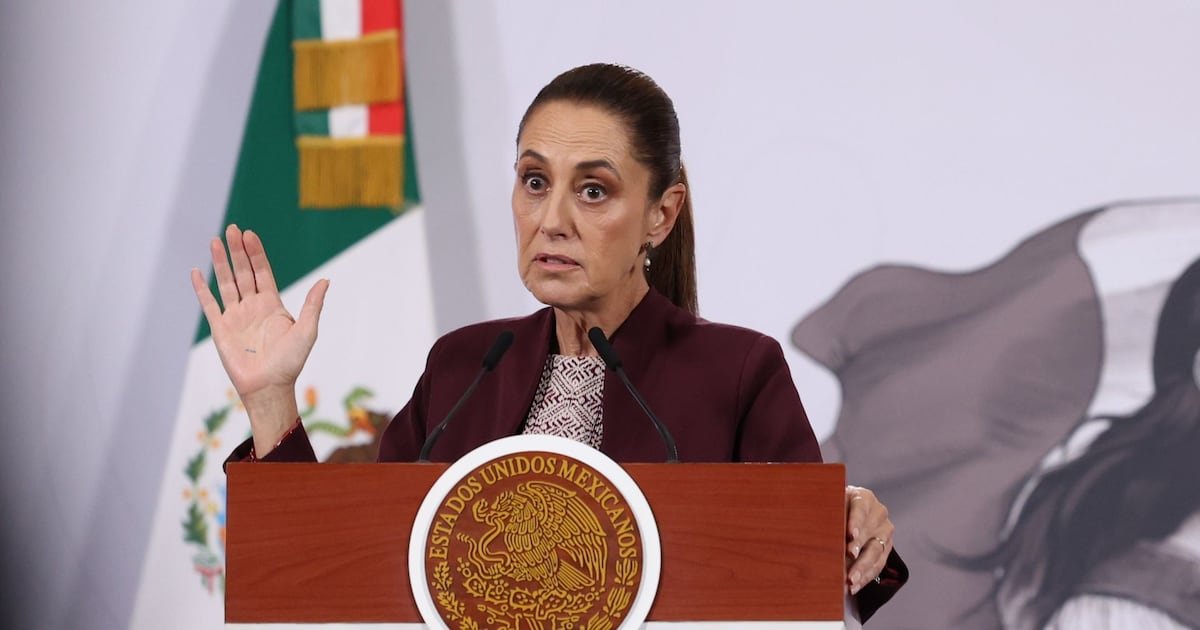
“Ganan más que la presidenta”, añadió Buenrostro. La mandataria inició la conferencia con el anuncio de que se enviará una iniciativa para acabar con ese tipo de privilegios en las pensiones.
La iniciativa se centrará en que la pensión de los exfuncionarios sea la mitad del salario de lo que gana el titular del Ejecutivo.
Hay 9 mil 457 extrabajadores de Luz y Fuerza quienes reciben una pensión de 100 mil a un millón de pesos mensuales, de los cuales, 3 mil 504 tienen una jubilación superior al sueldo neto mensual de la Presidenta de México.
En Pemex hay 544 personas pensionadas que reciben montos superiores a las percepciones de la presidenta, por un monto de mil 827 millones de pesos.
Mientras que en la Comisión Federal de Electricidad (CFE) hay 2 mil 199 personas pensionadas que reciben montos superiores a las percepciones netas de la presidenta, por un monto de 4 mil 4
Claudia Sheinbaum: Lo último de sus conferencias ‘mañaneras’ esta semana
A pregunta expresa, la mandataria explicó cuáles serán algunos de los productos que enviará México a Cuba en la siguiente carga de ayuda humanitaria.
La presidenta Claudia Sheinbaum explicó la visita de empresarios canadienses a México en el marco de la revisión del tratado de libre comercio entre México, Estados Unidos y Canadá (T-MEC).
Eduardo Clarkreiteró que la campaña de vacunación contra el sarampión se dirige de manera preferente a niñas, niños y personas de 13 a 49 años. Explicó que las personas que ya cuentan con la vacuna o que contrajeron la enfermedad hace muchos años no la requieren, pues “están ya protegidos”.
Eduardo Clark, subsecretario de Integración Sectorial y Coordinación de Servicios de Atención Médica, informó que en la última semana se registraron 410 casos de sarampión a nivel nacional.
Sobre el despido de Max Arriaga, de la Dirección de Materiales Educativos de la SEP, la presidenta Sheinbaum explicó que se debió a diferencias para implementar cambios en los libros de texto.
Respecto al descontento con la reforma de las 40 horas por no incorporar dos días de descanso a la semana, Marath Bolaños, secretario del Trabajo, negó que se reduzca el tiempo de descanso, pero no se comprometió a dejar explícito en la Constitución el tiempo de descanso para los miles de trabajadores.
It remains unclear whether the back-channel will evolve into a formal process or concrete measures
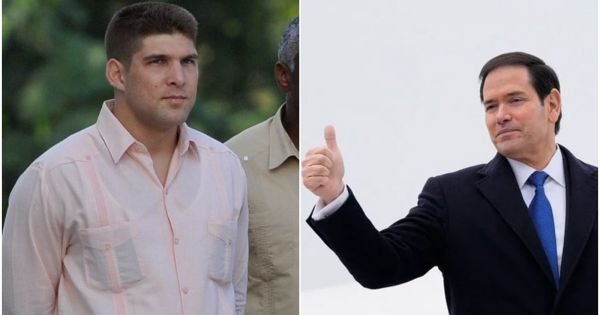
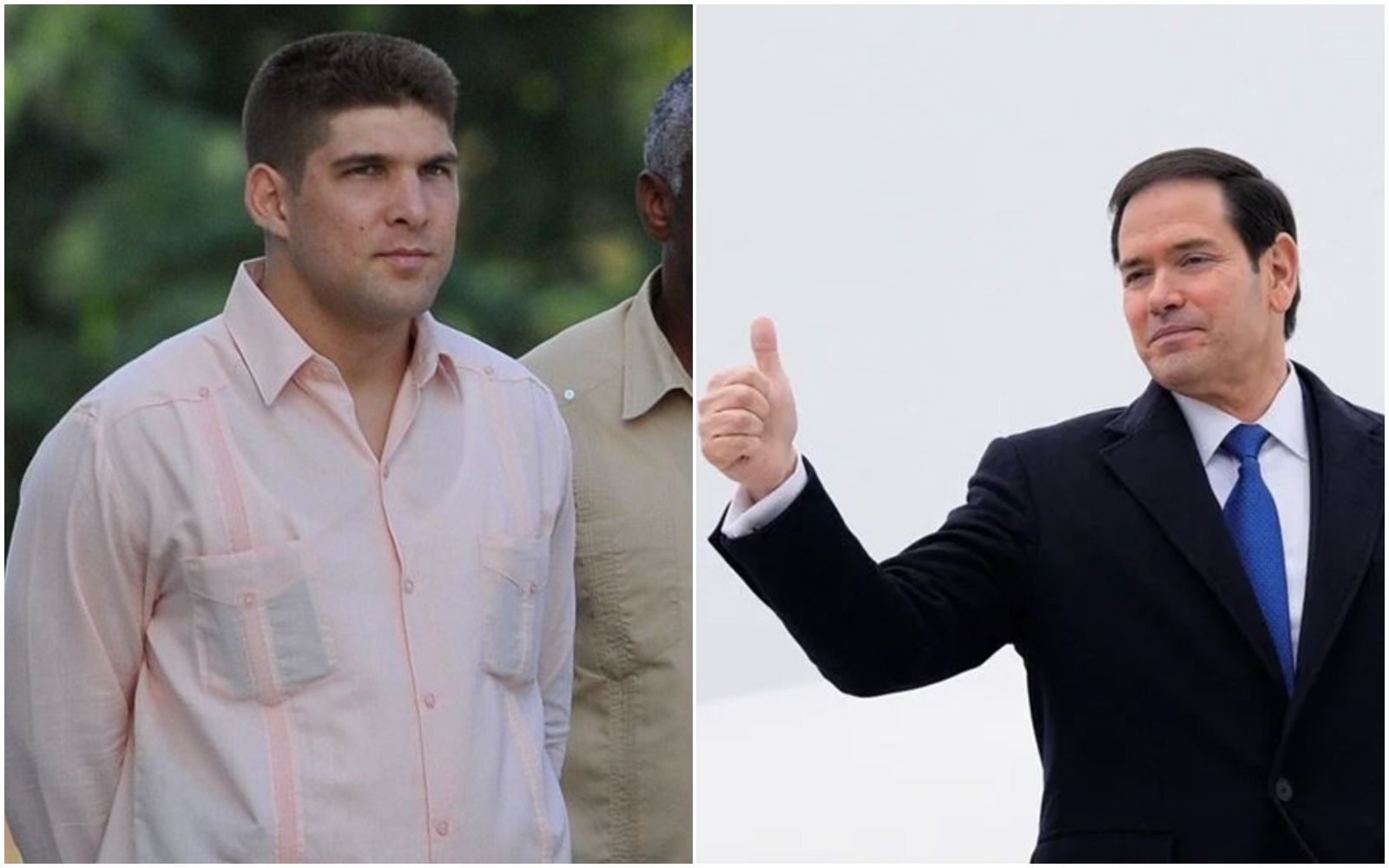
U.S. Secretary of State Marco Rubio has held discreet talks with Raúl Guillermo Rodríguez Castro, the grandson and caretaker of former Cuban leader Raúl Castro, bypassing official Cuban government channels, Axios reported, citing sources familiar with the outreach.
Axios says the exchanges underscore the Trump administration’s view that the 94-year-old revolutionary remains the island’s main decision-maker despite no longer serving as president. A senior official quoted by the outlet said he would not call them “negotiations,” but rather “discussions” about the future.
In the same account, the official described Washington’s position as that “the regime has to go,” while adding that what that looks like will ultimately be determined by President Donald Trump, who “has yet to decide,” and that Rubio “is still in talks with the grandson.”
The report lands as Cuba faces deepening economic and energy strain, including blackouts and severe fuel shortages, and as external partners move to shore up Havana. On Wednesday, Cuban Foreign Minister Bruno Rodríguez met Russian officials in Moscow, where Russia’s Sergey Lavrov urged Washington to refrain from what he described as plans for a maritime “blockade,” linking the crisis to a U.S. oil embargo and pressure on third countries.
Separately, Trump said on Monday that his administration is “talking to Cuba” and that Rubio “is talking to Cuba right now,” describing the situation as a “humanitarian threat,” according to remarks reported by Bloomberg. Havana has denied in recent weeks that talks are taking place on those terms.
Axios portrays Rodríguez Castro, 41, as a consequential figure in Raúl Castro’s security and family circle, and says Rubio’s team views him as a potential bridge to younger, more business-minded power brokers who may see value in a U.S. rapprochement.
It remains unclear whether the back-channel will evolve into a formal process or concrete measures. Axios frames the outreach as part of a broader strategy that combines intensified pressure on Havana with efforts to identify alternative interlocutors and test transition or deal-making scenarios outside the Cuban government’s official hierarchy.
News Americas, NEW YORK, NY, Weds. Feb. 168, 2026: Jamaica’s push toward year-round avocado production is more than an agricultural milestone. It represents a potential turning point in the Caribbean’s economic evolution – one that could position agriculture as a scalable investment sector capable of generating sustained export revenue, attracting private capital, and strengthening long-term food security.
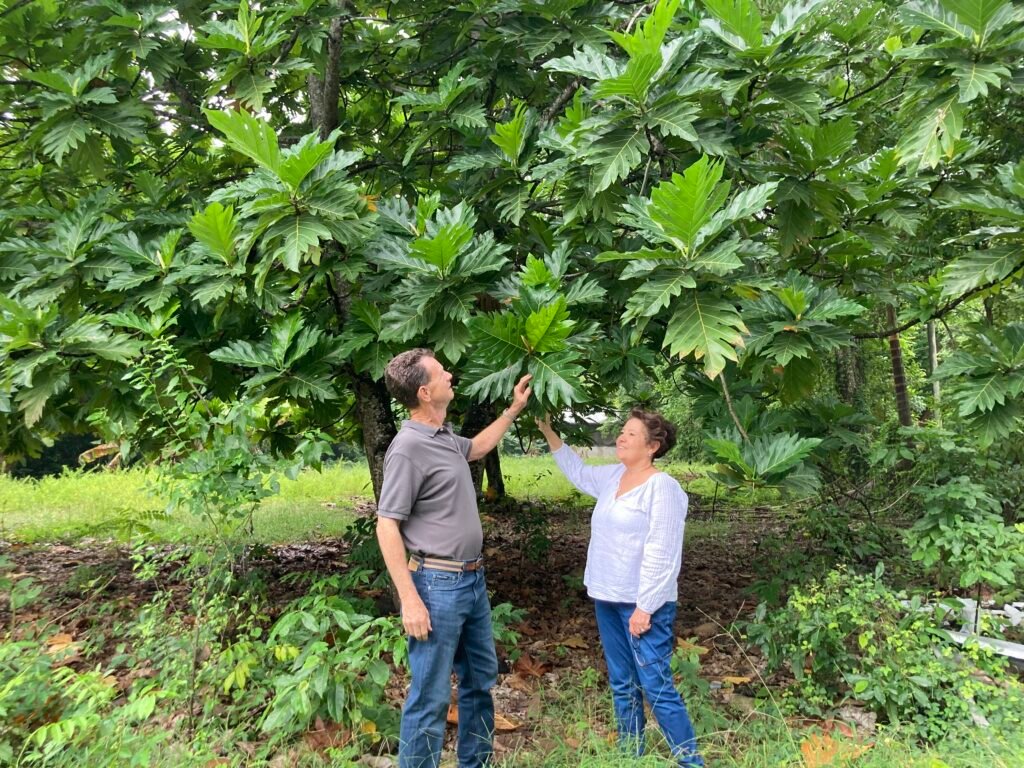
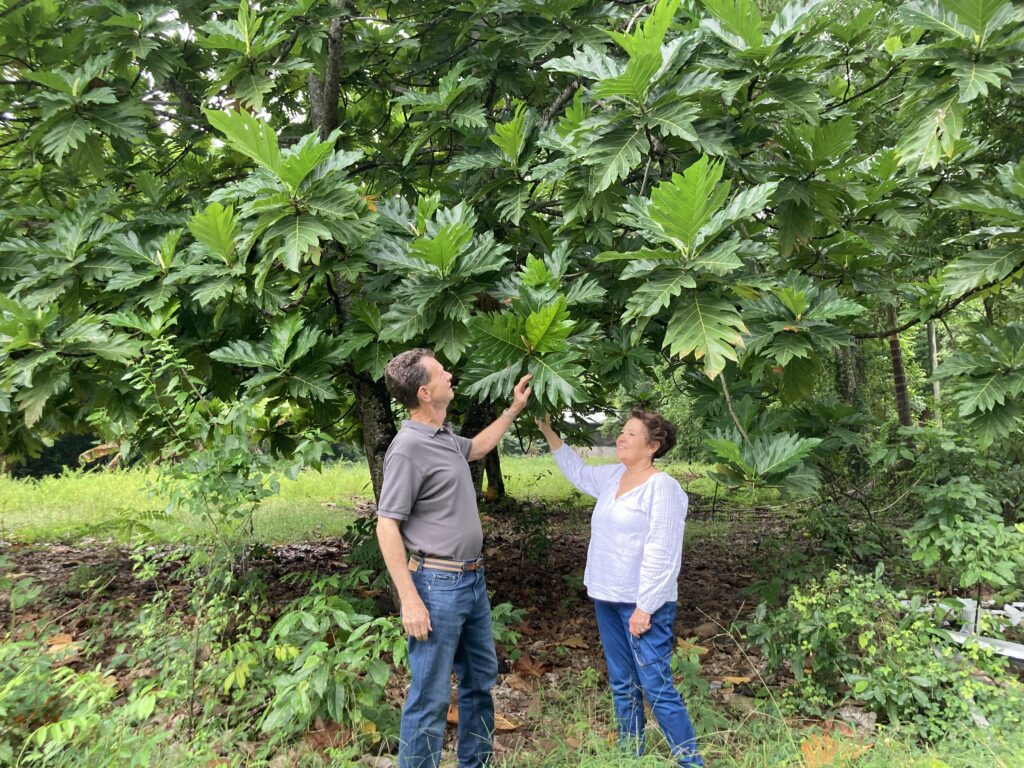
Mary and Mike McLaughlin, co-founders of Trees That Feed Foundation, visiting some of the first breadfruit trees they planted in Jamaica. (Contributed image)
For the first time in its history, Jamaica is preparing to produce avocados continuously throughout the year, thanks to the introduction of three new varieties – Carla, Hass, and Semil31 – through a partnership between the Ministry of Agriculture, Fisheries and Mining and the Trees That Feed Foundation. The initiative is designed to eliminate traditional seasonal production gaps, allowing farmers to harvest and supply markets consistently rather than intermittently.
This shift fundamentally changes the economics of avocado production in Jamaica.
Historically, Caribbean agriculture has faced a critical limitation: unpredictability. Seasonal harvest cycles restricted farmers’ ability to meet export demand consistently, making it difficult to secure long-term contracts or attract investment in processing, logistics, and infrastructure. Year-round production, however, provides the stability required to scale output and integrate into global supply chains.
Chief Technical Director in Jamaica’s Ministry of Agriculture, Orville Palmer, emphasized the economic significance of the initiative, noting that the move aligns with the government’s strategy to expand agricultural exports while providing farmers with steady income streams. Reliable production, he said, could elevate avocado to become as economically significant to Jamaica as its iconic ackee industry.
Globally, avocado demand has surged over the past decade, driven by consumer demand in North America, Europe, and emerging markets where health-conscious diets and plant-based foods are gaining popularity. The Hass avocado alone represents a multi-billion-dollar global export market, dominated by producers such as Mexico, Peru, and the Dominican Republic. Jamaica’s entry into year-round production opens the door to capturing a share of that rapidly growing sector.
Beyond exports, the development has broader implications for agricultural investment across the Caribbean.
Year-round production transforms agriculture from a seasonal activity into a predictable revenue-generating sector—one capable of supporting financing structures, infrastructure investment, and long-term business planning. Consistent output allows investors to evaluate risk more accurately, while farmers benefit from stable income rather than volatile seasonal earnings.
“Year-round production transforms crops like avocado from seasonal income sources into scalable investment assets,” said Felicia J. Persaud, CEO of Invest Caribbean and founder of AI Capital Exchange. “This creates opportunities for farmers, investors, and diaspora capital to participate in building sustainable wealth while strengthening the Caribbean’s food production and export capacity that is still heavily dependent on imports.”
The initiative also highlights the growing importance of agricultural diversification in the Caribbean’s economic future. While tourism has historically dominated the region’s economy, governments are increasingly seeking to strengthen domestic production and reduce reliance on imports. The Caribbean currently imports billions of dollars in food annually, creating both vulnerability and opportunity. Expanding local agricultural production allows countries to retain more economic value domestically while improving food resilience.
In Jamaica’s case, the new avocado varieties are being cultivated at the Bodles Research Station, where budwood sourced from the Dominican Republic is undergoing quarantine and field trials before distribution to farmers across the island. The effort reflects years of research and collaboration aimed at creating a sustainable production model suited to Jamaica’s climate and agricultural landscape.
The economic impact extends beyond farmers. Increased production supports growth across the agricultural value chain, including transportation, packaging, export logistics, and food processing. These downstream sectors generate employment, stimulate rural economies, and contribute to national GDP growth.
For the Caribbean more broadly, Jamaica’s breakthrough represents a blueprint for transforming agriculture into a modern economic engine. It demonstrates how innovation, strategic partnerships, and long-term planning can reposition traditional industries for global competitiveness.
As global demand for food continues to rise and supply chains diversify, Jamaica’s move toward year-round avocado production signals that Caribbean agriculture may be entering a new era – one defined not by subsistence or seasonality, but by scalability, investment, and economic opportunity.
Like this:
LikeLoading…
Help Sustain Independent Caribbean Diaspora Media.
Support NewsAmericas