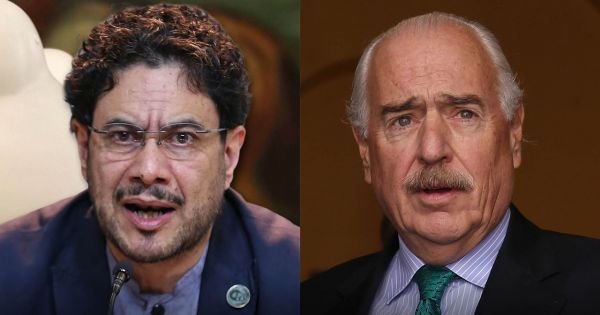
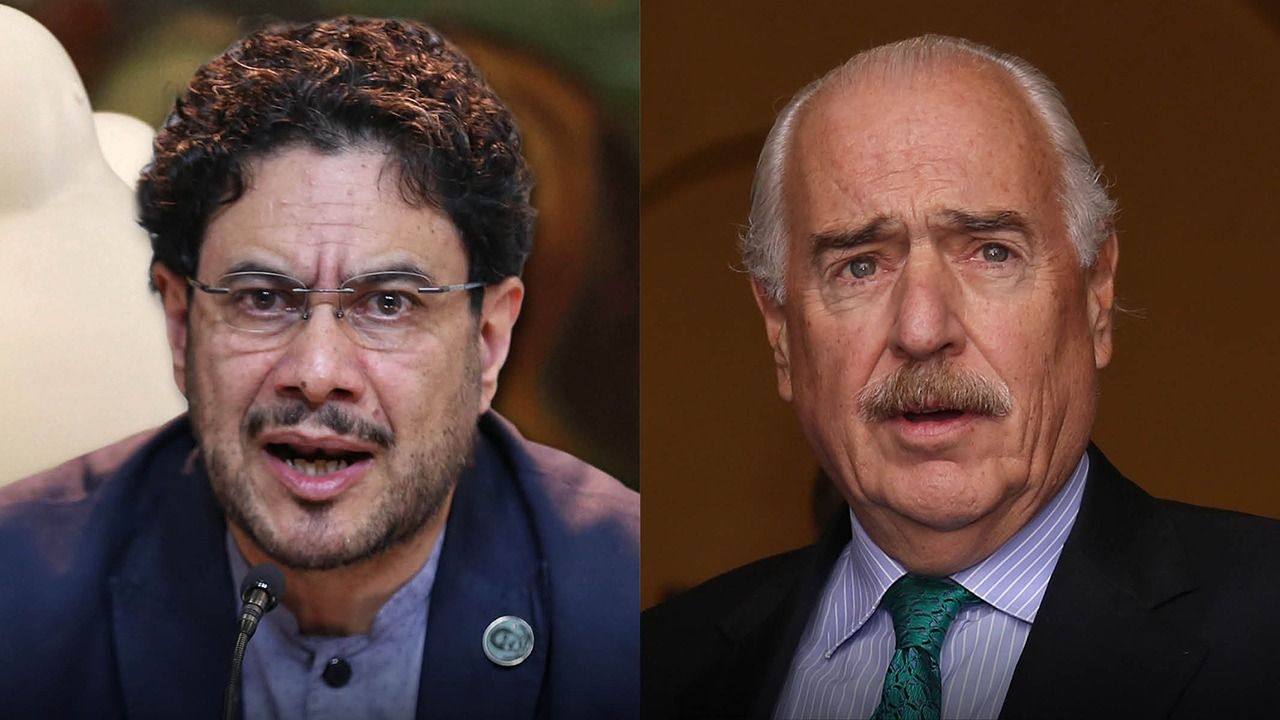
Cepeda said he would submit a complaint “so that the possible criminal conduct he may have engaged in can be investigated,” arguing that the disclosures warrant judicial scrutiny in Colombia
Senator Iván Cepeda, the presidential candidate of Colombia’s ruling Pacto Histórico coalition, said he will file a criminal complaint against former President Andrés Pastrana (1998–2002) after Pastrana’s name appeared in newly declassified records linked to Jeffrey Epstein and his associate Ghislaine Maxwell, who was convicted in the United States for her role in the trafficking scheme.
In a statement posted on X on Monday, Cepeda said he would submit a complaint “so that the possible criminal conduct he may have engaged in can be investigated,” arguing that the disclosures warrant judicial scrutiny in Colombia.
The newly surfaced material includes references to Pastrana in dozens of files, among them email exchanges from 2003 and 2004 with Maxwell and mentions of meetings and travel arrangements. One message thread discusses logistical details for a New York trip and reception arrangements. Cepeda has framed the issue as more than a political controversy, calling for authorities to determine whether the contacts reflected in the files carry legal consequences and whether any actions involved improper use of official resources or non-institutional arrangements.
Pastrana has acknowledged that he flew on Epstein’s plane but maintains that, at the time, Epstein was not widely known as a sex offender and was seen publicly as a well-connected financier. In recent days, Pastrana also announced legal action after being mentioned in commentary about the Epstein material, disputing insinuations about his name and requesting clarifications on specific claims.
The senator is pressing prosecutors to establish a factual record: what the contacts were, what they were for, and whether any prosecutable conduct occurred. The case also underscores how fresh disclosures from U.S.-based investigations can reverberate across borders, triggering domestic legal and political responses.
Cepeda has not yet specified which criminal offenses his filing will cite, nor how broadly he will ask investigators to examine the disclosed communications.
In Ecuador’s high Andes, rose farms surge toward Valentine’s Day, pushing millions of stems from cold greenhouses to global storefronts. Workers sort buds by health and color as cargo flights multiply, even while new U.S. tariffs threaten export earnings and payroll stability.
A Rose Button in Cayambe, Then a Long Flight Out
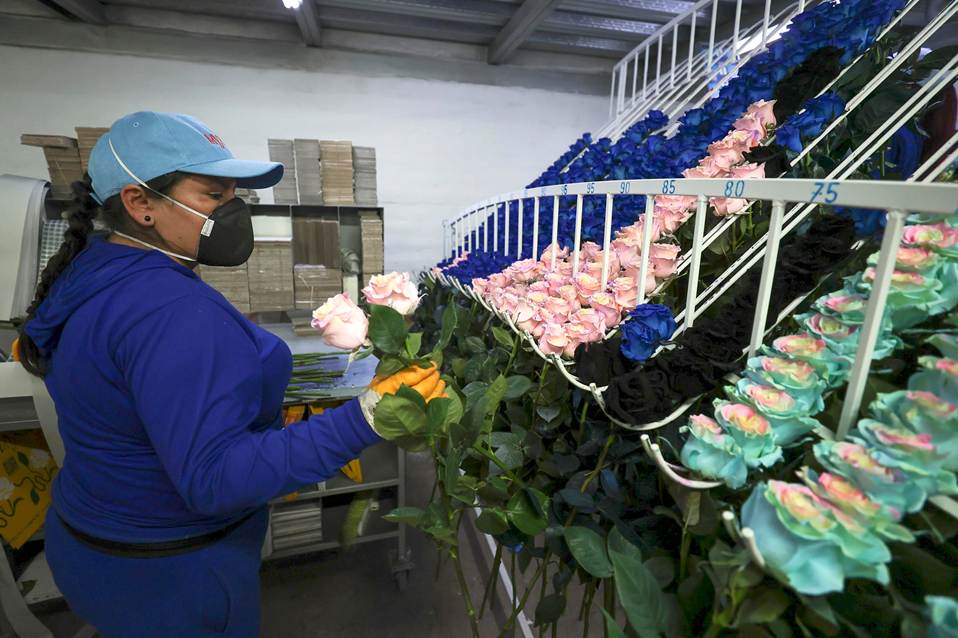
Lizbeth’s day is measured in small inspections. A rose bud, held close, turned slightly, checked for the faint signs that ruin a shipment later: disease, bruising, any mark that will only darken after hours in boxes and cold. Around her, hundreds of hands repeat the same careful choreography, planting, cultivating, harvesting, packing, moving. The scene is quiet but not calm. When Valentine’s Day approaches, the movement accelerates.
She has been on the farm for eight months, and even now she cannot list all the varieties she sees. The quantity is its own language. In Cayambe, near Quito, she and other workers verify that buds “don’t have any disease, that they aren’t mistreated,” before roses are gathered into bundles of up to twenty-five stems. This routine, though simple, is vital for maintaining the industry’s high standards and the quality that buyers expect, fostering respect for the workers’ dedication.
Ecuador has become the world’s third-largest exporter of flowers, behind the Netherlands and Colombia, sending millions of roses from the Andean cold into countries where they will be received as warm proof of affection. The farms sit at altitude, and the notes credit that height, along with luminosity and temperature, for the brightness and quality that buyers want. In the greenhouses of Mystic Flowers, specialists cultivate dozens of varieties described as unique worldwide, selecting for what the international market demands: long stems, firm petals, intense color, and the ability to travel thousands of kilometers without losing freshness.
“For us, the roses are something simple because we see them daily, but when they arrive in other countries, I think it’s a joy,” Lizbeth told EFE, speaking from the farm where the roses begin their quick chain outward, loaded onto trucks, driven to the airport, and flown into the retail world of the United States, Europe, Russia, and even China.
What this does, every year, is compress Ecuador’s flower economy into a narrow corridor of days, revealing how logistics and policy directly impact its economic importance and stability.
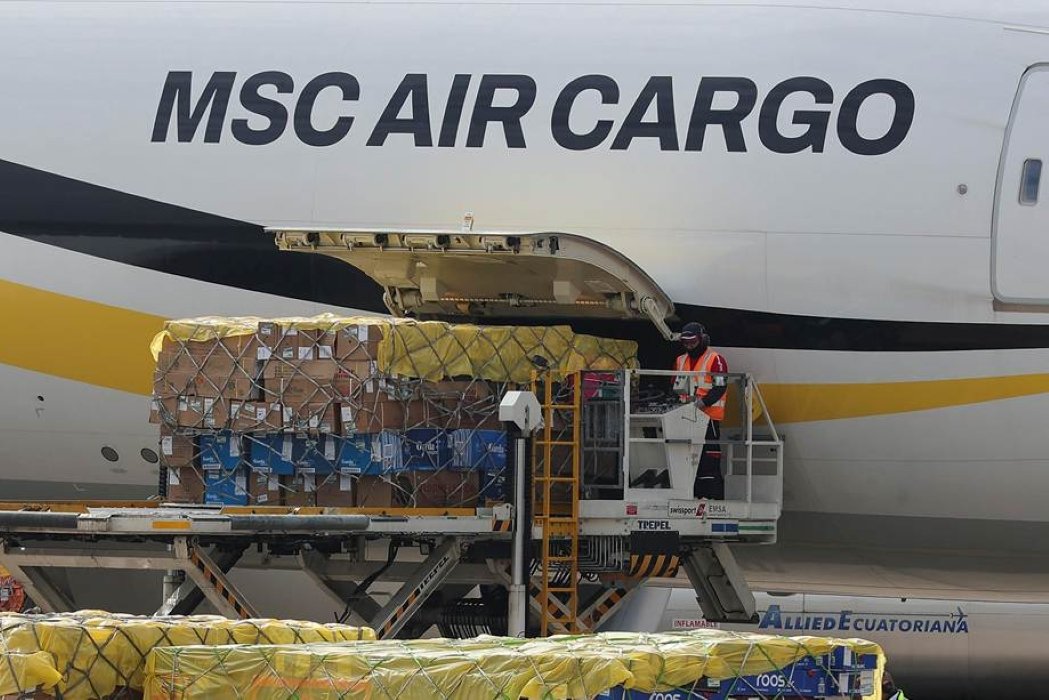
A package of flowers at the Mystic Flowers farm in Cayambe, Ecuador. EFE/ José Jácome
The Valentine Surge Meets a Tariff Wall
The flower sector in Ecuador spans 6,200 hectares of plantations and employs 120,000 people. Valentine’s Day accounts for thirty percent of annual sales. Those numbers are steady enough to feel like a foundation, and yet the season itself is fragile. It depends on timing that cannot be recovered once missed, and on costs that can shift faster than any farm can retool.
Alejandro Martínez, executive president of the national association of flower producers and exporters, Expoflores, expects export volume for Valentine’s to rise from thirty-seven thousand tons in two thousand twenty-five to about thirty-nine thousand. The increase sounds like momentum. But Martínez also expects revenue between two hundred seventy-four and two hundred seventy-six million dollars, below the two hundred eighty-two million recorded in two thousand twenty-five.
He attributes the decline in part to a 15 percent tariff imposed by Donald Trump, added to the 6.8 percent rate already applied to Ecuador’s flower exports to the United States, illustrating how tariffs threaten export earnings and industry stability.
On the farm floor, those numbers show up indirectly, as pressure, not in speeches or slogans, but in the quiet insistence that each bundle must be perfect because the margin for error is thinner. In an export economy, quality is not only pride. It is a key to survival, ensuring Ecuador’s flowers remain competitive and trusted worldwide.
The notes also place Ecuador’s role inside a broader duopoly of Valentine supply. Colombia and Ecuador dominate the global market for this one holiday, feeding the United States and Europe with hundreds of millions of stems, driven by high-altitude conditions and year-round growing seasons calibrated to peak just before February fourteen. Ecuador is known for large-headed roses. Colombia, the second-largest exporter, ships more than 500 million flowers for the Valentine season, with most of its annual production exported. In this shared corridor, a policy change in Washington does not stay in Washington. It moves, like cold air, into greenhouses and pay stubs.
A person selects flowers at the Mystic Flowers farm in Cayambe, Ecuador. EFE/ José Jácome
Cargo Flights, Cold Chains, and the Human Heart in a Box
At Quito’s Mariscal Sucre airport, the Valentine season looks like an aerial assembly line. Ramón Miró, president of Quiport, the corporation that runs the airport, expects exports to rise around six percent. “Which is spectacular because two thousand twenty-five was already a record year,” he told EFE.
The previous season, nearly twenty-nine thousand tons left the terminal in five hundred thirty-four flights. From January twenty to February one alone, the airport had already moved more than seventeen thousand tons in three hundred thirty-two cargo aircraft operated by sixteen companies, mainly headed to Miami and Amsterdam, where shipments are distributed onward.
That dependence on air freight and cold chains is not a detail; it is the core of the industry, showing how logistics and policy directly influence the industry’s survival and economic significance.
Joan, thirty-three, assembles between twenty-six and forty packages of roses per hour on the farm. He describes it as “exciting” to know that what is a bud in his hands will become a bouquet in a few hours in New York or Paris, because giving roses feels like “giving the heart.” In a season shaped by aircraft schedules and tariff rates, that speed and care are crucial, underscoring the industry’s resilience and commitment to delivering meaning across borders.
In the end, Ecuador’s Valentine rush is a story about speed and care living in the same room. It is about hands that keep moving even as the policy winds change overhead. And it is about a country that has learned to grow a global symbol at altitude, then race it down the mountain and into the sky, hoping the market still recognizes what the flower is supposed to mean.
British press reports said McSweeney accepted responsibility for his part in decisions connected to the controversy
UK Prime Minister Keir Starmer has been left politically more exposed after the resignation of his Downing Street chief of staff, Morgan McSweeney, a central architect of Starmer’s rise inside Labour and a key operator at the heart of government.
McSweeney stepped down as the “Mandelson scandal” intensified, reviving internal Labour arguments over how No. 10 is run, the government’s judgement on appointments and crisis handling, and Starmer’s ability to steady his premiership through mounting turbulence. British press reports said McSweeney accepted responsibility for his part in decisions connected to the controversy.
The departure triggered an immediate reshuffle in Starmer’s top team. The Guardian reported that Downing Street would appoint two insiders — Vidhya Alakeson and Jill Cuthbertson — as joint chiefs of staff, a bid to restore operational grip and reassure MPs after the sudden loss of a dominant internal figure.
The change comes at a sensitive moment. Discontent has been building in Labour’s parliamentary ranks, and senior figures have warned the prime minister needs a convincing “reset” to prevent the row from hardening into a broader challenge to his authority. The Independent described a febrile atmosphere in Westminster, with Labour MPs pressing for changes in No. 10’s culture and tighter political control ahead of upcoming electoral tests.
Beyond the immediate headlines, McSweeney’s exit matters because he was widely viewed as the internal enforcer of the Starmer project — shaping staffing decisions, message discipline and the handling of party management. His departure raises urgent questions: who now manages relations with MPs, who has the authority to impose strategic coherence across government, and how quickly Starmer can demonstrate stability without appearing weakened by factional pressure.
For rivals — and for critics inside Labour — the resignation is not just a staffing change but a signal of strain at the centre of power. For No. 10, the task is to turn an abrupt rupture into a credible reset before the political cost becomes entrenched.
The so-called “Mandelson scandal” erupted following the release in early February of a new batch of US Department of Justice files linked to Jeffrey Epstein, which document in greater detail the personal ties, travels, and meetings of former British minister Peter Mandelson with the American financier, even after his 2008 conviction for sex crimes.
Machado demanded his “immediate release,” saying he was seized by heavily armed men in civilian clothes
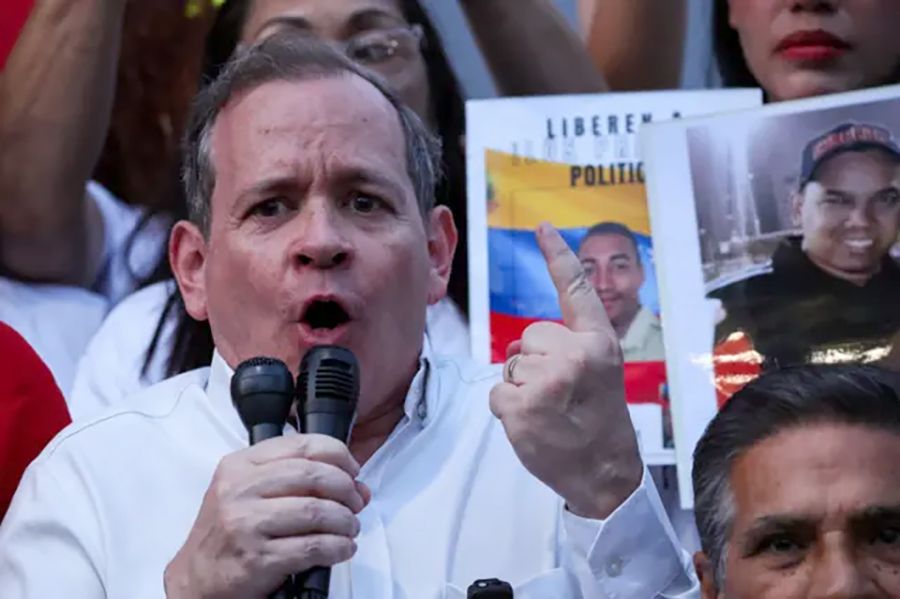
Venezuelan opposition politician Juan Pablo Guanipa was re-arrested only hours after leaving prison, in a move that sparked renewed accusations of political persecution and raised fresh questions about the scope of the government’s ongoing release process amid a pending amnesty bill.
The detention was first reported by Guanipa’s son, Ramón, who described it as a “kidnapping” carried out by an armed group of unidentified men. He said the attackers intercepted his father late at night and forced him into vehicles that included a silver Toyota Corolla, a white Range Rover and a Renault Symbol, without presenting official identification.
Venezuela’s Public Prosecutor’s Office later said it had requested that a court revoke the precautionary measure that had enabled Guanipa’s release, citing an alleged breach of the conditions imposed. Prosecutors asked the tribunal to consider moving him to house arrest, arguing it was necessary to safeguard the criminal proceedings.
URGENT
International Alert
A few minutes ago, Juan Pablo Guanipa was kidnapped in the Los Chorros neighborhood of Caracas.
Heavily armed men dressed in civilian clothes arrived in four vehicles and took him away by force.
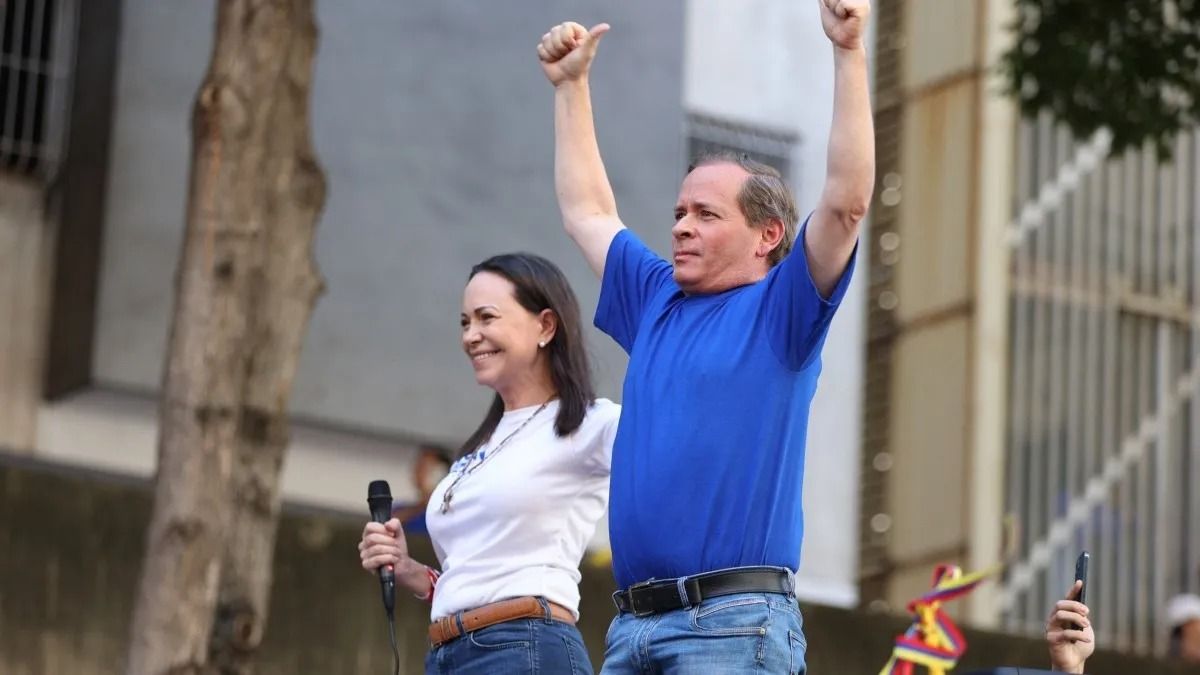
Guanipa —a senior figure in Primero Justicia and a close ally of opposition leader María Corina Machado— had been freed on Sunday alongside other members of Machado’s circle. Shortly after his release, he took part in a motorbike caravan and publicly celebrated his return, turning the moment into a street-level political event. That display drew criticism from pro-government voices, who accused the opposition of “provocation” rather than dialogue.
Machado demanded his “immediate release,” saying he was seized by heavily armed men in civilian clothes. Primero Justicia also blamed senior chavista officials for any harm to Guanipa.
The episode comes as Venezuela’s ruling-party-controlled legislature presses ahead with public consultations on a proposed amnesty law, while human rights groups and families of detainees continue to call for transparency on the criteria, lists and restrictions attached to recent releases.
The set leaned into Puerto Rican imagery—palm trees, sugarcane, and Old San Juan rooftops—while a dance troupe waved flags from across the Americas
Bad Bunny turned the Super Bowl LX halftime show into a hemispheric cultural statement: Puerto Rico at the center, Spanish as the primary language, and an idea of “America” that stretches beyond the United States.
The set leaned into Puerto Rican imagery—palm trees, sugarcane, and Old San Juan rooftops—while a dance troupe waved flags from across the Americas. The performance fused chart-era reggaetón with broader Caribbean cues, framing Spanish not as an accessory but as the show’s default register on one of the NFL’s biggest global stages.
Bad Bunny naming dozens of countries in the Americas and then holding up a football that reads together we are America….such an iconic Super Bowl performance wow pic.twitter.com/zU3R8WBkNL
Lady Gaga and Ricky Martin joined as high-profile guests, cast as both spectacle and lineage—linking earlier waves of Puerto Rican crossover success to Bad Bunny’s current dominance. The Hollywood Reporter emphasized the show’s overt celebration of Puerto Rican culture and noted President Donald Trump’s rapid online reaction, calling it “absolutely terrible” and “disgusting.”
The performance also arrived after months of debate over his selection as headliner. Billboard previously reported that Bad Bunny addressed backlash in a televised monologue, using humor to deflate criticism around language and identity.
For a league that typically keeps politics at arm’s length, the halftime show’s symbols—flags, language, and Puerto Rican iconography—read as a form of messaging without slogans: a reminder that U.S. popular culture is increasingly shaped by audiences and artists whose “America” is multilingual and continental.
The jet-fuel warning follows other emergency steps in the tourism sector
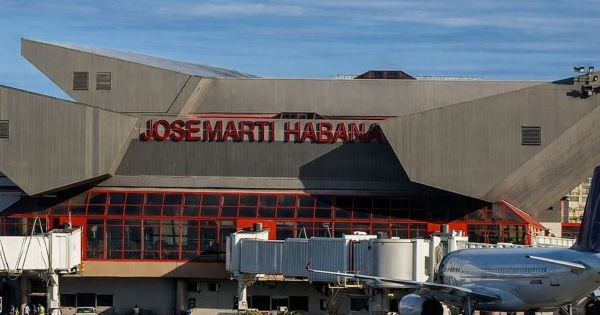
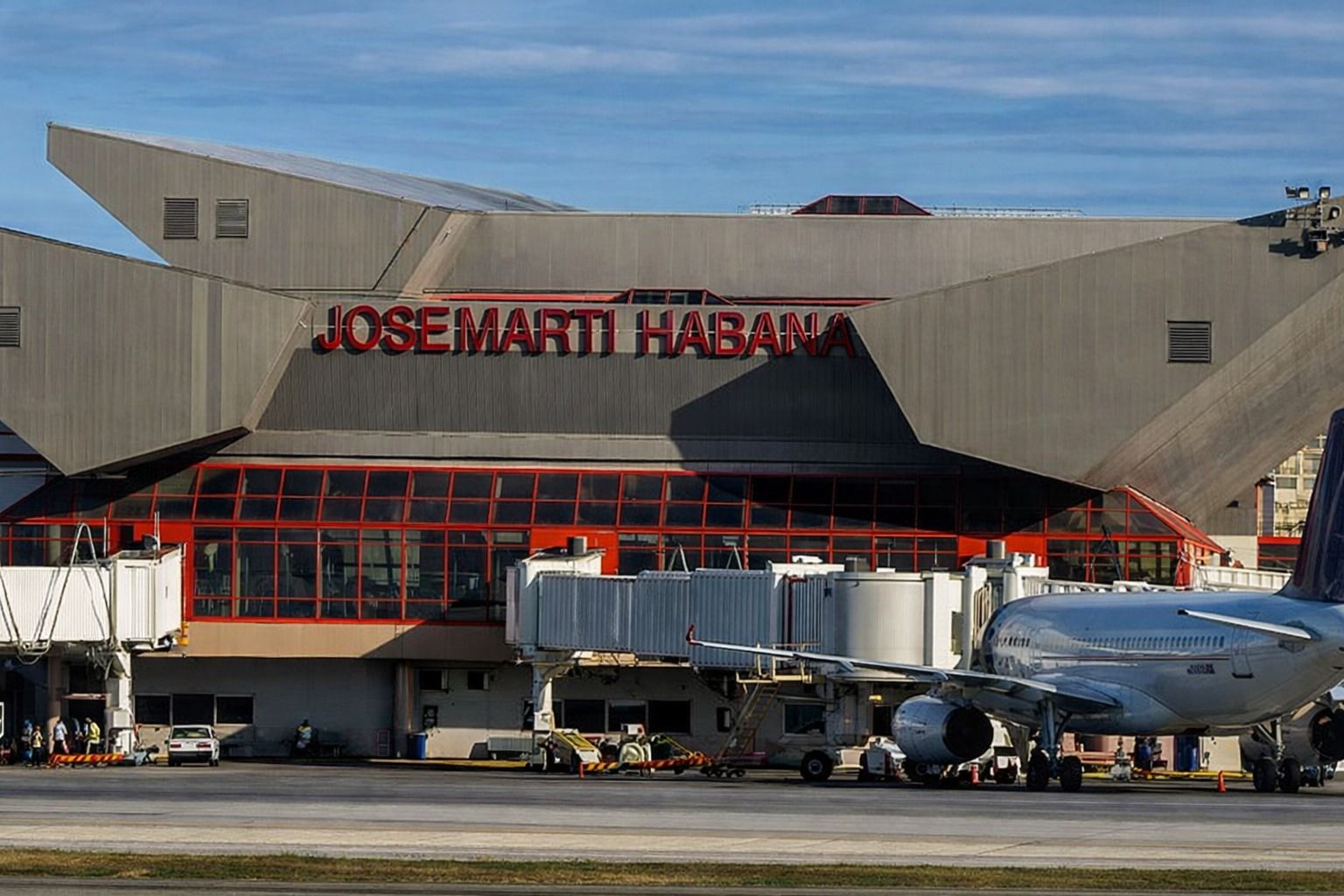
Cuba has warned international airlines that it will run out of aviation fuel starting Monday, widening an energy emergency that has already disrupted transport, public services and economic activity — and now threatens to further squeeze tourism, one of the island’s main sources of hard currency.
EFE, citing official sources, reported that airlines most likely to be affected include U.S., Spanish, Panamanian and Mexican carriers, though companies have not yet publicly detailed how they will handle potential disruptions, such as schedule reductions or cancellations.
The jet-fuel warning follows other emergency steps in the tourism sector. Authorities have moved to close some hotels and relocate tourists as part of an effort to consolidate operations and cut energy use during the peak season. Industry watchers say the aviation-fuel constraint could quickly translate into fewer seats, higher operational uncertainty and a sharper fall in arrivals.
The fuel crunch is unfolding amid heightened U.S. pressure on Cuba’s energy lifelines. A Reuters report described Cuba’s rollout of a contingency plan featuring fuel rationing, expanded remote work and reductions in services, while Havana blames the deterioration on external restrictions affecting oil and refined-product supplies. Cuban officials have repeatedly framed the shortages — including diesel and other fuels — as the consequence of a tightening U.S. “siege.”
Tourism, which provides critical foreign-exchange inflows, is particularly exposed to a sudden disruption in air connectivity. In recent years, official statistics have shown arrivals running below government targets and a weak recovery compared with pre-pandemic levels, compounding pressures on public finances and imports.
Beyond tourism, the fuel scarcity has fed longer blackouts and forced cuts across transport networks and state-run services. With jet fuel now in short supply, the crisis is poised to hit the country’s main gateway for visitors: international flights.
Guanipa posted a video holding his release document and said: “There is much to talk about regarding Venezuela’s present and future, always with the truth ahead.”
Opposition leader Juan Pablo Guanipa and several close collaborators of anti-government figure María Corina Machado were released from detention in Venezuela on Sunday, in a new round of politically sensitive releases that rights groups say must be measured not only by numbers but also by whether detainees regain full civil and political rights.
Guanipa posted a video holding his release document and said: “There is much to talk about regarding Venezuela’s present and future, always with the truth ahead.” Minutes later, Machado said she had spoken with him after his release and shared an image of a video call, adding: “Already making plans to see each other in Venezuela and travel the whole country together.”
Freddy Superlano, a prominent figure from the opposition party Voluntad Popular, was also freed, along with Perkins Rocha—an attorney linked to Machado’s political movement—and university professor Jesús Armas, a key organizer in the opposition’s 2024 election mobilization effort. Other reported releases include, among others, Venezuela-Spanish activist Catalina Ramos, María Oropeza, Dignora Hernández, Luis Tarbay, Albany Colmenares and Nikoll Arteaga.
Rights group Foro Penal said at least 35 people were released on Sunday. The organization’s running count points to several hundred releases since early January, while warning that hundreds remain detained for political reasons and that official figures have not always matched independently verified totals.
#AHORA | Juan Pablo Guanipa sale a las calles de Caracas y da declaraciones:
Several freed leaders quickly returned to public view. In Caracas, Jesús Armas told supporters: “Today, stronger than ever, we say they did not break us or bend us,” urging continued political pressure. Guanipa, speaking separately, called for “reconciliation,” but only “starting from recognition of the truth.”
The releases come as the government-backed National Assembly moves forward with an amnesty bill. The opposition coalition PUD has denounced what it calls “serious omissions,” including exclusions of detainees, lack of safeguards for exiles, and the failure to repeal laws it views as part of a repressive legal framework. It also warned that leaving implementation to the current prosecutor’s office and court system risks turning amnesty into a discretionary tool rather than a rights-based remedy.
If a taxpayer enrolls, files, and pays on time, ARCA would be barred from reopening administrative or criminal reviews for that year and earlier periods
Argentina’s government has issued the implementing rules for its Inocencia Fiscal law, formally activating a voluntary Simplified Income Tax Regime (RSG) aimed at encouraging taxpayers to bring undeclared savings —popularly known as “mattress dollars”— into the formal economy, while shifting enforcement toward compliance “going forward.”
As detailed by La Nación, the RSG targets individual taxpayers below set thresholds —up to ARS 1 billion in income and ARS 10 billion in wealth, assessed year by year over the last three fiscal years— excluding those classified as large taxpayers. Under the scheme, ARCA will provide a pre-filled tax return and focus audits on reported income and allowable deductions, while generally avoiding checks on personal consumption and wealth variation, except under narrowly defined red-flag scenarios.
A central selling point is a tax “safe-harbor” effect: if a taxpayer enrolls, files, and pays on time, ARCA would be barred from reopening administrative or criminal reviews for that year and earlier periods, subject to exceptions such as “significant discrepancies” or fraudulent invoicing. Government officials told La Nación the simplified regime means ARCA “won’t ask for explanations” about a taxpayer’s wealth or personal spending.
Operationally, the rules specify that funds must enter the financial system either at the origin or at the destination of a transaction —for instance, depositing cash into one’s own account before paying, or transferring directly to a seller. The regulation also raises certain reporting thresholds: transactions up to ARS 10 million per month would not trigger automatic bank reporting to ARCA, according to La Nación’s account of the decree.
The regulation also updates penalties for formal non-compliance —with sharply higher nominal fines— while moving away from fully automatic enforcement by adding reminder steps and grace periods before sanctions. It additionally lifts criminal tax-evasion thresholds, including ARS 100 million for basic evasion, among other changes.
Using Paraguay’s low-carbon hydropower advantage to attract globally mobile digital infrastructure and emerging decarbonization industries
Paraguay’s government has rolled out a pair of decrees offering preferential electricity pricing to energy-hungry industries—ranging from AI-linked data centers and cloud computing to green hydrogen and other “Power-to-X” projects—betting that the country’s hydroelectric surplus can be converted into investment and higher-value production. The move, however, has triggered pushback from energy experts and a fast-moving labor dispute inside the state utility ANDE.
As reported by Última Hora, Decree No. 5306 creates a new category of “convergent industries” and sets a special tariff for activities such as artificial intelligence, high-performance computing and cloud services. It also establishes a bi-ministerial accreditation commission to determine which projects qualify. A second measure, Decree No. 5307, covers “Energy-to-X (Power to X)” initiatives that convert renewable electricity into other energy carriers or industrial inputs, including green hydrogen, green fertilizers, ammonia, methanol and electrometallurgy.
Criticism has focused on pricing levels, governance, and ANDE’s role in decision-making. Former ANDE technical manager Pedro Ferreira told Última Hora the new rates appear “comparatively much lower” than what other job-creating industries pay, warning that underpricing large new loads could undermine service quality and force hidden subsidies. Energy specialist Victorio Oxilia, also quoted in the report, said a large-consumer strategy can make sense, but tariffs over long horizons should still cover current costs and future investment needs, while delivering clear economic and social returns.
Tensions spilled into public protests in early February. ABC Color reported nationwide demonstrations called by Sitrande, the ANDE workers’ union, demanding the resignation of ANDE president Félix Sosa. Union leader Adolfo Villalba argued that the decrees effectively leave key eligibility decisions to the MIC and the Mitic, while ANDE would be required to guarantee the special tariff for an extended period. “They are trying to force the sell-off of ANDE,” Villalba said.
Using Paraguay’s low-carbon hydropower advantage to attract globally mobile digital infrastructure and emerging decarbonization industries. The domestic argument now is whether the tariff design and oversight mechanisms can balance foreign investment incentives with ANDE’s financial sustainability—and ensure that promised benefits translate into measurable jobs, grid upgrades and broader productivity gains.
The set leaned into Puerto Rican imagery—palm trees, sugarcane, and Old San Juan rooftops—while a dance troupe waved flags from across the Americas
Bad Bunny turned the Super Bowl LX halftime show into a hemispheric cultural statement: Puerto Rico at the center, Spanish as the primary language, and an idea of “America” that stretches beyond the United States.
The set leaned into Puerto Rican imagery—palm trees, sugarcane, and Old San Juan rooftops—while a dance troupe waved flags from across the Americas. The performance fused chart-era reggaetón with broader Caribbean cues, framing Spanish not as an accessory but as the show’s default register on one of the NFL’s biggest global stages.
Bad Bunny naming dozens of countries in the Americas and then holding up a football that reads together we are America….such an iconic Super Bowl performance wow pic.twitter.com/zU3R8WBkNL
Lady Gaga and Ricky Martin joined as high-profile guests, cast as both spectacle and lineage—linking earlier waves of Puerto Rican crossover success to Bad Bunny’s current dominance. The Hollywood Reporter emphasized the show’s overt celebration of Puerto Rican culture and noted President Donald Trump’s rapid online reaction, calling it “absolutely terrible” and “disgusting.”
The performance also arrived after months of debate over his selection as headliner. Billboard previously reported that Bad Bunny addressed backlash in a televised monologue, using humor to deflate criticism around language and identity.
For a league that typically keeps politics at arm’s length, the halftime show’s symbols—flags, language, and Puerto Rican iconography—read as a form of messaging without slogans: a reminder that U.S. popular culture is increasingly shaped by audiences and artists whose “America” is multilingual and continental.