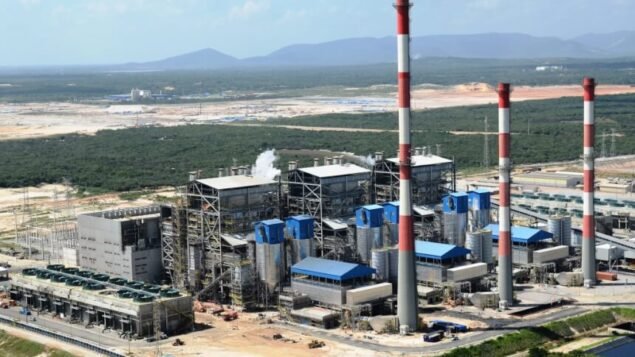
A Eneva está vendendo uma térmica a carvão no Porto de Pecém, no Ceará, enquanto se prepara para construir, na mesma região, usinas a gás com o triplo da capacidade e um terminal de GNL.
A companhia que tem o BTG Pactual como maior acionista anunciou hoje a venda da térmica Pecém II, a carvão, por até R$ 1 bilhão, em um negócio com a Diamante Energia.
A venda acontece dias depois da Eneva recontratar o complexo de Pecém II no leilão de capacidade da semana passada, com entrega a partir de 2031.
Em paralelo, a companhia também assinou com a Diamante um acordo que lhe permitirá instalar um terminal de gás natural liquefeito (GNL) na área, com capacidade para escoar até 14 milhões de metros cúbicos por dia.
A Diamante vai pagar à Eneva R$ 872,3 milhões incluindo dívidas (enterprise value) por Pecém II, com um adicional de até R$ 149 milhões se os contratos de venda de energia da usina forem antecipados.
No leilão de capacidade, a Eneva também assegurou contratos para construir duas térmicas a gás no Ceará – Jandaia I e II – que somarão 1,19 GW e deverão entregar energia por 15 anos a partir de agosto de 2029. (A título de comparação, Pecém II tem 365 MW.)
O terminal de GNL no Pecém anunciado hoje atenderá essas usinas, e ainda terá capacidade adicional para permitir vendas a outros clientes e futuros novos projetos térmicos na região.
Para o analista de utilities da XP, Raul Cavendish, a transação faz sentido estratégico para a Eneva e na prática até diminuirá o custo de capital da companhia.
“O carvão restringe muitos investidores globais de investirem em Eneva e dificulta o acesso a linhas de crédito específicas,” disse Cavendish.
Ele especulou, ainda, que este poderia ser o primeiro passo para a Eneva sair totalmente de seus ativos de carvão, reduzindo ainda mais o custo de capital e a pegada de carbono – a empresa ainda tem a UTE Porto do Itaqui, no Maranhão, com 360 MW.
Ao menos por enquanto, porém, este não é o objetivo da Eneva, uma fonte com conhecimento da estratégia da empresa disse ao Brazil Journal. A empresa “não tem intenção de vender mais. Pecém foi bem específico.”
O valor da venda ficou abaixo do valuation projetado por analistas, mas o negócio “fez parte de uma transação maior com a Diamante que envolveu projetos a gás e o terminal em Pecém,” disse essa fonte. “A transação não pode ser avaliada individualmente. O direito de operar o porto será 100% da Eneva.”
Analistas do Santander tinham no modelo um enterprise value de R$ 1,4 bilhão para Pecém II, embora esta conta não considerasse o terreno para o terminal de GNL. Eles avaliaram o deal como “uma etapa necessária para implantação do novo hub de GNL no Ceará.”
“A transação tem muito mérito estratégico,” disse Cavendish, da XP.
Nos novos projetos a gás do hub Ceará a Eneva terá uma receita fixa de R$ 3,11 bilhões por ano, com margem fixa de 75% a 85%.
Pecém II, vendida agora, terá receita fixa anual de R$ 510,8 milhões nos contratos fechados no leilão.
Já a Diamante, que está adquirindo o ativo, não tem medo do carvão – a empresa comprou antes a usina de Pecém I, em transação com a EDP Brasil em 2025, e o complexo a carvão Jorge Lacerda, da Engie, em 2021.
A Diamante tem como um de seus sócios Pedro Grünauer Kassab, que é sobrinho do presidente do PSD, Gilberto Kassab.
La sesión se realiza luego de un inicio complicado para el mexicano Sergio ‘Checo’ Pérez, quien tuvo unas prácticas libres accidentadas: registró un contacto con Alex Albon, piloto de Williams Racing, lo que provocó daños tanto en su Cadillac como en el monoplaza del tailandés.
Mientras los pilotos de la escudería Cadillac continúan adaptándose a las mejoras realizadas en los autos para este Gran Premio de Japón, Mercedes mantiene el dominio, ya que George Russell —actual líder del campeonato de constructores— y Kimi Antonelli siguen marcando los mejores tiempos.
Por ahora, Oscar Piastri, de McLaren, ha dado la sorpresa. Tras un arranque de temporada complicado que incluyó un doble abandono en el Gran Premio de China 2026, el piloto australiano se colocó como el más veloz en la segunda sesión de prácticas libres.
Es en este contexto que inicia la qualy del Gran Premio de Japón 2026, donde el mexicano ‘Checo’ Pérez buscará meterse entre los mejores.
‘Checo’ Pérez durante el GP de China. (Foto: EFE/EPA/ANDRES MARTINEZ CASARES).
‘Checo’ en el Gran Premio de Japón: ¿A qué hora es la clasificación?
Buenas y malas noticias: la clasificación del GP de Japón se transmitirá en vivo para México; sin embargo, debido a la diferencia horaria, se verá durante la madrugada. Así que prepárate para desvelarte.
Fecha: sábado 28 de marzo de 2026
Hora: 00:00 horas (tiempo del centro de México)
Sede: Circuito de Suzuka
Se tiene previsto que la clasificación dure una hora, siempre y cuando no se presenten banderas amarillas o incidentes a lo largo de la sesión.
Clasificación del GP de Japón 2026: ¿Dónde ver EN VIVO a ‘Checo’?
La transmisión oficial de las actividades del Gran Premio de Japón 2026 está disponible mediante dos plataformas de paga:
Sky Sports F1 (televisión de paga)
F1 TV (streaming oficial por suscripción)
Ambas ofrecen acceso a todo el contenido del Gran Premio de Japón, desde las prácticas libres y la clasificación hasta la carrera del domingo, así como análisis en tiempo real.
En caso de que no tengas acceso a ellas, puedes seguir las actualizaciones mediante nuestro sitio webEl Financiero Deportes.
‘Checo’ Pérez ha llegado en sitios 15 y 16 en las primeras dos carreras (Foto: AP).
¿Cómo es el Circuito de Suzuka del Gran Premio de Japón 2026?
El Circuito de Suzuka es uno de los más desafiantes para los pilotos, ya que cuenta con sus sinuosas curvas en “S”, las exigentes curvas Degner y la icónica 130R.
El trazado, conocido por su diseño en forma de ocho, exige gran precisión y provoca una elevada degradación de neumáticos. Tiene una longitud total de 5.807 kilómetros.
Por ahora, la vuelta más rápida le pertenece a Kimi Antonelli, quien el año pasado registró un tiempo de 1:30.965. La carrera del Gran Premio de Japón está pactada a 53 vueltas.
Cuba and the United States are holding tense talks amid a de facto oil blockade, with Washington considering terms that could reshape Havana’s leadership. For Latin America, these negotiations signal a harsher era of coercion, uncertainty, and new regional precedents.
A Negotiation Framed by Threats
For Latin America, the key issue is not that the U.S.-Cuba talks are occurring but the tense context surrounding them. Reuters reports that these bilateral talks are taking place amid heightened tensions, with President Donald Trump imposing a de facto oil blockade to pressure the Communist government. Cuban President Miguel Díaz-Canel insists the talks be based on equality and mutual respect. At the same time, Trump speaks in terms of domination, claiming he can do “anything I want” with Cuba and referring to the “honor” of “taking Cuba.”
This contrast defines the story’s significance for the region. Latin America understands negotiations marked by asymmetry—where one side speaks the language of sovereignty and the other of leverage. Cuba is negotiating not just with a larger power but with a government that, as seen in Venezuela, combines sanctions, force, and political engineering into a hemispheric strategy. Reuters notes that Washington’s sought deal resembles Venezuela’s, where the U.S. deposed Nicolás Maduro and worked with acting President Delcy Rodríguez instead of the traditional opposition. This detail shows the issue is no longer abstract democracy but control over outcomes.
This represents a dangerous shift for Latin America. Previously, Washington justified pressure through anti-communism, counterinsurgency, or democracy promotion. Now, the approach seems more improvised and transactional. Governments may be pressured to change form without becoming more pluralistic or democratic—to rearrange power in ways acceptable to Washington. This signals to all regional governments that sovereignty may increasingly depend not only on law and diplomacy but also on resisting economic strangulation and elite bargaining.
Reuters also notes that U.S. military officials deny rehearsing an invasion or preparing to take over Cuba militarily. While reassuring on the surface, this does not fully ease regional concerns. Latin America has long experienced formal denials alongside practical pressure, so such statements offer limited reassurance. The message from Washington remains that Cuba’s future is being decided where the U.S. claims the right to set terms.
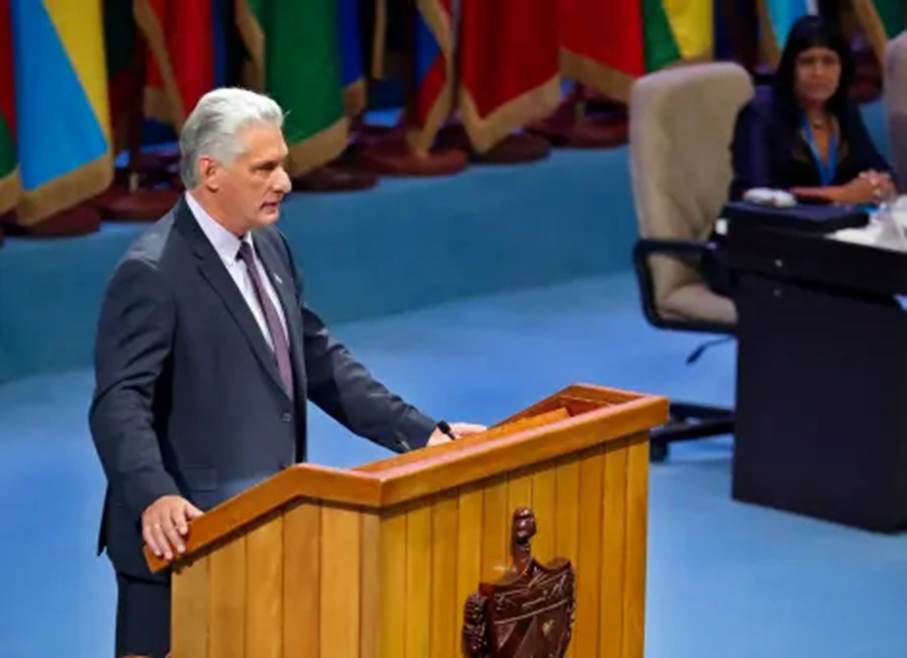
Cuba’s President Miguel Diaz-Canel. EFE/ Ernesto Mastrascusa
The Castros Still Haunt the Transition
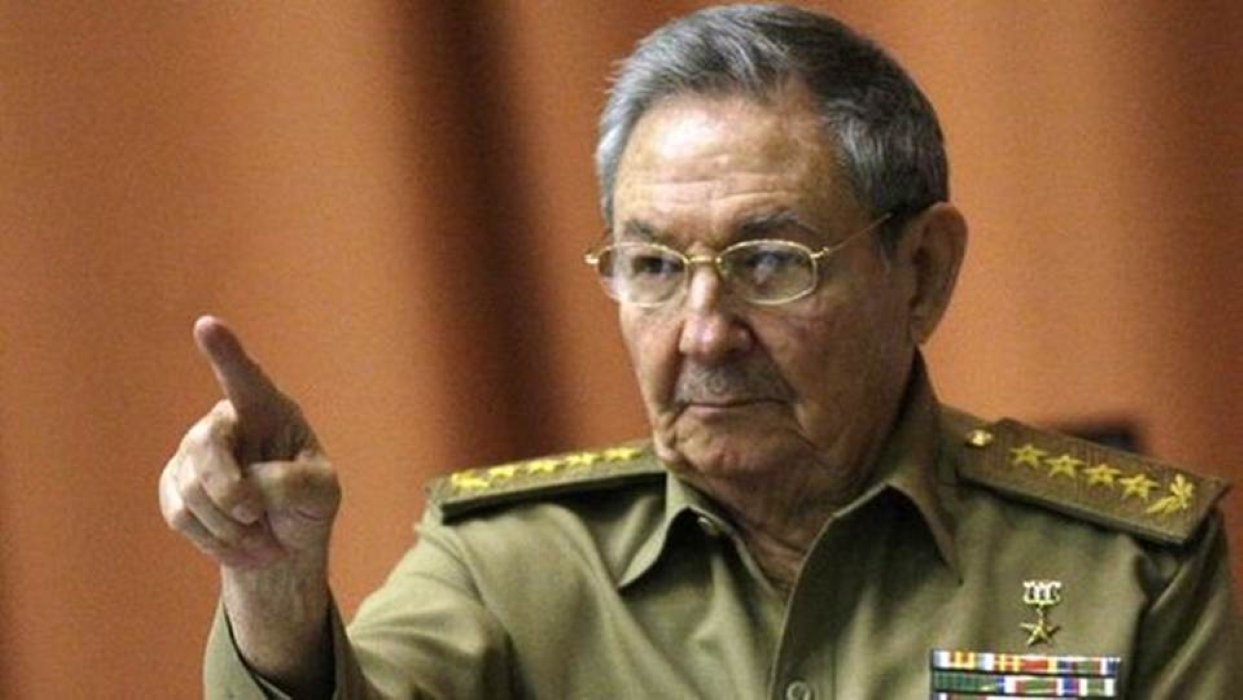
A key political insight from Reuters is that Cuba’s future does not rest on one man. Díaz-Canel is president and party leader, and his early removal would be unprecedented. Yet Raúl Castro remains highly influential. When Díaz-Canel announced talks with the U.S., he said they were led by both Castro and himself. Reuters also reports that Castro proposed postponing the Communist Party congress indefinitely due to the economic crisis, a move unanimously approved by the Central Committee. This reflects a power center, not a retired figurehead.
This matters because Latin America often misinterprets one-party systems by focusing solely on the visible presidency. In Cuba, power is distributed through a complex network of revolutionary legitimacy, military prestige, party continuity, and economic control. Reuters highlights key figures: Raúl Castro remains the unifying leader among revolution loyalists; Díaz-Canel holds formal offices but with diminished authority after repression and economic crisis. Raul Guillermo Rodríguez Castro, “El Cangrejo,” bridges family lineage and GAESA, the state’s most powerful economic entity. Prime Minister Manuel Marrero straddles government and the tourism-military business. Oscar Pérez-Oliva Fraga, linked to the Castro family, is discussed as a potential figure akin to Venezuela’s Delcy Rodríguez.
That structure tells Latin America something important. If Cuba changes, it may not change through rupture. It may change through controlled succession inside the same ruling architecture. In other words, the region may be. This structure signals to Latin America that if Cuba changes, it may do so through controlled succession within the existing ruling framework rather than rupture. The region may witness not a system’s fall but its adaptation under siege, reflecting a broader pattern in which embattled regimes replace faces to preserve interests, perhaps in a more cynical manner. If sanctions can be eased and the Castro family protected while a different public arrangement emerges, then what is really being negotiated is not liberation but acceptable continuity. That kind of transition could become a template elsewhere in the hemisphere, especially in countries where military, party, and commercial power are tightly fused.
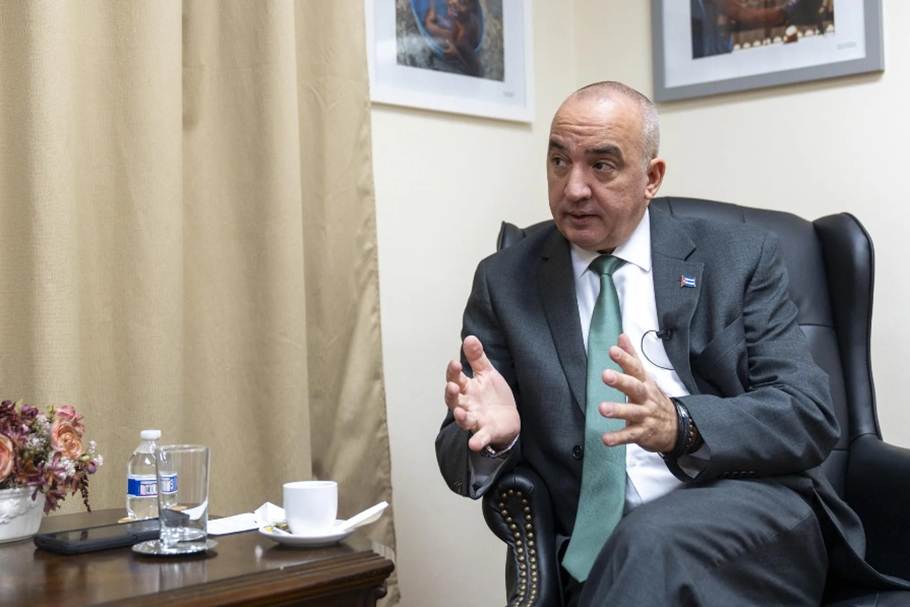
Cuba’s Permanent Representative to the UN, Ernesto Soberon Guzman. EFE/ Angel Colmenares
What Latin America Should Fear Most
The toughest regional lesson in the Reuters report warns of risks if Cuba collapses too quickly. Rubio’s plan to depose the government could trigger violence and massive migration. It would also open opportunities for organized crime in a country with an extensive coastline near U.S. shores. The report notes Cuba cooperates in combating drug trafficking—a crucial point. Even disliked governments can provide stabilizing functions that the region relies on. Removing them abruptly leaves a void.
Latin America has seen this repeatedly. When institutions weaken before replacements are ready, illicit actors outpace diplomats. Ports, coastlines, logistics corridors, and black markets do not wait for constitutional clarity. The question is not just whether Cuba’s current order is just or sustainable, but what disorder might follow if coercive diplomacy outpaces political reality.
This story matters beyond Cuba. It touches three longstanding Latin American concerns: intervention, where Washington feels entitled to redesign neighboring governments; elite succession, where pressured systems survive by rotating leaders rather than relinquishing power; and social fallout, where migration, scarcity, and organized crime exploit openings created by rushed political changes.
Reuters frames the talks around those with the most influence over Cuba’s future. Yet from a Latin American perspective, the broader issue is not just who prevails in Havana, but what kind of hemisphere emerges if states can be blockaded into talks, pressured toward leadership change, and reshaped through deals among a few men linked to the party, the military, the diaspora, and foreign powers. Cuba is the immediate stage; the audience and warning belong to all of Latin America.
Iran are among the countries who have qualified for this summer’s World Cup but their participation in the tournament, to be hosted by the US, Mexico and Canada from 11 June, remains in doubt.
They are scheduled to open their World Cup campaign against New Zealand and Belgium in Los Angeles before their final group game against Egypt in Seattle.
Mehdi Taj, the head of Iran’s football federation, then said the country will not travel to the US for what would be a fourth consecutive World Cup appearance.
“When Trump has explicitly stated that he cannot ensure the security of the Iranian national team, we will certainly not travel to America,” Taj said in a post, external on a social media account belonging to the Iranian embassy in Mexico.
Taj said Iran were negotiating with Fifa to hold their matches in Mexico but the governing body appear to have ruled out that possiblity.
Iran, who were beaten 2-1 by Nigeria on Friday, will face Costa Rica in another friendly in Turkey on Tuesday.
Earlier this month, the country’s women’s national team players declined to sing the national anthem during an AFC Women’s Asian Cup match, leading to a host on Iranian state TV calling them “traitors”.
A number of the players had initially sought humanitarian visas to stay in Australia after concerns they would face repercussions for their protest but all members of the team eventually returned to Iran after dropping their bids for asylum.
La Asamblea Nacional de Nicaragua, controlada mayoritariamente por el gobernante Frente Sandinista de Liberación Nacional, reformó el miércoles la Ley Orgánica de la Procuraduría General de Justicia, que es la representante legal del Estado y que a partir de ahora pasará a administrar el patrimonio y los bienes de las alcaldías municipales despojando a los alcaldes de todo poder de decisión económica.
“Todo el patrimonio, bienes muebles e inmuebles, derechos, activos y demás recursos que, a la fecha pertenezcan a la Carrera Administrativa Municipal y a la Dirección General de Carrera Administrativa Municipal, se considerarán propiedad del Estado y serán administrados por la Procuraduría General de Justicia”, señala el artículo cinco del texto reformado y aprobado por unanimidad por los diputados nicaragüenses.
Según la exposición de motivos de la reforma legal, el objetivo es “fortalecer las funciones de la Procuraduría General de Justicia para garantizar la eficiencia y eficacia de la administración municipal en el ejercicio de sus competencias” dejando entrever que la autonomía municipal y la gestión descentralizada es un obstáculo para el buen funcionamiento del Estado.
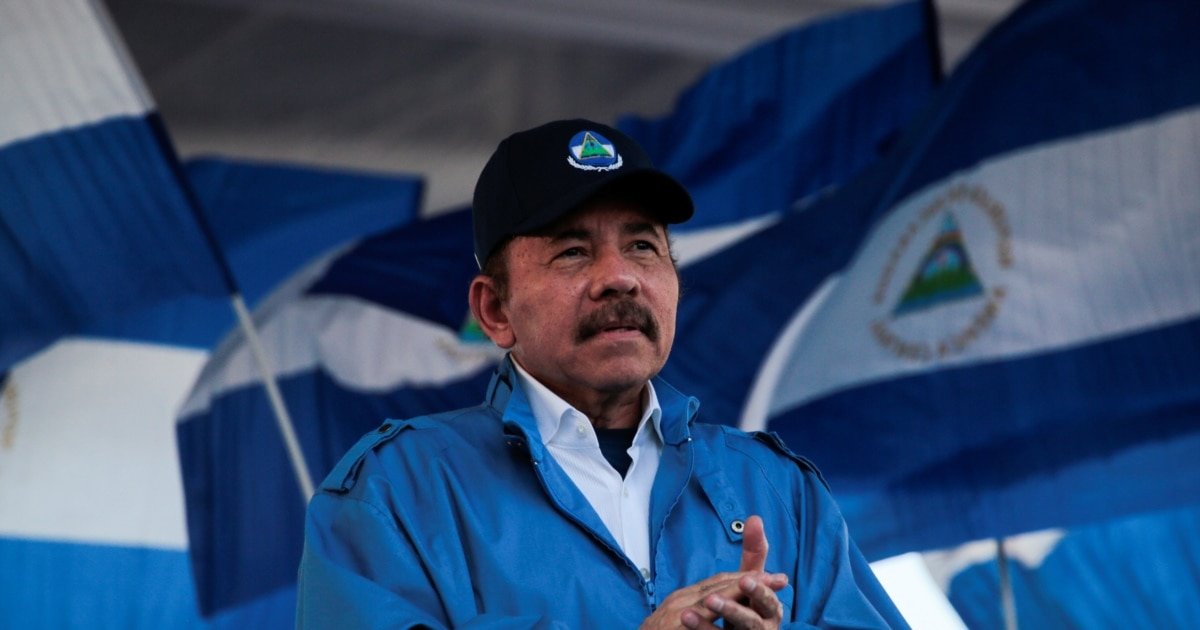
Por ahora se desconoce qué cantidad exacta de bienes municipales serán afectados por esta transmisión de patrimonio hacia el Gobierno central, pero lo que si está claro es que ahora el Ejecutivo controlado por Daniel Ortega y Rosario Murillo tendrá fácilmente a su disposición un amplio inventario de propiedades a nivel nacional.
El gobernante Frente Sandinista que en el pasado fue impulsor de la autonomía municipal, para asegurarse cuotas de poder político y económico cuando estaba en la oposición, ahora termina de destruir ese mecanismo de descentralización que buscaba evitar la concentración de poder.
Desde 2007, el régimen Ortega Murillo ha erosionado la autonomía municipal, convirtiendo a las alcaldías en estructuras dependientes del Gobierno central.
Un análisis de las elecciones municipales del año 2022 indica que los gobiernos locales han perdido su capacidad de autogestión y que a pesar de que las leyes nicaragüenses reconocen la autonomía municipal, en la práctica, el régimen ha sometido a estas instituciones a sus designios.
“El régimen autoritario bajo el que se encuentra Nicaragua ha socavado la autonomía municipal, limitando el ejercicio de poder de las autoridades locales y promoviendo el abuso, arbitrariedad y discrecionalidad en la toma de decisiones. De esta manera, se ha aniquilado el poder local democrático para dar paso al surgimiento de un poder local autoritario de facto” señaló el informe suscrito por Olga Valle, directora del Observatorio Ciudadano Electoral Urnas Abiertas.
También es importante recordar, que el régimen Ortega Murillo despojó a la oposición de las pocas alcaldías que controlaban tras ganarlas en las elecciones municipales de 2017. Primero se suprimió la personería jurídica del partido opositor Ciudadanos por la Libertad en 2021 y luego, en julio de 2022, el Instituto Nicaragüense de Fomento Municipal (Inifom) ocupó las instalaciones de las alcaldías de Santa María de Pantasma, El Cuá, San Sebastián de Yalí, El Almendro y Murra, todas ubicadas en el norte del país.
Una nueva arquitectura de concentración de poder
El último impulso centralizador del régimen Ortega Murillo tiene lugar con la reforma a la Constitución Política de agosto del año pasado, cuando el Gobierno sandinista concentró en la Procuraduría General de Justicia de Nicaragua (antes Procuraduría General de la República) tanto la representación de los intereses del Estado como la facultad de perseguir y castigar los delitos, una función que hasta ese entonces le correspondía al Ministerio Público.
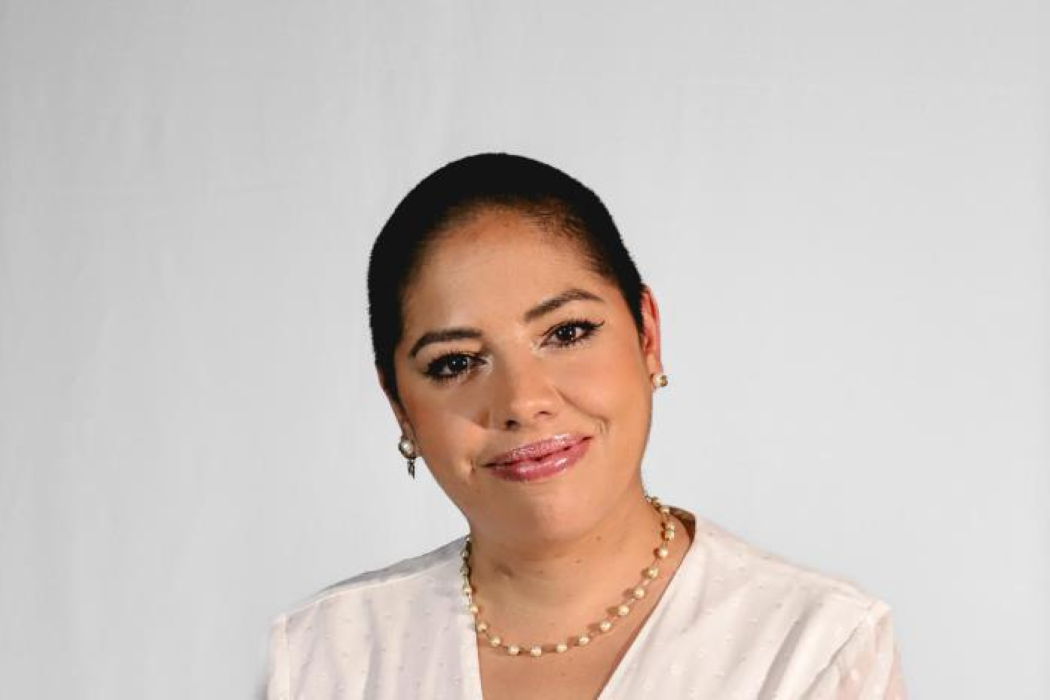
Ahora, con la reforma a su ley orgánica, la “super” Procuraduría a cargo desde 2019 de Wendy Carolina Morales Urbina también se convierte en un poderoso ente de gestión patrimonial al servicio de la familia Ortega-Murillo.
Un año antes de su nombramiento, en agosto de 2024, Morales Urbina fue sancionada por el Departamento del Tesoro de EE.UU. por “ser cómplice de la opresión del régimen”. En 2023, acusada de expropiar bienes de los oponentes políticos, fue incluida por Washington en una lista de “actores corruptos y antidemocráticos” de los países centroamericanos, conocida como Lista Engel.
“La procuradora general de Nicaragua, en colaboración con el régimen Ortega-Murillo, ha explotado su posición para facilitar una campaña coordinada de supresión de la oposición al expropiar propiedades de oponentes políticos del gobierno sin una base legal”, dijo el entonces subsecretario de inteligencia financiera y antiterrorismo del Departamento del Tesoro, Brian Nelson.
Esta última reforma representa un avance más hacia la concentración total del poder en Nicaragua, sobre todo en la gestión de millones de dólares en propiedades que antes eran patrimonio municipal y eran gestionados a nivel local.
Los principales barómetros de Wall Street arrancan la sesión con variaciones negativas, pues a pesar de que el presidente Donald Trump detalló que pospondrá los ataques a infraestructura energética, todavía se mantienen los riesgos de un mayor despliegue militar en la región.
El Nasdaq registra una caída de 1.43 por ciento, en los 21 mil 102.95 enteros, seguido por el Dow Jones que baja 0.93 por ciento a 45 mil 537.89 unidades, mientras que el S&P 500 con 0.91 por ciento menos, ronda en las 6 mil 417.53 unidades.
“Si bien la medida podría evitar temporalmente una escalada de la guerra entre Estados Unidos e Irán, ha prolongado la incertidumbre sobre la duración de la interrupción del suministro mundial de petróleo. Los informes que indican que Estados Unidos está enviando tropas terrestres adicionales a Oriente Medio han aumentado los temores de una escalada”, dijo a Bloomberg, Ian Lygen, de BMO Capital Markets.
Por su parte, del lado de Europa las pérdidas son de 1.43 por ciento, para el DAX en Alemania, en los 22 mil 296.76 puntos, seguido por el IBEX 35 de España, con 0.98 por ciento menos, en los 16 mil 796.80 enteros, el CAC 40 de Francia cede 0.90 por ciento, en los 7 mil 700.74 puntos, mientras que el FTSE 100 de Londres con 0.28 por ciento menos, alcanza las 9 mil 945.17 unidades.
Las negociaciones a nivel local ubican al S&P/BMV IPC de la Bolsa Mexicana de Valores con un descenso de 0.10 por ciento, colocándose en los 66 mil 991.88 enteros y para el caso del índice estelar de la Bolsa Institucional de Valores, FTSE-BIVA, se reporta una pérdida de 0.11 por ciento, al ubicarse en los mil 335.21 puntos.
En el frente petrolero, los crudos marcadores registran variaciones positivas de 3.79 por ciento para el West Texas Intermediate (WTI) que se coloca en los 98.04 dólares por unidad, mientras que el referencial Brent sube 2.48 por ciento, en un nivel de 110.71 billetes verdes el barril.
In Mexico, Samara Martínez’s campaign to decriminalize euthanasia has transcended a private illness narrative. It has evolved into a regional examination of dignity, religion, medicine, and state authority, challenging Latin America to determine who defines mercy at the end of life.
When Illness Becomes a Public Argument
Political debates often originate in congresses, party caucuses, or courtrooms. This debate, however, began within a body that has already endured significant hardship. Samara Martínez, a Mexican activist from Chihuahua, has spent years addressing the illness that has debilitated her since adolescence. In one letter, she described the illness as cursed, expressing both hatred for its toll and appreciation for its lessons. This tension underpins the debate’s intensity. Martínez’s argument is grounded not in abstraction but in lived experience involving chemotherapy, transplants, dialysis, hospitalizations, debt, and the gradual reorganization of life around survival.
The Associated Press provided the original report and quotations framing this story. Their coverage captures more than the biography of a determined individual; it marks the moment when one person’s ordeal begins to reshape a national conversation. At thirty-one, Martínez has emerged as one of the most prominent advocates for decriminalizing euthanasia in Mexico. Her proposal, the Transcendence Law, introduced by lawmakers from multiple political parties, including Morena, seeks to remove the explicit ban, redefine euthanasia as a legal and voluntary medical procedure, and establish it as a right based on dignity and autonomy rather than an obligation to prolong suffering.
This language holds significant weight in Mexico and, by extension, Latin America. The region has long adhered to a moral framework that regards endurance as virtue, pain as a trial, and the defense of life as nearly absolute—even when medicine can no longer heal but only prolong life. Martínez challenges this framework from within. She does not portray herself as nihilistic or defeated. According to the AP report, she explicitly states that she does not intend to surrender. However, she also asserts that when her body fails, she desires the right to say farewell by the sea, away from a hospital bed, surrounded by family and friends.
This reality renders her politically difficult to dismiss. Mexico is not being asked to consider euthanasia through abstract philosophical debate but by a woman who continues to work, engages with politicians, hosts conferences, addresses a large social media audience, and maintains that resilience and the right to choose can coexist. She does not argue against life but opposes the notion that life must be prolonged beyond dignity solely because the law lacks alternative solutions.
This issue is significant for Latin America as the region engages in a deeper debate over autonomy. Reproductive rights, gender identity, end-of-life care, and freedom of conscience are increasingly interconnected, converging into a broader conflict: whether the state’s role is to impose a singular moral doctrine or to accommodate diverse ways of living and dying.
Patient in an intensive care unit. EFE/ Jesús Diges
The Law Is Adapting to a Complex Reality
Mexico’s legal framework continues to treat euthanasia severely. The General Health Law defines it as mercy killing and prohibits it alongside assisted suicide. Federal law penalizes assisting or inducing suicide with imprisonment, imposing harsher sentences if death is directly caused. However, the regional context is evolving: Colombia has fully legalized and regulated euthanasia; Ecuador has decriminalized it; and Uruguay has approved legislation pending implementation. Consequently, Mexico is not confronting an unprecedented issue but is entering a debate already active in Latin America.
This delay is revealing. Mexico exemplifies a context where medical modernity and moral conservatism coexist, each constraining the other. The country possesses considerable legal sophistication and vigorous civic debate, yet it also experiences profound religious influence and strong opposition from conservative groups. Martínez’s campaign highlights this contradiction: a nation capable of public dignity debates remains legally bound to criminalizing assistance at the end of life.
The AP report demonstrates that this issue depends not only on legal language but also on moral narratives. Patricia Mercado, a lawmaker supporting Martínez, asserts that Martínez’s struggle and authenticity advance the possibility of legislation, emphasizing that testimony resonates more than extensive data. This observation is accurate. Despite institutional and ideological divisions, Latin American politics remains strongly influenced by personal testimony. While statistics establish scope, testimony often confers legitimacy.
Martínez’s personal history holds significant political relevance. Initially, she believed living connected to a machine was impossible. Currently, she undergoes peritoneal dialysis nightly, remaining tethered for hours to portable equipment. She has experienced the loss of a marriage, a desired career, financial stability, and long-term friendships. Her parents incurred debt to support her. Steroid treatments altered her body, and vomiting and hospitalization became routine. Despite this accumulation of suffering, she does not express defeat but has instead discovered a resolute sense of purpose.
This is precisely why the debate unsettles Mexico’s traditional moral gatekeepers. Opposition remains strong among conservative and religious groups. The Catholic Church echoed Pope Leo’s call to uphold the sanctity of life. Rodrigo Iván Cortés, president of a conservative advocacy group, says life must be protected at every stage. That position will resonate with many across Latin America, where religion remains one of the strongest public languages through which suffering is interpreted.
However, a singular religious response no longer exists. The AP notes that Héctor Reyes, a religious leader affiliated with the organization For the Right to Die with Dignity, supports Martínez’s cause. He contends that transcendence aligns with his conception of God and rejects the notion of a punishing deity. This division holds political significance, indicating that the region’s traditional moral monopolies are weakening. Faith is no longer assuredly aligned solely with prohibition.
Patient in an intensive care unit. EFE/Marcial Guillén
Implications of Mexico’s Debate for Latin America
This struggle extends beyond Mexico because it intersects multiple Latin American realities simultaneously. First, institutional: as healthcare systems across the region advance technologically, they can prolong life more than before; however, legal and ethical frameworks have not consistently adapted to patients’ experiences of such prolongation. Second, cultural: Latin America remains profoundly influenced by family obligations and religious beliefs, rendering death rarely a purely private decision. Third, political: regional conflicts over bodily autonomy increasingly serve as indicators of democratic maturity.
Martínez’s case integrates these three dimensions. Her proposed legislation permits conscientious objection for healthcare workers while mandating that public institutions provide willing personnel. This approach is significant, as it acknowledges diverse convictions without allowing personal beliefs to obstruct access entirely. In effect, it offers Mexico a model of coexistence rather than a winner-take-all moral resolution. This may explain its regional importance. Latin America frequently experiences debates over rights that stagnate when one side demands absolute recognition and the other absolute prohibition. This proposal suggests a more challenging yet sustainable alternative.
Martínez’s refusal to allow suffering to become spectacle reflects a distinctly Latin American perspective. She firmly rejects pity, stating that she does not wish merely to exist but desires a proper farewell—a time to laugh, cry, and depart in peace. This aspiration holds political significance because it reclaims agency from institutions that frequently speak on behalf of the dying individual, including hospitals, churches, political parties, and courts.
Mexico must now determine how to address this claim, with Latin America observing closely, as the outcome will extend beyond Mexican borders. Should the Transcendence Law progress, it will reinforce the regional trend toward recognizing end-of-life autonomy as an element of democratic citizenship. Conversely, if it falters, it will underscore the persistent challenges Latin American states face in entrusting individuals with final decisions regarding their own bodies.
Regardless of the outcome, Martínez has already transformed the discourse. She stated to the AP that if she did not advocate for this cause, no one else would. This statement may be the most politically significant in the entire narrative, encapsulating a longstanding regional truth: reform often emerges not from institutional generosity but when an individual, with no reason to delay, compels private suffering to become publicly undeniable.
Earlier this season, the club spent £480,000 to purchase land from Wrexham University and Welsh Ministers to undertake the development. It has also been confirmed that the stand will cost £69.3m to construct.
Once upgraded, the stadium will be capable of hosting competitive Welsh national team fixtures and Uefa-recognised matches, which in turn will boost revenue further.
The future-proofing extends well beyond their home stadium, though.
Wrexham state the “development of a strong youth player pipeline remains a strategic priority” while they confirmed the search for a suitable permanent first-team training facility “remains ongoing”.
To aid the club’s expansion, co-chairmen Mac and Reynolds have sought external investment.
Some of their cash input was also used to repay a loan of £27.5m owed to the R.R. McReynolds Company, LLC – owned equally by Mac and Reynolds.
It means Wrexham are currently free of all shareholder loans, as they were at the end of the 2024-25 financial period.
The club did not rule out of the possibility of further future external investment.
The strategic report states: “Additional partners will be considered where they can demonstrably add value and support to the delivery of the club’s strategic objectives.”
And, pertinently to both Wrexham fans and perhaps some of rival clubs, the Red Dragons have no concerns with their current position regarding Profit and Sustainability Rules (PSR).
Championship teams can lose up to £41.5m over a rolling three-year period. Wrexham lost £2.7m in 2023-24 and £14.85m a year later – leaving room for losses of about £24m for the current season.
But such has been their vast income, the Red Dragons are satisfied with the headroom they currently have.
El periodista independiente cubano Mag Jorge Castro, residente en España, repasa su vida tras salir de Cuba y comenta su reciente debate en la televisión española con uno de los integrantes de la flotilla de izquierda que visitó la isla la pasada semana.
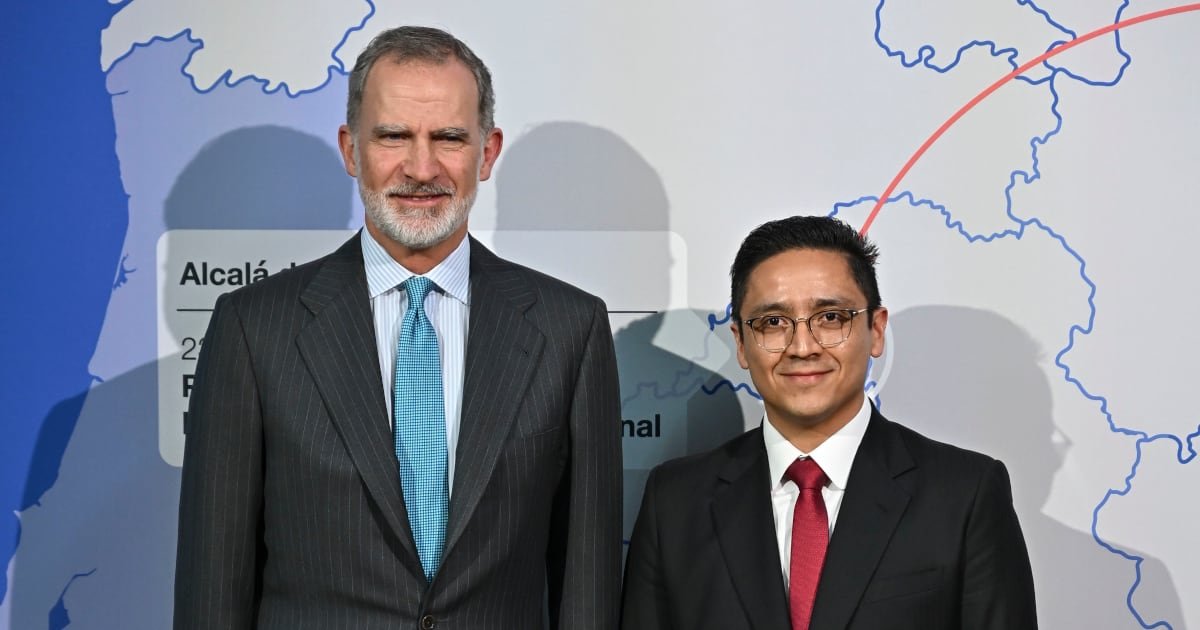
El astrofísico José Eduardo Méndez Delgado (México, 1994), galardonado con el Premio Princesa de Girona Internacional en la categoría de Investigación, traduce la química del universo con su trabajo y reconstruye el pasado de las galaxias, muy ligado “al oxígeno que respiramos o al calcio de nuestros huesos”, según dijo a EFE.
Méndez ganó el premio con un estudio que resuelve el enigma de la discrepancia de abundancias químicas en nebulosas.
“Entender la química del universo nos permite inferir el pasado y los procesos que moldearon el estado actual de las galaxias”, comentó Méndez a EFE sobre la investigación que lo llevó a conseguir este año el galardón, después de quedar cerca en la edición anterior.
Quedar finalista en 2025 lo motivó a continuar y demostrar que “la sociedad está interesada por la ciencia básica, que hay un interés genuino por conocer el universo, que no es algo ajeno a la sociedad, sino que es parte del pensamiento humano”.
La investigación se centra en cómo los indicios químicos permiten reconstruir el pasado de las galaxias y cómo todo ello está “muy ligado a nosotros mismos, el oxígeno que respiramos o el calcio de nuestros huesos”, detalló.
En síntesis, el galardonado lo define como una “arqueología astronómica”.
La innovación, fundamental para la investigación científica
“Parte fundamental de la investigación científica es la innovación, y la innovación está impulsada por la energía que generalmente está presente en los jóvenes”, resaltó el premiado, quien en sus inicios enfrentó retos derivados del estigma social hacia la población joven.
“Mostrar que los jóvenes somos capaces de desarrollar disciplinas científicas serias y comprometidas es la forma para que estas ideas se disipen poco a poco”, señaló.
Para Méndez, su inclinación por la ciencia y este estudio surgió por una “afortunada coincidencia”.
Mientras estudiaba las nebulosas con mayor profundidad, observó que “no solo eran bellas, sino que eran importantes”, lo que permitió unir dos pasiones que derivaron en la investigación premiada.
Además del impulso al talento joven, los Premios Princesa de Girona fomentan las relaciones iberoamericanas con una comunidad de galardonados que crece cada año y promueve la colaboración entre ellos. El propio Méndez afirmó que “es un honor” formar parte.
Méndez cursó su licenciatura en México y llegó a España gracias a una beca de la Fundación Carolina.
Eso “me abrió el panorama hacia el mundo de la investigación internacionalizada y, sobre todo, me dio acceso a instrumentos observacionales muy importantes como el Gran Telescopio de Canarias”, indicó.
Actualmente, lidera el estudio de nebulosas dentro del Local Volume Mapper del Sloan Digital Sky Survey y recibió el nombramiento como Service Scientist en un proyecto internacional para observar con espectroscopia tridimensional gran parte de la Vía Láctea.
En Alcalá de Henares, Madrid,se dieron a conocer este jueves, en un acto presidido por el rey de España, Felipe VI, los ganadores del Premio Princesa de Girona Internacional en sus dos categorías: CreaEmpresa, otorgado a la argentina Mercedes Bidart, e Investigación, a Méndez Delgado.
Los Premios Princesa de Girona, impulsados por la Fundación Princesa de Girona, buscan impulsar el talento joven, de entre 16 y 35 años, y lo reconocen con una dotación de 20 mil euros y proyección internacional.
Estos galardones se reparten en los ámbitos de Arte, Empresa, Investigación y Social, y se entregarán el 14 de julio en el Gran Teatre Liceu de Barcelona, España.