Los principales barómetros de Wall Street arrancan la sesión con variaciones negativas, pues a pesar de que el presidente Donald Trump detalló que pospondrá los ataques a infraestructura energética, todavía se mantienen los riesgos de un mayor despliegue militar en la región.
El Nasdaq registra una caída de 1.43 por ciento, en los 21 mil 102.95 enteros, seguido por el Dow Jones que baja 0.93 por ciento a 45 mil 537.89 unidades, mientras que el S&P 500 con 0.91 por ciento menos, ronda en las 6 mil 417.53 unidades.
“Si bien la medida podría evitar temporalmente una escalada de la guerra entre Estados Unidos e Irán, ha prolongado la incertidumbre sobre la duración de la interrupción del suministro mundial de petróleo. Los informes que indican que Estados Unidos está enviando tropas terrestres adicionales a Oriente Medio han aumentado los temores de una escalada”, dijo a Bloomberg, Ian Lygen, de BMO Capital Markets.
Por su parte, del lado de Europa las pérdidas son de 1.43 por ciento, para el DAX en Alemania, en los 22 mil 296.76 puntos, seguido por el IBEX 35 de España, con 0.98 por ciento menos, en los 16 mil 796.80 enteros, el CAC 40 de Francia cede 0.90 por ciento, en los 7 mil 700.74 puntos, mientras que el FTSE 100 de Londres con 0.28 por ciento menos, alcanza las 9 mil 945.17 unidades.
Las negociaciones a nivel local ubican al S&P/BMV IPC de la Bolsa Mexicana de Valores con un descenso de 0.10 por ciento, colocándose en los 66 mil 991.88 enteros y para el caso del índice estelar de la Bolsa Institucional de Valores, FTSE-BIVA, se reporta una pérdida de 0.11 por ciento, al ubicarse en los mil 335.21 puntos.
En el frente petrolero, los crudos marcadores registran variaciones positivas de 3.79 por ciento para el West Texas Intermediate (WTI) que se coloca en los 98.04 dólares por unidad, mientras que el referencial Brent sube 2.48 por ciento, en un nivel de 110.71 billetes verdes el barril.
In Mexico, Samara Martínez’s campaign to decriminalize euthanasia has transcended a private illness narrative. It has evolved into a regional examination of dignity, religion, medicine, and state authority, challenging Latin America to determine who defines mercy at the end of life.
When Illness Becomes a Public Argument
Political debates often originate in congresses, party caucuses, or courtrooms. This debate, however, began within a body that has already endured significant hardship. Samara Martínez, a Mexican activist from Chihuahua, has spent years addressing the illness that has debilitated her since adolescence. In one letter, she described the illness as cursed, expressing both hatred for its toll and appreciation for its lessons. This tension underpins the debate’s intensity. Martínez’s argument is grounded not in abstraction but in lived experience involving chemotherapy, transplants, dialysis, hospitalizations, debt, and the gradual reorganization of life around survival.
The Associated Press provided the original report and quotations framing this story. Their coverage captures more than the biography of a determined individual; it marks the moment when one person’s ordeal begins to reshape a national conversation. At thirty-one, Martínez has emerged as one of the most prominent advocates for decriminalizing euthanasia in Mexico. Her proposal, the Transcendence Law, introduced by lawmakers from multiple political parties, including Morena, seeks to remove the explicit ban, redefine euthanasia as a legal and voluntary medical procedure, and establish it as a right based on dignity and autonomy rather than an obligation to prolong suffering.
This language holds significant weight in Mexico and, by extension, Latin America. The region has long adhered to a moral framework that regards endurance as virtue, pain as a trial, and the defense of life as nearly absolute—even when medicine can no longer heal but only prolong life. Martínez challenges this framework from within. She does not portray herself as nihilistic or defeated. According to the AP report, she explicitly states that she does not intend to surrender. However, she also asserts that when her body fails, she desires the right to say farewell by the sea, away from a hospital bed, surrounded by family and friends.
This reality renders her politically difficult to dismiss. Mexico is not being asked to consider euthanasia through abstract philosophical debate but by a woman who continues to work, engages with politicians, hosts conferences, addresses a large social media audience, and maintains that resilience and the right to choose can coexist. She does not argue against life but opposes the notion that life must be prolonged beyond dignity solely because the law lacks alternative solutions.
This issue is significant for Latin America as the region engages in a deeper debate over autonomy. Reproductive rights, gender identity, end-of-life care, and freedom of conscience are increasingly interconnected, converging into a broader conflict: whether the state’s role is to impose a singular moral doctrine or to accommodate diverse ways of living and dying.
Patient in an intensive care unit. EFE/ Jesús Diges
The Law Is Adapting to a Complex Reality
Mexico’s legal framework continues to treat euthanasia severely. The General Health Law defines it as mercy killing and prohibits it alongside assisted suicide. Federal law penalizes assisting or inducing suicide with imprisonment, imposing harsher sentences if death is directly caused. However, the regional context is evolving: Colombia has fully legalized and regulated euthanasia; Ecuador has decriminalized it; and Uruguay has approved legislation pending implementation. Consequently, Mexico is not confronting an unprecedented issue but is entering a debate already active in Latin America.
This delay is revealing. Mexico exemplifies a context where medical modernity and moral conservatism coexist, each constraining the other. The country possesses considerable legal sophistication and vigorous civic debate, yet it also experiences profound religious influence and strong opposition from conservative groups. Martínez’s campaign highlights this contradiction: a nation capable of public dignity debates remains legally bound to criminalizing assistance at the end of life.
The AP report demonstrates that this issue depends not only on legal language but also on moral narratives. Patricia Mercado, a lawmaker supporting Martínez, asserts that Martínez’s struggle and authenticity advance the possibility of legislation, emphasizing that testimony resonates more than extensive data. This observation is accurate. Despite institutional and ideological divisions, Latin American politics remains strongly influenced by personal testimony. While statistics establish scope, testimony often confers legitimacy.
Martínez’s personal history holds significant political relevance. Initially, she believed living connected to a machine was impossible. Currently, she undergoes peritoneal dialysis nightly, remaining tethered for hours to portable equipment. She has experienced the loss of a marriage, a desired career, financial stability, and long-term friendships. Her parents incurred debt to support her. Steroid treatments altered her body, and vomiting and hospitalization became routine. Despite this accumulation of suffering, she does not express defeat but has instead discovered a resolute sense of purpose.
This is precisely why the debate unsettles Mexico’s traditional moral gatekeepers. Opposition remains strong among conservative and religious groups. The Catholic Church echoed Pope Leo’s call to uphold the sanctity of life. Rodrigo Iván Cortés, president of a conservative advocacy group, says life must be protected at every stage. That position will resonate with many across Latin America, where religion remains one of the strongest public languages through which suffering is interpreted.
However, a singular religious response no longer exists. The AP notes that Héctor Reyes, a religious leader affiliated with the organization For the Right to Die with Dignity, supports Martínez’s cause. He contends that transcendence aligns with his conception of God and rejects the notion of a punishing deity. This division holds political significance, indicating that the region’s traditional moral monopolies are weakening. Faith is no longer assuredly aligned solely with prohibition.
Patient in an intensive care unit. EFE/Marcial Guillén
Implications of Mexico’s Debate for Latin America
This struggle extends beyond Mexico because it intersects multiple Latin American realities simultaneously. First, institutional: as healthcare systems across the region advance technologically, they can prolong life more than before; however, legal and ethical frameworks have not consistently adapted to patients’ experiences of such prolongation. Second, cultural: Latin America remains profoundly influenced by family obligations and religious beliefs, rendering death rarely a purely private decision. Third, political: regional conflicts over bodily autonomy increasingly serve as indicators of democratic maturity.
Martínez’s case integrates these three dimensions. Her proposed legislation permits conscientious objection for healthcare workers while mandating that public institutions provide willing personnel. This approach is significant, as it acknowledges diverse convictions without allowing personal beliefs to obstruct access entirely. In effect, it offers Mexico a model of coexistence rather than a winner-take-all moral resolution. This may explain its regional importance. Latin America frequently experiences debates over rights that stagnate when one side demands absolute recognition and the other absolute prohibition. This proposal suggests a more challenging yet sustainable alternative.
Martínez’s refusal to allow suffering to become spectacle reflects a distinctly Latin American perspective. She firmly rejects pity, stating that she does not wish merely to exist but desires a proper farewell—a time to laugh, cry, and depart in peace. This aspiration holds political significance because it reclaims agency from institutions that frequently speak on behalf of the dying individual, including hospitals, churches, political parties, and courts.
Mexico must now determine how to address this claim, with Latin America observing closely, as the outcome will extend beyond Mexican borders. Should the Transcendence Law progress, it will reinforce the regional trend toward recognizing end-of-life autonomy as an element of democratic citizenship. Conversely, if it falters, it will underscore the persistent challenges Latin American states face in entrusting individuals with final decisions regarding their own bodies.
Regardless of the outcome, Martínez has already transformed the discourse. She stated to the AP that if she did not advocate for this cause, no one else would. This statement may be the most politically significant in the entire narrative, encapsulating a longstanding regional truth: reform often emerges not from institutional generosity but when an individual, with no reason to delay, compels private suffering to become publicly undeniable.
Earlier this season, the club spent £480,000 to purchase land from Wrexham University and Welsh Ministers to undertake the development. It has also been confirmed that the stand will cost £69.3m to construct.
Once upgraded, the stadium will be capable of hosting competitive Welsh national team fixtures and Uefa-recognised matches, which in turn will boost revenue further.
The future-proofing extends well beyond their home stadium, though.
Wrexham state the “development of a strong youth player pipeline remains a strategic priority” while they confirmed the search for a suitable permanent first-team training facility “remains ongoing”.
To aid the club’s expansion, co-chairmen Mac and Reynolds have sought external investment.
Some of their cash input was also used to repay a loan of £27.5m owed to the R.R. McReynolds Company, LLC – owned equally by Mac and Reynolds.
It means Wrexham are currently free of all shareholder loans, as they were at the end of the 2024-25 financial period.
The club did not rule out of the possibility of further future external investment.
The strategic report states: “Additional partners will be considered where they can demonstrably add value and support to the delivery of the club’s strategic objectives.”
And, pertinently to both Wrexham fans and perhaps some of rival clubs, the Red Dragons have no concerns with their current position regarding Profit and Sustainability Rules (PSR).
Championship teams can lose up to £41.5m over a rolling three-year period. Wrexham lost £2.7m in 2023-24 and £14.85m a year later – leaving room for losses of about £24m for the current season.
But such has been their vast income, the Red Dragons are satisfied with the headroom they currently have.
El periodista independiente cubano Mag Jorge Castro, residente en España, repasa su vida tras salir de Cuba y comenta su reciente debate en la televisión española con uno de los integrantes de la flotilla de izquierda que visitó la isla la pasada semana.
El astrofísico José Eduardo Méndez Delgado (México, 1994), galardonado con el Premio Princesa de Girona Internacional en la categoría de Investigación, traduce la química del universo con su trabajo y reconstruye el pasado de las galaxias, muy ligado “al oxígeno que respiramos o al calcio de nuestros huesos”, según dijo a EFE.
Méndez ganó el premio con un estudio que resuelve el enigma de la discrepancia de abundancias químicas en nebulosas.
“Entender la química del universo nos permite inferir el pasado y los procesos que moldearon el estado actual de las galaxias”, comentó Méndez a EFE sobre la investigación que lo llevó a conseguir este año el galardón, después de quedar cerca en la edición anterior.
Quedar finalista en 2025 lo motivó a continuar y demostrar que “la sociedad está interesada por la ciencia básica, que hay un interés genuino por conocer el universo, que no es algo ajeno a la sociedad, sino que es parte del pensamiento humano”.
La investigación se centra en cómo los indicios químicos permiten reconstruir el pasado de las galaxias y cómo todo ello está “muy ligado a nosotros mismos, el oxígeno que respiramos o el calcio de nuestros huesos”, detalló.
En síntesis, el galardonado lo define como una “arqueología astronómica”.
La innovación, fundamental para la investigación científica
“Parte fundamental de la investigación científica es la innovación, y la innovación está impulsada por la energía que generalmente está presente en los jóvenes”, resaltó el premiado, quien en sus inicios enfrentó retos derivados del estigma social hacia la población joven.
“Mostrar que los jóvenes somos capaces de desarrollar disciplinas científicas serias y comprometidas es la forma para que estas ideas se disipen poco a poco”, señaló.
Para Méndez, su inclinación por la ciencia y este estudio surgió por una “afortunada coincidencia”.
Mientras estudiaba las nebulosas con mayor profundidad, observó que “no solo eran bellas, sino que eran importantes”, lo que permitió unir dos pasiones que derivaron en la investigación premiada.
Además del impulso al talento joven, los Premios Princesa de Girona fomentan las relaciones iberoamericanas con una comunidad de galardonados que crece cada año y promueve la colaboración entre ellos. El propio Méndez afirmó que “es un honor” formar parte.
Méndez cursó su licenciatura en México y llegó a España gracias a una beca de la Fundación Carolina.
Eso “me abrió el panorama hacia el mundo de la investigación internacionalizada y, sobre todo, me dio acceso a instrumentos observacionales muy importantes como el Gran Telescopio de Canarias”, indicó.
Actualmente, lidera el estudio de nebulosas dentro del Local Volume Mapper del Sloan Digital Sky Survey y recibió el nombramiento como Service Scientist en un proyecto internacional para observar con espectroscopia tridimensional gran parte de la Vía Láctea.
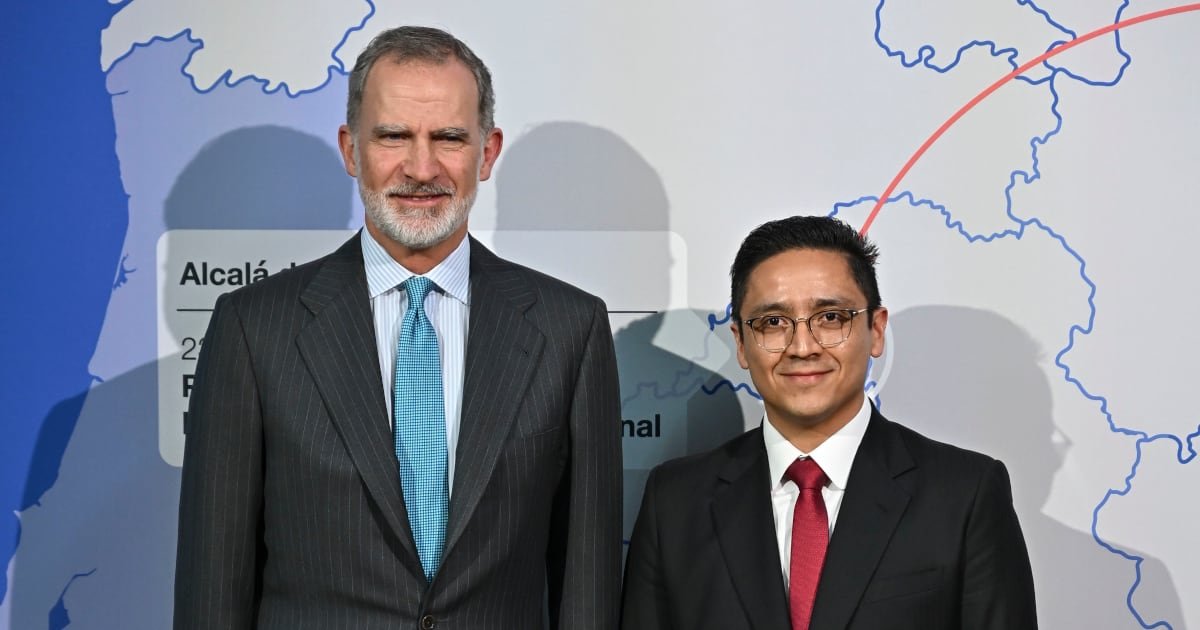
En Alcalá de Henares, Madrid,se dieron a conocer este jueves, en un acto presidido por el rey de España, Felipe VI, los ganadores del Premio Princesa de Girona Internacional en sus dos categorías: CreaEmpresa, otorgado a la argentina Mercedes Bidart, e Investigación, a Méndez Delgado.
Los Premios Princesa de Girona, impulsados por la Fundación Princesa de Girona, buscan impulsar el talento joven, de entre 16 y 35 años, y lo reconocen con una dotación de 20 mil euros y proyección internacional.
Estos galardones se reparten en los ámbitos de Arte, Empresa, Investigación y Social, y se entregarán el 14 de julio en el Gran Teatre Liceu de Barcelona, España.
Argentina’s decision to label Mexico’s Jalisco cartel as a terrorist group extends beyond one criminal network. It signals a regional shift toward militarized security, closer ties with Washington, and a risky blurring of crime, war, and sovereignty.
When Crime Is Rewritten as War
Argentina’s decision to label the Jalisco New Generation Cartel a “terrorist organisation” may seem symbolic, targeting a foreign criminal group. In fact, it signals a broader, troubling shift in Latin America. The region’s security language is evolving rapidly, stretching a term once reserved for political violence to include criminal violence, potentially reshaping law, diplomacy, and military action across the hemisphere.
The announcement came from President Javier Milei’s office, reflecting his well-known ideological alignment with Donald Trump and a government increasingly mirroring Washington’s approach. Officially, reports confirmed transnational illicit activities and links to other terrorist groups. Politically, Argentina aimed to align with countries that had made the same designation, primarily the United States. Until now, only the U.S. and Canada had done so. Argentina is the first Latin American country to adopt this label.
This matters because security policy language is never neutral. Labeling a cartel “terrorist” does more than condemn brutality; it changes the legal and moral framework for understanding violence. Cartels shift from criminal actors to wartime enemies, allowing military logic to take precedence.
Argentina’s move signals a deeper shift for Latin America. It is not just about Mexico or the CJNG but the emergence of a doctrine treating organized crime as a battlefield issue rather than a criminal justice matter. In a region with fragile institutions, abusive security forces, and a history of conflating force with control, this is a significant change.
Trump openly advanced this shift. His administration expanded the “terrorist” label beyond groups like al-Qaeda and ISIL to justify lethal actions against Latin American criminal groups. In the Caribbean Sea and the eastern Pacific Ocean, Trump authorized dozens of air strikes on vessels, killing about 163 people. He attacked a Venezuelan port and launched a military operation that led to Nicolás Maduro’s abduction and imprisonment. These actions were framed as efforts to disrupt drug smuggling but were described by legal experts as extrajudicial killings and sovereignty violations.
That is the context in which Argentina’s decision must be read. It is not a standalone classification. It is an entry point into a broader hemispheric security project.
The President of the Republic of Argentina, Javier Milei. EFE/ Juan Pablo Pino
The Washington Consensus of Force
For decades, Latin America has experienced various Washington consensuses on markets, privatization, and anti-communism. Now, a new consensus of force is emerging, driven by Trump’s hardline security stance and echoed by ideologically aligned regional governments.
At the “Shield of the Americas” summit in South Florida, Trump explicitly urged right-wing Latin American leaders to prioritize military action over law enforcement against cartels, calling them a “cancer” and insisting on military involvement. Milei attended. Argentina’s designation of the Jalisco cartel soon after aligns closely with this doctrine.
This matters because Latin America has heard similar promises before. Militarization is presented as urgent, wrapped in calls for strength, order, and national survival. It appeals to populations tired of extortion, trafficking, and impunity. Yet history shows that when armed forces address social and criminal crises, the results are rarely clean, often harming civilians, due process, and democratic accountability.
The “terrorist” label heightens this risk by simplifying already violent security environments. If a cartel is equated with groups like Hamas or Iran’s Quds Force, as Milei’s office suggested, pressure increases to use exceptional methods. Detention, surveillance, intelligence sharing, targeted killings, cross-border actions, and relaxed engagement rules become easier to justify politically. What was once a prosecutorial issue becomes a military one.
This is especially risky for Latin America, where sovereignty has often been unevenly respected. Trump’s actions across borders, justified by anti-cartel and anti-smuggling goals, should alarm governments beyond Argentina. While leaders aligned with Washington currently support this doctrine, it may be used in ways that are beyond their control in the future.
There is a deeper irony. Latin American states are often weakest where cartels are strongest—in policing, courts, prisons, financial tracking, local governance, and social investment. Rebranding cartels as terrorists may appear serious, but it leaves these weaknesses unaddressed. A military approach can be emotionally appealing and politically useful because it avoids tackling the slow institutional decay behind organized crime, offering only the promise of punishment.
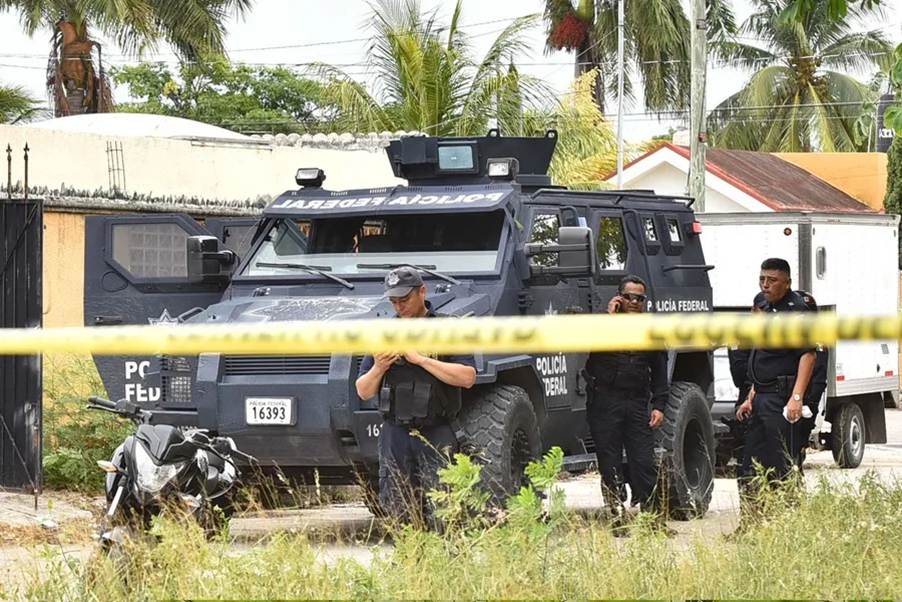
Mexican Federal Police during an operation against the Jalisco New Generation Cartel (CJNG). EFE/Alonso Cupul
What Argentina Is Really Signaling to the Region
Argentina’s move also reveals the political economy of alignment. Milei’s relationship with Trump is strategic and transactional, not just ideological. Trump supported Milei by promoting Argentine beef imports and offering a currency swap to strengthen the peso. The notes highlight that this economic support coincided with Argentina’s midterm election and that Trump linked continued backing to the election outcome. Security alignment is thus unfolding alongside economic incentives.
That is another warning for Latin America. Under this emerging order, support. This is another warning for Latin America. Under this emerging order, Washington’s support may increasingly carry expectations beyond trade and diplomacy, including security posture and political language. Designating a cartel as terrorist is thus not just adopting a label but signaling geopolitical loyalty. The New Generation Cartel is one of the most prominent criminal organisations in Mexico, with connections estimated in Guatemala, Colombia, and the United States. Once one Latin American country accepts the terrorism frame, others may follow, especially those governed by leaders eager to display toughness or closeness to Washington. The result could be a continent more willing to describe criminal violence in war terms and more willing to tolerate foreign-backed military solutions.
This would mark a serious break with traditional views of democracy and law in the region. Latin America has the right to confront cartels effectively; no honest politician denies their destruction. But the question is how. If the answer is an elastic terrorism doctrine imported from Washington and adapted by local strongmen, the region may face more soldiers on the streets, expanded executive power, increased cross-border pressure, and fewer protections against abuse.
Argentina’s designation of the Jalisco cartel is not a narrow security measure but a political signal. It shows that an influential regional government is willing to blur the lines between organized crime and terrorism, policing and war, alignment and dependence. Latin America should pay close attention. Once states adopt this language, they rarely use it only once.
News Americas, NEW YORK, NY, Fri. Mar. 27, 2026: Have you noticed how people today prefer faster and simpler ways to confirm their identity without going through long steps? In many parts of Argentina and Mexico, people are starting to look at new digital options that make daily tasks feel smoother and more direct.
Across Latin America, including Argentina and Mexico, there is a growing interest in identity technology that feels easy to use and practical. One such example is the Orb, a biometric system introduced by World.org, which is slowly becoming part of everyday conversations in different communities.
How Digital Habits Are Growing In Argentina And Mexico
People in Argentina and Mexico are already comfortable using mobile apps for payments, communication, and services. This comfort makes it easier for new technology to become part of daily life.
People Are Already Used To Digital Systems
From paying bills online to using digital wallets, many daily activities already happen through mobile devices. Because of this, people do not feel confused when they hear about new tools related to identity.
When something feels simple and useful, people are naturally open to trying it. They are not looking for complex systems, just something that fits into what they are already doing.
A Regional Shift Across Latin America
This is not limited to one or two cities. In different parts of Latin America, people are becoming more aware of digital identity tools. As information spreads, interest continues to grow in a steady way.
This shared movement across the region shows how people are slowly becoming more comfortable with new ways of managing identity.
What The Orb Technology Is And Why It Feels Useful
World.org has introduced a system that uses biometric verification to confirm identity in a simple way. The goal is to provide a digital identity that people can use when needed.
A Simple Way To Verify Identity
The Orb works by scanning and confirming a person’s identity through a quick process. Once completed, it allows individuals to have a digital identity that can be used in different situations.
People find this helpful because it reduces repeated steps and makes the process more direct. It saves time and avoids small everyday hassles.
Easy To Understand For Everyday Users
At first, some people think new technology might be difficult. But once they see how it works, it feels clear and easy to follow.
This clarity helps people feel more relaxed and open to trying it. As more individuals understand it, the interest naturally increases.
Why More People Are Starting To Use It
The increase in usage is happening step by step. People are not rushing, but they are showing interest as they learn more.
Word Of Mouth Is Helping Growth
In many communities, people trust what others share. When someone talks about a good experience, it creates curiosity.
Friends, family, and local groups play a big role in spreading awareness. This makes others feel more confident about trying it.
It Fits Into Daily Life Easily
People do not need to make big changes in their routine. The technology works alongside what they already use, like smartphones and apps.
Because of this, it feels natural and comfortable rather than something new or difficult.
Growing Use In Cities And Beyond
Cities like Buenos Aires and Mexico City are seeing early interest, but the trend is slowly reaching other areas as well.
Urban Areas Lead The Way
In busy cities, people prefer tools that help save time. This technology matches that need, which is why many early users come from urban areas.
Students and working professionals are often among the first to try new digital tools.
Expanding Across Communities In Latin America
As awareness spreads, more communities across Latin America are becoming familiar with this technology. It is slowly becoming part of discussions in different regions.
This steady spread shows that the interest is not limited to one place but is growing across multiple areas.
A Positive Shift Towards Digital Identity
The use of digital identity tools is increasing because people want simple and reliable ways to manage their information.
Making Daily Tasks Easier
From accessing services to confirming identity, people prefer systems that reduce effort. This technology supports that need by offering a quicker and more direct process.
It helps remove small delays and makes everyday interactions feel smoother.
Building Confidence Over Time
As more people use it and share their experiences, trust continues to grow. This creates a positive cycle where more individuals feel ready to try it.
Final Thoughts
In Argentina and Mexico, along with other parts of Latin America, the growing use of World.org’s Orb technology shows how people are moving towards simple and practical digital solutions. The change is happening in a calm and steady way, with more individuals becoming comfortable as they see how it fits into their daily life.
Help Sustain Independent Caribbean Diaspora Media – Support NewsAmericas
Byfield’s route into management began in non-league football with spells at Redditch United, Stratford Town, Walsall Wood and Alvechurch.
He said the relatively sheltered environment of the lower leagues shaped his identity as a coach.
“I had to train probably once a week on a third of a pitch, so you couldn’t even get your ideas across,” he said.
“But it helped me, shaped me. I was allowed to make mistakes and it wouldn’t be publicised. And it’s a big thing.
“What came out of that was I knew exactly how I wanted to play. I knew exactly what kind of players I wanted in my team.
“I knew all the fundamentals that were needed, the non-negotiables that would be implemented at a football club and it definitely helps with being a first-team coach.”
Currently, there are no black managers in the National League, following Sam Cox’s dismissal by Wealdstone in February.
Before former Walsall striker Byfield joined the coaching staff of his old club in the summer of 2023, he had a brief exposure of managing in the EFL, through a two-game interim spell at Crawley.
He said his time in non-league helped deal with the insecurity of that situation.
“Being an assistant manager and interim, you’ve got to get your message across as simple as possible in the best possible way,” he said.
“You’ve got to challenge the players, you’ve got to get them to adopt a winning mentality.
“You have to articulate the right way because the days of screaming at them and talking to them in a disgusting way are out the window, we have to keep encouraging them and challenging them on what’s right and what’s wrong.”
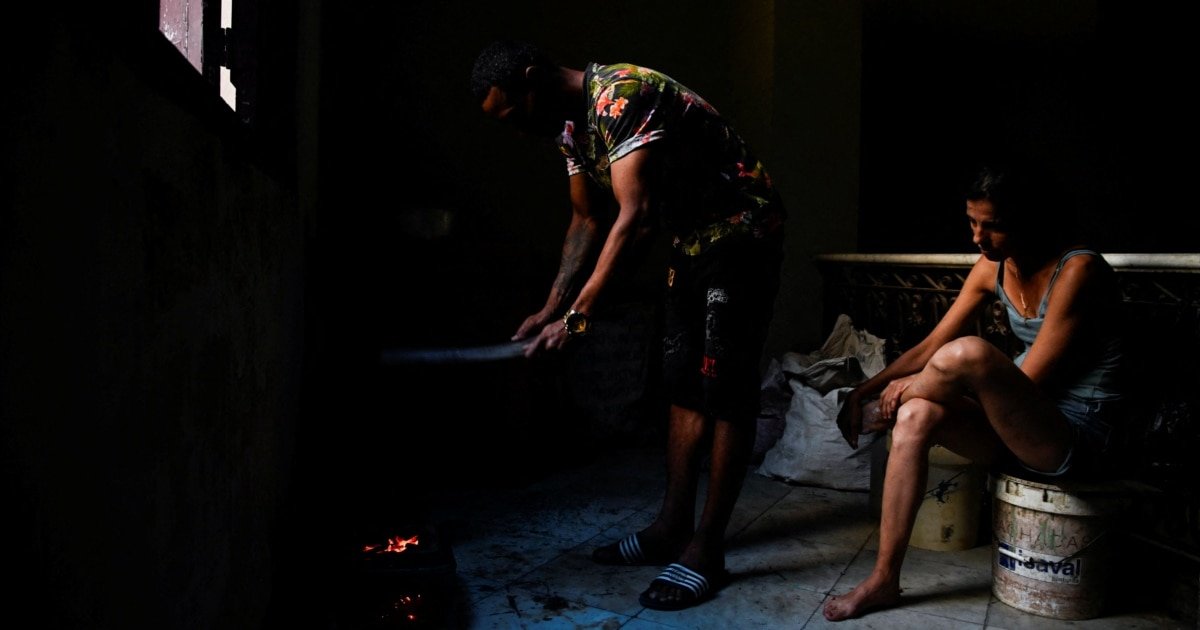
La Comisión Interamericana de Derechos Humanos (CIDH) y su Relatoría Especial sobre Derechos Económicos, Sociales, Culturales y Ambientales (REDESCA) avisaron en un comunicado sobre el agravamiento de la crisis humanitaria en Cuba.
“Este pronunciamiento es muy importante, especialmente en el contexto actual cubano, marcado por una grave crisis por el colapso de casi todos los sectores socioeconómicos del país”, precisó Yaxis Cires, director de Estrategia del Observatorio Cubano de Derechos Humanos (OCDH), con sede en España.
Las entidades regionales advirtieron, esta semana, que la insuficiencia crítica de alimentos, comida y combustible, complica duramente la atención médica, golpeada también por la escasez de insumos.
“Esta situación afecta severamente a grupos vulnerables y se produce en un contexto de cortes de electricidad prolongados, violaciones masivas de derechos humanos y falta de institucionalidad democrática”, asevera la nota de prensa.
La crisis en la provisión de servicios básicos afecta desmedidamente a los sectores más vulnerables de la sociedad como las personas privadas de libertad, las embarazadas, los niños, adolescentes y adultos mayores, a la vez que profundiza las brechas de desigualdad en la sociedad.
La organización interamericana señala que la persistente escalada en los precios de los alimentos, junto con los largos y frecuentes apagones en todo el país, continúan deteriorando aceleradamente la vida de la población.
La Comisión Interamericana de Derechos Humanos (CIDH) y su Relatoría Especial advierten que esta emergencia humanitaria se desarrolla en un entorno de graves vulneraciones a los derechos humanos y de profundos problemas estructurales.
“La Comisión viene alertando a la comunidad internacional sobre el impacto negativo en los derechos humanos de ese modelo político de Estado respecto de dos aspectos principales: Por un lado, mediante la profundización de la represión por parte del Estado con el fin de amedrentar y reprimir sistemáticamente a quienes expresan desacuerdo con el gobierno o son considerados opositores/disidentes del Partido Comunista. Por otro lado, se impide la implementación de las reformas necesarias para restablecer la separación e independencia de los poderes públicos, combatir la impunidad en casos de violaciones de derechos humanos y mejorar las condiciones de vida”, indica el comunicado.
La CIDH anota que Cuba atraviesa uno de los momentos más críticos de su historia reciente en materia de represión política, con cifras sin precedentes de detenciones arbitrarias y una persecución sistemática dirigida a silenciar las demandas de libertad y democracia.
Al respecto, Cires, destacó que resulta patente “que no solo es un régimen que reprime, sino también es un régimen que empobrece a pesar de lo que ha vendido la propaganda durante muchos años hacia el exterior de que Cuba es especie de un paraíso de los derechos sociales”.
“Sabemos que todo eso es mentira y que todo eso se está derrumbando en este momento. Y queda claro también a partir del comunicado que, de la situación de pobreza extrema en que vive la población cubana, solo se sale con cambios políticos hacia una democracia, hacia un régimen de respeto a los derechos humanos y a las libertades de las personas”, agregó.
El directivo del Observatorio agrega que todo ese relato ha quedado desmentido por la realidad y hoy se desmorona de manera evidente. El propio contenido del comunicado deja en claro que la extrema pobreza que enfrenta la población cubana no tiene salida sin transformaciones políticas profundas, orientadas a una transición democrática, al respeto efectivo de los derechos humanos y a la garantía de las libertades fundamentales.
El organismo regional subraya que la crisis humanitaria no puede entenderse de manera aislada, sino como una consecuencia directa de un sistema político que limita la capacidad de la población para organizarse, exigir rendición de cuentas y participar en las decisiones que afectan su bienestar.
Ante este panorama, la CIDH y la REDESCA recalcan que la responsabilidad principal por el bienestar del pueblo cubano recae en el propio Estado, cuyas políticas económicas restrictivas y su modelo de partido único constituyen factores estructurales de la crisis.
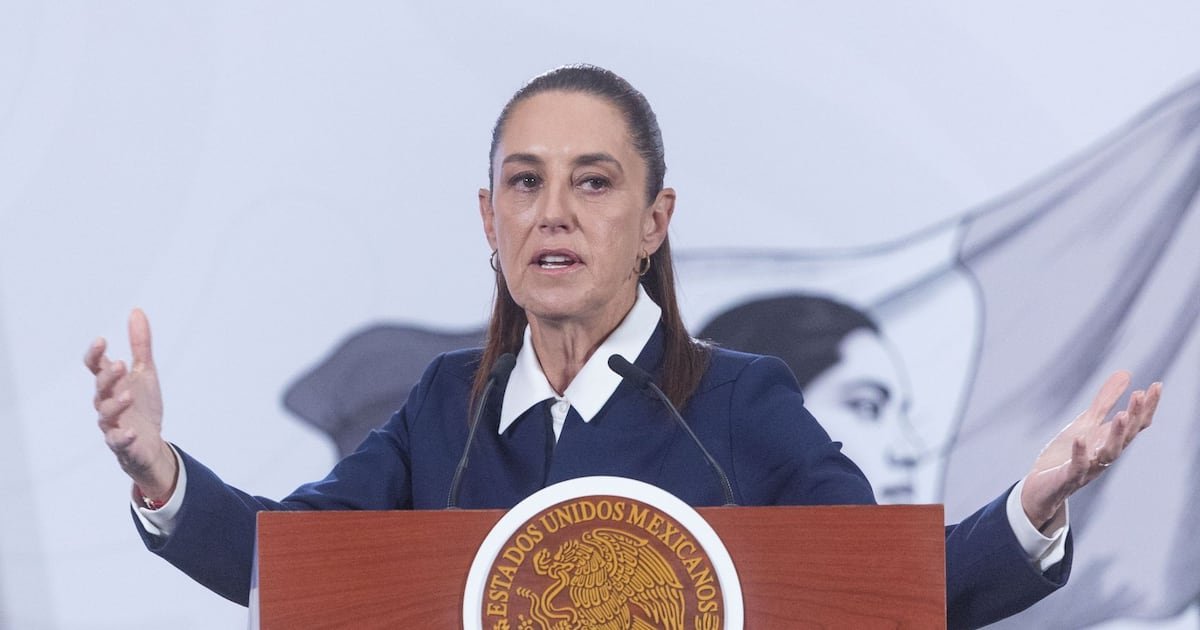
¿Cuál es el pronóstico de Sheinbaum para el partido México-Portugal?
Al hablar de la inauguración del Estadio Banorte, la presidenta Sheinbaum adelantó cuál es su pronóstico para el partido México-Portugal.
“Tiene que ganar la Selección Mexicana”, dijo la mandataria quien también lamentó que Cristiano Ronaldo no esté en México para dicho juego.
Sheinbaum dice que playas están limpias a pesar de derrame en el Golfo
Sobre el derrame en el Golfo de México, la presidenta aseguró que las playas ya no están sucias y no hay mayor riesgo.
“En estos momentos las playas están limpias, porque se limpiaron. Hubo un proceso de limpieza y se trabaja con pescadores y personas afectadas para resarcir el daño”, explicó la mandataria.
La presidenta Sheinbaum confirmó que la Secretaría de Marina (Semar) investiga qué barco ocasionó el derramen en el Golfo.
“Hay un proceso de investigación y contención en Cantarel. Se trabaja en un sistema de alertamiento para evitar derrames de este tipo”, añadió.
¿Qué sigue en el caso de Ceci Flores? Este es el protocolo de la FGR tras el hallazgo de restos
El subsecretario de Derechos Humanos, Población y Migración, Arturo Medina, explicó cuáles son los pasos a seguir en el caso como el de la madre buscadora, Ceci Flores.
“Cuando ocurre el hallazgo de un cuerpo, la Fiscalía General de la República a través de peritos analiza restos óseos con pruebas de ADN. Cuando hay coincidencias y se confirma la identidad hay protocolos para informar a la familia”
Hace unos días, Ceci Flores localizó restos que serían de su hijo Marco Antonio Sauceda Rocha, desaparecido en 2019 en Sonora.
La madre buscadora solicitó las pruebas ante la FGR, pero también agregó que ella ya tiene la certeza de que se trata de su hijo.
¿Cuál es la cifra oficial de personas desaparecidas en México?
Marcela Figueroa, titular del secretariado ejecutivo del Sistema Nacional de Seguridad Pública, informó que la cifra de personas que continúan como desaparecidas es de 132 mil 534.
De dicho total, de 2006 a 2026 al menos 130 mil 178 se mantienen con estatus como desaparecido y se dividen tres grupos que incluyen datos insuficientes para la búsqueda, con actividades y registros después de su fecha de desaparición y sin actividad a la fecha.
El 78 por ciento son hombres de 30 a 59 años y 22 por ciento son mujeres a partir de 18 años.
Desde octubre de 2024 han sido localizadas 31 mil 946 personas, según cifras oficiales. Del total del registro, 240 mil 211 personas fueron localizadas con vida.
Claudia Sheinbaum: Lo último de sus conferencias ‘mañaneras’ esta semana
La presidenta Claudia Sheinbaum reprochó que el Partido del Trabajo no acompañara por completo el ‘Plan B’ de la reforma electoral y presionara para eliminar el artículo sobre la revocación de mandato.
La presidenta confirmó que el próximo lunes 30 de marzo se reunirá con el presidente de la FIFA, Gianni Infantino, para tratar detalles sobre la organización del Mundial 2026.
La presidenta Sheinbaum dijo no tener información sobre la detención de Bertha Olga Gómez Fong, expresidenta del DIF estatal de Chihuahua y esposa del exgobernador César Duarte.
Sheinbaum evalúa medidas para contener la inflación ante el aumento en el precio del jitomate, limón y pollo, a través del Paquete Contra la Inflación y la Carestía (Pacic).
Marcelo Ebrard, secretario de Economía, presentó un programa para la renovación devehículos pesados a nivel nacional, mediante incentivos fiscales y esquemas de garantías. El objetivo es facilitar el acceso a beneficios fiscales y reducir el impacto en la compra de nuevas unidades en la industria del autotransporte.
En la mañanera anterior, la presidenta Claudia Sheinbaum, junto a funcionarios de la Secretaría de Relaciones Exteriores (SRE), informaron sobre los connacionales detenidos en Estados Unidos y la atención de las personas deportadas.