The United States is preparing options for a possible military operation against Cuba, according to a report today by daily newspaper USA Today.
Two sources reportedly familiar with the matter told the paper that the Pentagon is increasing its preparedness in case U.S. President Donald Trump orders the military to intervene on the island, a possibility which Trump and various other high-ranking figures in his administration have mooted.
In response, the Cuban government said that while it did not want Washington to attack, it was prepared for any possible intervention.
This year, relations between the two ideological adversaries have become more tense than at any other point since the end of the Cold War, with the U.S. removing Cuba’s closest political ally Nicolás Maduro from power in Venezuela and imposing a complete blockade on non-private fuel imports during the first three months of 2026.
However, the commencement of high-level diplomatic talks between the two nations and the recent arrival of a Russian oil tanker in Cuba – which Trump said he had “no problem” with – suggested that mutual desire for a peaceful resolution to tensions was growing.
But earlier this week, Trump said that the U.S. “may stop by Cuba” after the conflict with Iran reaches a resolution, which may be an indication that ongoing diplomatic talks between Cuba and the U.S. that seek to de-escalate tensions are progressing poorly.
Nevertheless, Cuban President Díaz-Canel repeatedly expressed his desire for peace with the United States in his first interview with U.S. media last Sunday, though he warned that he and the Cuban population would be willing to fight to defend the island from any aggression by Washington.
In January, Havana ordered its forces to prepare for war and has hosted countrywide defensive drills to prepare for a potential invasion from the north, yet its ability to defend against a Pentagon-led operation is unknown.
Jennifer Kavanagh, a senior fellow and director of military analysis at foreign policy think tank Defense Priorities, spoke to Latin America Reports about the likelihood of a U.S. military operation in Cuba.
She speculated that, although the leak to USA Today was likely a negotiating tactic intended to pressure the Cuban government into making greater concessions in negotiations, “there is planning going on for such a [military] operation … Rubio has made his support for regime change in Cuba clear. Trump, too, would likely welcome a distraction from Iran that he can sell as a success”.
The expert also explained what a potential intervention might look like: “I doubt they would use exiles, as this has failed in the past. A Maduro-style approach is possible. A more complete takeover of the island which is small and weak is an alternative”.
Kavanagh also weighed in on the chances of such an operation’s success. “[Although]
defenders always have an advantage, I imagine the United States could overpower Cuba’s defenses. Holding the island for a sustained period might be more challenging”.
The U.S. has intervened several times in Cuba, which is situated approximately 90 miles off the coast of Cuba. In the early 1900s, the U.S. invaded the island on three occasions to protect American economic interests.
In 1961, after the triumph of the Cuban Revolution, Washington also backed a failed invasion attempt of the island by anti-communist Cuban exiles, which came to be known as the Bay of Pigs.
In a rally today, Díaz-Canel drew parallels between the latest threats and the infamous Cold War operation.
“The moment is extremely challenging and calls upon us once again, as on April 16, 1961, to be ready to confront serious threats, including military aggression. We do not want it, but it is our duty to prepare to avoid it and, if it becomes inevitable, to defeat it.”
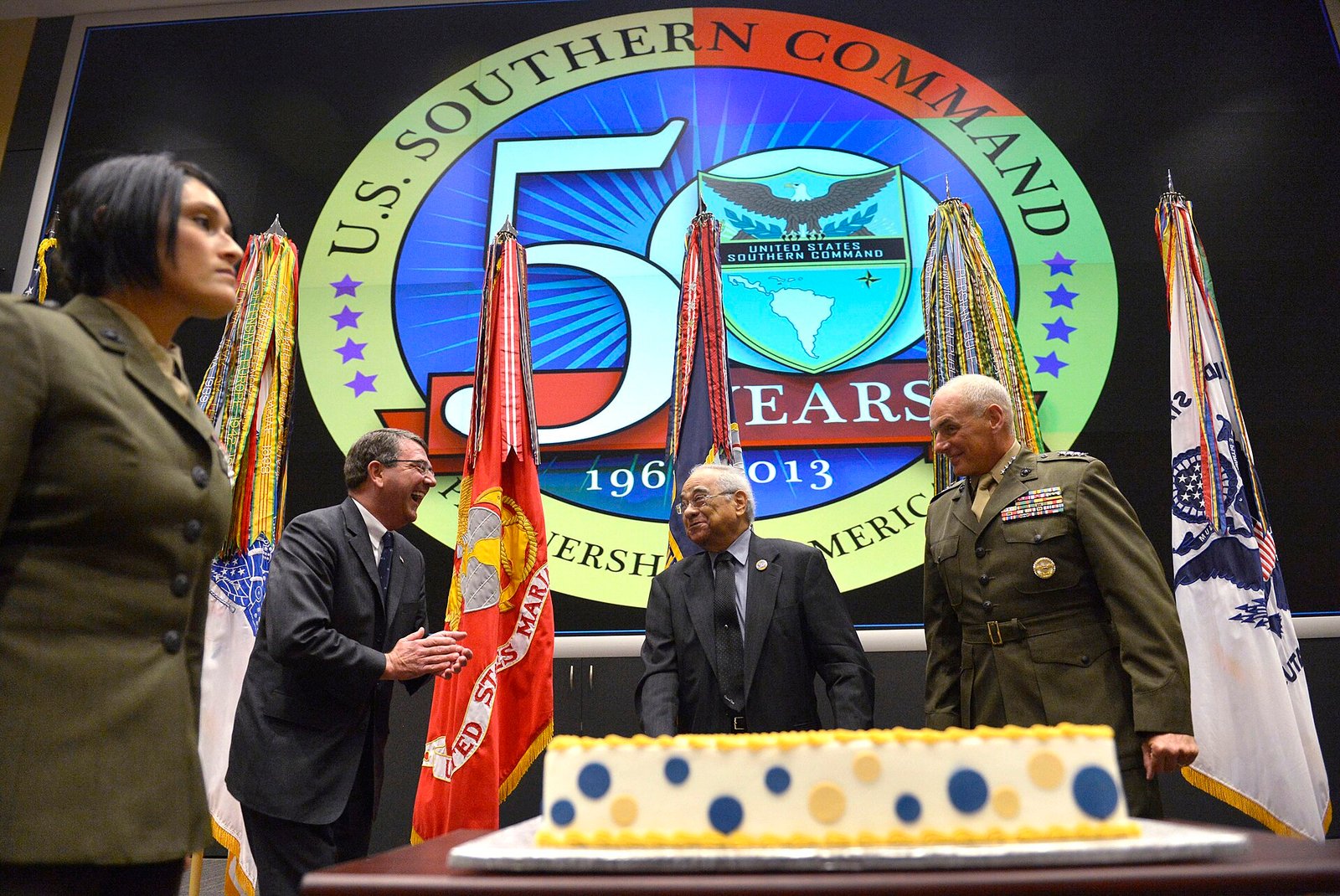
Featured Image: The celebration of the 50th anniversary of the creation of the United States Southern Command (USSOUTHCOM) in Miami. USSOUTHCOM is the command of the U.S. military that would likely be responsible for overseeing any military operation against Cuba.
Image Credit: Department of Defense via Wikimedia Commons License: Creative Commons Licenses