Author: americalatinanews.com

  • Invitamos a un hombre a casa para Navidad y se quedó con nosotros 45 años

    Invitamos a un hombre a casa para Navidad y se quedó con nosotros 45 años


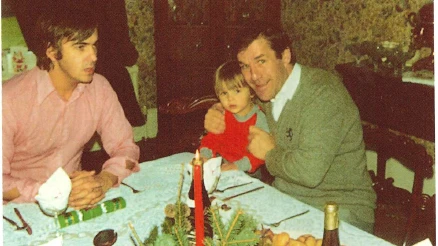
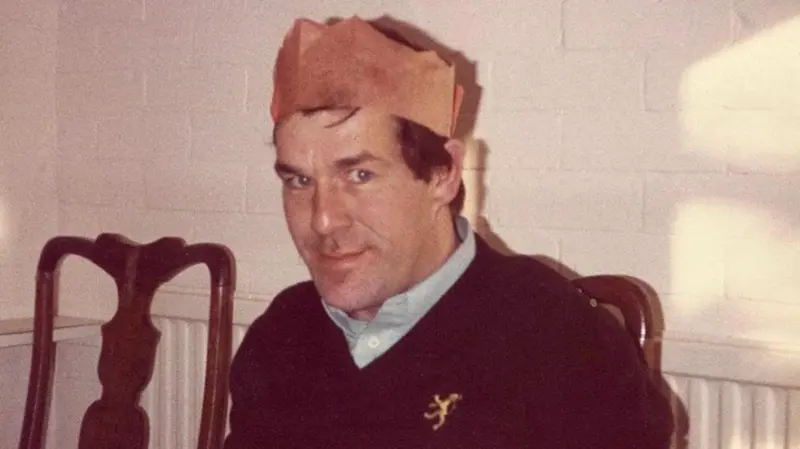
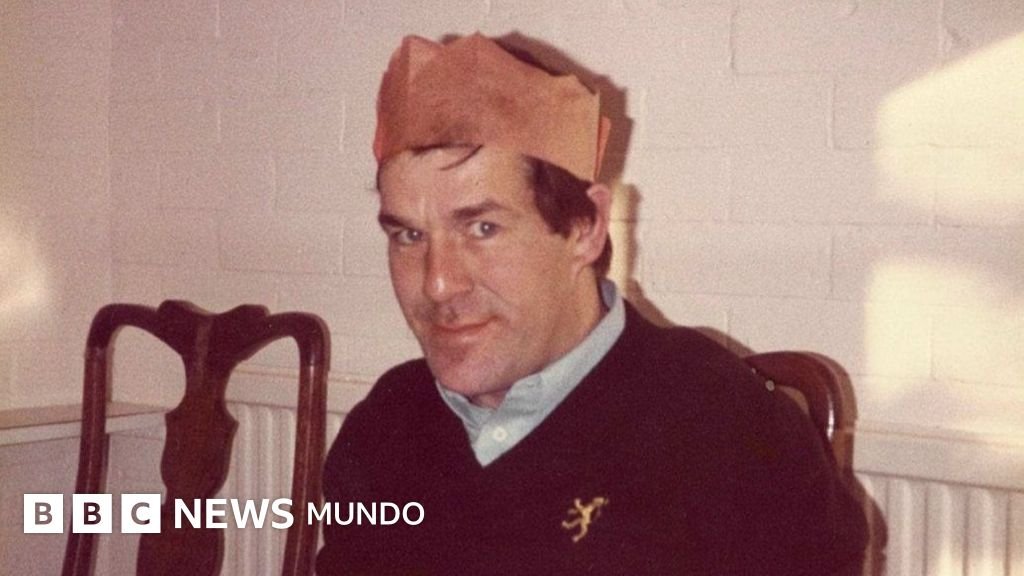
    Fotografía de archivo de tres fotografías. En la parte inferior derecha se ve a Ronnie Lockwood con un gorro de papel de galleta navideña, mientras que en la parte inferior izquierda aparece Ronnie sosteniendo a Lloyd, hijo de Rob y Dianne Parson, en la mesa durante la celebración de Navidad.

    La Navidad suele ser un periodo de buena voluntad y un acto de generosidad de una joven pareja británica hace 50 años cambió sus vidas para siempre.

    El 23 de diciembre de 1975, Rob Parsons y su esposa Dianne se preparaban para celebrar la Navidad en su hogar en Cardiff, en Gales, Reino Unido, cuando alguien tocó la puerta de su casa.

    En el umbral se encontraba un hombre que sostenía, con la mano derecha, una bolsa de basura con sus pertenencias y, con la izquierda, un pollo congelado.

    Rob estudió su rostro y lo identificó con cierta dificultad: era Ronnie Lockwood, alguien a quien ocasionalmente había visto durante su infancia en la escuela dominical. Recuerda que le habían dicho que debía ser amable con él, porque era “un poco diferente”.

    “Le pregunté: ‘Ronnie, ¿y ese pollo?’”.


    Source link

  • Football Daily – Manchester United’s Fernandes blow & player discipline at Christmas

    Football Daily – Manchester United’s Fernandes blow & player discipline at Christmas


    Available for 29 days

    Katie Smith is joined by former West Ham and Aston Villa midfielder Nigel Reo-Coker and Brighton midfielder Fran Kirby to look ahead to the busy festive football period.

    They discuss what it’s like to be a footballer at Christmas time and whether it’s possible to enjoy the holidays while also getting ready for matches.

    Boxing Day’s only Premier League match this year sees Manchester United host Newcastle, the panel discuss how much Ruben Amorim’s side will miss Bruno Fernandes during his spell out injured.

    Coventry City look to take another step towards promotion to the top flight when they host Swansea on Boxing Day and Sky Blues fan Katie Stafford discusses what life is like at the moment.

    The panel also chat about West Ham’s struggles and the WSL headlines going into the winter break.

    1:00 – Nigel and Fran’s Christmas traditions
    2:30 – Player management at Christmas
    4:10 – Nigel on players being weighed after Christmas Day
    7:30 – Festive training plans
    11:00 – How much will Man Utd miss Bruno Fernandes?
    17:30 – Opportunity for Kobbie Mainoo
    19:30 – Newcastle focus
    24:00 – Coventry City fan Katie Stafford
    30:30 – Fran Kirby on WSL
    35:00 – Nigel on West Ham
    37:40 – Nigel and Fran’s Christmas wishes

    Programme Website


    Source link

  • Chile’s Puma Boom When Patagonia’s Ghost Cat Finally Shows Itself

    Chile’s Puma Boom When Patagonia’s Ghost Cat Finally Shows Itself


    In Chile, puma sightings in Torres del Paine National Park are no longer a lottery ticket. Conservation, tracking guides and booming Patagonia ecotourism have pulled the cougar from myth into view, rewriting local economies and our relationship with wild predators.

    The “Ghost” Cat Meets Chile’s Frontier

    From Canada’s boreal forests and the Arctic tundra to the steppes of southern Chile, the puma—also known as the cougar and mountain lion—spans the widest distribution of any terrestrial mammal in the New World, BBC Wildlife reports. The magazine notes it may contend with the leopard for the tag “fourth largest cat,” while still yielding in size to the jaguar, lion, and tiger. None of that guarantees visibility. For decades, the puma felt more heard than seen, more trace than photograph.

    For years, rumor filled the gap. BBC Wildlife wrote that, until recently, “ghost” was a more fitting name because confirmed sightings were extremely rare. In Patagonia, that scarcity has never been only ecological; it is tied to fear, livelihoods, and the hard calculus of living beside a predator. What has changed in Chile’s Torres del Paine National Park is not the puma’s instincts but the human response: conservation efforts, and a tourism economy that rewards patience, have pulled the cat out of the shadows. Scholars in Biological Conservation have warned that wildlife tourism only protects what communities can afford to keep, a point that resonates in Patagonia’s patchwork of work and wilderness.

    Trackers, Triangles, And The Language Of Guanacos

    In BBC Wildlife reporting and interviews, the puma is described as a specialist in stealth, a dun body built to dissolve into Patagonia’s open, broken terrain. Yet the landscape can fool the impatient. Pumas are largely solitary and hold huge home ranges, so they remain sparsely distributed even where habitat is excellent. Trackers narrow the odds by reading what most visitors miss—tracks, wind, and the way a ridge can hide an entire animal until it decides to move.

    Time and place matter, too. BBC Wildlife notes the cats are mainly active at dawn and dusk, so the day begins early and ends late. In Torres del Paine National Park, tracking often concentrates along the eastern border, within a triangle formed by Laguna Armaga, Sarmiento Lake, and Nordenskjöld Lake. The surest signals, though, come from prey. BBC Wildlife emphasizes watching guanacos. Herds often post a “sentinel” on a vantage point; when it spots a puma, it blasts a high-pitched bleat that blows cover, hinders the hunt, and points humans to the cat.


    Facebook / Defendamos Patagonia

    Inside The Brutal Math of One in Five

    Even with that alarm system, hunting is hard. BBC Wildlife reports that roughly one in five hunts succeed. Guanacos are larger and faster, and they can defend themselves with a vicious kick. When the puma commits, the mechanics are precise: it uses terrain as cover, advances to within 15–20m—about 50–65 feet—then erupts in a lightning sprint to catch and overpower its quarry, finishing with a bite to the head or neck. A guanaco can weigh more than 100kg, roughly 220 pounds, so it won’t be eaten at once; leftovers are carefully cached.

    That cache is where the story stops being only about two animals. BBC Wildlife summarizes research showing pumas, alongside other solitary cats, have exceptionally high kill rates among carnivores, capable of catching twice the amount of food they need—surplus that works as insurance when a meal is stolen by rivals. Ecologists have explored kill rates, caching, and competition in journals such as The Journal of Wildlife Management and Journal of Animal Ecology. The ripple is visible in the scavengers’ circuit, benefiting the culpeo fox and the Andean condor.

    BBC Wildlife has told other puma stories—the “celebrity” cat of the Hollywood Hills for 10 years, and a fraught household tale in the Himalayas—but Chile adds a Latin American edge. Coexistence is a negotiation with history and inequality, with who bears risk and who earns reward. In Torres del Paine National Park, the “ghost” now walks in daylight, and that visibility is both a promise and a test: protection has to be durable, not just profitable. It also asks who is invited into the park’s new economy.

    Also Read:
    Uruguay’s Quiet Luxury Turns A Long Weekend Into Soft Power


    Source link

  • FPL tips: How to save your Fantasy Premier League season

    FPL tips: How to save your Fantasy Premier League season


    Manchester United are among the highest scoring teams in recent gameweeks and only rivals Manchester City have a higher expected goals (xG) this season.

    No European football – and therefore fewer midweek fixtures – is seemingly helping their Premier League form and they have some great games on the horizon.

    Bruno Fernandes’ injury will put many FPL managers off investment in United’s attack, especially with Bryan Mbeumo and Amad Diallo at the Africa Cup of Nations.

    However, Matheus Cunha (£8m) is an excellent pick and leads the way for shots in recent games.

    The Brazilian has picked up goal involvements in three consecutive matches since returning from injury and is my top replacement for Fernandes heading into this congested festive period.

    He faces his former employers Wolves in gameweek 19 which is a really juicy match-up.

    And Fernandes should return within three to four gameweeks. Despite being the joint-top-scoring midfielder, he was less than 30% owned before getting injured – Holly


    Source link

  • Venezuela Grounded: How Sanctions Turn Holiday Flights into Heartbreak Economics


    Venezuela’s skies are shrinking suddenly as U.S. pressure on Nicolás Maduro severs routes, spikes fares, and strands families from Madrid to Caracas. From canceled Christmas reunions to missing medicines, aviation becomes a frontline where geopolitics lands hardest on ordinary passengers.

    When Airspace Becomes Policy

    In an original report for The Wall Street Journal, Kejal Vyas frames flight chaos as the companion to louder headlines about regime change. A nation of 28 million is down to an aging fleet of about 20 commercial aircraft, operated by local airlines that rarely appear on booking engines, according to IATA. Travel agents told Vyas that carriers are rushing to reroute passengers through neighboring countries, charging steep fares for going the long way around. For families who measure love in visits and medication, that detour lands like a tax on belonging.
    The break became official on Nov. 29, when President Trump said the airspace should be considered closed after the Federal Aviation Administration warned of “a potentially hazardous situation” amid a military buildup near Venezuela, Vyas reported. Soon, more than a dozen international carriers suspended service, and a near-collision between a civilian jet and a U.S. military plane near Venezuelan waters turned fear into policy. Peter Cerdá of IATA told Vyas that airlines dread an aircraft being attacked after it is “mistaken for a military carrier.” “It’s always the passengers…who pay the biggest price,” said Rodolfo Ruiz of Ruiz & Partners.


    Maiquetía International Airport – Wilfredor / Wikimedia Commons – CC BY-SA 3.0

    Low-Battery Mode Abroad

    In Madrid, the geopolitical becomes domestic. Reynaldo Goitía, the frontman of Tomates Fritos, was stranded after his Dec. 5 return flight was canceled. Better known as Boston Rex, he told Kejal Vyas he would not spend the earnings from a tour for Spain’s Venezuelan diaspora community. So he ate mostly fast food and slept on the floor of a friend’s office, on a used mattress that cost 80 euros—about $94—washing in a bathroom sink. “We had to put ourselves in savings mode—a bit like putting your phone on low-battery mode,” he said. He later took a costly detour through Barbados to reach Lechería, Venezuela, to reunite with his daughter in time for Christmas. “You can’t do anything about it,” he said. “You just feel powerless.”
    The same policy reverberates through quieter households. Alejandra Acuña, a Venezuelan marketing agent in Spain, told The Wall Street Journal she bought tickets months earlier to Caracas, hoping to introduce her partner to the homeland she left a decade ago. Her cousins planned to fly from Colombia with costly medications for an elderly relative with Parkinson’s disease. Now the trip is off, and deposits for Margarita Island are lost. “It’s unfortunate,” she said; her parents concluded it was probably better she did not come. Public-health debates in The Lancet have long noted how disruptions to supply chains can turn medicine into a casualty of conflict.

    From Concorde Glamour to Twenty Aging Jets

    It wasn’t always like this. In the 1970s, Caracas was one of the first destinations for Air France’s Concorde, a stamp of cosmopolitan ambition. Peter Cerdá told Vyas that from the 1990s through the mid-2010s, Venezuela was among the world’s highest-yielding aviation markets, buoyed by an oil boom. Hugo Chávez subsidized travel, and an overvalued bolívar made Venezuelans big spenders in Miami and Paris. After Maduro took office in 2013, currency controls blocked companies from repatriating earnings, forcing airlines to write off billions; carriers from Delta to Germany’s Lufthansa left. The sanctioned state airline Conviasa clung to a shrinking map, including routes to Moscow, Damascus, and Tehran.
    IATA data cited by Vyas show weekly traffic collapsing from about 15,000 passengers to 1,000 to 2,000, while cargo—pharmaceutical products, perishables, aircraft parts—also get stranded. On Dec. 12, a JetBlue flight from Curaçao (40 miles north of Venezuela) to New York reported a near midair collision with a U.S. Air Force refueling jet. In Caracas, Diosdado Cabello spat, “You guys can keep your planes, and we’ll keep our dignity.” Gregory Barrios in Aragua estimated 40,000 December plans upended, calling it “a very worrisome dynamic.” Researchers in the Journal of Transport Geography argue that connectivity is economic infrastructure; when flights vanish, inequality hardens, and distance becomes another form of debt.

    Also Read:
    Latin America 2026 Economic Forecast Why Lithium Nearshoring and Centrist Politics Converge


    Source link

  • John Robertson: Former Scotland, Aston Villa and Nottingham Forest winger dies aged 72

    John Robertson: Former Scotland, Aston Villa and Nottingham Forest winger dies aged 72


    Born in the Viewpark area of North Lanarkshire, Robertson played for Drumchapel Amateurs and Scotland at youth level before joining Forest in May 1970, making his debut later that year.

    Having been on the transfer list before Clough’s arrival in 1975, he became a key player under the iconic manager, appearing in 243 consecutive games between December 1976 and December 1980.

    Robertson scored the winner from the penalty spot in the 1978 League Cup final replay win over Liverpool.

    He was sold to Derby in 1983 for a constested transfer fee, a move which soured the relationship between Clough and his former assistant, Peter Taylor.

    An early injury hampered Robertson’s progress at County and, despite rejoining Forest in 1985, he never again captured the same form and moved on to non-league Corby Town, Stamford and then Grantham Town.

    At Forest, he also won the First and Second Division titles, the Uefa Super Cup, two Football League Cups, the 1978 FA Charity Shield and the Anglo-Scottish Cup.

    And in 2015, Robertson topped a poll by the Nottingham Post of favourite all-time Forest players.

    As O’Neill’s assistant, Robertson helped Wycombe win promotion from the Football Conference and Third Division, and promotion to the top tier with Leicester, as well as the League Cup.

    An even more successful spell with Celtic followed.

    In Glasgow, they won the Scottish Premier League three times, the Scottish Cup three times, the League Cup once and reached the Uefa Cup final.

    Then, in Robertson’s final season as a coach in 2010, Villa finished runners-up in the League Cup final.


    Source link

  • Latin America and the Few Historical Clues Behind Jesus’ Birth

    Latin America and the Few Historical Clues Behind Jesus’ Birth


    Across Latin America, Christmas is both devotion and social glue. This remains true even as Catholic dominance wanes and Pentecostal churches surge. A report in HistoryExtra Magazine by Dr. Helen Bond asks a deceptively simple question: how historical is Jesus’ birth story, really, today?

    Faith’s Majority, And the Quiet Churn Beneath It

    In Latin America, the Nativity scene is not a trinket; it is a family mirror, reflecting who belongs and what survives. The text’s figure still places the region at 90% Christian, historically “mostly Roman Catholics.” But the seams show. The Pew Research Center survey in 2014 put Catholics at 69% and Protestants at 19%, rising to 22% in Brazil and over 40% across Central America, with more than half described as converts. The overview also notes the growing presence of Anglicanism and the outsized rise of Pentecostalism.

    Another snapshot in the text, from M&R Consultadores in 2024, shows the churn: 36.2% Catholic, 31% nondenominational believers, and 27.7% Protestant. That fragmentation matters. Scholars in the Journal of Latin American Studies have argued that churches often fill gaps left by weak institutions, offering ritual, food, counseling, and networks. When Pentecostalism draws the middle classes, it also shifts moral authority. In 2014, Pew counted the region’s 46 countries and territories as the world’s second-largest Christian region, with 24% of the population. In barrios and boardrooms alike, the cradle story sets the tone.

    The Nativity as Archive and Argument

    In HistoryExtra Magazine, Dr. Helen Bond approaches that shared season with a historian’s caution. Christmas, the text notes, has become so dominant that it is celebrated by more people than any other religious event. More than two billion treat it as the year’s most important holiday. Yet the 2,000-year-old story at its heart—Mary and Joseph searching for room, shepherds in the fields, wise men arriving with gifts—comes from “shadowy scribes” and scant corroborating evidence. The question is not whether the story moves people—in Latin America, it clearly does. The question is whether it can be pinned to history, and what it means when it cannot.

    Bond’s report reminds readers that the Bible does not hand historians one clean script. Mark and John omit the birth. Matthew and Luke agree on Bethlehem and Mary’s virginity, then diverge: Matthew has the magi, the star, and Herod the Great’s slaughter; Luke has shepherds, a census journey, and the manger. Ben Witherington, quoted by Dr. Helen Bond in HistoryExtra Magazine, argues the mismatch is meaningful: “The fact that they do suggests we are dealing with two independent witnesses talking about the text. ” The text notes that both gospels were written around 70 years apart, a delay often noted in journals such as the Journal of Biblical Literature and New Testament Studies.


     EFE/ Elvis González

    Stars, Censuses, And The Manufactured Date

    Calendars disguise uncertainty as precision. In the sixth century AD, Dionysius “the Humble” fixed Jesus’ birth at AD 1 and introduced the Anno Domini system. Yet Luke’s census points to Quirinius and AD 6, while Matthew’s Herod must predate Herod the Great’s death in 4 BC. Witherington, quoted in HistoryExtra Magazine, argues Herod’s reputation fits the massacre: “So ruthless and paranoid was Herod that he killed his very own children.” The star is unclear: Johannes Kepler tied it to Jupiter and Saturn in 7 BC, while others cite a 5 BC comet or nova. John Mosley, of Griffith Observatory in California, cautioned, “Maybe it was something that required interpretation, rather than something brilliant.”

    Even the day is chosen, not discovered. Few historians think 25 December is literal; Witherington says shepherds in the fields hint at spring. Bond’s account shows why the date stuck anyway: by the fourth century AD, Rome already celebrated Saturnalia, and northern Europe had solstice customs like mistletoe in the British Isles and Yule in Scandinavia. The Feast of the Nativity spread to Egypt by AD 432, then across Europe, crowned with imperial theatre when Charlemagne was crowned on Christmas Day in AD 800, and later by William the Conqueror in 1066. Latin America inherited that calendar through conquest, then remade it under summer skies. Witherington’s warning, quoted in HistoryExtra Magazine, remains: “nothing about the life of Jesus can be theologically true that is historically false.”

    Also Read:
    Colombia Army’s Renewed Lethal Targets Rattle Ranks and Revive Old Fears


    Source link

  • John Robertson obituary: Nottingham Forest great was ‘the Picasso of football’

    John Robertson obituary: Nottingham Forest great was ‘the Picasso of football’


    Robertson had played for Scotland at schoolboy and youth level before joining Forest as a teenager in 1970. He had failed to make an impact until Clough’s appointment, but the great manager saw something he could nurture.

    In his autobiography Clough wrote: “Rarely could there have been a more unlikely looking professional athlete… scruffy, unfit, uninterested waste of time… but something told me he was worth persevering with and he became one of the finest deliverers of a football I have ever seen.”

    He also wrote: “If one day, I felt a bit off colour, I would sit next to him. I was bloody Errol Flynn in comparison. But give him a ball and a yard of grass, and he was an artist, the Picasso of our game.”

    Clough was idolised by Robertson, who said: “I knew he liked me but I loved him. I wouldn’t have had a career without him.”

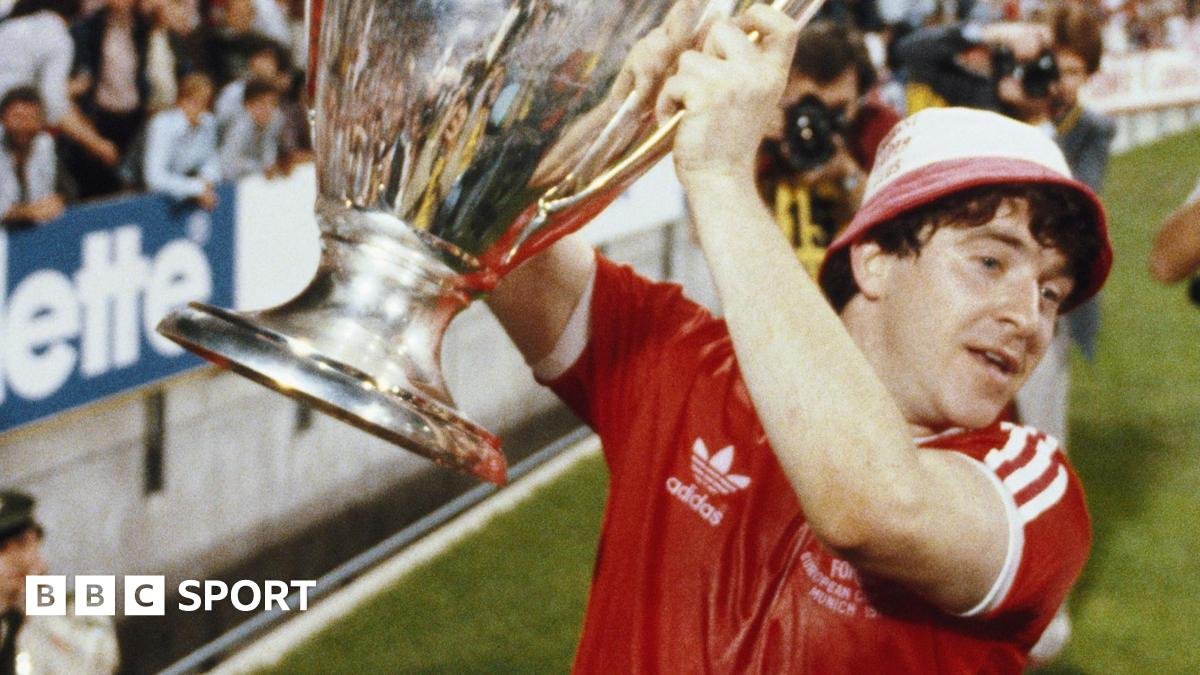
    Robertson played in 243 consecutive games between December 1976 and December 1980, and despite the big-name buys such as England goalkeeper Peter Shilton and Francis, Britain’s first £1m footballer, he was the player who made Forest tick.

    For all the talent elsewhere, Robertson was Forest’s fulcrum.

    In Forest’s first season back in the top flight under Clough in 1977-78, Robertson not only played a vital role in winning the title, but also scored the winner from the penalty spot against Liverpool in their League Cup final replay at Old Trafford.

    It was not just Clough who recognised Robertson’s significance, with former team-mate Martin O’Neill saying: “He was the most influential player in Europe for maybe three-and-a-half to four years.”

    And Forest’s captain under Clough, John McGovern, stated: “He was like Ryan Giggs but with two good feet.”

    All this despite Robertson’s own admission that he had no pace and could not tackle.

    Clough, however, was not bothered about what Robertson could not do, preferring to give him licence to concentrate on what he could do. It was the perfect footballing marriage of manager and player. Two maverick characters working in harmony.

    In a famous interview before the 1980 European Cup final against Hamburg, who had England captain Kevin Keegan in their side, Clough was asked about the prospect of their great Germany right-back Manfred Kaltz keeping Robertson quiet.

    “We’ve got a little fat guy who will turn him inside out,” said Clough. “A very talented, highly skilled, unbelievable outside-left.”


    Source link

  • Cómo un error tipográfico convirtió a una edición de la Biblia en 1631 en “la Biblia Malvada” (y otras erratas consideradas infames)

    Cómo un error tipográfico convirtió a una edición de la Biblia en 1631 en “la Biblia Malvada” (y otras erratas consideradas infames)


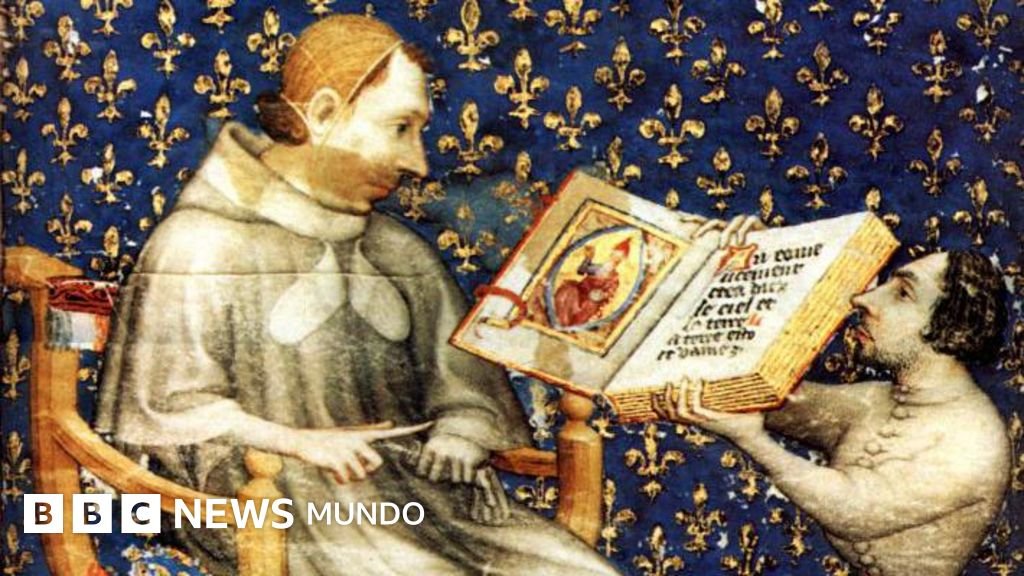
    Jean de Vaudetar ofreciendo una Biblia a Charles V.

    Fuente de la imagen, Getty Images

    Pie de foto, Por más buena voluntad y trabajo que se dedique, en cualquier texto, sagrado o no, se cuelan errores.

      • Autor, BBC News Mundo
      • Título del autor, Redacción
    • Tiempo de lectura: 7 min

    “Yo soy un pobre diablo, y mi nombre es Titivillus”, señala un demonio repugnante cuando un abad lo confronta.

    Su oficio, explica el demonio en el tratado devocional del siglo XV Myroure of Oure Ladye, es llevarle a Satanás a diario “mil sacos llenos de errores y negligencias en sílabas y palabras, cometidos por órdenes suyas al leer y cantar, de lo contrario seré duramente golpeado”.

    El Diablo, explica Titivillus, guarda esos errores como pruebas contra las personas al momento de juzgar qué destino tendrán sus almas al final de sus vidas.

    “Aunque tales cosas sean pronto olvidadas por quienes las hacen, el demonio no las olvida”.


    Source link

  • Icons of Football: John Robertson – the ‘scruffy fat lad who won two European Cups’

    Icons of Football: John Robertson – the ‘scruffy fat lad who won two European Cups’


    Martin O’Neill, Nottingham Forest team-mate and manager at Celtic

    He was a beautiful footballer who could play with both feet, terrific ability.

    I keep getting back to this word, fulcrum. He very seldom missed football matches and we needed John to play every single one of those games. He’s played his part in footballing history, I think.

    When you consider the things he’s won in the game, he’s an iconic figure, absolutely.

    John coming back to Scotland to see his family was a really big thing for him. Very seldom would he have got home and he hears this opportunity to come home as an assistant manager [at Celtic].

    John really enjoyed his role. He was a special partner, no question about that.

    People, for want of a better phrase, bought into John, they really did. There was something about him.

    The players had enormous respect for John as a player and anyone who was playing in his position would come and ask John for advice. I’ve heard of players now, top quality players in the Premier League, that have said that John was influential in his advice to him.


    Source link

Translate »