Having worked closely with FIDC and FIG on a number of projects, Sam is excited about the diverse development opportunities facing the Falklands
Outside of work, Sam is Chair of the Falkland Islands Hockey Association and enjoys hiking, skating and spending time outdoors.
The Falkland Islands Development Corporation, FIDC, has announced that Sam Cockwell has joined the team as Strategic Projects Manager. The FIDC is the economic development agency for the Falklands in 1983 in response to the Shackleton Report.
FIDC operates as a quasi-autonomous body funded by the Falklands Government, FIG, focusing encouraging sustainable economic growth, business diversification, and supporting the local business community. It serves as a principal partner in delivering the Economic, Rural, and Tourism Development Strategies, as well as leading the Innovation Strategy.
Precisely with an academic background in engineering and environmental science, Sam brings experience across conservation, oil and gas, renewables and humanitarian work, most recently leading eLink, a renewable energy-focused division of Atlink Ltd.
His career highlights include leadership and mentoring opportunities with eLink, as well as coordinating local logistics for the Red Cross humanitarian mission.
Having worked closely with FIDC and FIG on a number of projects, Sam is excited about the diverse development opportunities facing the Falklands. “I think the Falklands is entering an exciting period of development and growth,” said Sam. “The opportunities are varied, each with their own challenges and benefits, and the next big thing may still be unknown.”
Outside of work, Sam is Chair of the Falkland Islands Hockey Association and enjoys hiking, skating and spending time outdoors. He is also planning a rollerblading challenge from MPA to Stanley later this year, weather permitting.
Zachary Franklin, Managing Director of FIDC, said: “Sam joins us with a breadth of experience across multiple sectors and a strong understanding of the Falklands’ business environment. His energy and enthusiasm for innovation will be a real asset to FIDC as we continue to support sustainable growth and development across the Islands.”
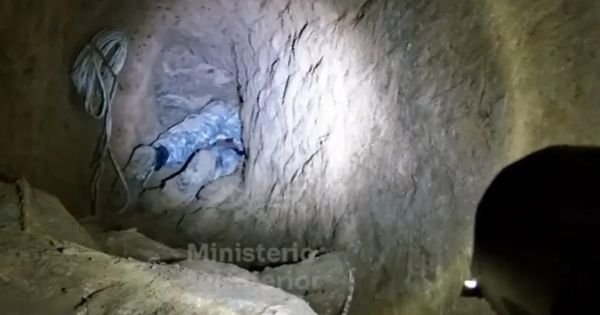
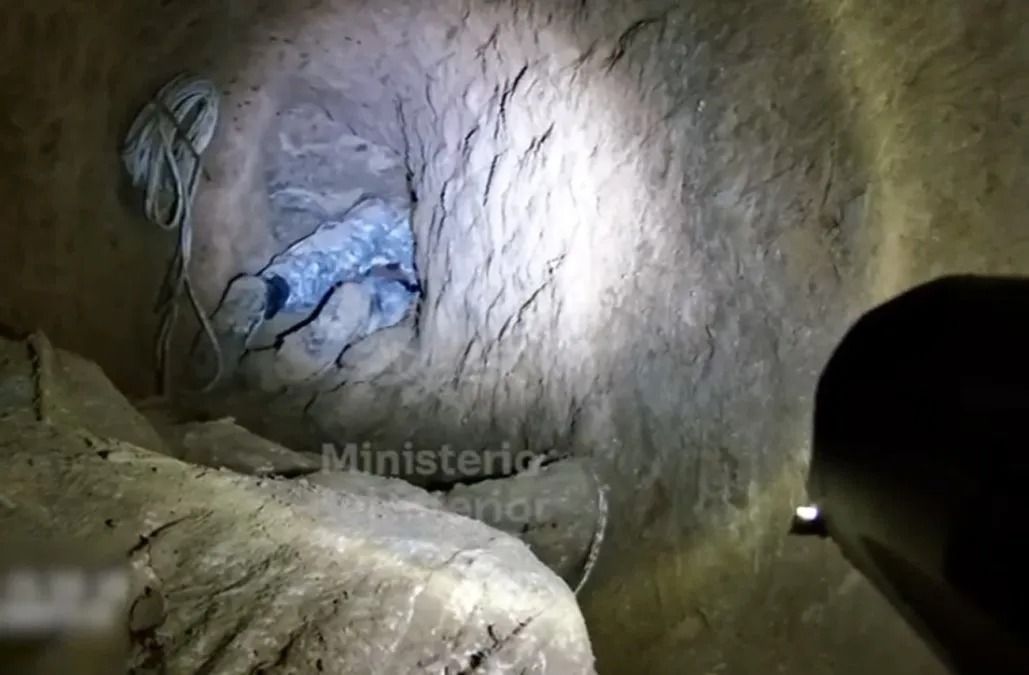
Investigators described the tunnel as a purpose-built connection between the storefront and the sewer network, allowing the group to move underground toward its target
According to the Interior Ministry, the plot relied on a commercial premises leased in mid-2025, from which an access point was allegedly opened into the sewers to advance toward a nearby financial institution. The broader investigation began on September 11 with an anonymous tip about a suspected drug-selling point in Neptunia, in Canelones, and expanded as investigators tracked a network with logistical presence in Montevideo.
Interior Minister Carlos Negro said the planned heist, had it succeeded, could have carried systemic consequences. He told reporters it would have dealt “a hard blow” to Uruguay’s financial system and, by extension, the national economy, as quoted by local outlets.
Así trabaja la Policía Nacional en Ciudad Vieja, continuando las pericias en el túnel de la zona, en el marco de la operación Blindaje liderada por la DGRTID con apoyo de la Dirección General de Información e Inteligencia, la Dirección General de Operaciones Especiales, el Centro… pic.twitter.com/jnhQL0forQ
Investigators described the tunnel as a purpose-built connection between the storefront and the sewer network, allowing the group to move underground toward its target. Footage released from the operation shows officers entering through an opening in the floor and moving through a narrow section before reaching a wider space.
Julio Sena, the National Police’s investigations director, said the suspects “could be linked to a transnational criminal group,” adding that some detainees appear to have experience with similar robberies in Brazil. Authorities are now awaiting cross-border checks. “Nothing guarantees the documents they carry are real,” Sena said, citing pending fingerprint and identity verification.
El País reported that investigators are weighing possible connections to Brazil’s First Capital Command (PCC), while stressing the hypothesis remains unconfirmed and depends on ongoing coordination with Brazil, Paraguay and Argentina.
The case led to raids in Ciudad Vieja and El Pinar (Canelones), with seizures including digging tools, surveillance equipment, a drone, vehicles and cash in multiple currencies. A court ordered 180 days of pre-trial detention; charges include criminal association and attempted aggravated theft, alongside drug-related counts in specific cases.
Outside Colombia’s largest health insurer, a mother steadies her disabled son as expired prescriptions pile up amid protests, highlighting how policy failure turns into daily suffering for families.
A Morning of Waiting and Paper
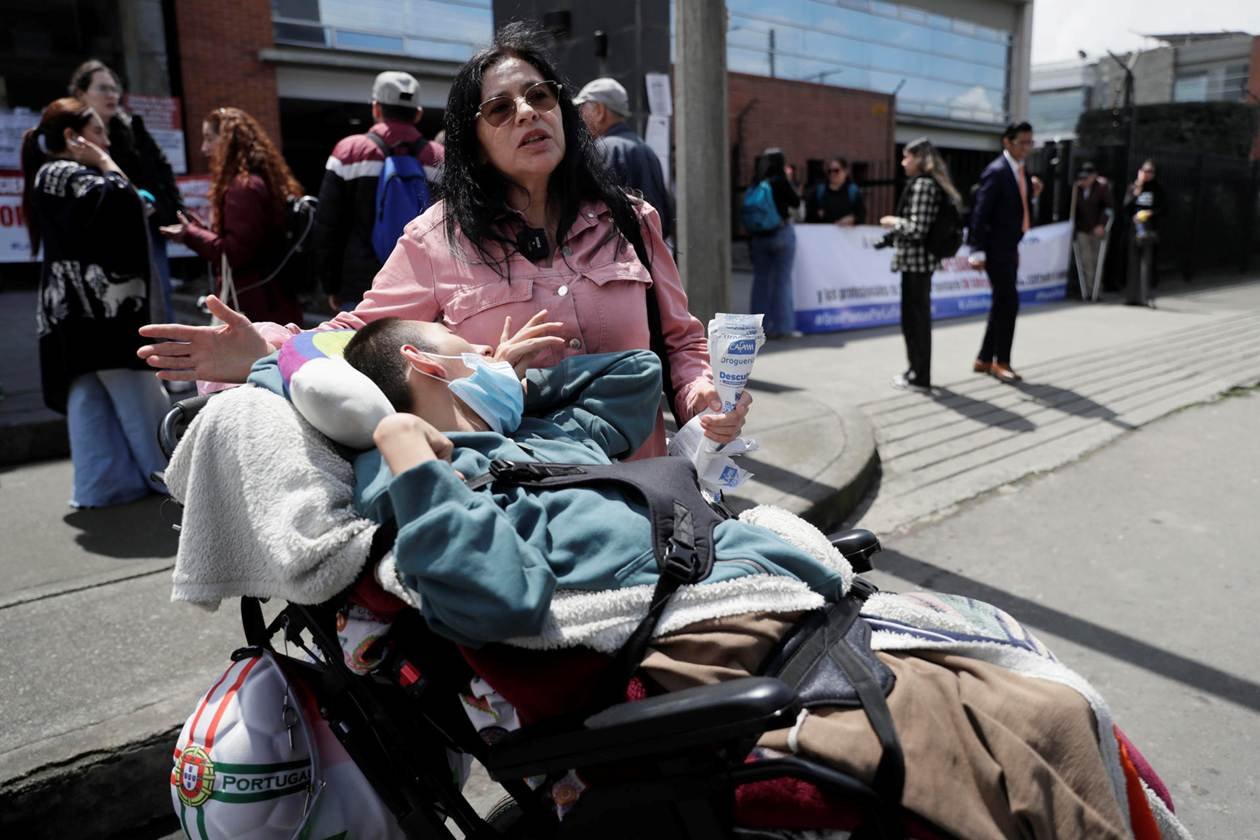
The micro scene unfolds on a sidewalk in front of Nueva EPS’s main headquarters in Bogotá. It is not loud. It is heavy. María Rubio wraps her son in blankets and secures him with belts in his wheelchair. The air is cool, and paper edges curl in her hands. She holds expired medication orders, fanned like proof, while traffic hums nearby. People pass on their way to work. The building does not move.
Her son has cerebral palsy, microcephaly, and multiple disabilities. He belongs to the group of high-cost patients whose treatments are authorized yet delivered irregularly, relatives and organizations say, as they protest outside the country’s largest health insurer. The everyday observation implied by the scene is brutal in its simplicity: authorization does not equal delivery. A stamp does not become a pill.
“Everything is authorized, but they do not disburse the resources and the pharmacy does not deliver,” María told EFE, lifting the bundle of orders. She explains she has gone from one dispensing point to another without success, even though her son needs daily antiepileptics.
The trouble is what happens next. María improvises, feeling the weight of exhaustion and sacrifice as she cares for her son, knowing each adjustment can worsen his condition.
“No hay suministros,” she says later, and the phrase hangs over the sidewalk.
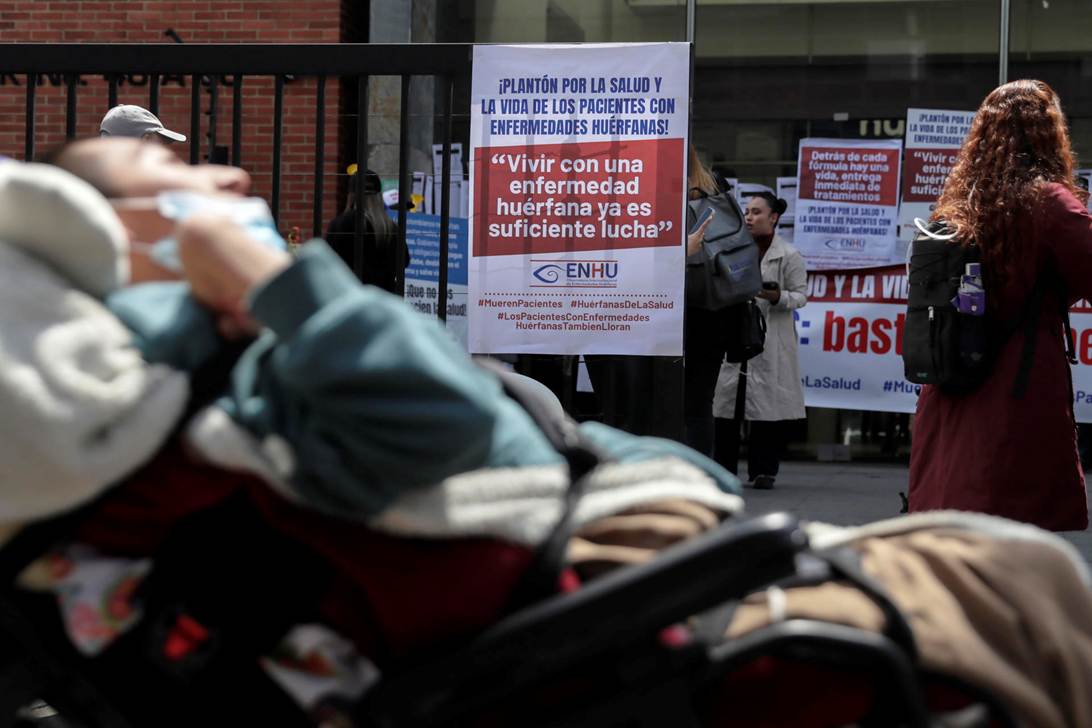
People take part in a protest against healthcare services in Bogotá, Colombia. EFE
When Interruptions Become Absence
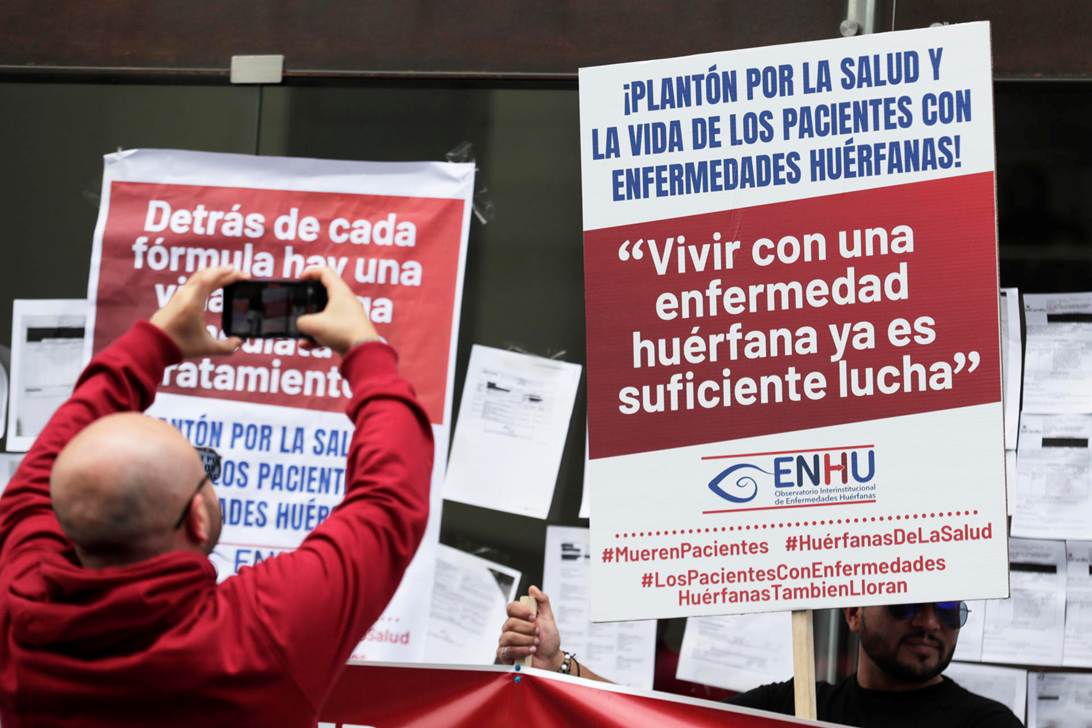
Victoria Salazar, who heads the board of the Interinstitutional Observatory of Rare Diseases, says patients have faced constant interruptions since last year, a situation that worsened in December. Now, she says, it is no longer just interruptions.
“There are no supplies. Nueva EPS is not buying the treatments patients need,” Salazar told EFE, adding that months of procedures and promises have produced no concrete evidence of a solution.
The government has acknowledged the health system crisis, but despite interventions, patients continue to suffer, feeling the system’s failure firsthand.
Official data indicate insurers carry significant debt owed to hospitals, clinics, and drug suppliers. The effect is cumulative. When payments stall, deliveries stall. Chronic, rare, and high-cost patients feel it first and longest.
What this does is turn policy disputes into household logistics. Who can drive to another pharmacy? Who can borrow a bottle? Who can skip a dose?
People take part in a protest against healthcare services in Bogotá, Colombia. EFE
Courts, Journals, and Kitchen Remedies
The diagnosis has reached academic pages. A recent article in the British Medical Journal described Colombia’s health system as undergoing a “deep deterioration,” citing medication shortages, treatment interruptions, and growing access barriers following public policy decisions. The Health Ministry rejected that report as biased and lacking technical rigor, arguing the crisis is structural and not attributable solely to the current administration. It said resources allocated to the sector rose in real terms between 2022 and 2026, equivalent to 25 trillion pesos.
Numbers travel easily. Pills do not.
The National Health Observatory estimates that nearly 20 percent of avoidable deaths are linked to health system failures, a reality felt deeply by families like Rocío’s, whose child’s medication delays threaten her daughter’s life.
Rocío González, mother of an eight-year-old girl with pulmonary hypertension, faces ongoing medication shortages, her frustration growing as she fights for her child’s right to health.
“I have filed tutelas, contempt actions, and nothing happens. I have to organize raffles and ask for help,” she told EFE.
One of her daughter’s medications can cost between two and four million pesos per box. Another, cheaper, lasts only two days. Like María, Rocío left her job to care for her child. She now survives on occasional work. The rhythm of her life is measured in doses and deadlines.
The wager here is whether judicial pressure can substitute for administrative capacity. Families keep filing. The system keeps lagging.
Back outside Nueva EPS, María adjusts the blanket again. She says she has no life. It is not a metaphor. It is a schedule erased by caregiving.
For caregivers, this is not a technical debate about financing models or governance charts. It is a daily negotiation with gravity, and authorities must prioritize patient dignity by ensuring the system delivers on its promises.
Dairy, sugar and pork prices were down during the first month of 2026
World food commodity prices declined in January 2026 for the fifth consecutive month, led by lower international quotations for dairy, sugar and meat products, according to the benchmark report released by the UN Food and Agriculture Organization.
The FAO Food Price Index, which tracks monthly changes in the international prices of a basket of globally-traded food commodities, averaged 123.9 points in January, down 0.4 percent from the previous month and 0.6 percent from its level a year earlier.
FAO Cereal Price Index increased slightly by 0.2 percent from December, despite marginal declines of world wheat and maize prices. Ample wheat stocks offset weather-related concerns affecting dormant crops in the Russian Federation and the United States, while comfortable global maize supplies offset adverse weather conditions in Argentina and Brazil and strong ethanol demand in the United States. By contrast, the FAO All-Rice Price Index rose by 1.8% from December, reflecting firmer demand for fragrant rice varieties.
The Vegetable Oil Price Index increased by 2.1 percent in January. World palm oil prices rose amid seasonal production slowdowns in Southeast Asia and firm global import demand, while world soy oil prices rebounded on tightening export availabilities in South America and expectations of robust biofuel demand in the United States. Global sunflower oil prices also increased, driven by supply tightness in the Black Sea region. By contrast, international quotations for rapeseed oil edged lower reflecting ample availability in the European Union in the wake of large recent imports.
The Meat Price Index declined by 0.4 percent from December, driven by lower pig meat quotations amid ample global supplies and subdued international demand. Global poultry meat quotations rose, mainly reflecting higher prices in Brazil underpinned by strong international demand, while prices for ovine and bovine meats were broadly stable, with the latter buoyed by increased shipments from Brazil to China, which offset the rapid exhaustion of the United States’ tariff-free quota.
The Dairy Price Index fell by 5.0 percent from December, driven largely by lower prices for cheese and butter amid ample availabilities. Meanwhile, world skim milk powder prices firmed, supported by renewed import demand from the Near East, North Africa and parts of Asia.
Finally the Sugar Price Index Index declined by 1.0 percent in January, reflecting expectations of increased supplies in the current season, underpinned by a significant production rebound in India, favorable prospects in Thailand, and an overall positive production outlook in Brazil.
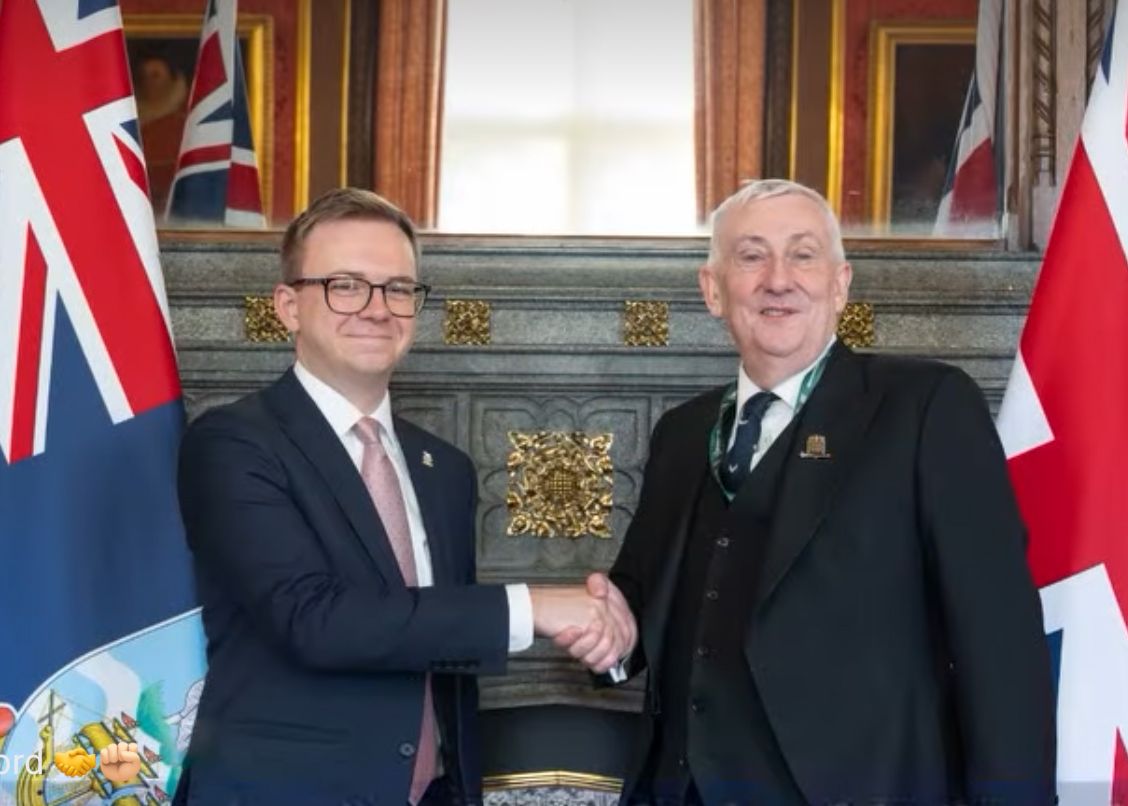
MLA Jack Ford during his reception by the Speaker of the House of Commons, Sir Lindsay Hoyle MP.
On the occasion of the swearing-in of the newly elected members of the Falkland Islands Legislative Assembly, its Chair, MLA Jack Ford, travelled to the United Kingdom, where he held a series of meetings with government and opposition lawmakers, as well as senior officials from various ministries and offices linked to the Islands and other British Overseas Territories.
The visit, with a full agenda and supported by the Falkland Islands Government Office in London (FIGO), was effectively the first overseas trip by the new self-governing Falklands administration, aimed at reinforcing the close ties with the United Kingdom and the firm support across the British political spectrum for the self-determination of the Falklands people.
MLA Jack Ford—one of only two of the eight legislators who secured re-election by a clear margin—began the round of meetings with the Shadow Secretary of State for Defence, Conservative MP James Cartlidge, and the Shadow Foreign Secretary, Rt Hon Dame Priti Patel MP.
During the meetings, the shadow secretaries and the Falklands legislator discussed the strategic importance of the Islands, as well as issues related to energy and finance.
MLA Jack Ford later met with the Shadow Minister for the Falklands and the Overseas Territories, Wendy Morton MP, who is expected to visit the Falklands later this month.
A key meeting was held with the Foreign Office Minister for the Overseas Territories and the Falkland Islands, Stephen Doughty MP, who reiterated the strong commitment of the United Kingdom and the Labour Party to the Islanders’ right to self-determination.
Bringing the political meetings to a close, MLA Jack Ford was received and hosted by the Speaker of the House of Commons, Sir Lindsay Hoyle MP, a long-standing pillar of support for the Falkland Islands, for which the Islanders have always been deeply grateful.
“We had a very productive conversation on key issues such as defence and security, and I reiterated to my colleague our very clear position that we will always stand in support of the Falkland Islands,” Speaker Hoyle said.
As a corollary to the wide-ranging agenda—which also included meetings with senior officials from various British government departments—the visit, according to comments from the Falklands’ self-governing administration, served to further reinforce the close ties and shared interests between the United Kingdom and the Falklands.
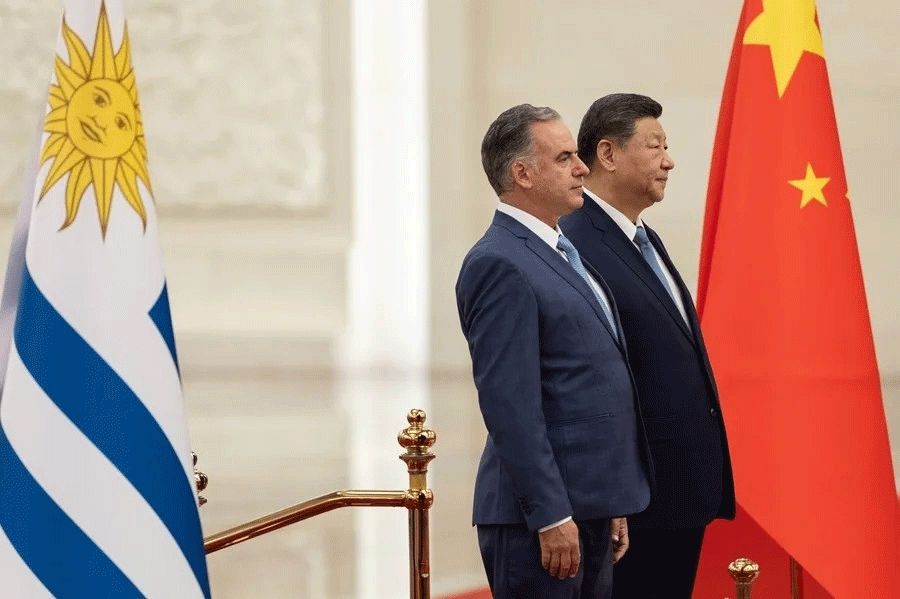
Taiwan’s government issued a “strong protest and condemnation” after a joint statement released in Beijing by Uruguay’s President Yamandú Orsi and China’s President Xi Jinping reiterated Montevideo’s adherence to the “one China” principle and described Taiwan as an “inalienable” part of Chinese territory.
In its response, Taiwan’s foreign ministry said the “Republic of China (Taiwan)” is a “sovereign and independent” state and is “not subordinate” to the People’s Republic of China, stressing that the Chinese Communist Party has “never ruled Taiwan.” Taipei urged Uruguay to “recognize China’s true intentions” in expanding its global influence and warned against endorsing rhetoric it said undermines regional peace and stability.
The Taiwan language was embedded in a broader diplomatic package signed during Orsi’s official trip, which included a bilateral summit with Xi and the signing of memoranda spanning investment and industrial cooperation, science and technology, environmental cooperation, fisheries management, trade facilitation and emergency management, as well as sanitary and export-related protocols. Uruguay’s foreign minister Mario Lubetkin framed the joint statement as part of a “long trajectory” in bilateral ties and aligned with what he called a “new phase” in global affairs, with an emphasis on trade and investment.
The wording on Taiwan mirrors language used in earlier Uruguay–China joint communiqués sparked criticism from opposition figures at home, who questioned the prudence of taking a sharply worded position on a sensitive geopolitical issue. Uruguay and China established diplomatic relations in 1988, and the relationship has expanded alongside China’s growing weight as a key partner for Uruguayan exports and broader economic engagement.
China views Taiwan as a breakaway province and has not ruled out the use of force to achieve “reunification,” while Taiwan maintains that its future should be decided by its people under its democratic system
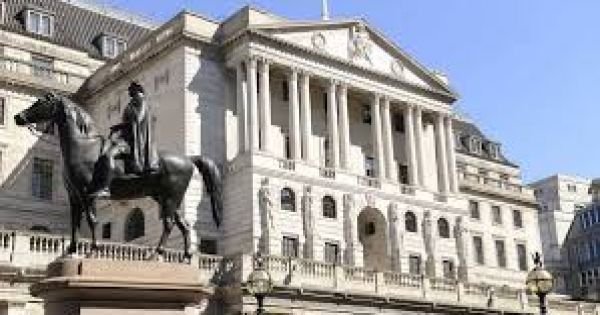
The BOE said that monetary policy is being set to ensure that the inflation rate “not only reaches 2% but remains sustainably at that level in the medium term”
The Bank of England’s Monetary Policy Committee (MPC) voted by a narrow 5-4 margin to keep interest rates on hold at 3,75%. In its first meeting of 2026, four members voted to reduce the benchmark interest rate by 25 basis points. Markets reacted positively with sterling at US$ 1,36.
The BOE’s policymakers last voted narrowly to cut interest rates in December, but analysts had expected the central bank to hold rates steady in February, given better-than-expected monthly growth figures and persistent inflation, at 3.4% in December, the latest data available.
The BOE said that monetary policy is being set to ensure that the inflation rate “not only reaches 2% but remains sustainably at that level in the medium term, which involves balancing the risks around achieving this.”
“On the basis of the current evidence, the extent and timing of further easing in monetary policy will depend on the evolution of the outlook for inflation,” the statement said, although it added that it expected the inflation rate to “fall back to around the 2% target from April.”
The BOE’s Governor Andrew Bailey was among the MPC members who voted to keep rates on hold. “I expect to see quite a sharp drop in inflation over coming months,” he said in a statement.
“Overall, the risks from inflation persistence appear to have continued to reduce. I therefore see scope for some further easing of policy. This does not mean that I expect to cut Bank Rate at any particular meeting. I will go into the coming meetings asking whether a cut is justified,” he said.
Rodríguez and government officials argue the measure is essential for “national reconciliation” after years of social and political strife
Venezuela’s legislature is moving forward with a proposed amnesty law that would grant clemency to protesters and government critics jailed in recent years.
The amnesty bill, championed by interim President Delcy Rodríguez, is designed to pardon individuals detained for participating in political protests or criticizing public figures, provided they were not convicted of serious crimes such as human rights abuses or drug offenses, according to the draft. The legislation would also reverse certain asset confiscations and cancel international warrants like Interpol notices to allow exiles to return safely.
Rodríguez and government officials argue the measure is essential for “national reconciliation” after years of social and political strife, during which thousands of opposition activists and critics have been arrested. The initiative comes as part of broader political shifts following the removal of Nicolás Maduro, who was extradited to the United States on narcotics charges earlier this year.
Human rights organizations have documented several hundred releases of individuals categorized as political prisoners since January, though government figures differ and often lack detailed explanations of the reasons for release. Foro Penal reported that at least 383 political detainees had been freed, while roughly 680 others remained incarcerated.
Family members of detainees staged candlelight vigils in cities such as Maracaibo in the state of Zulia, where relatives urged swift enactment of the law. “We understand this amnesty could help restore coexistence in our country and drop unlawful charges against people unjustly detained,” said Wilson Labrador at a vigil for his brother outside a detention center.
The amnesty proposal must still pass the National Assembly, where Rodríguez’s coalition holds a majority, to become law. Observers note that translating the legislative intent into tangible freedom for detainees will require navigating Venezuela’s deeply criticized court system, which has long been dogged by concerns over transparency and political interference.
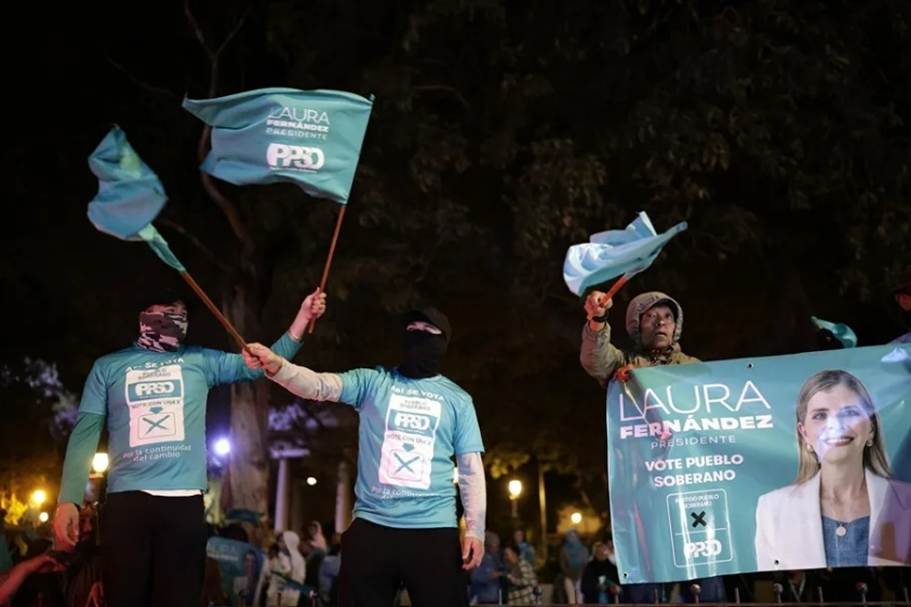
On Sunday night, Costa Rica handed power to Laura Fernández in a first-round win, extending Rodrigo Chaves’s confrontational era. Her mandate arrives with a new legislative majority, a hard-line security agenda, and a looming argument over rights, prisons, and social spending.
A Victory Speech With a Hard Edge
The room had the feel of election-night inevitability, the kind that settles in once the numbers stop wobbling. As results accumulated from the Supreme Elections Tribunal, Fernández’s margin became the headline and, quietly, the premise for everything that follows: more than forty-eight percent of the vote, no runoff, and a field of nineteen rivals left behind. Álvaro Ramos of the National Liberation Party trailed in second with thirty-two percent, with more than eighty-eight percent of polling stations counted, according to the tribunal.
Fernández’s party, Pueblo Soberano, also secured thirty of fifty-seven seats in the legislature. That detail matters as much as the presidential tally because it turns campaign promises into a near-term test of governance. The wager here is not just whether Costa Rica chose a new president. It is whether the country chooses a new tempo.
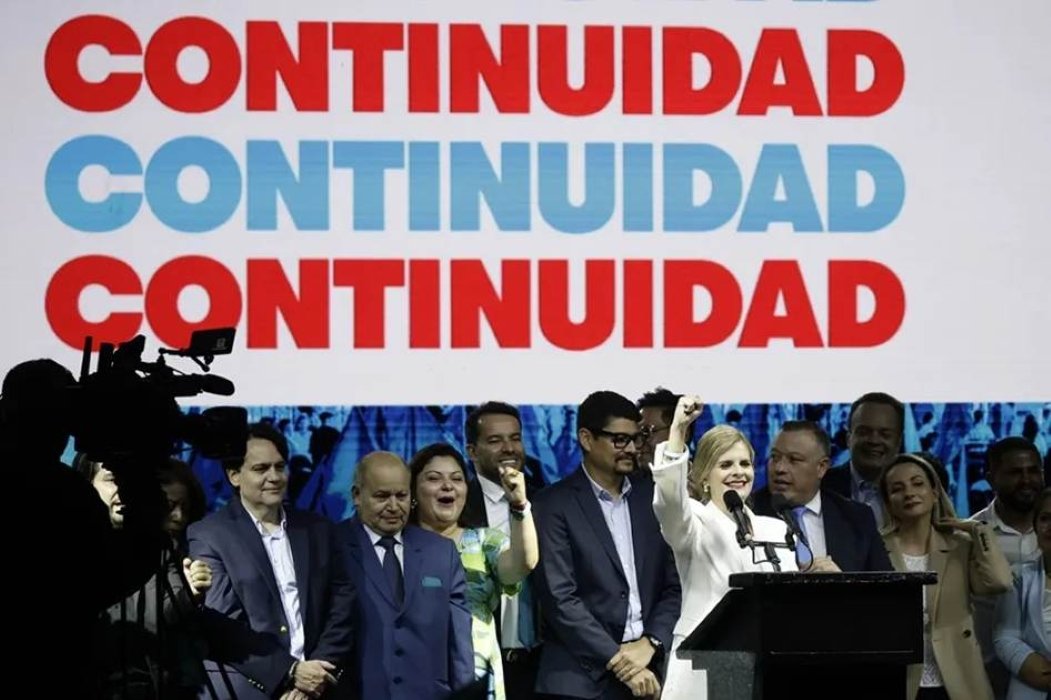
In her first speech after the victory Sunday night, Fernández promised to lead a government of dialogue and national concord, respectful and firm in the rule of law. Then, in the same breath, she branded part of the opposition as obstructionist and sabotaging, an unusually aggressive posture for a victory address in a country that often treats political civility as part of its national story.
It was a reminder of the shadow she is stepping into, and the shadow she is trying to manage. Fernández ran as the heir to outgoing President Rodrigo Chaves, a leader known for confrontation and direct criticism of the traditional political class. She thanked him repeatedly during the campaign and again in victory, and she framed her agenda around continuity rather than rupture. Continuity, in her telling, is not hesitation. Continuity is pressure.
Fernández, thirty-nine, is set to take office on May eight, becoming Costa Rica’s second woman president after Laura Chinchilla, who served from twenty ten to twenty fourteen. She arrives without prior electoral experience, but not without experience in the state. Trained in political science at the University of Costa Rica and specialized in public policies, she built a technical profile inside Chávez’s administration, serving as planning minister and later minister of the presidency before resigning to run.
Her relationship to Chávez is the hinge of this political moment. Ronald Alfaro-Redondo, a political scientist with a doctorate from the University of Pittsburgh, described the challenge of transferring a personalistic popularity to a successor with her own style. “Chaves maintains a direct and even confrontational tone that makes him look like a firm politician. Fernández’s style is different from the president’s, which implies a challenge for the candidate,” he told the BBC. He added that the president has tried to transfer his high popularity, rooted in his personal style.
The trouble is that popularity is not a policy, and continuity is not a plan. But in Costa Rica, continuity now has a name, and it will have to govern.
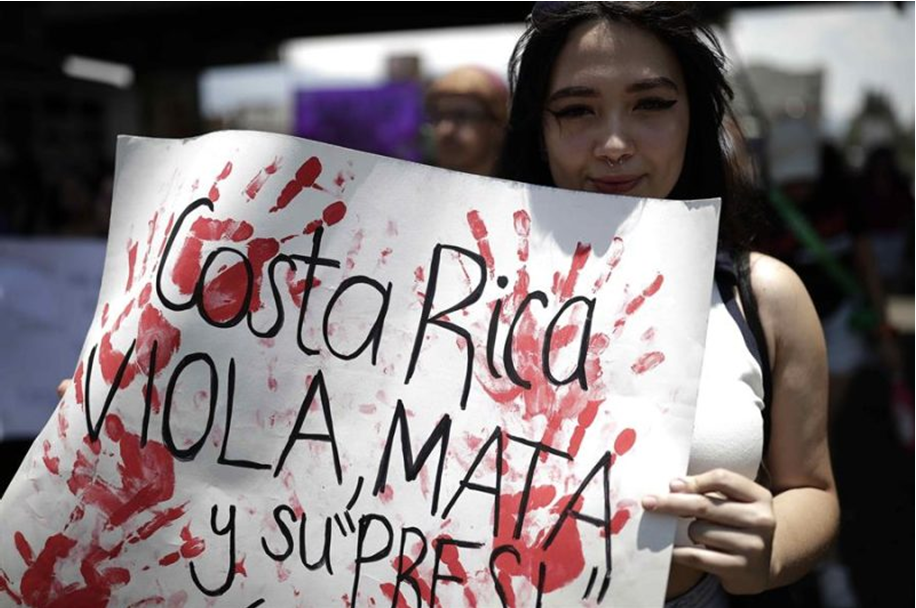
Activists protest to call for the declaration of a national emergency due to the wave of violence against women in San José, Costa rica. EFE
Security Promises Meet Constitutional Red Lines
Fernández’s platform emphasizes security in a country grappling with a sharp rise in violence. In two thousand twenty-five, Costa Rica recorded the third-highest homicide rate in its history, sixteen point seven per one hundred thousand people, according to the country’s Judicial Investigation Organism. Nearly seventy percent of homicides were linked to drug trafficking.
Those are the numbers that sit behind the rhetoric and behind the proposals. During the campaign, Fernández argued that continuity means intensifying the fight against drug trafficking and organized crime with firmness and a tough hand, “with the firmness and the tough hand that only we have dared to exercise,” as she put it.
She also floated an extraordinary measure: the possibility of declaring a state of exception in conflict zones, and asking the legislature to lift or suspend individual constitutional guarantees in strictly necessary cases if Costa Rica saw an escalation in contract killings and related crimes. The proposal would allow, among other things, the detention of suspects without a judicial order. It has become one of the opposition’s central lines of attack.
In a presidential debate, leftist candidate Ariel Robles pressed the point directly, asking why her camp had promoted suspending individual guarantees rather than finding solutions to the security crisis. That question is likely to return, not as a debate prompt but as a governing dispute, because Fernández’s legislative ambitions are built into her security pitch. She said she needed a legislative supermajority of forty deputies to advance reforms, a threshold her party did not reach, even as it won the largest bloc.
The prison plan is the most concrete symbol of the continuity she promises. Two weeks before the election, Chávez hosted El Salvador’s President Nayib Bukele to announce the start of works on a high-containment center against organized crime, a mega-prison near the capital designed for five thousand detainees. Fernández’s government program says she will push forward with construction, calling it modern infrastructure conceived to isolate crime leaders.
Opponents argue it is the wrong answer and, more pointedly, not even a real start. Claudia Dobles, a centrist candidate running for president under the Citizen Agenda Coalition, said the government had announced the start of construction, but that the work had not yet begun. “They were not capable of laying the first stone in a media show,” she said, calling the promise ridiculous.
What this does is crystallize the dispute: whether Costa Rica’s insecurity is best met by building capacity to isolate, confine, and deter, or by strengthening institutions without stretching the constitution to its edge. Continuity, again, becomes the frame. Continuity, again, becomes the fight.
Supporters of the Puerto Soberano party hold flags in San José, Costa Rica. EFE/ Jeffrey Arguedas
The Price of Continuity in Courts and Social Spending
Security is not the only arena where continuity collides with Costa Rica’s institutional self-image. Fernández has pledged to continue a judicial reform begun under Chávez, a move several analysts read as interference in the separation of powers and a threat to constitutional rules.
Alfaro-Redondo pointed to the principle of political non-belligerence and said Chávez has pushed the limits in his clashes with the justice system. Those clashes reached a formal institutional flashpoint in October, when the Supreme Elections Tribunal asked Congress to lift the president’s constitutional immunity so he could be prosecuted for alleged interference in the ongoing political campaign, a request rejected twice.
On the economic front, the Chávez administration has touted a near five percent growth rate, unemployment falling from thirteen percent to around seven percent, negative inflation, and poverty dropping to fifteen point five percent in two thousand twenty five, using official figures repeated by the governing candidacy. Supporters present that record as proof that a combative style can deliver.
Opponents say the stabilization came at the expense of social investment. Robles framed it in moral terms during the campaign, arguing that a primary surplus cannot be achieved at the cost of a child without a scholarship and falling behind in school, and promising that his government would not cut social programs to produce surpluses.
Fernández now faces the most delicate continuity question of all: how to govern in Chávez’s shadow, and whether that shadow will become a second center of power. She has said in media remarks that she would like Chaves to serve as minister of the presidency or of finance, a move described as unprecedented in Costa Rica. Alfaro-Redondo underlined the cultural rupture embedded in that idea, noting that former presidents typically leave the field clear when their term ends, and that it remains to be seen how she would manage it.
Costa Rica voted for continuity of change, Fernández declared in her victory speech. The country may soon learn what that phrase costs, and who pays it first.
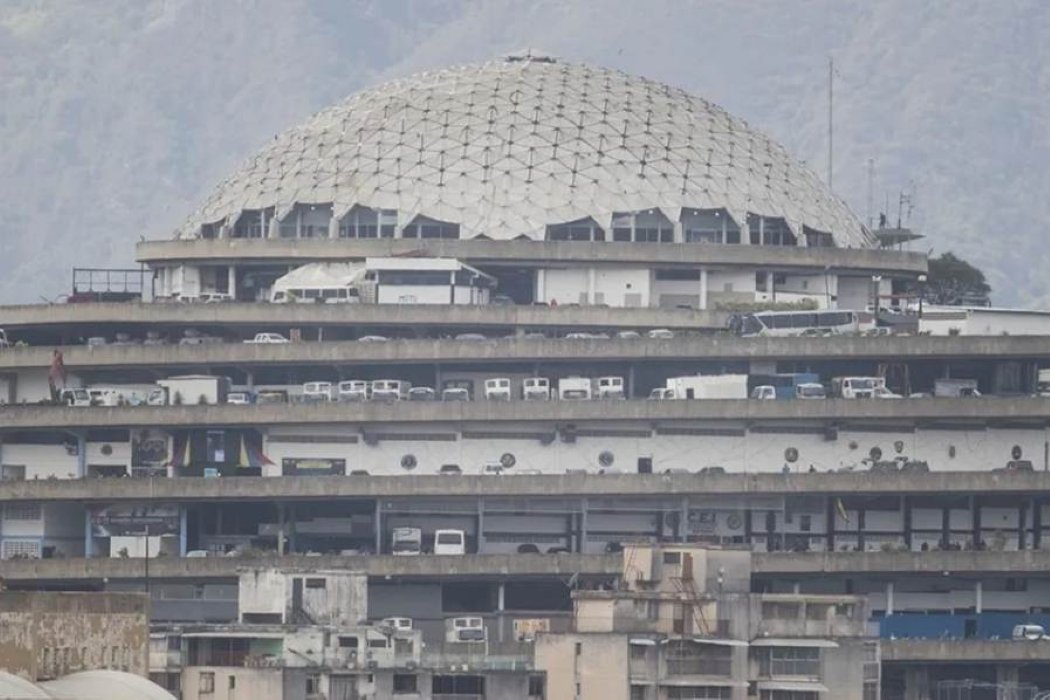
In Caracas, a bearded former governor records himself outside a notorious prison and says the quiet part aloud. Since Maduro’s ouster by the U.S., critics are testing speech again, while an amnesty promise raises a more complex question: who controls what comes next?
Outside Helicoide, a Man Risks His Name Again
The spiral of Helicoide sits in the capital like a building that never stopped listening. Out on the street, Andrés Velásquez holds up a phone and films himself with the kind of caution you can see in a person’s shoulders. His beard is new, bushy enough to change the way his face reads on camera, and that detail matters because the note of this moment is recognition and risk. He is outside the place that has haunted opponents for years, and he is asking for something that once could have been treated as a provocation: the release of political prisoners, all of them.
“We must dismantle the entire repressive apparatus in the hands of the state,” Velásquez said in the video. “Venezuela will be free!”
The trouble is not that Venezuelans suddenly forgot fear. The problem is that fear has become a daily administrative fact, the kind you plan around like traffic or power cuts, and now people are trying to live without it while the state still remains in the same hands, highlighting the ongoing barriers and the resilience needed to cope with them.
Velásquez did not stick around to become one more government critic jailed after the 2024 presidential election. The notes say he crisscrossed the country campaigning for Nicolás Maduro’s opponent in that disputed race, then grew a thick beard, sent his children into exile, and avoided public events that could expose him to arrest. That is how private survival looks in political terms. You cut your public life into smaller and smaller pieces until you can pass as ordinary.
After Maduro’s overthrow by the U.S., he began to speak again. First in a video on January 19 supporting Maduro’s removal while calling for new elections, then days later outside Helicoide. It is the same act twice, in slightly different keys. Saying the country needs elections. Saying the prisons need to open and saying it where people can see.
The notes describe prominent critics emerging from hiding to test the limits of speech after years of silence, inspiring hope and resilience in the audience. Families of jailed activists are protesting outside prisons. People freed under the new climate are defying gag orders that are usually imposed as a condition of release. Media outlets are reopening airwaves to voices banished in recent years. It is not a parade. It is more like a cautious reoccupation of public space, one small act at a time.
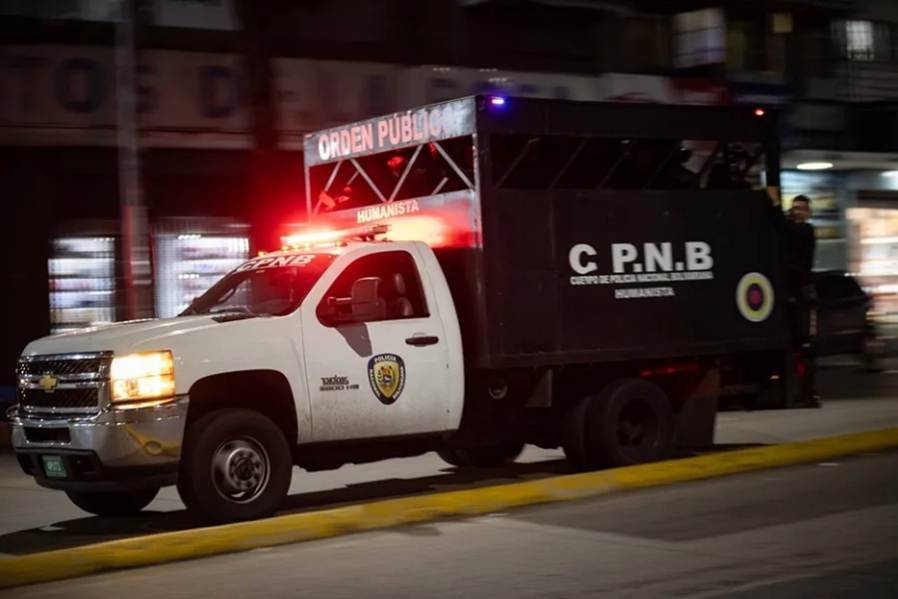
A patrol of the Bolivarian National Police entering El Helicoide, in Caracas, Venezuela. EFE/ Ronald Peña
A Small Opening, With a Big Hand on the Door
Velásquez likened what is happening to glasnost, the Soviet-era policy of openness that preceded the collapse, but this opening is heavily influenced by external actors like the Trump administration, which the notes say has used financial incentives and threats of additional military strikes to carry out the president’s pledge to ‘run’ Venezuela from Washington.
The wager here is that loosened repression might lead to a genuine civic opening. The fear is that loosened repression is simply tactical. The ultimate goal of the Trump administration’s maneuvers is still unknown, the notes say, even as the White House has praised acting President Delcy Rodríguez’s willingness to partner with the U.S. to open Venezuela’s oil reserves, combat criminal networks, and curb the influence of Iran and Russia. Opponents worry that elections and a restoration of democracy could be indefinitely delayed.
Last week, Rodríguez, a longtime Maduro ally, announced plans for a general amnesty that could lead to the release of hundreds of opposition leaders, journalists, and human rights activists detained for political reasons. She also announced the shutdown of Helicoide, promising to transform the building into a sports and cultural complex for police and residents of the surrounding hillside slums.
“May this law serve to heal the wounds left by the political confrontation fueled by violence and extremism,” Rodríguez said at the event, she told AP.
Those are the words. On the ground, the questions are procedural and blunt. Who decides who counts as political? Who decides who is forgiven? Who decides what is forgotten? When the state offers amnesty without a credible change in the institutions that carried out repression, it can read like mercy and leverage at the same time, underscoring the need for genuine reform to build trust and hope.
Pedro Vaca, the top freedom of expression expert for the Inter-American Commission on Human Rights, said the gestures are not enough without an independent judiciary and law enforcement.
“Venezuela’s civic space is still a desert,” Vaca said, he told AP. “The few critical voices emerging are seeds breaking through hardened ground, surviving not because freedom exists, but because repression has loosened while remaining ever-present. Let us be clear: this does not mark a democratic turning point.”
That is the sober version of the scene outside Helicoide. A man speaks, a crowd gathers, a camera records. And somewhere behind the scenes, the structures that once punished speech are still intact.
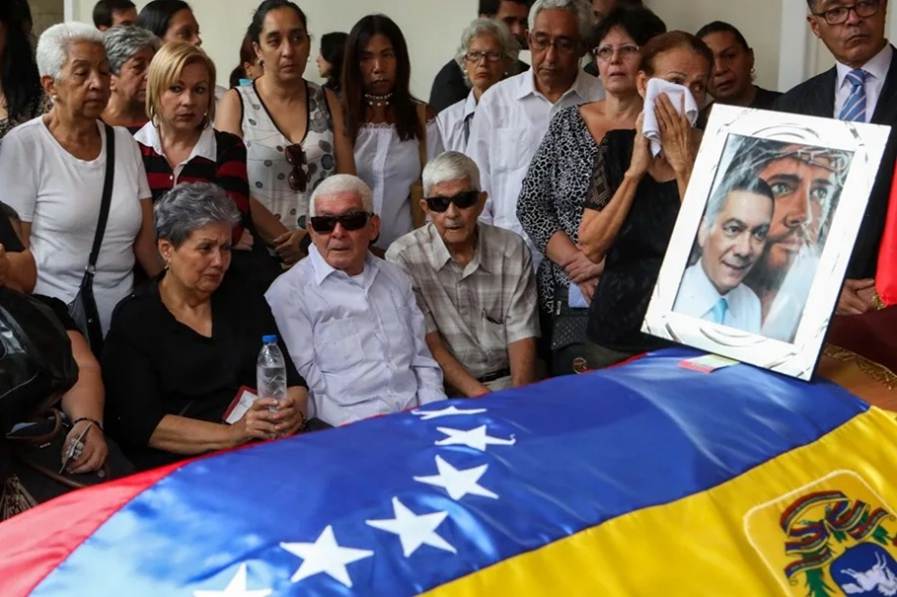
Tribute held for councilman Fernando Albán, who died at El Helicoide in Caracas, Venezuela. EFE/Cristian Hernández
Airwaves Crack Open as Old Reflexes Return
The notes trace how self-censorship deepened after the July 2024 election, when Maduro launched a wave of repression marked by thousands of arbitrary detentions as he disavowed evidence showing he had lost to opposition candidate Edmundo González by more than two-to-one. Dissidents went into hiding. Independent outlets softened already cautious coverage for fear of being unplugged.
Now, broadcasters are moving again.
Venevision has reopened its airwaves to anti-government voices and has been covering opposition leader Maria Corina Machado’s moves in Washington since Maduro’s capture. Globovision invited back commentator Vladimir Villegas for the first time in years. Villegas was known for navigating the restricted space by keeping hardened opponents off his show. The program was abruptly canceled in 2020 after he criticized Maduro for forcing DirecTV to carry state TV in violation of U.S. sanctions, a move that led DirecTV to abandon the country along with its international news offerings. In other words, media policy became a household inconvenience. A political decision, felt as missing channels, missing windows.
Rodríguez has not embraced meaningful public debate beyond announcing an advisory commission on political co-existence to be headed by Villegas’ brother, Culture Minister Ernesto Villegas. And already, some allies appear intent on shutting down criticism. Authorities have yet to restore full access to X, which Maduro blocked after Elon Musk accused him of stealing the 2024 vote.
When Venevision covered Machado meeting Secretary of State Marco Rubio, Interior Minister Diosdado Cabello accused the media of playing into a plot by the Nobel Prize winner to sow chaos. “Without media attention, her notoriety fades away. Without headlines, she disappears,” Cabello warned on state TV, the notes report.
Yet even state TV is showing cracks. The notes describe Rodríguez touring a university campus in Caracas and being confronted by a small group of student protesters. State TV did not mention the demands, but it aired the scene of Rodríguez calmly stepping away from her security entourage to “exchange ideas” with what the broadcaster called activists from “extremist parties.” A few weeks earlier, the notes say, that kind of televised friction would have been unthinkable under Maduro.
Velásquez, in an interview, said he will continue to push the envelope while remaining wary because the repressive apparatus remains under Rodríguez and her allies. “We must continue winning back lost terrain, challenging power. An opportunity has opened up, and we can’t let it close again,” he said, he told AP. “But the biggest obstacle we have to overcome is fear.”
In the coming weeks, he hopes to organize a public event with other opponents who have recently come out of hiding, including Delsa Solórzano, who resurfaced at a rare press conference and described living clandestinely without sunlight. “I didn’t hide because I committed any crime but because here fighting for freedom became an extremely high risk to your life, your freedom, and your safety,” she said, she told AP.
And then there is the pressure from below, from people who paid the cost directly. Journalist and political activist Carlos Julio Rojas spent 638 days in prison, he said, describing handcuffs, denial of sunlight, and confinement in a tiny cell without a bed. Released last month, he said he was instructed never to discuss the abuse. “For me, not speaking meant I still felt imprisoned. Not speaking was a form of torture,” Rojas said, he told AP. “So, today, I decided to remove the gag and speak.”
What stays with you is how quickly silence turns from protection into a cage. What stays with you is the idea that a country can reopen its mouth while still tasting the fear that closed it.
Adapted from original report by The Associated Press.