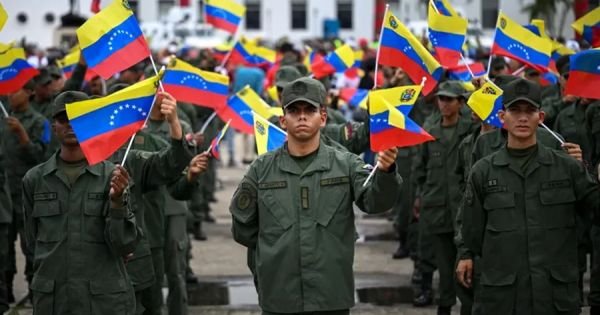
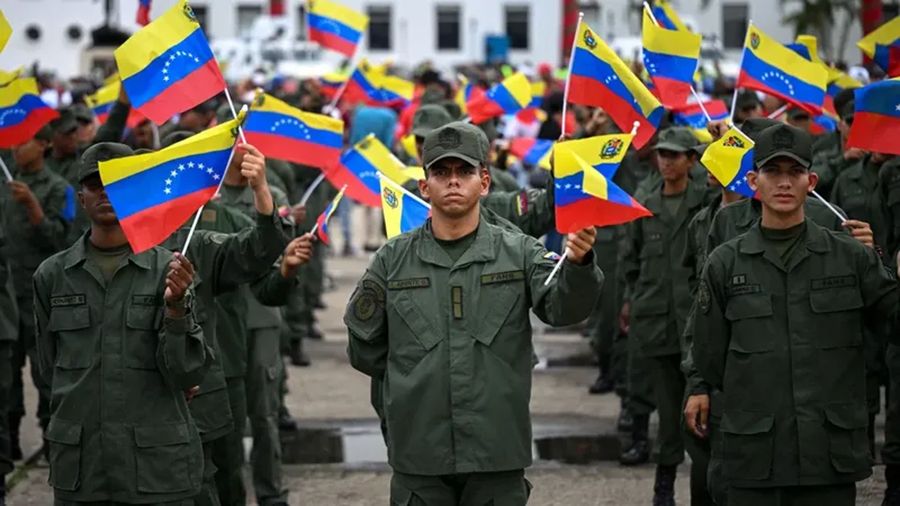
Venezuela had about 123,000 active personnel, roughly 8,000 reservists, and a core paramilitary force —the Milicia Bolivariana— of around 220,000 members
Venezuela’s Defense Minister Vladimir Padrino López announced Friday a “review and adjustment” of the Bolivarian National Armed Forces (FANB) following the January 3 US attacks, in which 47 Venezuelan soldiers were killed and President Nicolás Maduro and his wife Cilia Flores were captured, EFE reported.
In a televised address on state channel VTV, Padrino López said the country is facing “a new geopolitical situation” and that adjustments under the Ayacucho Plan are necessary. “We are forging ahead in the Ayacucho Plan […] with a reality that warrants a review and adjustment,” he said. He emphasized that “our military honor is intact, intact, our dignity is intact” and called for “spiritual strength” among FANB members.
Padrino López also demanded the release and return of Maduro and Flores, saying the armed forces will continue “fulfilling its national task of stability and progress.”
International reporting from late 2025 and early 2026 provides specific data on Venezuela’s armed forces before the US operation. Estimates from the International Institute for Strategic Studies (IISS) indicated that Venezuela had about 123,000 active personnel, roughly 8,000 reservists, and a core paramilitary force —the Milicia Bolivariana— of around 220,000 members. The Bolivarian Army accounted for roughly 63,000 troops, with the remainder distributed among the Navy, National Guard and Air Force. These figures are referenced to understand the force structure preceding the attack and the scope of the announced review.
Reports also show that in military exercises in January 2025, Venezuela mobilized around 150,000 combatants, a deployment intended to demonstrate operational capability amid rising tensions with the United States.
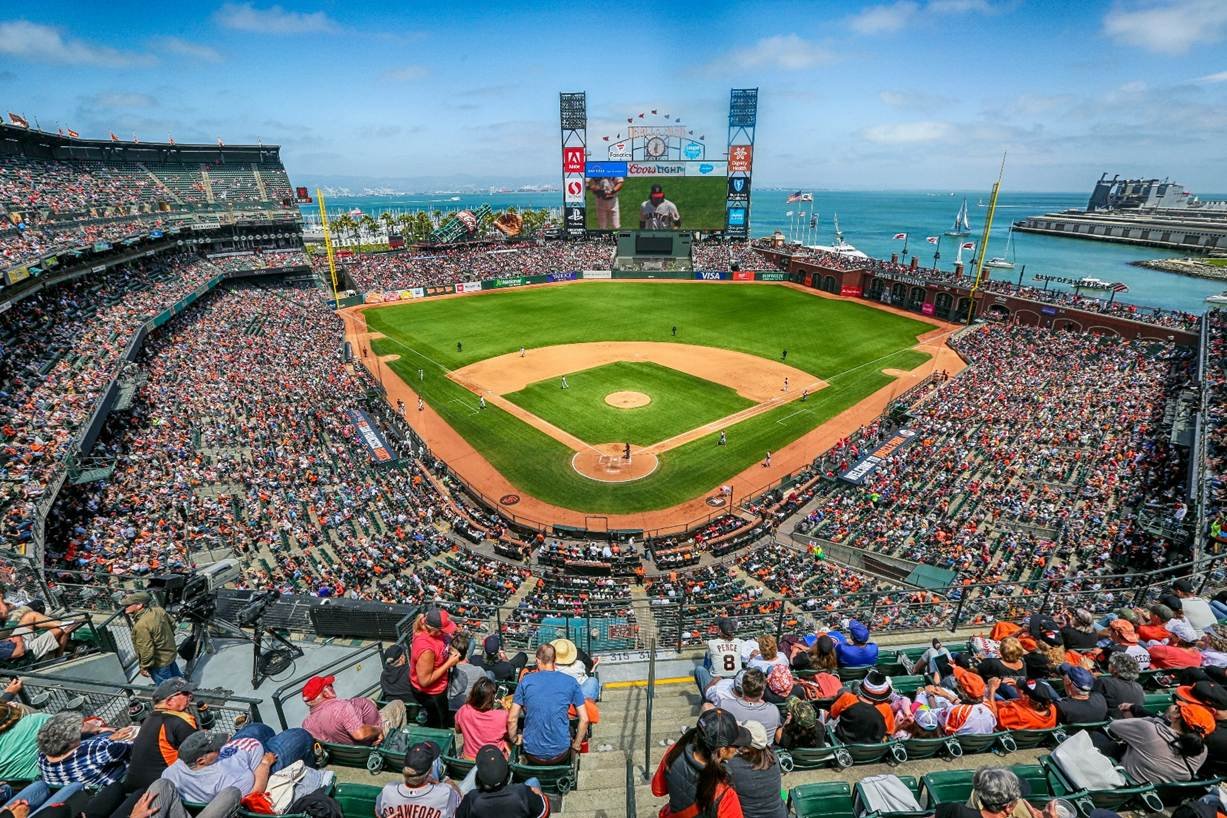
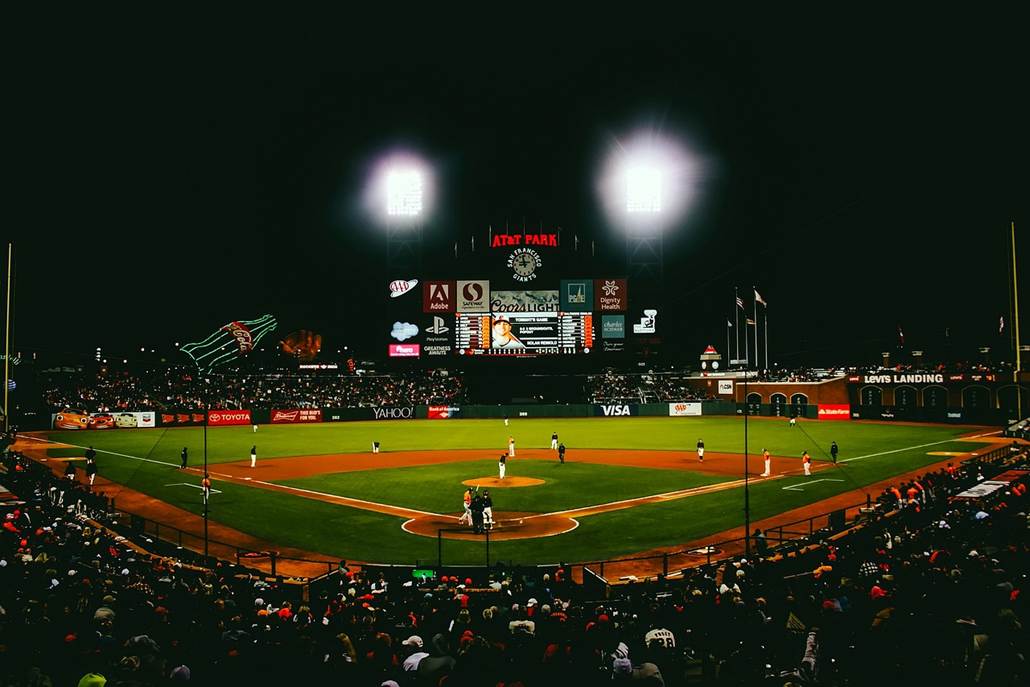
For decades, the San Francisco Giants watched Latin America feed other franchises’ glory. Now a Venezuelan and a Dominican teenage shortstop arrive like a promise—expensive, fragile, and thrilling—testing whether the club can finally grow its own Caribbean legacy.
The Long Drought After the Golden Names
In San Francisco, the franchise’s relationship with Latin America has always been a story of two eras: the early days when the Giants helped open doors, and the long middle when those doors seemed to close for everyone wearing orange and black. The evidence sits in the record like an ache. The team’s most luminous Latin American memories from the West Coast’s early decades read like a roll call of baseball history—Juan Marichal, Orlando Cepeda, Felipe Alou and his brothers Matty and Jesús, José Pagán, Manny Mota, José Cardenal, Tito Fuentes, André Rodgers—a generation that made the Giants feel connected to the Caribbean and to Spanish-speaking baseball cultures that were already producing genius.
Then the pipeline thinned, almost to nothing. After Marichal’s final season with the Giants in 1973, the club’s flow of Latin American talent “virtually dried up,” the text says. The playoff teams of the late 1980s had zero players the Giants developed from Latin America. The one hundred three-win team of 1993 had just one: Salomón Torres, who took the fateful loss in the season finale, was traded to Seattle for Shawn Estes, and went on to a serviceable career elsewhere. Even through the Barry Bonds years, the most notable homegrown Latin American name the Giants could point to was third baseman Pedro Feliz.
That emptiness becomes even sharper when you place it next to the championships. The Giants won three titles in 2010, 2012, and 2014, and their most vivid Latino star of that era was Pablo Sandoval, beloved and booming, a player who entered pro ball as a catcher and became a third baseman who hit his way into legend, winning the 2012 World Series MVP. Yet even Sandoval’s ascent carried an unsettling footnote: when he became an All-Star in 2011, the text notes he was the first homegrown Giant from the Caribbean to do so in forty years, since Marichal in 1971.
A New Class Arrives With a Price Tag
In 2026, hope has a face, and it is young. On the Giants’ own prospect list, five of the top ten are international signings, a sign that the organization is finally trying to build where it once lagged. The catch is time: all of them are in A ball or below, meaning the majors remain a distant country. Still, the text captures the emotion of this phase perfectly—how it becomes “fun for the Giants and their fans to dream,” especially after recent success signing elite teenage Latin prospects.
Last year’s international signing period delivered a headline name: Josuar Gonzalez, a seventeen-year-old switch-hitting Dominican shortstop, signed for $2,997,500, the second-biggest international bonus in franchise history. At the time, he was compared to a young José Reyes or Francisco Lindor, and was ranked the No. 1 prospect from Latin America and No. 2 overall behind Japanese pitcher Roki Sasaki. In a business where comparisons can be marketing, those names still land like a dare: if you’re going to dream, dream big.
Now the encore is expected to be larger, louder, and even more symbolic. As this year’s international signing period begins, the Giants are poised to sign the No. 1 prospect from Latin America for the second straight year: Luis Hernandez, a seventeen-year-old Venezuelan shortstop, for an estimated $5 million—most of their allotted bonus pool of $5.44 million. The report describes Hernandez as having superior tools for his age, competing at a high level against far more experienced players, with advanced bat speed, pop, contact ability, defense, athleticism, and baseball IQ. The intrigue is immediate: how do you develop two gifted shortstops—Gonzalez and Hernandez—in the same system, climbing the same ladder, each carrying his own country’s baseball mythology on his back?
“It’s exciting the talent that’s coming into the organization through these countries,” Giants general manager Zack Minasian said. “This is something we feel needs to be a strength of ours for us to build and sustain a winner.”
The stakes behind that sentence are bigger than roster construction. Latin American baseball is not a peripheral pipeline; it is one of the sport’s beating hearts, shaped by family sacrifice, early professionalization, and the knowledge that one signature can change a household forever. The text notes the context: Latino players made up 28.6% of big-league rosters in 2025, and clubs scout kids in the Dominican Republic and other Caribbean areas when they are as young as thirteen. If the Giants are late to this market, they are not late to a trend—they are late to a reality.
Se hizo oficial la firma de Luis Hernández (SS) con San Francisco Giants 📝
Su bono fue de $5.000.000
Firma histórica para el nacido en San Juan de los Morros. Formado en la Academia Carlos Guillén.
The organization’s internal story, told here through Joe Salermo, reads like an admission and a reformation. “We’re going in the right direction,” said Salermo, the Giants’ senior director of international scouting. But he pairs optimism with caution that feels almost philosophical, the kind of humility you hear from people who’ve watched too many “can’t miss” prospects disappear into the ordinary.
“It’s a humbling game,” Salermo said. “We can’t sit on our hands and say we’re doing great. We’ve got to keep moving forward and look at the next class. Every year is a different year… don’t walk around like you have all the answers because no one has all the answers… The day you think you have answers is the day you fail.”
The text traces why this humility exists: decades of swings and misses, and sometimes “without even any swings.” It points to regrettable signings such as Angel Villalona and Lucius Fox, and to Marco Luciano, a heralded international signing who didn’t pan out and was let go last month. Yet the report argues the system is changing, in part because the infrastructure finally caught up to the ambition.
In September 2015, Salermo was promoted to international scouting director and gained autonomy over the international operation. In August 2016, the Giants opened the Felipe Alou Baseball Academy in Boca Chica, near Santo Domingo, a headquarters for Latin American operations with fields, dormitories, dining hall, and extensive training facilities. The club was late to build it—“I hate to say it; I think we’re the last ones in,” Brian Sabean said at the time—an honest confession that doubles as an explanation for the drought.
Then came the structural shift that changed the market for every team: a 2017 collective bargaining agreement change that placed a hard cap on teams’ international bonus pools. The Giants had been penalized after spending $6 million on Fox, leaving them unable to spend more than $300,000 on any international prospect. In that constrained era, Salermo focused on mid-range prospects and found bargains: he signed closer Camilo Doval for $100,000 and Randy Rodríguez for $50,000—two names the text highlights as the only homegrown Latino pitchers since Marichal to make an All-Star team, both in the past three years.
Today, the Giants are freer to spend, and the money is louder—$2,997,500 for a Dominican shortstop, $5 million for a Venezuelan shortstop—but the question remains the same: can they finally develop, not just acquire? Buster Posey, now president of baseball operations after the 2024 season, visited the Alou academy early in his tenure, and Salermo called it an “impact statement,” a signal to staff: “I’ve got your back.”
In Latin America, baseball dreams are built in neighborhoods where talent is common but opportunity is not. The Giants’ new wave—Gonzalez, Hernandez, and the Caribbean-heavy names filling the farm system—offers a different kind of narrative than the one fans have lived for decades: not the story of watching other clubs harvest the region’s best, but of trying, at last, to become worthy stewards of those dreams. It is not a guarantee of championships. It is something rarer for this franchise in this market: a chance to stop being absent from a continent that has always been central to the game.
The laws are intended to strengthen diplomatic ties and military cooperation, enhancing emergency response and efforts against transnational crime.
Brazil has enacted two laws formalizing the transfer of military aircraft and equipment to Uruguay and Paraguay, as part of an initiative to upgrade operational capabilities of neighboring countries and enhance regional security, Agência Brasil reported.
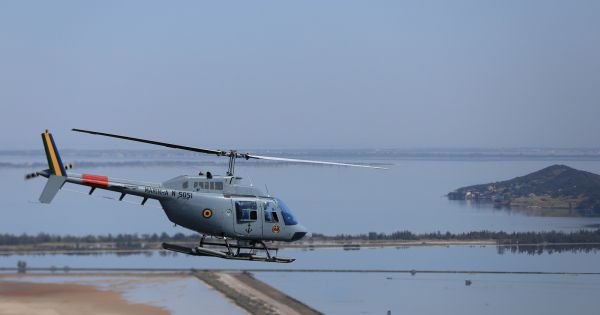
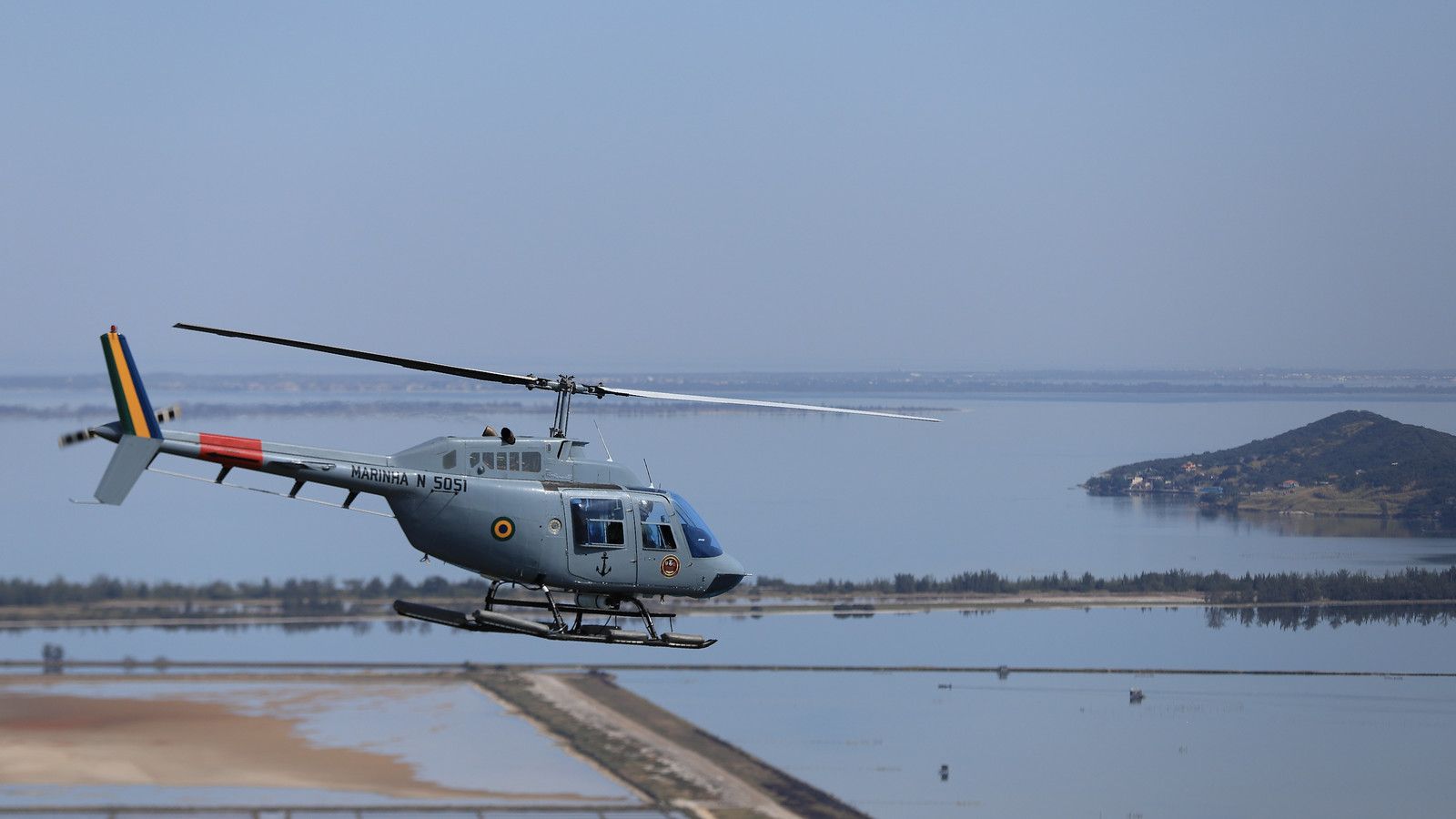
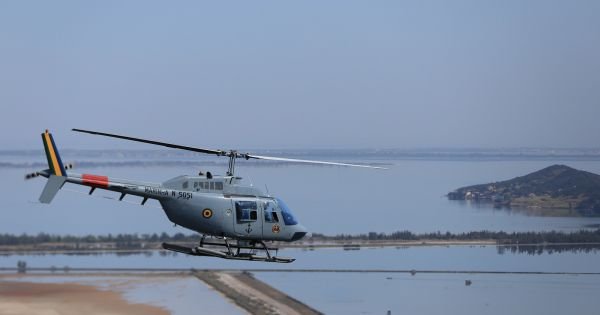
The measure calls for two Bell 412 Classic helicopters from Brazil’s Federal Police and six M108 self-propelled howitzers from the Army to be transferred to Paraguay, along with an aluminum floating bridge for river crossings. Uruguay will receive two Bell Jet Ranger III (IH-6B) helicopters from the Brazilian Navy. The Brazilian government said the equipment will be delivered in its “current condition”, and Brazil will cover transportation costs to the countries’ borders.
Signed by President Luiz Inácio Lula da Silva and Defense Minister José Múcio Monteiro Filho, the laws are intended to strengthen diplomatic ties and military cooperation, enhancing emergency response and efforts against transnational crime.
In Uruguay, the armed forces are structured to support national defense within a democratic framework, focusing on territorial security, civil assistance and international peacekeeping, though they operate with modest resources compared with larger regional militaries.
Paraguay has also been pursuing defense modernization. According to Reuters, it has been in talks with Brazil to acquire Embraer A-29 Super Tucano combat aircraft as part of a broader defense investment to confront drug trafficking and organized crime.
The transfers reflect growing efforts among Southern Cone nations to enhance regional security cooperation in the face of shared challenges, including cross-border criminal networks and emergency response requirements.
Although the ruling has been appealed, US judgments can be enforced pending appeal
Burford Capital, the main beneficiary of a US$16 billion first-instance ruling against Argentina over the 2012 expropriation of YPF, has asked federal judge Loretta Preska to hold the country in contempt and impose sanctions, citing alleged failures to comply with discovery orders.
Burford argues that Argentina did not produce emails and messages from current and former officials that it deems critical to enforcement efforts and to its claim that certain state entities operate as the government’s “alter ego.” The motion seeks civil sanctions, adverse inferences for missing evidence and coercive daily fines.
Argentina’s Treasury Solicitor’s Office said the country has complied with court orders, including the production of more than 113,000 pages and official testimony, and maintains it does not have “possession, custody or control” over officials’ personal accounts, which are protected under local law.
Although the ruling has been appealed, US judgments can be enforced pending appeal. Burford has pursued multiple avenues to collect, including efforts to attach assets and to establish an alter-ego theory. With interest, the award now exceeds US$18 billion.
Argentine outlets warned that a contempt finding by a New York court would complicate Buenos Aires’ push to regain market access at a sensitive moment for investor relations.
Among the immediate obligations, countries must conduct environmental impact assessments for planned activities beyond national jurisdiction
The High Seas Treaty, also known as the Global Ocean Treaty, enters into force on Saturday, marking “a historic achievement in ocean protection” and the start of a new phase in global ocean governance, EFE reported.
Formally known as the BBNJ Agreement, the treaty creates the first legally binding framework to safeguard marine biodiversity in international waters, which cover nearly 50% of the planet’s surface. Ratified by 82 countries, it becomes international law and aims to ensure the fair sharing of benefits from marine resources.
Its entry into force is “a milestone for multilateralism,” said Rena Lee, Singapore’s ambassador for international law who chaired the negotiations that led to the treaty’s adoption in 2023.
The agreement enables the designation of marine protected areas on the high seas, sets obligations for sustainable use, prioritizes capacity building and access to technology, and establishes benefit-sharing mechanisms. Rebecca Hubbard, director of the High Seas Alliance, said international waters are “full of life” and increasingly recognized as vital to the planet’s health.
Among the immediate obligations, countries must conduct environmental impact assessments for planned activities beyond national jurisdiction—or those with significant effects on the high seas—and notify them publicly. The first Conference of the Parties must be held by January 17, 2027, in New York, according to Adam McCarthy.
The laws are intended to strengthen diplomatic ties and military cooperation, enhancing emergency response and efforts against transnational crime.
Brazil has enacted two laws formalizing the transfer of military aircraft and equipment to Uruguay and Paraguay, as part of an initiative to upgrade operational capabilities of neighboring countries and enhance regional security, Agência Brasil reported.
The measure calls for two Bell 412 Classic helicopters from Brazil’s Federal Police and six M108 self-propelled howitzers from the Army to be transferred to Paraguay, along with an aluminum floating bridge for river crossings. Uruguay will receive two Bell Jet Ranger III (IH-6B) helicopters from the Brazilian Navy. The Brazilian government said the equipment will be delivered in its “current condition”, and Brazil will cover transportation costs to the countries’ borders.
Signed by President Luiz Inácio Lula da Silva and Defense Minister José Múcio Monteiro Filho, the laws are intended to strengthen diplomatic ties and military cooperation, enhancing emergency response and efforts against transnational crime.
In Uruguay, the armed forces are structured to support national defense within a democratic framework, focusing on territorial security, civil assistance and international peacekeeping, though they operate with modest resources compared with larger regional militaries.
Paraguay has also been pursuing defense modernization. According to Reuters, it has been in talks with Brazil to acquire Embraer A-29 Super Tucano combat aircraft as part of a broader defense investment to confront drug trafficking and organized crime.
The transfers reflect growing efforts among Southern Cone nations to enhance regional security cooperation in the face of shared challenges, including cross-border criminal networks and emergency response requirements.
Machado confirmed the move after leaving the US Capitol, following a packed schedule that included a closed-door meeting of more than two hours with Trump
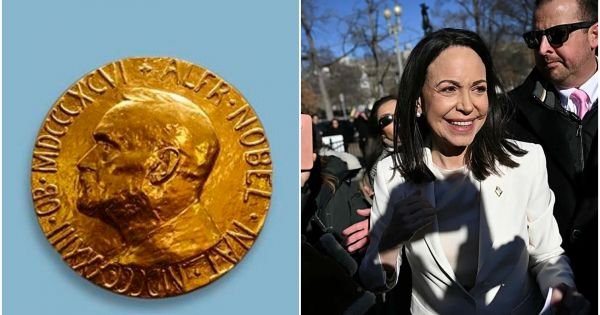
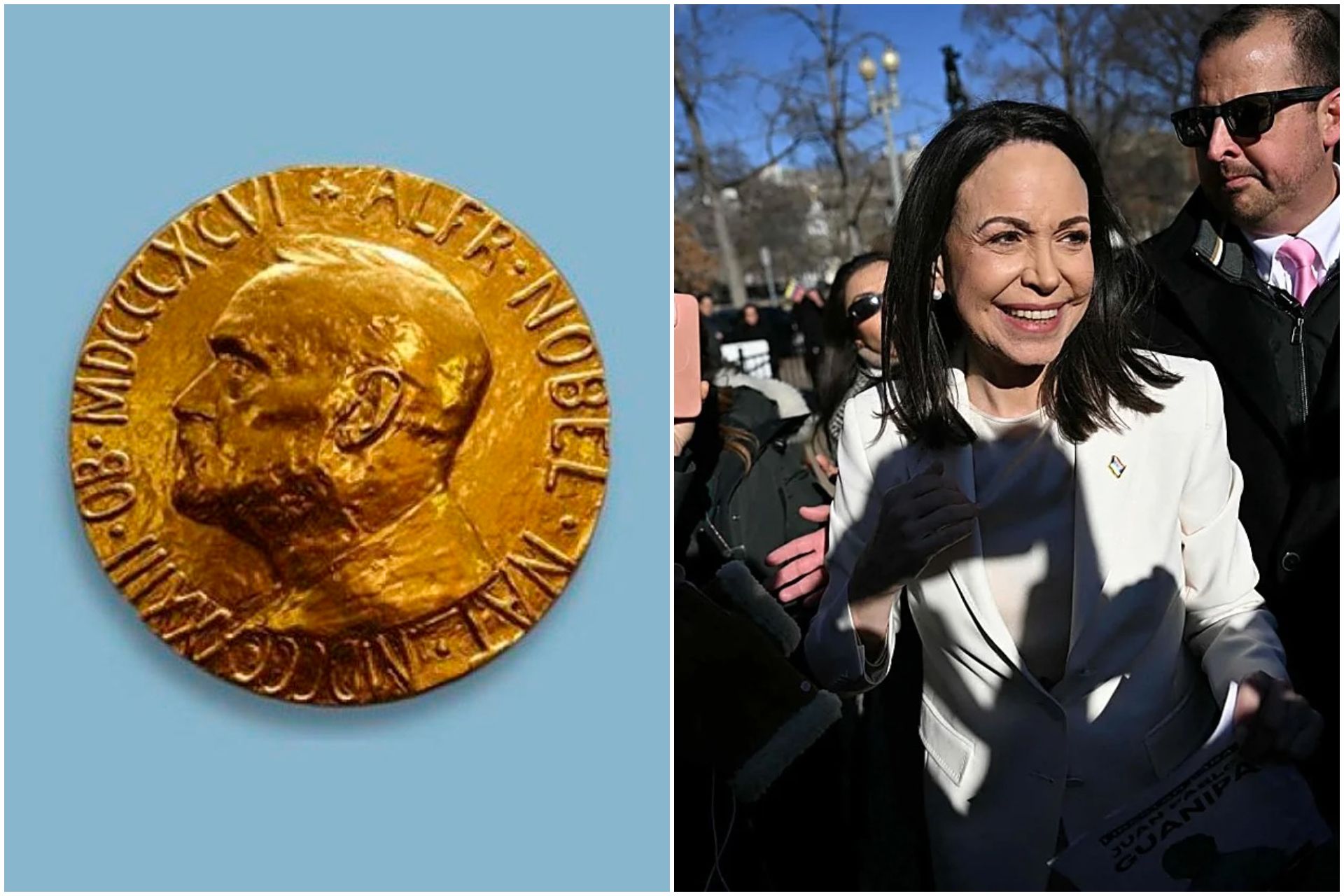
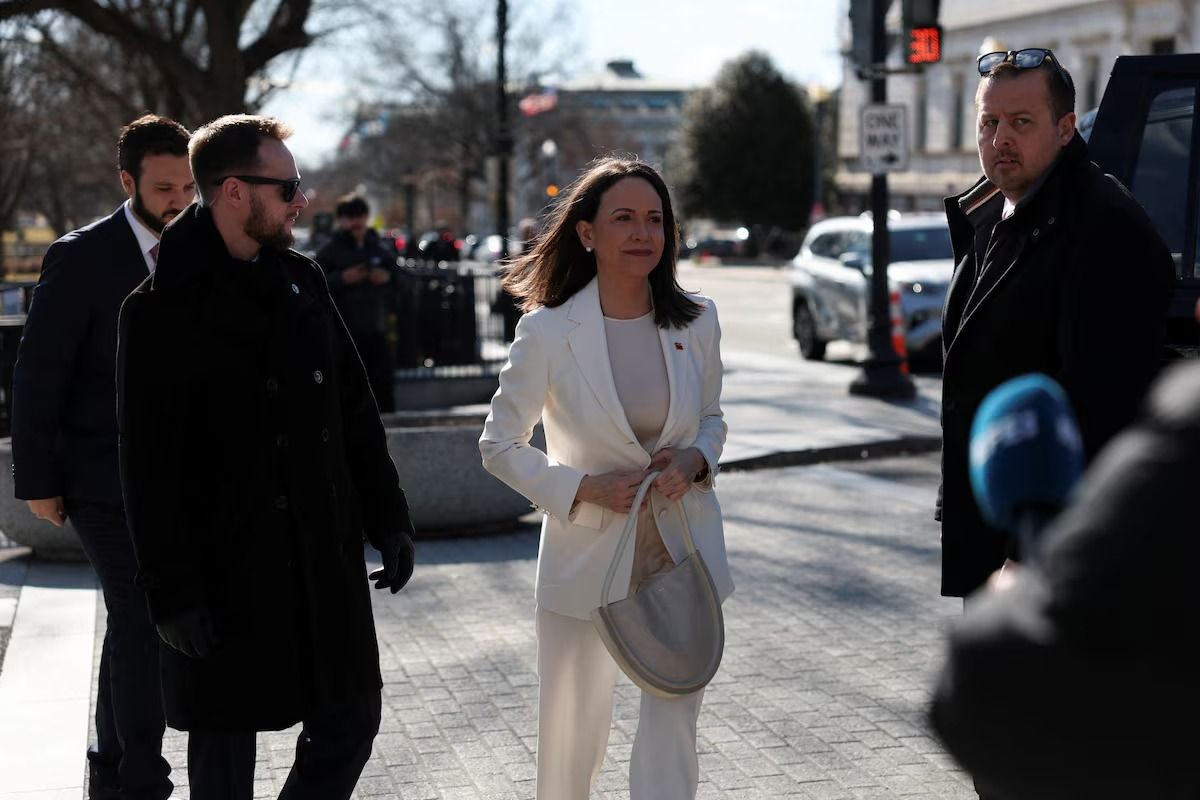
Venezuelan opposition leader María Corina Machado handed her Nobel Peace Prize medal to US President Donald Trump on Thursday, in a symbolic gesture that capped a high-stakes visit to Washington amid mixed signals from the White House over Venezuela’s political future.
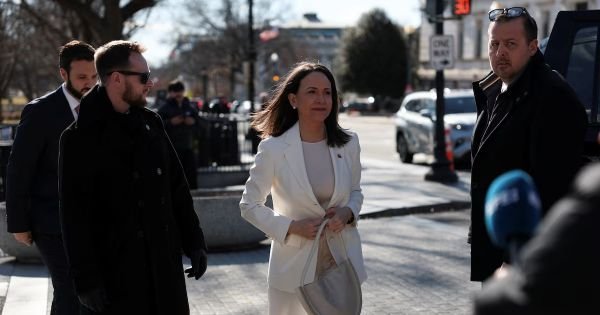
Machado confirmed the move after leaving the US Capitol, following a packed schedule that included a closed-door meeting of more than two hours with Trump at the White House and subsequent talks with US senators and lawmakers. She said she used the meeting to convey the Venezuelan people’s determination to rebuild democratic institutions, safeguard civil liberties and address what she described as “the collapse of healthcare and education.”
The opposition leader said the presentation of the medal was intended as a historical and symbolic act, recalling an episode from 200 years ago when the Marquis de Lafayette presented Simón Bolívar with a medal bearing the image of George Washington. “Two centuries later, the people of Bolívar are returning a medal to Washington as a sign of recognition,” she said.
The gesture came against a complicated political backdrop. Earlier in the day, the White House reiterated that Trump does not see Machado as the right figure to lead a political transition in Venezuela, while expressing approval of the cooperation shown by interim president Delcy Rodríguez, who took office after the capture of former president Nicolás Maduro on January 3.
Despite that stance, Machado told supporters gathered outside the White House that she “counts on the president for Venezuela’s freedom,” underscoring the importance she places on US backing at what she described as a decisive moment for the country.
After the meeting, Machado told reporters only that it had gone “very well” and declined to say whether she had handed Trump her Nobel Peace Prize medal. Photo: REUTERS/Kylie Cooper
Venezuelan opposition leader María Corina Machado told supporters gathered outside the White House on Thursday that “we count on the president for Venezuela’s freedom” after holding a closed-door meeting lasting more than two hours with US President Donald Trump.
Her remarks contrasted with the official White House line. Earlier in the day, spokesperson Karoline Leavitt said Trump’s view that Machado is “not the right person to lead political change in Venezuela” remains unchanged, calling it a “realistic” assessment. Leavitt added that the president is satisfied with the cooperation shown by Venezuela’s interim leader Delcy Rodríguez, saying that “the president likes what he is seeing and hopes this cooperation continues”.
After the meeting, Machado told reporters only that it had gone “very well” and declined to say whether she had handed Trump her Nobel Peace Prize medal, a possibility the US president had publicly welcomed. She later headed to the US Capitol for meetings with senators and lawmakers.
In Caracas, Rodríguez struck a defiant tone, calling the US capture of former president Nicolás Maduro a “kidnapping”. “If I ever have to go to Washington, I will go standing, walking, never crawling,” she told the National Assembly, while acknowledging a “stain” on bilateral relations following the January 3 operation.
Meanwhile, Washington intercepted another oil tanker in the Caribbean and seized its Venezuelan crude cargo, the sixth such action since December, as pressure mounts following the detention of Maduro and his wife Cilia Flores. Human rights groups cited by international agencies warned that many recently released detainees in Venezuela are not “fully free”, despite official announcements.
Before sunrise in Minneapolis, ordinary residents trail unmarked SUVs and sound alarms, not to target migrants but to protect them. As federal immigration enforcement surges, these quiet patrols have become a shield, buying time, visibility, and dignity for Latin American Migrants.
Watching the Street So Others Can Sleep
Just before dawn, Elle Neubauer eased her car along Lake Street in Minneapolis, passing storefronts that define the city’s immigrant economy even when their lights are off. Ecuadorean groceries, Somali cafés, Mexican taco shops, businesses built from migration stories that stretch from the Andes to the Horn of Africa, sat quietly as the cold pressed down on the pavement. In the passenger seat, her friend Patty O’Keefe lifted binoculars and scanned the road, not for criminals, but for the subtle signs of Immigration and Customs Enforcement vehicles moving through the neighborhood.
They were not alone. As the sun edged up, more volunteer patrollers arrived, spreading out along Lake Street, their presence meant to be noticed. The goal was simple and openly stated: if ICE was nearby, neighbors wanted to know. If agents were watched, filmed, and followed, they might move on. In communities where deportation can begin with a knock before breakfast, minutes matter.
With many eyes already on Lake Street and fewer agents visible that morning, Neubauer and O’Keefe drove south toward Bloomington, where O’Keefe said she had encountered ICE the day before. Their purpose, she explained, was not confrontation but delay. “Distract them, occupy their time,” she said. “The more time they’re trying to get away from us, the less time they’re spending searching for people to abduct.” The language is blunt, but for families shaped by Latin American histories of state violence and sudden disappearance, it feels precise.
Following the Signs of Power
They spotted a white Ford Explorer they suspected was ICE’s and slipped in behind it. Almost immediately, the driver began weaving through parking lots, a telltale move patrollers have come to recognize. “They do and will say anything to intimidate and scare people,” Neubauer said later. “One of their favorite lines recently is, ‘This is your only warning.’”
In a hotel parking lot, the Explorer came to a stop. Neubauer parked nearby. Then the Explorer pulled behind her, blocking her exit. A man stepped out wearing a black face covering, a tactical vest visible beneath a flannel shirt, and gestured for O’Keefe to roll down the window.
“No, thank you,” Neubauer replied, smiling and waving through the glass.
“Stop following us,” the man said through the closed window. “This is your first warning.” There was no explanation, no badge offered for inspection, just a warning delivered like a command.
Scenes like this have become more common as the Trump administration has intensified immigration enforcement in Minnesota, sending in thousands of ICE and Border Patrol agents, with more expected. Over the past year, thousands of Twin Cities residents have mobilized to protest ICE operations and divert agents away from immigrant neighborhoods, sometimes resulting in tense standoffs.
Minnesota has been a particular focus since December, when a right-wing media outlet published unsubstantiated claims that Somali Minnesotans were funneling stolen government funds to terrorism. That same month, Homeland Security Secretary Kristi Noem announced “Operation Metro Surge,” publicly framing it as a crackdown on Somali immigrants, even though most are U.S. citizens or legal permanent residents. For many residents, the announcement sounded less like policy than collective suspicion aimed at an entire community.
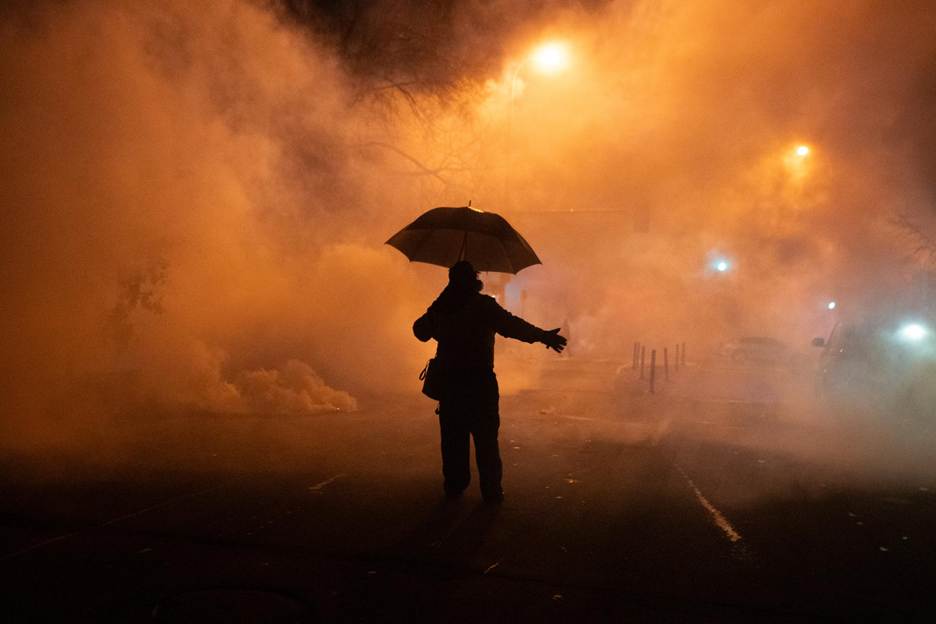
A person walks through a cloud of tear gas deployed by federal agents during a protest that followed the shooting of two people by federal agents in a residential neighborhood of Minneapolis, Minnesota. EFE/Olga Fedorova
When Protection Turns Dangerous
The stakes rose sharply after ICE agent Jonathan Ross fatally shot Renee Good in her car in south Minneapolis. The killing sent shockwaves through the city and transformed ICE patrols from a controversial tactic into, for many, a moral necessity. According to the Minnesota Reformer, there are now at least four times as many immigration agents in the state as there are Minneapolis police officers. This ratio feeds the sense of an outside force operating beyond local consent.
Citizen observers began clustering on corners, sharing locations online, and crowding into “know your rights” trainings hosted by immigrant advocacy groups. ICE did not respond to the Reformer’s requests for comment.
Appearing on Fox News, Noem described Good’s killing as an act of “domestic terrorism,” alleging she attempted to run over an agent. She also claimed nonprofit groups were training activists to “distract them, assault them,” and provoke violence. Those assertions are sharply disputed by local activists, who describe their work as lawful observation and warning.
Back in Bloomington, after the masked agent returned to the Explorer, a second vehicle, a black GMC Yukon, pulled in behind Neubauer, boxing her in while the Explorer drove away, Neubauer and O’Keefe followed the SUV as it left.
“I wonder how many first warnings we can get today,” O’Keefe joked.
Two days later, the warnings became action. Federal agents smashed O’Keefe’s car window, dragged her and her co-pilot out, and held them for eight hours inside the Whipple Federal Building.
A Network Built on Presence
When Donald Trump assumed the presidency for a second time, immigrant rights groups anticipated an enforcement surge and expanded rapid response networks. Organized by neighborhood, volunteers aim to arrive quickly at ICE activity, warn residents, inform detainees of their rights, and pressure agents to leave. A central message repeated in training is that ICE cannot enter private property without consent or a judicial warrant.
Across the country, similar tactics, honking horns, and blowing whistles have spread in cities like Chicago and Los Angeles. In the Twin Cities, they have become routine since Operation Metro Surge began. According to Tracy Roy of the Immigrant Law Center of Minnesota, following vehicles, filming officers, and making noise are legal. Physically blocking arrests is not.
As ICE tactics shifted toward faster, smaller operations, rapid responders adapted. Instead of waiting for alerts, patrollers began actively searching for ICE vehicles, following them to discourage stops and documenting interactions. “If they know somebody is watching, they’re significantly less likely to stop somebody,” Neubauer said.
The system is deliberately decentralized. Volunteers use code names in group chats. No one assigns shifts. People step in when they can, share information, then fade back into daily life. It is, in many ways, a civilian version of mutual aid long practiced in Latin American neighborhoods where trust in the state has historically been fragile.
Fear, Resolve, and the Cost of Watching
That fragility became personal on January 12, 2026, when Neubauer followed what appeared to be a convoy of federal vehicles. Agents stopped, surrounded her car, and addressed her using her wife’s legal name, information taken from the vehicle registration. “If you keep following us… We’ll have to pull you out and arrest you,” one agent warned.
The convoy led Neubauer directly to her home, idled outside, then drove on. According to a lawsuit filed by the American Civil Liberties Union, ICE has repeatedly used license-plate databases to identify and intimidate observers by showing up at their homes.
That same day, while Neubauer continued following another vehicle, agents returned to her house and pounded on the door. Her wife, fearing ICE, stayed silent until neighbors emerged and began blowing whistles. “I feel changed, and afraid,” she later said. “Not for me, but for what could have happened to you.” That afternoon, they went back out on patrol together.
For O’Keefe and Brandon Sigüenza, the cost was physical. During a Sunday patrol, they said ICE agents pepper-sprayed their car, smashed the windows, dragged them into unmarked vehicles, and detained them for hours. O’Keefe recalled an agent mocking her in custody and referring to Renee Good with a slur. The U.S. Department of Homeland Security did not respond to requests for comment.
Both were released without charges. Sigüenza said agents suggested they could help his relatives’ immigration cases if he provided the names of undocumented people or organizers. He plans to take a short break for his family’s sake, then return.
O’Keefe says the experience hardened her fear, but also her resolve. “They don’t realize this comes from a deep place of love and empathy and care for my community,” she said. “That feeling is stronger than fear.”
In Minneapolis, watching ICE has become an act of solidarity rooted in a long Latin American understanding. When institutions feel distant or hostile, survival often begins with neighbors choosing to see each other and refusing to look away.
Reporting and interviews originally published by the Minnesota Reformer, by Madison McVan
The US State Department said the suspension will remain in place until the government can ensure that new immigrants “do not extract wealth from the American people.”
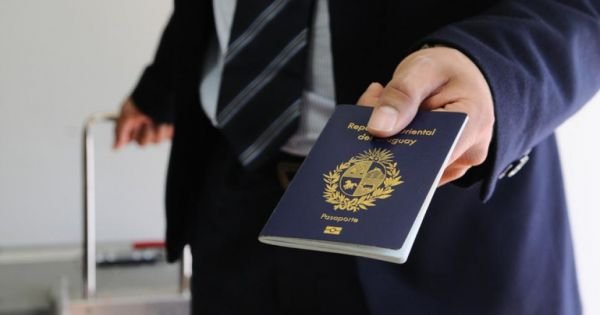
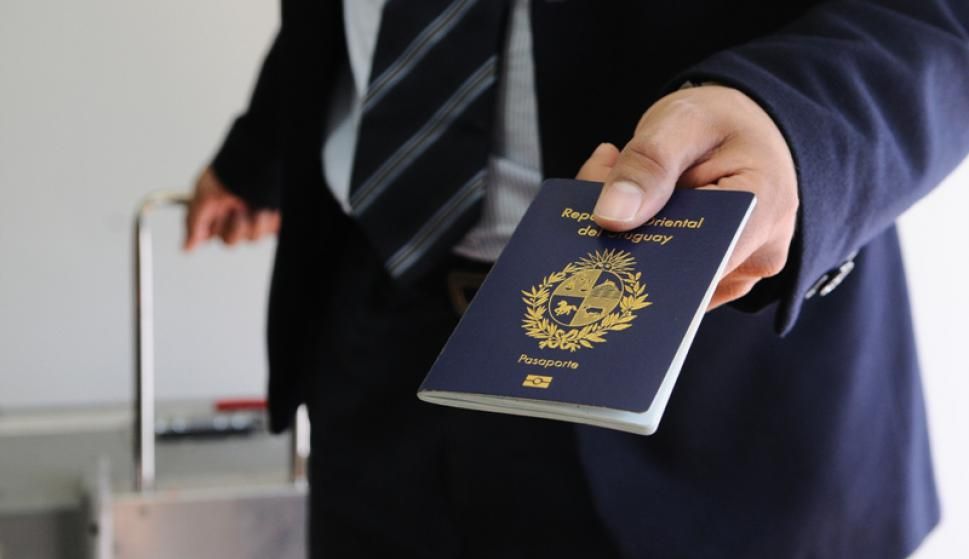
Uruguay’s President Yamandú Orsi said he was concerned by Washington’s decision to pause immigrant visa issuance for citizens of 75 countries —including Uruguay— starting January 21, with no end date announced. “In numerical terms it’s not very important, but as a signal it certainly worries us,” Orsi said after meeting US Ambassador Lou Rinaldi at the presidential residence in Montevideo.
Orsi has already met with US Ambassador to Uruguay Lou Rinaldi, during which Orsi conveyed his concern over the suspension of immigrant visas. According to official sources, the ambassador said in the meeting that he had been in contact with the White House to “clarify” the situation, while the Uruguayan government continues to seek further details on the scope of the measure and its potential impact on Uruguayan nationals.
What Washington said
The US State Department said the suspension will remain in place until the government can ensure that new immigrants “do not extract wealth from the American people.” The move is grounded in the Immigration and Nationality Act, which allows visas to be denied to applicants deemed likely to become a “public charge.”
Last November, the Trump administration instructed consular offices to tighten screening criteria, including the consideration of certain health conditions. State Department spokesperson Tommy Piggott said the policy aims to prevent abuse of US public resources.
Only three South American countries —Brazil, Uruguay and Colombia— are included among the 75 affected, alongside several nations from Central America and the Caribbean. Immigrant visas are typically sought by foreign nationals intending to live and work permanently in the United States, often through family or employer sponsorship.
Regional backdrop: Venezuela after Maduro’s capture
The visa decision comes amid heightened US engagement in Latin America following the January 3 operation in Venezuela that led to Nicolás Maduro’s capture and transfer to the United States.
Since then, acting president Delcy Rodríguez has announced limited prisoner releases, framing them as part of a new political phase. Rights groups, however, dispute official figures and say many detainees remain in custody.