Marcela Ivanovic, head of INIDEP’s Cephalopods’ Program
BIP “Victor Angelescu’ continues its scientific and research cruise
The Illex squid season in Argentina, taking into account catches of the three first seeks of 2026 can be considered, “encouraging”, according to Marcela Ivanovic, head of the Cephalopods’ Program from the Fisheries Research and Development Institute, INIDEP.
“We’ve already presented the first report up to 22 January 2026, and catches have reached 25.000 tons , with an average of 38 tons per day”, explained Ms Ivanovic, in reference to the 74 jiggers operating out of 82 licensed to fish in Argentina’s EEZ.
“The fleet is operating where it does every year, with the summer spawning stock, in the intermediate platform, between 44 and 46 latitude South”, added Ms Ivanovic together with Nicolas Prandoni, who will be heading the Cephalopods department.
However the abundance that the jigger fleet found north of the South Managed areas has been far from that of the sub-patagonic stock, which “we anticipated would be very poor, sadly very poor, 158 kilos, which frustrated the 53 jiggers that tried in the south”. In effect many vessels went South of 49 hoping to repeat the experience at the start of the 2025 season, when 18 jibbers managed 700 tons of high quality squid, but this year it was a disaster, and they headed north”.
“Squid being captured now is 20 centimeters long, 158 grams, mature and S and SS sizes,” added the INIDEP official pointing out that an increase in the number of scientific observers in the fleet will supply us with additional consolidated data, plus the fact that the different companies are complying with the rules, with weekly reports, meaning we have a good dialogue with the companies chamber”
As to the impact of foreign jigger fletes and ‘illegal, non declared’ fishing, “the largest impact has been on the sub-Patagonic stock, which was the main support of catches in the nineties and beginning of the two thousands.
“The abundance of that stock has diministhed, but has had a limited impact since there are other stocks along the Argentine shelf, particularly the north Patagonic stock, “which for 17 years did not record the 2025 abundance, and when the majority of catches are on this side”.
Meantime INIDEP’s BIP “Victor Angelescu’ continues its scientific and research cruise expected to last almost the whole of February in the 46/51 South sectors, at 100 to 500 isobaths, along the Patagonia shelf.
Fifty-four days since his last Champions League goal, Julián Álvarez is living football’s pressure at Atlético Madrid. Ten matches, minutes piling up, and shots have not moved the scoreboard, even as teammates insist the finish will return soon enough.
The Last Goal Still Echoes in Eindhoven
The moment is easy to replay because it arrived with the clean logic of a striker’s life. Minute thirty-seven at the Philips Stadion in Eindhoven, after a fast start from PSV. A pass from Alexander Sørloth across the face of the goal. Julián Álvarez, nicknamed La Araña, nudging it in. The net ripples. The noise changes. Atlético steadies itself, then suffers, then escapes with a two-three win that felt, in its own small way, like a statement.
It was also his last goal in an Atlético shirt.
That was December nine, two thousand twenty-five. On February one, two thousand twenty six, the drought is no longer a talking point. It is the frame around him. The notes put it plainly: fifty-four days without scoring, a run that had already reached seven hundred fifteen minutes and twenty-six shots by January twenty-seven, then continued through two more appearances without relief.
The trouble is that droughts do not stay static. They gather little details that make them heavier. A run that once looked like a league issue, softened by European production, becomes complete silence across competitions. Álvarez had already been dry in LaLiga when he scored against PSV, but Europe kept the balance. Now it is ten consecutive official matches without a goal since that Eindhoven night, and the balance has tipped.
An everyday ritual is implied here. Fans check the match clock for the last time he scored, then recheck it. The striker does the same, whether he admits it or not—a forward lives in numbers that keep time.
Argentine forward for Atlético de Madrid, Julián Álvarez. EFE/Juanjo Martín
Shots, Minutes, and the Math of a Slump
The sequence of games is not presented as drama in the notes, but as an accumulation. Valencia, Girona, Real Sociedad. Real Madrid in the Spanish Super Cup, a full ninety minutes. Deportivo de La Coruña in the Copa del Rey. Alavés. Galatasaray in the Champions League. Mallorca. Then Bodø/Glimt on January twenty-eight, a one-two defeat at the Riyadh Air Metropolitano, where Álvarez was substituted in the fifty-seventh minute. Then Levante UD on January thirty-one, a nil-nil, where he entered in the twenty-seventh minute after Sørloth was injured.
Two matches, two different shapes of frustration. Against Bodø/Glimt, Atlético loses, and the forward comes off before the hour. Against Levante, Atlético cannot find a way through, and Álvarez, coming in cold, still poses a threat—a header saved at minute sixty-nine. A late effort stopped at ninety plus four. The goalkeeper is forced to work. The net stays still.
This is where the numbers start to argue with the narrative people want to tell about a striker who has “forgotten” how to finish. The notes describe the hard production line that framed the drought through January twenty-seven: twenty-six shots in that stretch, five on target, thirteen off, eight blocked. The expected goals figure for the run, 1.6, suggests something subtler than pure individual failure. Chances exist, but not enough clean ones. Or they arrive in the wrong rhythm. Or they come and do not fall.
What this does is shift the conversation from blame to context without erasing responsibility. A forward is paid, in the end, for goals. But football is not only a striker and a ball. A team that cannot turn pressure into clear looks also shares the weight of a dry spell.
The notes add a small but telling detail after January twenty-seven: more minutes, more attempts, including two shots on target against Levante, and still no breakthrough. In a slump, even “on target” can feel like a cruel compliment.
Argentine forward for Atlético de Madrid, Julián Álvarez. EFE/Juanjo Martín
Simeone’s Patience and Atlético’s Stakes
Diego Simeone has not hidden himself. He has kept Álvarez close, used him regularly, defended him publicly, and framed the performance as more than the final touch. “Julián hizo un partido fantástico, sin gol, pero fantástico,” Simeone said, in the notes, insisting he played a fantastic match even without scoring.
That is a coach’s loyalty, but it is also a coach’s calculation. Simeone needs Álvarez at his most decisive. The team needs it too. There is a reason a drought becomes headline material at a club like Atlético, where tight matches and narrow margins are not an exception but an identity. When goals are scarce, every missed moment feels larger.
Teammates have leaned into the language of inevitability. Nico González reduced it to a phase, calling him a top player and saying he is sure Álvarez will come out of it because he is stronger than anyone. Johnny Cardoso echoed the same idea, describing total confidence and saying his moment will arrive.
The wager here is that belief can hold long enough for the striker’s timing to return, without the season’s demands outpacing patience. This is not a crisis described in panic in the notes, but a problem that has begun to shape how every appearance is read. A forward can play well, press well, move well, and even scare defenses. But the scoreboard has a way of making everything else feel like a preface.
In Eindhoven, Álvarez’s touch was final and straightforward. Since then, the story has been about everything that comes before the finish, and everything that follows its absence. The longer it goes, the more each near miss becomes a small test of character, not just technique.
At one end of this run sits a goal in the thirty-seventh minute against PSV, a pass from Sørloth and a net that gave way. At the other sits a header saved at sixty-nine and a late shot stopped at ninety plus four against Levante. Between them, ten matches, seven hundred fifteen minutes counted at one point along the way, and a growing insistence from the people around him that this is temporary.
News Americas, NY. NY, Mon. Feb. 2, 2026: In modern-day football betting, there are rarely any numbers in a vacuum. While the calculation of odds involves complicated statistical models and comprehensive data gathering and modeling of injuries and tactical strategies in a game, there is another variable that has an impact that consistently throws things out of balance: global superstardom.
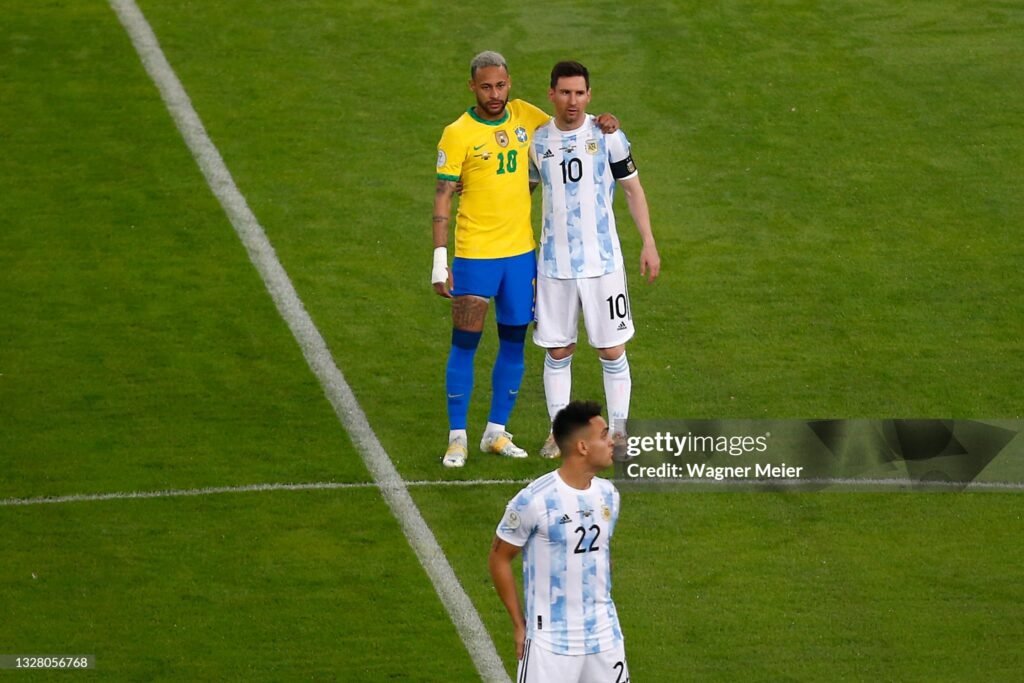
FLASHBACK – Neymar Jr. of Brazil hugs Lionel Messi of Argentina as Lautaro Martinez of Argentina prepares for kick off prior to the final of Copa America Brazil 2021 between Brazil and Argentina at Maracana Stadium on July 10, 2021 in Rio de Janeiro, Brazil. (Photo by Wagner Meier/Getty Images)
Few players represent this phenomenon better than Neymar and Lionel Messi. Their mere existence can skew betting volumes, public perception, and market behavior in ways that go well beyond what probability models predict. For online bettors logging in through sites such as jackpot city login, the issue is no longer about form or fitness – it’s about influence.
The Psychology of Star Power in the Betting Markets
Football betting markets are theoretically efficient, but in practice, they are highly human. Neymar and Messi aren’t just elite players; they are emotional anchors for millions of fans all over the world. When either of the names appears on a team sheet, the casual bettor usually will react on instinct rather than logic. This emotional bias leads to increased spending on teams with these players on their rosters, regardless of underlying metrics such as expected goals or defensive solidity.
Sportsbooks know precisely what is going on. When a superstar is known to start, odds will often shorten not because there is a massive change in the actual probability of the team winning, but because bookmakers anticipate a large amount of public money. Bettors using the Jackpot City login tend to observe this in real-time, as lines can change quickly based on team news with marquee players.
Messi, Neymar and the ‘Public Money Effect’
One of the best-documented phenomena in betting economics is the “public money effect.” This is when huge amounts of bets are coming from recreational bettors as opposed to sharp or professional bettors. Messi and Neymar are magnets to this kind of action. Matches involving them have worldwide audiences, casual bets, and emotional bets minutes before kickoff.
As such, sportsbooks occasionally handicap odds for teams with these stars on them for less favorable prices simply because bettors will take less on these teams’ odds just to play for their idols. In these cases, the odds do not represent an aspect of probability but rather a response to market psychology. Experienced users of Jackpot City login platforms often seek to increase value by betting against star-driven narratives rather than following them.
Market Movement More Than Match Results
The effect of Neymar and Messi is more than just for win-lose markets. Player props, goal scorers, assists and even in-play betting lines are impacted. In the case of Messi on the pitch, anytime goalscorer odds are often squashed, even against defensively strong opponents. Neymar’s skills and profile for creating and winning great plays similarly inflate expectations around penalties, shots on target, and match-defining plays.
Live betting markets increase this effect. A single dribble, free kick, or near miss can cause in-play odds to swing disproportionately when it involves a superstar. Bettors logging in via the Jackpot City login are often struck by how quickly markets move during star moments, compared with identical moves by less famous players.
Are the Odds Wrong – Or Just Different?
This raises an important question: are bookmakers mis-pricing matches due to Neymar and Messi, or are they just pricing demand over probability? In fact, odds are used for two purposes. They make likelihood estimates but also balance risk. When there are millions of bettors willing to offer exposure and bet on the same player or outcome, sportsbooks need to take precautions.
From a pure statistical perspective, Messi and Neymar are not always worth the market movement their name generates. However, from a commercial perspective, the odds are they are doing exactly what they are designed to do: manage liability. Savvy bettors with jackpot city login know that the presence of a superstar often leads to inefficiencies in other facets of the market, especially on the opposing team or other outcomes.
The Long-Term Effect on Betting Strategy
For disciplined bettors, matches involving Neymar or Messi are both dangerous and promising. Following the crowd often means accepting poor value, while fading the public narrative can discern sharper lines. Over time, emotionally biased betting is a losing strategy, even when it comes to betting with the great players of all time.
That said, it would also be a mistake to dismiss star power entirely. Elite players exert a controlling influence on matches in ways that models have difficulty quantifying, particularly in high-pressure moments. The key is balance – knowing when the market is over-reacting and when there is real impact on the market in line with price movement.
An Athletic and Psychological Influence
Neymar and Messi undoubtedly move the betting markets, at times more than the odds of them would indicate. Their influence is not only athletic, but psychological, in that it guides the way that bettors think, feel, and wager. For anyone navigating modern football betting via the Jackpot City login, understanding this dynamic is essential. The smartest bets are not often about betting the biggest name – they’re about knowing when the market has already done that for you.
The visit comes after Washington revoked Petro’s visa in September and, in October, imposed financial sanctions through the U.S. Department of the Treasury and its OFAC sanctions program
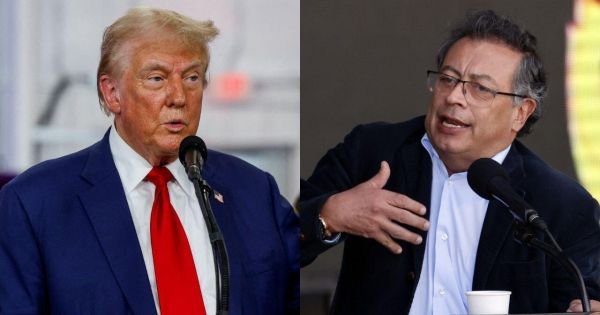
Colombian President Gustavo Petro will meet U.S. President Donald Trump at the White House on Tuesday, Feb. 3, in what both capitals frame as an attempt to steady a relationship under pressure from disputes over counternarcotics policy, regional security and trade.
The visit comes after Washington revoked Petro’s visa in September and, in October, imposed financial sanctions through the U.S. Department of the Treasury and its OFAC sanctions program, alleging links to illicit drug activity. Treasury Secretary Scott Bessent said the administration was taking “strong action” and accused Petro of allowing cartels to flourish—claims the Colombian government has rejected.
Separately, the State Department said in October it would not certify Colombia’s counternarcotics efforts and paired that decision with sanctions-related actions, adding institutional weight to the bilateral dispute.
Public messaging ahead of the meeting has swung between de-escalation and confrontation. After an early-January phone call, Trump wrote that it was a “Great Honor” to speak with Petro, praising the “tone” and confirming plans for a White House meeting. Petro, for his part, called the talks “decisive” for him and “for the life of humanity,” according to EFE, while also renewing criticism of U.S. actions in Venezuela.
Outcomes range from a pragmatic reset—potentially conditioned on tougher anti-drug measures and broader geopolitical alignment—to a tense encounter that could spill into trade, security cooperation and travel restrictions.
Underlying the diplomacy is a renewed focus on Colombia’s coca and cocaine indicators, with competing narratives around eradication, seizures and extraditions shaping Washington’s demands and Bogotá’s defense ahead of the Oval Office talks.
The visit comes after Washington revoked Petro’s visa in September and, in October, imposed financial sanctions through the U.S. Department of the Treasury and its OFAC sanctions program
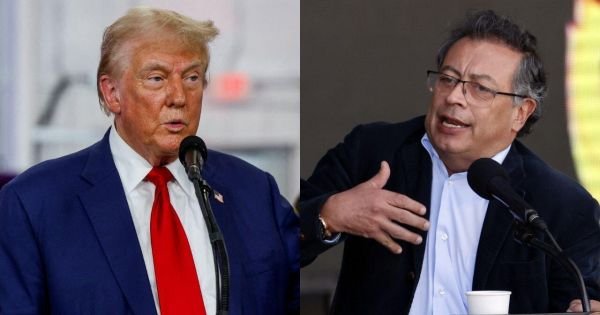
Colombian President Gustavo Petro will meet U.S. President Donald Trump at the White House on Tuesday, Feb. 3, in what both capitals frame as an attempt to steady a relationship under pressure from disputes over counternarcotics policy, regional security and trade.
The visit comes after Washington revoked Petro’s visa in September and, in October, imposed financial sanctions through the U.S. Department of the Treasury and its OFAC sanctions program, alleging links to illicit drug activity. Treasury Secretary Scott Bessent said the administration was taking “strong action” and accused Petro of allowing cartels to flourish—claims the Colombian government has rejected.
Separately, the State Department said in October it would not certify Colombia’s counternarcotics efforts and paired that decision with sanctions-related actions, adding institutional weight to the bilateral dispute.
Public messaging ahead of the meeting has swung between de-escalation and confrontation. After an early-January phone call, Trump wrote that it was a “Great Honor” to speak with Petro, praising the “tone” and confirming plans for a White House meeting. Petro, for his part, called the talks “decisive” for him and “for the life of humanity,” according to EFE, while also renewing criticism of U.S. actions in Venezuela.
Outcomes range from a pragmatic reset—potentially conditioned on tougher anti-drug measures and broader geopolitical alignment—to a tense encounter that could spill into trade, security cooperation and travel restrictions.
Underlying the diplomacy is a renewed focus on Colombia’s coca and cocaine indicators, with competing narratives around eradication, seizures and extraditions shaping Washington’s demands and Bogotá’s defense ahead of the Oval Office talks.
News Americas, New York, NY, Mon. Feb. 2, 2026: Independent Jamaican artist Keznamdi captured the 2026 Grammy Award for Best Reggae Album on Sunday night, edging out genre heavyweights, including Vybz Kartel, in a victory that underscored both reggae’s evolving sound and the growing influence of independent Caribbean artists on the global stage.
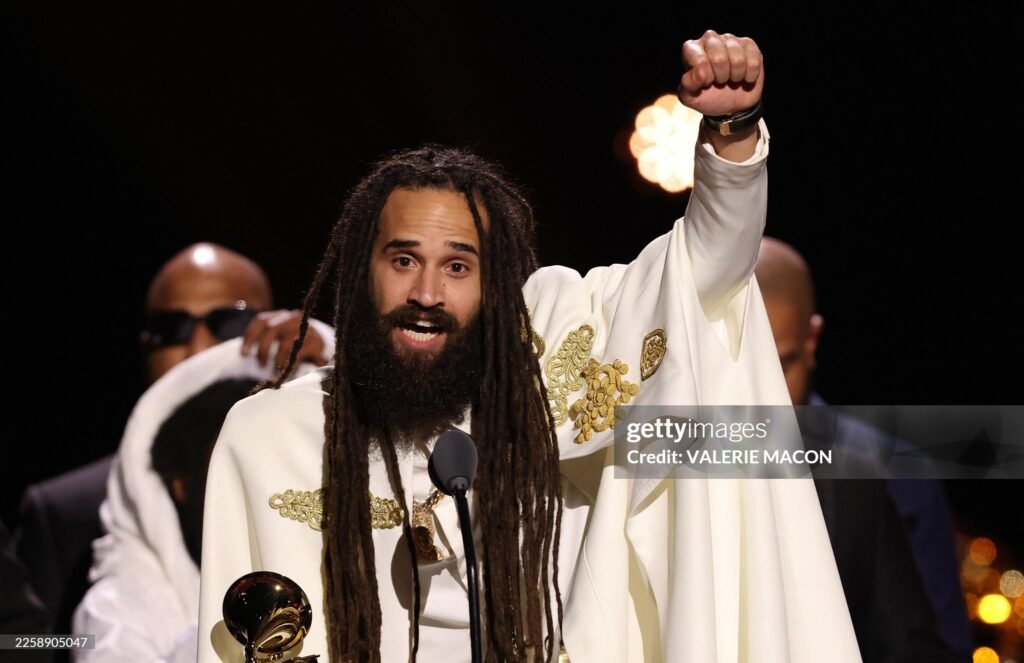
Jamaican musician Keznamdi accepts the Grammy for Best Reggae Album for “BLXXD & FYAH” on stage during the 68th Annual Grammy Awards Premiere Ceremony at the Crypto.com Arena in Los Angeles on February 1, 2026. (Photo by VALERIE MACON / AFP via Getty Images)
Keznamdi claimed the honor for BLXXD & FYAH, released independently in August 2025, marking his first Grammy win and his first nomination. The album triumphed over Kartel’s Heart & Soul, Lila Iké’s Treasure Self Love, Jesse Royal’s No Place Like Home, and Mortimer’s From Within.
Keznamdi (Second from left) accepts the Best Reggae Album award for “BLXXD & FYAH” at the 2026 Grammy Awards Pre-Show (Premiere Ceremony) held at the Peacock Theater in Los Angeles, CA, Sunday, Feb. 1, 2026. (Myung J. Chun / Los Angeles Times via Getty Images)
The announcement was made during the Grammy Premiere Ceremony at the Peacock Theater in Los Angeles on Sunday, February 1.
“Reggae music has always been a music weh defend truths and rights, African liberation, and Black man redemption,” Keznamdi said while accepting the award. “We a represent Jamaican culture — dancehall and reggae.”
A Roots-Deep Reggae Journey
Born into music, Keznamdi is the son of Errol and Kerida, lead vocalists of the international reggae band Chakula. He grew up touring globally and recording in a home studio in the St. Andrew hills of Jamaica, where the band produced ten albums.
He recorded his first song at age five and began performing publicly during his mother’s album release tours for her children’s project Save the World, which became a viral hit in Jamaican primary schools. His musical development continued through studies at St. Mary’s College in Northern California, followed by formative years living in Tanzania and completing high school in Ethiopia.
BLXXD & FYAH features collaborations with Kelissa, Mavado, and Masicka, blending roots consciousness with contemporary global production.
A Defining Caribbean Night at the Grammys
Keznamdi’s breakthrough came on a night that proved unusually resonant for Caribbean and diaspora artists across genres — not only in wins, but in message.
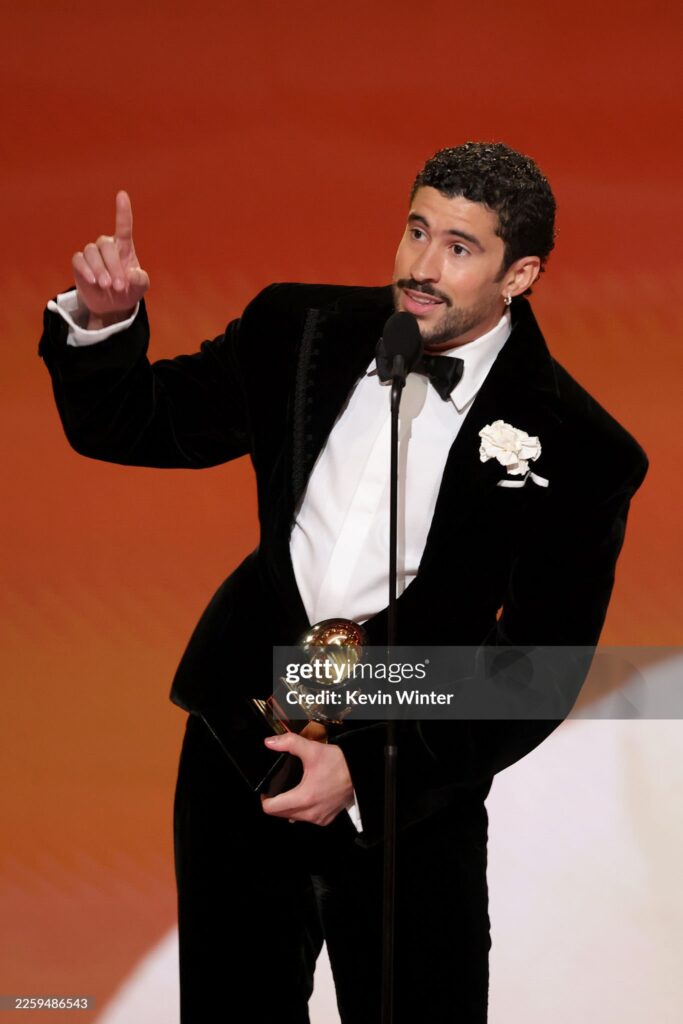
Puerto Rico star, Bad Bunny accepts the Best Música Urbana Album onstage during the 68th GRAMMY Awards at Crypto.com Arena on February 1, 2026 in Los Angeles, California. (Photo by Kevin Winter/Getty Images for The Recording Academy)
Puerto Rico–born global superstar Bad Bunny made Grammy history by becoming the first Latin artist to win Album of the Year with a Spanish-language album. During his acceptance speech, Bad Bunny openly criticized aggressive U.S. immigration enforcement.
“Before I say thanks to God, I’m going to say ICE out,” he told the audience, referencing recent civilian deaths amid heightened enforcement actions. He later added, “We’re not animals. We’re not aliens. We are human beings.”
Bad Bunny also won Best Global Music Performance and Best Música Urbana Album, further cementing his dominance on the night.
Cuban-born icon Gloria Estefan won Best Tropical Latin Album for Raíces and used her moment in the press room to call for a return to democratic principles and humanity in immigration policy.
“These values are the reason people want to be here,” Estefan said. “I hope our government listens to our plea for humanity.”
Caribbean Britain and the Windrush Legacy
Caribbean heritage star, Olivia Dean attends the 68th GRAMMY Awards on February 1, 2026 in Los Angeles, California. (Photo by John Shearer/Getty Images for The Recording Academy)
British singer Olivia Dean, who has Jamaican-Guyanese roots, was named Best New Artist for Nice To Each Other. In her speech, Dean invoked her family’s immigrant history, noting that her grandmother was part of the Windrush generation.
“I’m here as the granddaughter of an immigrant,” she said. “I’m a product of bravery. We’re nothing without each other.”
“ICE OUT” Becomes A Cultural Marker
Beyond speeches, visible protest marked the ceremony. Several artists wore pins reading “ICE OUT,” including Kehlani, Billie Eilish, Justin Vernon of Bon Iver, and jazz vocalist Samara Joy.
The coordinated symbolism reflected a broader moment of cultural dissent — driven largely by artists whose identities are shaped by migration, diaspora, and cross-border histories.
More Than An Awards Night
While Keznamdi’s Grammy win marked a personal and professional milestone – and a victory for independent reggae – the night itself signaled something larger. Caribbean artists were not only recognized for their musical excellence; they used one of the world’s biggest cultural platforms to assert their humanity, history, and right to speak.
In a genre born from resistance and survival, Keznamdi’s words echoed long after the trophy was raised — on a night when Caribbean voices didn’t just win, they defined the moment.
The early margin puts Fernández within reach of the 40% threshold required to win outright and avoid an April runoff
With 61.50% of the vote counted, Laura Fernández of the Sovereign People’s Party was leading with 50.23% of the vote, compared with 32.12% for social democrat Álvaro Ramos, who was running second, according to provisional data from the Supreme Electoral Tribunal (TSE). Roughly 3.7 million Costa Ricans were eligible to vote Sunday to choose a successor to President Rodrigo Chaves and renew the 57-member Legislative Assembly. Voter turnout was estimated at about 66%, in a day shaped by concerns over drug-related violence and widespread voter engagement, as early results began to roll in from across the country.
The early margin puts Fernández within reach of the 40% threshold required to win outright and avoid an April runoff. The campaign unfolded in a polarized media environment, with outgoing President Rodrigo Chaves—barred from re-election—remaining the central political protagonist and frequently attacking a splintered opposition field that entered election day with roughly 20 candidates.
Campaigns had prepared parallel election-night events in San José: Fernández’s team gathered supporters at a hotel venue for a post-results address, while Ramos planned a separate speech elsewhere in the capital. Claudia Dobles—running under the Citizen Action banner within the broader opposition coalition—called supporters to meet at the “Mercadito La California” food hall downtown.
Beyond Ramos and Dobles, the opposition landscape includes left-wing legislator Ariel Robles, whose party has been prominent in congressional battles, and lawyer José Miguel Aguilar, who has drawn attention due to family ties to El Salvador’s president.
A regional political footnote also surfaced: Nayib Bukele publicly congratulated Fernández as “president-elect” before the count was conclusive, prompting commentary in regional media.
The vote also renews Costa Rica’s 57-seat legislature, which will shape the next administration’s ability to legislate on security, judicial reforms and cost-of-living measures. As counting continues, the dominant question remains whether Fernández can sustain her advantage through later reporting and secure a first-round win.
“I think we’re going to make a deal with Cuba… we’ll see what happens,” Trump said
US President Donald Trump said his administration is talking with “the highest people” in Cuba and voiced confidence that a deal could be reached, even as Washington tightens economic pressure aimed at restricting the island’s fuel lifeline.
“I think we’re going to make a deal with Cuba… we’ll see what happens,” Trump told reporters, arguing that a humanitarian emergency “doesn’t have to happen” if Havana chooses negotiation. The comments come amid an intensified push to squeeze Cuba’s access to imported oil and refined products.
Days earlier, Trump signed an executive order that authorizes tariffs on imports from any country that supplies oil to Cuba. The measure does not set a fixed rate, leaving the tariff level to be determined by the president on a case-by-case basis after assessments by the Treasury and Commerce departments—an approach designed to deter or raise the cost of third-country shipments to the island.
Claudia Sheinbaum, the president of México, warned that cutting fuel flows could trigger a humanitarian crisis and said her government would continue to support Cuba through alternative channels, while Trump countered that Havana would “probably come to us” to strike a bargain.
Washington has also sharpened its public criticism after incidents involving US chargé d’affaires Mike Hammer. In a social media statement, the State Department’s Western Hemisphere bureau accused Cuba’s government of “failed intimidation tactics” and said US diplomats would keep meeting “with the Cuban people.” Hammer said he was heckled by a group outside the Iglesia San Francisco de Paula and argued the agitators did not represent ordinary Cubans.
US messaging framed 2026 as a year in which Cubans should be able to “exercise their fundamental freedoms,” underscoring that the standoff is being presented in both political and economic terms.
Separately, some regional outlets have pointed to backchannel discussions in Ciudad de México involving senior Cuban figures and financial arrangements tied to remittance-related funds, but no official confirmation has been issued by either government.
Civil Defense said the system is expected to form near Brazil’s Southeast and bring heavier rain back to Santa Catarina’s coastal strip
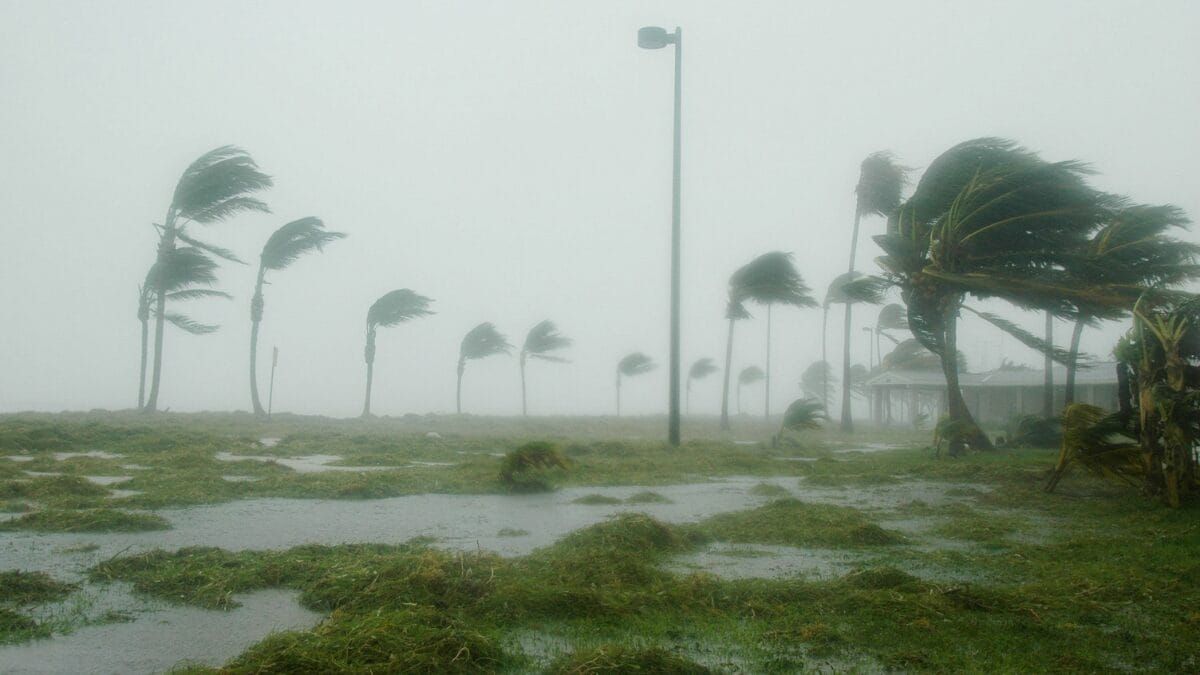
An extratropical cyclone forecast to develop offshore in the South Atlantic is already driving growing instability across Santa Catarina, with officials warning that conditions could worsen between Monday, Feb. 2, and Wednesday, Feb. 4. The alerts were issued by Defesa Civil de Santa Catarina and reported by Agência Brasil.
Civil Defense said the system is expected to form near Brazil’s Southeast and bring heavier rain back to Santa Catarina’s coastal strip. From early Tuesday, storms are likely to intensify—especially from the northern coast to the greater Florianópolis area—raising the risk of urban flooding, fast runoff and, in susceptible terrain, landslides.
Before that peak, the state has already seen isolated thunderstorms with lightning, strong wind gusts, possible hail and localized flooding, particularly along the coast and the Itajaí Valley. Civil Defense said individual storm cells may last two to three hours and still produce “point flooding” and spot damage.
Meteorologist Nicolle Reis, quoted by Agência Brasil, highlighted the expected shift from short-lived instability to sustained rainfall: “Unlike the weekend, when instabilities are fleeting, rain should occur in a persistent and high-volume way over the next days.” At the federal level, Instituto Nacional de Meteorologia (INMET) maintained a heavy-rain warning for the area, advising residents to avoid sheltering under trees during gusts and to take precautions around the power grid.
While the current system is still evolving, recent history underscores the region’s exposure: an extratropical cyclone in southern Brazil caused devastating floods and dozens of deaths in 2023. In 2025, an extratropical-cyclone-driven storm triggered widespread power outages in the São Paulo metropolitan area.
Authorities urged residents to monitor official bulletins and, in case of emergencies, to contact Civil Defense (199) or the Fire Department (193).
Adult diabetes diagnoses increased from 5.5% in 2006 to 12.9% in 2024, and hypertension rose from 22.6% to 29.7%.
More than six in ten Brazilians are now overweight and obesity affects roughly one in four adults, according to official health data released this week and carried by Agência Brasil. The survey estimates that 62.6% of the population had excess weight in 2024, up from 42.6% in 2006, while obesity (BMI ≥ 30) doubled from 11.8% to 25.7% over the same period.
The dataset also points to a broader rise in chronic conditions linked to weight and lifestyle. Adult diabetes diagnoses increased from 5.5% in 2006 to 12.9% in 2024, and hypertension rose from 22.6% to 29.7%.
Trends in daily habits were mixed. Physical activity tied to urban commuting fell from 17% in 2009 to 11.3% in 2024—an erosion officials associate with greater reliance on transport apps and public transit—while moderate leisure-time activity (at least 150 minutes per week) rose from 30.3% to 42.3%. Diet indicators showed limited improvement: regular fruit-and-vegetable consumption remained broadly stable, but frequent intake of soft drinks and artificial juices declined sharply compared with levels recorded in the late 2000s.
Health Minister Alexandre Padilha argued that positive shifts—less soda and more recreational exercise—have not been enough to reverse obesity, diabetes and hypertension as Brazil’s population ages. He called for stronger prevention and long-term care policies.
For the first time, the survey also measured sleep. It found that 20.2% of adults in state capitals sleep fewer than six hours per night and 31.7% report at least one insomnia symptom, with higher prevalence among women. Padilha warned that poor sleep quality is closely linked to weight gain, worsening chronic disease and mental-health strain, and said primary care teams will be pushed to address sleep more systematically.
In response, the Health Ministry launched the “Viva Mais Brasil” initiative, aiming to expand prevention and healthy-living measures through the SUS while also engaging the private sector. Officials announced R$ 340 million in funding for policies that promote physical activity nationwide.