Category: Home

  • Colombia, Ecuador Tariffs Turn Border Ports Into the Real Battlefield

    Colombia, Ecuador Tariffs Turn Border Ports Into the Real Battlefield


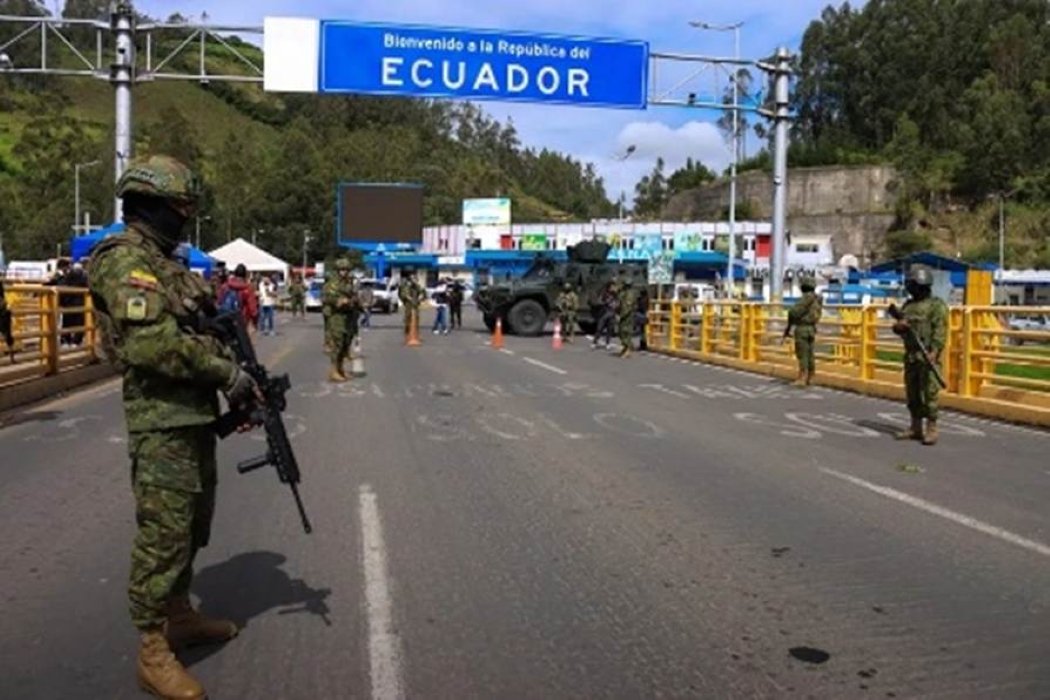
    A 30 percent security tariff has jolted trade, electricity, and trust at the border between Colombia and Ecuador. At Rumichaca, a quiet crossing hints at what is at stake: joint port control, shifting cocaine routes, and presidents turning security into economic punishment for everyone.

    At Rumichaca, Silence Feels Like Policy

    At the Rumichaca International Bridge, the main artery between Ecuador and Colombia, local media described an unusual, almost disquieting silence. It is the quiet that makes you notice what is usually swallowed by motion. The space where engines idle. The pause where paperwork changes hands. The little rituals of a border that lives typically by routine.

    One sensory detail stands out in that description, because it is so basic: stillness. And with it, an everyday observation that is almost unavoidable once you name Rumichaca an artery. Arteries are not supposed to feel quiet.

    The trouble is that this silence is not just a mood. It is the sound of a diplomatic rupture hardening into something more practical and more punishing: a trade and energy war between neighbors whose shared geography keeps dragging them back into the same argument, even when the presidents change, and the slogans shift.

    This time, the spark was economic, and it arrived with the bluntness of a percentage. Ecuadorian President Daniel Noboa announced that beginning February 1, a 30 percent tariff would apply to imports from Colombia, framed as a “security tariff” and justified as a response to what he called a lack of reciprocity and firm action in the fight against drug trafficking along the border. The way he put it, the evidence points to a regional narcotrafficking machine operating from neighboring territories.

    Colombia answered quickly. Bogotá announced a matching 30 percent levy on Ecuadorian goods and suspended electricity sales to its southern neighbor. In the same week, Ecuador also raised the transportation fee for Colombian crude moving through the Sote pipeline system, from $3 to $30, presented as a form of reciprocity for the suspension of energy sales.

    Tariffs. Kilowatts. Pipeline fees. These are not abstract weapons, even when leaders describe them in the clean language of policy. They touch ordinary life fast—a price change. A shipment waits. A grid becomes more fragile.

    And then, inevitably, the dispute returns to the place where both governments insist the real fight should be: the border, the ports, the routes.
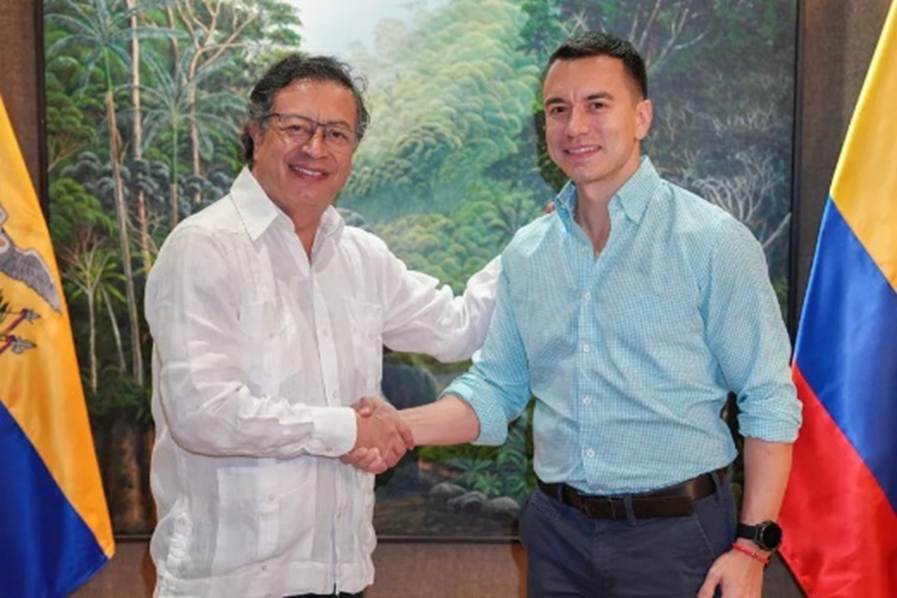
    Colombian President Gustavo Petro (l) and his Ecuadorian counterpart Daniel Noboa during their meeting this Saturday in the Galápagos Islands, Ecuador. Presidencia de Colombia

    Ports, Routes, and the Wager of Control

    President Gustavo Petro, speaking on Saturday, said he was willing to meet with Noboa to discuss a joint struggle against narcotrafficking, and he tried to narrow the argument to a specific agenda item. When Ecuador wants, he wrote, they can meet, but the first point he wants examined is the development of a shared policy for controlling maritime ports. He framed it as a basic boundary of sovereignty and decency: the naval ports of Ecuador and Colombia are not for exporting cocaine, and not for smuggling fentanyl inputs.

    What this does is shift the conversation away from the insult embedded in a tariff, and toward the machinery that makes the drug economy work. Ports are logistics. Ports are paperwork. Ports are containers and inspection protocols, and the quiet vulnerabilities that criminal groups study more patiently than any politician ever will.

    Petro also argued that cocaine routes have been displaced. In his account, routes that once used Colombian Pacific ports have shifted toward Ecuador. That shift carries a dangerous counterpart: the entry and transport northward of contraband he described as more dangerous than cocaine, tied to inputs for fentanyl. He called for strict control over those inputs entering through Pacific ports.

    He insisted he has not eased pressure in the anti-narcotics fight, and he pointed to coordinated seizures with Ecuador as evidence. According to Colombian government data, joint cocaine seizures with Ecuador rose from 86,786 kilos in 2023 to 132,354 in 2024, and then to 195,862 in 2025. He also recalled attending the inauguration of a new intelligence coordination center in Manaus, and said Ecuador accepted a policy of greater anti-mafia action there. The meeting he referenced took place on September 9 in the Brazilian city, in connection with the opening of the Amazon International Police Cooperation Center.

    Numbers like these are meant to settle the argument. They rarely do.

    Because on Ecuador’s side, Noboa is making a different wager. He is wagering that public anger over violence demands visible action, and that, in this moment, visible action means pressure on Colombia. In an interview published in the newspaper Metro, he said the safeguards imposed on Colombia are not an attack on a brother country. He said abandonment of the border allowed narcotrafficking to expand, and that the measure aligns with national security policy to strengthen the frontier. The citizenship demands action, he said, and the government is acting.

    He also made the dispute personal in a way familiar in this region, where the line between security policy and political theater can blur quickly. Noboa said that for Ecuador, the fight has been relentless, and he pointed to arrests of people he identified as alias Pipo, Fénix, and Viche, saying they are behind bars, all with Colombian identity and links in that country. He said Adolfo Macías Villamar, known as alias Fito, now extradited to the United States, used to move in and out of the neighboring country from where he controlled criminal networks operating in Ecuador. He closed with a defiant line: they sought to replicate a business that already worked there, but with Ecuador, they were mistaken.

    It is hard to miss what both leaders are doing. Both are trying to locate the problem on the other side of the border. Both insist the narcotrafficking machine is regional, but each is emphasizing the neighbor’s weakness. In Latin America, that is a familiar political reflex. When the state cannot fully control violence, it often reaches for a story of external origin.

    Meanwhile, both countries share a 586-kilometer land border where drug traffickers operate, alongside guerrilla groups, and both have Pacific ports that mafias use to send drugs toward the United States and Europe. The structure of the problem is bigger than either president. But presidents still set the tone, and the tone right now is punitive.
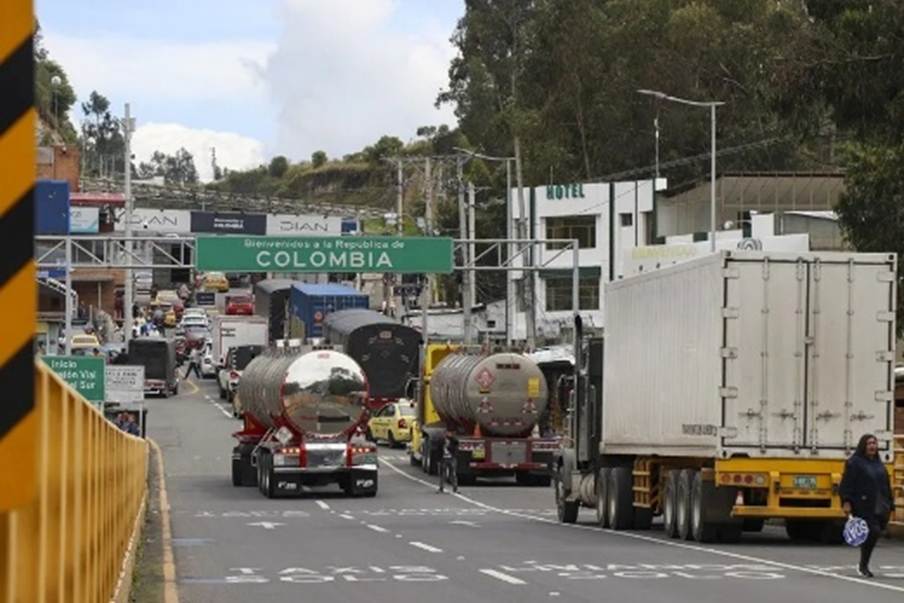
    The Rumichaca International Bridge, in Tulcán, Ecuador. EFE / Xavier Montalvo.

    A Familiar Crisis With Flipped Politics

    To understand why this escalated so quickly, you have to notice the echo. The notes point back to March 1, 2008, when Colombia’s military, under President Álvaro Uribe, bombed a FARC camp inside Ecuadorian territory and killed senior commander Raúl Reyes. Ecuador’s President Rafael Correa severed ties, denouncing a violation of sovereignty.

    Eighteen years later, the ideological poles have flipped. Back then, Colombia was governed by the right and Ecuador by the left. Today, Colombia has its first leftist president in Petro, and the conservative Noboa leads Ecuador. Yet the structural drivers described in the notes remain stubbornly consistent: a border defined by cocaine, a relationship vulnerable to personal political calculations, and a region squeezed by the United States’ geopolitical ambitions.

    The notes place the U.S. shadow in plain view. In 2008, Uribe’s confidence was reinforced by Washington’s support through Plan Colombia, and the U.S. backed Bogotá against Quito’s sovereignty complaints. Today, the notes describe a “Trump Doctrine” that pressures Petro while backing Ecuador, and they portray Washington as generally close with Noboa and cold toward Petro. The U.S., in that telling, becomes a wild card, and the border becomes leverage.

    There is also the economic imbalance that makes tariff warfare uneven. The notes argue that the trade relationship matters more to Ecuador’s economy than to Colombia’s, and they underscore Ecuador’s dollarization as a vulnerability because devaluation is not an option for absorbing shocks. They also point to another asymmetry: Ecuador’s dependence on Colombia’s electricity exports during droughts, which can account for up to 10% of its power during dry-season months between September and March.

    So the weapons here are not symbolic. They are daily.

    The wager here is that pressure will produce cooperation. That a tariff will force seriousness. That an electricity cutoff will discipline. But the more plausible effect is the one the notes warn about: both economies take hits, ordinary people absorb them, and the criminal groups at the center of the conflict benefit from any breakdown in coordination.

    At Rumichaca, silence is a clue. It suggests the argument has already moved beyond speeches. It has entered the border’s muscle memory.

    And that is the line that stays with you, because it sounds less like strategy than like experience: in a fight about narcotrafficking, the first casualty is often ordinary commerce.

    There is talk now of meetings. Petro floated a bilateral agenda. A meeting between the foreign ministers, Rosa Villavicencio for Colombia and Gabriela Sommerfeld for Ecuador, was mentioned as a possibility for next week, aimed at finding ways out of the tariff war. In the meantime, each side insists it is acting responsibly, that it is not attacking, but simply defending.

    That repetition, too, is part of the region’s political language. Not an attack, says one side. Not a retreat, says the other. Not for cocaine, not for contraband, says Petro, turning ports into moral terrain.

    But the bridge does not speak in speeches. It says in movement, or its absence.

    Also Read:
    Latin American Democracy Faces a Hard Turn Toward Uniformed Solutions


    Source link

  • Haiti Council Moves to Oust Prime Minister as New U.N. Force Arrives

    Haiti Council Moves to Oust Prime Minister as New U.N. Force Arrives


    As Haiti’s transitional council moves to fire its prime minister days before its mandate ends, gangs dominate Port-au-Prince. A new United Nations (U.N.)-backed suppression force begins arriving, while sanctions and visa bans tighten around politicians accused of feeding chaos.

    A Decision Announced Like Paperwork

    The words land with the flat certainty of procedure. At a press conference, Edgard Leblanc Fils confirms that the decision has been made: the prime minister, Alix Didier Fils-Aimé, is to be removed. The normal steps are now underway, he says, so that the national press can publish the dismissal.

    Cameras click. Microphones wait. The room does what press conference rooms do, turning a country’s crisis into a sequence of statements, then silence, then the next question.

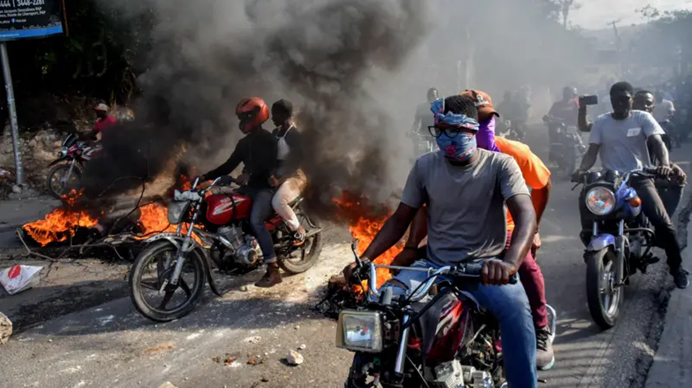
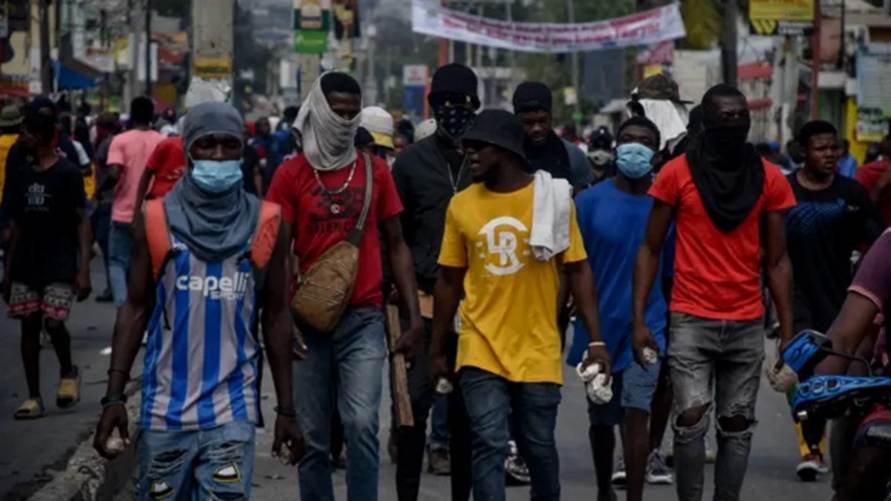
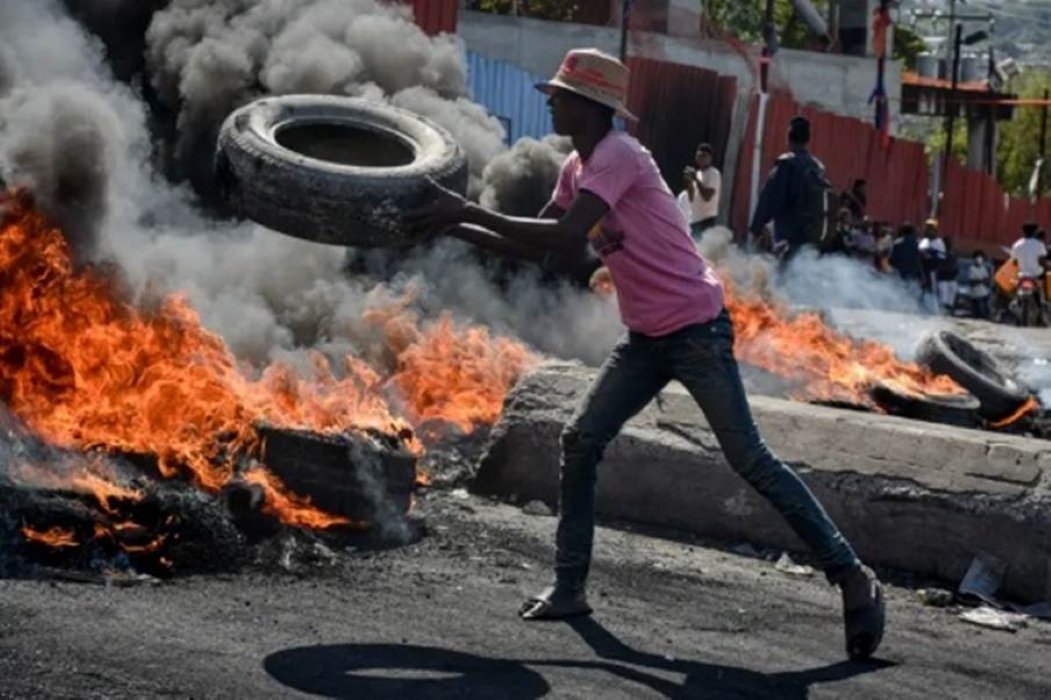
    The trouble is that Haiti does not experience leadership changes as clean administrative resets. It experiences them as tremors that travel outward into a place already cracked by violence, displacement, and the long aftershock of 2021, when a president was assassinated, and a devastating earthquake struck a month later. The government has been in shambles since. Meanwhile, the police are outnumbered and outgunned by more than 100 gangs, some of which formed a powerful alliance in 2024. Those groups control almost 90% of Port-au-Prince. More than 1.4 million residents have been driven from their homes.

    So when five of the seven voting members of the Transitional Presidential Council decide to dismiss the prime minister just days before the council’s mandate ends on February 7, the moment does not read as routine. It reads as a gamble with the last thin threads of continuity.

    And it arrives, as these things often do in Haiti now, in the middle of everything else.

    Archived photo of violent protests in Port-au-Prince, Haiti, in February 2024 as demonstrators called for then Prime Minister Ariel Henry’s resignation. EFE

    A Transition That Keeps Slipping

    The council itself was born from collapse. It took office in April 2024 after Prime Minister Ariel Henry, who had assumed control following President Jovenel Moïse’s assassination on July 7, 2021, announced his resignation in March 2024. That announcement came as the Vivre Ensemble coalition, led by Jimmy Chérizier, known as Barbecue, launched an unprecedented offensive.

    The council was supposed to steer Haiti back toward something recognizable: security in areas held by armed groups, inclusive and democratic general elections, a referendum on a constitutional project, and the resumption of economic activity. The notes are blunt about the outcome. That mission has not been achieved.

    There have been attempts to stabilize the transition by replacing its managers. Garry Conille, an academic and politician who previously served as prime minister in 2011 and 2012, was appointed on May 28, 2024, and sworn in six days later, tasked with leading the country toward elections repeatedly postponed. Five months later, on November 11, he was removed and replaced by Alix Didier Fils-Aimé, a businessman, amid corruption allegations and differences with council members.

    Fils-Aimé took office by describing essential priorities that, on paper, sound like the minimum duties of a state: the security of people, the protection of goods and infrastructure, food security, and freedom of movement across the country. The wager here was that the language of basics might help restore basics. But those goals remain far from reality in a country that recorded more than 8,100 killings last year. At the same time, armed groups continued to control large parts of the territory, especially the capital.

    Now the council is moving to remove him too, despite rejection from the international community, especially the United States. The European Union’s representation in Haiti and the embassies of Germany, Spain, and France urge the transitional authorities of Haiti to act responsibly and in the general interest. They warn that any change at the top of government so close to the end of the council’s mandate could endanger what they describe as an encouraging dynamic in which security forces confront criminal gangs.

    The United States, for its part, accuses corrupt politicians in Haiti of using armed criminal groups to sow chaos and expresses unwavering support for the prime minister and for stability and security in Haiti.

    Sharp words, then more pressure. Two members of the transitional presidential council and a cabinet minister have had their U.S. visas revoked in the latest round of sanctions announced by the State Department on Wednesday. The restrictions came three days after two other council members were similarly barred from entering the United States. As in earlier cases, including another visa revocation in November, the State Department did not identify the individuals involved, citing privacy concerns.

    This is how a political crisis starts to feel like a tightening circle. Leadership moves inside Haiti. External levers move outside it. Gangs keep moving through the middle.

    Archived photo of violent protests in Port-au-Prince, Haiti, in February 2024 as demonstrators called for then Prime Minister Ariel Henry’s resignation. EFE

    New Forces Arrive at an Old Question

    For three decades, Haiti has lived with interventions stacked on interventions, each arriving with its own mandate and its own promise. In 1994, a United States-led multinational force restored President Jean-Bertrand Aristide after a military coup. U.N. peacekeeping forces followed over the years, even before an earlier deadly earthquake in 2010. Most recently, a Kenyan-led international police force, with fewer than 1,000 officers, ended its U.N. mandate this past October without making much of a difference against gang power.

    Now the United Nations has approved a stronger mission known as the Gang Suppression Force, designed to deploy up to 5,550 police officers with authority to detain suspected gang members and conduct offensive operations. Its first officers arrived in December to begin the transition.

    On paper, the escalation is clear: more officers, broader powers, a harder edge. On the street, Haitians are left with the same question they have carried through every intervention cycle: what changes for ordinary life, and how fast.

    The notes point to a grim measure of what has been happening in the meantime. The number of sexual abuse cases being treated at a clinic in the capital has tripled in the past four years as gang violence surges, a health charity warns. And the United Nations says more than 1.4 million people have been displaced due to escalating gang violence and political instability.

    What this does is turn politics into shelter, or its absence. It turns the question of who leads into whether people can stay home.

    Haitians, facing what the notes describe as a dizzying descent into lawlessness, are increasingly questioning what international intervention has done for them. Solutions, small-scale and imperfect, are growing inside the country. That detail matters because it points to a stubborn truth: even as missions arrive, Haitians keep improvising ways to endure.

    Elections remain the formal exit ramp, but the ramp is guarded by reality. Haiti’s last presidential elections were held in 2016. The authorities have scheduled a first round of presidential elections for August 30, 2026, and a second round for December 6, 2026. The Provisional Electoral Council sets two prerequisites: an acceptable security climate and the availability of financial resources. The notes suggest both are unlikely for now.

    Even Europe is moving in parallel with Washington. On January 28, the Swiss Federal Council joined EU sanctions aimed at curbing gang violence, extending an ordinance that has been in place since December 16, 2022, and had previously been based exclusively on U.N. sanctions. The U.N. measures include an arms embargo on the entire country, as well as an asset freeze and travel ban targeting 11 individuals and entities. With the new decision, asset freezes and travel bans now apply to 10 additional individuals and entities, while humanitarian exemptions remain in place.

    In the press conference room, the decision to remove a prime minister is framed as a step toward publication. Outside, Haiti keeps living in the gap between announcements and control. A government can change its head. A mandate can expire. But in Port au Prince, where gangs hold nearly nine-tenths of the capital, the argument is always the same, repeated because it does not go away: power is not what you declare. It is what you can actually hold.

    Also Read:
    Tragic Deaths in Ecuador Prisons Highlight Growing Crisis: Authorities Fail to Provide Answers


    Source link

  • Mexican Pop Star Turns Nahuatl and Maya Into Mainstream Fire

    Mexican Pop Star Turns Nahuatl and Maya Into Mainstream Fire


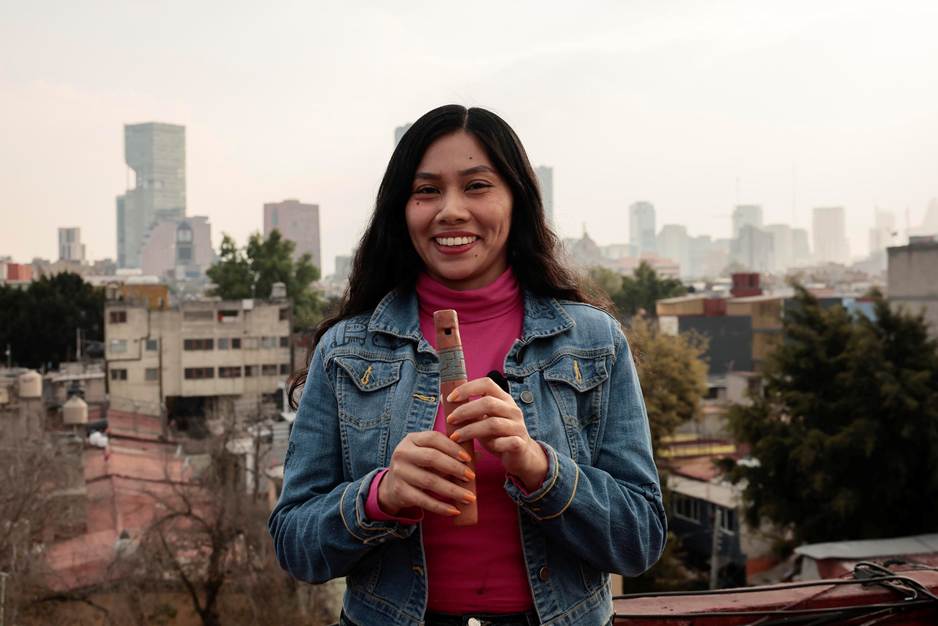
    On a Mexico City rooftop, Azalea Báalam lifts a jaina flute and plays nine notes into the open air. What follows is pop built from older languages, newer beats, and a stubborn idea: that the biggest genre on earth can still make room for origin.

    A Rooftop Where Nine Notes Cut Through the City

    From the rooftop of her home in central Mexico City, Azalea Báalam stands with a small pre-Hispanic flute in her hands and sends nine notes outward. The city is below, crowded and indifferent in the way cities often are, but up here, there is a pocket of attention—a moment where sound leads.

    She is thirty-three, a composer and singer from the Yucatán Peninsula, and people tell her the music feels like a ‘revolution.’ This term highlights her effort to challenge norms and can draw readers into her cultural movement.

    The trouble is that “revitalization” can become a slogan if you do not keep it tethered to something you can see and hear. Here, the tether is literal. A jaina flute, an instrument with a pre-Hispanic lineage, is held on a rooftop in the capital. Nine notes, repeated because repetition is how songs work and how memory works, too.

    Báalam’s music does not stay in one place. It fuses electrifying K-pop rhythms with choreography shaped by Michael Jackson, one of her favorite musicians, alongside Juan Gabriel. It is a blend that refuses to apologize for being a blend. It insists that origin is not the opposite of modern. It can be a method.

    “The people who connect with my music really like it and feel proud that not everything is lost, that something is being done in the original languages,” she told EFE.

    There is a wager here, and it is not only artistic. It is social. To bring languages that are losing speakers into the world’s most dominant musical format is to gamble that young audiences, in Mexico and beyond, will not treat Indigenous language as museum glass. That they might sing along, fostering hope and curiosity about cultural resilience.

    The platform matters because it is where pop now travels at the speed of imitation, where a chorus becomes a caption, and where Indigenous language can reach new audiences quickly, transforming sound into a shared experience.

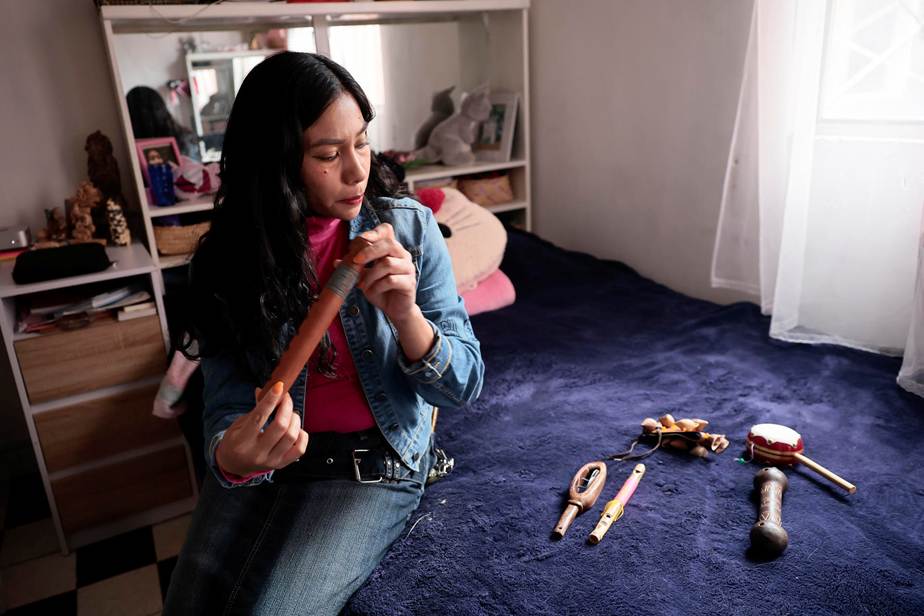
    Mexican Artist Azalea Báalam in Mexico City, Mexico. EFE/ José Méndez

    Learning From Zero and Naming a Genre on Purpose

    Báalam’s route into Nahuatl and Maya was not easy. Even with a Maya-speaking father, she says she had to learn both languages from scratch when she was fifteen, after moving to Mexico City. In the capital, she says, Maya was practically not taught in any school.

    So she began with “basic Nahuatl,” the most spoken Indigenous language in the city, rooted in the heritage of the Aztec Empire, which dates from 1325 to 1521. That detail matters because it shows how history stays lodged in the everyday. Not as a textbook. As an imbalance. A language present in the capital’s past, yet still treated as peripheral in its present.

    In the course of learning, she reached a conclusion that sounds like marketing but is also a strategy of survival: to resist the death of linguistic diversity, she believed she needed a label that would catch the attention of young audiences, both national and international, by intentionally naming her style ‘nahuapop’ and ‘mayapop.’

    “It’s a mix of things I like,” she told EFE.

    The line lands because it is ordinary and exact. Mole is not a metaphor imported from elsewhere. It is a word that already understands mixture as craft, not dilution. In her version of pop, K-pop is not a colonizer. It is a tool. So are the classical dances of India, especially the mudras, hand gestures used in Bollywood choreography. She borrows with intention, then turns back toward Nahuatl and Maya as the core.

    There is an everyday detail in the notes that does more work than it seems. As she talks, her gaze goes to her Hello Kitty socks. It is small, almost too small, but it fits the larger argument of her music. Cute culture, kawaii tenderness in Japanese, paired with an incendiary edge. Softness and critique in the same frame.

    Making music in Indigenous languages, she says, is like jumping from one world to another, playing with the possibilities of words beyond the borders of Spanish. That idea of play matters. Play is how people learn. Play is how people keep returning.

    And then there is the way language changes emotion. She notes that in Nahuatl, verbs are more intense, which lets her explore feelings like anger. Anger, she says, is something she wants to analyze from a feminist perspective because when women get angry, it often seems socially unacceptable. This highlights how language can empower individuals to express and challenge societal norms, inspiring a feeling of agency in the audience.

    Here, the politics is not abstract. It is grammatical. It is about what a verb can hold, and what a society allows a woman to say.

    She even says she would like to use these languages to rethink insult, to answer men who, without knowing what they are saying, criticize her music as poorly made or try to mansplain her own work. The point is not secrecy for its own sake. It is power.

    “I can say it, and they won’t cancel me, they won’t say anything because people don’t know the languages, so it’s also playing with that,” she told EFE.

    A cheerful grimace accompanies the line in the notes, and it reads like recognition. The world has not learned these languages, so she uses that ignorance as a shield and as a stage. What this does is expose the asymmetry: Spanish and English are treated as universal, while Indigenous languages are treated as niche. She flips that hierarchy in the space of a song.

    Mexican Artist Azalea Báalam in Mexico City, MexicoEFE/ José Méndez

    A Movement With Company and Dreams That Refuse to Shrink

    Báalam insists she is not alone. She points to artists like Za Hash and Juan Sant, who rap in Mazahua and Totonaco, making new music from millennia-old expressions and helping it be heard as contemporary sound rather than just cultural heritage.

    The multiplication of this talent motivates her, she says, and it shapes her most enormous ambition: to build her own path and found her own record label to push projects like these. She wants an effect on society. She wants a new life for cultures that the industry often treats as background texture.

    “Those dreams are too far away, but before I die, I want to feel that I tried everything to achieve them,” she told EFE.

    It is an intimate line and also a political one. Because when Indigenous languages lose speakers year after year, the question is not only what the state does. It is also what culture rewards. What gets distributed. What gets repeated.

    Back on the rooftop, those nine notes do not solve anything by themselves. But they make a claim. That pop is not only the sound of the global present. It can be a container for the languages that survived conquest, schooling, shame, and neglect. A container that travels. A container that sings back.

    Also Read:
    Ciudad Juárez Reckons with Femicide in a Film That Refuses Silence


    Source link

  • Falklands, Tussac restoration project to protect peatlands — MercoPress

    Falklands, Tussac restoration project to protect peatlands — MercoPress


    Falklands, Tussac restoration project to protect peatlands

    Friday, January 30th 2026 – 14:16 UTC


    Frame by FITV.
    Frame by FITV.

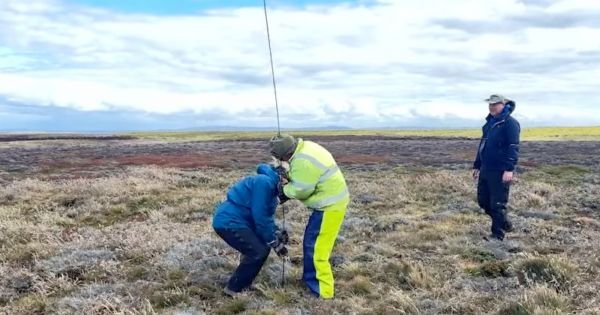
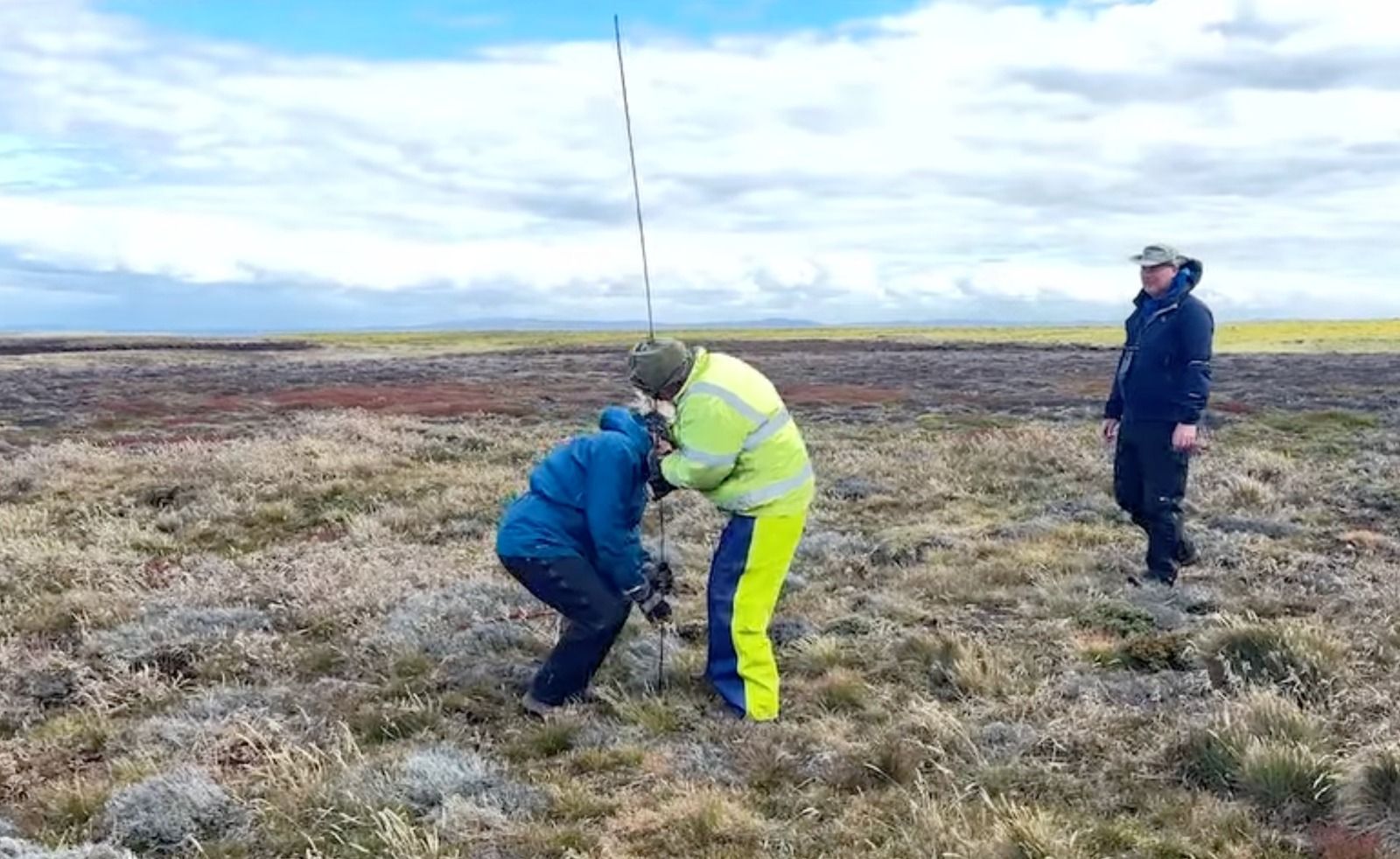
    Dr. Nicholas Midgley, a senior lecturer and his team from Nottingham Trent University have been in the Falkland Islands for the last three weeks investigating coastal peatland and tussac’s significance for agriculture and wildlife.

    The team focused especially on Cape Dolphin and Hummock Island conducting surveys on the ground and from the sky, working with steel rods to measure peat bogs and a small drone.

    The work is basically directed to try and understand how we might address restoration of tussac sites, hopefully both former and currently, where managing practices have been started in places such as Hammock and Cape Dolphin, according to Dr. Midgley, Senior Lecturer in Physical Geography at the Nottingham Trent University.

    “This means measuring peat depth with steel rods, which are pushed into the soil, and with a fifty meter grid measure the peat to the point, and then repeat the operation several hundred, possibly thousands of times, enabling us to build a map of bogs, both in the coastal and inland settings”.

    This way we can have a ‘personal’ map on peat depth, and at Cape Dolphin we had peat eight meters plus deep. Besides we have a very small drone for contemporary extensive map sighting which can help us in a very interesting way to look at how tussac extension changes over time, say in five, ten years. This can be achieved by processing aerial archival imagery in the Islands dating back to 1956.

    “There are a lot of reasons why we should care about tussac and the peat it develops, and helping store carbon, which is really important in a global context, and even more locally, as it has been historically for agriculture and also for the wildlife. Tussac is really a key stone species for wildlife and we are interested in extending the range of sites that we’ve got started in west Weddlell, we’ve covered Hummock, Cape Dolphin and we are interested in extending it to East Falklands”.

    The Nottingham Trent University team is most grateful to Lewis Clifton OBE, The Shackleton Scholarship Fund, the Antarctic Research Trust, and Sally and Ken at Hammock island, for helping with the project.


    Source link

  • Montevideo to host Spain’s ASPA helicopter aerobatic display marking 100 years of the Plus Ultra flight — MercoPress

    Montevideo to host Spain’s ASPA helicopter aerobatic display marking 100 years of the Plus Ultra flight — MercoPress


    Montevideo to host Spain’s ASPA helicopter aerobatic display marking 100 years of the Plus Ultra flight

    Friday, January 30th 2026 – 14:29 UTC


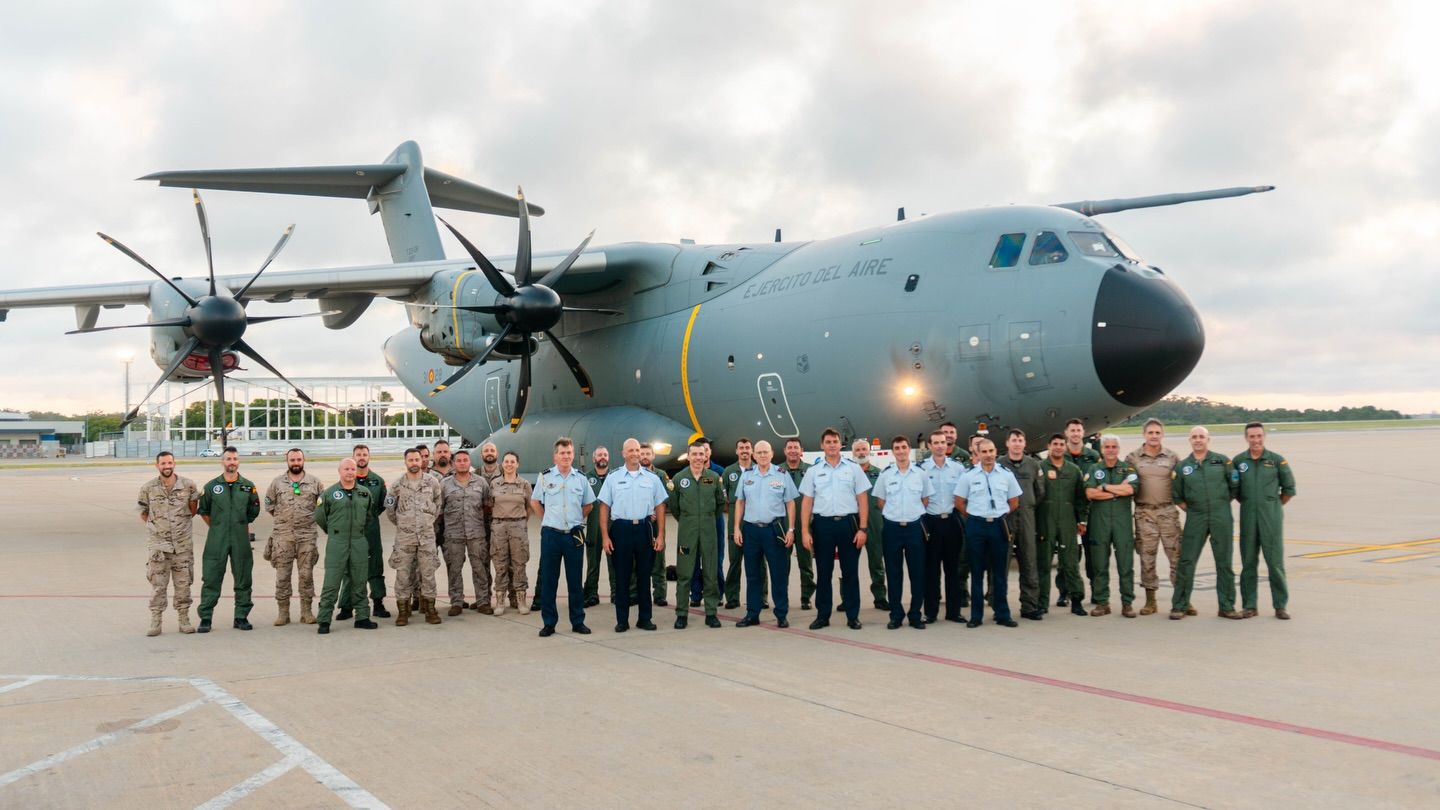
    FAU reported that two Spanish Airbus A400M transport aircraft arrived at Brigada Aérea I (Carrasco) carrying six Eurocopter EC-120B “Colibrí” helicopters—three inside each aircraft
    FAU reported that two Spanish Airbus A400M transport aircraft arrived at Brigada Aérea I (Carrasco) carrying six Eurocopter EC-120B “Colibrí” helicopters—three inside each aircraft

    Uruguay’s Air Force (FAU) says Montevideo will host an aerobatic helicopter display by Spanish Air Force’s Patrulla ASPA on Sunday, 1 February, as part of the centenary commemorations of the historic Plus Ultra flight. The free event is scheduled for 10:30 a.m. along Rambla Presidente Wilson, in Montevideo.

    In a separate post, the FAU reported that two Spanish Airbus A400M transport aircraft arrived at Brigada Aérea I (Carrasco) carrying six Eurocopter EC-120B “Colibrí” helicopters—three inside each aircraft—along with an accompanying contingent of around 50 personnel.

    The visit has been formally cleared by Uruguay’s institutions. A Uruguayan law authorizes the entry of up to 70 Spanish personnel, two A400M aircraft and six EC-120 “Colibrí” helicopters between 29 January and 1 February, specifically for the centenary activities.

    The airshow is part of a broader programme that also features cultural events and a public talk in Montevideo, alongside related displays planned in Rio de Janeiro and Buenos Aires.

    The original Plus Ultra mission—completed in 1926 with stops including Brazil, Montevideo and Buenos Aires—remains a landmark in Spanish aviation history. In centenary coverage, Captain Gonzalo Pinazo told EFE it was a “source of pride” to revisit the “feat” a century later.


    Source link

  • Trump threatens tariffs on countries supplying oil to Cuba, tightening pressure on Mexico — MercoPress

    Trump threatens tariffs on countries supplying oil to Cuba, tightening pressure on Mexico — MercoPress


    Trump threatens tariffs on countries supplying oil to Cuba, tightening pressure on Mexico

    Friday, January 30th 2026 – 05:16 UTC


    The measure comes amid deep strains in Cuba’s energy system, including fuel shortages, recurring blackouts and constraints on transport and production
    The measure comes amid deep strains in Cuba’s energy system, including fuel shortages, recurring blackouts and constraints on transport and production

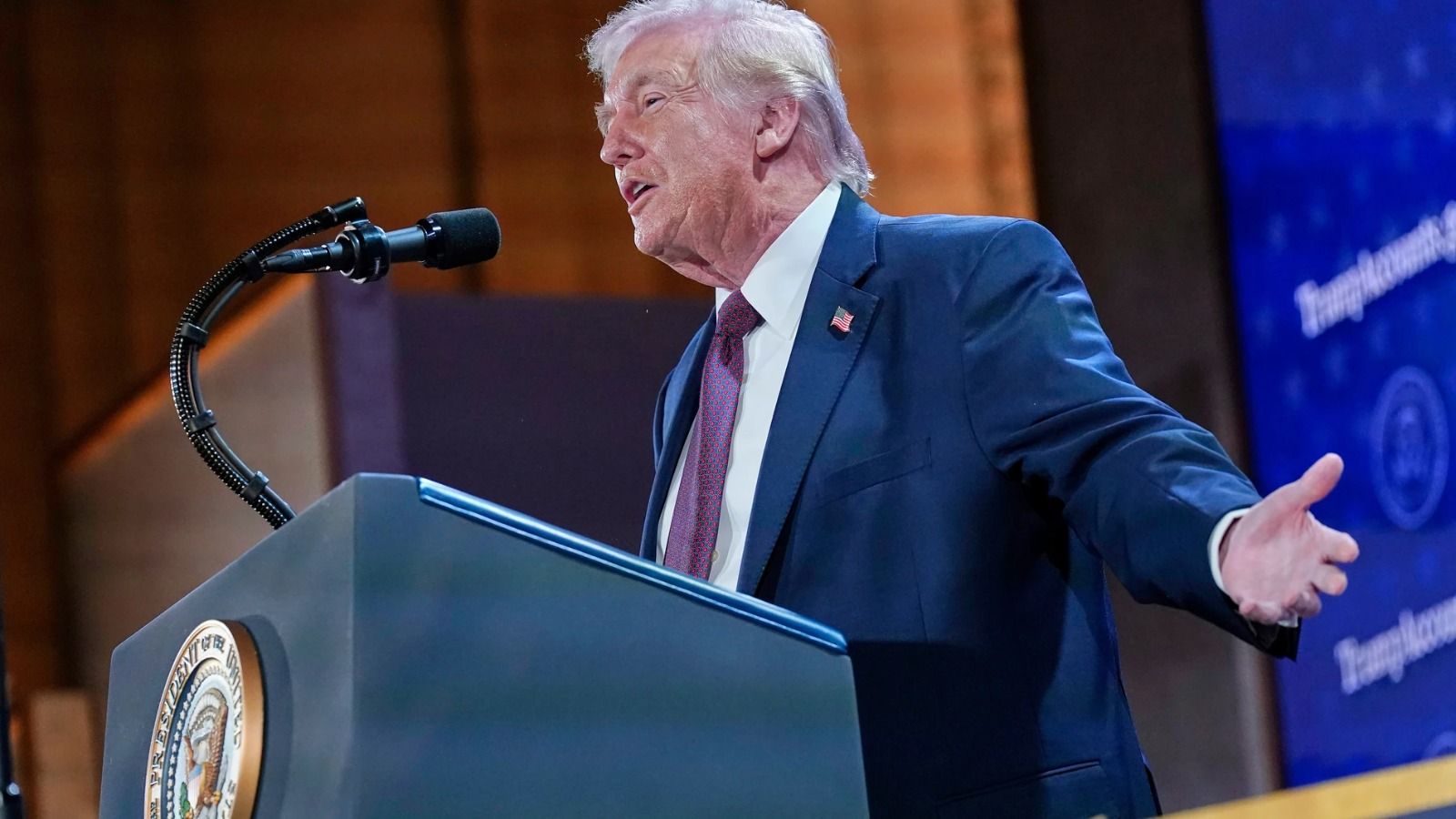
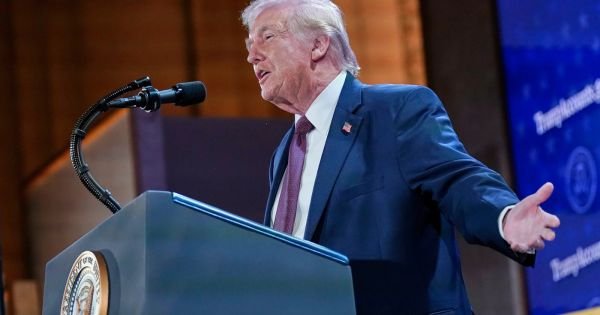
    U.S. President Donald Trump signed an executive order that opens the door to imposing tariffs on imports from countries deemed to be supplying crude oil to Cuba, a move designed to raise the external cost of keeping Havana’s energy lifeline open and further constrain fuel flows to the island.

    The order, released late Thursday in Washington, declares a national emergency on the grounds that Cuba’s policies constitute an “unusual and extraordinary threat” to U.S. national security and foreign policy. It does not specify tariff levels. Instead, it sets a case-by-case process under which Trump would decide potential duties after receiving assessments from the Departments of Treasury and Commerce on countries involved in oil shipments.

    “Cuba will not be able to survive,” Trump told reporters shortly after the order was published. Asked whether he was trying to “choke off” the island, he pushed back on the phrasing while calling Cuba a “failed nation,” according to accounts carried by news outlets and wire services.

    The measure comes amid deep strains in Cuba’s energy system, including fuel shortages, recurring blackouts and constraints on transport and production. Washington is effectively threatening secondary commercial penalties to discourage third-party suppliers — a coercive tool the U.S. has used in other contexts to reshape behavior without directly sanctioning the target country’s imports.

    Cuban officials condemned the move as an escalation of economic pressure. EFE reported that Prensa Latina president Jorge Legañoa accused Washington of seeking “genocide,” warning that if oil supplies are disrupted the impact could extend across electricity generation, transport, industrial and agricultural output, healthcare services and water supply.

    Mexico is at the center of the equation. International reporting has described it as one of Cuba’s key suppliers after Venezuelan flows dwindled. President Claudia Sheinbaum has argued Mexico’s shipments include humanitarian assistance as well as Pemex contracts with Cuba, and said the issue was not raised in her latest call with Trump. Previous reporting cited Pemex estimates of average exports to Cuba of about 17,200 barrels per day in the first nine months of 2025 — a small share of Mexico’s overall exports but a meaningful volume for the island.

    The Cuba order also lands alongside a broader recalibration in U.S. regional energy policy. Washington announced partial easing of restrictions on Venezuela’s energy sector through a general license allowing U.S. companies to operate under strict conditions: payments routed through a Washington-controlled bank account, contracts governed by U.S. law, and bans on transactions involving entities linked to Russia, Iran, North Korea or Cuba.

    Trump has repeatedly argued that political change in Caracas will ultimately accelerate pressure on Havana. In Senate testimony, however, Secretary of State Marco Rubio said the U.S. is not pursuing regime change in Cuba “directly,” while acknowledging that Washington would welcome an end to what he described as autocratic rule — comments referenced by major wire services.

    For regional governments and energy traders, the practical impact will hinge on enforcement choices and risk tolerance: whether suppliers continue shipments despite tariff threats, and whether Cuba can secure alternative barrels in a market where logistics, financing and political exposure already limit options.


    Source link

  • Brazil’s Lula to undergo cataract surgery on left eye after Panama trip — MercoPress

    Brazil’s Lula to undergo cataract surgery on left eye after Panama trip — MercoPress


    Brazil’s Lula to undergo cataract surgery on left eye after Panama trip

    Friday, January 30th 2026 – 03:43 UTC


    The announcement comes as Lula remains active on the international circuit and ahead of a packed domestic schedule
    The announcement comes as Lula remains active on the international circuit and ahead of a packed domestic schedule

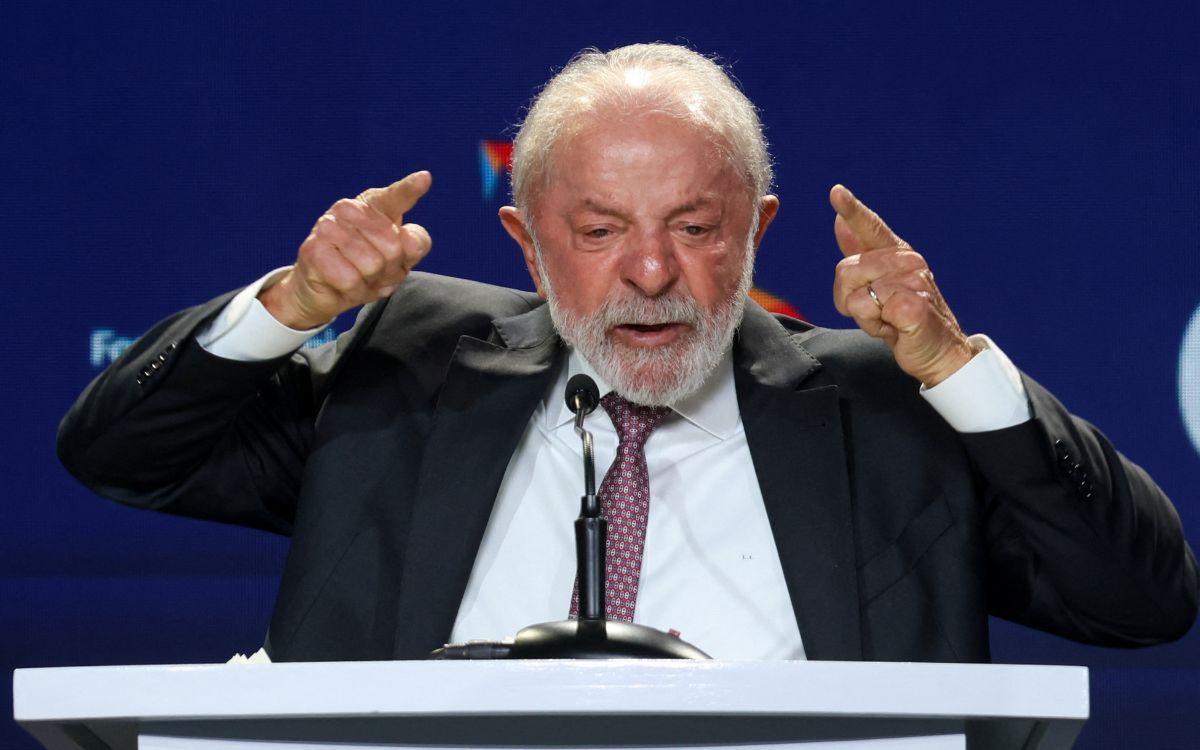
    Brazilian President Luiz Inácio Lula da Silva will undergo cataract surgery on his left eye on Friday, the presidential palace said after preoperative tests were conducted on Thursday in Brasília. The 80-year-old leader returned overnight from Panama, where he attended the International Economic Forum for Latin America and the Caribbean, and spent Thursday at the official Granja do Torto residence.

    The procedure is routine. Lula had the same surgery in 2020 on his right eye, according to the government statement. Reuters reported that Lula completed the pre-surgery checks on Thursday morning and that his office announced the operation in a formal note.

    Cataracts involve the clouding of the eye’s natural lens, typically associated with aging, and can cause blurred vision often described as seeing through fogged glass. Treatment generally consists of replacing the opaque lens with a transparent artificial one, restoring visual clarity in most cases.

    The announcement comes as Lula remains active on the international circuit and ahead of a packed domestic schedule. While Planalto did not indicate any broader medical concerns, Lula’s health routinely draws political attention in Brazil given his central role in the governing coalition and the country’s polarized climate. Reuters has previously noted that episodes involving Lula’s health have prompted wider discussion about political succession on Brazil’s left.

    Planalto provided no further operational details beyond confirming the timing following the preoperative exams.


    Source link

  • US returns seized oil tanker to Venezuela amid broader energy policy shift — MercoPress

    US returns seized oil tanker to Venezuela amid broader energy policy shift — MercoPress


    US returns seized oil tanker to Venezuela amid broader energy policy shift

    Friday, January 30th 2026 – 05:11 UTC


    In Caracas, the interim government led by acting President Delcy Rodríguez welcomed the return, noting it may help reduce uncertainty in maritime crude trade
    In Caracas, the interim government led by acting President Delcy Rodríguez welcomed the return, noting it may help reduce uncertainty in maritime crude trade

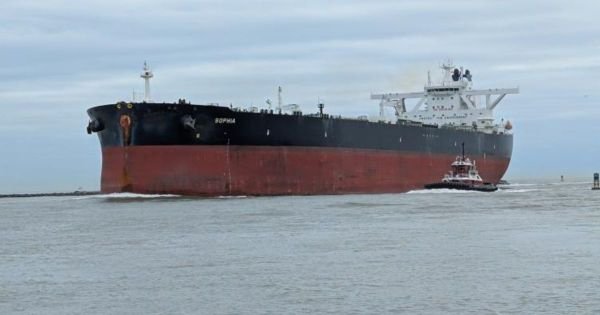
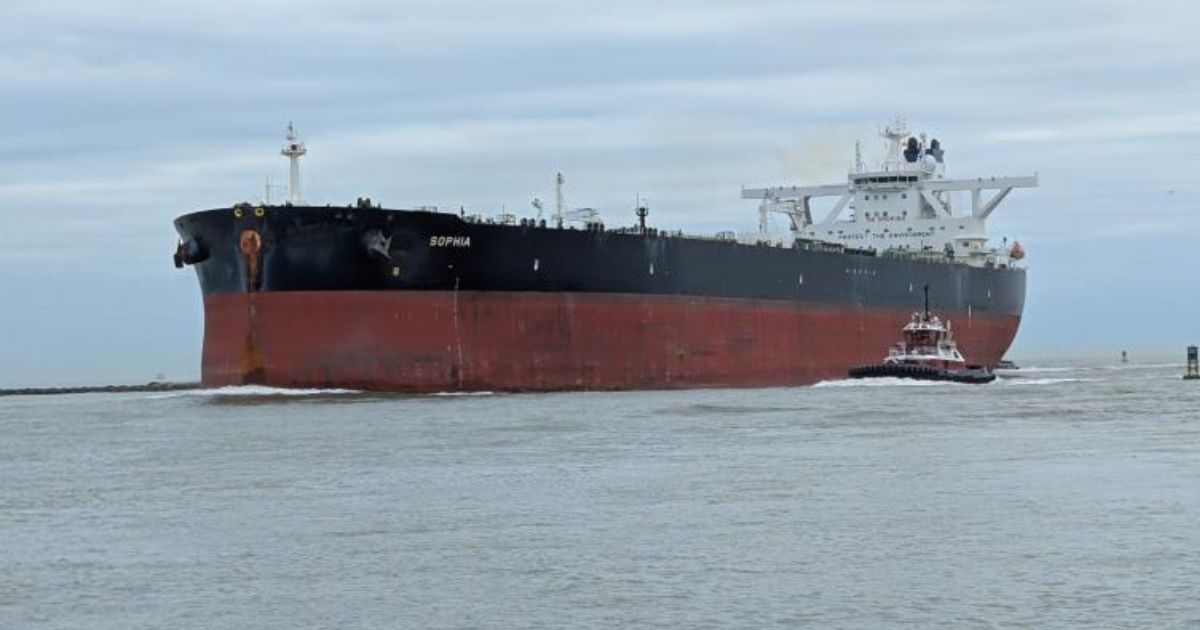
    The United States government this week returned the seized oil tanker M/T Sophia to Venezuela, reflecting a broader shift in U.S. energy policy toward Caracas amid efforts to normalize commercial ties, U.S. officials said Wednesday. The move comes after several high‑profile seizures of vessels tied to Venezuelan oil shipping.

    The U.S. Coast Guard and military forces seized the Panama‑flagged M/T Sophia on January 7, when it was carrying Venezuelan crude and was designated a “stateless, sanctioned dark fleet motor tanker” by U.S. authorities, alleging lack of safety certification and sanctions violations.

    Officials speaking on condition of anonymity said the decision to return the vessel — and potentially its cargo, though details on that remain unclear — aligns with an evolving U.S. approach to Venezuela that seeks to balance enforcement with a regulatory framework intended to facilitate orderly Venezuelan oil exports.

    The return comes amid a string of at least seven vessel seizures since late 2025, part of an operation targeting ships alleged to be evading sanctions and operating without proper maritime certifications. The U.S. move to return the Sophia is seen by analysts as a signal that some logistical and regulatory frictions are being addressed as Washington aims to stabilize export flows.

    In Caracas, the interim government led by acting President Delcy Rodríguez welcomed the return, noting it may help reduce uncertainty in maritime crude trade. “It is essential to establish clear norms that prevent arbitrary detentions of Venezuelan vessels in international waters or U.S. jurisdictions,” a Venezuelan energy official said.

    Energy and maritime policy analysts say the vessel’s return should be read in the context of a broader U.S. strategy shift, which has included preparing general licences to ease some sanctions and boosting U.S. refinery access to Venezuelan crude after years of tight restrictions.

    “The message behind returning the tanker is that Washington wants to stabilize oil trade routes and reduce the frictions that have marked recent years,” a Miami‑based maritime expert said. “However, regulatory risk remains, and ship operators will continue to monitor future detentions closely.”

    Legal experts also caution that the vessel’s return could affect ongoing maritime disputes and potential compensation claims from shipowners affected by prolonged detentions. The involvement of international insurers and the International Maritime Organization (IMO) may become relevant if such incidents escalate.


    Source link

  • Trump threatens tariffs on countries supplying oil to Cuba, tightening pressure on Mexico — MercoPress

    Trump threatens tariffs on countries supplying oil to Cuba, tightening pressure on Mexico — MercoPress


    Trump threatens tariffs on countries supplying oil to Cuba, tightening pressure on Mexico

    Friday, January 30th 2026 – 05:16 UTC


    The measure comes amid deep strains in Cuba’s energy system, including fuel shortages, recurring blackouts and constraints on transport and production
    The measure comes amid deep strains in Cuba’s energy system, including fuel shortages, recurring blackouts and constraints on transport and production

    U.S. President Donald Trump signed an executive order that opens the door to imposing tariffs on imports from countries deemed to be supplying crude oil to Cuba, a move designed to raise the external cost of keeping Havana’s energy lifeline open and further constrain fuel flows to the island.

    The order, released late Thursday in Washington, declares a national emergency on the grounds that Cuba’s policies constitute an “unusual and extraordinary threat” to U.S. national security and foreign policy. It does not specify tariff levels. Instead, it sets a case-by-case process under which Trump would decide potential duties after receiving assessments from the Departments of Treasury and Commerce on countries involved in oil shipments.

    “Cuba will not be able to survive,” Trump told reporters shortly after the order was published. Asked whether he was trying to “choke off” the island, he pushed back on the phrasing while calling Cuba a “failed nation,” according to accounts carried by news outlets and wire services.

    The measure comes amid deep strains in Cuba’s energy system, including fuel shortages, recurring blackouts and constraints on transport and production. Washington is effectively threatening secondary commercial penalties to discourage third-party suppliers — a coercive tool the U.S. has used in other contexts to reshape behavior without directly sanctioning the target country’s imports.

    Cuban officials condemned the move as an escalation of economic pressure. EFE reported that Prensa Latina president Jorge Legañoa accused Washington of seeking “genocide,” warning that if oil supplies are disrupted the impact could extend across electricity generation, transport, industrial and agricultural output, healthcare services and water supply.

    Mexico is at the center of the equation. International reporting has described it as one of Cuba’s key suppliers after Venezuelan flows dwindled. President Claudia Sheinbaum has argued Mexico’s shipments include humanitarian assistance as well as Pemex contracts with Cuba, and said the issue was not raised in her latest call with Trump. Previous reporting cited Pemex estimates of average exports to Cuba of about 17,200 barrels per day in the first nine months of 2025 — a small share of Mexico’s overall exports but a meaningful volume for the island.

    The Cuba order also lands alongside a broader recalibration in U.S. regional energy policy. Washington announced partial easing of restrictions on Venezuela’s energy sector through a general license allowing U.S. companies to operate under strict conditions: payments routed through a Washington-controlled bank account, contracts governed by U.S. law, and bans on transactions involving entities linked to Russia, Iran, North Korea or Cuba.

    Trump has repeatedly argued that political change in Caracas will ultimately accelerate pressure on Havana. In Senate testimony, however, Secretary of State Marco Rubio said the U.S. is not pursuing regime change in Cuba “directly,” while acknowledging that Washington would welcome an end to what he described as autocratic rule — comments referenced by major wire services.

    For regional governments and energy traders, the practical impact will hinge on enforcement choices and risk tolerance: whether suppliers continue shipments despite tariff threats, and whether Cuba can secure alternative barrels in a market where logistics, financing and political exposure already limit options.


    Source link

  • French legislation will replace concept of ‘conjugal duty’ with ‘sexual autonomy’ — MercoPress

    French legislation will replace concept of ‘conjugal duty’ with ‘sexual autonomy’ — MercoPress


    French legislation will replace concept of ‘conjugal duty’ with ‘sexual autonomy’

    Friday, January 30th 2026 – 07:08 UTC


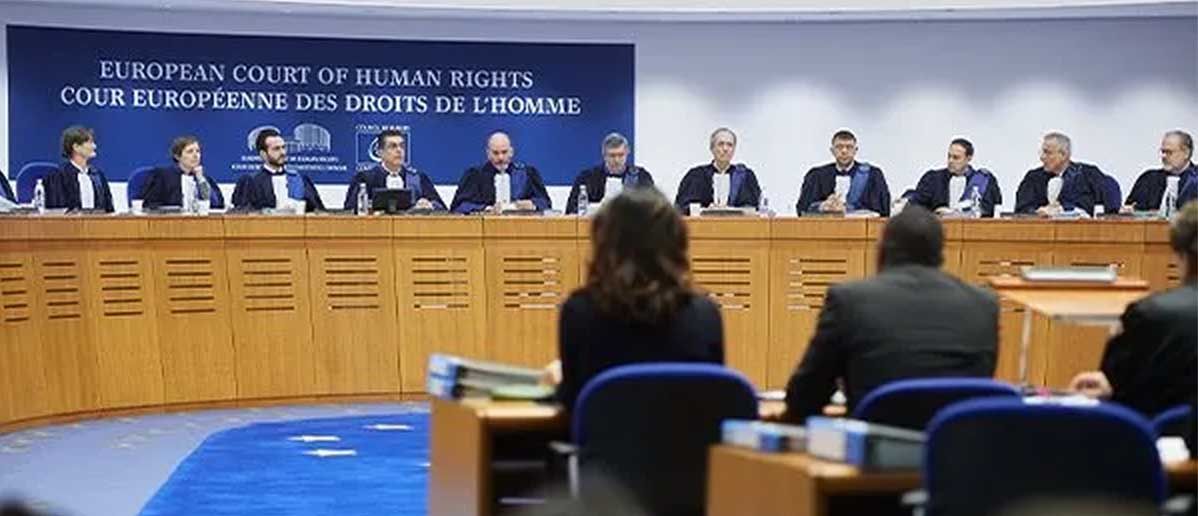
    The European Court of Human Rights ruled last year that France had failed to adequately protect sexual autonomy within marriage
    The European Court of Human Rights ruled last year that France had failed to adequately protect sexual autonomy within marriage

    The French Senate is ready to discuss and approve legislation aimed at removing any legal basis for the idea that marriage creates an obligation to ‘conjugal duty’ and engage in sexual relations.

    The bill was passed on Wednesday by the National Assembly and amends the civil code to state explicitly that a couple’s “community of living,” cohabitation, does not amount to an obligation to have sex. It also bars the absence of sexual relations from being cited as grounds for fault-based divorce.

    The French civil code currently defines the duties of marriage as respect, fidelity, support, and assistance, and requires spouses to commit to a “community of living”. While the text does not refer to sexual relations, judges have at times interpreted the phrase broadly.

    That interpretation came under scrutiny following a 2019 divorce case in which a woman was found to be at fault for refusing sex with her husband for several years, a ruling that allowed him to obtain a fault-based divorce.

    The woman later appealed to the European Court of Human Rights, which ruled last year that allowing refusal of sex to justify fault-based divorce violated her rights. The court said France had failed to adequately protect sexual autonomy within marriage, a judgment that has since influenced how French courts approach similar cases.

    Lawmakers backing the new bill say it aligns domestic law with that ruling and removes any remaining room for misinterpretation. “Marriage cannot be a space where consent to sex is presumed to be permanent,” said Green MP Marie-Charlotte Garin, who sponsored the legislation.

    The law will erase an ambiguity that has persisted despite there being no explicit mention of “conjugal duty” in any legal text.

    France has also recently strengthened its sexual offences framework. Since November, the legal definition of rape has been expanded to focus explicitly on consent, defining it as any sexual act carried out without consent that is informed, specific, prior and revocable. Silence or lack of resistance does not constitute consent under the law.


    Source link

Translate »