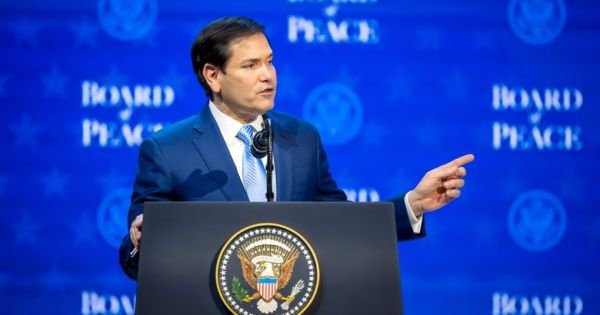
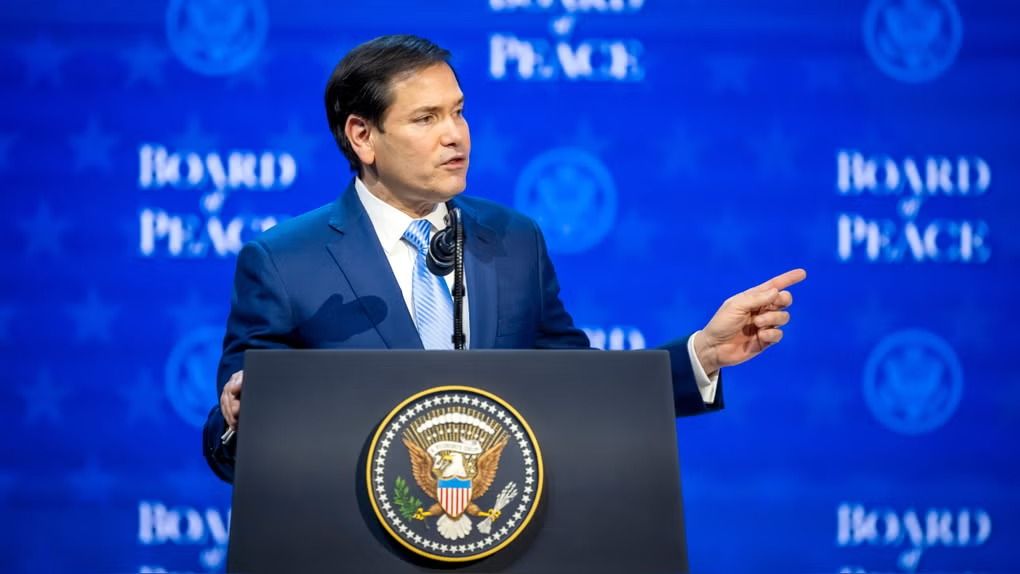
The hearing will be Rubio’s first public appearance before Congress focused on Venezuela since the U.S. military operation of Jan. 3
U.S. Secretary of State Marco Rubio will tell the Senate Foreign Relations Committee on Wednesday that Washington is prepared to “use force” again in Venezuela if it determines that acting president Delcy Rodríguez is not cooperating “to the level” expected by President Donald Trump’s administration, according to a draft of his prepared remarks cited by media.
Rubio is expected to say the United States will “closely monitor” the interim authorities’ cooperation with a “phased” plan to “restore stability,” adding: “Let there be no doubt… we are prepared to use force to ensure maximum cooperation if other methods fail,” while stressing he hopes such steps will “not be necessary.”
The hearing will be Rubio’s first public appearance before Congress focused on Venezuela since the U.S. military operation of Jan. 3 that resulted in the capture of Nicolás Maduro and his wife, Cilia Flores — an action the White House has framed within its counternarcotics agenda. Reuters reported at the time that the mission had been planned for months and involved U.S. special operations forces and intelligence, alongside a significant regional military posture.
In the draft, Rubio is set to describe the intervention as a “judicial operation” to seize “two narcotraffickers” for trial in the United States, arguing it did not amount to a war and therefore did not require prior congressional authorization. He will also reiterate Washington’s position that Maduro’s 2024 election claim lacked legitimacy — a result disputed by opposition figures and not accepted by several governments.
Rubio will outline commitments he attributes to the interim government: opening Venezuela’s oil sector to U.S. companies with preferential access to output, using crude-sale revenue to purchase U.S. goods, ending oil support to Cuba, and pursuing “national reconciliation.” At the same time, Rodríguez has said Venezuela “does not accept orders” from external actors, though Trump said this week he maintains a “very good relationship” with the interim authorities.
The bilateral track has been reshaped by oil arrangements. Rodríguez has said Venezuela has already received $300 million from a $500 million crude-sale agreement announced by Washington. The Trump administration has acknowledged its roadmap could take years and is structured around stabilization, economic recovery, and a transition toward elections.
After the Senate session, Rubio is scheduled to meet opposition leader María Corina Machado at the State Department.
Kast argued that cooperation between Chile and Brazil “can lead the change our region needs”
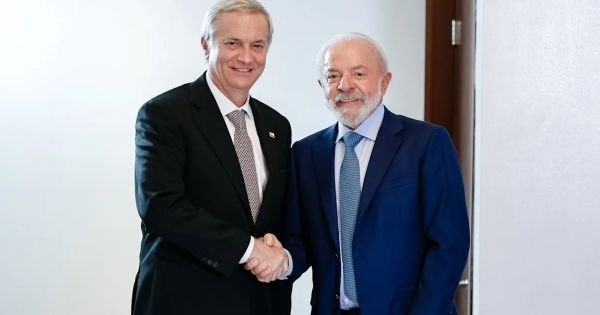
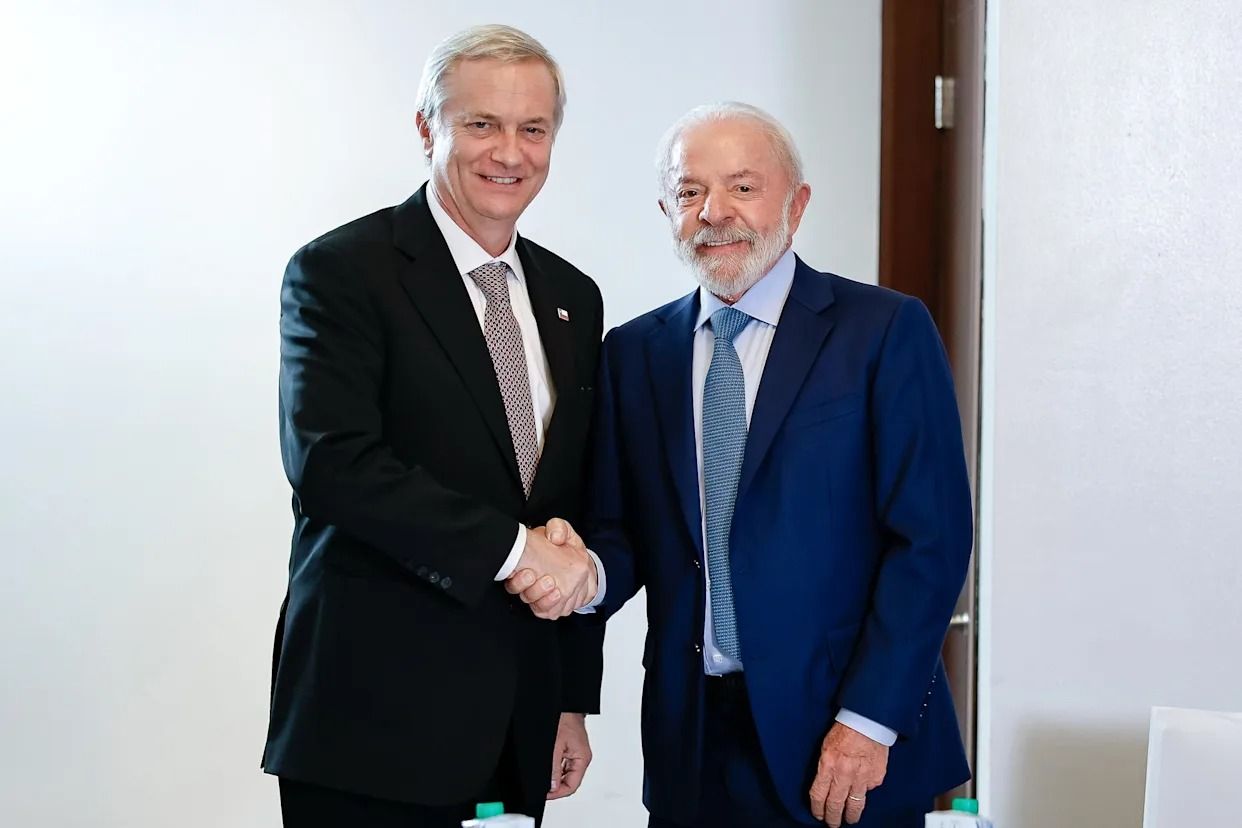
Brazil’s President Luiz Inácio Lula da Silva and Chile’s president-elect José Antonio Kast held their first bilateral meeting in Panama on Tuesday, shortly after arriving for the International Economic Forum for Latin America and the Caribbean — an event promoted by organizers and regional media as a “Latin Davos.”
The talks were held behind closed doors and brought together leaders from opposing political camps. After the meeting, Kast described it as “constructive” and said South America faces “enormous” challenges in security, economic progress and poverty reduction. He argued that cooperation between Chile and Brazil “can lead the change our region needs,” in a post on X.
Brazil’s Foreign Ministry had framed such contacts as normal on the sidelines of a gathering that will bring together multiple heads of state. “We maintain dialogue with absolutely all presidents in the region and our relations do not depend on the political cycle,” said Gisela Padovan, the ministry’s secretary for Latin America and the Caribbean, noting that Brazil was already in contact with Chile’s president-elect.
Forum draws eight top-level leaders
The forum runs in Panama City on January 28–29 and is expected to convene presidents, business leaders and multilateral institutions. CAF said the opening session will feature Panama’s President José Raúl Mulino, Lula, Bolivia’s President Rodrigo Paz, Ecuador’s President Daniel Noboa, Guatemala’s President Bernardo Arévalo and Jamaica’s Prime Minister Andrew Holness, with Kast attending as Chile’s president-elect.
Regional reporting has highlighted an agenda focused on growth, macroeconomic stability, investment, the energy transition, digital transformation and social cohesion, as the organizers seek to position the forum as a recurring high-level platform for Latin America and the Caribbean.
No official readout of the Lula–Kast discussion was released, but Kast’s public remarks pointed to security and economic cooperation as core themes, underscoring a broader pattern of cross-ideological engagement among governments across the region.
The Assembly placed the message in a current global context, warning that discrimination — including antisemitism — is becoming “more widespread globally.”
The Falkland Islands Legislative Assembly marked Holocaust Memorial Day on 27 January, joining people and governments worldwide in a statement centered on remembrance and renewed vigilance against hatred and discrimination.
In its public message, the Assembly said the day is dedicated to remembering “the six million Jewish men, women and children murdered during the Holocaust,” while also acknowledging “the millions of others” who suffered and died under Nazi persecution, including Roma, people of colour, disabled people, LGBTQ+ people, political prisoners, and other groups.
The statement frames the commemoration as more than historical reflection, arguing that Holocaust Memorial Day “urges us to remember the dangers of hatred and discrimination,” and to maintain vigilance “to prevent future atrocities.”
It also links the lessons of the Holocaust to principles the Assembly said are fundamental to the Falkland Islands: that “all people have the right to self-determination,” and the right to live freely “without fear or being persecuted.”
The Assembly placed the message in a current global context, warning that discrimination — including antisemitism — is becoming “more widespread globally.” It added that its thoughts are with people who have faced discrimination or live in fear of it.
Concluding, the Assembly called for shared responsibility to “challenge hatred wherever we encounter it,” to speak out when prejudice is expressed, and to stand alongside those who are targeted, so that “the horrors of the past are never repeated.”
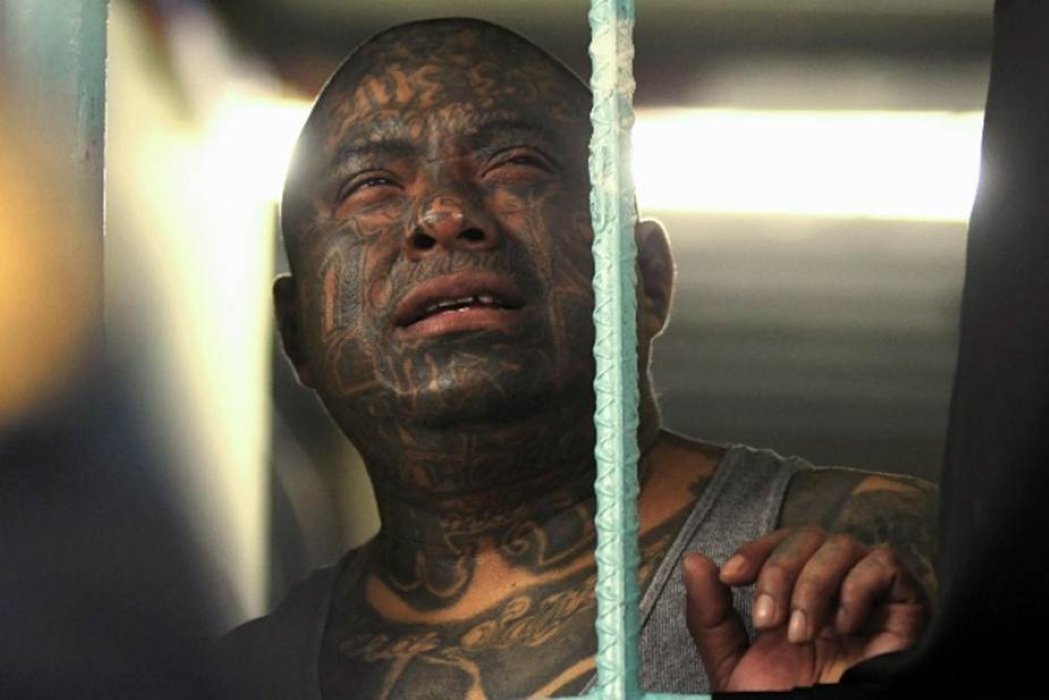
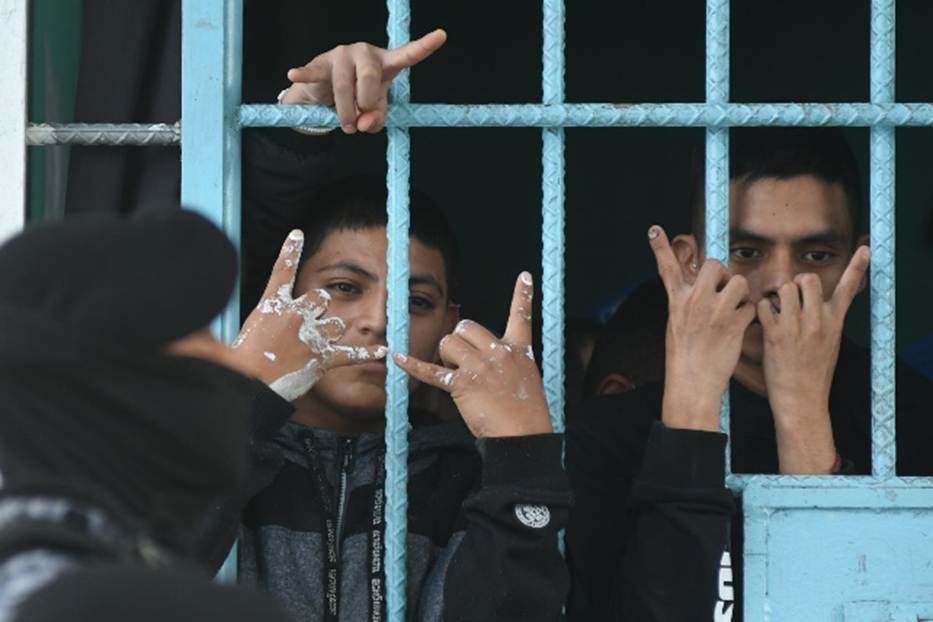
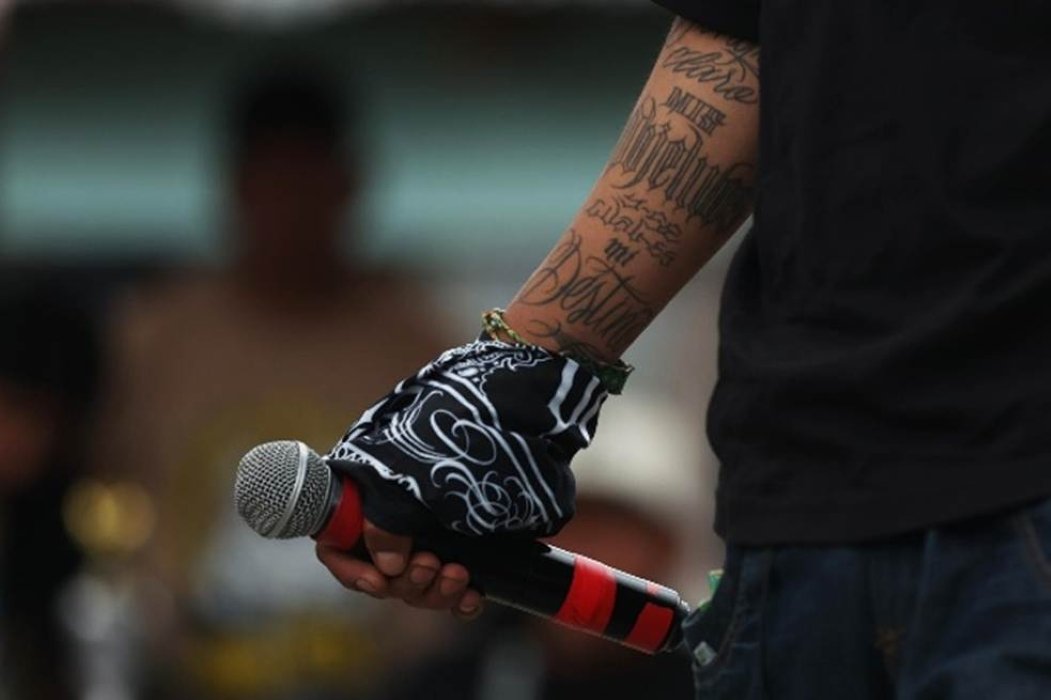
From behind bars, gangs in Guatemala run extortion rackets like call centers, directing threats, payments, and killings while enjoying privileges unseen by most citizens. Recent prison crackdowns exposed a system where incarceration fuels crime instead of stopping it.
Cells That Became Control Rooms
For decades, Guatemala’s prisons have quietly mutated into something far more dangerous than overcrowded detention centers. They have become operational headquarters for the country’s most violent gangs, places where sentences do not interrupt criminal careers but formalize them. From inside their cells, incarcerated leaders organize extortion schemes that drain millions of quetzales from shopkeepers, transport workers, and small businesses. At the same time, violence on the streets follows their instructions with chilling precision.
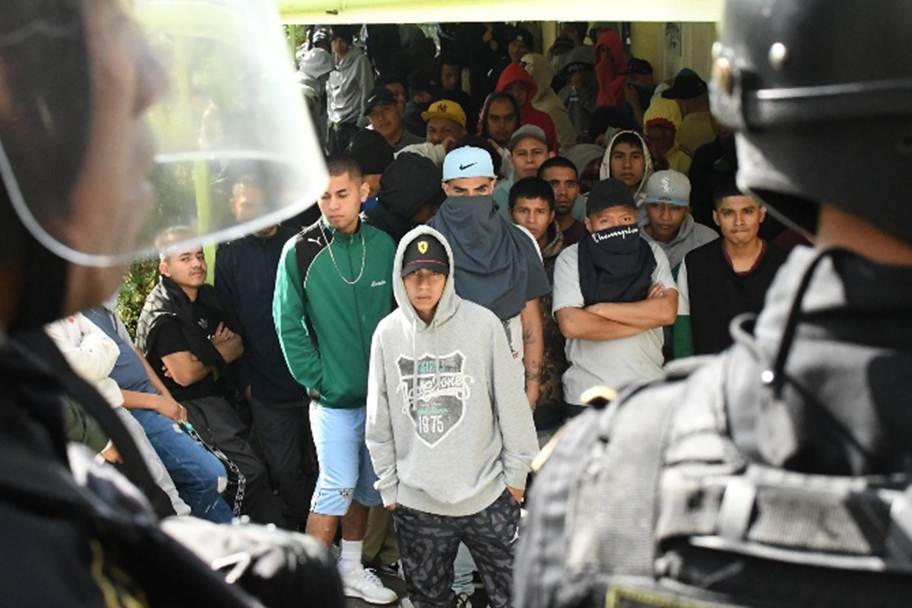
This reality erupted into public view again after a bloody weekend in July 2025, when ten police officers were killed shortly after authorities moved to retake control of three prisons seized by inmates. The riots, hostage-taking of penitentiary workers, and coordinated reprisals outside prison walls laid bare what many Guatemalans already suspected: the state had lost command long ago.
According to Manfredo Marroquín, executive director of Acción Ciudadana, the Guatemalan chapter of Transparency International, the roots of the problem run deep. “El sistema penitenciario padece una penetración histórica de la corrupción que permite a las estructuras criminales operar con total impunidad,” he said, describing a structure where prisons no longer rehabilitate but govern crime.
Marroquín’s assessment highlights the crucial role of political will in addressing a national contradiction. Recognizing that prisons are meant to isolate dangerous actors, it is vital for leaders to act decisively to dismantle these control centers, inspiring confidence in reform efforts.
Inmates inside Pavoncito Prison, in Fraijanes, Guatemala. EFE/ Álex Cruz
Extortion as a Parallel Economy
The business model sustaining this system is extortion, a crime so normalized that it has become a parallel economy. Official data and independent monitoring show that thousands of complaints filed each year share the exact origin: phone calls and payment orders traced back to prison facilities.
The scale is stark. A January 2026 report by the Centro de Estudios Económicos Nacionales (CIEN) documented 25,961 extortion complaints in 2025, up from 24,978 in 2024. The increase of 983 cases represents a 3.9 percent rise, consolidating the national rate at 142.7 extortion reports per 100,000 inhabitants. These figures capture only those who dared to report; many more pay silently to survive.
CIEN researcher David Casasola has emphasized that the department of Guatemala concentrates nearly half of all extortion and homicide cases nationwide. The geography matters. It reflects how gangs maintain intact communication structures despite incarceration, relying on cellular phones, intermediaries, and bribed guards to coordinate threats in real time.
For families and merchants, the impact is intimate and relentless. A bus driver receives a call demanding weekly payments. A corner shop closes early, then permanently. Each transaction funds the same system that terrorizes neighborhoods and reinforces prison-based command chains. Violence, in this sense, is not chaotic; it is administered.
Guatemala holds one of the highest incarceration overcrowding rates in Latin America, with occupancy exceeding 300 percent, directly enabling organized crime to thrive within and beyond prison walls.
Overcrowding creates markets where control shifts from the state to those who can pay or intimidate, making the threat of extortion and violence ongoing and urgent. This reality should alarm citizens and policymakers alike, emphasizing the need for immediate action.
Members of the Mara Salvatrucha during a search operation inside Pavoncito Prison, in Fraijanes, Guatemala. EFE/ Álex Cruz
Power, Privilege, and the Limits of Reform
The current crisis intensified after President Bernardo Arévalo de León’s administration attempted to reverse decades of neglect. Beginning in July 2025, the government moved to strip inmates of long-standing privileges and transfer high-profile gang leaders to Renovación I, a refurbished maximum-security prison in Escuintla, about fifty kilometers south of Guatemala City.
The backlash was immediate and violent. Riots inside prisons coincided with attacks outside them, reinforcing the central lesson of Guatemala’s penitentiary dilemma: when leaders are removed from comfort, their organizations retaliate to prove they still hold power.
Despite repeated searches and seizures, the flow of contraband continues. Each new raid recovers more phones, chargers, and communication devices, underscoring how deeply corruption has penetrated daily operations. CIEN has warned that without professionalizing the penitentiary career and completing a comprehensive inmate census, reforms will remain symbolic rather than structural.
Individual cases best illustrate the persistence of privilege. Aldo Dupie Ochoa Mejía, known as “Lobo,” a leader of the Barrio 18 gang, reportedly demanded transfer to another facility along with comforts such as air conditioning, restaurant food deliveries, and even a king-size bed in his cell. These requests were not delusions; they reflected expectations shaped by years of accommodation.
Such demands resonate far beyond one inmate. They speak to a system where incarceration has been negotiated into a lifestyle, and where the boundary between punishment and power has blurred beyond recognition.
Guatemala now faces a pivotal moment. Reclaiming prisons requires collective effort and political resolve. Recognizing that dismantling extortion and corruption is essential can empower citizens and leaders to work together for meaningful change.
For ordinary Guatemalans, the stakes are immediate. As long as prisons remain command centers, violence will continue to be planned from within institutions meant to stop it. The challenge is no longer whether the state knows what is happening inside its cells. It is whether it can finally afford to confront the power that has grown there, one extortion call at a time.
The information and quotations in this story were first reported by EFE.
At Qalauma on Bolivia’s Altiplano, teenage voices once reduced to case files now fight for air through rhyme. A prison-yard freestyle contest reveals how hip hop can become discipline, dignity, and a fragile route back to La Paz’s streets.
Where Stone, Breath, and Rhythm Meet
The patio at the Centro de Reinserción Social para Jóvenes “Qalauma” does not look like a stage at first glance. It is a highland enclosure in Viacha, an Andean municipality about 30 kilometers from La Paz, perched at more than 3,900 meters above sea level. The air is thin enough to punish a sprint, and cold enough to make the body remember every mistake it ever made. Yet on this Tuesday, the yard becomes a crowded amphitheater of teens, guards, visitors, and sound—hands raised, sneakers tapping, bodies leaning in the way people do when they want to believe a voice can change a life.
The contest is called “Combatemática,” a name that feels like a wink and a challenge at once: combat, but also mathematics—structure, rules, tempo, discipline. It is a freestyle battle, built on improvisation and public pressure, where you have seconds to think and a crowd waiting for you to fail. For young people whose lives have often been defined by impulse, the format is almost therapeutic: if you lose control of your words, you lose the round. If you keep your mind sharp, you keep your dignity.
The symbolism sits right inside the center’s name. “Qalauma” means “the drop that carves the stone” in Aymara. It is a metaphor that the Altiplano understands better than any minister: persistence as geology, patience as survival. In that yard, the drop is a verse. The stone is a life already marked by the state, by the family, by the street. The question is whether language can still carve a new shape.
Freestyle (improvised rap) competition at the Qalauma Youth Social Reintegration Center in Viacha, Bolivia. EFE/ Luis Gandarillas
A Prison System Learning the Youth’s Language
The event is backed by the evangelical congregation El Refugio Bolivia, part of the global movement ‘Dios en las calles’—God in the streets. Their presence offers hope and reassurance, bringing MCs from Bolivia, Argentina, and Peru, and providing small acts of kindness like free haircuts that restore dignity and self-worth, which matter deeply for reintegration.
The government presence is not distant or ceremonial. The director of the departmental penitentiary regime in La Paz, police major Brayan López, frames the choice of rap, hip hop, and freestyle as a practical strategy, not a fashionable experiment. “Por la edad que tienen, a ellos les gusta este tipo de música,” he explained.
That sentence, simple on paper, carries an unspoken indictment of how rarely institutions bother to like what young people like. In Bolivia, as in much of Latin America, the prison system often treats youth as a problem to be contained rather than a population to be understood. López’s argument is not romantic. It is logistical: if the aim is reintegration, you have to reach the person who is actually there, not the person you wish you had. “Les gusta el ‘freestyle’, el hip hop, el rap, entonces, con la ayuda de instituciones como esta iglesia podemos llegar a ellos,” he added.
Inaugurating the competition, López describes the deeper intention: to offer a channel for expression, and, alongside reintegration, a hope tied to “the word” of God, a task shared with evangelical pastor Renán Choque. This is where the scene turns unexpectedly modern. Choque is not dressed like a visiting authority. He looks like an MC himself—cap low, sneakers on, wide pants, hoodie stamped with graffiti-styled lettering: “Doble H para Cristo.” Doble H is his stage name, and he carries it like a bridge between two worlds that usually refuse to speak to each other.
Choque speaks about urban music as something he once used destructively, a tool that could feed ego, provoke violence, or deepen the crash of a young life. Now, he says, he uses it differently, tailoring the message to resonate with local youth. ‘Ahora lo usamos de buena manera y con eso levantamos, ya no destruimos; con eso edificamos,’ he explains, describing art as scaffolding for youth who already love music and dance, but need something sturdier beneath that love.
The project’s rules are strict in ways that matter. This Combatemática bans profanity, insults, and obscenities—an insistence on “clean” creativity that forces participants to expand their vocabulary rather than lean on shock. The point is not censorship for its own sake; it is training. Choque says the goal is to make them work their intellect through improvisation, to produce an art that “the child, the mother, and the grandfather” could hear without flinching.
In a region where public violence often begins with public humiliation, there is something quietly radical about teaching a young person to win without degrading someone else.
Freestyle (improvised rap) competition at the Qalauma Youth Social Reintegration Center in Viacha, Bolivia. EFE/ Luis Gandarillas
Sixteen Voices and One Trophy, Still Climbing the Altiplano
Before the competition begins, the crowd watches a duel between two visiting MCs—one from Bolivia, one from Argentina—demonstrating speed, rhyme, confidence, and control. This showcases discipline and craft, inspiring respect among the youth and audience alike.
The battles unfold in rounds, intercut with performances by other invited freestylers, who share life testimonies with the youth and, at times, share the yard itself—no stage divide, no velvet rope. Members of the congregation add a dance performance, reminding everyone that the culture is not only lyrical but physical, a way of moving through pressure with rhythm rather than rage.
Every time a battle is about to start, Doble H works the crowd like a veteran host. He calls out: “mano arriba, mano arriba toda Qalauma,” pushing the yard into motion, turning spectators into participants, replacing the prison’s habitual stillness with coordinated energy.
Sixteen young men compete, improvising on themes thrown at them by the judges—video games, sports, politics, elements—topics that force them to think beyond their files, beyond their sentences, beyond the narrow geography of confinement. It is almost impossible to ignore what this demands. Freestyle is not merely talk. It is memory, timing, emotional regulation, and the ability to read a room without exploding. In most prisons, those are survival skills. Here, they are also civic skills.
When someone breaks the rules, Doble H flashes a yellow or red card, borrowing football’s language to impose order without humiliation. The punishment is clear but not cruel; it says: you can restart, but you cannot pretend the rule didn’t exist. In a region where state authority often arrives only as punishment, this softer form of structure matters more than it seems.
The winner receives a trophy and a shirt from an official freestyle brand—symbols of achievement that might look small outside these walls, but inside them can become proof that a young person is more than his worst day. The prizes are not the point. The point is the moment when a teenager realizes that his mind still works under pressure, that his words can earn applause instead of suspicion, that a crowd can gather around him for something other than a crime.
In Bolivia, reinsertion is often discussed as a policy goal and experienced as a social rejection. The street does not always welcome a young person back, even when the law says he has paid. That is why this scene on the Altiplano feels bigger than a contest. It is an experiment in dignity—one that tries to replace the prison’s most corrosive lesson, that you are only what you did, with a different lesson: you are also what you can build.
Up at three thousand nine hundred meters, breath is precious. So is time. In Qalauma, a drop can carve stone—but only if it keeps falling, line after line, day after day, until the surface finally changes.
The information and quotations in this story were first reported by EFE.
Aerospace specialists note that the announcement comes amid growing competition for orders from regional airlines and fleet-renewal campaigns across Asia
Indian conglomerate Adani Group and Brazilian plane maker Embraer announced on Tuesday that they have signed a memorandum of understanding aimed at cooperating on the production of regional aircraft in India. The agreement calls for establishing a domestic supply chain and a final assembly line for Embraer’s E2 family of jets, which seat between 70 and 146 passengers, as well as developing maintenance services and pilot-training programmes. It also leaves the door open to potential local manufacturing of Embraer’s C-390 military transport aircraft.
Arjan Meijer, president of Embraer Commercial Aviation, said the alliance combines the Brazilian company’s 50 years of aircraft-design expertise with the industrial and logistical capabilities of the Indian group. “The E2 family is perfect for the Indian market, which is growing rapidly and needs efficient aircraft for regional routes,” he said.
Ashish Rajvanshi, chief executive of Adani Defence & Aerospace, noted that the agreement is part of the government’s “Make in India” initiative to bring advanced manufacturing to the country. “Our vision is to create a complete civil-aviation ecosystem — from manufacturing through training and aftermarket support — that generates jobs and strengthens India’s self-reliance,” he said.
If realised, it would be the first time narrow-body commercial aircraft from a global manufacturer are assembled in India. The country’s aviation market has expanded rapidly, driven by the rise of low-cost carriers and surging domestic demand, but it still relies almost entirely on imported aircraft from Airbus and Boeing.
Embraer, the world’s third-largest planemaker, aims to capitalise on a gap in the regional-jet segment, a niche that could support routes between medium-sized cities that are not yet connected by direct flights. Adani Group, one of India’s largest infrastructure conglomerates, has in recent years expanded into defence and aviation with investments in airports, drones and missile systems.
This is not Embraer’s first attempt to secure an Indian partner. In 2023 it reached an agreement with local company Mahindra to market its C-390 transport plane to the Indian Air Force, but the tender has not yet been resolved. Analysts say the new alliance with Adani could give Embraer an edge in future procurement by providing an industrial base within India.
Aerospace specialists note that the announcement comes amid growing competition for orders from regional airlines and fleet-renewal campaigns across Asia. Airbus and its subsidiary ATR dominate the turboprop market for 50- to 70-seat aircraft, while the Airbus-Boeing duopoly controls the larger single-aisle segment. Embraer’s entry with a local partner could diversify the offering and open opportunities for suppliers from Latin America and Europe. Still, the memorandum is only a statement of intent and will require regulatory approvals and concrete contracts before it can be realised.
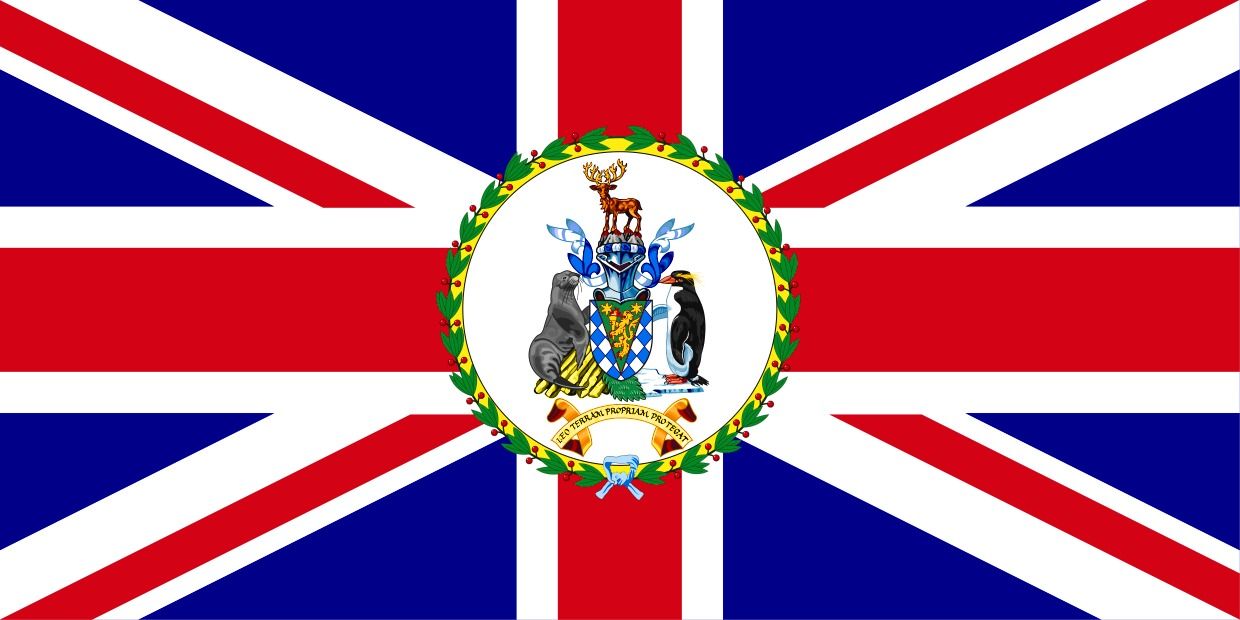
The Government of South Georgia and South Sandwich Islands, GSGSSI, are recruiting for their next Chief Executive Officer – to be based in Government House, Stanley, Falkland Islands.
The recruitment is being handled by our partners at Gatenby Sanderson, interested candidates should visit the dedicated microsite for further information, including details of how to apply: https://sgssi-future.com/
“This is a rare and exceptional leadership opportunity: to serve as the most senior executive official of a UK Overseas Territory that sits at the intersection of global environmental stewardship, international diplomacy, sustainable economic management and complex remote operations.
“South Georgia and the South Sandwich Islands is one of the world’s most remarkable and remote places. It is home to globally significant populations of seabirds and marine mammals, dramatic glaciated landscapes, and one of the most productive and carefully managed marine ecosystems in the Southern Ocean.
“The role is both strategic and handson. As CEO, you will work directly with the South Georgia Commissioner, His Excellency Colin Martin-Reynolds CMG, who is also Governor of the Falkland Islands, providing strategic leadership and overseeing the daytoday operations of the Government.
“You will lead a complex, missiondriven organization responsible for worldleading sustainable fisheries, a vast Marine Protected Area, major operational and infrastructure programs, and the longterm future of the territory. The role provides opportunities for ambassadorial leadership, representing the Government with international partners, NGOs, industry, the scientific community and the media.
“Operating in a unique and demanding environment, the role calls for an experienced, resilient and purposedriven leader. In return, it offers the rare chance to make a lasting global impact and to help shape the future of an extraordinary place.
“We invite you to explore the information on this site to learn more about South Georgia and the South Sandwich Islands, the Government’s strategic priorities, and the scope and expectations of the CEO role. If you are motivated by purposedriven leadership, complex challenge and meaningful impact, we warmly encourage you to consider applying.”
Indian Prime Minister Narendra Modi, who called the pact “the mother of all agreements,” said the EU and India constitute a “double engine of growth” for the world economy
New Delhi and Brussels announced on Tuesday that they had concluded the largest bilateral trade deal in their histories after almost two decades of negotiations. The pact links India’s 1.4 billion-person economy with the 27-nation European Union and, according to both sides, will create a free-trade zone for around 2 billion consumers and sharply lower tariffs and other barriers that have long hindered commerce between the two regions.
In a statement, the European Commission said the agreement will abolish or cut duties on 96.6% of EU exports to India by value and, in return, Brussels will remove tariffs on 99.5% of Indian goods over a seven-year period. EU estimates suggest the deal could double its goods exports to India by 2032 and save European companies about €4 billion a year in customs duties.
Under the accord, India’s import levy on cars will fall from a current maximum of 110% to 10% over five years. Duties on wine and spirits will drop initially from 150% to 75% and eventually to 20% for wine and 40% for spirits.
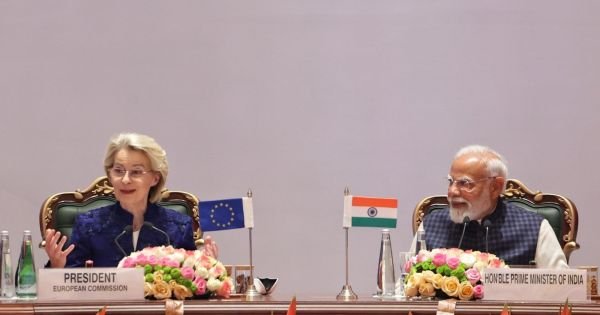
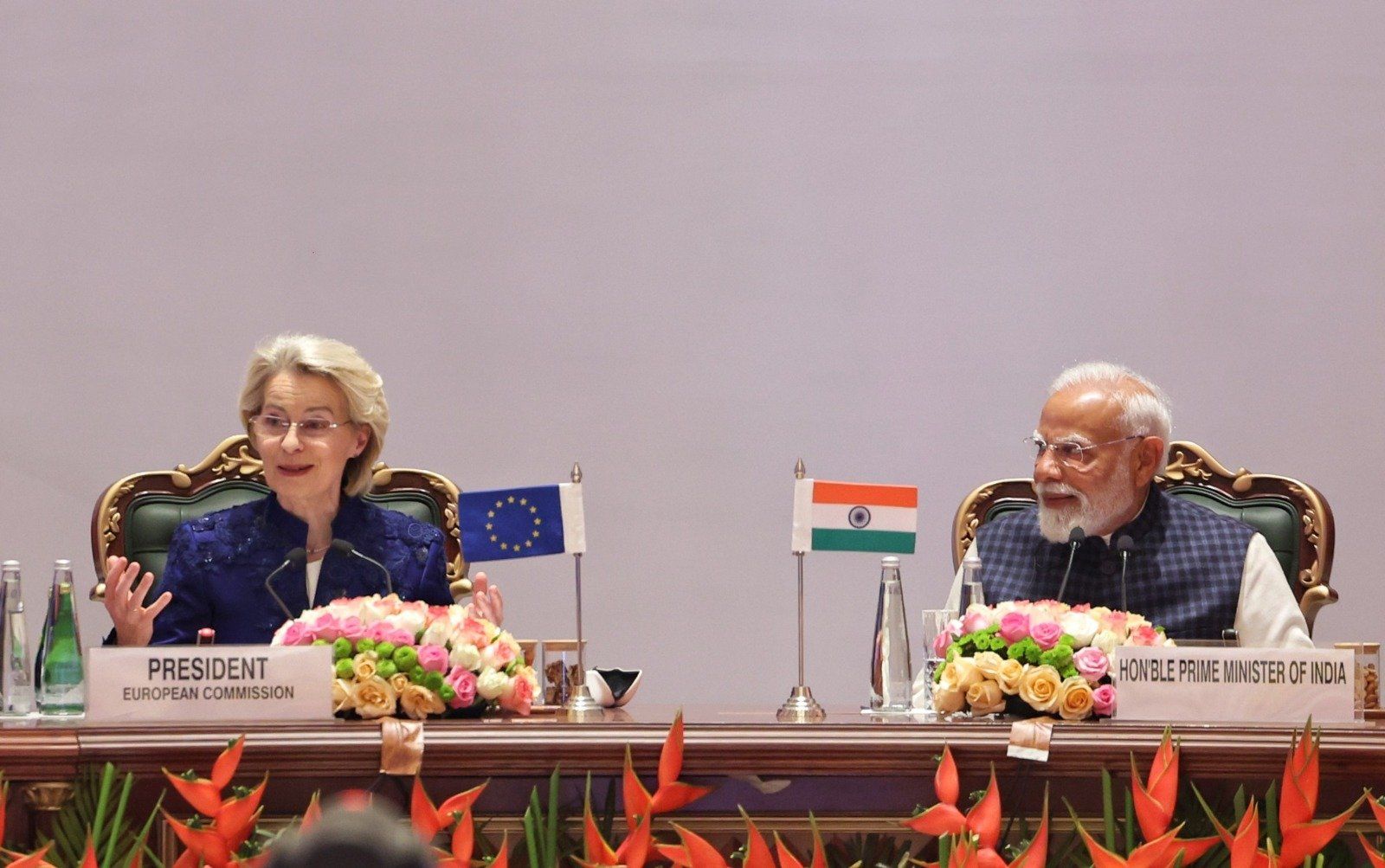
European Commission President Ursula von der Leyen hailed the announcement as “historic,” saying it creates “a free-trade zone for two billion people.” She described it as the most ambitious agreement the Union has ever signed and said it reflects a “geopolitical shift” as Europe seeks to diversify its commercial partners amid tensions with the United States and uncertainty in global supply chains.
Indian Prime Minister Narendra Modi, who called the pact “the mother of all agreements,” said the EU and India constitute a “double engine of growth” for the world economy.
Although negotiators have settled the key commercial chapters, the legal text must undergo a technical review and be translated into the EU’s 24 official languages before it can be formally signed. EU officials estimate that process will take five to six months and that ratification by the European Parliament, national legislatures and India’s parliament could allow the deal to take effect in about a year.
Trade Commissioner Valdis Dombrovskis said the treaty offers “reciprocal and balanced access” and that sensitive sectors such as agriculture and dairy have been shielded through transition periods and exclusions.
The deal comes against the backdrop of trade tensions with Washington, after U.S. President Donald Trump recently threatened to raise tariffs on Korean and European cars, prompting Brussels to accelerate talks with other partners.
Both Brussels and New Delhi have highlighted that the pact will boost trade not only in goods such as machinery, chemicals, seafood and textiles, but also in services, opening opportunities for European firms in telecommunications, education and information technology, while facilitating the movement of Indian professionals.
Farm organisations and environmental groups in Europe have warned of increased competition in sectors such as automotive and agri-business, as well as the ecological impact of greater trade flows. In India, opposition parties are demanding assurances that farmers and small businesses will be protected from the effects of market opening.
Even so, analysts say the treaty represents a decisive step in bringing the EU closer to one of the world’s fastest-growing economies and reducing its reliance on both the United States and China. As Modi put it, “In these uncertain times, this agreement shows that democracies on the Atlantic and Indian Oceans can build bridges for sustainable growth.”
Trading companies that move goods between Asia, Africa, and the Middle East often face financial hurdles that slow down their operations. Delays in payments, unexpected account reviews, and breaks in cash flow can put deals at risk. These issues arise from how traditional financial systems handle cross-border trade in these regions.
Why traditional banking fails trading companies operating between Asia and Africa
Many trading businesses experience disruptions when relying on conventional financial providers for routes involving Asia and Africa. Payments can take days to clear due to multiple intermediary institutions. Sudden compliance checks may freeze funds without clear timelines. These delays create gaps in settlements, making it hard to pay suppliers on time. In turn, partners lose confidence, and opportunities slip away. The challenge is built into the system—regional trade flows do not always align with standard risk assessment processes.
What trading companies actually need from a banking partner
Successful traders prioritize reliable access to payments over lengthy procedures. They require predictable timelines for transfers, so suppliers receive funds when expected. Support for multiple currencies, such as USD, EUR, AED, GBP, and CNY, helps manage exchanges without extra steps. A partner that understands real trade documentation—rather than strict formal KYC alone—keeps operations moving.
Why Asia–Africa trade is treated as high-risk — even when the business is legit
Financial institutions often classify routes through parts of Asia and Africa as higher risk due to regulatory concerns and past patterns. This affects legitimate traders who deal in everyday goods. Banks apply broad rules to limit exposure, leading to extra scrutiny on standard transactions. The gap appears when actual business activity—backed by invoices and contracts—clashes with generalized risk models.
The real cost of banking friction for trading companies
Consider a scenario where a shipment arrives, but payment to the supplier is held for review. The trader faces demurrage fees at the port and strained relations with the partner. In another case, delayed receipts from buyers create cash shortfalls, forcing delayed orders. Frozen amounts tie up working capital for weeks. Over time, these issues damage reputation, as counterparts seek more reliable players.
Why classic “one-bank” models don’t work for Asia–Africa trade
Depending on a single institution creates vulnerability. One compliance decision can halt all activity. Changes in internal policy affect the entire relationship without warning. Lack of flexibility means the setup cannot adapt to varying trade directions. A diversified structure, using regulated partners and correspondent networks, spreads risk and maintains continuity.
A different approach: How Shokran supports trading companies working with Asia and Africa
Shokran operates as a regulated fintech platform and Islamic neobank, providing staged access to financial infrastructure aligned with Shariah principles. This model connects businesses to established correspondent networks, reducing single points of failure. Traders gain multi-currency accounts with no minimum balance and transparent fees. Transfers settle quickly, supporting flows in USD, EUR, AED, GBP, CNY, and other currencies. The focus remains on real economic activity, avoiding riba through fee-based revenue. For companies seeking Islamic banking solutions, this approach offers fair partnership and ethical alignment.
How trading companies use Shokran in real operations
Importers sourcing from China pay suppliers promptly in CNY, while receiving payments from African buyers in USD. Exporters in the UAE settle invoices from multiple markets without converting everything to one currency. Daily tasks include sending funds to logistics partners or receiving proceeds from sales. The platform fits into existing workflows, handling cross-border settlements where traditional setups often stall. Support responds within minutes, 24/7, to resolve questions during operations.
Compliance without disruptions: How Shokran handles risk and transparency
Compliance forms the core of the structure, not an obstacle. Reviews focus on trade documents, company registration, and director details to confirm legitimacy. Clear explanations guide each step—what is checked, why, and expected timelines. This reduces surprises like freezes or refusals from correspondents. Asset-based focus and ethical screening prohibit support for restricted activities, maintaining stability.
Who Shokran is best suited for — and when it makes sense to use it
The platform works well for mid-sized trading companies with regular cross-border flows between Asia, Africa, and MENA. It suits businesses relocating to the UAE, those awaiting full local setup, or facing refusals elsewhere. Companies valuing predictable compliance and multi-directional payments benefit most. It serves as an entry point to regulated infrastructure, especially before establishing traditional arrangements. Local cash-only operations or those seeking to bypass rules find it less appropriate.
Conclusion: Building a banking setup that works for Asia–Africa trade
Reliable financial access supports long-term trade strategy. Shokran provides a practical tool through diversified networks and Shariah compliance, addressing common frictions in these routes. Businesses can maintain momentum with transparent terms and ongoing support. For traders aligning operations with ethical principles, options like Islamic banking solutions contribute to sustainable growth across markets. Over 100 clients already use the platform for similar needs. To discuss your setup, reach out via the site.
43% of farms are accredited under the Responsible Wool Scheme (RWS) plus a small number of farms have organic certification with Australian Certified Organic
Much of the Falkland Islands’ land mass is used for agriculture. The main product is wool, with an EU approved abattoir producing mutton and lamb for local and export markets and beef for local markets.
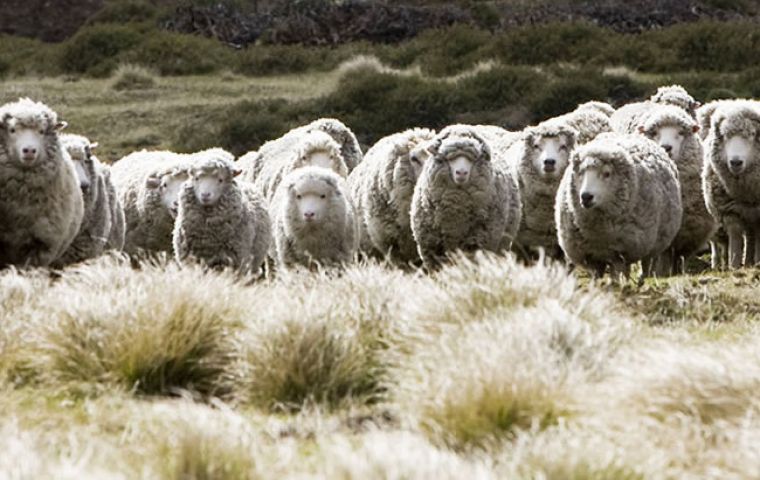
The Falkland Islands have 70 (according to the 2022/23 FI Farm Statistics) farms, which are mostly family owned, totalling 1,143,596ha of land. In total these farms graze just under half a million sheep of various breeds including; predominantly Polwarth/Merino cross with increased Merino genetics and a small number of Texel, Corriedales, SAMM and others. Approx. 50 of these farms also have a total cattle population just over 3,000 which consist mainly of Aberdeen Angus, Hereford, Red Devon and Murray Grey breeds.
The environment here produces exceptionally clean and white wool for which the Falkland Islands do have a very good reputation in their wool trading. The approx. annual wool production for the Falkland is 1,500,000 kg of greasy wool with an average weight of 3.71 kg and a fiber diameter range of 16.8-28µm. 43% of farms are accredited under the Responsible Wool Scheme (RWS) plus a small number of farms have organic certification with Australian Certified Organic (ACO) which is a step towards marketing these attributes internationally.
The uniqueness of the environment also throws up its challenges, and it is towards these that the Department of Agriculture (DoA) directs much of its advisory and research efforts and resources.
The DoA provides research and extension support to improve profitability and sustainability of farming businesses. A profitable farming sector will support a population living outside Stanley and provide valuable produce for both domestic and export purchase. It is an essential part of the Island Plan. The goals of the FIP scheme are to improve profitability by assisting farmers to develop long term solutions to the problems of poor winter nutrition and low wool income. It is achieving this through enabling grazing management systems which will better nourish the sheep, improving pastures and crops and accelerating genetic progress.
We aim to improve genetics of sheep and cattle herds throughout the Falklands with Artificial Insemination and embryo transfer programs. Using the National Stud Flock we also aim to improve reproductive performance of sheep flocks.
Sound health and welfare of farm animals is important, and apart from the normal pressures some further restraints imposed by those choosing the organic path will create further challenges for our veterinary section.