The EC is in the process of regulating labelling for all clothing/shoes etc using the Product Environmental Footprint (PEF) system
The Falkland Islands is supportive of the International Wool Textile Organization (IWTO) plea for all in the wool industry to sign the petition “Make the Label Count”, which calls for, “Wear Wool, not Fossil Fuel”.
The European Commission is in the process of regulating labelling for all clothing/shoes etc using the Product Environmental Footprint (PEF) system, which, as it stands at the moment, is heavily in favor of synthetics and penalizes natural fibers such as wool.
The new petition has been launched by Make the Label Count, an international coalition of organizations representing a wide range of natural fiber producers, manufacturers, brands, standards organizations and environmental groups.
The petition urges EU policy makers to:
• recognize natural fibers’ benefits in new sustainability policies
• ensure robust, science-based environmental criteria to prevent greenwashing
• promote a responsible fashion model that limits fast fashion and encourages biodegradable, renewable and recyclable fibers.
If you would like to have a look and sign the petition please read further: Make The Label Count coalition has launched an important petition calling on EU policymakers to ensure fair treatment of natural fibers in upcoming legislation.
This video can be found on The Woolmark Company’s YoutTube account. Reminding us all to check the labels of our clothes, change how we consume and make cleaner, greener choices. 100% natural, renewable and biodegradable, Merino wool can help you buy less and buy better. Find more information on The Woolmark Company website.
James will deliver a new virtual presentation hosted by FIDC, at the Harbourlights Cinema, Stanley, on Tuesday 3rd February at 5.30pm.
James Ellsmoor is an award-winning entrepreneur, writer, and CEO of Island Innovation, widely recognized for his work on sustainable development, renewable energy, and island economic resilience, and will be giving a presentation in the Falkland Islands.
Originally from Shropshire, educated at Orkney College Mr. Ellsmoor in September 2025, presented “Tourism and the Island Paradox” as a guest lecture at Harvard University Extension School, exploring why conventional economic development models often fail in island contexts and why tourism, despite its challenges, remains economically indispensable for many islands.
Building on this discussion, James will deliver a new virtual presentation hosted by Falklands Development Corporation, FIDC, at the Harbourlights Cinema, Stanley, on Tuesday 3rd February at 5.30pm.
The session will examine the structural constraints facing island economies, key development paradoxes, and innovative island-led solutions emerging from places such as the Maldives and the Faroe Islands, with insights relevant far beyond islands alone.
Register your interest by e-mailing lane.projects@fidc.co.fk to attend the virtual presentation or receive the live link.
Woodiwiss addressed Falklands beef industry supply challenges, highlighting a range of factors including communication gaps, logistical constraints, and the narrow supply window
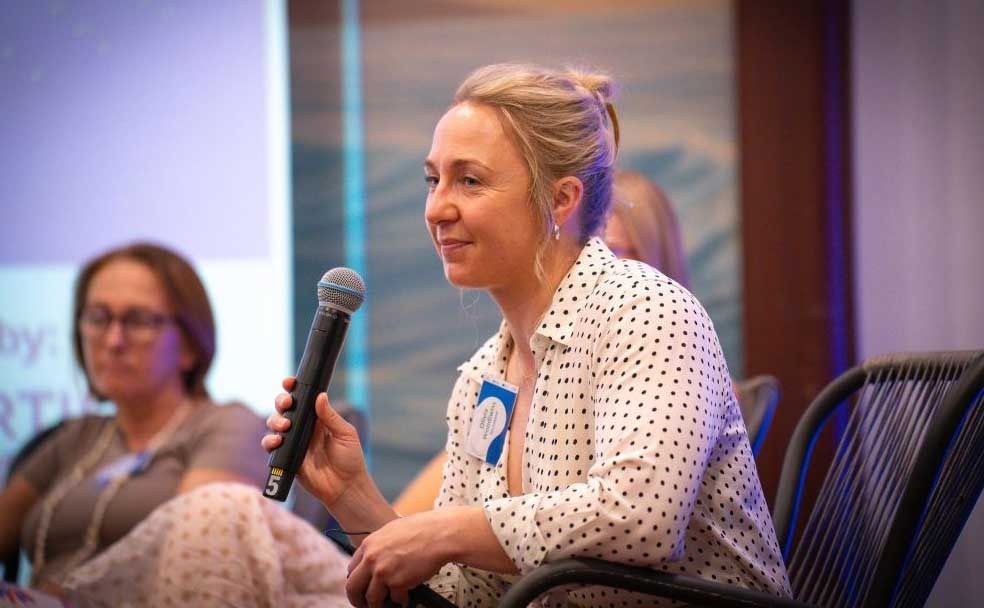
Falkland Islands Government Department of Agriculture Agricultural Advisor and Chair of the Beef Suppliers Working Group, Olivia Woodiwiss, represented the Falkland Islands at the Green Overseas Program “Strengthening Food Systems Resilient to Climate Change” workshop in Tahiti, last December where she spoke on beef supply chain challenges, stakeholder coordination, and adapting agriculture to climate change alongside counterparts from 15 Overseas Countries and Territories.
Reflecting on the exchange, Olivia said the discussions highlighted shared pressures around food security and supply resilience, noting, “Although our climate conditions differ, there is much we can learn from the systems and decision-making processes applied in other OCTs, particularly their prioritization of local production targets and structured planning mechanisms.”
At Tahiti, in a panel Ms Woodiwiss focused on the downstream links in processing, marketing, coordination of stakeholders, and adaptation of the agricultural sector to a changing climate.
“I delivered a presentation on the supply challenges of our beef industry in the Falkland Islands, highlighting that this has stemmed from a range of factors including communication gaps, logistical constraints, and the narrow supply window we operate in. The aim was to provide other Overseas Territories with insights that may inform their own efforts when looking to establish or strengthen local red meat supply chains,” said Woodiwiss. “The Green Overseas Program serves as a platform for OCTs to exchange knowledge, share challenges, and explore practical solutions. While most of the participating OCTs were from the Caribbean and Pacific regions, and their climates differ significantly from ours, they face a similarly high reliance on imported food. Faced with larger populations and limited land resources, these territories have adopted innovative strategies to strengthen food security. They have worked hard to introduce initiatives that encourage local communities to re-engage with agriculture and increase the production of food locally.”
“A key takeaway for me came during visits to several farms and production sites on the field trip days, where the emphasis was consistently on small-scale production,” said Woodiwiss. “This approach was reinforced by strong government backing and policy frameworks developed collaboratively with local stakeholders and the European Union. Working alongside the local people, on the land, has been fundamental to the success of these initiatives. Farmers were enabled to build a business or new enterprise sufficient to meet local demand only, with imports of similar products only permitted when domestic production was deemed inadequate. For example, producers submitted expected yields for fruit or veg, four to six weeks in advance, allowing a committee of decision makers to determine whether imports of items such as tomatoes, for example, would be required next month. They knew what the local demand was, and they aimed to fill it locally first. Although our climate conditions differ, there is much we can learn from the systems and decision-making processes applied in other OCTs, particularly their prioritization of local production targets and structured planning mechanisms.”
Since taking on the role of chair of the Beef Suppliers Working Group in the Falkland Islands — which is mandated to engage with beef suppliers across the islands and ensure the Falkland Islands Meat Company (FIMCO) is proactively working and communicating with beef suppliers to address shortfalls in production levels — Woodiwiss has passed several milestones, including regular joint meetings with suppliers and stakeholders, changes to the national beef pricing grid, revised supplier contracts, and actively supporting the launch of FIMCO’s online supplier portal.
Ms Woodiwiss is originally from Australia and graduated at Tasmania University.
Environmental authorisations set out mitigation measures, including onboard observers (marine biologists) and shutdown protocols for acoustic sources if cetaceans, turtles or pinnipeds are detected
Viridien (CGG Services) has told Uruguay’s Environment Ministry it aims to begin offshore seismic exploration in February, after submitting the environmental management plan required by the National Directorate for Environmental Quality and Assessment (Dinacea) as a precondition to operate in Uruguayan waters, according to local media reporting.
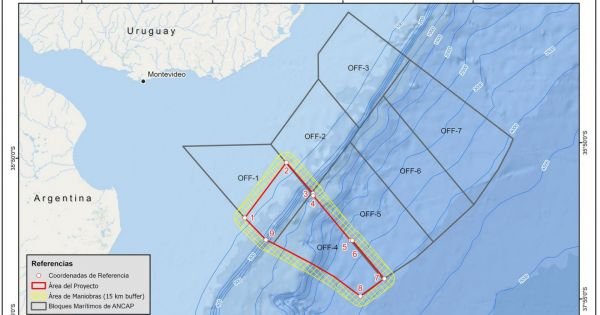
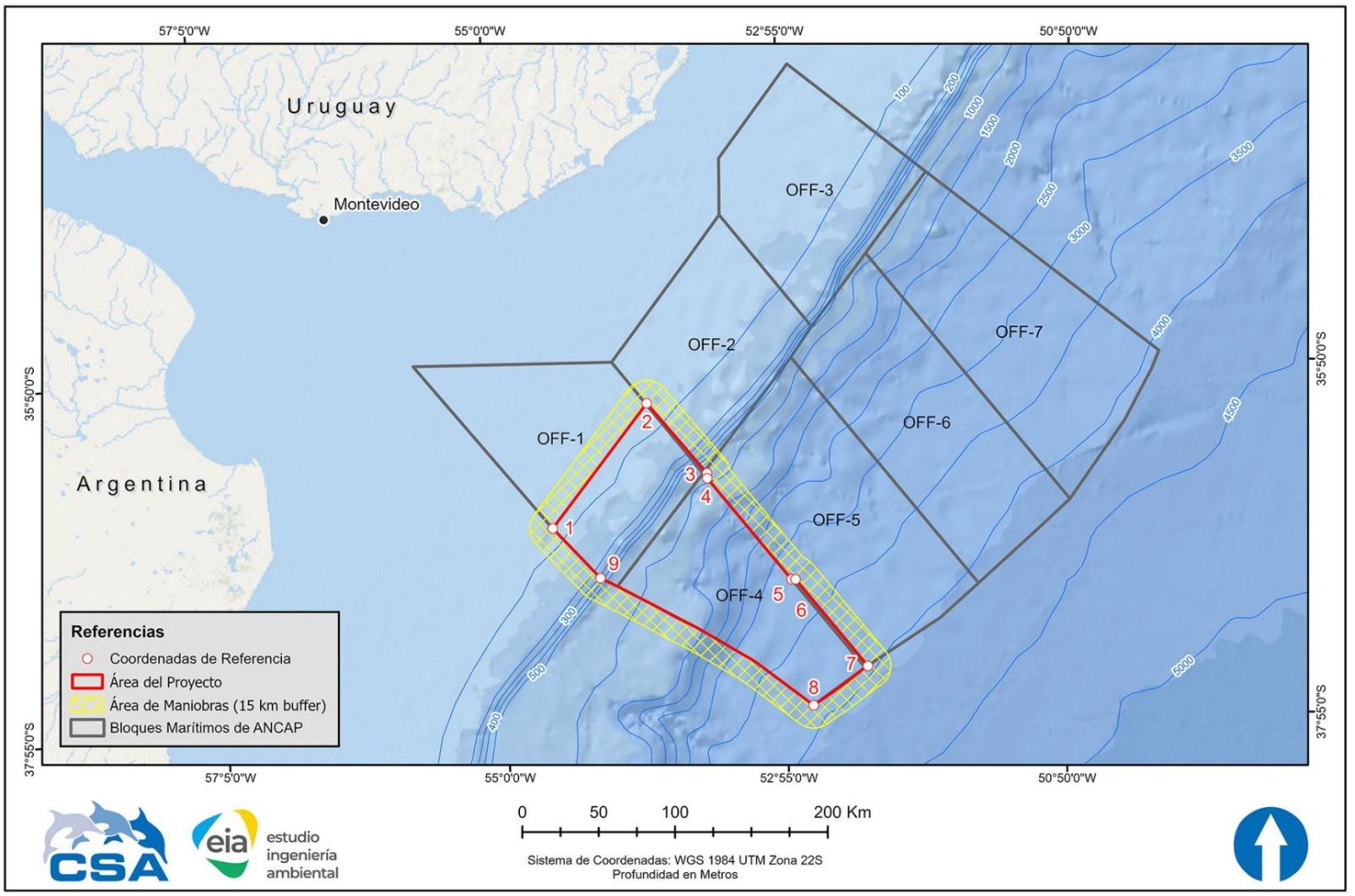
The operation is expected to rely on the seismic survey vessel BGP Prospector, due to arrive in Montevideo in early February before heading to the so-called offshore block 1, roughly 180 kilometres from the coast. The survey is projected to run for 104 days split into two stages (61 and 43 days), with a pause between April and November due to overlap with industrial fishing activity and seasonal environmental sensitivities in the area, as outlined in reporting based on project documentation.
Environmental authorisations set out mitigation measures, including onboard observers (marine biologists) and shutdown protocols for acoustic sources if cetaceans, turtles or pinnipeds are detected within defined safety radii. The survey area overlaps with conservation sites designated by Uruguay in 2022, including a permanent hake spawning area (full overlap) and parts of the continental shelf linked to submarine canyon heads and coral mounds (partial overlap), which has intensified public scrutiny of the campaign.
Survey vessel BGP Prospector, due to arrive in Montevideo in early February before
heading to the so-called offshore block 1, roughly 180 kilometres from the coast
At the same time, civil society groups are pursuing legal action against the permits. The platform Mar Libre de Petroleras said it wants “the courts to rule before activities begin” and called for a suspension of any contract-related action until there is a final judgment.
BGP Prospector is built for 3D seismic acquisition and multi-streamer operations, part of a broader fleet designed to collect geophysical data for the energy industry. Technical sources describe such vessels as specialised platforms that map subsurface geology using acoustic pulses and the recording of reflected signals from beneath the seabed.
Viridien’s planned campaign fits into Uruguay’s broader push to revive offshore hydrocarbons exploration along its Atlantic margin. In earlier rounds, state-owned Ancap awarded offshore areas to international players including Chevron, Shell and APA Corporation, alongside arrangements involving YPF, as part of a strategy to attract exploration capital to a basin where commercial discoveries have yet to be confirmed. Regionally, investor interest in comparable Atlantic margins has been shaped by recent discoveries in Namibia, which shifted expectations about South Atlantic geology, Reuters has reported.
For Uruguay’s authorities, the immediate test will be compliance with environmental conditions and maintaining an orderly operating framework. For opponents and environmental groups, the priority is enforceable oversight and legal clarity before seismic acquisition begins offshore.
Rodriguez said the draft is a sovereignty-respecting framework aimed at turning Venezuela into a giant producer of hydrocarbons with private investment
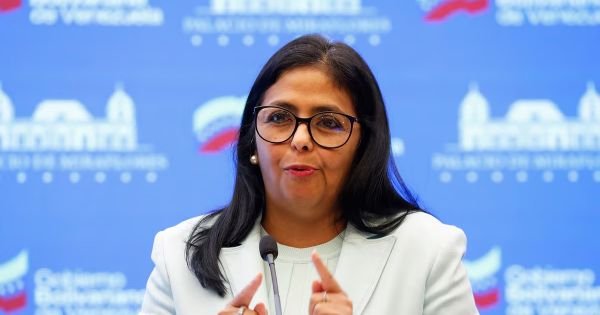
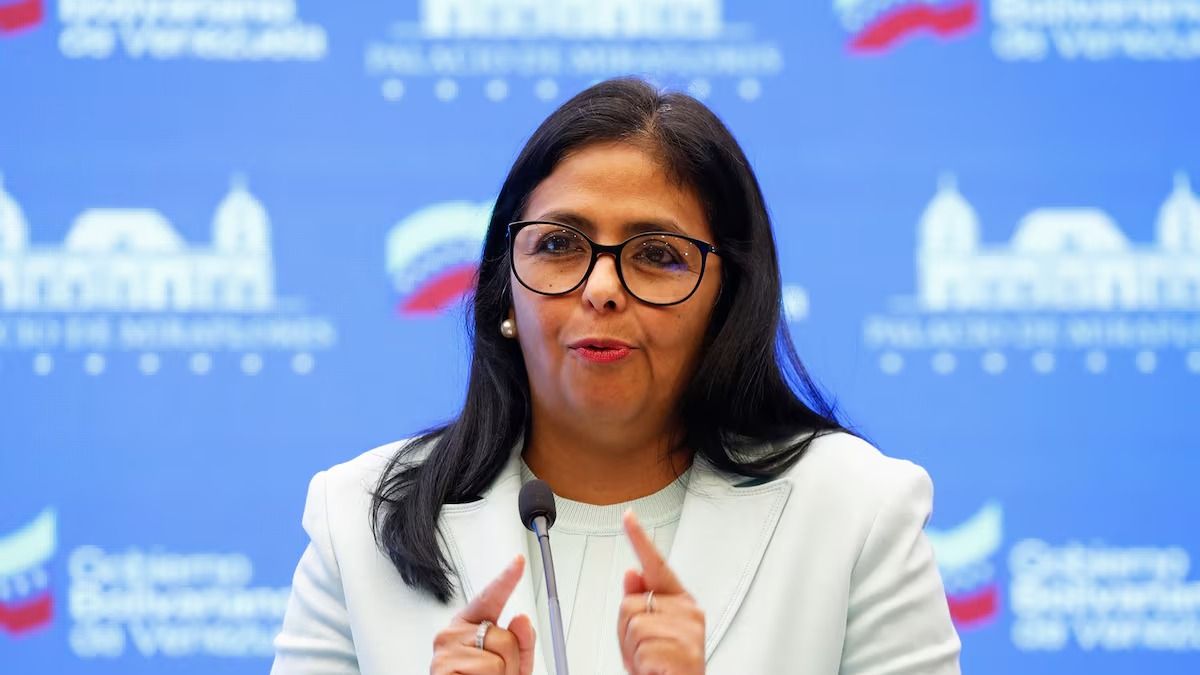
Venezuela’s acting president Delcy Rodriguez met on Monday in Caracas with representatives of oil companies including Repsol, Chevron and Shell to discuss a hydrocarbons law reform now moving through the National Assembly, as her government seeks to attract private and foreign investment. The meeting took place at PDVSA facilities and forms part of a mandatory public consultation phase after the bill cleared its first legislative debate.
In remarks aired on state television, Rodriguez said the draft is a sovereignty-respecting framework aimed at turning Venezuela into a giant producer of hydrocarbons with private investment. She added that authorities expect to secure a significant flow of international and domestic capital, as the government seeks to reset rules for investment and boost output.
Chevron said it was ready to continue contributing expertise and technology to help build a more competitive oil and gas sector, according to EFE’s account of comments by Chevron’s representative in Venezuela, Mariano Vela. Rodriguez defended what she called a successful model of productive participation contracts and said 29 such contracts are currently in place, instruments the government links to the 2020 anti-blockade law designed to navigate international sanctions.
The talks come amid a broader, fast-moving political and diplomatic backdrop. International reporting has described a new channel between Washington and Caracas shaped by US President Donald Trump’s stated interest in Venezuelan crude and oil sales arrangements. Reuters reported that Rodriguez said $300 million had already entered Venezuela from an initial $500 million crude sale agreement.
At the same time, Rodriguez has tried to project domestic control while signaling openness to investors. On Monday, she said Venezuelans do not take orders from any external actor and that this government obeys the people, EFE reported. An Associated Press report earlier in January described Rodriguez as threading a line between sovereignty rhetoric and a pitch to expand foreign participation in the oil sector, as the Trump administration said it aims to influence how Venezuelan oil revenues are handled.
The reform push is also unfolding alongside scrutiny over political detentions and releases. Human rights groups have questioned the pace and totals of prisoner releases; an AFP report said NGOs verified only a fraction of the releases claimed by the government.
The bill’s next stage is a second, article-by-article debate, where amendments may still be introduced. For Rodriguez’s government, the objective is to lift investment and production while keeping state ownership of reserves intact. For critics and investors, the key test will be whether the new rules deliver legal clarity, transparency and enforceable guarantees in a country still marked by sanctions, institutional strain and deep political polarization.
Dollar trades near May 2024 levels in Uruguay, at 38.62 pesos buy and 40.58 sell. The currency fell about 11% in 2025 and a further 4% so far in 2026.
Uruguay’s Central Bank (BCU) cut its benchmark policy rate by 100 basis points to 6.5% and said monetary policy “enters an expansionary phase,” framing the move as a way to prevent inflation from drifting away from its 4.5% target and to respond to recent strains in the foreign-exchange market.
The decision deepens an easing path that local reporting says now totals six consecutive reductions since mid-2025, and comes with an unusual scheduling change: the bank brought forward its monetary policy committee meeting and added an extra session in March to retain “flexibility” if volatility resurfaces.
The BCU said 2025 inflation closed at 3.65%, below its goal and below market expectations, while two-year inflation forecasts moved closer to target in surveys of analysts and financial markets. Against that backdrop, the bank pointed to heightened global “policy uncertainty” that has fueled “renewed weakening of the dollar,” particularly in Latin America, a dynamic that in Uruguay has been amplified by “lower liquidity” and “discrete moves” in parts of the FX market.
The exchange rate has been central to the narrative. Uruguayan outlets reported the dollar trading around 38.622 pesos on the buy side and 40.58 on the sell side in the interbank market, near levels last seen in May 2024. The same coverage said the currency fell roughly 11% in 2025 and about 4% so far in 2026.
BCU President Guillermo Tolosa had already warned in October that “peso appreciation is a challenge” while inflation was running below target. The central bank reiterated that if “exceptional” domestic conditions reappear, it could pair the rate stance with other tools to preserve “orderly conditions” and keep inflation within its tolerance band.
Uruguay’s pivot comes as the dollar has faced headwinds globally as well: the dollar index ended 2025 down about 7% amid heightened sensitivity to policy signals.
For markets, the immediate test is whether faster easing supports credit and activity without reigniting price pressures or aggravating the FX volatility the BCU described as “anomalous” in recent weeks. With an additional March meeting now on the calendar, the bank has left the door open to recalibrate the expansionary bias if the exchange rate and expectations move off track again.
In 2024, Milei pitched the Ushuaia naval project as a logistics hub for a new Argentine base, alongside the head of U.S. Southern Command
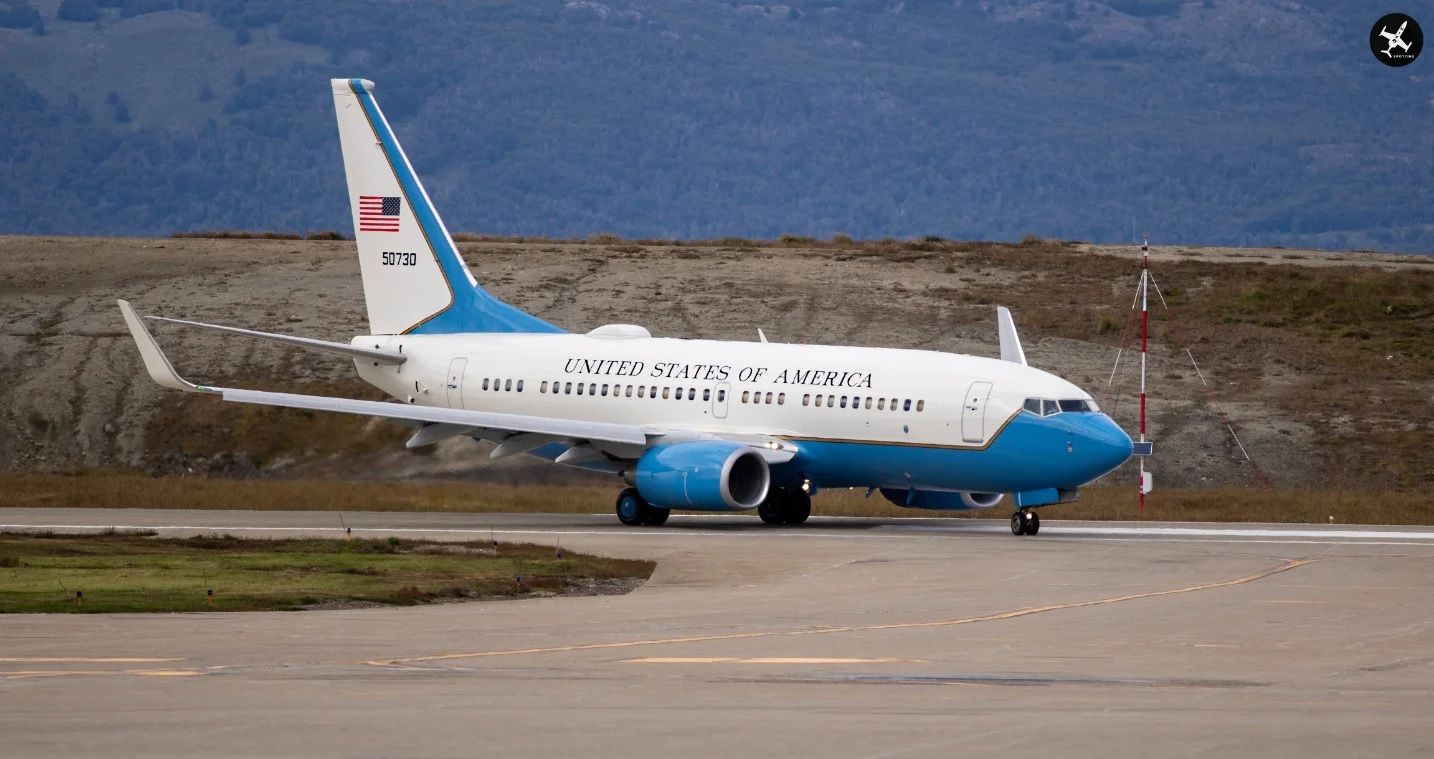
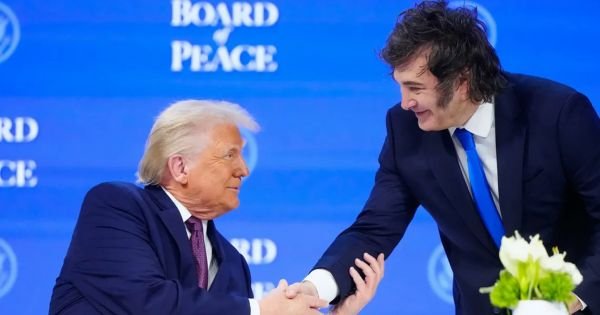
The landing in Ushuaia of a U.S. Air Force aircraft carrying a bipartisan delegation of U.S. lawmakers has reignited political controversy in Argentina’s Tierra del Fuego province and sharpened attention on the country’s strategic footprint in the South Atlantic and Antarctica, amid deepening ties between President Javier Milei and U.S. President Donald Trump.
TN reported that the aircraft transported members of the U.S. House of Representatives linked to the Energy and Commerce Committee. The visit included activities tied to natural environments, critical minerals and public health issues. Argentine officials, quoted by the same outlet, said the Foreign Ministry was aware of the trip and played down its significance: “There is nothing unusual about it.”
The arrival came days after Argentina’s federal government moved to take over, for one year, the administration of Ushuaia’s port, previously run by the provincial government. The national executive cited alleged irregularities and operational concerns, while Governor Gustavo Melella rejected the measure and said he would challenge it in court. “What they did is illegal; there are no grounds,” Melella said in remarks cited by TN.
In Tierra del Fuego, the combination of both developments — the port intervention and the U.S. military flight — fueled speculation about geopolitical and economic motives, especially given the growing international interest in maritime routes, Antarctic logistics and strategic resources. Provincial officials said they lacked details about the delegation’s agenda and demanded clarifications from the federal government, while opposition figures renewed calls for public transparency.
A U.S. Air Force Boeing C-40 Clipper landed Sunday at Ushuaia’s international airport — an
unusual arrival that drew immediate attention from local media
The broader backdrop includes Milei’s explicit alignment with Washington and U.S. regional strategy. Reuters has noted that Milei, in 2024, presented a Ushuaia naval project as a logistics hub linked to the base Argentina is building there, alongside the then head of U.S. Southern Command. The agency also referenced subsequent visits by senior U.S. officials and the sensitivity of the issue amid competition for influence with China in South America.
Argentina’s government has framed the lawmakers’ trip as routine and technical, without political implications. Yet the presence of a U.S. congressional mission focused on critical minerals and environmental management in a key Antarctic gateway has again pushed sovereignty and strategic infrastructure to the center of the domestic debate — and raised questions about how far Buenos Aires’ pivot toward Washington may reshape decision-making in the far south.
With the port takeover already headed to court and no fully detailed public readout of the delegation’s meetings, the episode is set to keep straining federal-provincial relations, while placing Ushuaia at the heart of a larger contest over Antarctic logistics, resources and geopolitical positioning.
In 2024, Milei pitched the Ushuaia naval project as a logistics hub for a new Argentine base, alongside the head of U.S. Southern Command
The landing in Ushuaia of a U.S. Air Force aircraft carrying a bipartisan delegation of U.S. lawmakers has reignited political controversy in Argentina’s Tierra del Fuego province and sharpened attention on the country’s strategic footprint in the South Atlantic and Antarctica, amid deepening ties between President Javier Milei and U.S. President Donald Trump.
TN reported that the aircraft transported members of the U.S. House of Representatives linked to the Energy and Commerce Committee. The visit included activities tied to natural environments, critical minerals and public health issues. Argentine officials, quoted by the same outlet, said the Foreign Ministry was aware of the trip and played down its significance: “There is nothing unusual about it.”
The arrival came days after Argentina’s federal government moved to take over, for one year, the administration of Ushuaia’s port, previously run by the provincial government. The national executive cited alleged irregularities and operational concerns, while Governor Gustavo Melella rejected the measure and said he would challenge it in court. “What they did is illegal; there are no grounds,” Melella said in remarks cited by TN.
In Tierra del Fuego, the combination of both developments — the port intervention and the U.S. military flight — fueled speculation about geopolitical and economic motives, especially given the growing international interest in maritime routes, Antarctic logistics and strategic resources. Provincial officials said they lacked details about the delegation’s agenda and demanded clarifications from the federal government, while opposition figures renewed calls for public transparency.
The broader backdrop includes Milei’s explicit alignment with Washington and U.S. regional strategy. Reuters has noted that Milei, in 2024, presented a Ushuaia naval project as a logistics hub linked to the base Argentina is building there, alongside the then head of U.S. Southern Command. The agency also referenced subsequent visits by senior U.S. officials and the sensitivity of the issue amid competition for influence with China in South America.
Argentina’s government has framed the lawmakers’ trip as routine and technical, without political implications. Yet the presence of a U.S. congressional mission focused on critical minerals and environmental management in a key Antarctic gateway has again pushed sovereignty and strategic infrastructure to the center of the domestic debate — and raised questions about how far Buenos Aires’ pivot toward Washington may reshape decision-making in the far south.
With the port takeover already headed to court and no fully detailed public readout of the delegation’s meetings, the episode is set to keep straining federal-provincial relations, while placing Ushuaia at the heart of a larger contest over Antarctic logistics, resources and geopolitical positioning.
The exchange comes as Washington advances an international framework linked to Gaza’s postwar administration
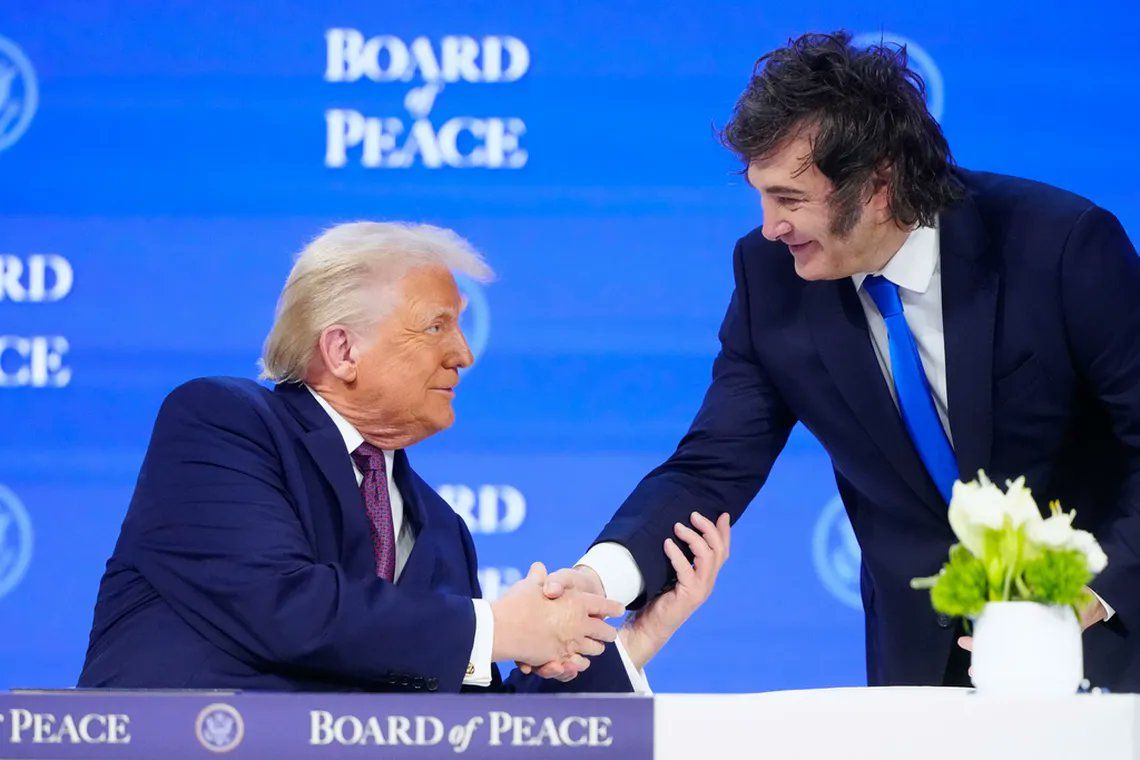
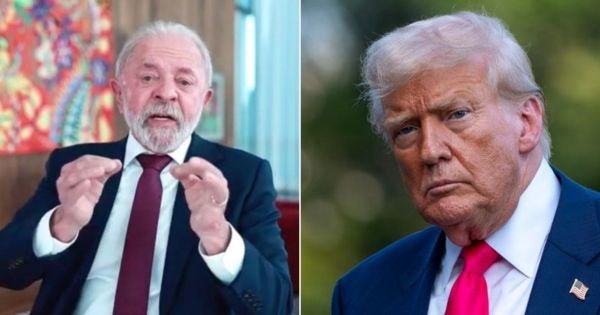
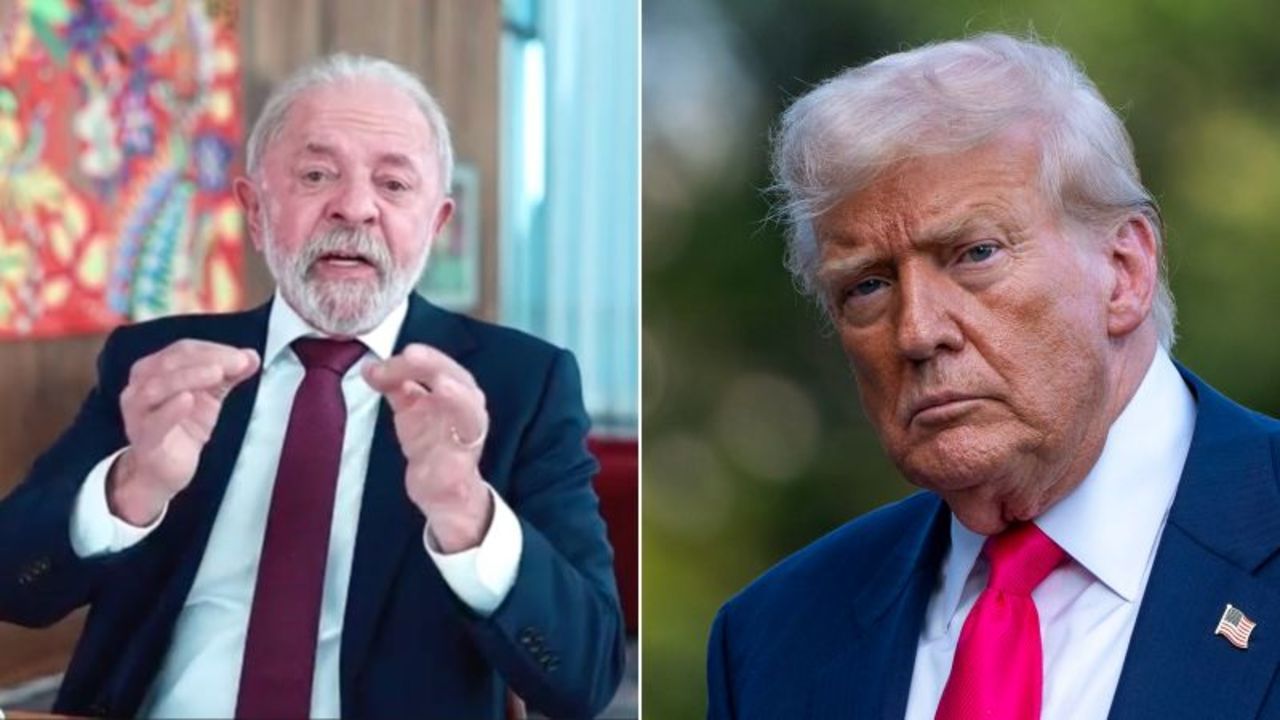
Brazil’s President Luiz Inácio Lula da Silva held a phone call on Monday with U.S. President Donald Trump, in a nearly hour-long conversation that blended global governance issues with the bilateral agenda. Brazilian media, citing Planalto Palace sources, reported that Lula argued Trump’s proposed “Peace Board” should be restricted exclusively to the future governance of the Gaza Strip and should also contemplate the creation of a Palestinian state—an approach those sources said Trump does not share.
The exchange comes as Washington advances an international framework linked to Gaza’s postwar administration. In a recent statement, the White House outlined an institutional design meant to oversee the work of a “National Committee for the Administration of Gaza (NCAG),” including an “Executive Board” and a “Board of Peace” intended to provide political backing and operational supervision.
In Brazil, the proposal has been handled cautiously. According to local reporting citing diplomatic sources, Brasília has not issued a formal response to Washington’s invitation to join, and officials at Itamaraty are said to be weighing the initiative with visible reluctance. Lula, who often frames foreign policy as a balance between principle and pragmatism, reportedly told Trump the mechanism should not expand beyond Gaza and that any exit framework requires a political horizon that addresses the Palestinian question.
The leaders also discussed Venezuela following Nicolás Maduro’s overthrow by U.S. forces earlier this month, according to the same accounts carried by Brazilian outlets. Lula, those reports said, stressed the need to preserve peace and stability in South America and to respect the sovereignty of neighboring countries—consistent with his public defense of multilateral norms. The issue carries regional weight as Brazil seeks to prevent the crisis from hardening into a bloc-driven confrontation.
Economic matters were also on the agenda. Brazil’s government, as cited by local media, said Trump “praised” the trajectory of bilateral relations and growth prospects for both economies. The call also touched on expanding cooperation against organized crime and money laundering, with positive signals on both sides, according to the reported readout.
Beyond operational details, the dispute is political: Lula is trying to defend a diplomatic tradition anchored in negotiation and multilateral forums, while Trump is promoting a more U.S.-driven, ad hoc architecture. Al Jazeera reported that the “Board of Peace” concept has drawn support from some countries while raising reservations across several European capitals, highlighting a wider debate about legitimacy, mandate and scope.
Brazil has not announced a final decision on the invitation. But the call underscored Lula’s red line: if the “Peace Board” moves forward, he wants it confined to Gaza and not repurposed into a broader geopolitical instrument.
Twenty-five years after January 13, 2001 —the quake that bent El Salvador for forty-five seconds —its aftershocks still live in the body—inside the flinch at a passing truck, the pause when a wall creaks. It killed 944 people, displaced 1.3 million, and taught a small country how fragile “normal” can be.
Forty-Five Seconds That Rewrote a Country
At 11:33 a.m. local time on Saturday, January 13, 2001 (5:33 p.m. GMT), the ground in El Salvador shook with a force that felt deeply unsettling. The earthquake, officially measured at magnitude 7.7, struck off the Pacific coast with its center about 18 kilometers from the Usulután shoreline at a depth of roughly 60 kilometers. For forty-five seconds, 11 out of 14 departments learned that natural disasters can come at any moment, no matter the schedule.
In the months that followed, the tremor refused to leave quietly. Roughly 4,500 aftershocks were recorded that year, each one a small reminder that disaster is not a single moment but a season of uncertainty. Official publications describe the January 13, 2001, quake as the second-largest in the nation’s recorded history, surpassed only by a magnitude 7.9 earthquake in 1902—a statistic that reads coldly, until you remember that history is made of households.
Seismology can explain the mechanics. The Cocos and Caribbean plates collide and subduct beneath the Pacific Plate. Local faults also thread inland. But mechanics do not capture what happens near noon when the crunch of structures gives way to a thin, stunned silence. Then the cries begin—voices calling names into dust, trying to locate the living by sound alone.
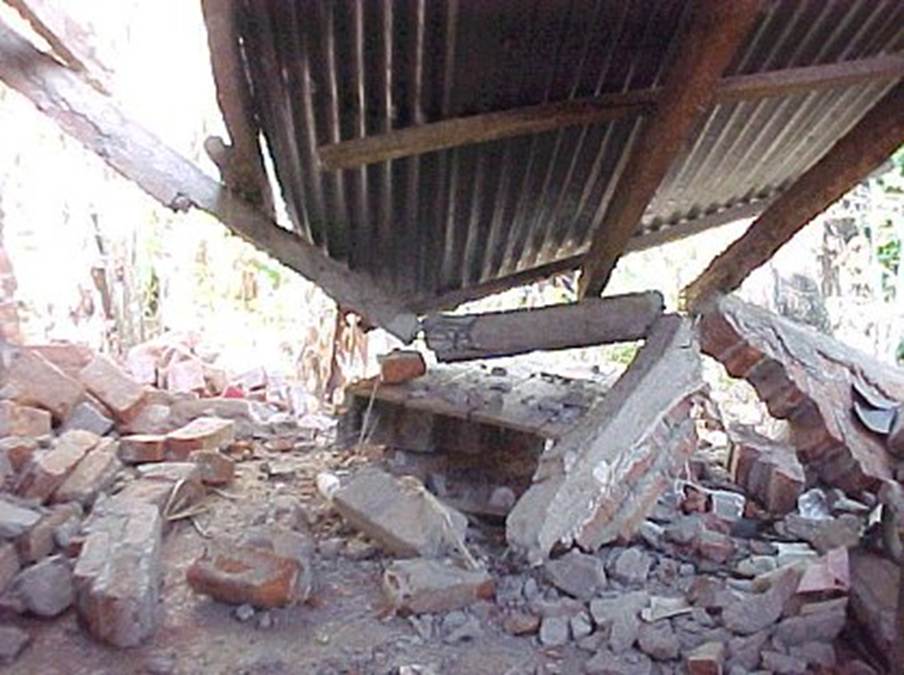
Earthquake damage in a school in El Salvador. USAID El Salvador / Public domain (via Wikimedia Commons)
Las Colinas and the Weight of a Mountain
If the earthquake has a single image, it is Las Colinas, the residential community in Santa Tecla, about fifteen kilometers from San Salvador. There, the quake triggered a devastating landslide in the El Bálsamo mountain range, burying nearly 200 homes. Official figures put the dead from the slide at around 600, but some former community leaders have said their own counts rose beyond 900—a grim example of how, in mass tragedy, numbers become contested not out of politics but out of mourning.
The destruction extended far beyond one neighborhood. Entire localities—Santa Tecla, Comasagua, and Colón in the department of La Libertad, among others—suffered near-total structural damage in places. The Dirección General de Protección Civil counted 108,261 homes destroyed and 169,962 damaged, along with 1,155 public buildings damaged. In human terms, that translated to 1,364,160 people suddenly living in improvisation: shelters, relatives’ floors, plastic roofs, borrowed pots, donated mattresses.
The economic wound was immense. The UN Economic Commission for Latin America and the Caribbean (CEPAL) estimated total damages and losses from the January 13 earthquake at $1,255.4 million. That figure includes what Latin Americans know too well. It means not only broken roads and collapsed walls, but the slow erosion of livelihoods—shops that never reopen, school years disrupted, migration decisions accelerated.
Landslides scarred slopes, raising vulnerability to future storms and tremors. The environmental loss affected rural families who relied on the stability of the hillsides.
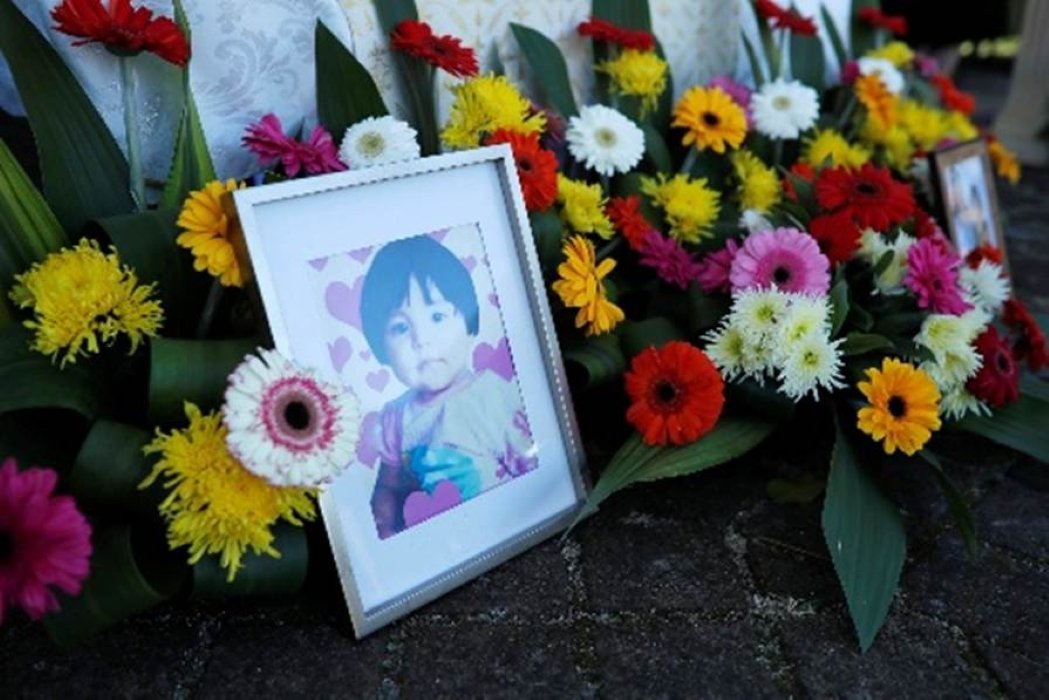
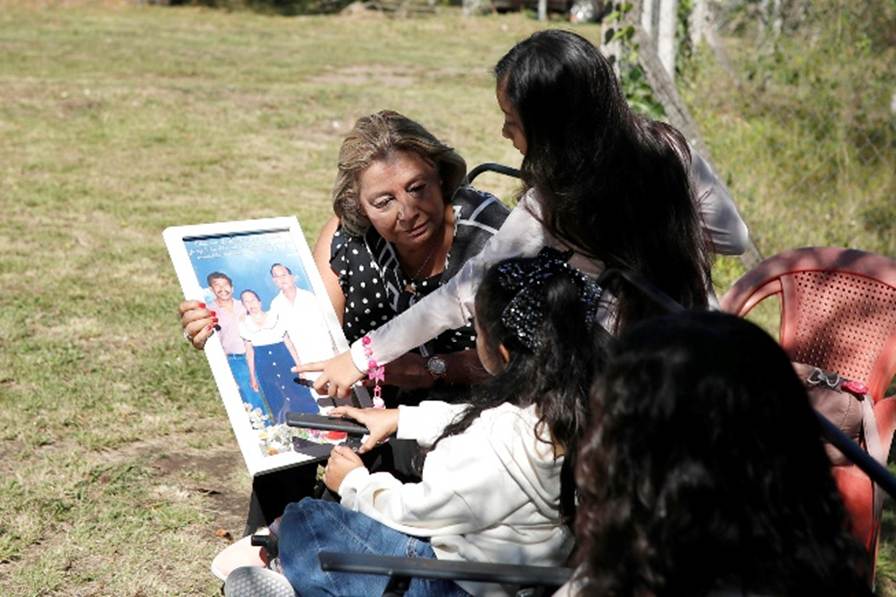
Survivors and relatives of victims of the earthquake that occurred on January 13, 2001, take part in a commemorative Mass on January 11, 2026. EFE/Rodrigo Sura
A Rescuer’s Memory and the Second Blow
For Edgar Jhonny Ramos, a veteran rescuer with Comandos de Salvamento, the anniversary does not arrive as a date on a calendar—it arrives as a replay. He joined the organization as a teenager and earned his first Aspirant Rescuer credential at sixteen, in 1983, during the bloodiest years of El Salvador’s civil war (1980–1992). That earlier decade taught him urgency. The quake taught him scale.
“We were about to go have lunch when the tremor happened. We froze. I saw the bowl of soup they had served me fall onto the table. Then, we got up and ran to the base to see how we could help,” Ramos recalled speaking to EFE.
He and a colleague were initially sent to check a building in Zona Rosa, one of the capital’s upscale districts, but they were reassigned en route and directed to Las Colinas—the place that became shorthand for the disaster itself. By 2001, Ramos had training he did not have as a teenager during the October 10, 1986, earthquake, a magnitude 5.6 disaster that killed more than 1,500 and collapsed buildings in downtown San Salvador. Back then, he remembers, preparedness was thinner. In 2001, he had at least taken his first course in searching collapsed structures.
“When we arrived (at Las Colinas), we saw that the scene was quite extensive. Many people were buried there. We saw some people trapped among the rubble, and we were able to pull them out,” he said. (EFE)
What remains with him is not only the magnitude, but the intimate horrors: families found fused together in embraces in patios—a final instinct to become one body against fear. He remembers a rescue that briefly turned hope into a public symbol. Sergio Moreno was a musician from the then well-known tropical group Algodón. The rescuers were moving debris and vehicles when they were told someone was alive beneath the earth.
“We started moving rubble, cars, and began pulling those people out to take them to the hospital. Then we were told that there was a person buried alive—it was Sergio Moreno,” Ramos recalled.
A washbasin—an ordinary household object—helped keep a wall from crushing Moreno completely. Still, his hip remained trapped. In moments like that, survival feels like a negotiation with chance—a thin margin granted by furniture and angles.
“He begged us, please, not to leave him alone,” Ramos added to EFE.
After about thirty-six hours beneath the rubble, Moreno was pulled out alive. Yet, he died later at the hospital. This is one of those endings that complicates the word “rescue,” leaving it both true and insufficient.
The rescuers stayed in Las Colinas for 15 days: the first 7 days searching for survivors, the rest locating bodies. And then, as if the earth wanted to underline the lesson, another earthquake struck on February 13, 2001. The second tremor—magnitude 6.6—killed 315, injured 3,399, and left roughly 275,013 people affected, with CEPAL estimating damages and losses at $348.5 million. A country already leaning on crutches was asked to run.
This is why El Salvador remembers: because remembrance is also a statement. It asserts that the dead are not just numbers, the displaced are not easily forgotten, and that resilience does not mean accepting the same risks again. Ultimately, the anniversary is about more than the earthquake itself. It is also a reflection on what a society chooses to rebuild—homes, institutions, emergency systems, and the self-worth of those still affected by the quake.