In Brussels, the immediate obstacle is less the text itself than the institutional and political sequencing
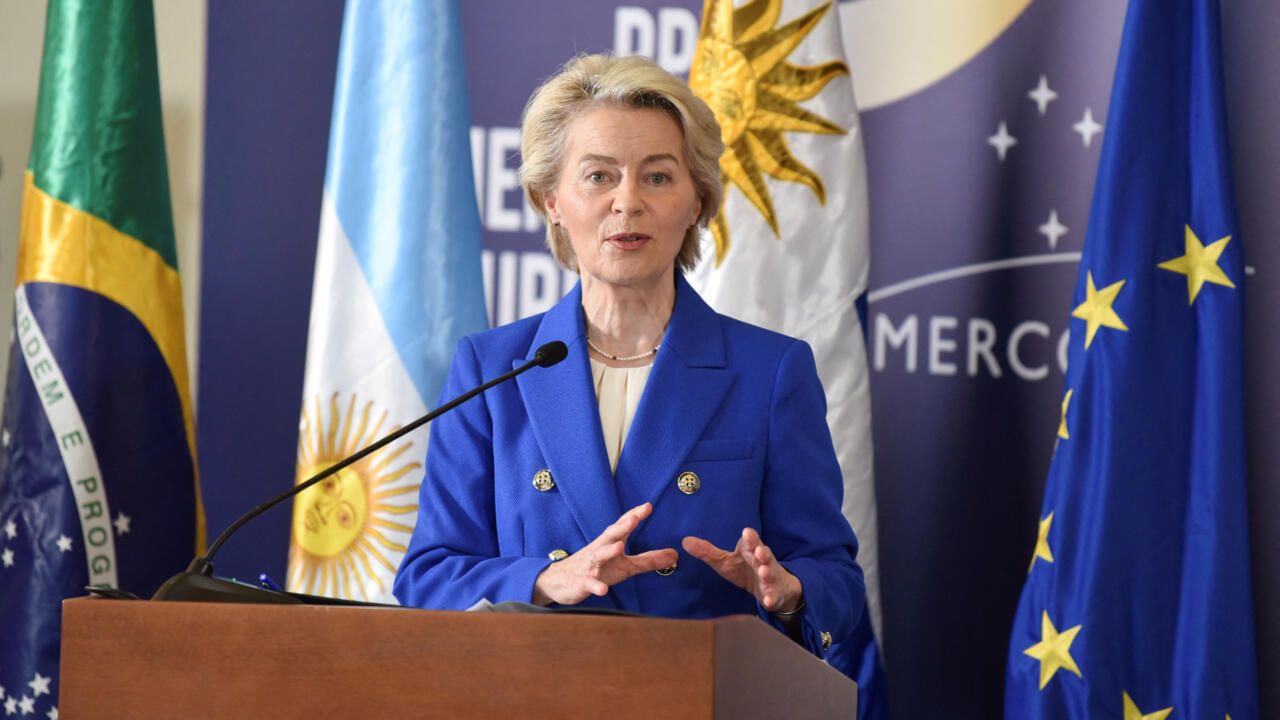
European Commission President Ursula von der Leyen said the European Union is prepared to provisionally implement the EU–Mercosur trade agreement as soon as Mercosur countries begin completing their ratification procedures, seeking to reassure partners after a European Parliament vote injected fresh uncertainty into the bloc’s approval track.
The message comes days after the agreement was signed in Asunción, an event framed by EU leaders as a strategic bet on rules-based trade at a time of mounting tariff threats and geopolitical friction. The ceremony —with Argentina’s President Javier Milei present and Brazil’s Luiz Inácio Lula da Silva absent— took place after negotiations stretching roughly 25 years.
In Brussels, the immediate obstacle is less the text itself than the institutional and political sequencing. On Wednesday, the European Parliament backed a motion —334 votes to 324, with 11 abstentions— to request a legal opinion from the EU’s Court of Justice (CJEU), a treaty mechanism that can slow down the process and sharpen divisions across party lines.
The Commission has signaled it will try to keep momentum. Vice-President Teresa Ribera described the parliamentary move as legitimate but emphasized how narrowly it passed, while indicating the Commission would explore ways to prevent a lengthy freeze. Reuters has reported that EU officials and some member states are examining options for provisional application, even as the Parliament’s role in granting final consent looms as the key political test.
After an extraordinary EU leaders’ meeting in Brussels —called primarily over transatlantic strains linked to Greenland— European Council President António Costa publicly urged the Commission to use the Council’s earlier decision to move toward provisional implementation when the timing is ripe.
Supporters of a faster rollout argue the deal would help Europe widen export markets and reduce vulnerability to protectionism elsewhere, while critics —from parts of the left to far-right groups and farming interests— warn about regulatory constraints and environmental and consumer-policy implications. The Parliament’s recourse to the CJEU underscores how contested the file remains inside the EU’s institutions.
The Council of the EU has already endorsed the signature of the EU–Mercosur package, but it also underlined that the agreements cannot be formally concluded without the European Parliament’s consent —a reminder that Brussels can prepare for speed, but cannot avoid a difficult political count in Strasbourg.
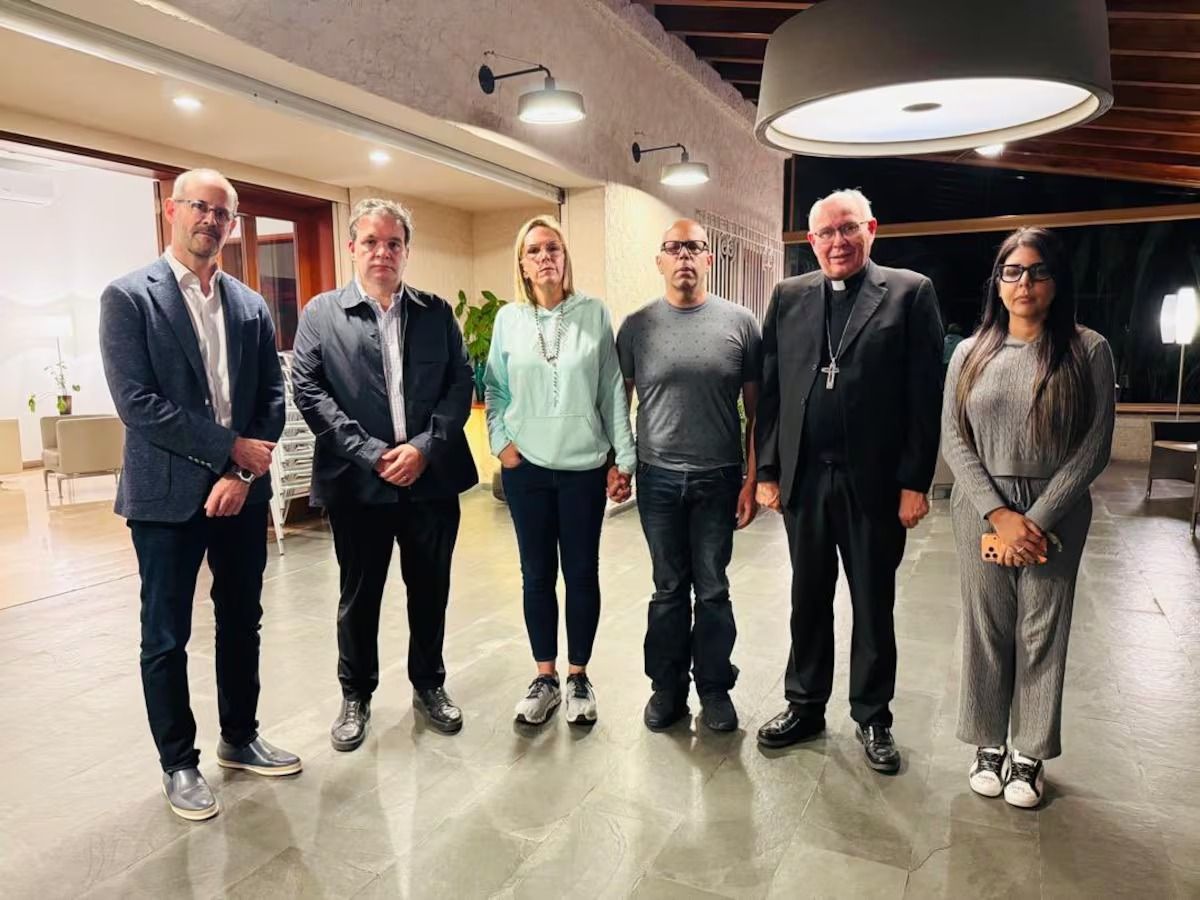
Mariana González and Rafael Tudares (center), at the Swiss Embassy residence in Caracas.
Venezuelan authorities on Thursday released Rafael Tudares, the son-in-law of opposition figure Edmundo González Urrutia, in one of the most politically charged prisoner releases since Nicolás Maduro’s ouster and the installation of an interim administration led by Delcy Rodríguez, according to agency reporting.
Tudares’ wife, Mariana González, said he returned home after “380 days of an unjust arbitrary detention,” alleging he endured “enforced disappearance” during his imprisonment. Family accounts say the lawyer — not known as a political activist — was detained in January 2025 while taking his children to school and later faced a 30-year sentence on “terrorism” charges.
González Urrutia, now in exile in Spain and described by parts of Venezuela’s opposition as the rightful winner of the 2024 presidential election, welcomed the release but framed it as only one case among many. In a public message, he argued that numerous detainees remain behind bars “for political reasons,” without due process, and that their continued detention constitutes an ongoing rights violation.
The release comes amid a rapid sequence of moves aimed at stabilizing the economy and rebuilding ties with the United States. An AFP report published by Gulf News said Venezuelan lawmakers gave initial approval to a bill that would open the oil sector to private investors, rolling back restrictions tightened during the Chávez era — a reform presented as central to President Donald Trump’s demands and to attracting hard currency and investment.
Diplomatic signaling has moved just as quickly. Reuters reported that the White House has been exploring the re-establishment of formal diplomatic relations with Caracas, including the possibility of reopening embassies, following years of severed ties. Separately, Reuters said “multiple Americans” detained in Venezuela were released, an episode Washington linked to direct engagement with the interim authorities.
Tudares’ case had become emblematic in opposition circles because of its familial link to González Urrutia and because relatives said he was swept into the post-election crackdown. In December, AP reported that families and activists described a climate of repression following the disputed 2024 vote, including detentions and prosecutions that critics said lacked basic judicial safeguards.
Even so, Thursday’s release appears to come with limits. Recent releases in Venezuela have often been granted under conditional or procedural benefits rather than full exoneration — a distinction that keeps legal pressure on former detainees and leaves broader questions about political imprisonment unresolved.
For the opposition, the focus now shifts to whether the government will extend releases beyond high-profile names and whether any legal pathways emerge for detainees to regain full freedom — not just leave prison.
Dogu is a career diplomat with more than 30 years of service, including stints as US ambassador to Honduras and Nicaragua
The United States has named veteran Foreign Service officer Laura Dogu as its new mission chief for Venezuela, a step that aligns with broader signs of a tentative diplomatic reset — including discussions about reopening embassies and plans for Venezuelan acting president Delcy Rodríguez to travel to Washington, though no dates or agenda have been disclosed.
Reuters reported the appointment after an update posted through the US representation handling Venezuela from Bogotá, where the State Department’s Venezuela Affairs Unit has operated since Washington and Caracas severed diplomatic ties in 2019.
Dogu is a career diplomat with more than 30 years of service, including stints as US ambassador to Honduras and Nicaragua, alongside senior roles linked to national security and interagency coordination. As chargé d’affaires, she effectively becomes Washington’s top diplomatic point-person on the ground in the absence of an ambassador and amid a still-fragile bilateral channel.
The move comes as the White House has indicated Rodríguez is expected to visit Washington “soon,” according to a US official quoted by EFE, without providing further details. Reuters has also reported that President Donald Trump has publicly backed the government led by Rodríguez following the US capture of Nicolás Maduro on January 3, saying his administration is “working very well” with Caracas.
Rodríguez, who is under US Treasury sanctions, has sought to frame any Washington trip as a posture of strength. Reuters quoted her as saying that if she were to go, she would do so “on her feet, walking — not crawling.” The opposition has pushed back. Reuters reported that opposition figure María Corina Machado said Rodríguez does not represent Venezuelans and characterized the arrangement as part of a “complex phase.”
Energy policy is central to the evolving relationship. AP reported Trump urging oil executives to invest in Venezuela and suggesting the US would “run” the country for an unspecified period during the transition, underscoring how hydrocarbons have become a core lever in Washington’s approach. Reuters, meanwhile, has detailed economic moves in Caracas after the US operation, with oil flows and external financing featured prominently.
Dogu’s appointment appears designed to give structure and continuity to that mix of political engagement and energy-driven bargaining, as both sides test whether an improvised channel can evolve into a more formal diplomatic track.
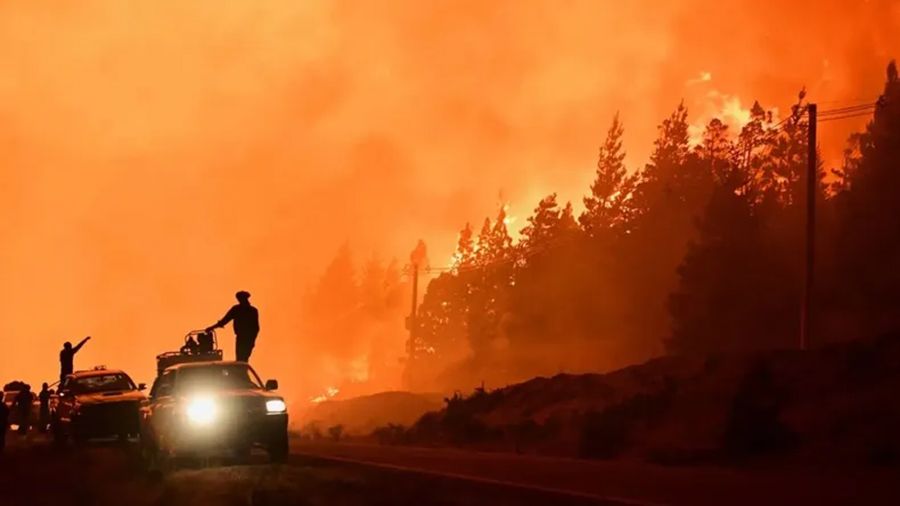
Authorities have also stressed the likelihood of human causation. Photo: AP Photo/Maxi Jonas
Wildfires in Argentina’s Patagonia continued to pressure communities in Chubut province, with active fronts and repeated flare-ups reported around Epuyén, El Hoyo and Puerto Patriada, as heat, strong winds and very low humidity complicated containment efforts. Local coverage described preventive self-evacuations and round-the-clock watch shifts by firefighters, specialist brigades and residents trying to shield homes, livestock and productive areas.
According to TN, the main fire started weeks earlier near Puerto Patriada and remained active, while additional hotspots in the Andean corridor produced heavy smoke and reduced visibility, hindering ground operations. Crews have had to enter hard-to-reach zones on foot to cool hotspots and hold fire lines, because wind-driven reignitions can quickly expand a perimeter that looked stable the day before.
Authorities have also stressed the likelihood of human causation. Citing comments carried by Argentine media, the head of the Federal Emergency Agency (AFE), Santiago Hardie, said “95% of these events are caused by human action,” whether deliberate or negligent. Governor Ignacio “Nacho” Torres, in remarks reported locally, alleged the fires were intentionally set and said the judicial investigation was advancing—framing the response as both an emergency operation and a criminal probe.
Damage has included burned grasslands, fencing and rural infrastructure, with immediate losses for small producers and residents who often mount the first line of defense before reinforcements arrive. TN also reported that the near-term risk of spread remained high given forecasts that did not point to meaningful rainfall in the short term.
Wildfires are a recurring summer threat in Patagonia, but emergency officials warn that extreme heat and dryness increase the chances of persistent underground burning and “tree-hold” fires that can reignite under wind—one reason local commanders have urged crews not to relax even when a sector appears controlled.
Chile fires: update from the centre-south
Across the border, Chile has kept a large-scale response in Biobío and Ñuble after authorities confirmed the death toll rose to 20, with thousands evacuated and more than 500 people in shelters, alongside a night curfew and a state-of-catastrophe declaration. Local reporting also highlighted the arrest of a suspect in Penco as investigators examine potential causes of the blaze.
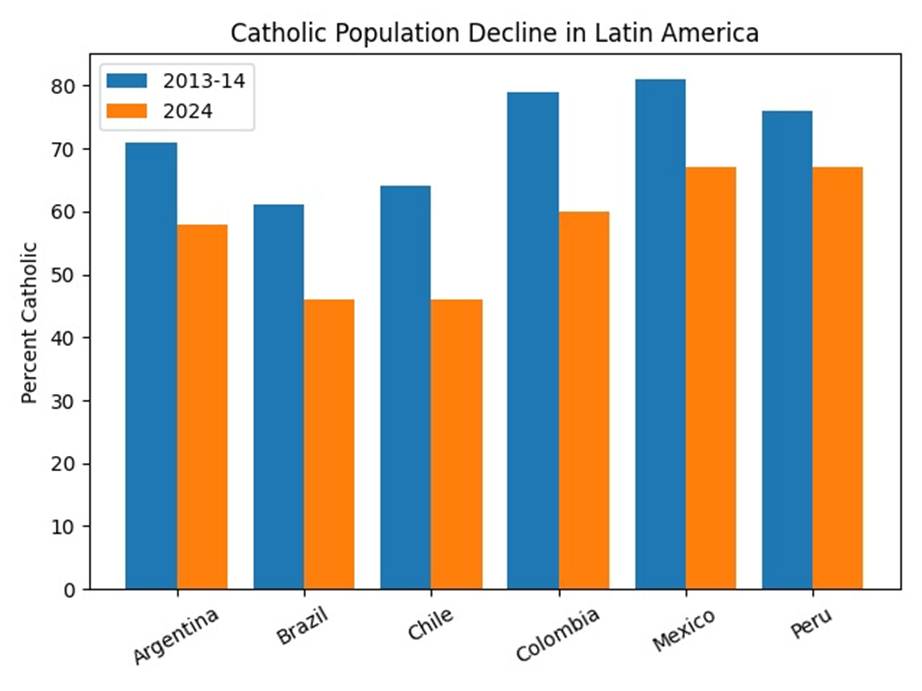
In Latin America, the census box is changing faster than the soul. New Pew Research Center surveys show Catholic identity falling across Argentina, Brazil, Chile, Colombia, Mexico, and Peru, as “nones” rise—yet belief in God stays fiercely high.
A Shrinking Label in A Region That Still Prays
On paper, the shift looks blunt: fewer Catholics, more people who say they are atheist, agnostic, or “nothing in particular.” But in Latin America, religion has never lived only on paper. It lives in the way a mother touches a forehead before a long bus ride, in the neighborhood saint whose name becomes a shortcut for protection, in the candle lit not as doctrine but as habit, memory, and love. So when Pew Research Center reports that the Catholic share of the population has shrunk over the last ten years in some of the region’s most populous countries, the real story is not simply a church losing market share. It is a continent revising its vocabulary of belonging—sometimes quietly, sometimes with rebellion, often with a complicated tenderness.
According to Pew Research Center surveys conducted in spring 2024, which included more than 6,200 adults in Argentina, Brazil, Chile, Colombia, Mexico, and Peru, Catholicism remains the largest religion in each of these countries. Yet “largest” no longer means what it used to. Today, Catholics make up between 46% and 67% of the adult population in each country surveyed, while the share of adults who are religiously unaffiliated ranges from 12% to 33%. Over the past decade, Catholic shares fell by nine percentage points or more in all six countries, while the unaffiliated rose by seven points or more—and in several places, the “nones” now outnumber Protestants.
Still, the region refuses to fit into the familiar European narrative of belief draining out of society like water from a cracked cup. By several measures in the same Pew Research Center data, Latin Americans remain strongly religious on average. Around nine-in-ten or more adults surveyed in each country say they believe in God. In Brazil, that figure reaches 98%; in Chile, it is 89%. In Brazil, Colombia, Mexico, and Peru, about half or more say religion is very important in their lives, including 79% of Brazilians and 57% of Colombians. Prayer remains common: majorities of Brazilian, Colombian, and Peruvian adults say they pray at least once a day, and across all six countries, daily prayer ranges from 39% in Argentina to 76% in Brazil.
The contradiction is only a contradiction if you imagine faith as a single ladder—up or down, believer or nonbeliever, church or nothing. Latin America tends to move sideways. People step away from institutions while holding on to the metaphysical. They reject a label while keeping a ritual. Even among the unaffiliated adults surveyed, majorities still say they believe in God. In Mexico, about three-quarters of “nones” say they believe in God—an answer that sounds less like secular certainty and more like a region insisting that the universe remains populated, even if the pew is not.
The earlier survey Pew Research Center conducted in 2013–2014 allows a direct comparison on two core questions—religious affiliation and belief in God—offering a decade-long snapshot of how the region has shifted. Most other measures from 2024 cannot be directly compared because the questions are new or have changed wording. But the affiliation picture alone is enough to show a tectonic motion under everyday life.
Where The Former Catholics Went, And What They Kept
A decade ago, Argentina, Brazil, Chile, Colombia, Mexico, and Peru all had Catholic majorities, with roughly six-in-ten or more adults in each identifying as Catholic. Today, that dominance has thinned. In 2024, roughly half of Brazilians and Chileans identify as Catholic—46% in Brazil and 46% in Chile. Argentina stands at 58%, Colombia at 60%, and Mexico and Peru at 67% each. Catholicism has been declining in all these countries at least since the 1970s, according to estimates from the World Religion Database, a reminder that today’s headlines are often the visible crest of a longer, deeper wave.
The most dramatic change is not Protestant growth, which many outsiders once treated as the region’s only alternative future. Protestantism has remained relatively stable across these countries, according to Pew Research Center. In Brazil, the most Protestant of the six surveyed, 29% of adults identify as any kind of Protestant today, compared with 26% in 2013–2014. Pentecostal Protestantism remains widespread, though Pew Research Center notes that the percentage of Protestants who are Pentecostal has declined over the past decade as other traditions have grown.
Instead, the big movement is toward “nothing in particular.” The share of adults who are religiously unaffiliated has roughly doubled in Argentina to 24%, Brazil to 15%, and Chile to 33%; tripled in Mexico to 20% and Peru to 12%; and nearly quadrupled in Colombia to 23%. In Argentina, Chile, Colombia, and Mexico, unaffiliated adults now outnumber Protestants. Mexico offers the cleanest contrast: two-in-ten Mexican adults identify as atheist, agnostic, or “nothing in particular,” while about one-in-ten identify with any branch of Protestantism.
But the most human part of this story is not the percentages; it is the act of leaving. Pew Research Center ties Catholic decline and unaffiliated growth in part to religious switching—adults raised Catholic who no longer identify with it. Across the six countries, around two-in-ten or more adults say they were raised Catholic but have since left Catholicism. In other words, the change is not only generational replacement; it is personal decision, lived biography.
In Colombia, 22% of adults say they were raised Catholic but no longer identify that way. That includes 13% of all adults who were raised Catholic and now identify as atheist, agnostic, or “nothing in particular,” plus 8% who have become Protestant and 1% who identify with another religious group. Brazil is the standout: former Catholics there are more likely to now be Protestant (13% of all adults) than unaffiliated (7%). In Peru, the former Catholics divide more evenly—9% of all adults have become Protestant and 7% have become “nones.”
Yet in all six countries, most adults still identify with a religion, and belief in God remains overwhelming. Religious affiliation ranges from 66% in Chile to 88% in Peru, including Catholics, Protestants, Jehovah’s Witnesses, and also Afro-Caribbean, Afro-Brazilian, and Indigenous religions such as Umbanda and Candomblé, alongside smaller shares of Buddhism, Hinduism, Islam, and Judaism. The region’s religious map has never been a simple two-color drawing. It is layered, braided, and full of local dialects of the sacred.
The categories also behave differently in everyday life. Pew Research Center reports that Protestants are generally more likely than Catholics and “nones” to say religion is very important in their lives. In Chile, 75% of Protestants say religion is very important, compared with 48% of Catholics and 9% of unaffiliated adults. Protestants are also more likely to attend services weekly or more often; in Argentina, 63% of Protestants say they attend at least weekly, compared with 12% of Catholics and 2% of “nones.” Yet Catholics carry a different kind of visibility: they are much more likely to wear or carry religious items or symbols. In Colombia, six-in-ten Catholics say they do this, compared with two-in-ten or fewer among Colombian “nones” and Protestants—an everyday reminder that Latin American Catholicism often lives not just in belief but in objects that accompany the body.
And then there’s a detail that feels distinctly Latin American: Catholics and unaffiliated adults are generally more likely than Protestants to believe that parts of nature—mountains, rivers, trees—can have spirits or spiritual energies. In Brazil, roughly six-in-ten Catholics and “nones” hold that belief, compared with about half of Protestants. It reads like a region where the sacred is not only above but also around—embedded in landscape and memory, sometimes surviving even when institutional loyalty fades.
Based on PEW Research Center
The Venezuelan Diaspora and The Faith of Return
If religious identity is changing, so is the region’s sense of home, and the two stories meet in the lives of Venezuelans scattered across Latin America who are weighing whether to return. In the text provided, some migrants say they are cautiously hopeful after the U.S. ouster of long-time leader Nicolás Maduro raises hopes for democratic elections and a way out of economic collapse. Since 2014, about a quarter of Venezuela’s population has fanned out across Latin America, the Caribbean, Spain, and the United States, fleeing what the text describes as an oil-dependent economy crippled by mismanagement. The exodus—about eight million people—has transformed demographics across the Americas and shaped politics far beyond Venezuela’s borders.
In Colombia, which the text describes as hosting Latin America’s largest Venezuelan migrant population, Juan Carlos Viloria, a doctor who helps run a migrant advocacy group, speaks with the kind of hope that sounds like duty. “I want to return to my country, I want to help rebuild,” he says. But he also describes the gravity pulling people back into fear: with Delcy Rodríguez, identified in the text as Maduro’s former vice president, tightening her grip on power, migrants weigh the risk of repression and the reality of economic insecurity. He notes that border communities in northeastern Colombia have seen a rise in people crossing into Colombia to earn some cash while the situation stabilizes—an improvised life, built from crossings.
Other voices in the provided text hold both longing and skepticism in the same breath. Nicole Carrasco, who moved to Chile in 2019 after her father was arrested, fears little has changed for political prisoners and their families. “It is not as if Venezuela is free yet—there are still many very bad people in power,” she says, while also longing to see family and eat traditional foods like arepas. The text notes that opposition leader and Nobel Peace Prize winner María Corina Machado, whose candidate was widely seen as the legitimate winner of the 2024 election that Maduro was accused of rigging, has called for a transition of power as soon as possible so Venezuelans can return home.
In Panama, the provided text captures the mood of people mid-journey, suspended between countries and outcomes. Luis Díaz, traveling back to Venezuela after a year in Mexico, says, “I don’t know whether it’s good or bad. Now they’ve done what they’ve done, something different is going to start.” Omar Álvarez, also passing through Panama on his way home, offers a more declarative faith, the kind that migrants often learn to speak because despair is too expensive. “All of us outside Venezuela, I think we can come together and recover our country by working together, like we have always done in every country we’ve arrived in,” he says. “With all of us united, our country’s economy will rise again.”
Read alongside the Pew Research Center findings, the diaspora story sharpens the meaning of Latin America’s “nones.” Leaving Catholicism, for many, does not mean leaving belief; it means leaving an institution while keeping the language of hope, protection, and moral accounting. Leaving a country can work the same way: you abandon a structure that failed you while still believing in the possibility of return. In both cases, the region shows a stubborn pattern: identity changes, but yearning remains.
So the decade-long shift captured by Pew Research Center is not a simple religious decline. It is a reorganization of how Latin Americans name themselves—Catholic, Protestant, nothing in particular—while continuing to pray, believe, carry symbols, and search for meaning in nature and community. Catholicism may be shrinking as a census label across Argentina, Brazil, Chile, Colombia, Mexico, and Peru, but the sacred has not packed its bags. In Latin America, even disbelief often speaks with an accent of belief, and even the unaffiliated keep reaching—toward God, toward home, toward something that says the future can still be repaired.
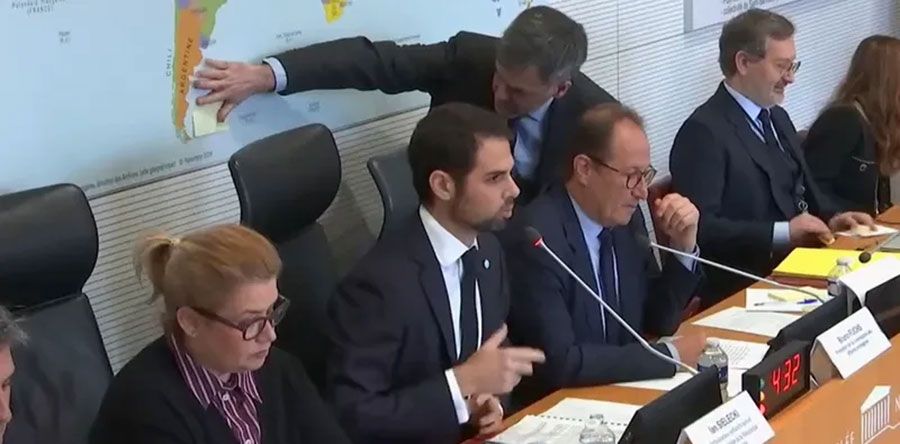
“As a representative of the Argentine state, I cannot speak freely in front of that map,” Sielecki said
Argentina’s ambassador to France, Ian Sielecki, halted the start of a hearing at France’s National Assembly and refused to speak while a map behind him displayed the Falklands/Malvinas as UK territory. Proceedings resumed only after a staff member covered the islands with a sticky note.
The exchange took place before the Assembly’s Foreign Affairs Committee after Sielecki noticed the map included the label “R-U” (United Kingdom) next to the archipelago. “As a representative of the Argentine state, I cannot speak freely in front of that map,” he said, arguing that doing so would amount to “legitimising” a situation he described as a breach of Argentina’s sovereignty and of international law.
Committee chair Bruno Fuchs replied that “everyone knows this is disputed territory” and that the map was not intended to assign sovereignty. Sielecki countered that the cartography nonetheless identified it as British, likening the setting to a hypothetical scenario in which Ukraine’s ambassador was asked to address lawmakers in front of a map showing occupied territories as part of Russia. After a brief pause, the islands were covered with a yellow “post-it” and the hearing continued.
The moment quickly spread on social media. Sielecki later posted a message on X defending his stance—“They are Argentine… any decent Argentine would have done the same,” according to local coverage.
“Acabo de ver que muestran las Islas Malvinas como parte del Reino Unido”
Durante la Asamblea Nacional, el embajador argentino en Francia, Ian Sielecki, dijo que hablar frente a un mapa que no reconoce las islas como argentinas “implica legitimar una vulneración a la soberanía”. pic.twitter.com/DZ6pXKp7G7
The episode underscores how naming conventions in official or semi-official settings can inflame long-running disputes. Argentina and the UK have maintained opposing claims over the Falklands/Malvinas for decades; the islands have been under British administration since 1833 and were the site of the 1982 war. For Buenos Aires, terminology and map labels are not neutral details but part of the sovereignty dispute’s diplomatic theatre.
Sielecki—educated in France and the UK—was appointed under President Javier Milei and has promoted closer bilateral ties with Paris, while also signalling that Argentina will continue raising the Falklands/Malvinas issue in international arenas.
News Americas, MIAMI BEACH, FL, Thurs. Jan. 22, 2026: Afro-Caribbean cuisine is stepping into the global spotlight, and Miami will be center stage on Friday night as the South Beach Wine & Food Festival, (SOBEWFF®), hosts Las’ Lap Link Up: A Celebration of Afro-Caribbean Cuisine, a late-night cultural showcase spotlighting one of the most influential food movements shaping today’s culinary landscape.
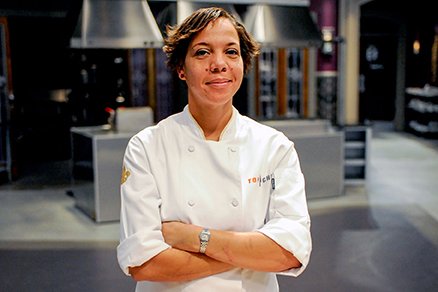
Former Top Chef contestant, Chef Nina Compton of St. Lucia will co-host Las’ Lap Link Up: A Celebration of Afro-Caribbean Cuisine.
The event, hosted by acclaimed chefs Kwame Onwuachi and Nina Compton, will take place from 10:00 p.m. to 1:00 a.m. at the Kimpton Surfcomber Hotel in Miami Beach as part of SOBEWFF®’s 25th anniversary celebrations.
Once viewed largely through the lens of community cookouts and regional traditions, Afro-Caribbean food has increasingly moved into mainstream culinary spaces – redefining menus, inspiring global chefs, and fueling new food economies. Its rise reflects a broader cultural shift, where Caribbean flavors are no longer treated as “ethnic” or “exotic,” but as essential to the future of food.
“One of the things that makes SOBEWFF® special is our ability to celebrate culture through food,” said festival founder and director Lee Schrager. “Afro-Caribbean cuisine is bold, joyful, and deeply rooted in history – and this event captures that energy in a way only Miami can.”
At the heart of the celebration is chef Kwame Onwuachi, whose culinary vision has helped propel Afro-Caribbean flavors into the highest ranks of global dining. His Miami Beach restaurant Las’ Lap recently opened to widespread acclaim, bringing island-inspired cuisine, inventive cocktails, and cultural storytelling to South Beach. His New York City restaurant Tatiana has earned top honors, including recognition as North America’s Best New Restaurant and consistent praise as one of the city’s premier dining destinations.
Co-host Nina Compton, a James Beard Award–winning chef and the force behind Compère Lapin in New Orleans, brings her own deeply personal interpretation of Caribbean cuisine. Raised in Saint Lucia, Compton is celebrated for blending island flavors with refined technique and narrative-driven cooking that reflects migration, memory, and identity.
Together, the two chefs represent a new generation of Afro-Caribbean culinary leaders reclaiming narrative power—elevating traditional dishes without stripping them of their cultural soul.
The evening will also feature music by DJ GQ, whose reggae and dancehall sets will provide a soundtrack rooted in Caribbean rhythm and diaspora culture, reinforcing the event’s immersive atmosphere.
At Las’ Lap Link Up, food becomes more than sustenance – it becomes storytelling. Guests will experience how Afro-Caribbean cuisine continues to shape global tastes while honoring the histories and communities that gave rise to it.
As Afro-Caribbean food continues its ascent from the margins to the mainstream, events like this signal not just a culinary trend, but a cultural reckoning – one where flavor, identity, and heritage take their rightful place at the center of the global table.
The minister was responding to a question from Mark Sewards MP on tariffs on Falkland Islands fisheries exports.
”We remain strong defenders of the Falkland Islands as part of our Great British family globally and we continue to work very closely with them on a range of trade and tariff issues, said Foreign Office minister for Overseas Territories, Stephen Doughty during a question time in Parliament.
The minister was responding to a question from Mark Sewards MP on tariffs on Falkland Islands fisheries exports.
“What can the UK government do to alleviate the European Union tariffs, between 6% and 18%, on their fishing exports so that the Falklands has more money to spend on health, education and their treasured environment?”
After reaffirming he current Labor Government of strongly defending the Great British Family, minister Doughty said he was pleased to have spoken to the newly elected Falklands Islands’s Legislative Assembly. “Of course the Brexit deal, which the previous government negotiated left the Falklands out when it comes to tariffs, but we continue to work closely on a range of trade and tariffs issues, and have done successfully in relation with the United States”.
Trump did not clarify whether the “framework” includes any form of US ownership, but told US media the concept could involve mineral-related rights and broader defense priorities
US President Donald Trump said his administration has agreed with NATO Secretary General Mark Rutte on a “framework” for a potential understanding covering Greenland and the wider Arctic region, and announced he would pull back a tariff threat aimed at several European allies. Trump offered no operational detail, but framed the talks as a solution that would benefit the United States and NATO as a whole.
The statement followed what both sides described as a “very productive” meeting. Trump said the “framework” touches “Greenland and, in fact, the entire Arctic Region,” and tied his decision to cancel levies scheduled to take effect on February 1 to that emerging “understanding.” Rutte publicly endorsed Trump’s description of the meeting, while avoiding sovereignty questions and saying Danish sovereignty over Greenland was not discussed.
In Copenhagen, Danish Foreign Minister Lars Løkke Rasmussen struck a conciliatory note, saying the day ended “on a better note than it began,” and calling for talks to address American security concerns in the Arctic while respecting the “red lines” of the Kingdom of Denmark. The Danish response signaled de-escalation, without publicly conceding Trump’s long-running ownership demand.
Trump did not clarify whether the “framework” includes any form of US ownership, but told US media the concept could involve mineral-related rights and broader defense priorities, including his planned “Golden Dome” missile-defense vision. US officials have repeatedly cited Greenland’s strategic location and its resource potential, arguing the Arctic is becoming more contested amid Russian and Chinese interest.
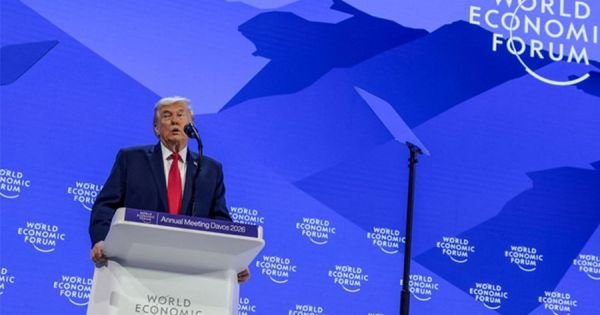
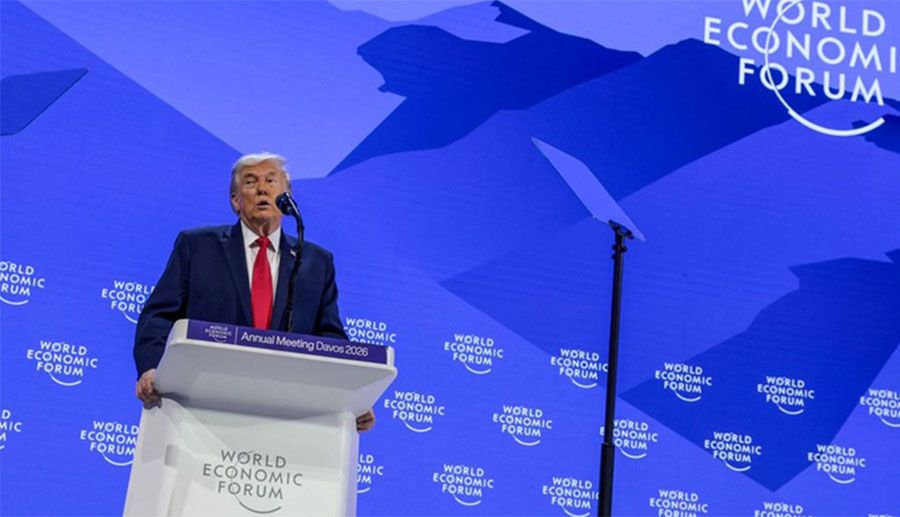
The shift came as Trump addressed global leaders in Davos, where he said he wanted negotiations and would not use military force—after weeks in which tariff threats and sharp rhetoric strained transatlantic ties. European capitals are now watching for specifics: what, exactly, the “framework” commits allies to do, and what Washington is prepared to offer in return.
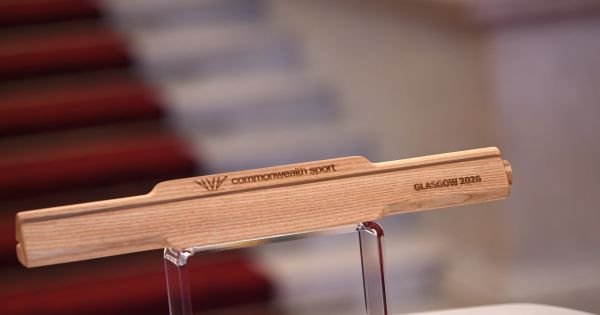
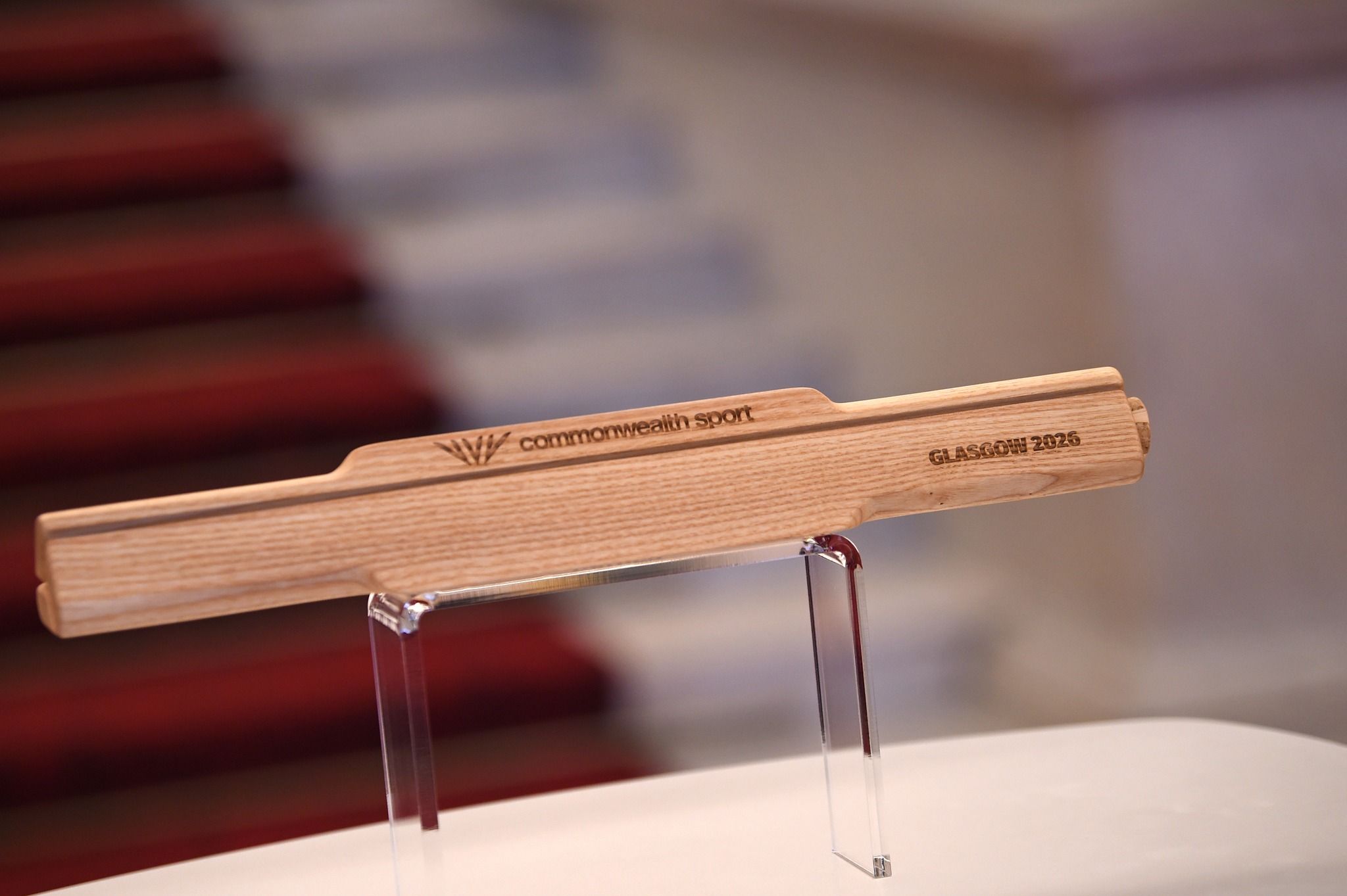
“We are looking for artists to give us some designs, what they think they could put on the baton, either with paints, textiles, wood burning,” Ms Chater says
The run-up to the Commonwealth Games has officially begun in the Falkland Islands, with plans for a King’s Baton Relay revealed by the National Sports Council. In previous years, one baton has travelled around the whole Commonwealth but this time each nation has received their own blank baton.
Vicky Chater, the Falklands Chef de Mission for the Commonwealth 2026 Games explained that the Islands National Sports Council has now launched a competition to allow community members to submit their ideas for decoration of the wooden baton.
“We are looking for artists to give us some designs, what they think they could put on the baton, either with paints, textiles, wood burning, really any media that they think they will stay on the wood. Baton has three sides and there is a few words and logos like the Commonwealth Sports, Falkland Islands written on it, –and our keyword which is to be avoided–, but on the other the whole baton can be decorated in whatever way they want. The keyword on our baton is Family, and each of those words are going to come together when the opening at ceremony in Glasgow, and all the batons basically spelling-out part of the King’s message to the Commonwealth.”
The main thing is to create something that is undeniably from the Falkland Islands. “Something that show-cases the Falklands, culture, wildlife, plant life, history, heritage, national pride, sporting achievements; it does not need to have all those things, but certainly those are things we are looking for”.
This could mean picking three themes from one artist if they have a really complete set that works together, but also pick one from one artist, one form another…, which Ms. Charter said “will be just pieced together in the best way we can”
Finally the other part of the commitment of the Games is sustainability and working with the environment, in such a way that every nation has to do a plastic pick-up event, during their King’s bat relay at home country. The aim of 2026 Commonwealth Sports is to clean one million pieces of plastic from Commonwealth waterways, “in such a way that we are trying to make a benefit to the environment, rather than a cost to the environment across the Commonwealth Games.”
The Glasgow multi-sport competition is scheduled to take place from 23 July to 2 August 2026, with 3,000 athletes from 74 nations, in what is considered the most important athletic event after World Olympics.