Category: Home

  • Why Trump is obsessed with Greenland and why Canada’s staying out of it — MercoPress
    Why Trump is obsessed with Greenland and why Canada’s staying out of it — MercoPress


    Why Trump is obsessed with Greenland and why Canada’s staying out of it

    Thursday, January 22nd 2026 – 00:34 UTC


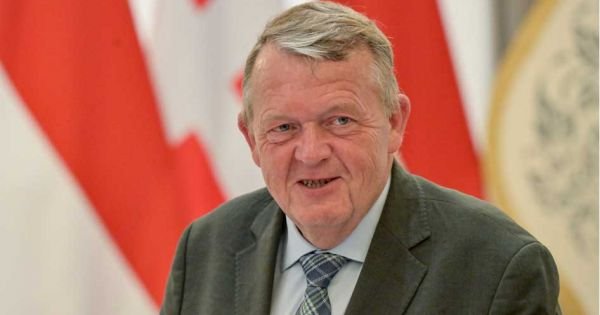
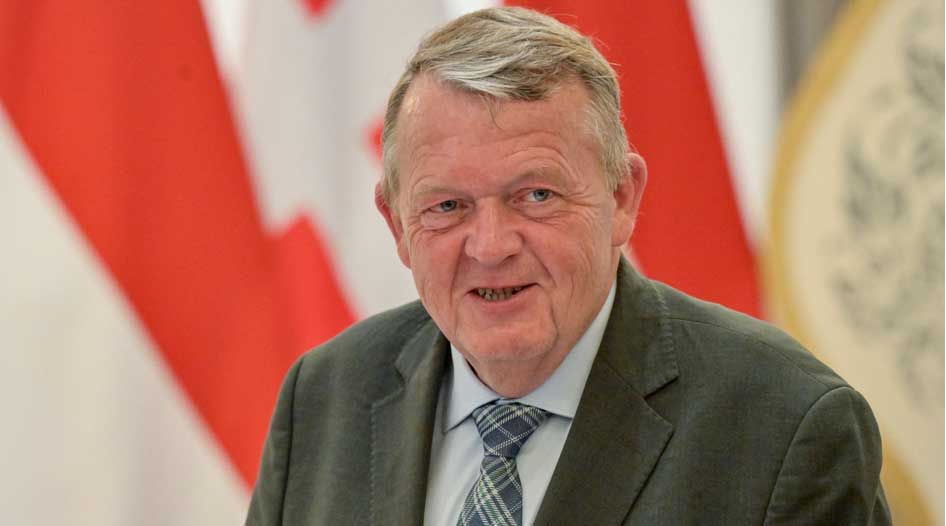
    “We didn’t manage to change the American position,” said Danish Foreign Minister Lars Løkke Rasmussen.
    “We didn’t manage to change the American position,” said Danish Foreign Minister Lars Løkke Rasmussen.

    By Gwynne Dyer – After the Danish and Greenland foreign ministers came out of a meeting in Washington on last week convinced that Donald Trump really intended to seize Greenland, things moved very fast.

     “We didn’t manage to change the American position,” said Danish Foreign Minister Lars Løkke Rasmussen. “It’s clear the president has this wish of conquering Greenland. And we made it very, very clear that this is not in the interests of the (Danish) kingdom.”

    Within a day, European members of the NATO alliance were promising troops for a Danish-led military force to strengthen the giant island’s weak defenses against the alleged threat of invasion by other, more distant conquerors: Russia (around 6,000 ice-choked kilometers from Nuuk to Murmansk) and China (about three times as far, Nuuk to Shanghai).

    Oddly, not even the keenest strategist looking for plausible reasons to buy more submarines or whatever had hit upon this particular excuse before. But that was Donald Trump’s pretext for taking Greenland: “The US needs Greenland for the purpose of national security…It is vital for the Golden Dome that we are building.”

    Hardly anybody actually believes this. The ‘Golden Dome’ is a proposed space-based anti-missile defense system that, like former president Ronald Reagan’s fanciful and ultimately abandoned “Star Wars” project would protect the United States from attack by nuclear missiles.

    It consists of an early-warning system based on a constellation of satellites in orbit and interceptors, also space-based, to shoot down incoming missiles. It would cost around a trillion dollars, but no contract has been signed yet, even for initial design work. Trump would probably be dead long before such a system became operational, if it ever did.

    However, it does let Trump claim that he is ‘protecting US national security’, which plays much better domestically than ‘seizing rare earth minerals’. Average American voters will never know that bases in Greenland are completely irrelevant to a space-based system, so they might go along with it.

    Why is Trump himself so obsessed with Greenland? The best guess in NATO circles is that it’s an extension of his old mania for putting his name on every hotel he owned. He can’t actually put his name on Greenland, but it would get him in American history books as the man who increased the extent of the US by a quarter. As simple and as stupid as that.

    NATO’s response and more tariffs from Trump. NATO’s European members realized they had to react to the verbal beating that the Danish and Greenland foreign ministers got at the hand of Trump’s two principal consiglieri, J.D. Vance and Marco Rubio.

    Moreover, they had to do it within the framework of Trump’s pretended Russo-Chinese threat to Greenland, or else openly recognise him as an adversary.

    So, in two days, they scraped together a small ‘reconnaissance force’ from eight European NATO members (France, Germany, Denmark, Finland, Norway, Sweden, the United Kingdom and the Netherlands) and sent it to Greenland to figure out what kind of European forces would be a convincing deterrent to hypothetical Russian and Chinese invaders.

    It didn’t work. Rather than thank the Europeans for finally picking up the load, Donald Trump blasted them for having “journeyed to Greenland for purposes unknown.”

    He warned that “these countries, who are playing this very dangerous game, have put a level of risk in play that is not tenable or sustainable.”

    In fact, they were trying to take away Trump’s pretext for invasion, and they were severely punished for it.

    In the same Truth Social post last Saturday, he imposed 10 per cent tariffs on all the countries that contributed to the Greenland mission, to begin on Feb. 1 and continue until “such time as a Deal is reached for the Complete and Total purchase” of Greenland.

    Only a few weeks ago, it looked as if the charade of NATO unity still had a couple of years to run before it collapsed irrevocably, but suddenly it could be just a couple of weeks — or, at the latest, June 1, when Trump will raise the tariffs to 25 per cent on NATO members that are still refusing to sell the Greenlanders out.

    What about Canada?  And to one side stands Canada’s Prime Minister Mark Carney, giving cautious verbal support to European military support for Greenland but abstaining from any Canadian military contribution to its defence.

    Bizarre in a way, because Canada is far closer to Greenland than any other NATO country. (It has a short land border on Hans Island.)

    The problem is, of course, that all the (false) arguments the US uses to justify annexing Greenland apply equally to Canada. And Trump has used them in the past about Canada as well. Stay low and pray.
    Source link

  • Trump is buying eleven icebreakers from Finland for Arctic Ocean patrolling — MercoPress

    Trump is buying eleven icebreakers from Finland for Arctic Ocean patrolling — MercoPress


    Trump is buying eleven icebreakers from Finland for Arctic Ocean patrolling

    Thursday, January 22nd 2026 – 00:24 UTC


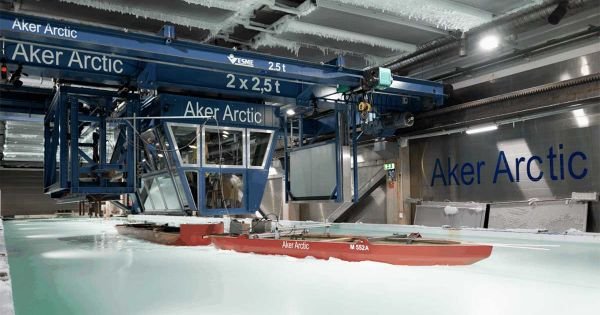
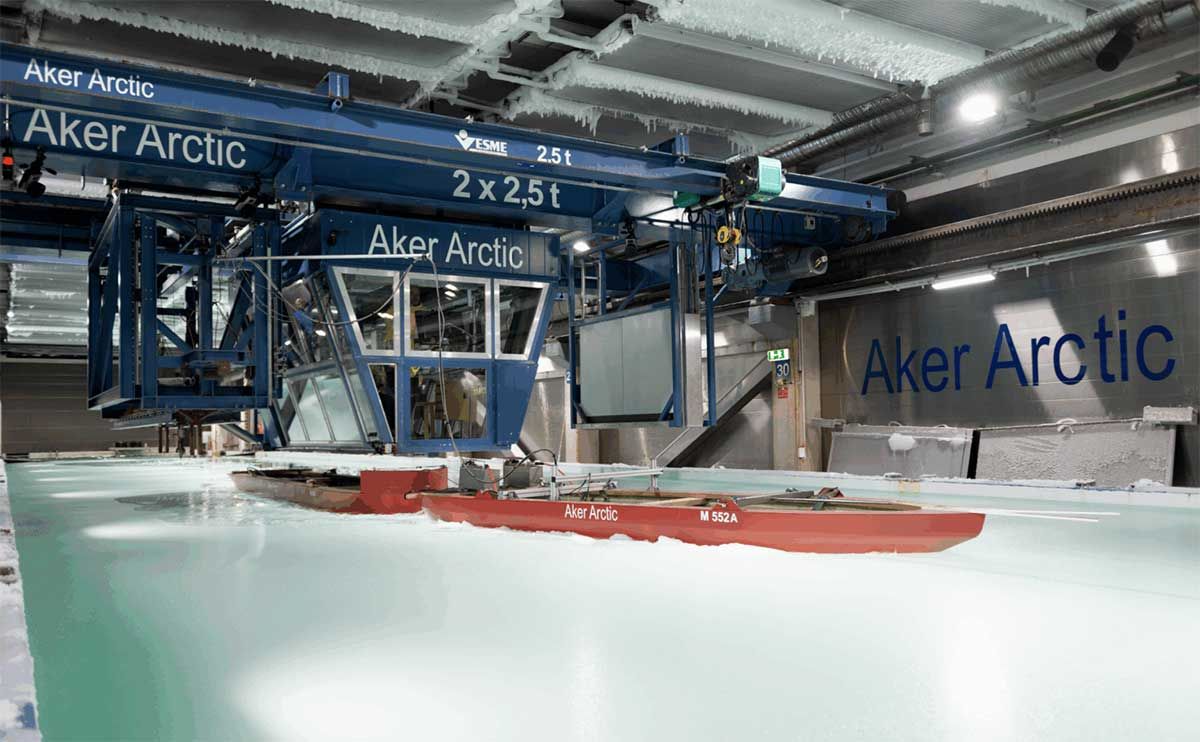
    In Helsinki is an ice testing center at the Aker Arctic Technology's with a scale model of an icebreaker floating in a 70-meter-long simulation tank.
    In Helsinki is an ice testing center at the Aker Arctic Technology’s with a scale model of an icebreaker floating in a 70-meter-long simulation tank.

    “We are buying the best icebreakers in the world, and Finland is known for producing them,” US president Donald Trump said, as part of his campaign to take over Greenland and his concern as the Arctic Ocean becomes more navigable and with more trade routes.

     Trump argued the case as one of national security, underlining the presence of “aggressive military postures and economic penetration by foreign adversaries,” by which he meant Russia and China.

    The fact is that as climate change is making the Arctic Ocean more navigable for cargo ships, and icebreakers can and must clear the way by breaking through the ice. While President Trump continues to insist that the US should own Greenland, his broader focus on the Arctic region has led Washington to order new icebreakers, a first batch of eleven involving a contract of US$ 3.5 billion for the so called Arctic Security Cutters.

    For these ships, which can navigate seas covered in solid ice, the US has turned to the world expert: Finland.

    Finland is the undisputed world leader when it comes to icebreakers. Finnish companies have designed 80% of all those currently in operation and 60% are built in Finnish shipyards.

    The country leads out of necessity, explains Maunu Visuri, president and CEO of the Finnish state-owned company Arctia, which operates a fleet of eight icebreakers.

    “Finland is the only country in the world where all ports can freeze over during the winter,” he says, adding that 97% of all goods in the country are imported by sea.

    Under US law, Navy and Coast Guard ships must be built domestically, but in this case the president waived that requirement for national security reasons.

    Four of the icebreakers will be built in Finland the first should be ready by 2028. A further seven of the “Arctic Security Cutters”, are to be built in the US, using Finnish designs and expertise.

    In Helsinki, capital of Finland there is an ice testing center at the Aker Arctic Technology’s with a scale model of an icebreaker floating in a 70-meter-long simulation tank. It cuts a clean channel through the frozen water surface.

    “It is essential that it has sufficient structural strength and motor power,” says ice performance engineer Riikka Matala.

    Mika Hovilainen, the firm’s chief executive, adds that the shape of the ship is also crucial. “You have to have a hull shape that breaks the ice by pushing it down,” he says.

    “It’s not cutting, it’s not shredding.”

    The US orders are part of an effort to catch up with the number of Russian icebreakers. Currently Russia has around 40, including eight that are nuclear powered. By contrast, the US presently only has three in operation.

    Meanwhile China operates around five polar-capable vessels. “None of them are technically icebreakers,” says Rybski, pointing to their design not meeting the strict criteria. “But they are increasing their fleet.”


    Source link

  • Legislative Assembly sets out early priorities after December election — MercoPress

    Legislative Assembly sets out early priorities after December election — MercoPress


    Falklands: Legislative Assembly sets out early priorities after December election

    Wednesday, January 21st 2026 – 19:58 UTC


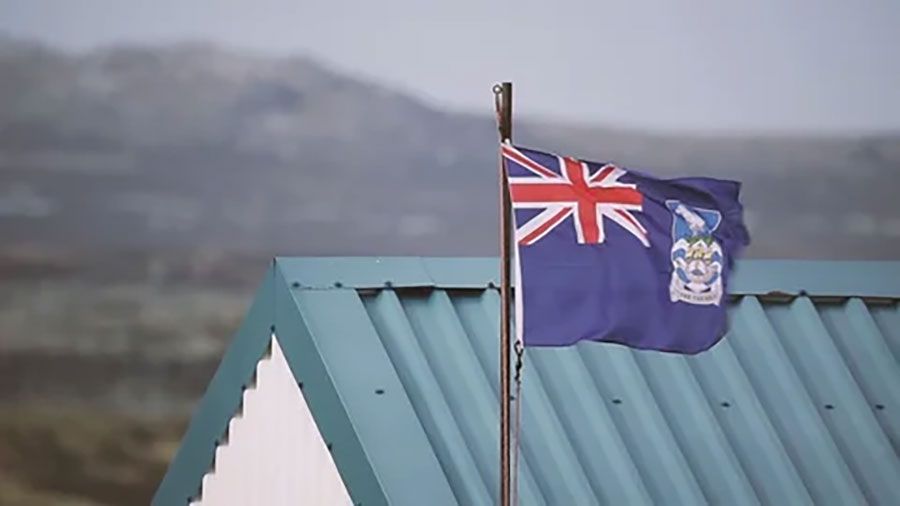
    While the January 21 statement did not provide a detailed timetable, it framed the opening agenda as an effort to align fiscal planning, capital delivery and key economic files
    While the January 21 statement did not provide a detailed timetable, it framed the opening agenda as an effort to align fiscal planning, capital delivery and key economic files

    The Falkland Islands’ Legislative Assembly said it has begun its “early work” for the new term and will focus in coming weeks on finalising the 2026/27 budget, reviewing the capital programme and addressing stalled projects, according to an official statement issued on January 21.

    The statement, signed by Assembly Chair MLA Jack Ford, said members have been “working on a range of important issues,” highlighting the budget process, updates to the capital plan, and continued work on the Tourism Strategy and “air links.”

    “Looking ahead to 2026, we intend to continue meeting regularly and working through a wide range of important issues,” Ford said.

    The update follows the political turnover after the General Election held on 11 December. At the Assembly’s first sitting on 15 December, members took the oaths of office, marking the start of the 2025–2029 term; they also elected the first-year members of Executive Council and the chamber’s presiding officers.

    While the January 21 statement did not provide a detailed timetable, it framed the opening agenda as an effort to align fiscal planning, capital delivery and key economic files—particularly tourism and connectivity—at the outset of the new Assembly term.


    Source link

  • White House confirms upcoming Washington visit by Venezuela’s Delcy Rodríguez — MercoPress

    White House confirms upcoming Washington visit by Venezuela’s Delcy Rodríguez — MercoPress


    White House confirms upcoming Washington visit by Venezuela’s Delcy Rodríguez

    Wednesday, January 21st 2026 – 19:22 UTC


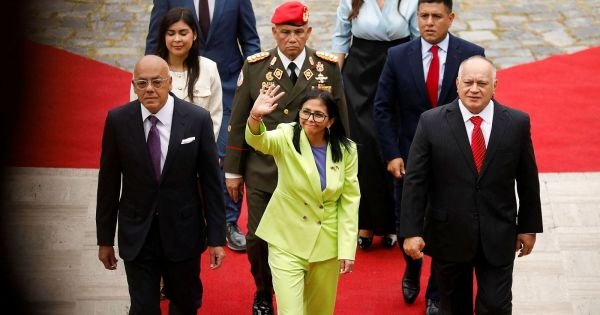
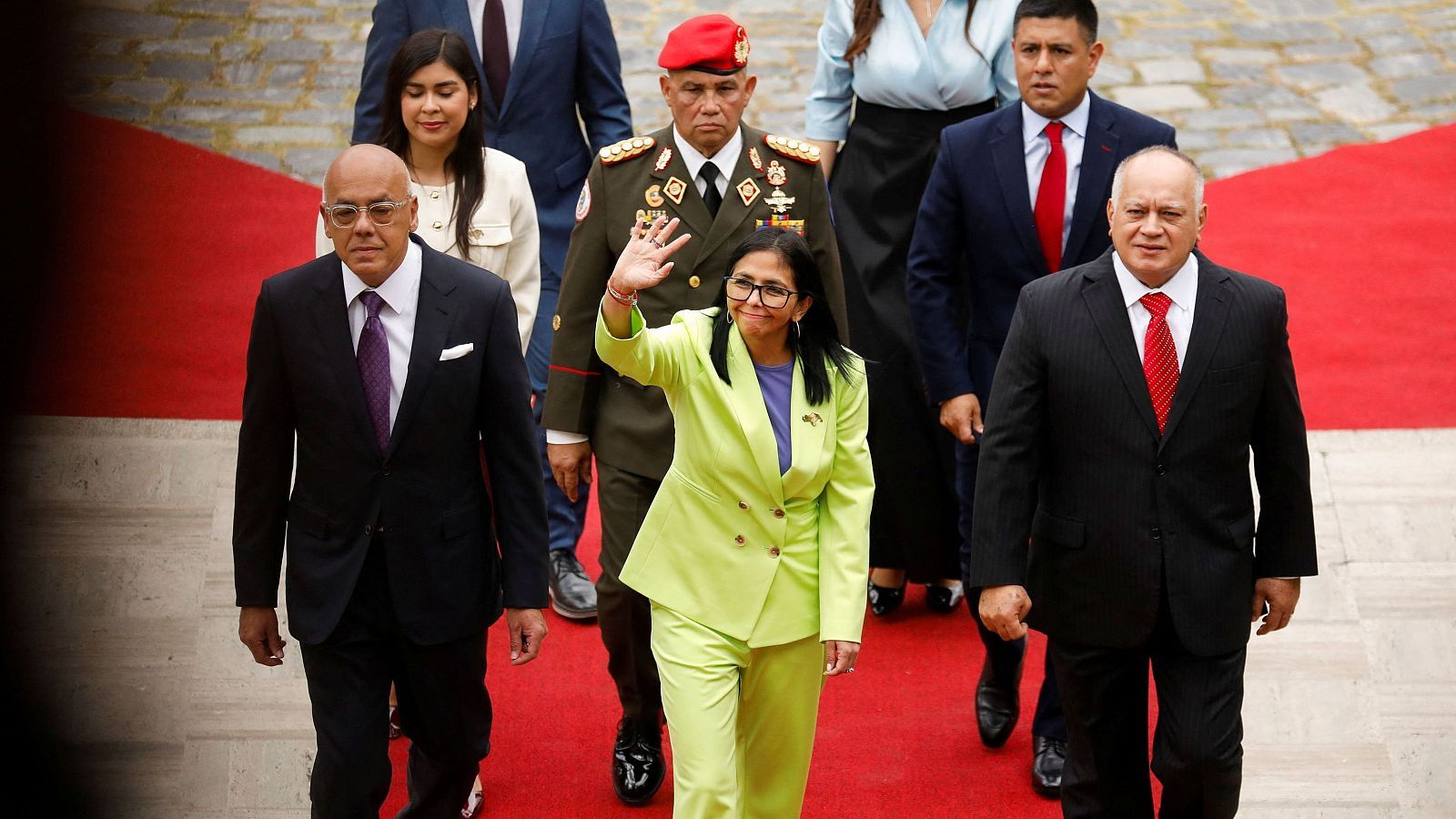
    Rodríguez has tried to pair practical coordination with a sovereignty-forward message. Photo: REUTERS/Leonardo Fernandez Viloria
    Rodríguez has tried to pair practical coordination with a sovereignty-forward message. Photo: REUTERS/Leonardo Fernandez Viloria

    Venezuela’s interim president Delcy Rodríguez is expected to travel to Washington “soon,” a White House official told EFE on Wednesday, without providing dates or an agenda. The planned trip comes as the administration of US President Donald Trump seeks to entrench a transition framework in Caracas following the US operation that captured and removed Nicolás Maduro in early January.

    According to EFE, the White House argues Rodríguez’s government is operating under US “tutelage” and meeting Washington’s key demands—most notably access to Venezuela’s oil sector and the shipment of millions of barrels to the United States for commercialization. Trump, speaking at a recent press event, said he had shifted from opposing Venezuela to embracing the current arrangement: “I was against Venezuela, but now I love Venezuela,” he said, adding that he had been working “very well” with Rodríguez and crediting her with releasing “many political prisoners.”

    In remarks delivered days after meeting opposition leader and Nobel Peace Prize laureate María Corina Machado, Trump suggested he might involve her “in some way” in Venezuela’s future, while still leaving unclear whether she would be given a formal role in the transition architecture.

    At the same time, CIA Director John Ratcliffe met Rodríguez in Caracas on the day of the Trump–Machado meeting, discussing security issues and possible economic cooperation—a sign of operational engagement even as Washington maintains broader political pressure. That pressure has included tighter control over Venezuelan crude flows: US Southern Command has described recent actions against vessels in the Caribbean as part of enforcement aimed at preventing unauthorized oil shipments under a sanctions-related “quarantine” framework.

    Rodríguez has tried to pair practical coordination with a sovereignty-forward message. EFE quoted her as saying that if she were to visit Washington as Venezuela’s leader, she would do so “standing up, walking—never crawling.” Machado, meanwhile, has argued Rodríguez does not represent Venezuelans and has portrayed the interim government as executing “dirty work” in a complex phase shaped by external power.

    If Rodríguez’s Washington trip proceeds in the near term, it will be read as a test of how far formal coordination can go—especially on energy and security—without the White House fully sidelining the opposition. It may also sharpen scrutiny of the transition timeline, internal political cohesion in Caracas, and the trade-offs between oil policy, sanctions enforcement, and human-rights expectations that continue to define the relationship.


    Source link

  • Mexico’s Water Reckoning Leaves Texas Thirsty and Northern Borderlands on Edge

    Mexico’s Water Reckoning Leaves Texas Thirsty and Northern Borderlands on Edge


    At the edge of a bullet-scarred canyon in northern Mexico, a river no one sees has become the fault line of a growing crisis, where drought, politics, and history collide, binding Texas cities and Mexican states to the same vanishing water.

    A River Few Texans Know, And Many Depend On

    From a scenic overlook above the Cañón del Pegüis in Chihuahua, the land drops suddenly into a ravine so deep it seems to swallow sound. At the rim stands a crude concrete monument, three slabs forming an X, their surfaces cratered by bullet holes. Locals say it is where gunmen come to vent their anger. Standing there in early December, reading President Donald Trump’s social media threats about water and tariffs, the irony was impossible to miss. Hundreds of feet below, almost hidden by distance and brush, ran the thin green thread Trump wanted so badly: the Río Conchos.

    Most Texans have never heard of the Río Conchos, yet their future quietly depends on it. The river rises in the Sierra Madre, cuts across the deserts of Chihuahua, and eventually meets the Rio Grande near Presidio, Texas. Without it, the Rio Grande no longer reliably reaches the Gulf of Mexico. Decades of dams, canals, and overuse upstream have reduced the once-mighty border river to an algae-choked trickle south of El Paso, sometimes disappearing entirely through the Forgotten Reach, a two-hundred-mile stretch of dust and weeds.

    When the Conchos flows, it rescues the river. When it does not, cities like Laredo, McAllen, and Brownsville—some relying on the Rio Grande for one hundred percent of their drinking water—face the unthinkable prospect of dry taps. Farmers in the Rio Grande Valley already know what scarcity looks like. The collapse of the Texas sugar industry has been partly blamed on the lack of fresh water. Citrus and cotton could be next.

    Treaties Written In Ink, Rivers Written In Dust

    The crisis is governed by the nineteen forty-four water treaty, a diplomatic document that divides rivers with mathematical precision but never imagined a hotter, drier century. Under its terms, Mexico owes the United States a fixed volume of water over five-year cycles, much of it expected to come from the Río Conchos. In December, Trump accused Mexico of violating the treaty and threatened a five percent tariff if water did not immediately flow north.

    Facing economic pressure, President Claudia Sheinbaum announced Mexico would release more than sixty-five billion gallons by the end of the month. The Trump administration declared victory. Sheinbaum sounded far less triumphant. At her daily morning conference, she reminded reporters that Mexico could not send water it did not have. “There was a drought—because there wasn’t water,” she said. “It’s simple as that.”

    Soon, reservoirs opened and water surged toward Texas. But it was not the water Texans wanted. Instead of drawing significantly from the Conchos basin, Mexico released water from the Río San Juan, which feeds Monterrey and enters the Rio Grande downstream of major reservoirs. The water counts toward Mexico’s treaty obligations, but it arrives salty, difficult to store, and sometimes barely usable.

    “Is that water good? No,” Dante Galeazzi, president and CEO of the Texas International Produce Association, said. “But it’s water that’s wet. Not theoretical water.” In recent summers, the salinity grew so severe that Texas asked Mexico to stop sending San Juan water altogether. It was useless for crops and risky for infrastructure.

    Monterrey’s Thirst and Chihuahua’s Fury

    Sending San Juan water north comes at a cost Mexico knows all too well. In two thousand twenty-two, during a historic drought, Monterrey, one of Latin America’s wealthiest industrial cities, ran out of water. Entire neighborhoods went dry for months. Bottled water vanished from shelves. Residents described scalpers reselling plastic buckets at inflated prices, a black market born of desperation.

    Why would Sheinbaum risk repeating that trauma—especially with World Cup visitors set to arrive—rather than send water from the Conchos? The answer lies west, in Chihuahua, Mexico’s largest and most rugged state. The region has long resisted federal control, a defiance older than Pancho Villa’s cavalry. In two thousand twenty, when President Andrés Manuel López Obrador ordered water released from La Boquilla, Chihuahua’s largest reservoir, growers and campesinos revolted. Highways were blocked. The military intervened. Two farmers were shot; one died. The federal government retreated.

    Since then, Conchos water has become politically radioactive. Sheinbaum has signaled she is unwilling to test Chihuahua again, especially as her administration rolls out a controversial national water law asserting that all water ultimately belongs to the state. The law limits the sale of private water rights and proposes a national registry to crack down on unlicensed use, a widespread practice in arid states. In December, farmers drove tractors onto freeways and even across the international bridge near El Paso, protesting what they see as an existential threat.

    For now, the government has limited releases from small reservoirs near the border, avoiding the deeper Conchos system. Most of the water heading north continues to come from the San Juan.

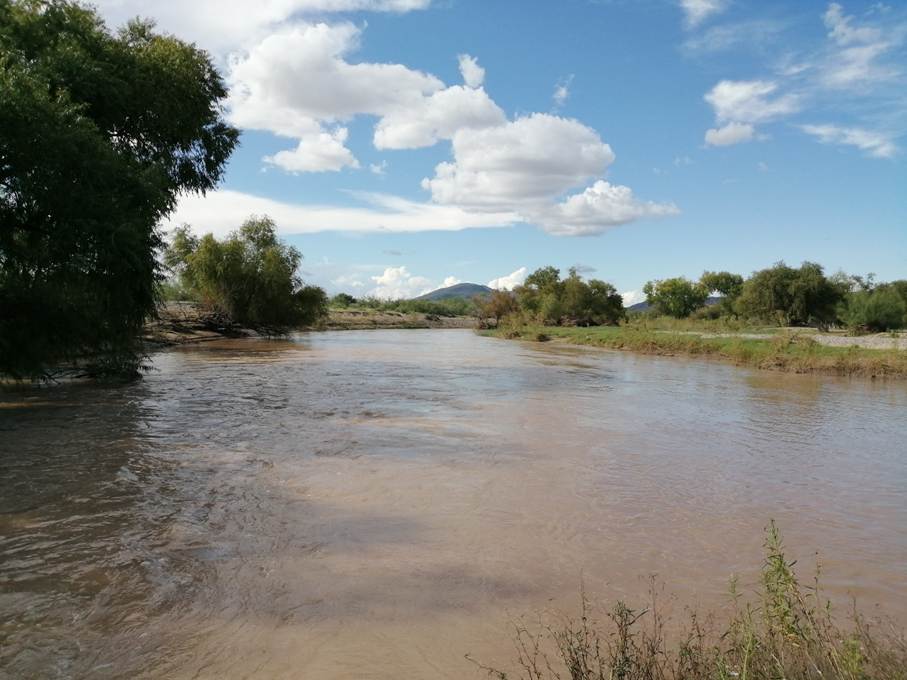
    Río Conchos, near Potrero del Llano, Aldama, Chihuahua, Mexico. Photo by Levi Bernardo / Wikimedia Commons, licensed under CC BY-SA 3.0.

    Bandaids On a Dry Future

    Water experts warn that these maneuvers are temporary fixes masking structural failure. “These are just bandaids,” said Rosario Sanchez, a senior research scientist at the Texas Water Resources Institute. Even if Mexico drained San Juan reservoirs entirely, she explained, it would not meet treaty obligations or future needs. There simply is not enough water. “We are seeing the limits of the treaty,” Sanchez said. “Mexico is not able to fulfill that amount of water.”

    South Texas farmers are sympathetic to drought but furious about overuse. Over the past thirty years, pecan orchards in Chihuahua have more than doubled. Tree nuts are among the most water-intensive crops in the world, a fact documented in agricultural studies published by journals such as Agricultural Water Management. As orchards expanded in Chihuahua, similar growth occurred along the Rio Grande in West Texas and New Mexico, compounding shortages downstream.

    “What Chihuahua is doing is farming in the desert,” Galeazzi said. He offered a blunt analogy: imagine replacing Las Vegas with pecan groves. The water demand would multiply several times over. To Texas growers watching their livelihoods evaporate, Chihuahua’s orchards feel like a betrayal of shared scarcity.

    Yet even Galeazzi concedes a harder truth. Even if Mexico delivered every last drop owed from the Conchos, it would cover only about one-third of the Rio Grande Valley’s long-term needs. Without massive investment in infrastructure, conservation, and difficult decisions about crop choices on both sides of the border, the region is headed toward disaster regardless of Mexico’s actions.

    Water, Power, And A Border Under Pressure

    In January, Trump escalated his rhetoric. After the dramatic arrest of President Nicolás Maduro of Venezuela, Trump suggested Mexico was effectively controlled by cartels and again floated the idea of military action. “Something is going to have to be done with Mexico,” he said. The comments rattled markets and underscored how quickly water disputes can slide into geopolitical brinkmanship.

    From a Latin American perspective, the crisis exposes an old pattern. Treaties drafted in distant capitals ignore local realities. Rural communities absorb the costs of decisions made far away. Drought becomes not just a natural disaster but a political weapon. In Chihuahua, farmers fear losing control over water they see as their birthright. In Monterrey, residents remember empty taps. In South Texas, families wonder how long reservoirs can hold.

    The Río Conchos flows quietly through canyons marked by bullets and history, carrying more than water. It carries the weight of two nations trying to survive a hotter century with rules written for a cooler one. The river does not care about borders or tariffs. It responds only to rain, snowmelt, and the relentless pull of gravity. Whether governments can learn to respond with equal humility remains the unanswered question, as the green line below the canyon rim grows thinner by the year.

    First reported and adapted from Texas Monthly. Original reporting by Jack Herrera.

    Also Read:
    Mexican Enchiladas Traveled Far Enough to Lose Their Birth Certificate


    Source link

  • Colombia’s Religious Violence: Pastors Need Protection Before Politics Turns Faith into Target

    Colombia’s Religious Violence: Pastors Need Protection Before Politics Turns Faith into Target


    After murders in Northern Colombia and a mass grave in Guaviare, a quiet legal change has left pastors exposed just as Washington calls the hemisphere a priority. In rural Colombia, faith leaders aren’t just preachers—they’re the last public institution standing.

    A Strategy from Washington, A Funeral in The Countryside

    In the language of the countryside, Colombia is a place where the state can feel like a rumor—heard of, rarely seen—while armed groups enforce the daily rules.

    On New Year’s Eve, armed individuals assassinated a Protestant pastor in Northern Colombia—the second pastor from that same area targeted and killed in a year, and the tenth reported case in the country since December two thousand twenty-four. The specificity matters because the pattern is no longer deniable. These are not random crimes in a violent country. They are messages. And in rural zones where governance is contested, messages travel faster than justice.

    This is why the question for policymakers is not abstract. It is immediate: will the Colombian state protect religious leaders facing targeted violence, or will it leave them to navigate a battlefield with nothing but prayer and luck? The stakes extend beyond one community, because in many isolated places, faith leaders serve as the closest thing to a functioning civic center—mediators, counselors, guardians of social peace, and sometimes the only adults willing to say no to the armed men.

    The Promise of Freedom, Then the Paperwork of Risk

    President Gustavo Petro, Colombia’s first left-wing president in decades, is set to commemorate the country’s National Day of Religious Freedom on July four. The symbolism is strong: a leftist president speaking the language of pluralism and conscience in a nation long shaped by conservative power and brutal counterinsurgency. On that day in two thousand twenty-three, Petro pledged to religious leaders that “nobody would be persecuted for their religious convictions” and that spirituality was essential for peace. It was an expansive idea—peace not just as a ceasefire, but as a moral architecture built in communities.

    Yet by the next year, the message rang hollow in the way that political speeches often do in Colombia: sincere on the podium, fragile on the ground. Two days before the annual observance, authorities uncovered a mass grave in Calamar, Guaviare, containing eight civilians forcibly disappeared in April—seven of them Protestant church leaders or active members, plus one family member. In an area still largely controlled by the leftist FARC guerrillas, each individual was personally summoned for a “meeting” and murdered soon after. The cruelty of that detail—summoned, singled out, disappeared—reveals a particular kind of domination. Armed actors do not just kill bodies. They kill trust. They kill the idea that public life is possible.

    Petro condemned the killings on X, urging state institutions to “redouble their efforts to protect those who lead through faith.” But the country’s recent record suggests that Colombian institutions have not been redoubling; in one key respect, they have been retreating. Almost exactly one month after Petro’s two thousand twenty-three pledge, his administration amended a national decree to remove “religious leaders” from the list of categories eligible for specific protections under a program designed for individuals at “extreme risk of harm.”

    It sounds technical, the kind of bureaucratic tweak that rarely makes headlines. In Colombia, technicalities can be life and death. For more than a decade, the decree served as the backbone of the country’s protection framework for journalists, activists, human rights defenders, former officials—and, until two thousand twenty-three, religious leaders. The National Protection Unit, housed in the Ministry of Interior, is responsible for protecting “the lives and diversity of social leaders throughout the country.” The inclusion of religious leaders as a separate category in two thousand fifteen was a public acknowledgment that they faced distinctive danger, particularly in territories where armed groups view independent moral authority as competition.

    Removing that explicit category weakened a straightforward legal pathway for pastors and priests seeking urgent protection. Beyond narrowing formal recognition of their vulnerability, it risks delaying security measures and reducing political visibility for faith leaders under threat. The stated reasoning was that the change would expand access to religious members and institutions. In practice, the change left religious leaders without direct or timely access to protection, precisely when targeted attacks were showing the cost of delay.

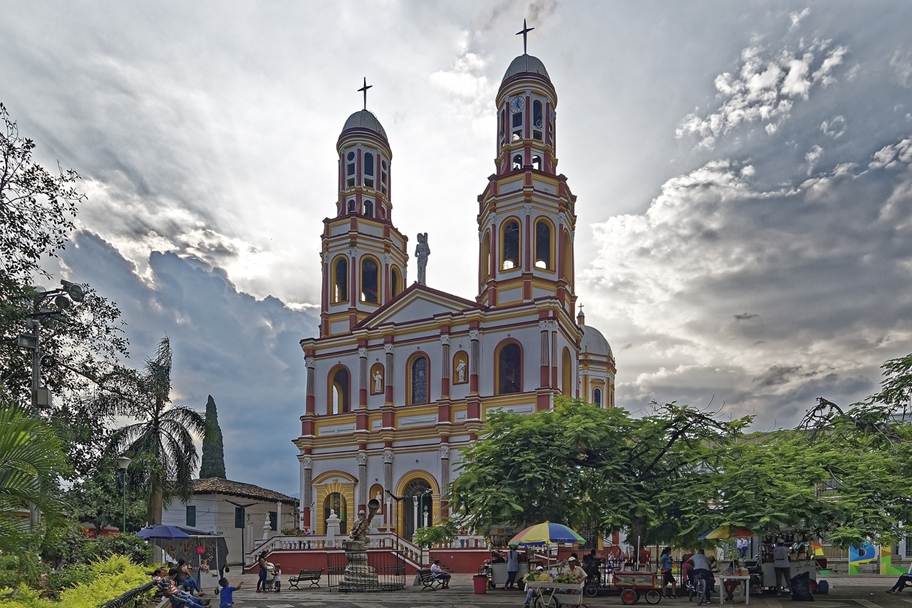
    Colombia, La Plata, Iglesia San Sebastián. Pixabay/ Makalu

    When Pastors Become Civic Infrastructure, Their Deaths Become Policy Failures

    Religious leaders in rural Colombia do not operate in a tidy category. They baptize children and bury the dead, yes. They also negotiate the fragile boundaries of community life—calming conflicts, discouraging recruitment, protecting families from displacement, and providing the kind of social glue that the state often fails to supply. That multiplicity is not a loophole; it is their public function. Forcing them to fit into other categories—activist, human rights defender, political actor—may be both unnecessary and, in certain places, dangerous. In communities effectively governed by guerrilla armies and criminal groups, labels can be lethal. Being seen as a “rights defender” can be interpreted as being on one side of a war.

    Even in places where the state is strongest, the risk persists. A two thousand eighteen State Department report claimed that, in the capital, thirteen percent of Christian leaders had received death threats. If this is the climate in Bogotá, the vulnerability in remote corridors—where roads are bad, institutions thinner, and armed actors louder—requires little imagination.

    This is where U.S. policy enters the picture, not as savior, but as stakeholder. The U.S. now frames Latin America as a strategic priority, and it has every incentive to avoid instability that drives migration, undermines counternarcotics goals, and erodes democratic legitimacy. If Washington wants a stable hemisphere, it must care about the local actors who stabilize communities. When governments weaken access to protection for civic figures who keep neighborhoods from collapsing, they weaken the very foundations of order.

    The context is already tense. Relations are described as poor, with Bogotá recalling its ambassador to Washington in late October over a U.S. strike on a vessel linked to the National Liberation Army, and with Trump threatening U.S. military action in Colombia following the capture and arrest of Nicolás Maduro in Venezuela. In such an environment, it may be tempting for both sides to treat human security issues as secondary to posturing. That would be a mistake, because the killing of pastors is not a side issue. It is a warning signal from the territories where the Colombian state is still contested.

    The text argues that Congress can use confirmation and oversight processes related to the next ambassador-at-large for international religious freedom—or, given former Congressman Mark Walker’s announced appointment as principal adviser for global religious freedom at the State Department—to press Bogotá to reinstate explicit protections for religious leaders in high-risk zones. The point is less about one office than about leverage: policy tools should be used to correct a legal gap that has real consequences in conflict-affected regions.

    Restoring explicit protections would not end Colombia’s violence, but it would restore a clear pathway to security for people who are being targeted precisely because they hold communities together. In a country where armed groups often seek to replace the state with fear, pastors can become the last line of public moral life. When they are targeted, it is not merely a religious tragedy. It is a civic emergency.

    If two thousand twenty-six is to be a year of hemispheric priorities, it should begin with a simple recognition: security is not only helicopters and intelligence sharing. It is also the protection of the local figures who keep social life intact when institutions fail. In Colombia, that often includes “those who lead through faith.” Removing them from the law did not make the country more inclusive. It made it more exposed.

    Also Read:
    Venezuela Removed Its President, But the Guns Never Changed Hands


    Source link

  • The UWI Toronto Benefit Awards Announces This Year’s Honorees

    The UWI Toronto Benefit Awards Announces This Year’s Honorees


    News, Americas, Toronto, ON, January 21, 2026: The highly anticipated University of the West Indies, (UWI), Toronto Benefit Awards is proud to announce its 2026 honorees for the 17th annual evening of recognition in support of scholarships for students in the Caribbean. The prestigious event will take place on Saturday, April 25, 2026, at The Ritz-Carlton Hotel, 181 Wellington Street West, Toronto, beginning at 5:30 p.m. EST.

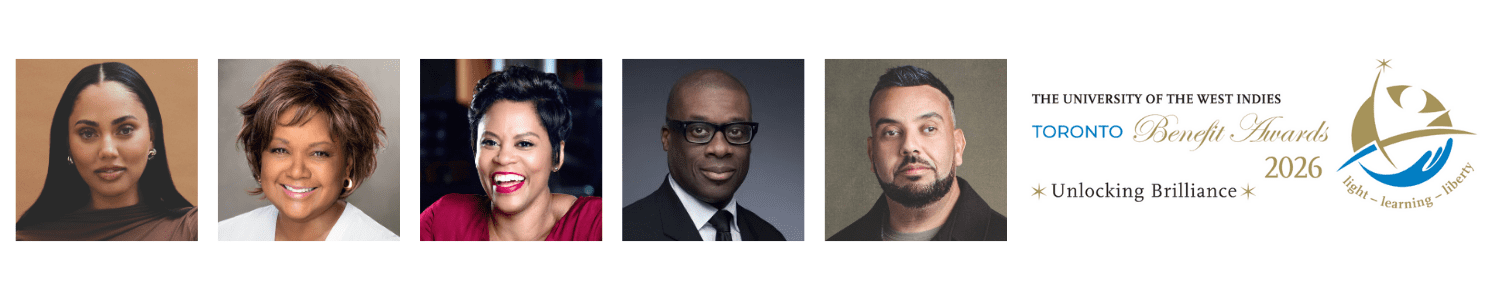
    The UWI Toronto Benefit Awards honorees - L to R: Ayesha Curry, Tonya Williams, The Honourable Marci Ien, The Honourable Justice McLeod, Sam Ibrahim
    L to R: Ayesha Curry, Tonya Williams, The Honourable Marci Ien, The Honourable Justice McLeod, Sam Ibrahim

    Hosted by The University of the West Indies (UWI) – consistently ranked among the world’s top universities – this year’s theme, Unlocking Brilliance, reflects UWI’s enduring commitment to nurturing talent, leadership, and opportunity across the Caribbean and its global diaspora.

    “This is a powerful night of purpose and pride,” says Dr. Donette Chin-Loy Chang, Patron of the UWI Toronto Benefit Awards. “For 16 years, Canadians have supported the cause of ensuring that students in the Caribbean are afforded the chance to fulfill their dreams of education.  We have met the moment, built bridges of hope, and lit the way.  This year, with great fervour, we will ‘unlock the brilliance of students’ whilst celebrating once again leaders who, by their works, have demonstrated the results of how unlocking potential transforms communities.  Now more than ever, with several existential threats worldwide, we must stand firm in unity in the belief that education will change the world.”

    A signature event on Toronto’s social and philanthropic calendar, the UWI Toronto Benefit Awards attracts a distinguished audience of corporate executives, cultural leaders, public figures, and community champions united by a shared commitment to giving back.

    2026 UWI Toronto Benefit Awards Honourees

    • Luminary Award: Mrs. Ayesha Curry– Renowned entrepreneur, philanthropist, and wellness advocate whose work centres on community upliftment, cultural empowerment, and purpose-driven leadership.

    • Luminary Award: Ms. Tonya Williams, O.C. – Award-winning actress, producer, and founder of initiatives supporting diversity in media and film and has been a driving force for inclusion and cultural representation.

    • G. Raymond Chang Award: Mr. Sam Ibrahim – Esteemed business leader and philanthropist recognized for his dedication to community advancement and social impact initiatives.

    • Chancellor’s Award:
    Black Opportunity Fund – A transformative organization investing in economic, educational, and leadership opportunities for Black communities.
    Lifelong Leadership Institute – A pioneering institution committed to leadership development and lifelong learning.

    • Vice-Chancellor’s Award:
    The Honourable Marci Ien – Former Member of Parliament and award-winning broadcaster, recognized for her advocacy, public service, and community leadership.
    The Honourable Justice Donald F. McLeod – Distinguished jurist recognized for decades of service to justice, equity, and civic leadership.

    • Patron’s Award: Sagicor – Honoured for its longstanding commitment to education, community investment, and scholarship support.

    Mrs. Elizabeth Buchanan-Hind, Chair of the UWI Toronto Benefit Awards noted, “In addition to its core mission of funding scholarships for Caribbean students, a portion of the proceeds from the 2026 UWI Toronto Benefit Awards will be directed toward Hurricane Melissa relief efforts, supporting recovery and rebuilding initiatives in affected Jamaican communities.”

    The UWI Toronto Benefit Awards has awarded more than 1,000 scholarships to Caribbean students to date. The event continues to play a vital role in ensuring access to higher education while responding to the evolving needs of the region.

    Media Availability: 6:00 p.m. – 6:30 p.m. (Honourees, Patrons, and select VIPs)
    Red Carpet Cocktail Hour: 5:30 p.m. – 7:00 p.m.
    Dinner, Awards Program & Entertainment: 7:00 p.m. – 10:00 p.m.
    After Party: 10:00 p.m. – Midnight

    Website | Instagram |

    About The University of the West Indies
    The University of the West Indies has been a driving force in Caribbean development for more than 75 years, producing global leaders across medicine, law, science, culture, business, and public service. Today, UWI is an internationally respected institution with nearly 50,000 students across five campuses and global centres worldwide, consistently ranked among the world’s top universities for impact, innovation, and excellence.


    Source link

  • European Parliament puts EU-Mercosur trade deal on hold, seeks top court legal opinion — MercoPress

    European Parliament puts EU-Mercosur trade deal on hold, seeks top court legal opinion — MercoPress


    European Parliament puts EU-Mercosur trade deal on hold, seeks top court legal opinion

    Wednesday, January 21st 2026 – 13:26 UTC


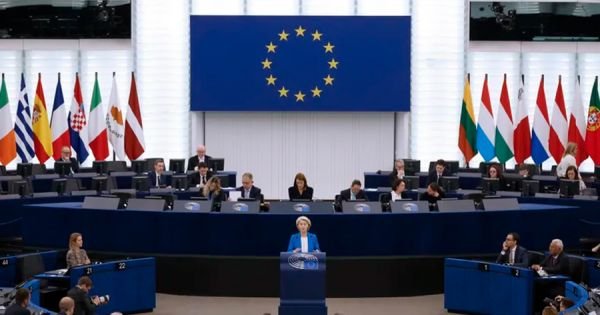
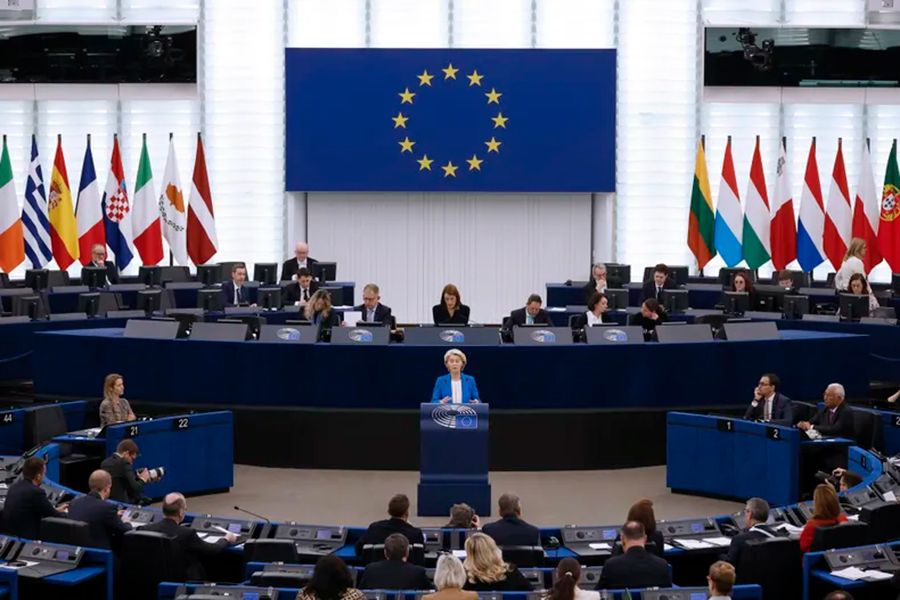
    The parliamentary motion is based on a mechanism that allows the Court of Justice to be asked for an opinion on whether an international agreement complies with the Community legal framework
    The parliamentary motion is based on a mechanism that allows the Court of Justice to be asked for an opinion on whether an international agreement complies with the Community legal framework

    The European Parliament voted on Wednesday to freeze its approval track for the EU-Mercosur trade agreement and request a legal opinion from the Court of Justice of the European Union (CJEU) on whether the deal is compatible with EU treaties. The motion passed by a razor-thin margin —334 in favour, 324 against, with 11 abstentions— injecting new uncertainty into a pact that the two blocs had only just signed in Asunción after a quarter-century of negotiations.

    The move relies on the EU’s treaty mechanism under Article 218(11), which allows EU institutions to ask the CJEU to assess the legality of international agreements. Until the court issues its opinion, the Parliament is effectively pressing pause on its own scrutiny — a step that can delay the broader ratification process even if political backing already exists among EU governments.

    The timing is politically awkward. The agreement was formally signed in Paraguay in a ceremony billed as a landmark moment for both blocs. As noted by MercoPress in Asunción: Argentina’s President Javier Milei attended, while Brazil’s Luiz Inácio Lula da Silva stayed away, even as EU leaders emphasised the deal’s strategic and economic scope.

    At the heart of the legal question is a “rebalancing mechanism” referenced by the sponsors of the request. In their argument, the clause could allow compensatory steps if one side’s regulatory changes materially affect expected benefits under the agreement — raising concerns that it might constrain the EU’s ability to adopt future rules on issues such as environmental protection or consumer standards. They want the CJEU to clarify whether the mechanism sits comfortably within the EU’s treaty framework.

    European Commission Executive Vice-President Teresa Ribera characterised the parliamentary vote as extremely close and signalled that Brussels will look for ways to prevent the initiative from turning into a long-term blockage, including exploring options to keep political momentum — and potentially elements of implementation — moving while the court process unfolds.

    The episode also reflects the broader context in which Brussels has framed the agreement: a push to strengthen trade ties with South America and diversify partnerships as the global trading system faces heavier geopolitical pressure and sharper disputes over tariffs and industrial policy.

    For Mercosur members, the court referral adds a new variable to domestic ratification debates and investment expectations tied to the agreement’s market-access timetable. For the EU, it underlines that political endorsement by governments and a signature ceremony do not guarantee a smooth parliamentary path in a deal that still faces ideological, sectoral and national objections.


    Source link

  • UK investment in Antarctica underlines role as a leading polar research nation — MercoPress

    UK investment in Antarctica underlines role as a leading polar research nation — MercoPress


    UK investment in Antarctica underlines role as a leading polar research nation

    Wednesday, January 21st 2026 – 13:16 UTC


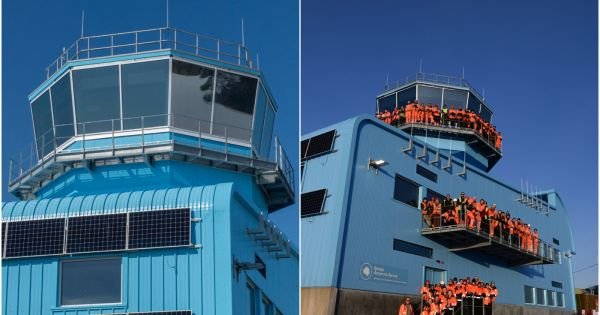
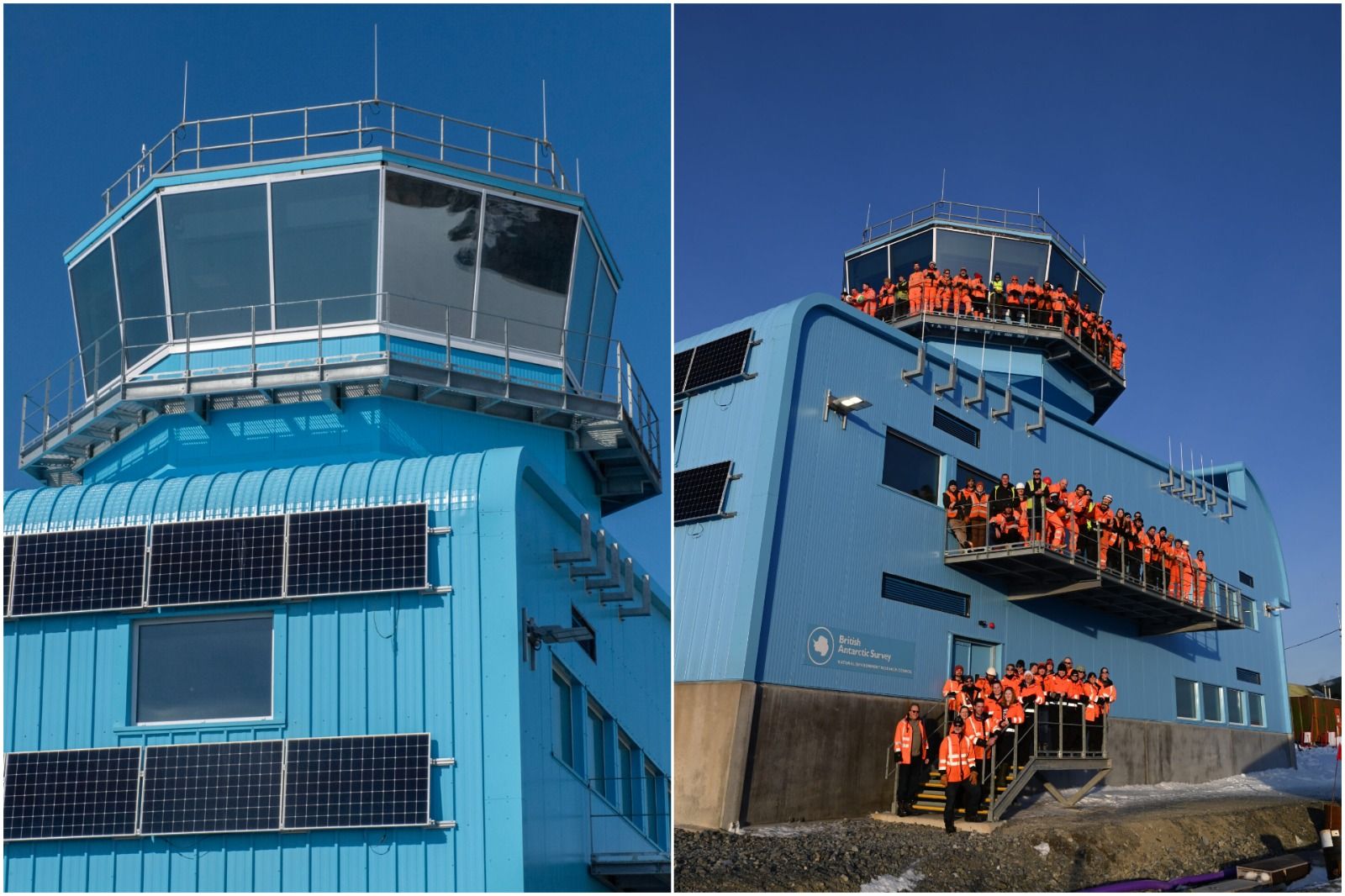
    Operations tower and team outside the new Discovery Building at Rothera Research Station, featuring solar panels on the façade. Credit: Pete Bucktrout and David Ganiford, BAS.
    Operations tower and team outside the new Discovery Building at Rothera Research Station, featuring solar panels on the façade. Credit: Pete Bucktrout and David Ganiford, BAS.

    A major new British Antarctic Survey (BAS) facility at Rothera Research Station is being presented as evidence of the UK’s standing in polar research. The £100 million Discovery Building—together with a new services network at Rothera—has been formally opened by BAS Director Professor Dame Jane Francis, completing what BAS describes as the largest UK construction project ever carried out in Antarctica.

    With about 4,500 square metres of internal space and more than 100 rooms across two floors, the Discovery Building is intended to become the operational core of the UK’s main Antarctic research station. BAS says it will provide essential services including power generation, drinking water and communications, replacing older infrastructure previously spread across multiple structures. The new set-up is designed to improve safety and efficiency for staff and to cut carbon emissions at the station, while supporting scientific work ranging from ice-sheet stability to marine ecosystems.

    Rothera has served as the UK’s gateway to Antarctica since 1975. Over time, it has hosted BAS programmes, projects led by UK universities and work with international partners, including the Netherlands’ Dirck Gerritsz laboratory, alongside long-running environmental monitoring facilities.

    Inside the new building, BAS highlights an operations tower responsible for managing air access to Rothera and routes into the “deep field,” central storage backed by a digital inventory system, a vehicle garage for maintaining the station fleet, and an energy centre that supports station-wide operations. BAS says teams preparing for deep-field expeditions will now be able to plan and equip under one roof.

    The project was commissioned by the Natural Environment Research Council (NERC), part of UK Research and Innovation (UKRI), as a component of the government-funded £670 million Antarctic Infrastructure Modernisation Programme. BAS says construction began in 2019 and was completed on schedule and within the anticipated budget. The wider programme—described as the biggest government investment in Antarctic science infrastructure since the 1980s—has also delivered the UK polar research ship RRS Sir David Attenborough (launched in 2021), upgraded wharfs at Rothera and King Edward Point, and extended and improved Rothera’s runway.

    Officials framed the investment as part of a long-term commitment to Antarctic science and a sustained UK presence on the continent, arguing that polar research contributes to understanding global climate systems and ocean change with worldwide impacts. The ongoing infrastructure push is also linked to the UK Government’s recently published UK Antarctic Strategy.

    Lord Patrick Vallance, Minister of State for Science, Research, Innovation and Nuclear, said: “Antarctic research is essential to understanding how changing climate patterns could affect our planet in the years to come, from food security to flooding risk – so together, we can act.

    “The UK has long been a leader in polar science and this government investment in modern, state of the art facilities will enable current and future generations of researchers to tackle shared challenges with our international partners.”

    Professor Dame Jane Francis said: “The fantastic new Discovery Building and our program of modernization at Rothera offer UK and international researchers the facilities needed to enable science and operations at Rothera and in the deep field for decades to come. We’re incredibly excited to see the building come to life on our 50th anniversary. It’s been an intense period of work in the most challenging construction site in the world – I look forward to the opportunities it offers for collaborative polar science and operations in Antarctica.”

    BAS describes the Antarctic Infrastructure Modernisation Programme (AIMP) as a long-term, government-funded effort across the Polar Regions, delivered with multiple partners including Hugh Broughton Architects, BAM, Ramboll, Sweco, G&A Barnie Group Ltd, Turner and Townsend and Norr Ltd. BAS says it has drawn on partner expertise and supply chains since 2017 to deliver engineering work in extreme Antarctic conditions.


    Source link

  • Delcy Rodríguez vows 30% increase in gold output to boost hard-currency inflows — MercoPress

    Delcy Rodríguez vows 30% increase in gold output to boost hard-currency inflows — MercoPress


    Delcy Rodríguez vows 30% increase in gold output to boost hard-currency inflows

    Tuesday, January 20th 2026 – 15:29 UTC


    International organizations and rights groups have repeatedly flagged serious abuses connected to gold mining in Venezuela’s south, including the role of armed groups
    International organizations and rights groups have repeatedly flagged serious abuses connected to gold mining in Venezuela’s south, including the role of armed groups

    Venezuela’s interim president Delcy Rodríguez said her administration aims to raise gold production by 30% in 2026 to generate additional foreign-currency revenues, as the government seeks to shore up public finances and draw fresh investment into the mining sector, according to reports attributed to EFE.

    Rodríguez said Venezuela produced 9.5 tonnes of gold in 2025 and plans to exceed that figure this year. Speaking at a government event, she argued that gold revenues help sustain external obligations and fund public programs, while acknowledging—implicitly through limited detail—the longstanding lack of transparency around the sector.

    Her remarks came alongside signals of a regulatory push. Rodríguez said the National Assembly is preparing a new mining and minerals law designed to attract “significant international investment flows,” and she also pointed to plans to expand output of iron and coal.

    Sanctions, licenses and the gold trade

    Venezuela’s gold industry has been targeted by U.S. sanctions, including measures linked to state miner Minerven and gold-related transactions. In October 2023, Washington issued temporary sanctions relief—including authorizations tied to Minerven—after an electoral roadmap agreement between Nicolás Maduro’s government and the opposition.

    In 2024, the U.S. rolled back part of that relief, including the Minerven component, after disputes over the electoral process, AP reported.

    International organizations and rights groups have repeatedly flagged serious abuses connected to gold mining in Venezuela’s south, including the role of armed groups and exploitation in and around illegal mines. Human Rights Watch has documented violence and abuses in Bolívar state, while the International Crisis Group has described gold mining as central to conflict dynamics and informal governance in the region.

    The government argues higher output and new rules will expand revenues and formalize the sector. There’s an absence of public audits on production volumes, sales channels and environmental impact.


    Source link

Translate »